
The Initial Assessment and Management of Burns Mr
The Initial Assessment and Management of Burns Mr Ayman S Jundi, MD MSc FRCS Dip. IMC FRCEM Consultant in Emergency Medicine Lancashire Teaching Hospitals NHS Foundation Trust
Aims and Objectives • Definition • Pathophysiology • Assessment of Depth • Assessment of Area • Resuscitation & Initial Management • “Special” Burns
Definition • Injury to skin and other tissues, caused by: • Heat • Electricity • Chemicals • Radiation • ? Non-Accidental Injury?
Pathophysiology • Proteins denature at temperatures over 44∘c • Increased permeability of local capillaries Local oedema • Loss of fluids and plasma Reduced blood volume and flow • Renal failure, GI ulcerations • Coagulation of blood vessels • Cortisol, chatecolamines, hypermetabolic state • cardiac output, heart rate, poor immune function
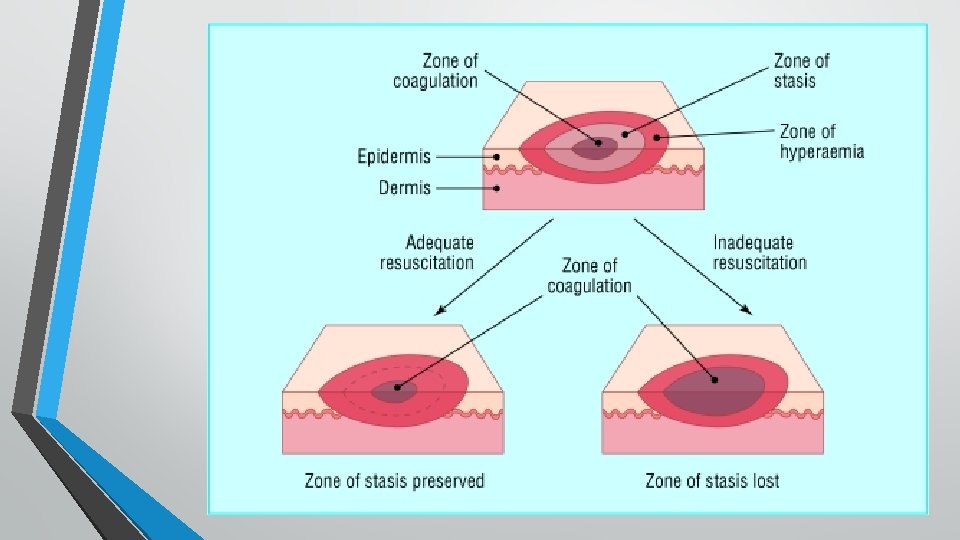
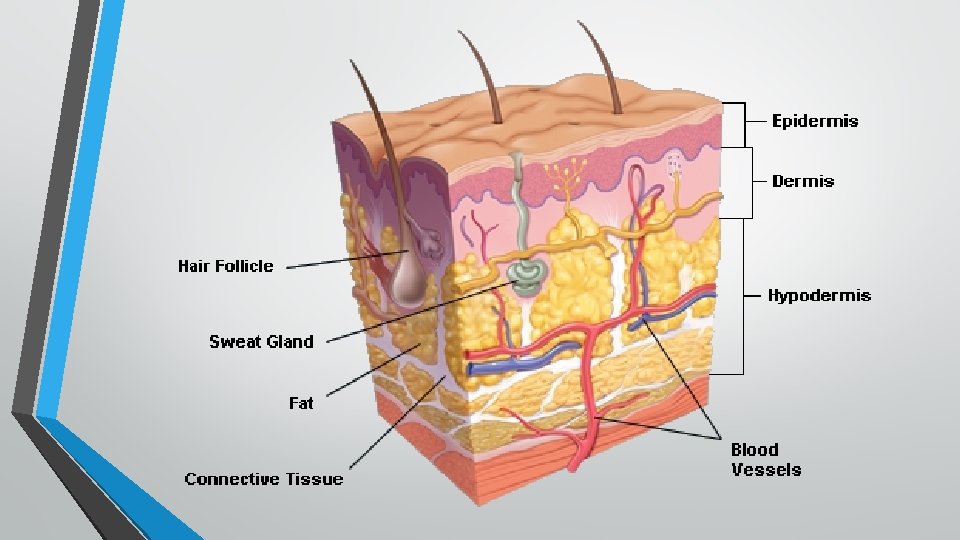
Depth of the Burn • Superficial Partial Thickness • Deep Partial Thickness • Full Thickness • Deep Burns
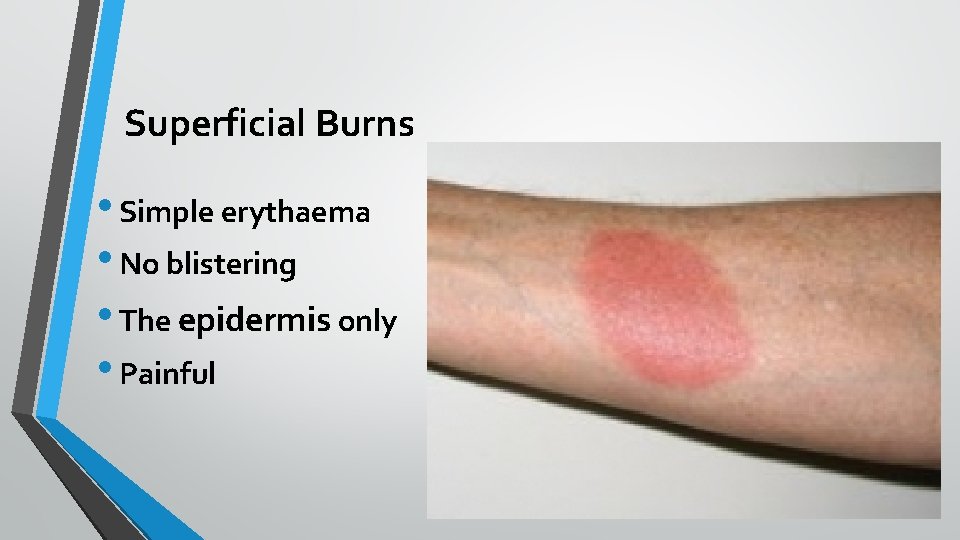
Superficial Burns • Simple erythaema • No blistering • The epidermis only • Painful
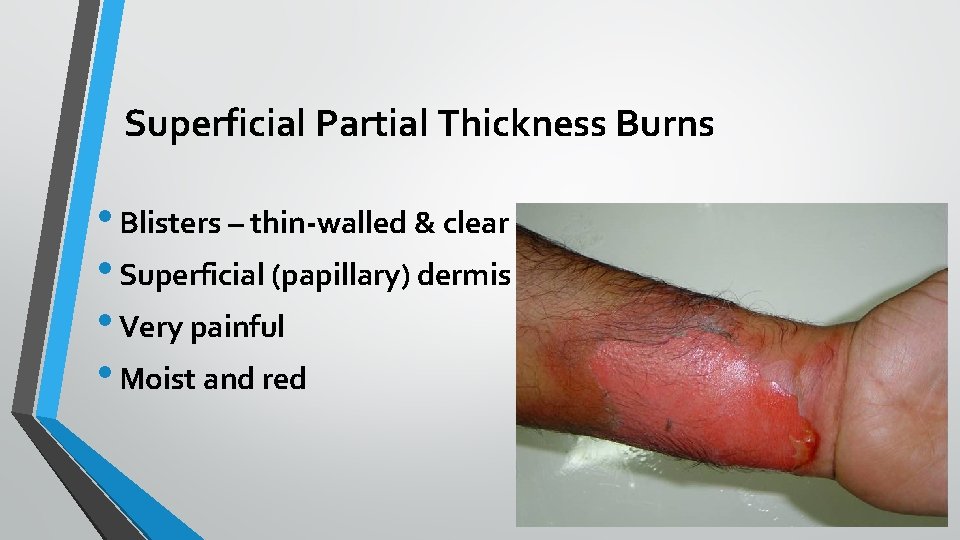
Superficial Partial Thickness Burns • Blisters – thin-walled & clear • Superficial (papillary) dermis • Very painful • Moist and red
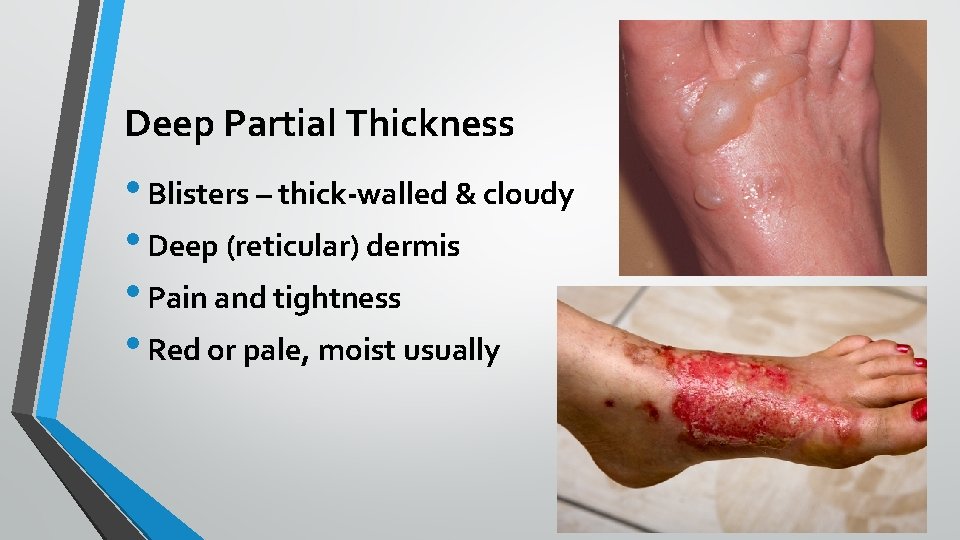
Deep Partial Thickness • Blisters – thick-walled & cloudy • Deep (reticular) dermis • Pain and tightness • Red or pale, moist usually
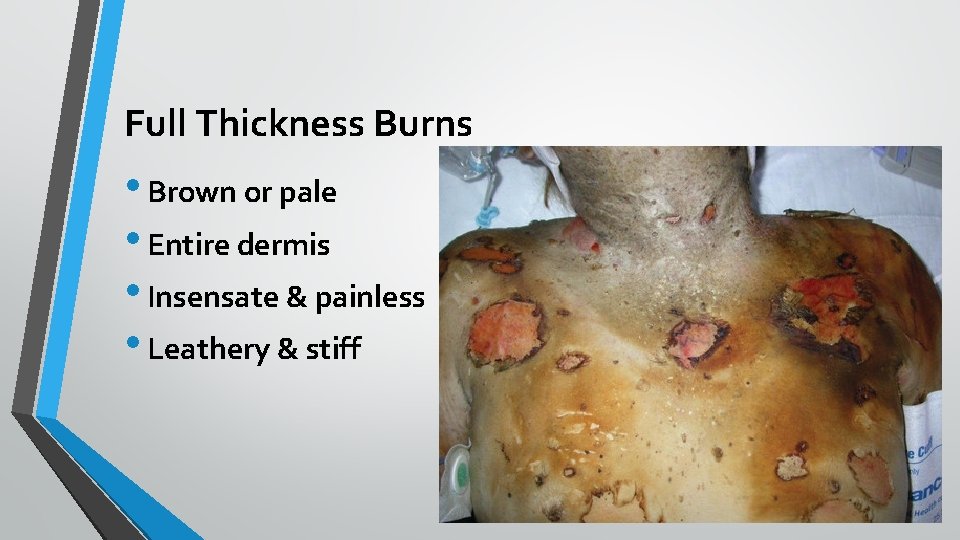
Full Thickness Burns • Brown or pale • Entire dermis • Insensate & painless • Leathery & stiff

Deep Burns • Black, charred • Skin & underlying structures • Painless • Dry & dead

Assessment of the Area • % TBSA • Relevant to resuscitation fluid volume • Relevant to prognosis • Relevant to severity of burn
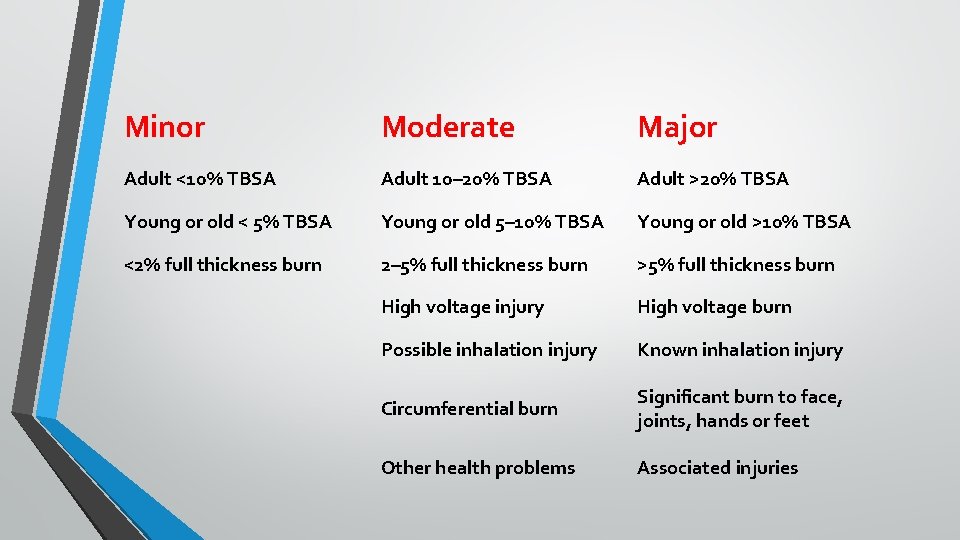
Minor Moderate Major Adult <10% TBSA Adult 10– 20% TBSA Adult >20% TBSA Young or old < 5% TBSA Young or old 5– 10% TBSA Young or old >10% TBSA <2% full thickness burn 2– 5% full thickness burn >5% full thickness burn High voltage injury High voltage burn Possible inhalation injury Known inhalation injury Circumferential burn Significant burn to face, joints, hands or feet Other health problems Associated injuries
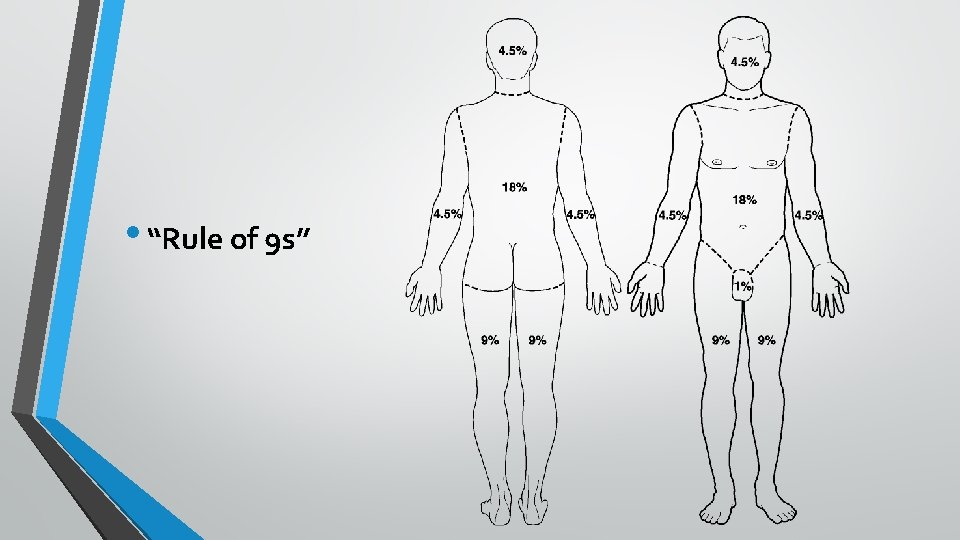
• “Rule of 9 s”
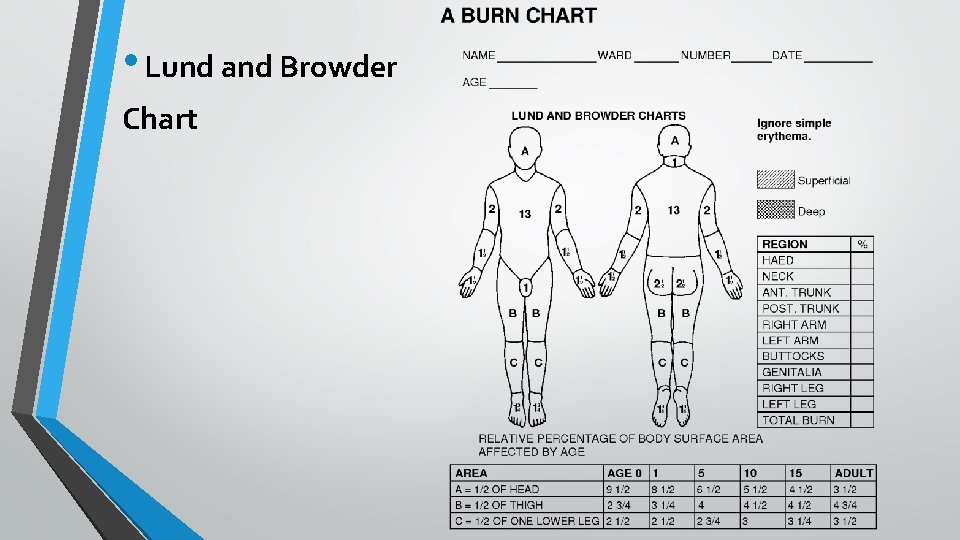
• Lund and Browder Chart
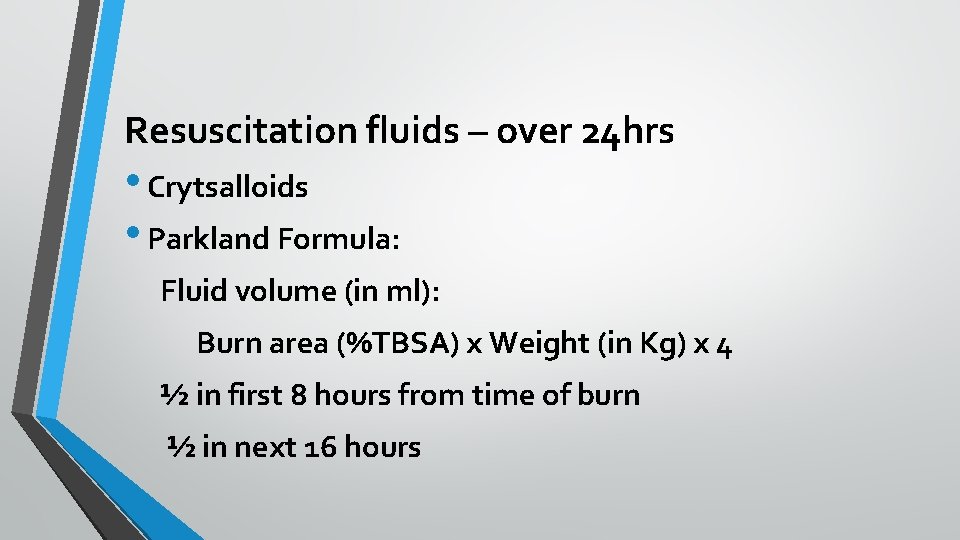
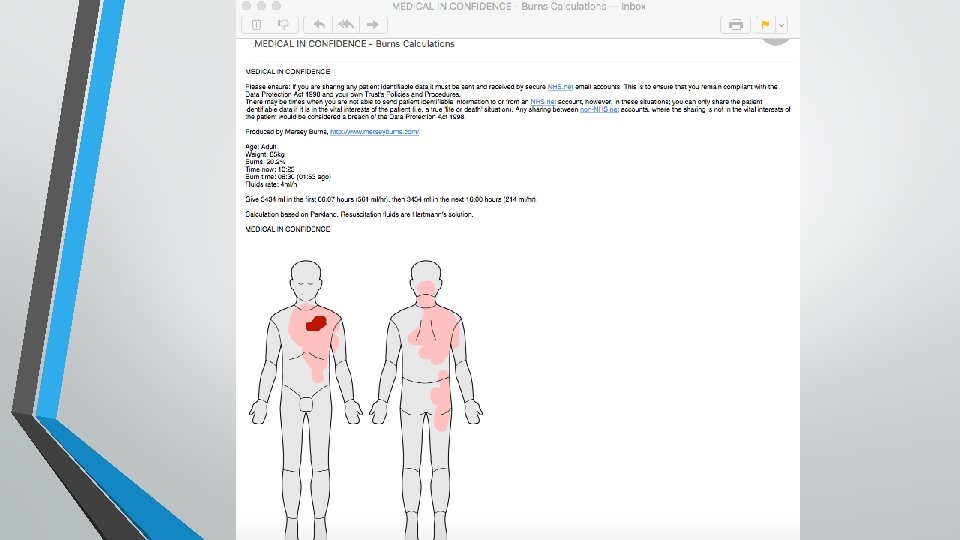
Resuscitation fluids – over 24 hrs • Crytsalloids • Parkland Formula: Fluid volume (in ml): Burn area (%TBSA) x Weight (in Kg) x 4 ½ in first 8 hours from time of burn ½ in next 16 hours
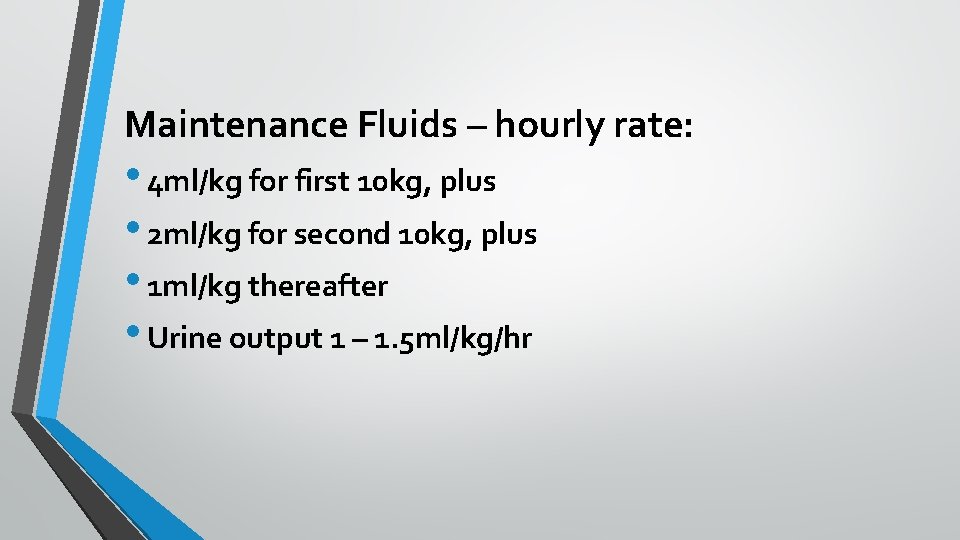
Maintenance Fluids – hourly rate: • 4 ml/kg for first 10 kg, plus • 2 ml/kg for second 10 kg, plus • 1 ml/kg thereafter • Urine output 1 – 1. 5 ml/kg/hr

Special Areas • Face / Airways • Hands • Feet • Genitalia • Perineum
Pre-Hospital Management • Stop the burning process • Cool the burn with cold running water • Only partial thickness, less than 10% TBSA • Cover with a clean dressing • Cling film • Specialist Burn Dressings, e. g. “Burn. Shield” • Seek medical advice
Resuscitation & Initial Management • Airway • Breathing • Circulation
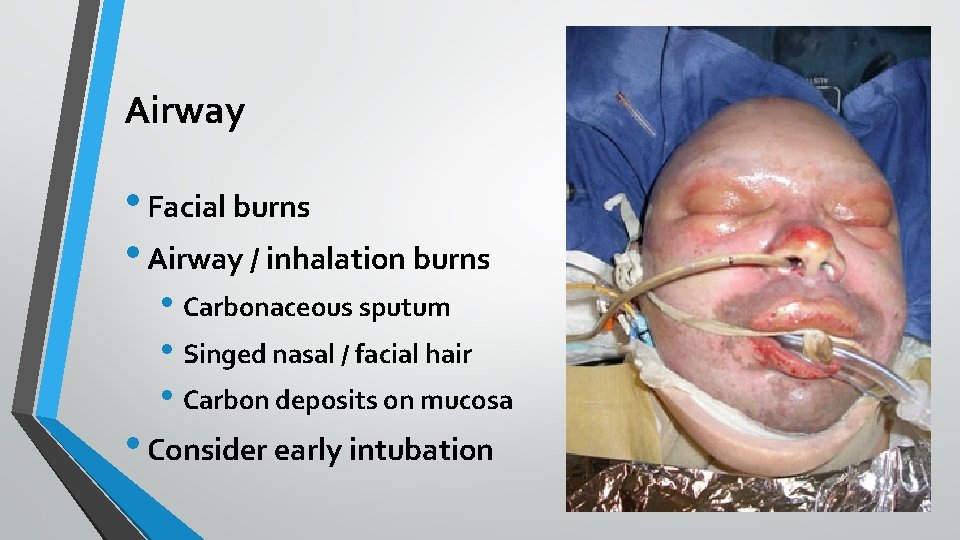
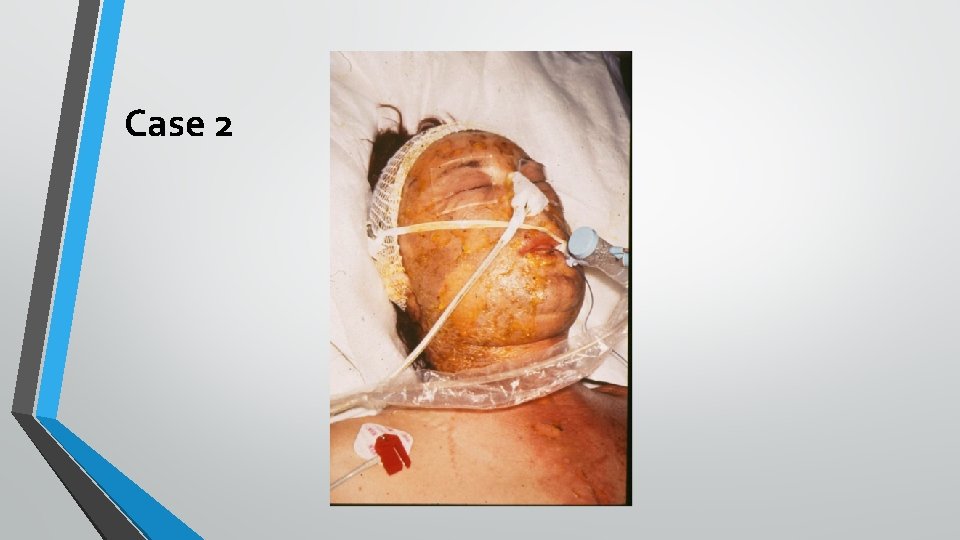
Airway • Facial burns • Airway / inhalation burns • Carbonaceous sputum • Singed nasal / facial hair • Carbon deposits on mucosa • Consider early intubation
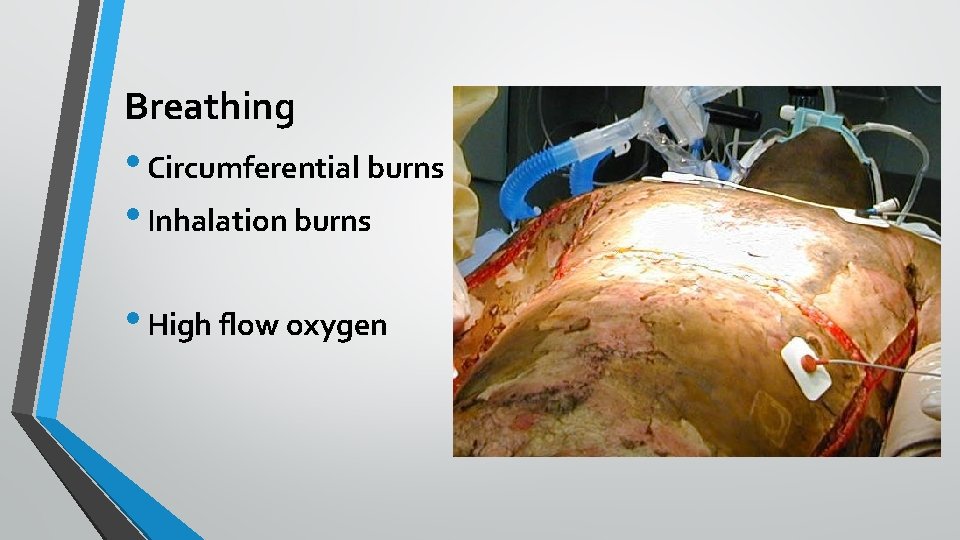
Breathing • Circumferential burns • Inhalation burns • High flow oxygen
Circulation • 2 large-bore cannulae • Fluid resuscitation • Urinary catheter • Nasogastric tube • IV Analgesia – opiates / ketamine
Further management • Dressing – non-adherent material • Prevent hypothermia • Referral to Burns Centre
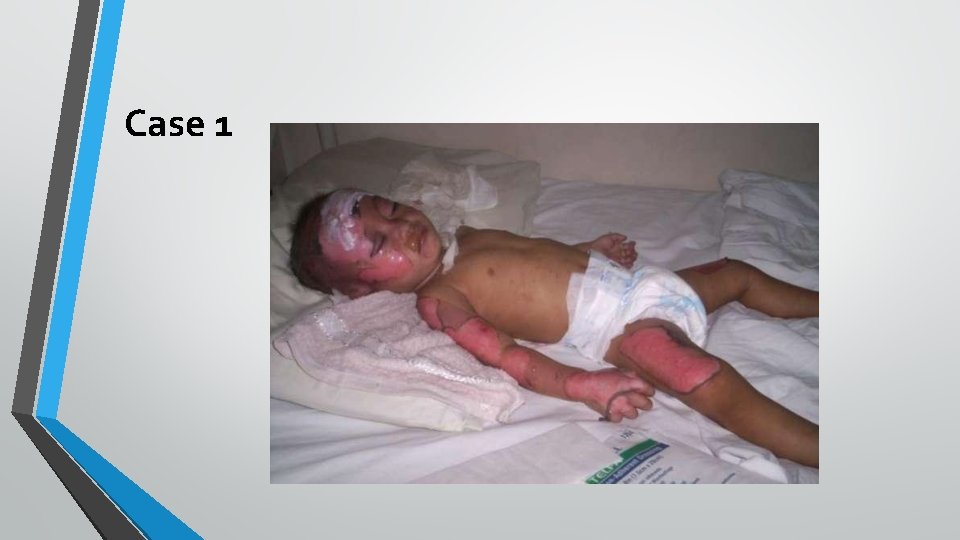
Case 1
Case 2

- Slides: 29