
The Influence of Water Control Structures on Rangeland
- Slides: 12
The Influence of Water Control Structures on Rangeland Vegetation Patterns Lauren Thompson Mentor: Mary Nichols, SWRC, USDA ARS Virtual Symposium 4/18/20
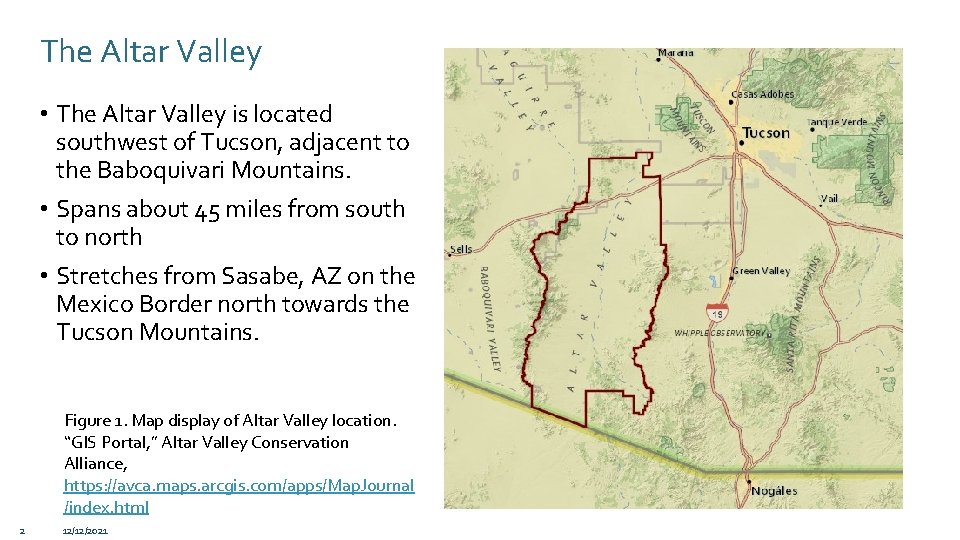
The Altar Valley • The Altar Valley is located southwest of Tucson, adjacent to the Baboquivari Mountains. • Spans about 45 miles from south to north • Stretches from Sasabe, AZ on the Mexico Border north towards the Tucson Mountains. Figure 1. Map display of Altar Valley location. “GIS Portal, ” Altar Valley Conservation Alliance, https: //avca. maps. arcgis. com/apps/Map. Journal /index. html 2 12/12/2021
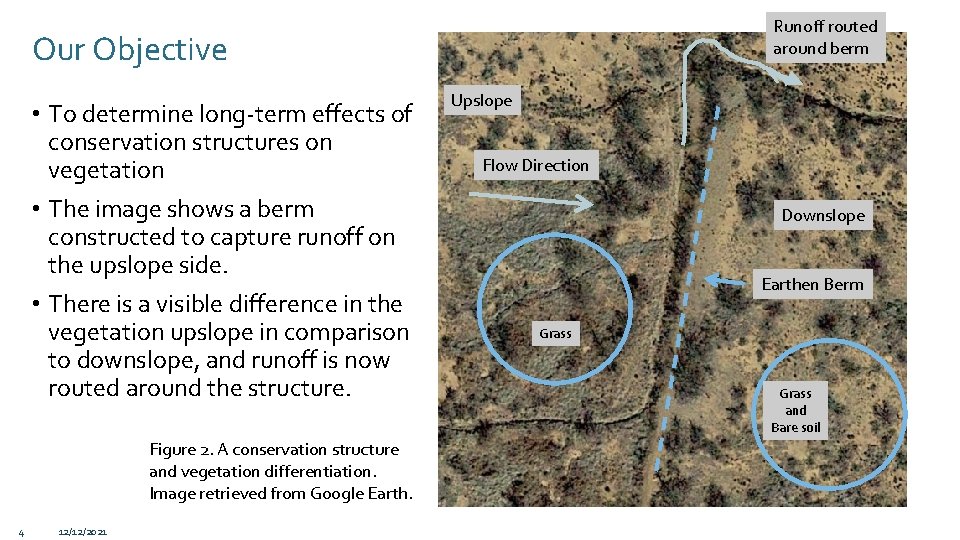
Statement of Problem • Until the late 1800 s, the Altar Valley saw little human occupation due to limited water sources. • Once well-drilling and pumping technology became available, people began to migrate to the area and develop cattle ranches. • A common practice amongst cattle ranchers is the use of conservation structures, such as earthen berms, to control rangeland erosion and runoff. • These earthen structures alter runoff patterns creating areas of greater moisture upslope while drying other areas. If not maintained, the structures can cause channel incision and erosion. 3 12/12/2021
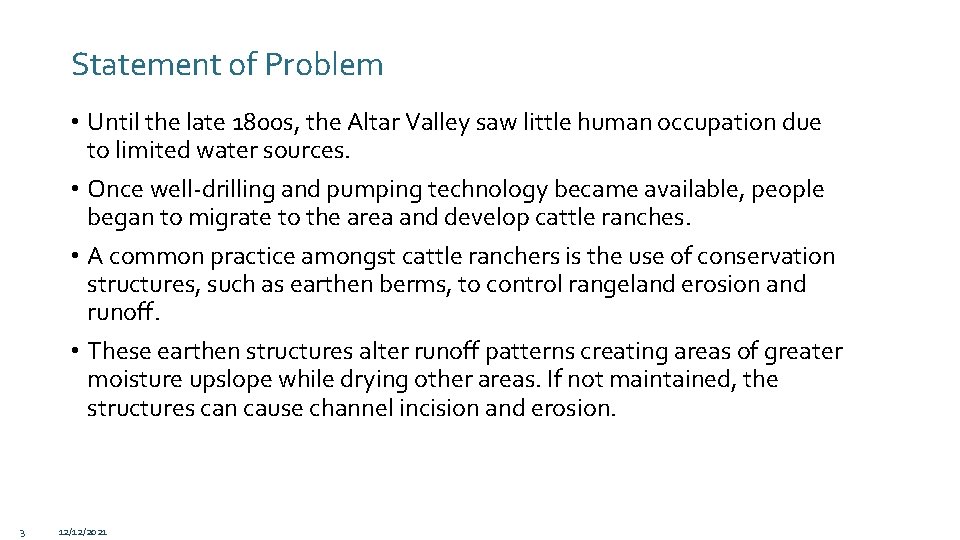
Runoff routed around berm Our Objective • To determine long-term effects of conservation structures on vegetation • The image shows a berm constructed to capture runoff on the upslope side. • There is a visible difference in the vegetation upslope in comparison to downslope, and runoff is now routed around the structure. Figure 2. A conservation structure and vegetation differentiation. Image retrieved from Google Earth. 4 12/12/2021 Upslope Flow Direction Downslope Earthen Berm Grass and Bare soil
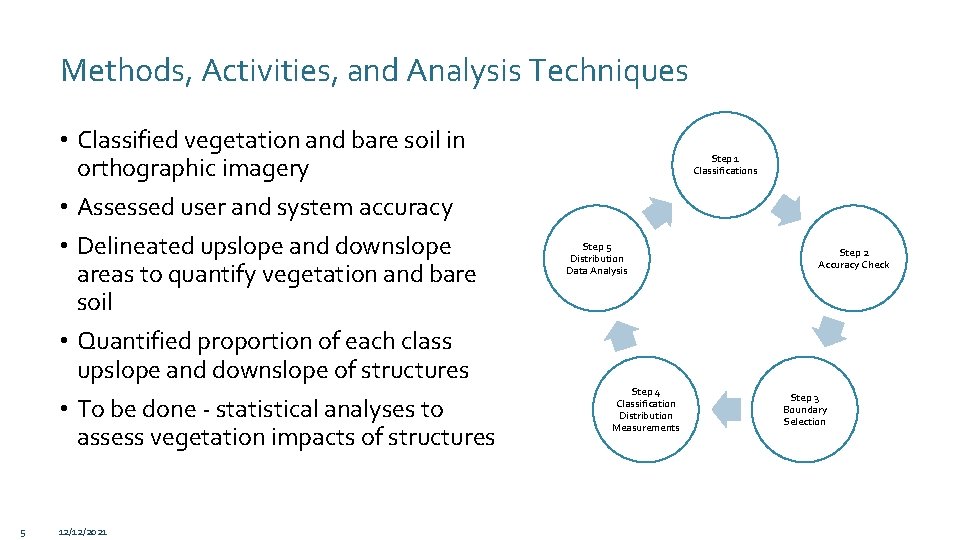
Methods, Activities, and Analysis Techniques • Classified vegetation and bare soil in orthographic imagery • Assessed user and system accuracy • Delineated upslope and downslope areas to quantify vegetation and bare soil • Quantified proportion of each class upslope and downslope of structures • To be done - statistical analyses to assess vegetation impacts of structures 5 12/12/2021 Step 1 Classifications Step 5 Distribution Data Analysis Step 4 Classification Distribution Measurements Step 2 Accuracy Check Step 3 Boundary Selection
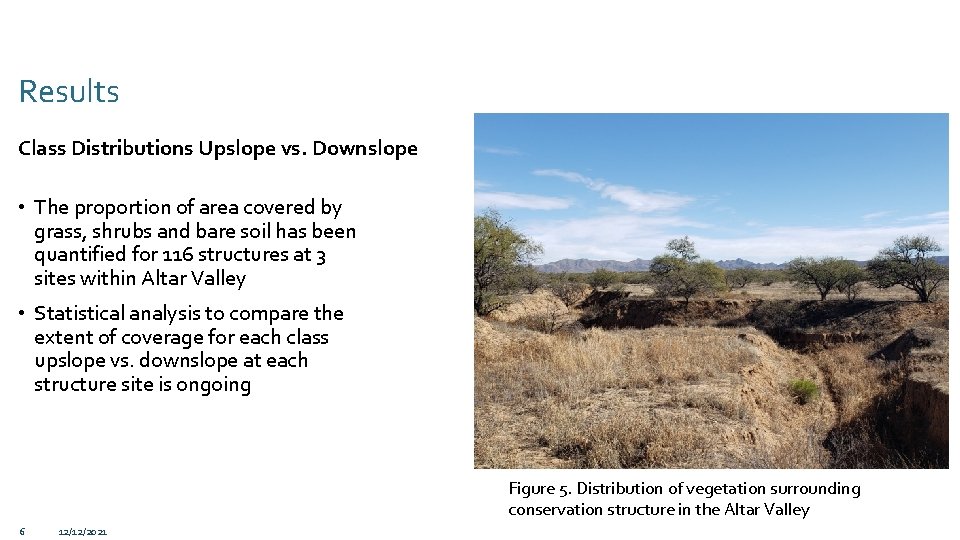
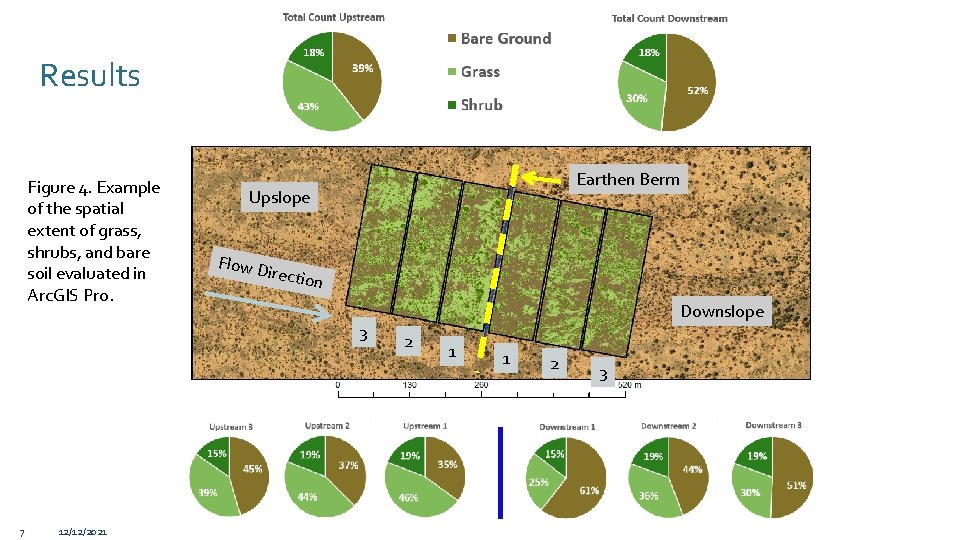
Results Class Distributions Upslope vs. Downslope • The proportion of area covered by grass, shrubs and bare soil has been quantified for 116 structures at 3 sites within Altar Valley • Statistical analysis to compare the extent of coverage for each class upslope vs. downslope at each structure site is ongoing Figure 5. Distribution of vegetation surrounding conservation structure in the Altar Valley 6 12/12/2021
Results Figure 4. Example of the spatial extent of grass, shrubs, and bare soil evaluated in Arc. GIS Pro. Earthen Berm Upslope Flow D irectio n 3 7 12/12/2021 Downslope 2 1 1 2 3
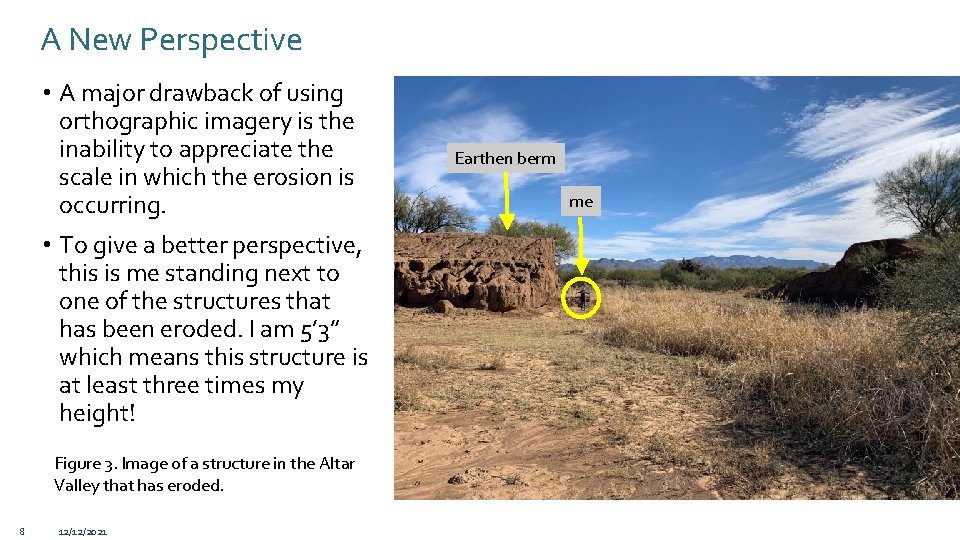
A New Perspective • A major drawback of using orthographic imagery is the inability to appreciate the scale in which the erosion is occurring. • To give a better perspective, this is me standing next to one of the structures that has been eroded. I am 5’ 3” which means this structure is at least three times my height! Figure 3. Image of a structure in the Altar Valley that has eroded. 8 12/12/2021 Earthen berm me
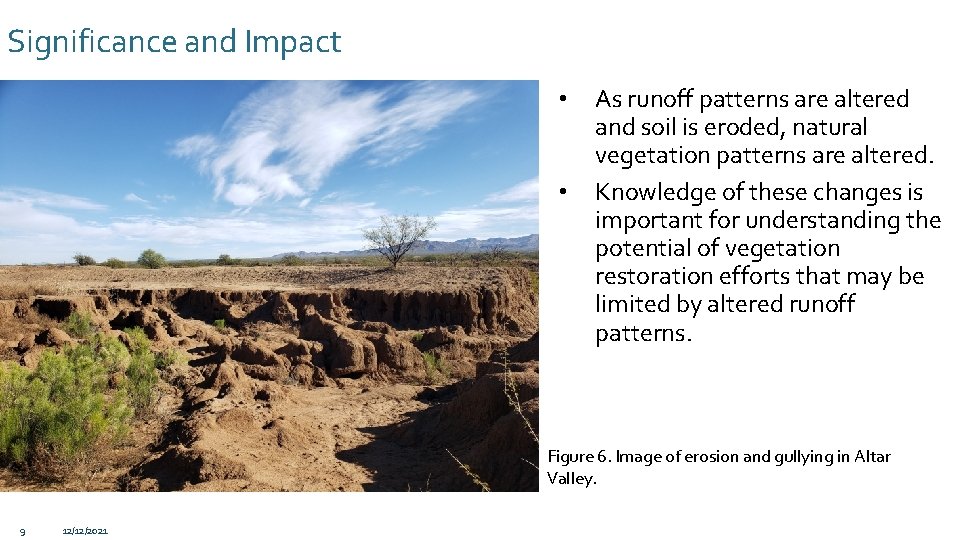
Significance and Impact • • As runoff patterns are altered and soil is eroded, natural vegetation patterns are altered. Knowledge of these changes is important for understanding the potential of vegetation restoration efforts that may be limited by altered runoff patterns. Figure 6. Image of erosion and gullying in Altar Valley. 9 12/12/2021
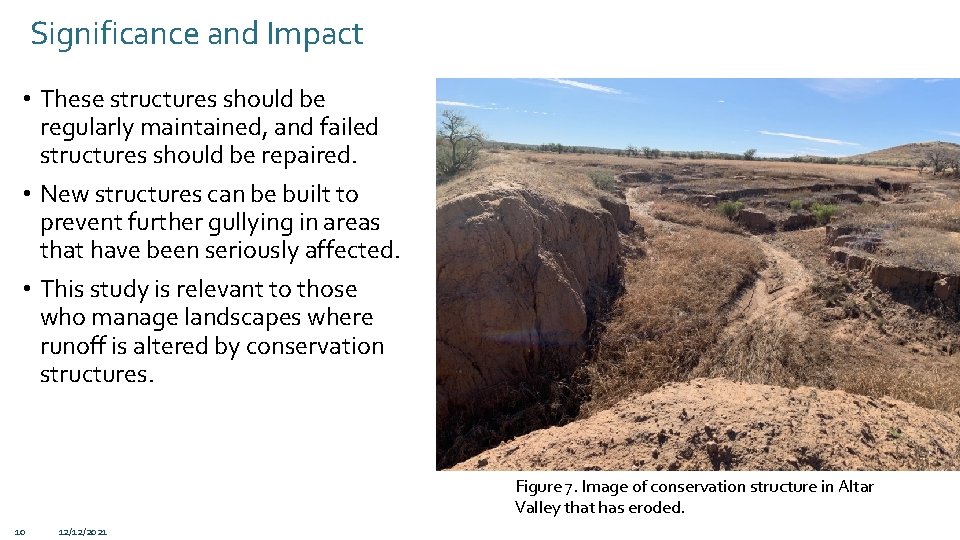
Significance and Impact • These structures should be regularly maintained, and failed structures should be repaired. • New structures can be built to prevent further gullying in areas that have been seriously affected. • This study is relevant to those who manage landscapes where runoff is altered by conservation structures. Figure 7. Image of conservation structure in Altar Valley that has eroded. 10 12/12/2021
Acknowledgments • Dr. Mary Nichols • Michelle Cavanaugh • Dr. Chandra Holifield Collins • UA NASA Space Grant Program 11 12/12/2021
Thank You