
The Influence of Neighboring Cultures on Japan 500
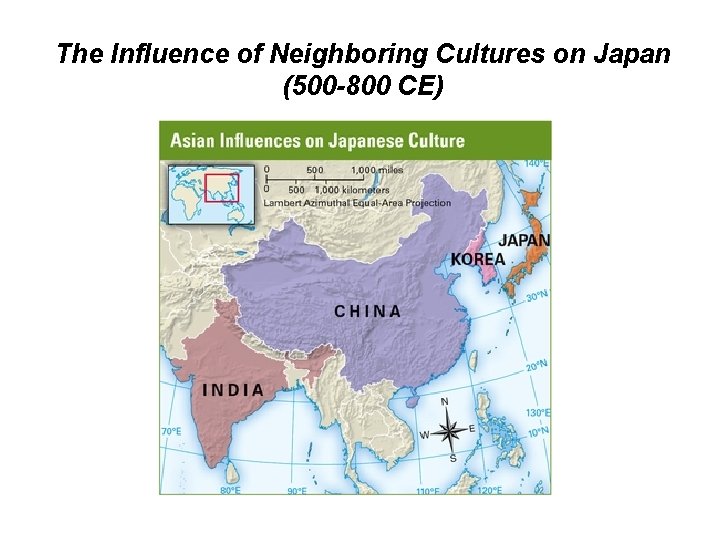
The Influence of Neighboring Cultures on Japan (500 -800 CE)
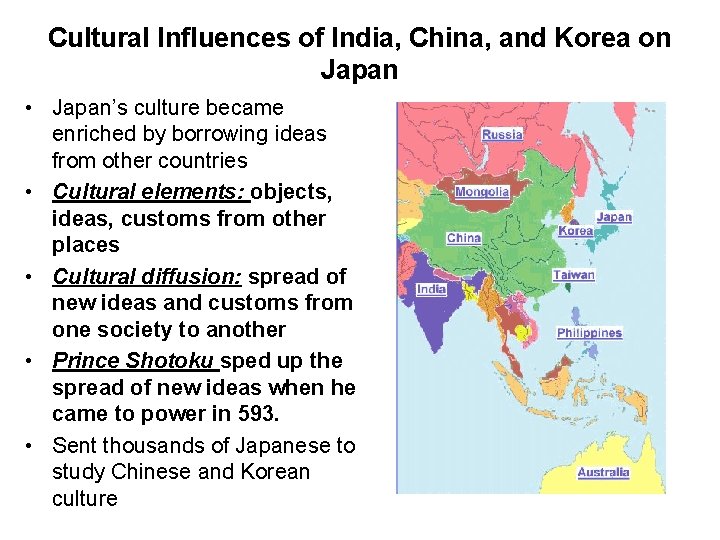
Cultural Influences of India, China, and Korea on Japan • Japan’s culture became enriched by borrowing ideas from other countries • Cultural elements: objects, ideas, customs from other places • Cultural diffusion: spread of new ideas and customs from one society to another • Prince Shotoku sped up the spread of new ideas when he came to power in 593. • Sent thousands of Japanese to study Chinese and Korean culture
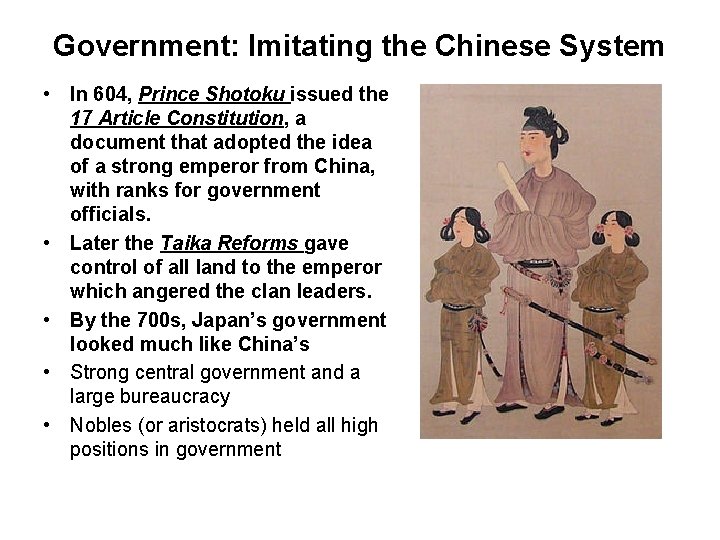
Government: Imitating the Chinese System • In 604, Prince Shotoku issued the 17 Article Constitution, a document that adopted the idea of a strong emperor from China, with ranks for government officials. • Later the Taika Reforms gave control of all land to the emperor which angered the clan leaders. • By the 700 s, Japan’s government looked much like China’s • Strong central government and a large bureaucracy • Nobles (or aristocrats) held all high positions in government
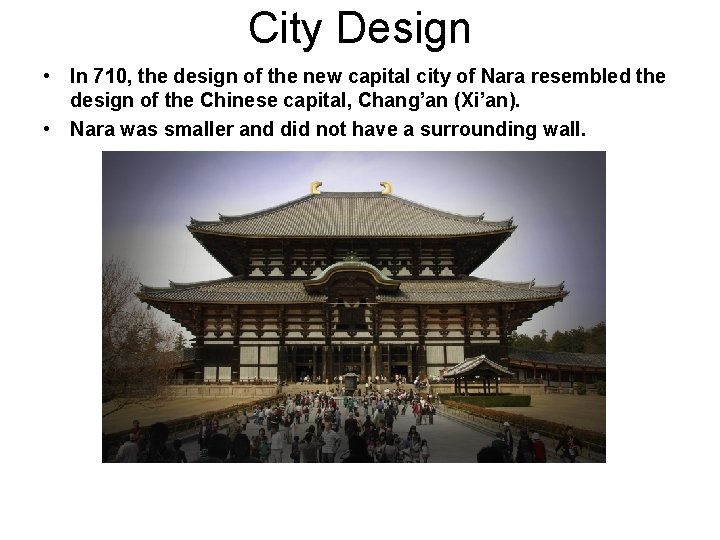
City Design • In 710, the design of the new capital city of Nara resembled the design of the Chinese capital, Chang’an (Xi’an). • Nara was smaller and did not have a surrounding wall.
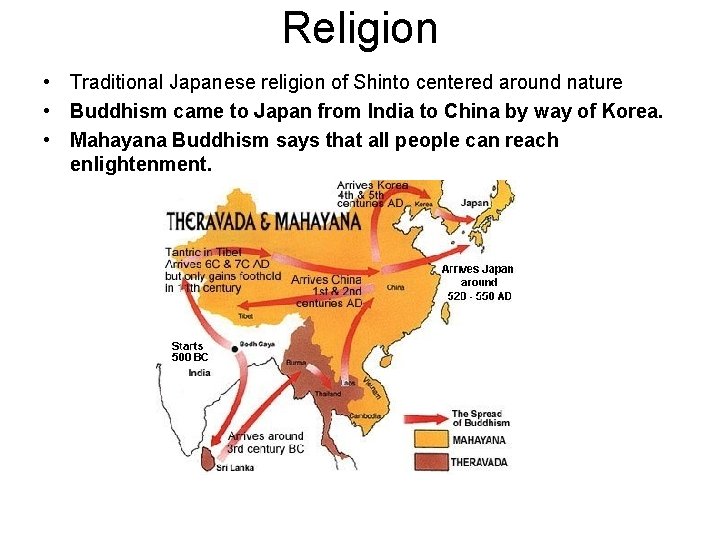
Religion • Traditional Japanese religion of Shinto centered around nature • Buddhism came to Japan from India to China by way of Korea. • Mahayana Buddhism says that all people can reach enlightenment.
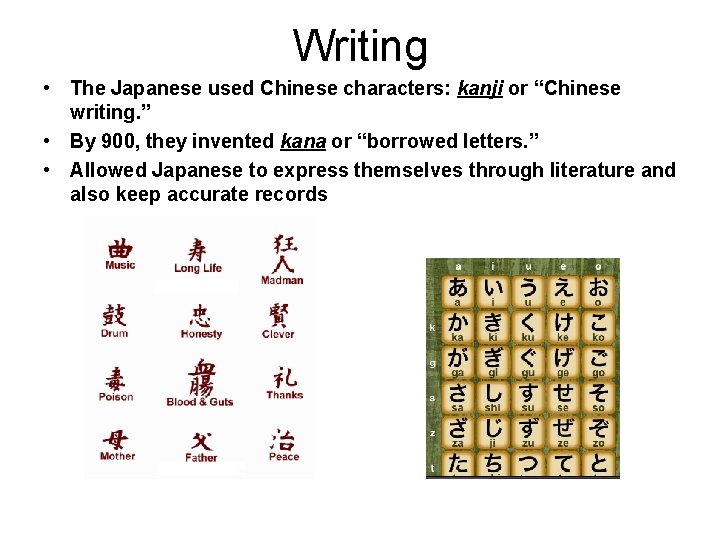
Writing • The Japanese used Chinese characters: kanji or “Chinese writing. ” • By 900, they invented kana or “borrowed letters. ” • Allowed Japanese to express themselves through literature and also keep accurate records
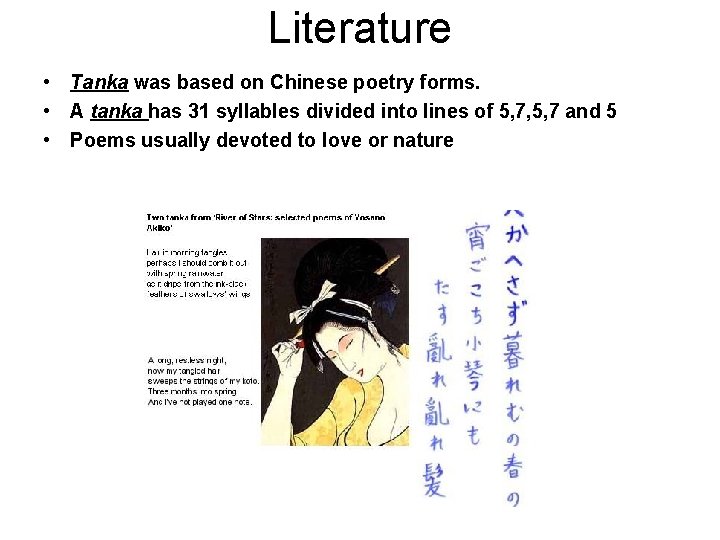
Literature • Tanka was based on Chinese poetry forms. • A tanka has 31 syllables divided into lines of 5, 7, 5, 7 and 5 • Poems usually devoted to love or nature
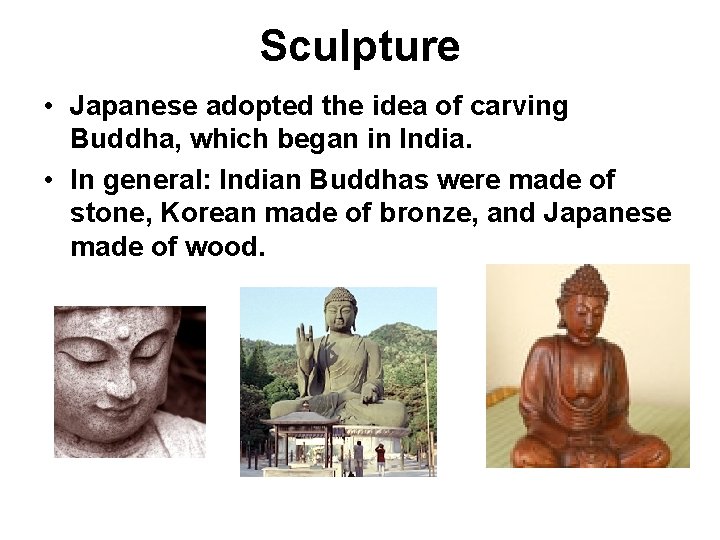
Sculpture • Japanese adopted the idea of carving Buddha, which began in India. • In general: Indian Buddhas were made of stone, Korean made of bronze, and Japanese made of wood.
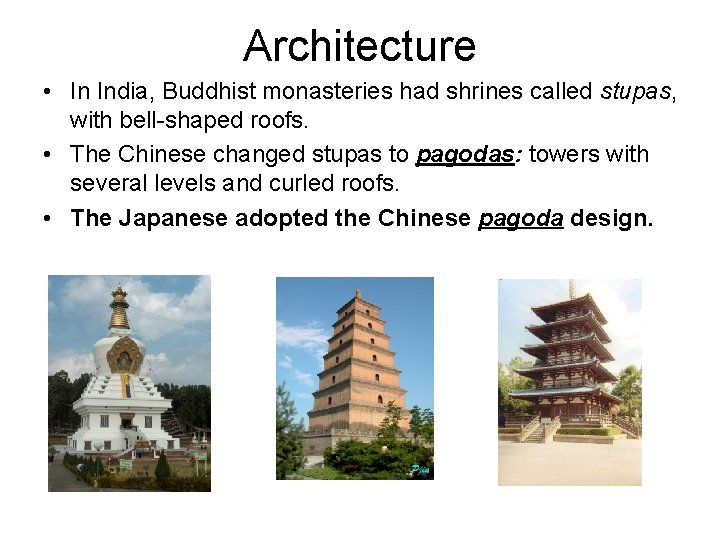
Architecture • In India, Buddhist monasteries had shrines called stupas, with bell-shaped roofs. • The Chinese changed stupas to pagodas: towers with several levels and curled roofs. • The Japanese adopted the Chinese pagoda design.
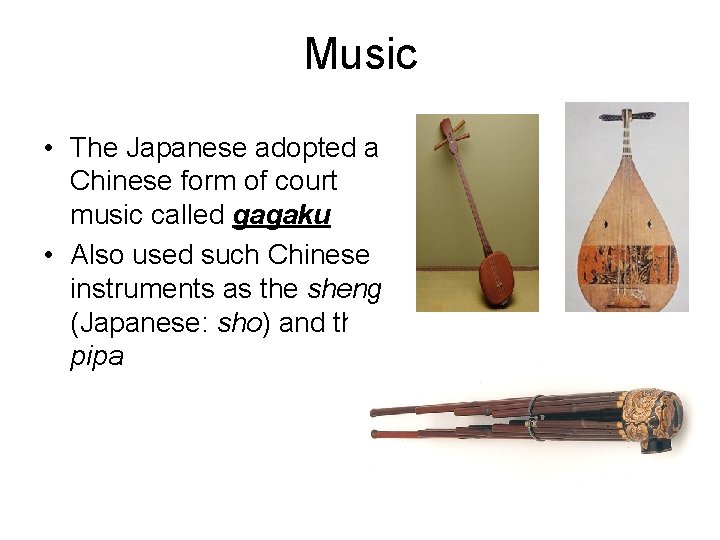
Music • The Japanese adopted a Chinese form of court music called gagaku • Also used such Chinese instruments as the sheng (Japanese: sho) and the pipa
Re-Cap • 500 -800 CE Japan became enriched by neighboring countries • Cultural diffusion = spread of new ideas and customs from one society to another • New ideas about government, architecture, religion, writing, literature, art, and music influenced Japan

Review and Summary Review • Read back over your notes • Use a different color to review your notes: – underline important points – highlight key details – put a star next to potential test questions – Create 2 -3 test questions in left hand column Summary • In 4 -5 sentences, explain the key takeaways from the notes: – Most important details – Main ideas • Answer the essential question: “How did neighboring countries influence Japan? ”

Group Assignment • Using the textbook and your notes, decide which new idea had the biggest impact on Japan during this period. • Create a small poster that does the following: – illustrates the idea, – Lists 3 facts about it – States your reasoning for why your group chose it (most important part!) • Reporter will then “report” out to the class the group’s findings
- Slides: 13