
The Industrialization of America The Second Industrial Revolution
- Slides: 9
The Industrialization of America
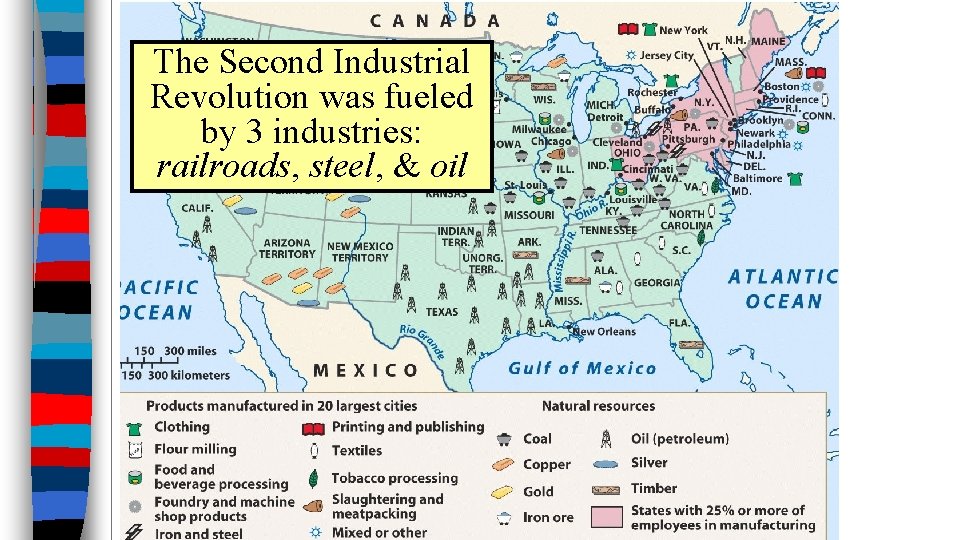
The Second Industrial Revolution was fueled by 3 industries: railroads, steel, & oil
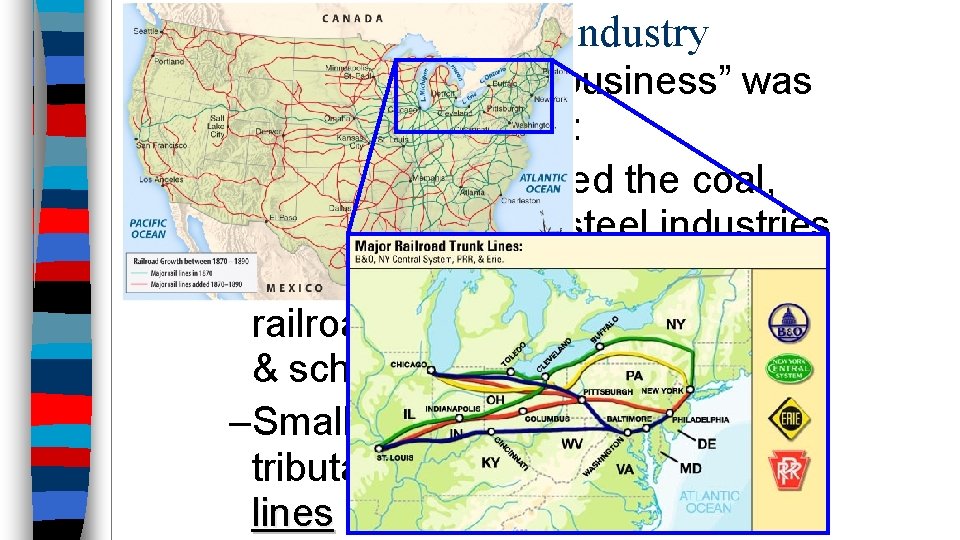
The Railroad Industry ■ America’s first “big business” was the railroad industry: –Railroads stimulated the coal, petroleum, & iron/steel industries –Large companies bought small railroads, standardized gauges & schedules, & pooled cars –Small lines in the east acted as tributaries to the 4 great trunk lines into the West
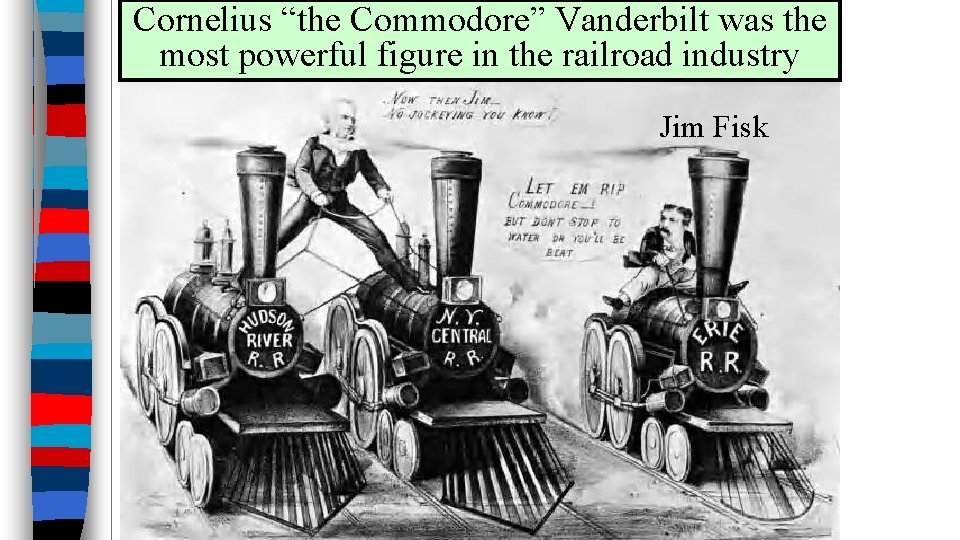
Cornelius “the Commodore” Vanderbilt was the most powerful figure in the railroad industry Jim Fisk
Problems of Growth Speculators like Jay Gould built & bought rail lines to profit faced with ■ But, the railroad industry little concern foroverbuilding efficient use in problems due to the 1870 s & 1880 s: –Mass competition among RRs –RR lines offered special rates & rebates (secret discounts) to lure passengers & freight on their lines –Pooling & consolidation failed to help over-speculation
Problems of Growth ■ RR bosses asked bank financier J. P. Morgan to save their industry: –Morgan created a traffic-sharing plan to end wasteful competition –“Morganization” Morganization fixed costs, cut debt, stabilized rates, issued new stock, & ended rebates –Created a “board of trustees” ■ By 1900, 7 giant (centralized & efficient) rail systems dominated
Gov’t Regulation of Industry ■ From 1870 to 1900, 28 state commissions were created to regulate industry, especially RRs: –In 1870, Illinois declared RRs to be public highways; this was upheld by Munn v. Illinois (1876) –But, was overturned in Wabash v. Illinois (1886): “only Congress can regulate interstate trade”
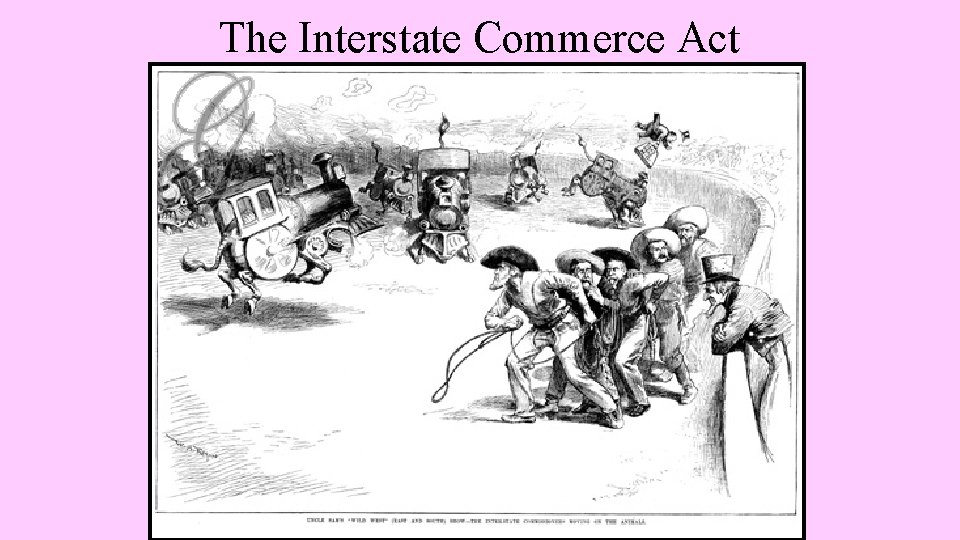
This was the 1 st attempt The ICC became the Tariffs Trusts by the federal gov’t to &model for future regulate big business regulatory agencies ■ Congress responded by creating: –The Interstate Commerce Commission (ICC) in 1887 to regulate the railroad industry
The Interstate Commerce Act