
THE INDUSTRIAL REVOLUTION The Industrial Revolution began in
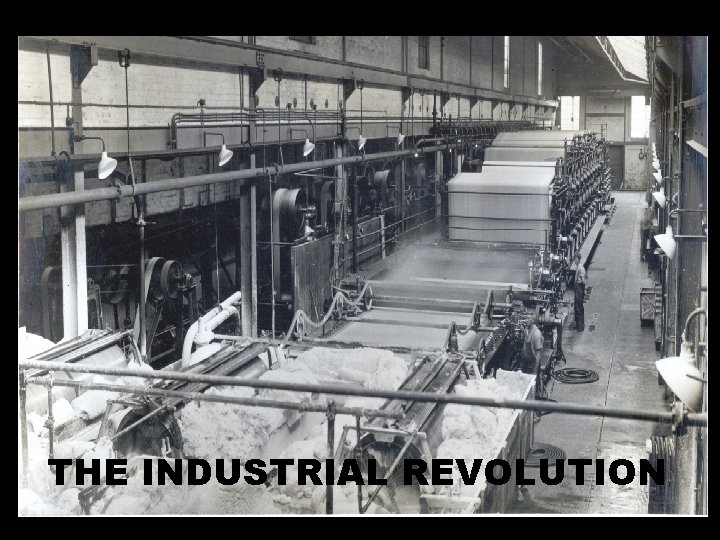
THE INDUSTRIAL REVOLUTION
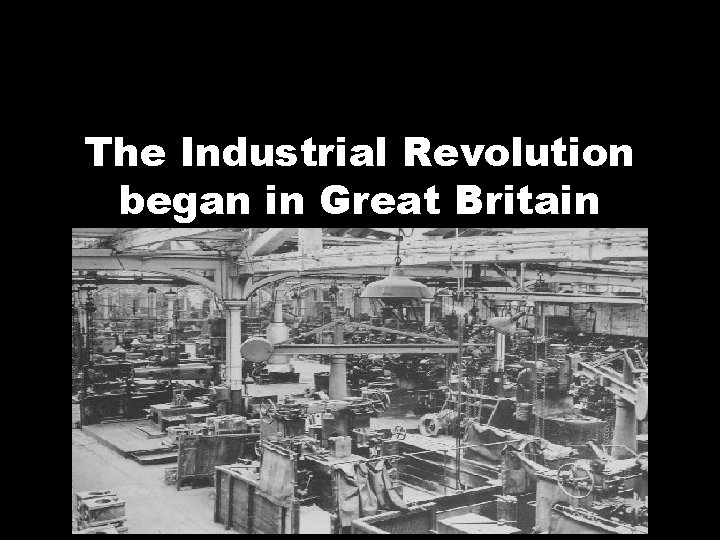
The Industrial Revolution began in Great Britain
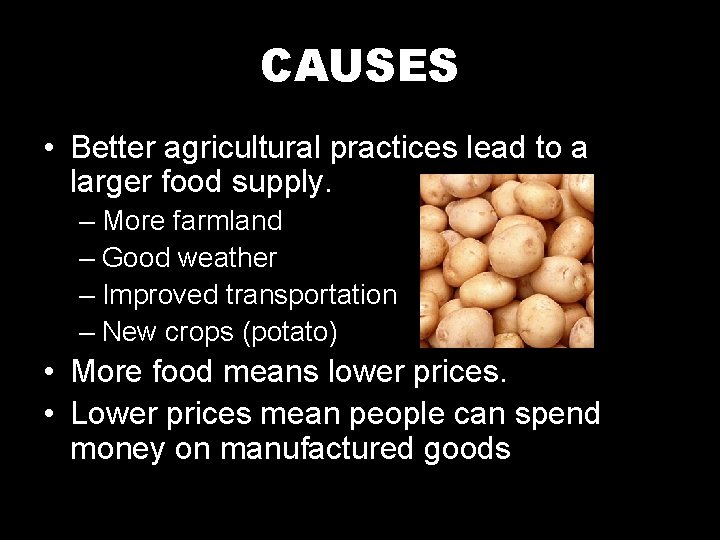
CAUSES • Better agricultural practices lead to a larger food supply. – More farmland – Good weather – Improved transportation – New crops (potato) • More food means lower prices. • Lower prices mean people can spend money on manufactured goods
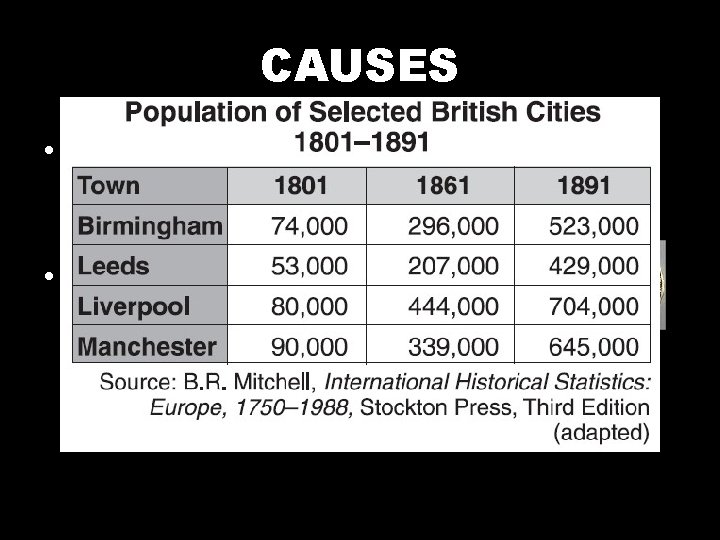
CAUSES • Growth in Population – More people means more demand – More people means more workers • Capital to Invest in Machines and Factories – Many British are wealthy – Entrepreneur – looking for new business opportunities and ways of making profits
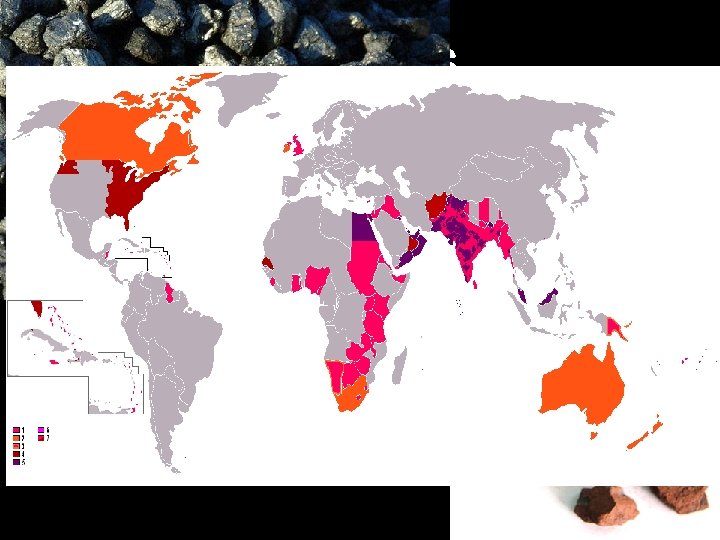
CAUSES • Great Britain has Abundant Natural Resources – Good rivers that supply water power as well as transportation – Coal – Iron Ore • Great Britain has a Supply of Markets – Vast colonial empire – Domestic markets – more demand in Great Britain
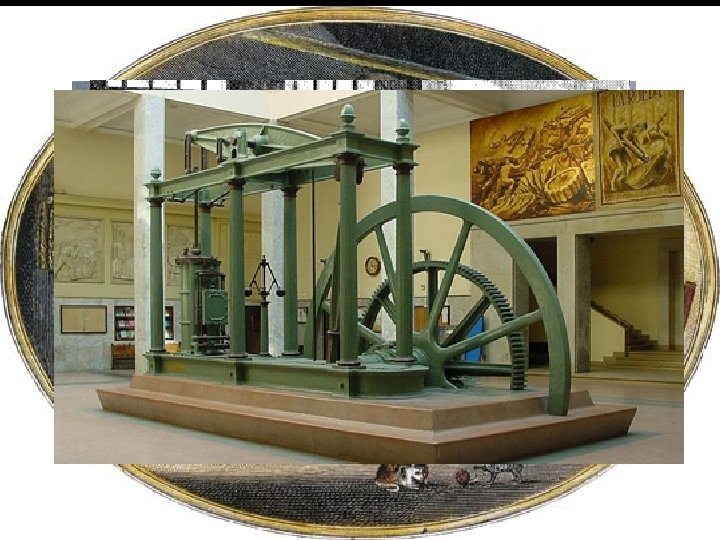
CHANGES IN PRODUCTION • Cottage Industry is replaced with automation – Edmund Cartwright (1787) I invented a water powered loom (weave). Workers go to the water – James Hargraves invented the “spinning jenny” (thread) – James Watt invented a steam powered engine – powered by coal – Great Britain becomes the leading cotton producer in the world
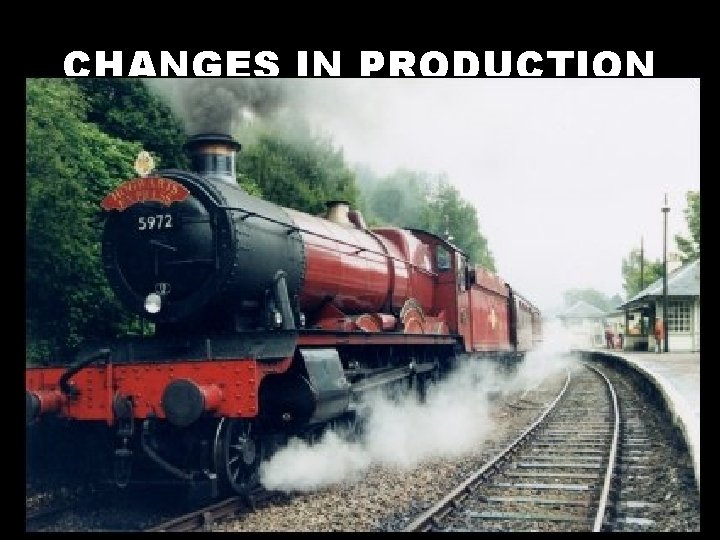
CHANGES IN PRODUCTION • Coal and Iron – Coal powered the steam engines – Steam engines required iron – Railroad tracks required iron • Railroads – – Important to the success of the Industrial Revolution Allowed mass goods to be transported 1804 – First steam locomotive Building tracks created new jobs for farm laborers and peasants
RESULTS • Great Britain is the first industrialized nation and richest nation – Produced ½ the worlds coal – Produced ½ the worlds manufactured goods – Great Britain was the world’s leading cotton producer • Industrial Revolution Spreads – To Western Europe – To North America
RESULTS • Growth of Cities and Population – European population in 1750 = 140 million – European population in 1850 = 266 million • Decline in death rates –wars, disease, plague • Increase in food supply – City Growth • Factories are located in cities • People leave the farms and move to the city looking for jobs
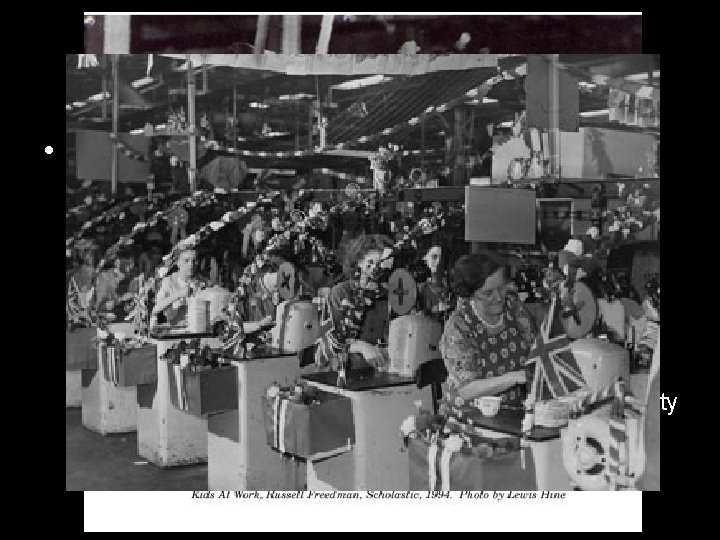
RESULTS • Social Classes – Industrial Middle Class – Bourgeoisie • Made up of factory owners, machine owners who search for markets • Desire to make money! – Industrial Working Class • Factory workers • Poor working conditions, hours, wages, job security – especially for women and children
Socialism • Socialism is when a society or government owns or controls the means of production such as factories or utilities. • The conditions experienced by the Working Middle Class prompted some intellectuals to want to replace competition with cooperation. • Several attempts at a Utopian society failed.
- Slides: 11