
The Industrial Revolution Section 1 The Industrial Revolution
- Slides: 16
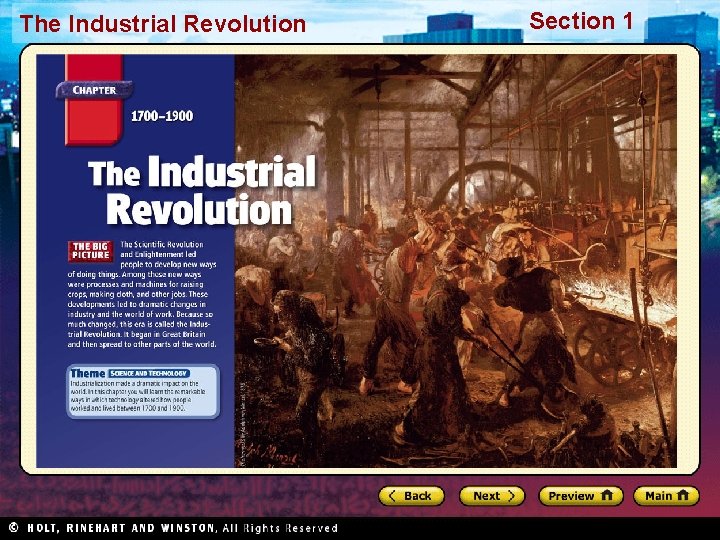
The Industrial Revolution Section 1
The Industrial Revolution Section 1 A New Kind of Revolution Main Idea In the 1700 s conditions in Great Britain led to the rapid growth of the textile industry (woven fabric), which in turn led to huge changes in many other industries. Reading Focus • Why did the Industrial Revolution begin in Great Britain? • How did the Agricultural Rev. lead to the Industrial Rev. ? • How did industrialization cause a revolution in the production of textiles? • How did steam power the Industrial Revolution? • Where did industrialization spread beyond Great Britain?
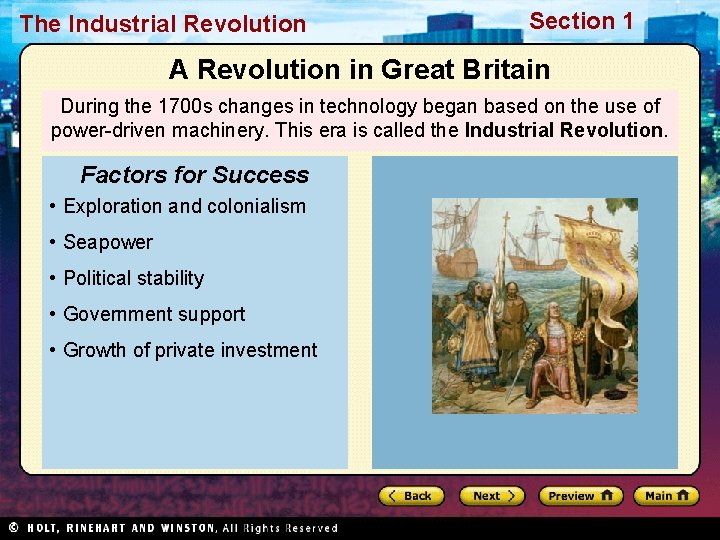
The Industrial Revolution Section 1 A Revolution in Great Britain During the 1700 s changes in technology began based on the use of power-driven machinery. This era is called the Industrial Revolution. Factors for Success • Exploration and colonialism • Seapower • Political stability • Government support • Growth of private investment
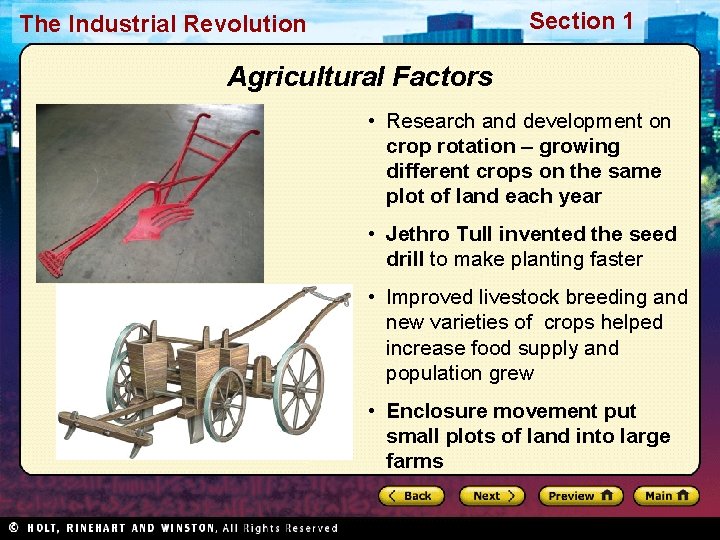
Section 1 The Industrial Revolution Agricultural Factors • Research and development on crop rotation – growing different crops on the same plot of land each year • Jethro Tull invented the seed drill to make planting faster • Improved livestock breeding and new varieties of crops helped increase food supply and population grew • Enclosure movement put small plots of land into large farms
The Industrial Revolution Section 1 Britain’s Big Advantage The Industrial Revolution began in Great Britain. • Had essential elements for economic success • Factors of production – Land resources grew with new colonies – Labor moved from small farms into cities – Capital investment grew as merchants used banks
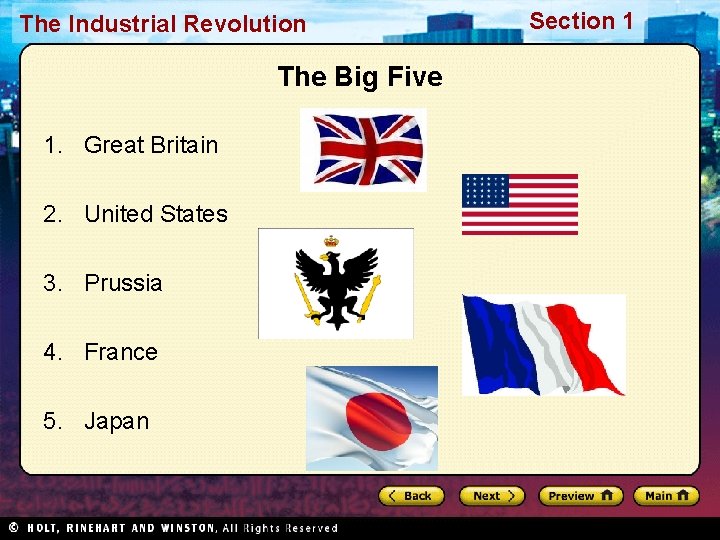
The Industrial Revolution The Big Five 1. Great Britain 2. United States 3. Prussia 4. France 5. Japan Section 1
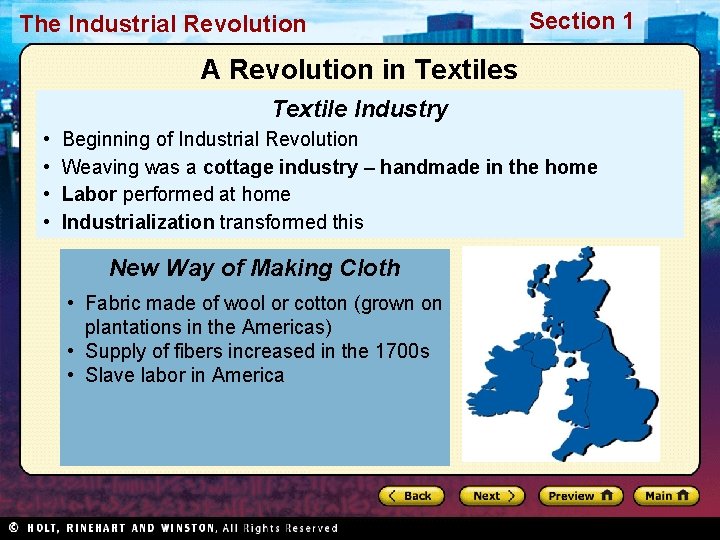
The Industrial Revolution Section 1 A Revolution in Textiles Textile Industry • • Beginning of Industrial Revolution Weaving was a cottage industry – handmade in the home Labor performed at home Industrialization transformed this New Way of Making Cloth • Fabric made of wool or cotton (grown on plantations in the Americas) • Supply of fibers increased in the 1700 s • Slave labor in America
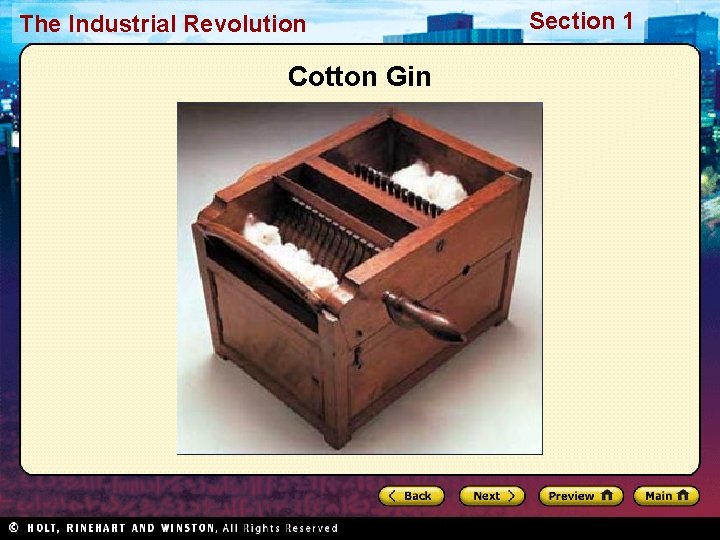
The Industrial Revolution Cotton Gin Section 1
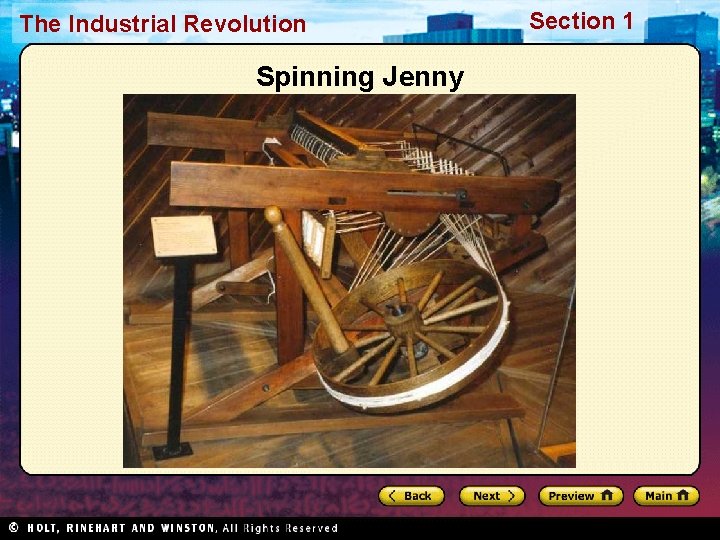
The Industrial Revolution Spinning Jenny Section 1
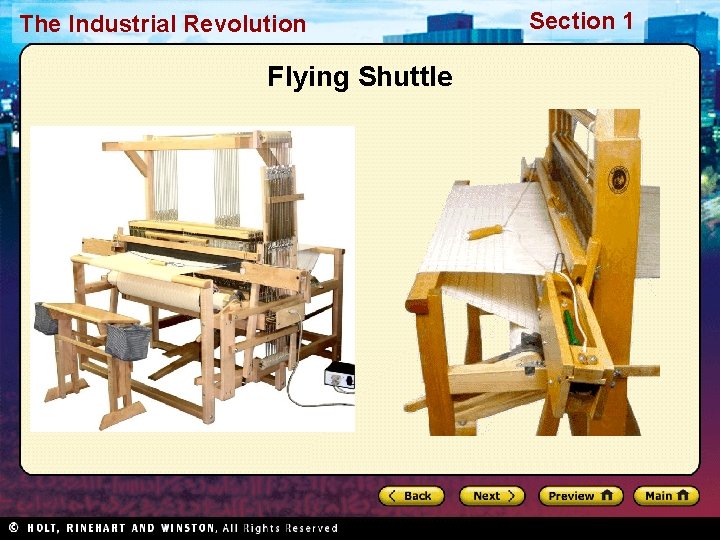
The Industrial Revolution Flying Shuttle Section 1
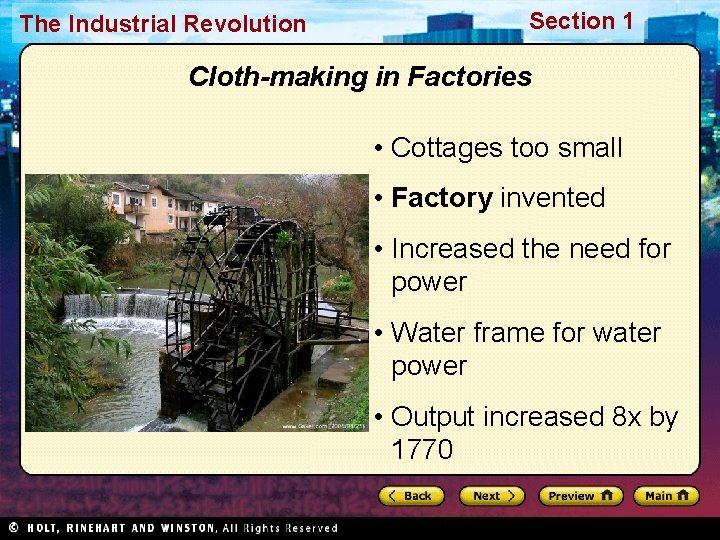
The Industrial Revolution Section 1 Cloth-making in Factories • Cottages too small • Factory invented • Increased the need for power • Water frame for water power • Output increased 8 x by 1770
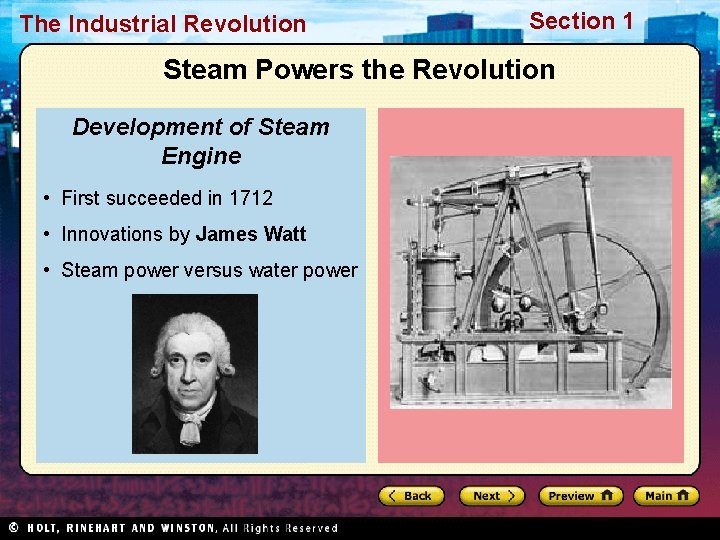
The Industrial Revolution Section 1 Steam Powers the Revolution Development of Steam Engine • First succeeded in 1712 • Innovations by James Watt • Steam power versus water power
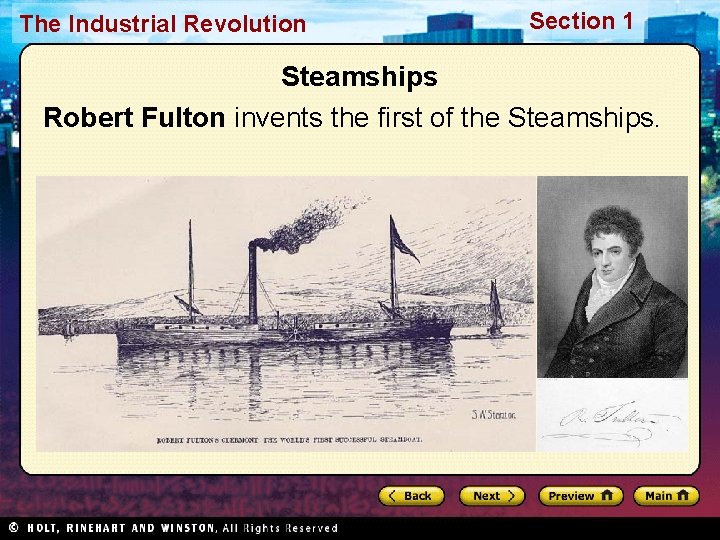
The Industrial Revolution Section 1 Steamships Robert Fulton invents the first of the Steamships.
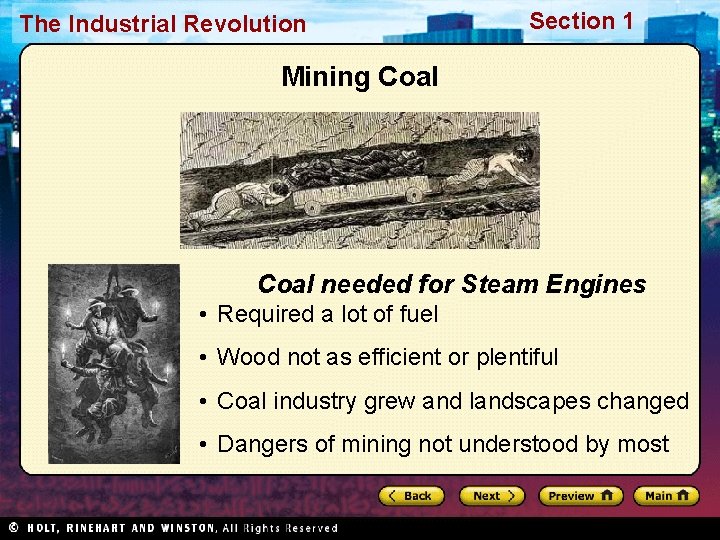
The Industrial Revolution Section 1 Mining Coal needed for Steam Engines • Required a lot of fuel • Wood not as efficient or plentiful • Coal industry grew and landscapes changed • Dangers of mining not understood by most
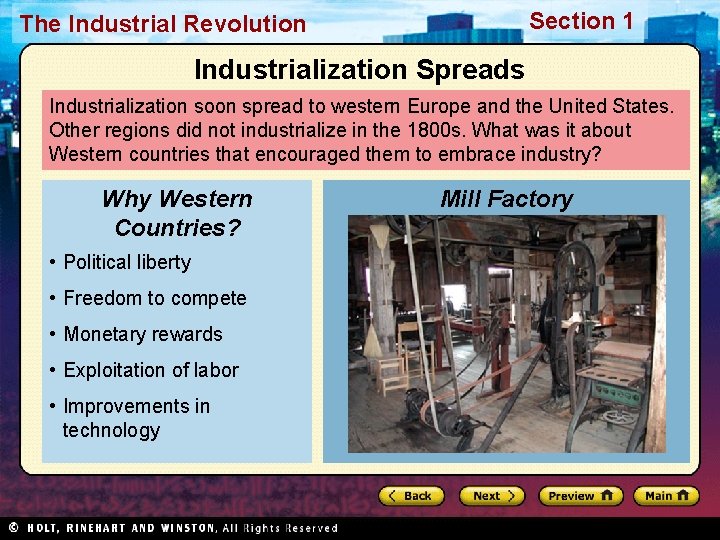
Section 1 The Industrial Revolution Industrialization Spreads Industrialization soon spread to western Europe and the United States. Other regions did not industrialize in the 1800 s. What was it about Western countries that encouraged them to embrace industry? Why Western Countries? • Political liberty • Freedom to compete • Monetary rewards • Exploitation of labor • Improvements in technology Mill Factory
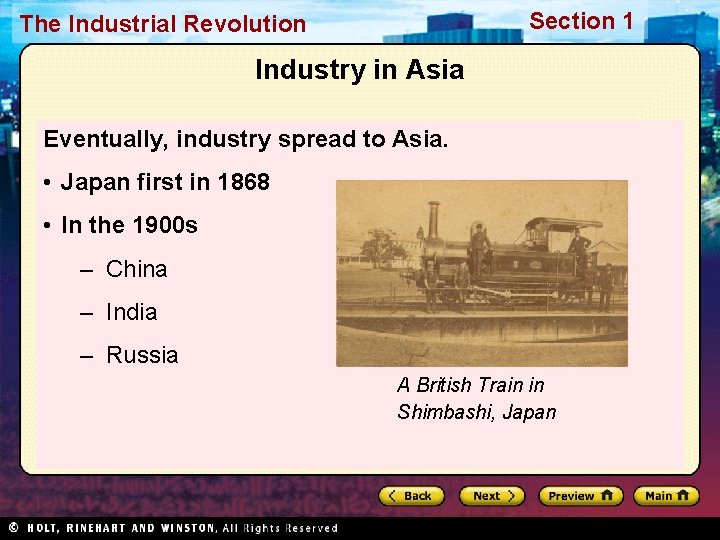
Section 1 The Industrial Revolution Industry in Asia Eventually, industry spread to Asia. • Japan first in 1868 • In the 1900 s – China – India – Russia A British Train in Shimbashi, Japan