
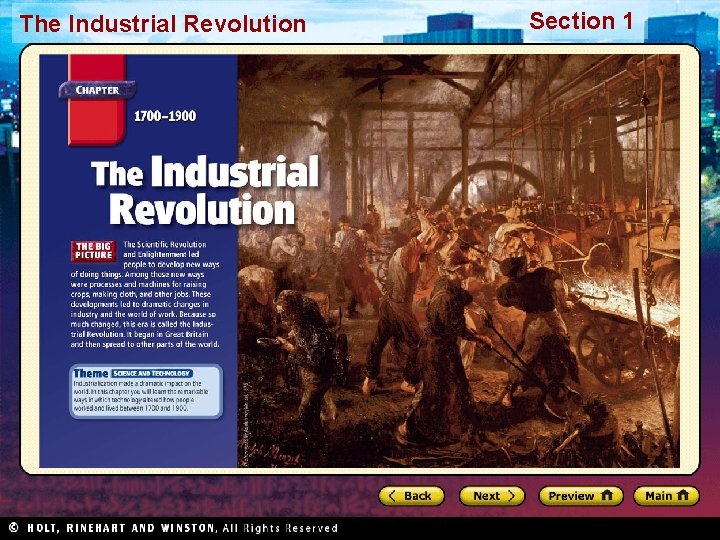
The Industrial Revolution Section 1 The Industrial Revolution
- Slides: 16
The Industrial Revolution Section 1
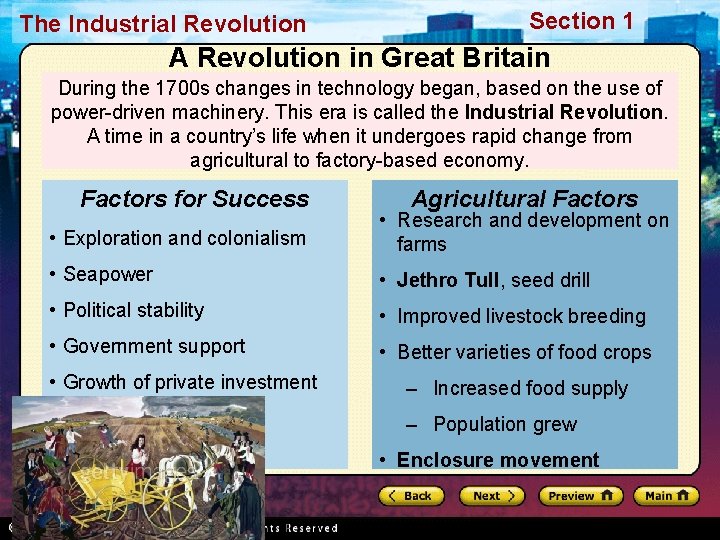
The Industrial Revolution Section 1 A Revolution in Great Britain During the 1700 s changes in technology began, based on the use of power-driven machinery. This era is called the Industrial Revolution. A time in a country’s life when it undergoes rapid change from agricultural to factory-based economy. Factors for Success Agricultural Factors • Exploration and colonialism • Research and development on farms • Seapower • Jethro Tull, seed drill • Political stability • Improved livestock breeding • Government support • Better varieties of food crops • Growth of private investment – Increased food supply – Population grew • Enclosure movement
The Industrial Revolution Section 1 Enclosure Movement • Wealthy landowners • Movement allowed for more efficient bought up land that farming and had been previously increased food shared by small and supply. large alike. Fenced it in and caused • The small farmers poor farmers to went to big cities search for other and became the ways to make a labor supply for the living. growing industries.
The Industrial Revolution Section 1 Britain’s Big Advantage The Industrial Revolution began in Great Britain. • Had essential elements for economic success • Factors of production Land-Labor-Capital • Rich deposits of iron and coal essential to industrialization • Reliable sources of water power • Numerous colonies supplied her with raw materials and a market for her manufactured goods
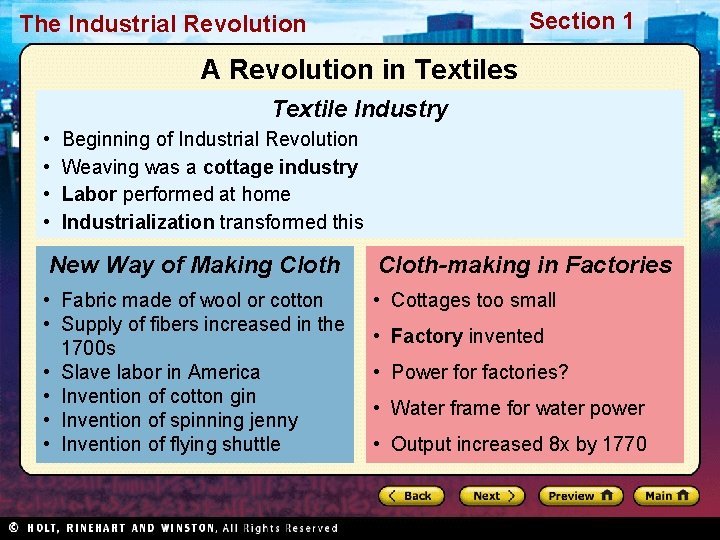
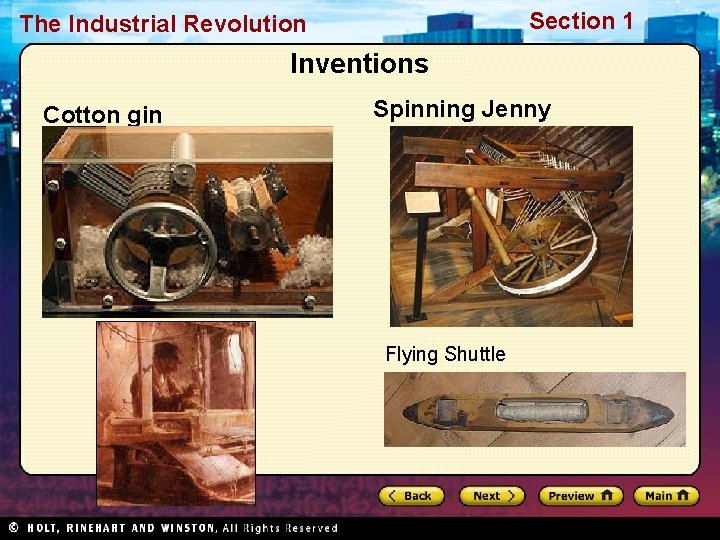
Section 1 The Industrial Revolution A Revolution in Textiles Textile Industry • • Beginning of Industrial Revolution Weaving was a cottage industry Labor performed at home Industrialization transformed this New Way of Making Cloth-making in Factories • Fabric made of wool or cotton • Supply of fibers increased in the 1700 s • Slave labor in America • Invention of cotton gin • Invention of spinning jenny • Invention of flying shuttle • Cottages too small • Factory invented • Power for factories? • Water frame for water power • Output increased 8 x by 1770
Section 1 The Industrial Revolution Inventions Cotton gin Spinning Jenny Flying Shuttle
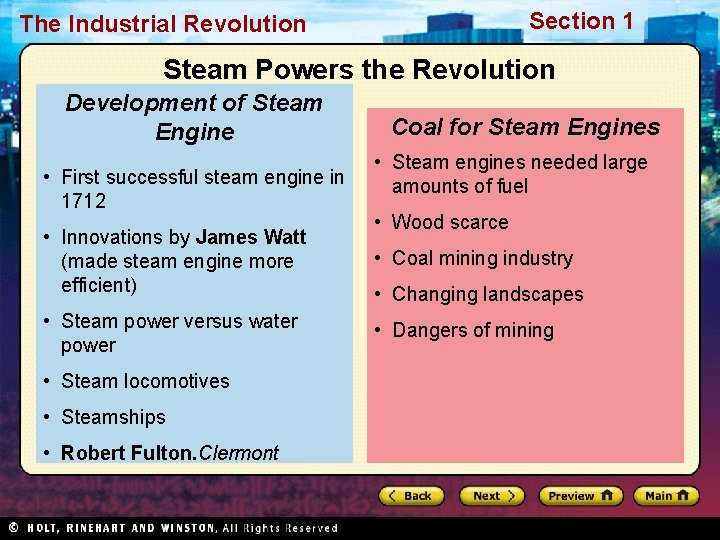
Section 1 The Industrial Revolution Steam Powers the Revolution Development of Steam Engine • First successful steam engine in 1712 • Innovations by James Watt (made steam engine more efficient) • Steam power versus water power • Steam locomotives • Steamships • Robert Fulton. Clermont Coal for Steam Engines • Steam engines needed large amounts of fuel • Wood scarce • Coal mining industry • Changing landscapes • Dangers of mining
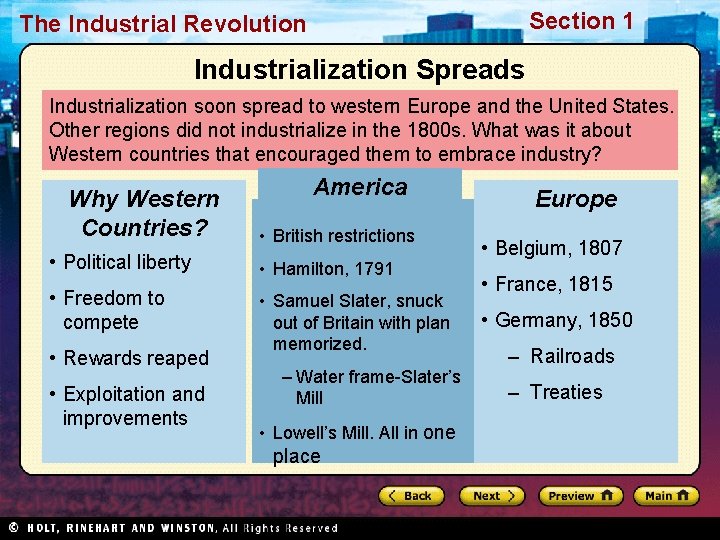
Section 1 The Industrial Revolution Industrialization Spreads Industrialization soon spread to western Europe and the United States. Other regions did not industrialize in the 1800 s. What was it about Western countries that encouraged them to embrace industry? Why Western Countries? America • British restrictions • Political liberty • Hamilton, 1791 • Freedom to compete • Samuel Slater, snuck out of Britain with plan memorized. • Rewards reaped • Exploitation and improvements – Water frame-Slater’s Mill • Lowell’s Mill. All in one place Europe • Belgium, 1807 • France, 1815 • Germany, 1850 – Railroads – Treaties
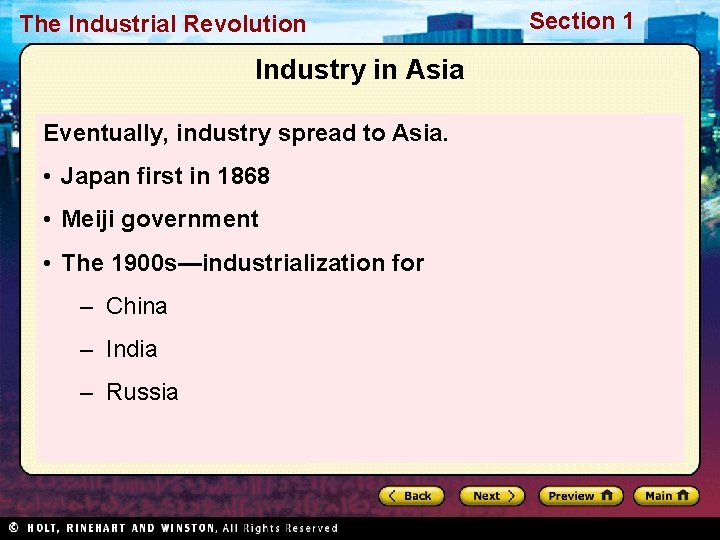
The Industrial Revolution Industry in Asia Eventually, industry spread to Asia. • Japan first in 1868 • Meiji government • The 1900 s—industrialization for – China – India – Russia Section 1
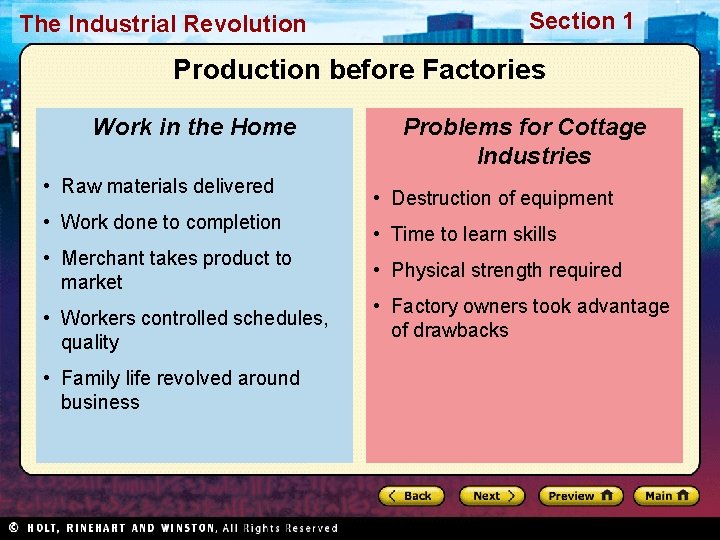
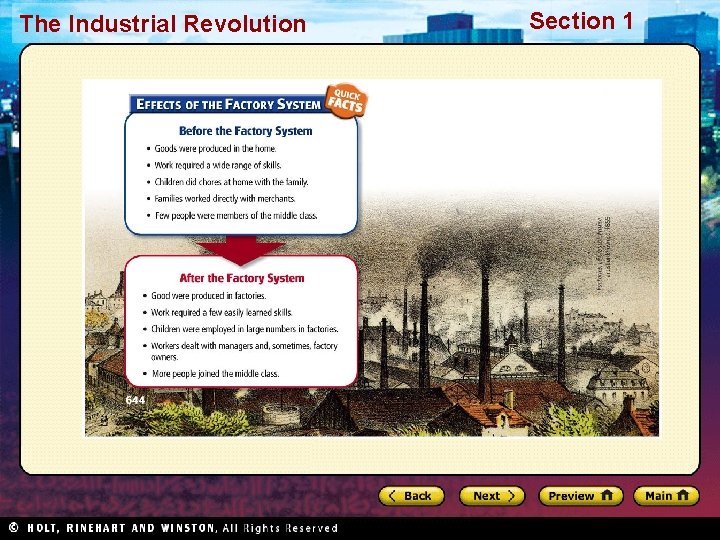
The Industrial Revolution Section 1 Production before Factories Work in the Home • Raw materials delivered • Work done to completion • Merchant takes product to market • Workers controlled schedules, quality • Family life revolved around business Problems for Cottage Industries • Destruction of equipment • Time to learn skills • Physical strength required • Factory owners took advantage of drawbacks
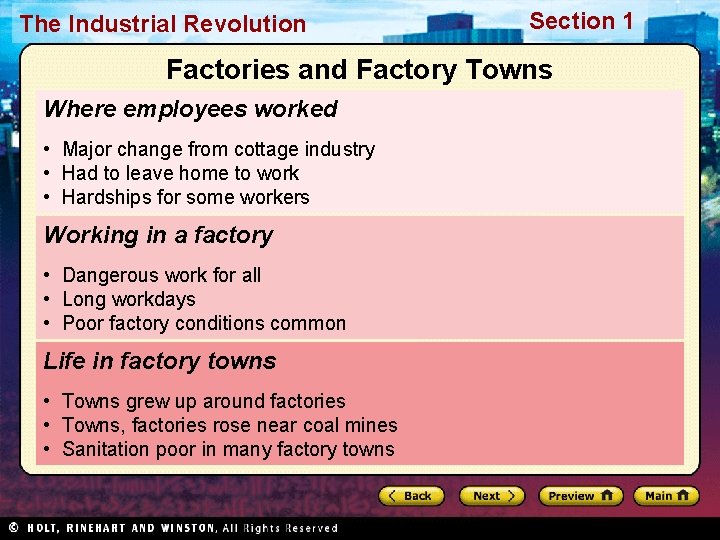
The Industrial Revolution Section 1 Factories and Factory Towns Where employees worked • Major change from cottage industry • Had to leave home to work • Hardships for some workers Working in a factory • Dangerous work for all • Long workdays • Poor factory conditions common Life in factory towns • Towns grew up around factories • Towns, factories rose near coal mines • Sanitation poor in many factory towns
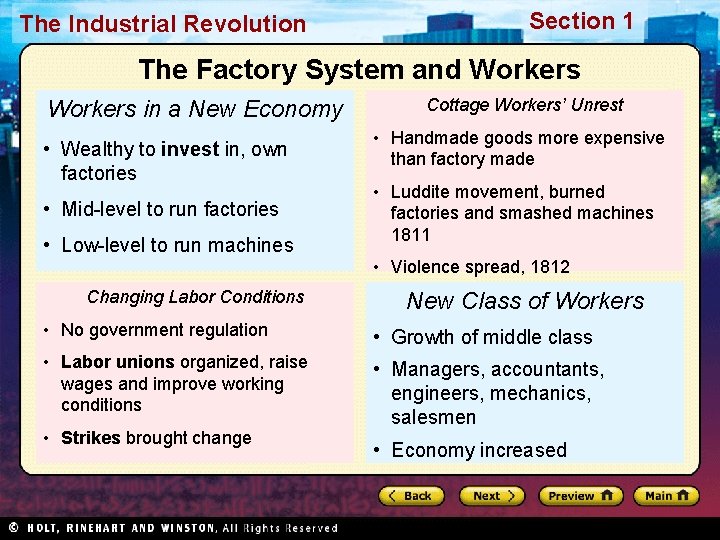
The Industrial Revolution Section 1 The Factory System and Workers in a New Economy • Wealthy to invest in, own factories • Mid-level to run factories • Low-level to run machines Changing Labor Conditions Cottage Workers’ Unrest • Handmade goods more expensive than factory made • Luddite movement, burned factories and smashed machines 1811 • Violence spread, 1812 New Class of Workers • No government regulation • Growth of middle class • Labor unions organized, raise wages and improve working conditions • Managers, accountants, engineers, mechanics, salesmen • Strikes brought change • Economy increased
The Industrial Revolution Section 1
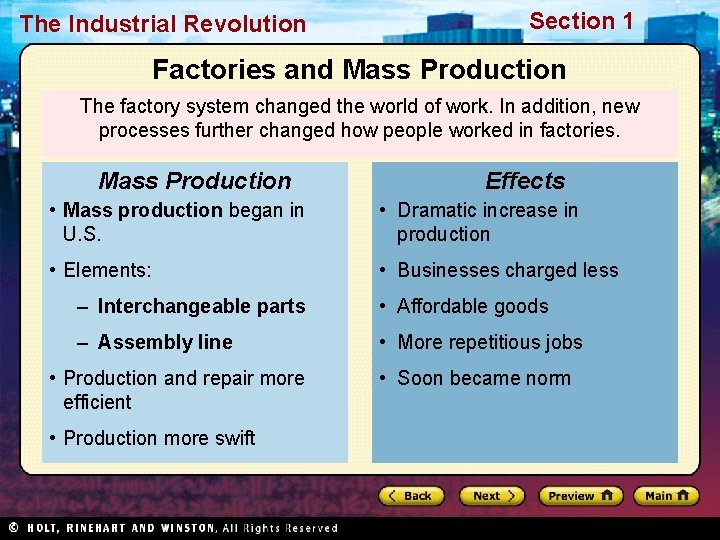
The Industrial Revolution Section 1 Factories and Mass Production The factory system changed the world of work. In addition, new processes further changed how people worked in factories. Mass Production Effects • Mass production began in U. S. • Dramatic increase in production • Elements: • Businesses charged less – Interchangeable parts • Affordable goods – Assembly line • More repetitious jobs • Production and repair more efficient • Production more swift • Soon became norm
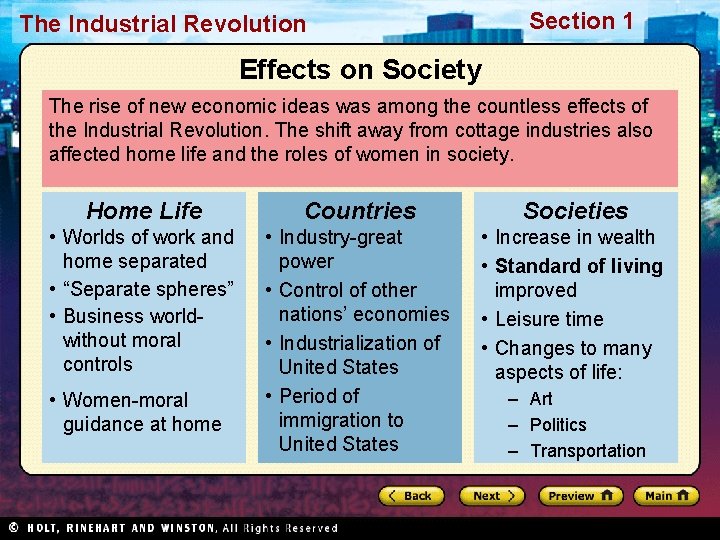
The Industrial Revolution Section 1 Effects on Society The rise of new economic ideas was among the countless effects of the Industrial Revolution. The shift away from cottage industries also affected home life and the roles of women in society. Home Life Countries Societies • Worlds of work and home separated • “Separate spheres” • Business worldwithout moral controls • Industry-great power • Control of other nations’ economies • Industrialization of United States • Period of immigration to United States • Increase in wealth • Standard of living improved • Leisure time • Changes to many aspects of life: • Women-moral guidance at home – Art – Politics – Transportation
The Industrial Revolution Section 1