
The Industrial Revolution Phases of the Industrial Revolution















- Slides: 43
The Industrial Revolution • Phases of the Industrial Revolution 1. The First Industrial Revolution (1760 -1820): occurred in Europe and dominated by Great Britain and Textile Production. 2. The Second Industrial Revolution (The second half of the 1800’s): The spread of Industrialization to the rest of Europe and North America. Marked by machinery and the implementation of technology.
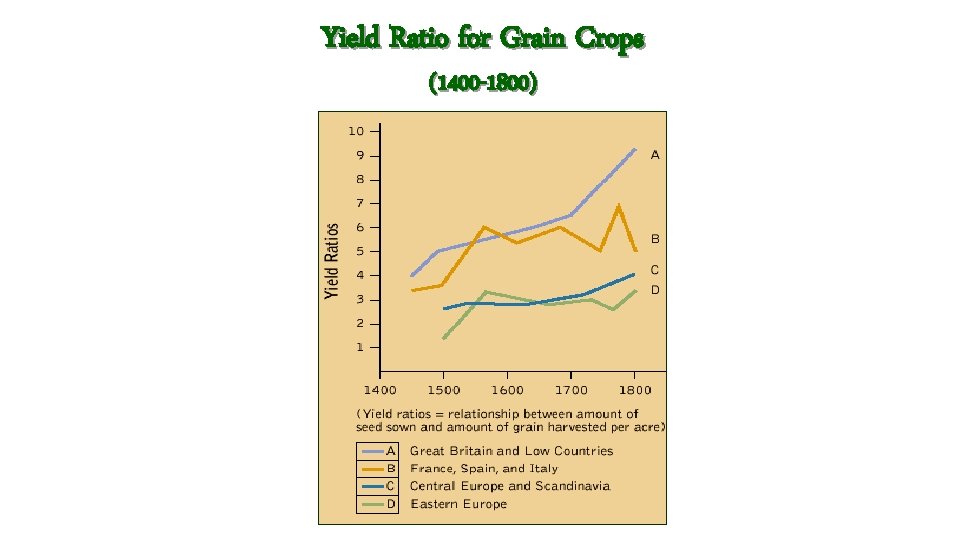
Origins of the First Industrial Revolution • Agriculture and Land 1. By the early 18 th century, peasant lives had not improved much over the late Middle Ages. 2. End of the 1600’s- 80% of the population drew livelihood from agriculture. 3. There was a 1: 6 ration of sown and harvested seed. 4. New developments in agriculture would pave the way for the Industrial Revolution.
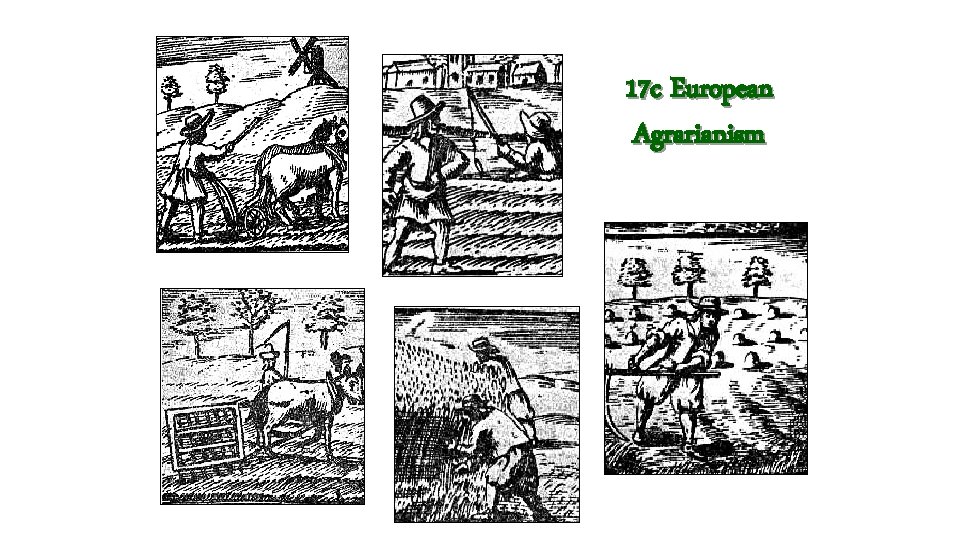
17 c European Agrarianism
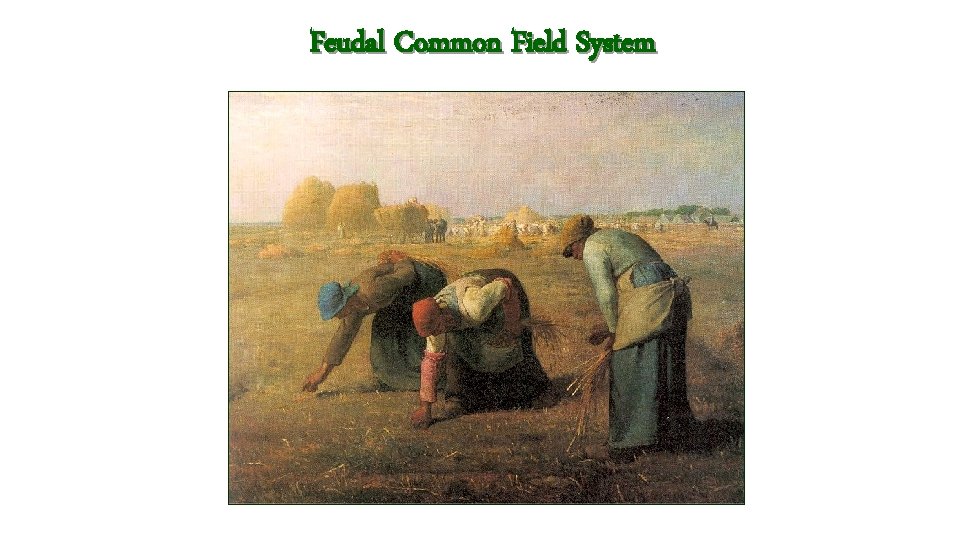
Origins of the First Industrial Revolution • The Open-Field System 1. Farming at the during the 17 th century still reflected the Open -Field System of the Middle Ages. 2. Typically a three-field system with one field left fallow. 3. Each field was separated into strips. 4. Communal Rights: Forests, pastures, fishing ponds, and gleaning.
Origins of the First Industrial Revolution • Open Field/ Three Field System
Feudal Common Field System
Origins of the First Industrial Revolution • The Agricultural Revolution “So remarkable were the possibilities and results that historians have often spoken of the progressive elimination of the fallow, which occurred gradually throughout Europe from the mid-seventeenth century on, as an agricultural Revolutions. ” Mc. Kay 623
Origins of the First Industrial Revolution • The Agricultural Revolution 1. The introduction of legumes with nitrogen fixing properties: Turnips, potatoes, clovers, grasses, peas, and beans. 2. Legumes allowed for “Crop Rotation” as an alternative to the Three Field System. 3. Legumes like clover also allowed for the feeding of more animals.
Origins of the First Industrial Revolution • Crop Rotation
Origins of the First Industrial Revolution • The Enclosure Movement 1. In order to make new experiments in agriculture possible, the consolidation of stripped farmland commons was necessary. 2. Peasants put up strong resistance to the enclosure. Why? 3. Until the end of the 18 th century, enclosure only occurred in the Low Countries and in England.
Origins of the First Industrial Revolution • “The old system of unenclosed open fields and the new system of continuous rotation coexisted in Europe for a long time. ” Mc. Kay 623 • A change in agriculture meant a change in culture. What does this mean?
Origins of the First Industrial Revolution • Enclosure
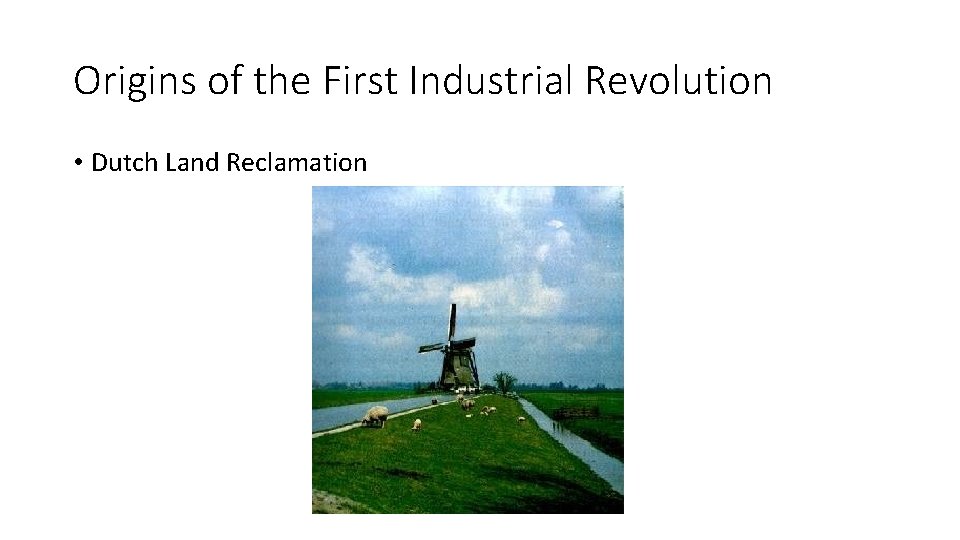
Origins of the First Industrial Revolution • The Leadership of the Low Countries 1. The Dutch Republic was a leader in the 17 th century: Enclosed Fields, Crop Rotation, Varied Crops, and Heavy Manuring. 2. Large population forced the Dutch to change and maximize crop yields. 3. New drainage was sought and also facilitated enclosure. 4. Dutch growth of trade cities demanded more food.
Origins of the First Industrial Revolution • Dutch Land Reclamation
Origins of the First Industrial Revolution • England Adopts the Dutch Model 1. Jethro Tull: Horses, Seed Drilling, Better Selective Breeding. 2. By 1870, English farms produced 300% more crops than in 1700 with only 14% more people engaged in agriculture. 3. In order to fight resistance, Parliament passed a series of Enclosure Acts to enclose farmland. 4. Eventually, the poor only worked for cash and lost all communal rights.
Yield Ratio for Grain Crops (1400 -1800)
Cereal Crops in 18 c Europe
Origins of the First Industrial Revolution • “By eliminating common rights and greatly reducing the access of poor men and women to the land, the eighteenth century Enclosure Movement marked the completion of two major historical developments in England—the rise of market oriented estate agriculture and the emergence of a landless rural proletariat. ” Mc. Kay 625
Origins of the First Industrial Revolution • The Beginning of a Population Explosion 1. Population explosion from the 17 th-20 th centuries. 2. Population growth slowed in the 17 th century as food and population balanced. 3. “The grim reaper of demographic crises were famine, epidemic disease, and war. ” Mc. Kay 626
Origins of the First Industrial Revolution • The New Population Pattern of the 18 th Century The Last Outbreak of Plague: Marseilles 1. Dramatic population growth in the 1700’s especially after 1750. 2. The last plague ended in 1722; Absolutist support for better water, sewage, roads, and canals; new foods, especially the potato.
Population Density: 18 c Europe
18 c Population Growth Rate
European Urbanization: 1500 -1800
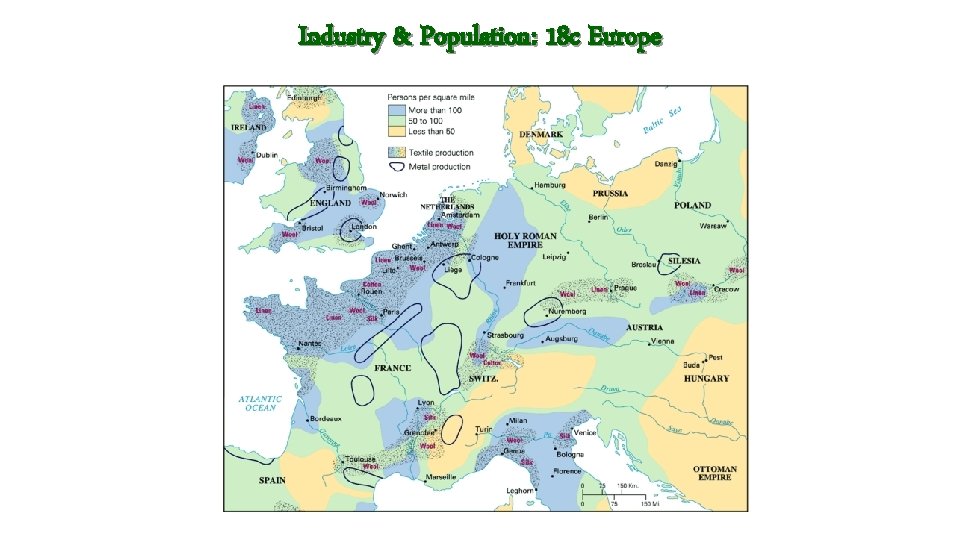
Industry & Population: 18 c Europe
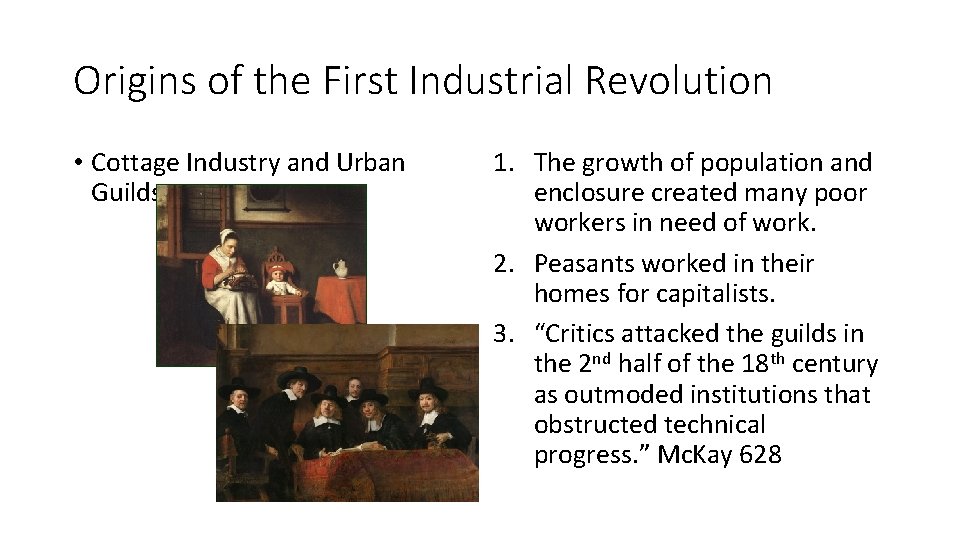
Origins of the First Industrial Revolution • Cottage Industry and Urban Guilds 1. The growth of population and enclosure created many poor workers in need of work. 2. Peasants worked in their homes for capitalists. 3. “Critics attacked the guilds in the 2 nd half of the 18 th century as outmoded institutions that obstructed technical progress. ” Mc. Kay 628
Origins of the First Industrial Revolution • The Putting-Out System 1. Cottage industry was organized through the putting-out system. 2. Break up steps of production between homes. 3. “Underemployed labor was abundant, and poor peasants and landless laborers would work for low wages. ” Mc. Kay 629 4. Occurred mostly in the county side. Best in England for the spinning and weaving of wool.
Supplemental Income Cottage Industries: “Putting. Out” System
The “Putting-Out” System
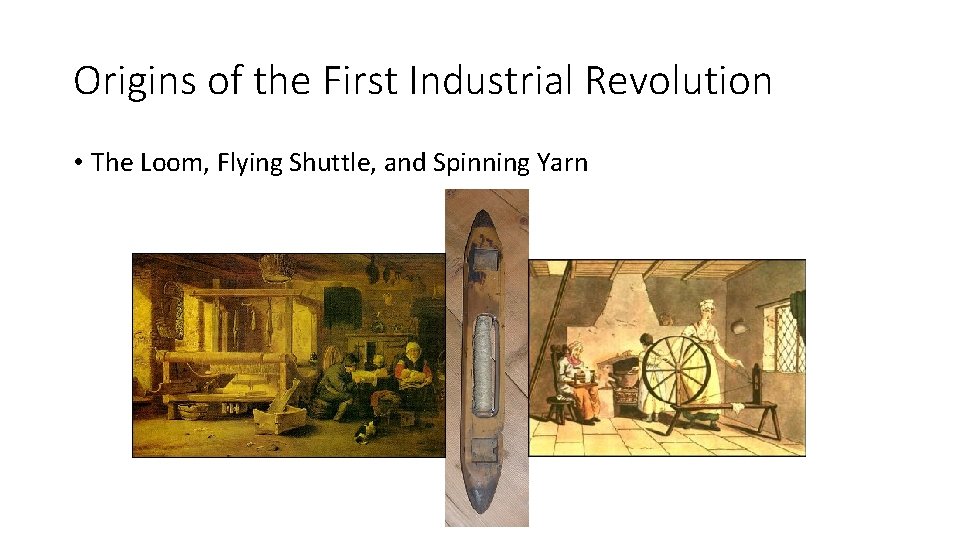
Origins of the First Industrial Revolution • The Textile Industry 1. “Until the 19 th century, the industry that employed the most people in Europe was textiles. ” Mc. Kay 631 2. The Loom in the Home– John Kay’s “Flying Shuttle”, whole family was involved. 3. “Spinster” as a concept. Inequality between men and women in pay. 4. Rural production was hard to control and decreased in the spring and summer.
Origins of the First Industrial Revolution • The Loom, Flying Shuttle, and Spinning Yarn
Origins of the First Industrial Revolution • Urban Guilds 1. “The high point of the Guild System in most of Europe occurred in the 17 th and 18 th centuries, rather than in the Middle Ages as previously believed. ” Mc. Kay 632 2. Guilds were exclusive, most Europeans worked outside of the Guild System. 3. “Nevertheless, by the middle of the 19 th century, economic deregulation was championed by most European governments and elites. ” Mc. Kay 635
Origins of the First Industrial Revolution • The Industrious Revolution • Late 17 th and Early 18 th “This occurred as households in Northwestern Europe reduced leisure time, stepped up the pace of work, and most importantly, redirected labor of women and children away from the production of goods for household consumption and toward wage work. ” 633 • How is this a significant social and economic change for Europe? How will it change as industry occurs outside the home?
Origins of the First Industrial Revolution • Industry, Mercantilism, and Colonial Wars 1. English Mercantilism was born out of the Navigation Acts. The first began under Cromwell in 1651 and increased through the 17 th century. 2. Goods had to be transported on English ships, British shipping had a monopoly on colonial trade. 3. First targeted against the Dutch. (Economic Warfare)
18 c British Port
The Growth of England’s Foreign Trade in the 18 c
Origins of the First Industrial Revolution • Economic Warfare and Colonial Warfare “Thus from 1701 to 1763, Britain and France were locked in a series of wars to decide, in part, which nation would become the leading maritime power and claim the profits of Europe’s overseas expansion. ” 635
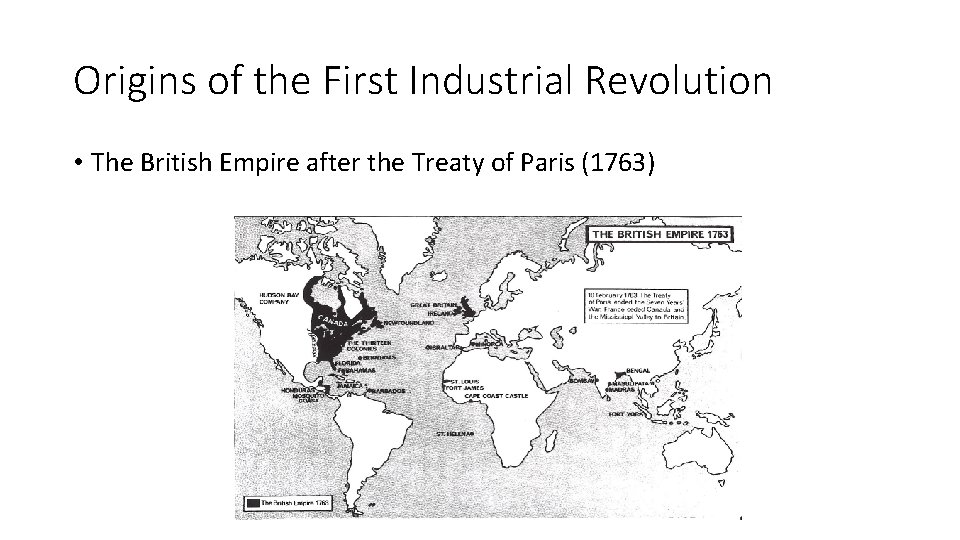
Origins of the First Industrial Revolution 1. 2. 3. War of Spanish Succession: Peace of Utrecht gave GB- Newfoundland, Nova Scotia, and the Hudson Bay from the French and the West African Slave Trade from the Spanish. The War of Austrian Succession Seven Years’ War: Treaty of Paris (1763) GB got the French colonies of North America and sole control of India. • Economic Effect: New colonial markets for goods helped British Industry Grow.
Origins of the First Industrial Revolution • The British Empire after the Treaty of Paris (1763)
Origins of the First Industrial Revolution • Land Labor in British America Contract for Indentured Servitude in America 1. “As Britain built its empire in North America it secured an important outlet for surplus population, so that migration abroad limited poverty at home. ” Mc. Kay 640 2. Land not available at home: free, indentured, and criminal. 3. Mercantilism fostered investment and expanded plantation slavery.
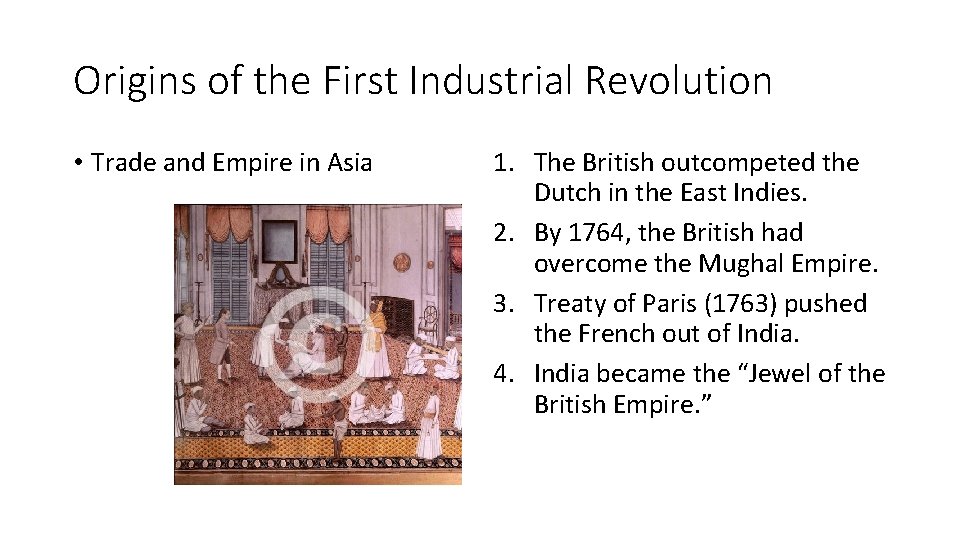
Origins of the First Industrial Revolution • Trade and Empire in Asia 1. The British outcompeted the Dutch in the East Indies. 2. By 1764, the British had overcome the Mughal Empire. 3. Treaty of Paris (1763) pushed the French out of India. 4. India became the “Jewel of the British Empire. ”
Origins of the First Industrial Revolution • Economic Philosophy: Adam Smith and Economic Liberalism 1. “Wanting a bigger position in overseas commerce, independent merchants in many countries began campaigning against ‘monopolies’ and calling for ‘free trade’”. 647 2. Wealth of Nations quickly emerged as the argument for economic liberalism.
The First Industrial Revolution (1760 -1850) • 18 th Century Industrial Revolution • Began in England • Warfare and Revolution slowed process in France • Origins in England • • • Mercantilism Easy access to navigable waterways Large deposits of coal and iron Key changes in agriculture Central bank and credit market Large labor population