
The Industrial Revolution INDUSTRIAL REVOLUTION What factors caused
- Slides: 23
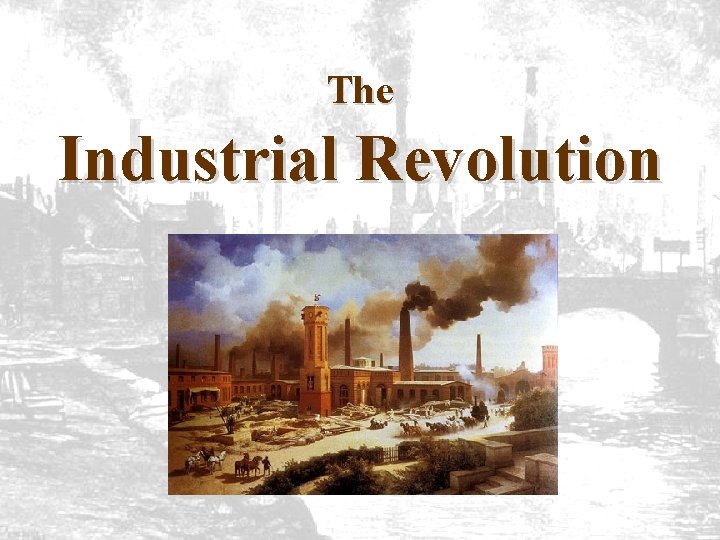
The Industrial Revolution
INDUSTRIAL REVOLUTION • What factors caused the Industrial Revolution? • How did the Industrial Revolution change the ways people lived?
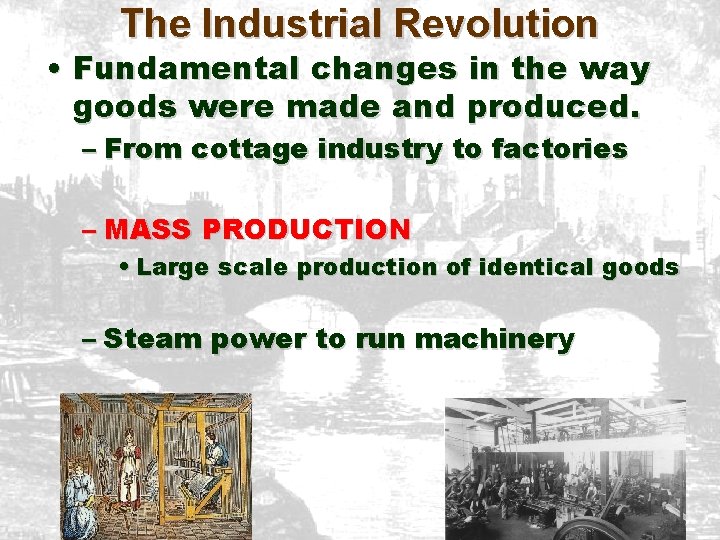
The Industrial Revolution • Fundamental changes in the way goods were made and produced. – From cottage industry to factories – MASS PRODUCTION • Large scale production of identical goods – Steam power to run machinery
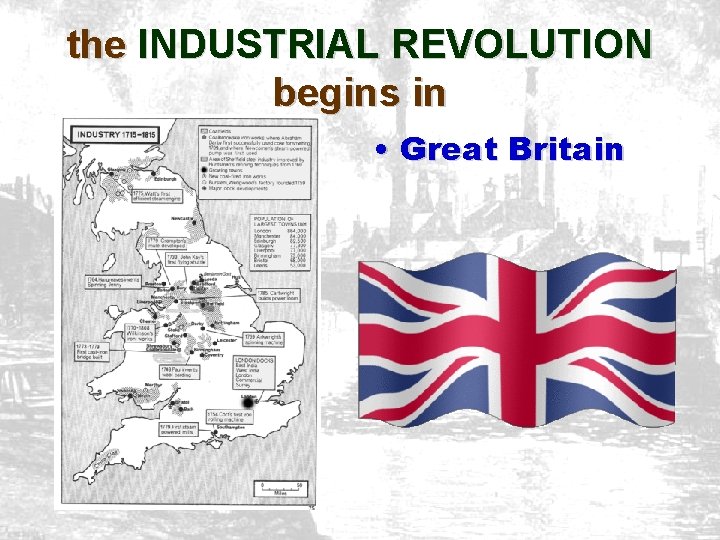
the INDUSTRIAL REVOLUTION begins in • Great Britain
What industrialization would mean to England • Economic strength: dominant role in international trade would lead to expansion of markets. • Imperialism: need for more markets and resources necessitates England’s colonial ambitions • Nationalism: not as bad as other European nations. Superiority of English culture.
Social Impact • Lifestyle change- Agricultural way of life hadn’t changed much in 10, 000 years. Now rapid change. • More food production: Less starvation and hunger; concentrate work elsewhere. • Population Explosion: Better sanitation and hygiene means healthier living conditions. Birth rates up, death rates down
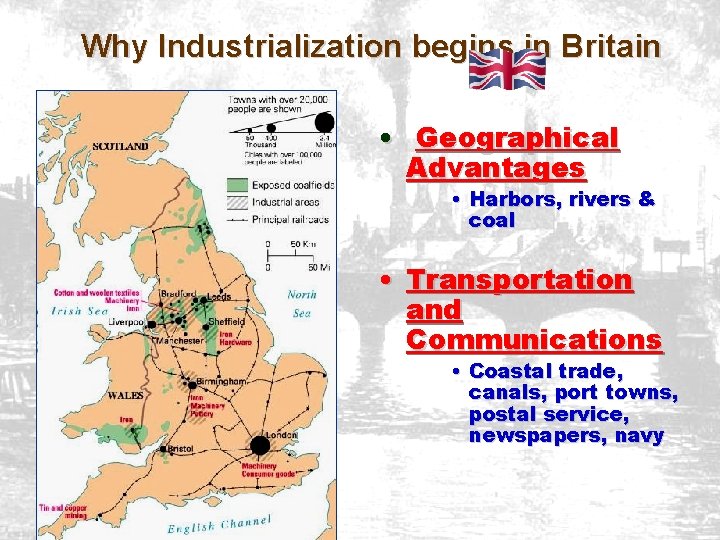
Why Industrialization begins in Britain • Geographical Advantages • Harbors, rivers & coal • Transportation and Communications • Coastal trade, canals, port towns, postal service, newspapers, navy
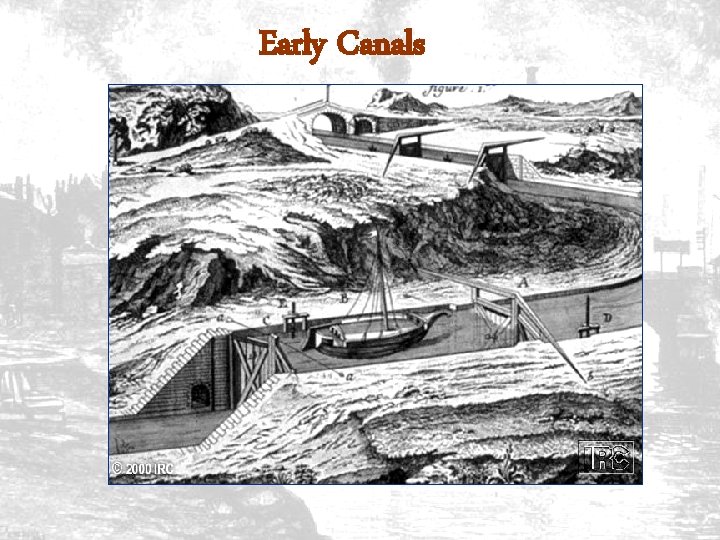
Early Canals
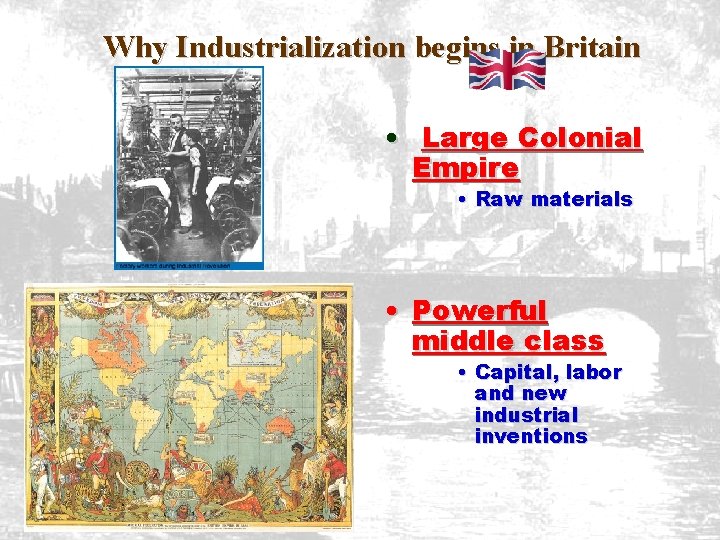
Why Industrialization begins in Britain • Large Colonial Empire • Raw materials • Powerful middle class • Capital, labor and new industrial inventions
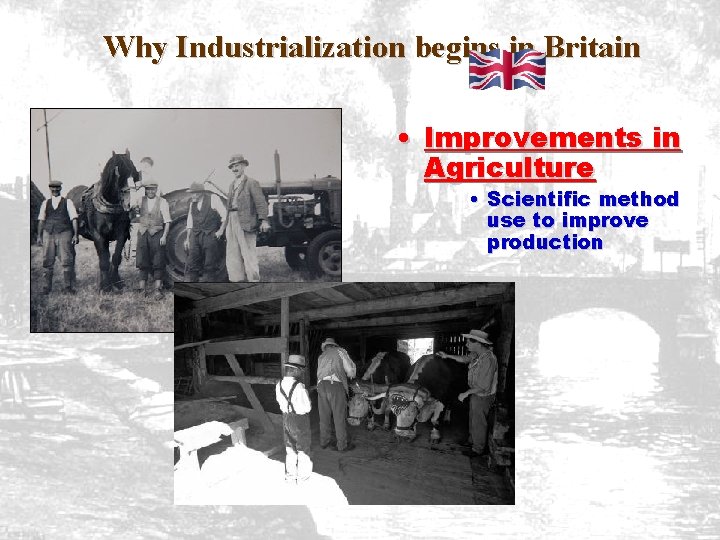
Why Industrialization begins in Britain • Improvements in Agriculture • Scientific method use to improve production
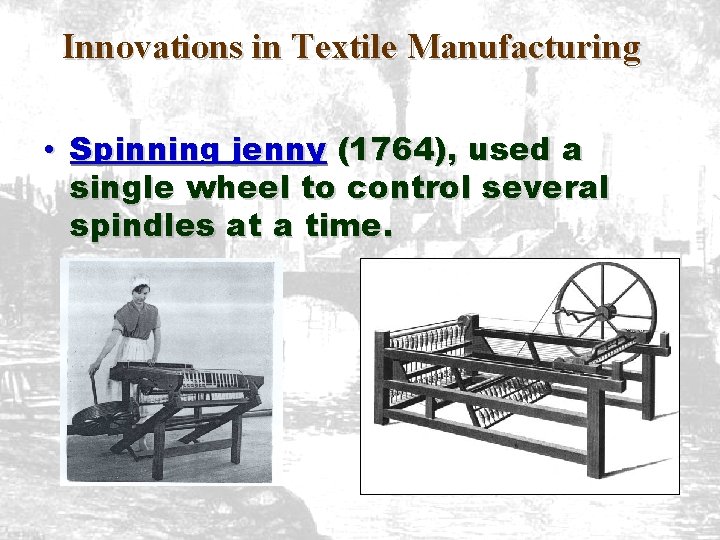
Innovations in Textile Manufacturing • Spinning jenny (1764), used a single wheel to control several spindles at a time.
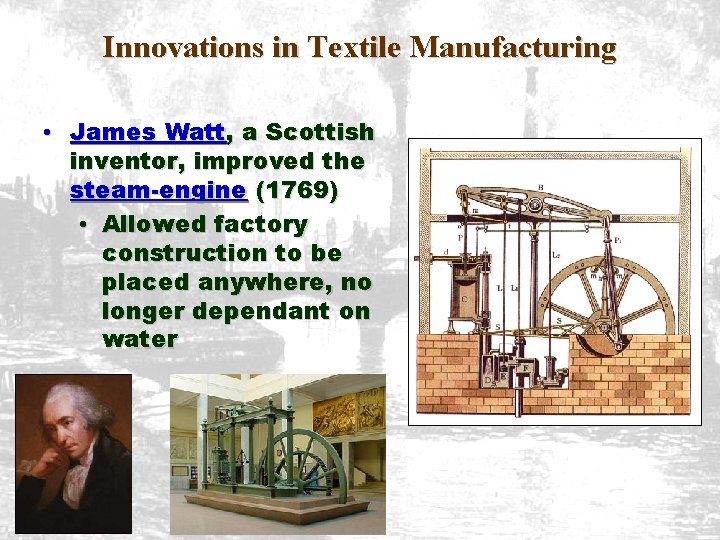
Innovations in Textile Manufacturing • James Watt, a Scottish inventor, improved the steam-engine (1769) • Allowed factory construction to be placed anywhere, no longer dependant on water
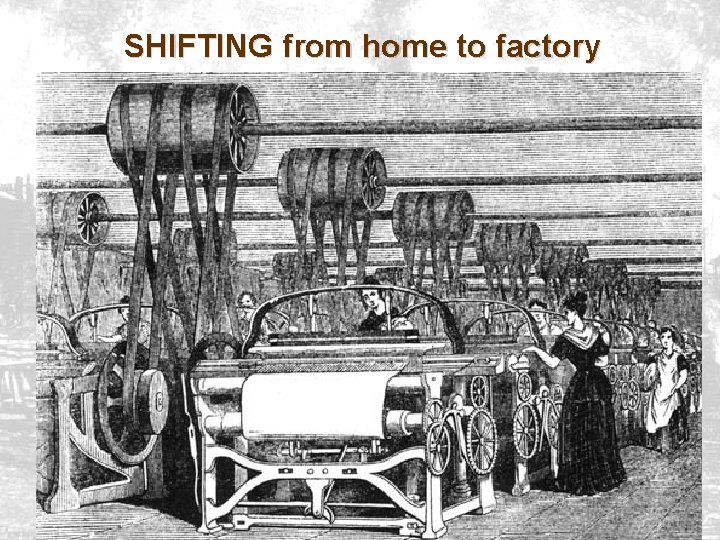
SHIFTING from home to factory
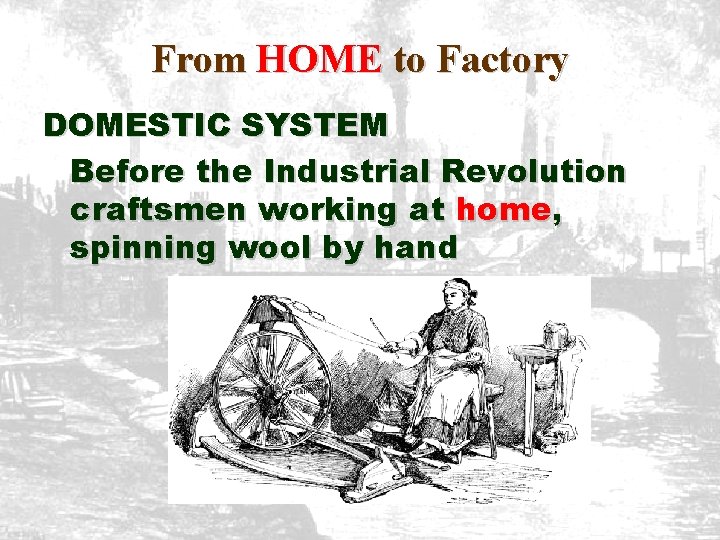
From HOME to Factory DOMESTIC SYSTEM Before the Industrial Revolution craftsmen working at home, spinning wool by hand
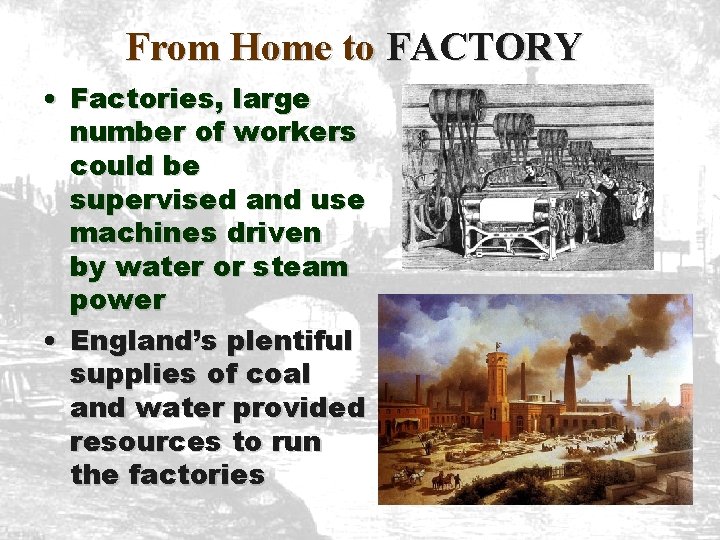
From Home to FACTORY • Factories, large number of workers could be supervised and use machines driven by water or steam power • England’s plentiful supplies of coal and water provided resources to run the factories
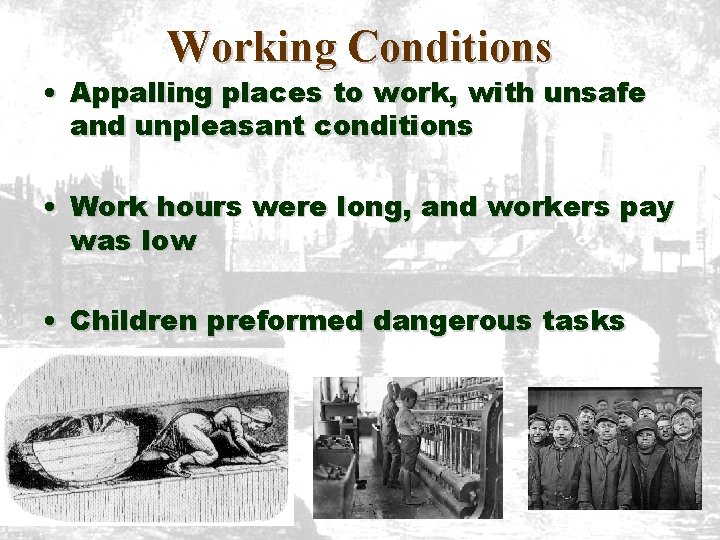
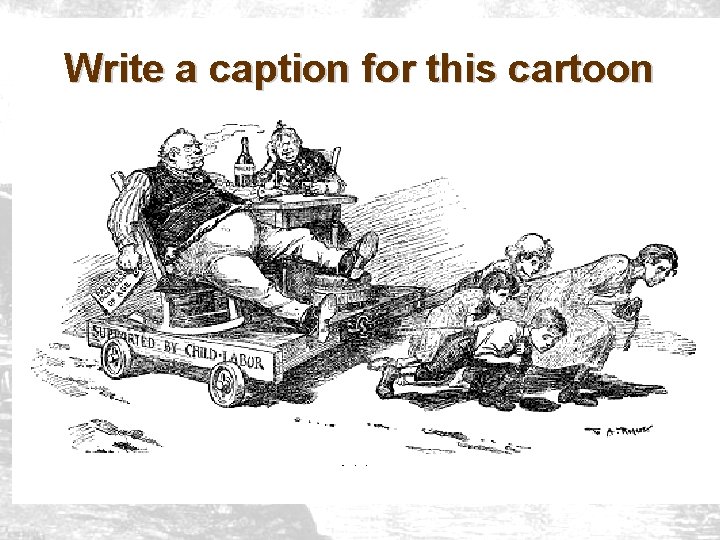
Working Conditions • Appalling places to work, with unsafe and unpleasant conditions • Work hours were long, and workers pay was low • Children preformed dangerous tasks
Write a caption for this cartoon
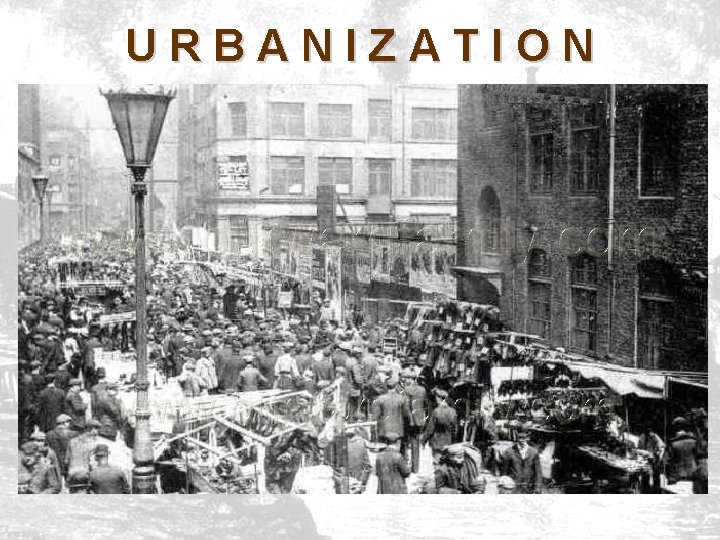
URBANIZATION From the countryside farms (RURAL)
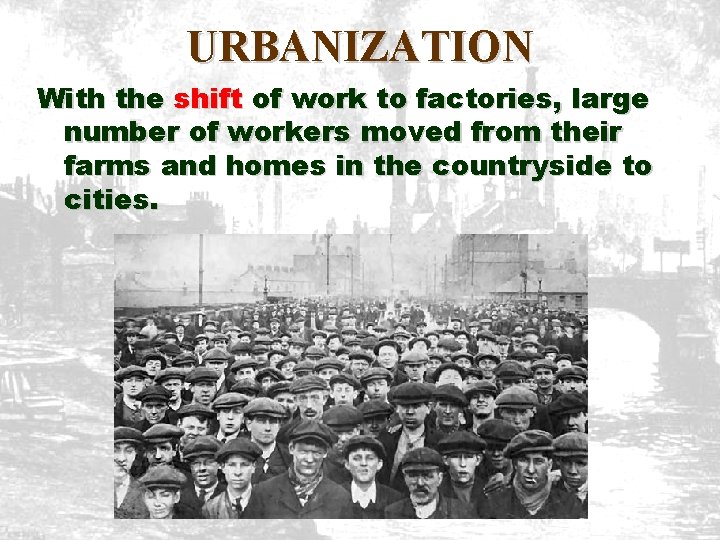
URBANIZATION With the shift of work to factories, large number of workers moved from their farms and homes in the countryside to cities.
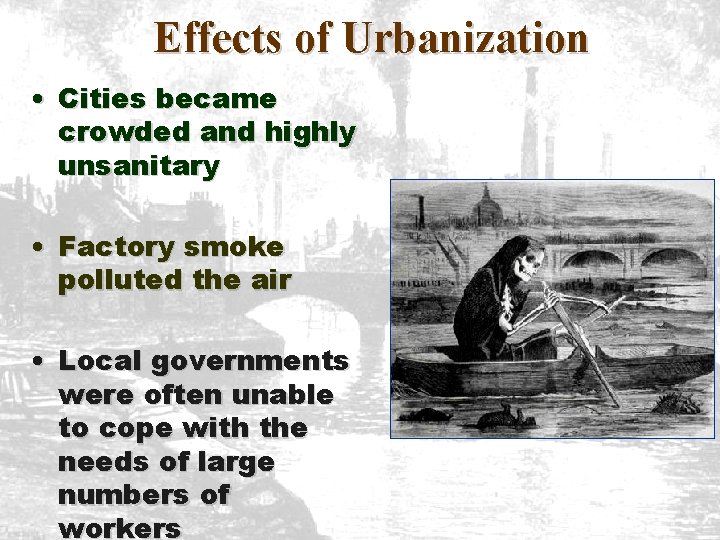
Effects of Urbanization • Cities became crowded and highly unsanitary • Factory smoke polluted the air • Local governments were often unable to cope with the needs of large numbers of workers
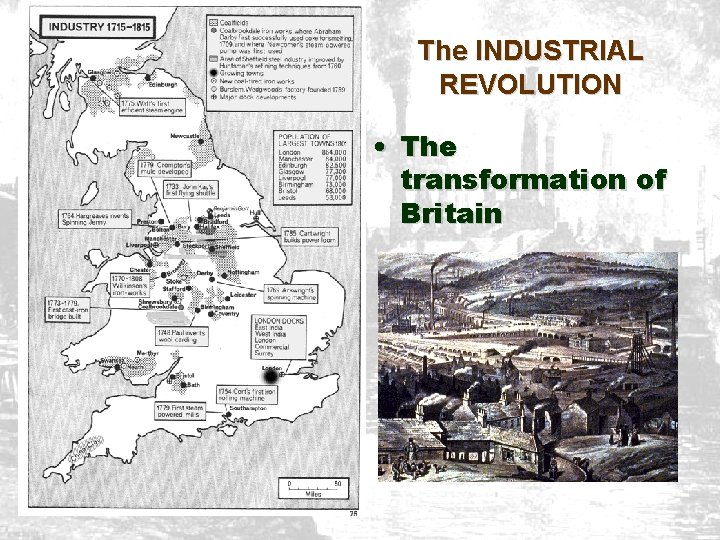
The INDUSTRIAL REVOLUTION • The transformation of Britain
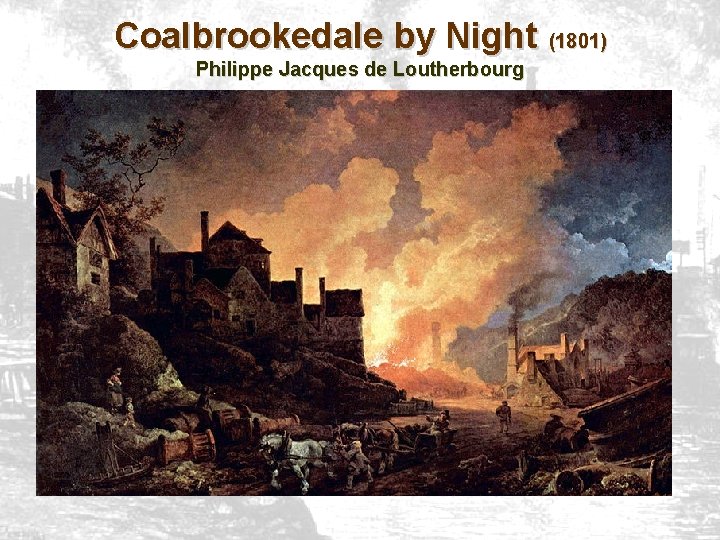
Coalbrookedale by Night (1801) Philippe Jacques de Loutherbourg
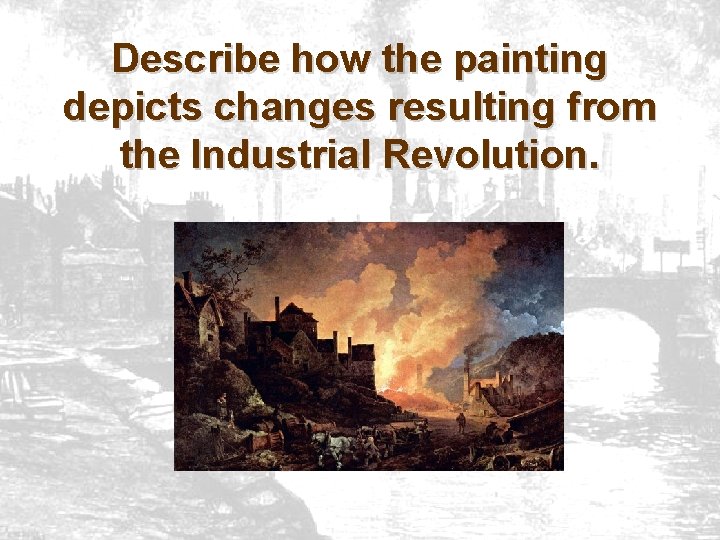
Describe how the painting depicts changes resulting from the Industrial Revolution.