
The Industrial Revolution in Britain beginning of the
The Industrial Revolution in Britain beginning of the modern world 1750 s-1830 s
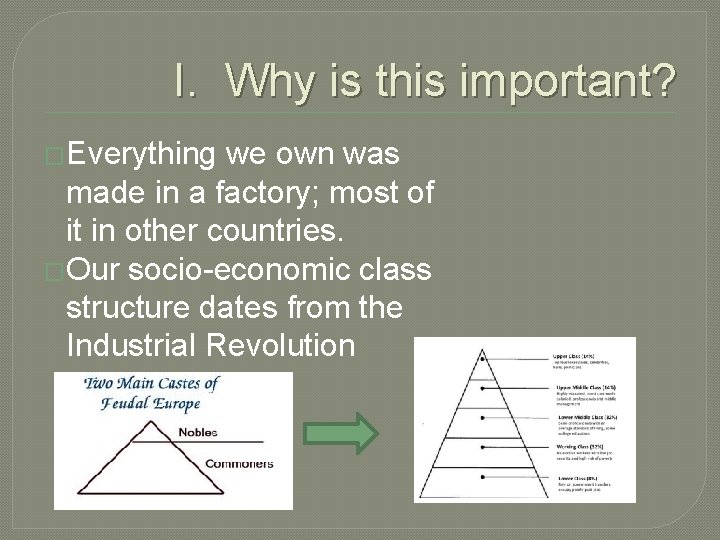
I. Why is this important? �Everything we own was made in a factory; most of it in other countries. �Our socio-economic class structure dates from the Industrial Revolution
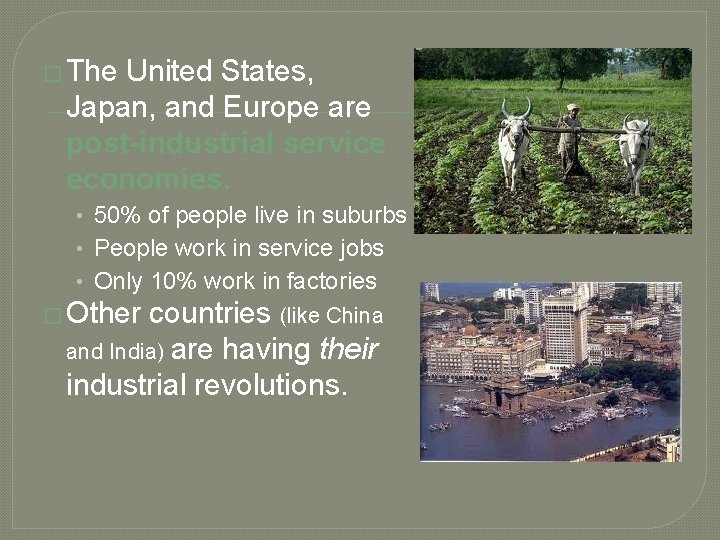
� The United States, Japan, and Europe are post-industrial service economies. • 50% of people live in suburbs • People work in service jobs • Only 10% work in factories � Other countries (like China and India) are having their industrial revolutions.
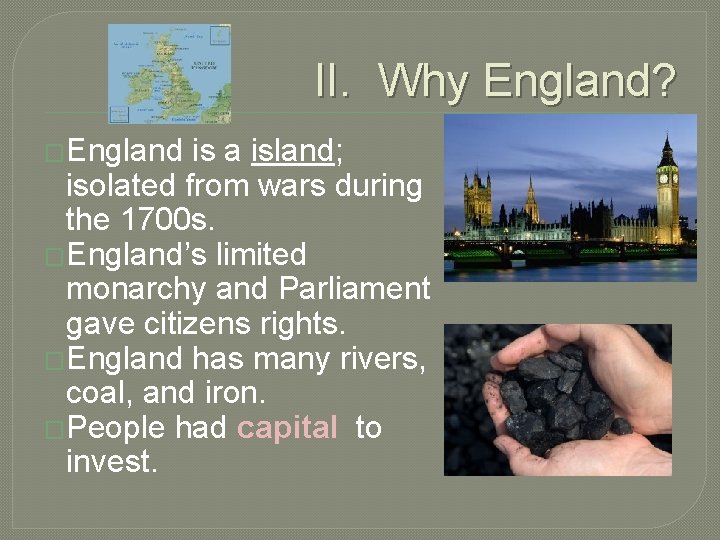
II. Why England? �England is a island; isolated from wars during the 1700 s. �England’s limited monarchy and Parliament gave citizens rights. �England has many rivers, coal, and iron. �People had capital to invest.
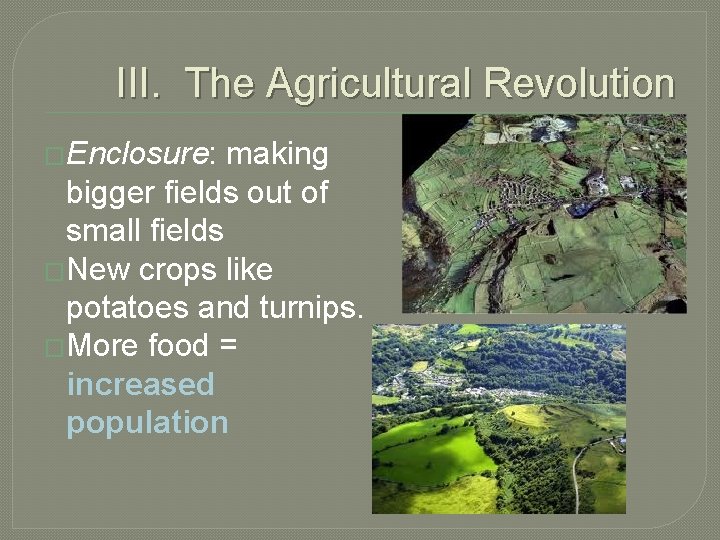
III. The Agricultural Revolution �Enclosure: making bigger fields out of small fields �New crops like potatoes and turnips. �More food = increased population
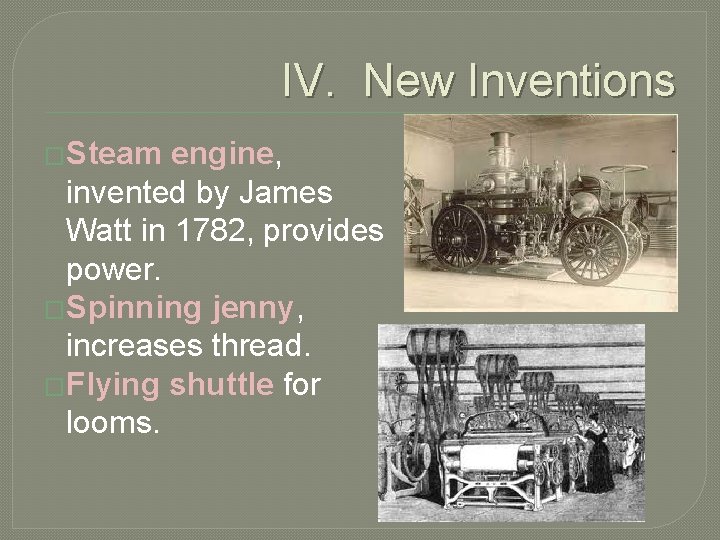
IV. New Inventions �Steam engine, invented by James Watt in 1782, provides power. �Spinning jenny, increases thread. �Flying shuttle for looms.
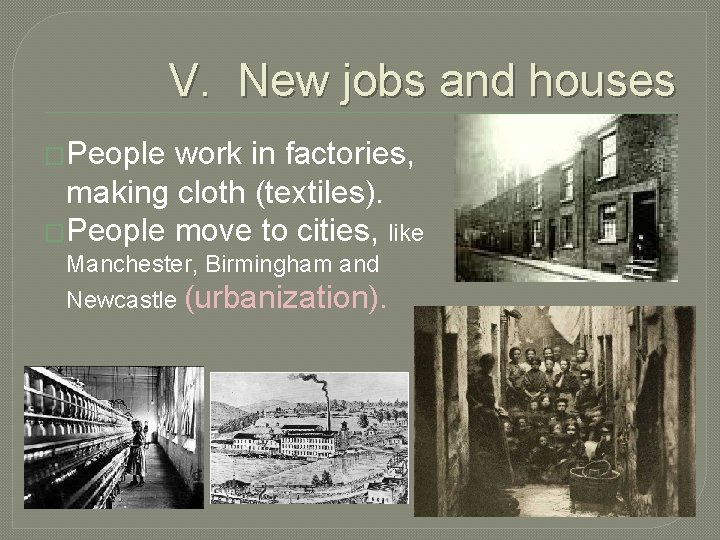
V. New jobs and houses �People work in factories, making cloth (textiles). �People move to cities, like Manchester, Birmingham and Newcastle (urbanization).
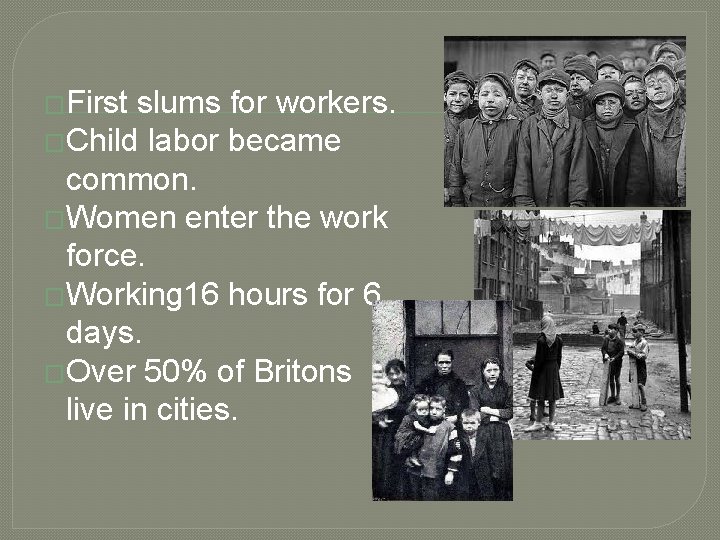
�First slums for workers. �Child labor became common. �Women enter the work force. �Working 16 hours for 6 days. �Over 50% of Britons live in cities.
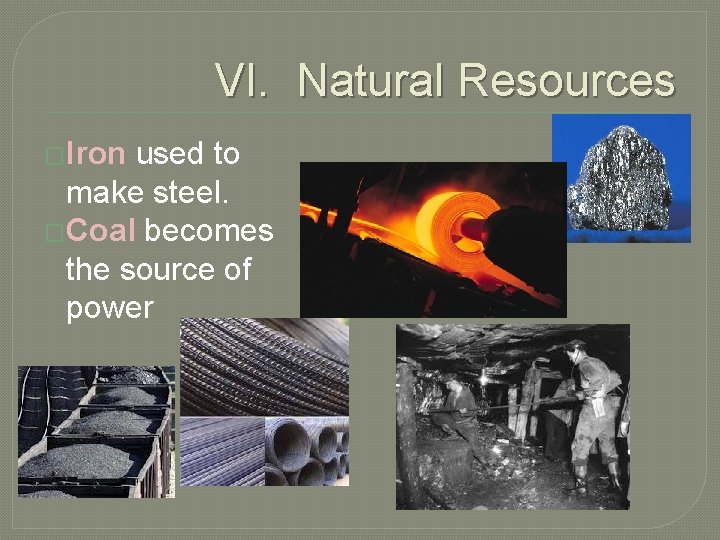
VI. Natural Resources �Iron used to make steel. �Coal becomes the source of power
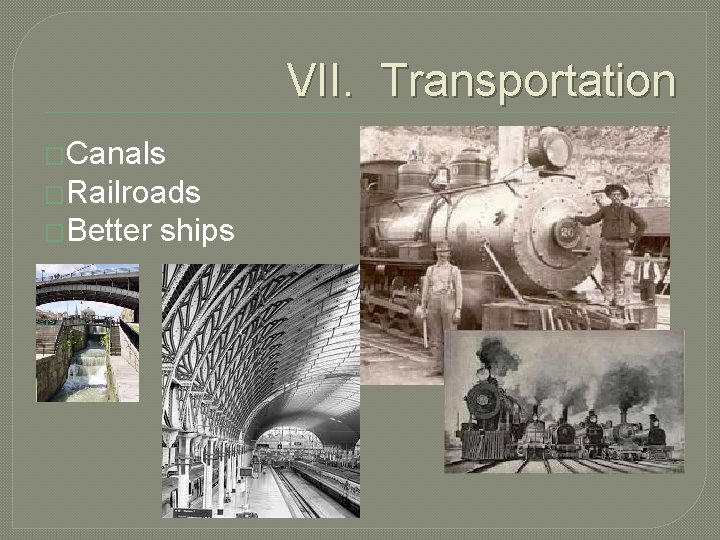
VII. Transportation �Canals �Railroads �Better ships
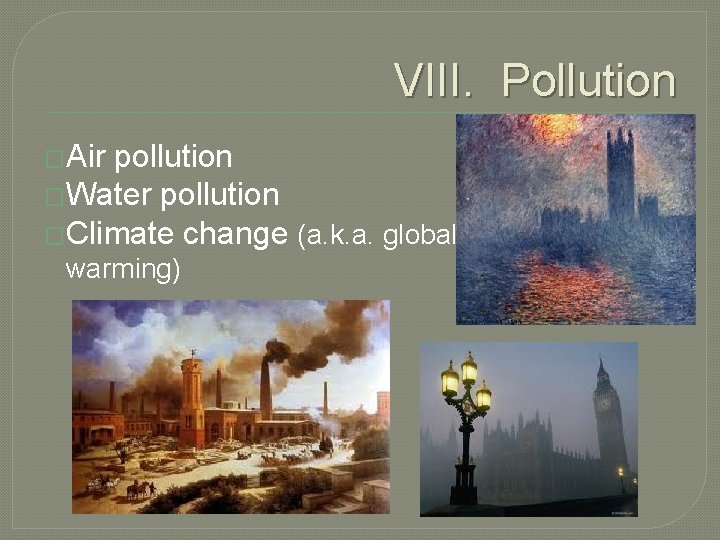
VIII. Pollution �Air pollution �Water pollution �Climate change (a. k. a. global warming)
- Slides: 11