
The Industrial Revolution Early 19 th century Background
The Industrial Revolution Early 19 th century
Background ® began in Great Britain ® spread to Belgium, France, Germany, the United States and Japan ® In 1750, most people in Europe lived on small farms and produced most of their needs by hand; by 1850, most goods were made in factories by machine
Causes ® Agrarian Revolution ® Geography ® Population Explosion ® Capital ® Technology & Energy

® Agrarian Revolution- 1600’s fertilizer, seed drill, enclosure, crop rotation more food population growth not enough jobs on the farm factories open in cities Urbanization/ Rise of Big Business
Effects ® ® ® ® Mass Production Big Business Laissez-Faire Economics New Social Class Structure Urbanization Poor Working Conditions/ Child Labor Reform Movements, Legislation, and The Rise of Unions ® ® ® Communism Malthusian Theory Imperialism Migrations Potato Famine
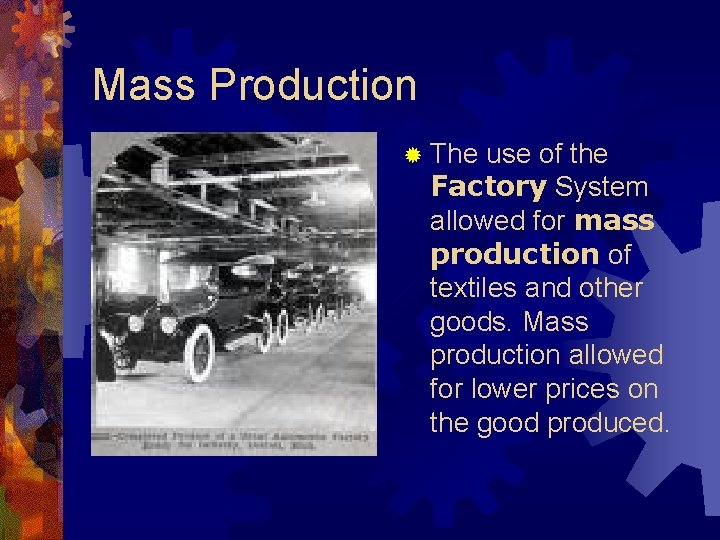
Mass Production ® The use of the Factory System allowed for mass production of textiles and other goods. Mass production allowed for lower prices on the good produced.
Big Business ® As the Industrial Revolution grew, so did business. To meet the needs of this growth, business owners sold shares of their companies to stockholders who would share the profits and losses. The influx of capital allowed business to grow into corporations that had dealing in many different areas.
Laissez-faire Economics philosophy begun by Adam Smith in his book, Wealth of Nations, that stated that business and the economy would run best with no interference from the government. (Competition is good). This economic system dominated most of the Industrial Revolution. ® Economic
New Social Structure ® ® ® ® Upper Class: Very rich industrial & business families. Old Noble class. Upper Middle Class: Business people & professionals such as, lawyers & doctors. Lower Middle Class: Other professionals such as, teachers, shop owners, and office workers. Working Class: Factory workers and small farmers.
Urbanization ® People moved to towns and cities to be closer to the factories. Conditions were very poor during the early part of the Industrial Revolution, as factory workers lived in over crowded buildings, with no sewage or sanitation services. This resulted in widespread disease.
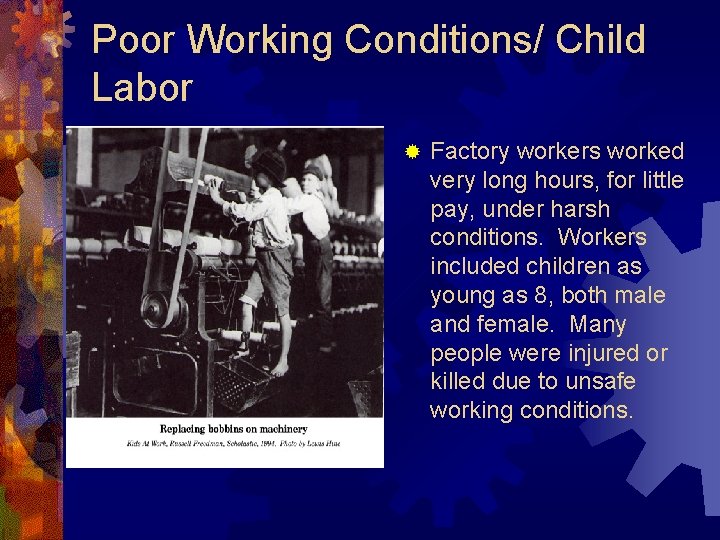
Poor Working Conditions/ Child Labor ® Factory workers worked very long hours, for little pay, under harsh conditions. Workers included children as young as 8, both male and female. Many people were injured or killed due to unsafe working conditions.
Economic Philosophies ® Pro-Business ® Laissez-faire capitalism-Adam Smith ® Survival of the Fittest - Herbert Spencer ® Malthusian Theory. Thomas Malthus ® Law of Wages- David Ricardo ® Pro-Worker ® Utopian Socialism. Robert Owen ® Communism- Karl Marx
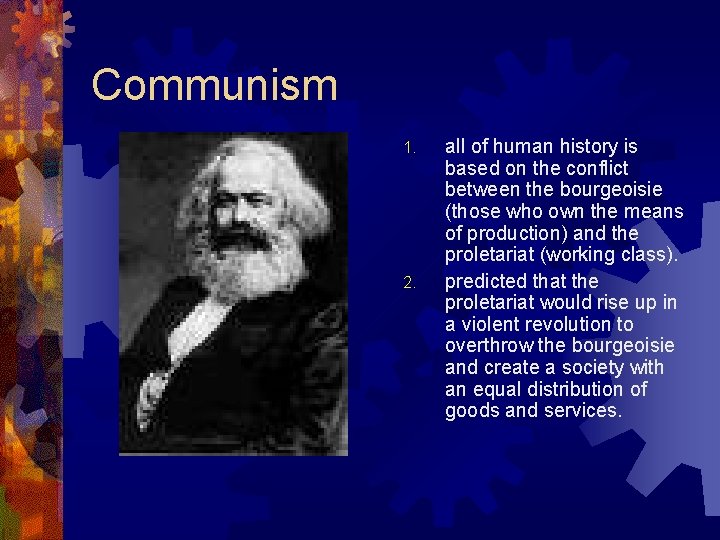
Communism 1. 2. all of human history is based on the conflict between the bourgeoisie (those who own the means of production) and the proletariat (working class). predicted that the proletariat would rise up in a violent revolution to overthrow the bourgeoisie and create a society with an equal distribution of goods and services.
Malthusian Theory ® Population would outpace food supply famine, disease war would keep population in check
Reform Movements, Legislation, and the Rise of Unions ® Factory Acts would limit the use of child labor, improve factory work conditions, and set minimum wage rates
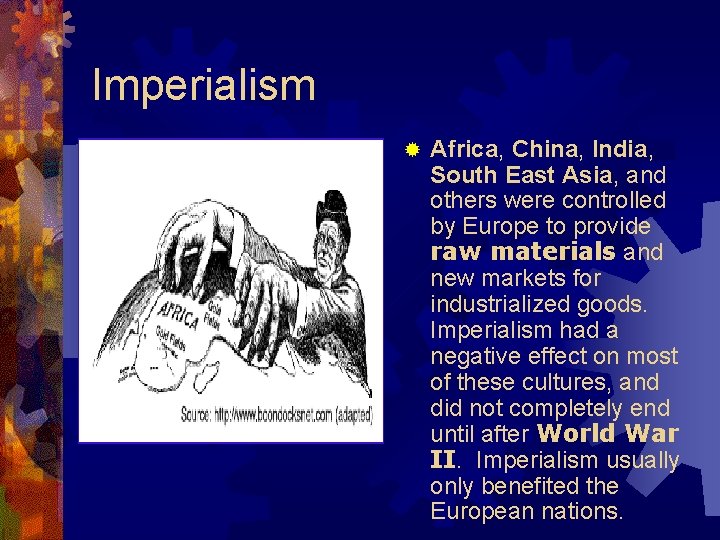
Imperialism ® Africa, China, India, South East Asia, and others were controlled by Europe to provide raw materials and new markets for industrialized goods. Imperialism had a negative effect on most of these cultures, and did not completely end until after World War II. Imperialism usually only benefited the European nations.
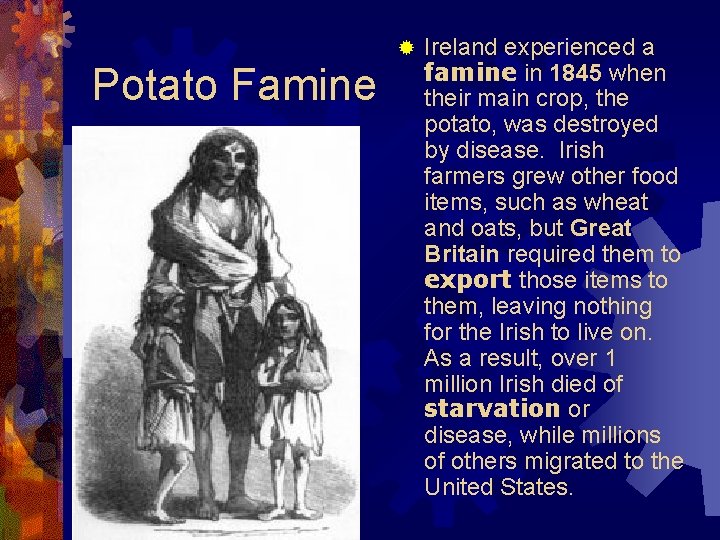
® Potato Famine Ireland experienced a famine in 1845 when their main crop, the potato, was destroyed by disease. Irish farmers grew other food items, such as wheat and oats, but Great Britain required them to export those items to them, leaving nothing for the Irish to live on. As a result, over 1 million Irish died of starvation or disease, while millions of others migrated to the United States.
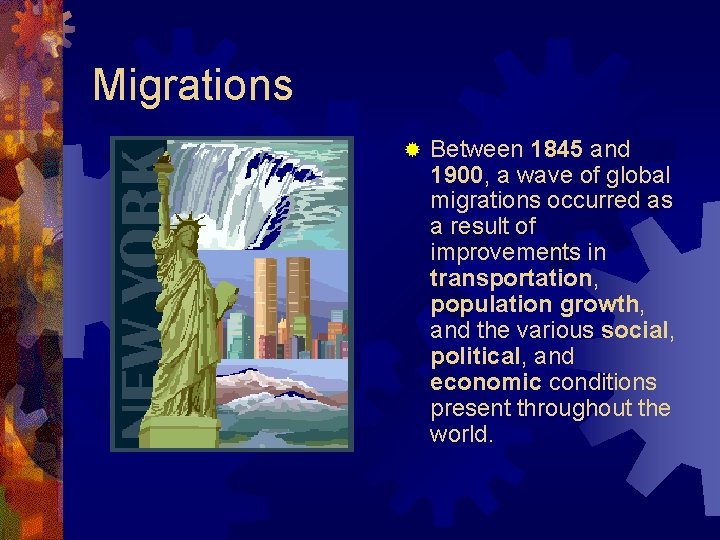
Migrations ® Between 1845 and 1900, a wave of global migrations occurred as a result of improvements in transportation, population growth, and the various social, political, and economic conditions present throughout the world.
Connections to Today ® World Population has hit 7 billion ® Industrial Pollution Global Warming increasing number of superstorms (Hurricane Katrina, Superstorm Sandy, Taiphoon Haiyan) ® 2 billion people live on less than $2 a day ® Famine and war plague developing nations ® Child Labor continues in the developing world
- Slides: 19