
The Industrial Revolution Cottage Industry Putting Out System


- Slides: 25
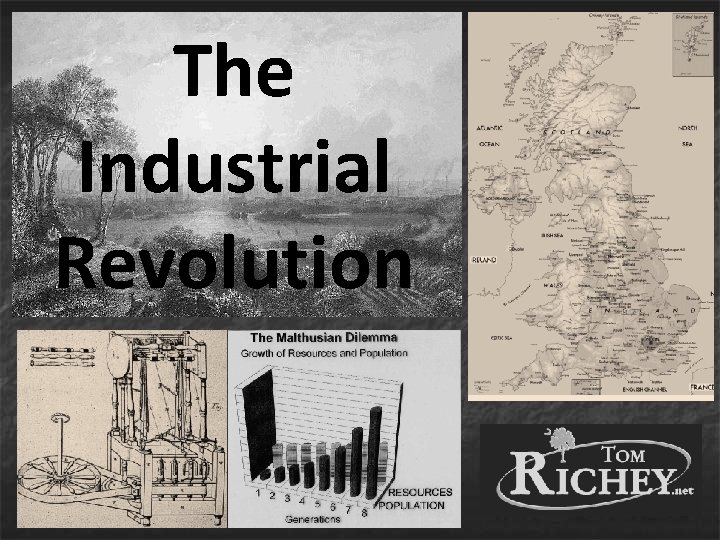
The Industrial Revolution
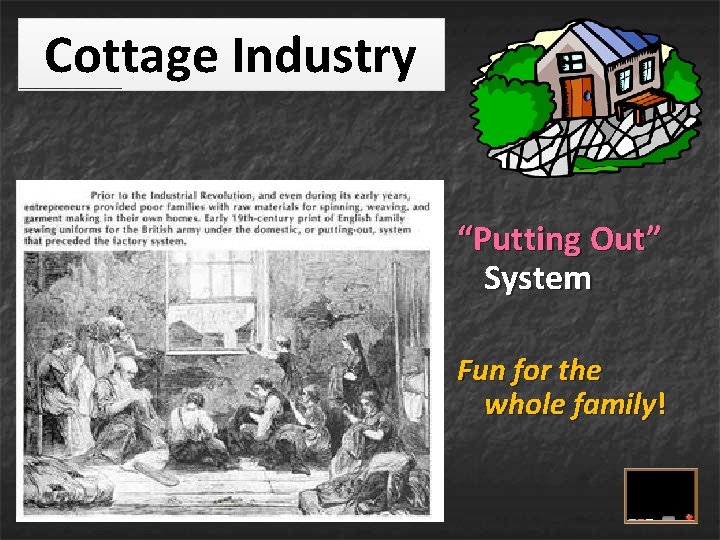
Cottage Industry “Putting Out” System Fun for the whole family!
Supervision Difficult to supervise rural workers “Holy Monday” SOLUTION: Factory Production
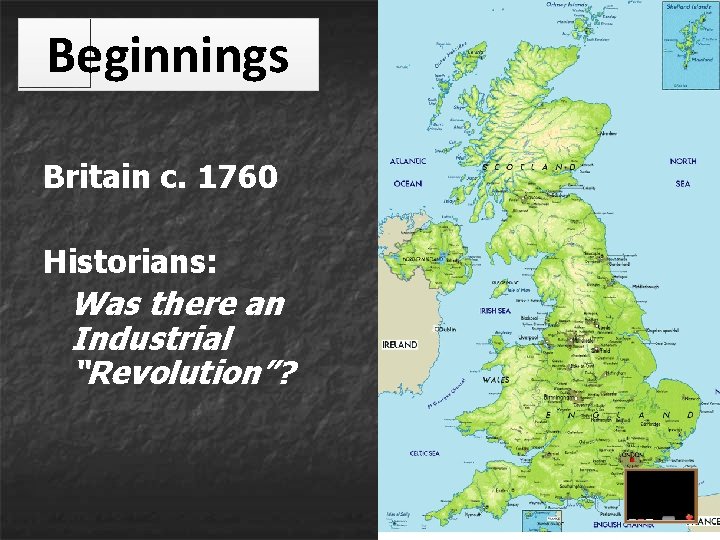
Beginnings Britain c. 1760 Historians: Was there an Industrial “Revolution”?
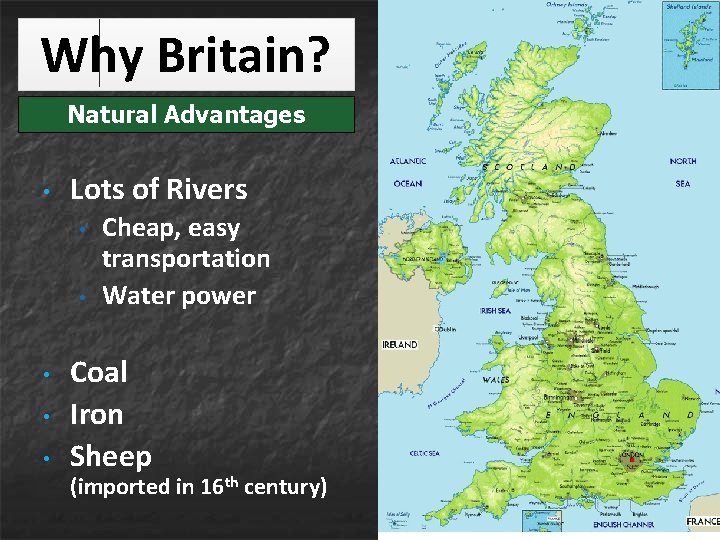
Why Britain? Natural Advantages • Lots of Rivers • • • Cheap, easy transportation Water power Coal Iron Sheep (imported in 16 th century)
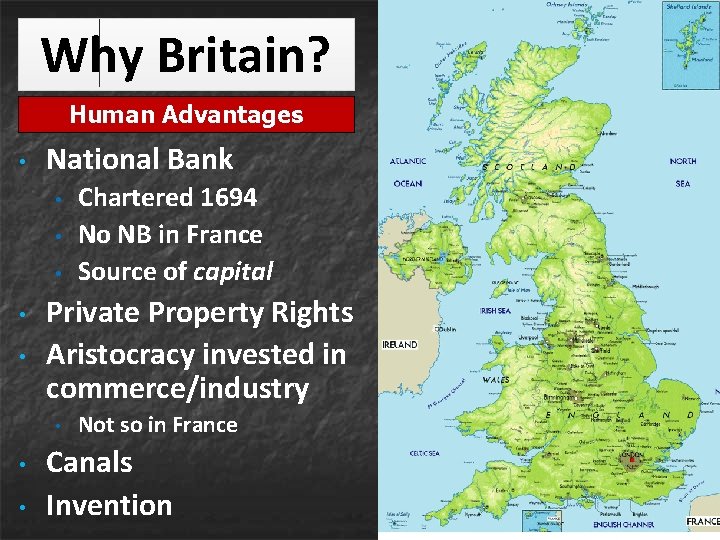
Why Britain? Human Advantages • National Bank • • • Private Property Rights Aristocracy invested in commerce/industry • • • Chartered 1694 No NB in France Source of capital Not so in France Canals Invention
Why Britain? Natural Advantages Human Advantages
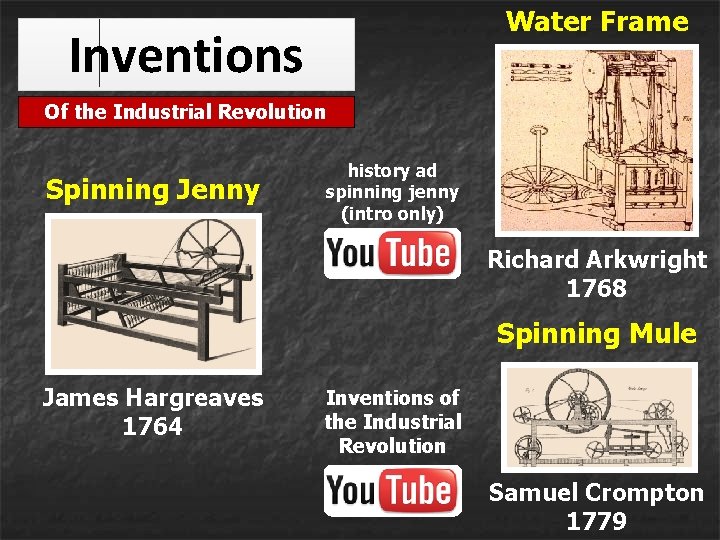
Water Frame Inventions Of the Industrial Revolution Spinning Jenny history ad spinning jenny (intro only) Richard Arkwright 1768 Spinning Mule James Hargreaves 1764 Inventions of the Industrial Revolution Samuel Crompton 1779
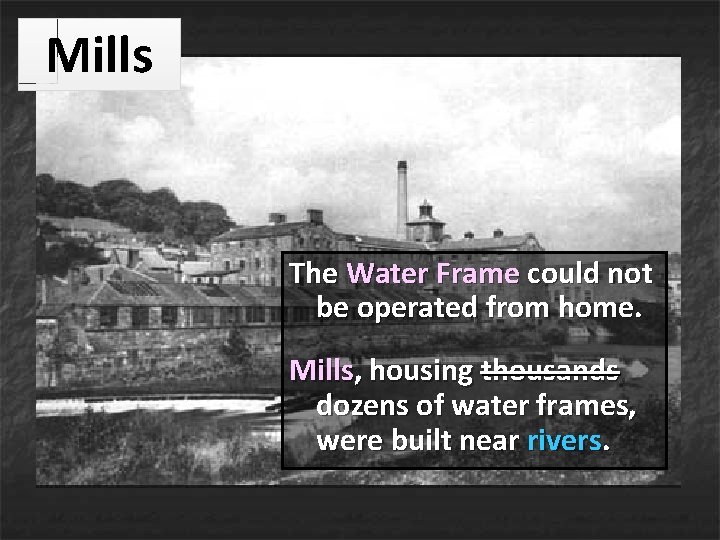
Mills The Water Frame could not be operated from home. Mills, housing thousands dozens of water frames, were built near rivers.
Water Power Water power is finite – only so many water frames could be built, and only by major rivers. Goods still produced on a small scale in the countryside.
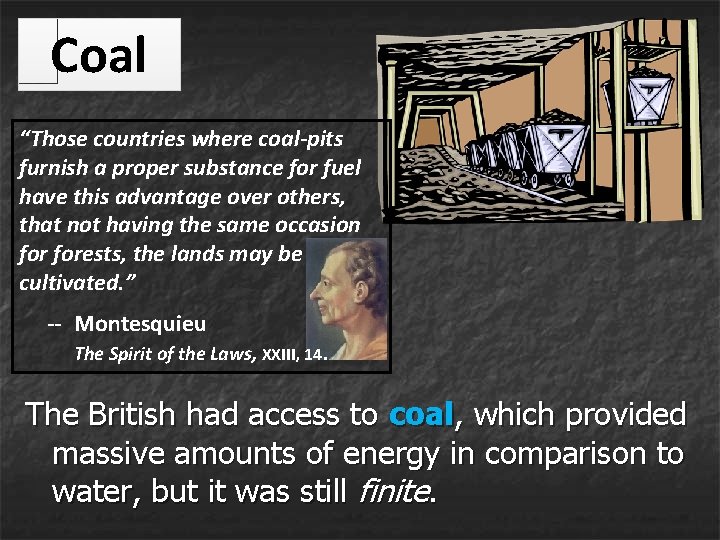
Coal “Those countries where coal-pits furnish a proper substance for fuel have this advantage over others, that not having the same occasion forests, the lands may be cultivated. ” -- Montesquieu The Spirit of the Laws, XXIII, 14. The British had access to coal, which provided massive amounts of energy in comparison to water, but it was still finite.
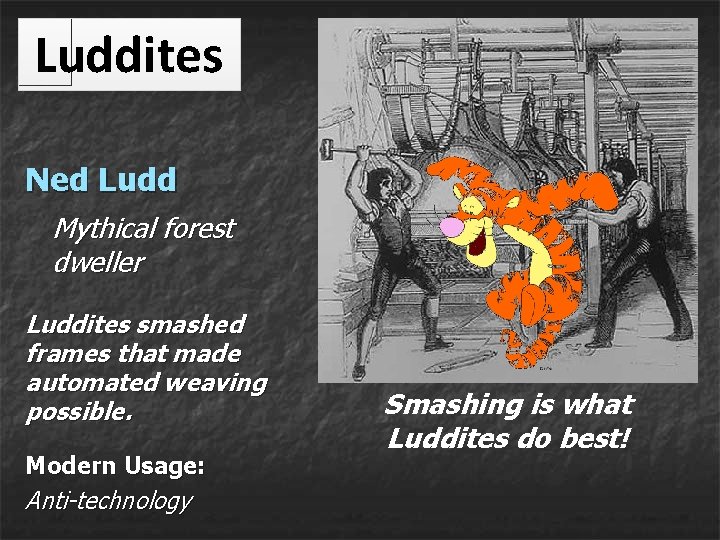
Luddites Ned Ludd Mythical forest dweller Luddites smashed frames that made automated weaving possible. Modern Usage: Anti-technology Smashing is what Luddites do best!
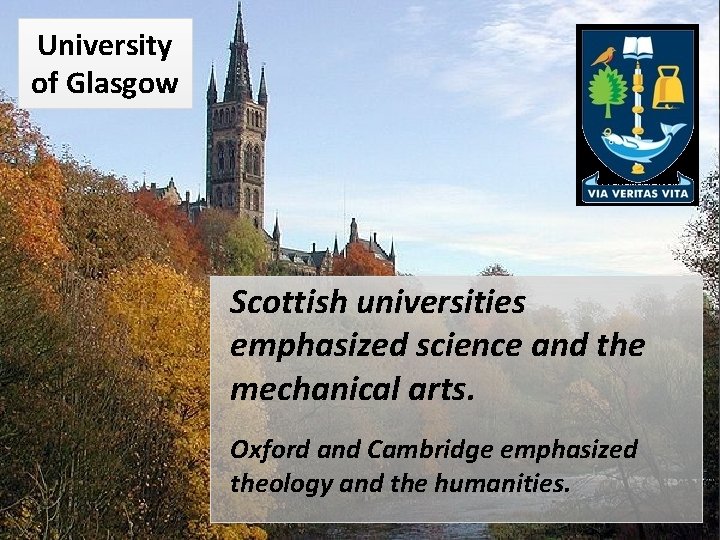
University of Glasgow Scottish universities emphasized science and the mechanical arts. Oxford and Cambridge emphasized theology and the humanities.
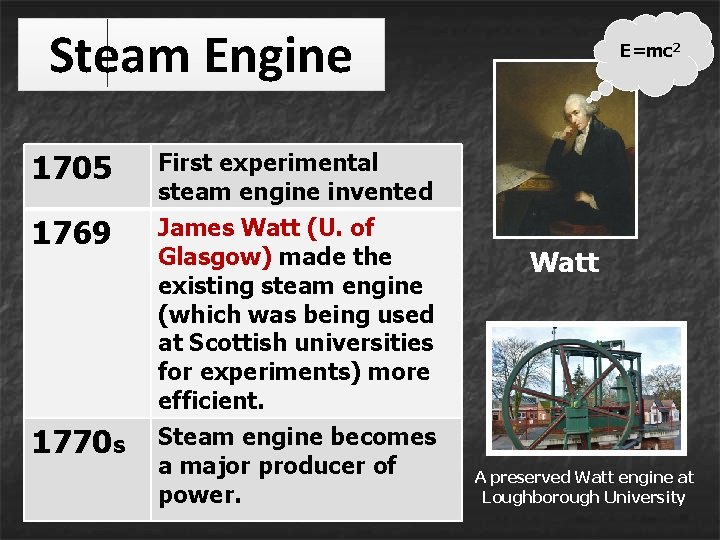
Steam Engine 1705 First experimental steam engine invented 1769 James Watt (U. of Glasgow) made the existing steam engine (which was being used at Scottish universities for experiments) more efficient. 1770 s Steam engine becomes a major producer of power. E=mc 2 Watt A preserved Watt engine at Loughborough University
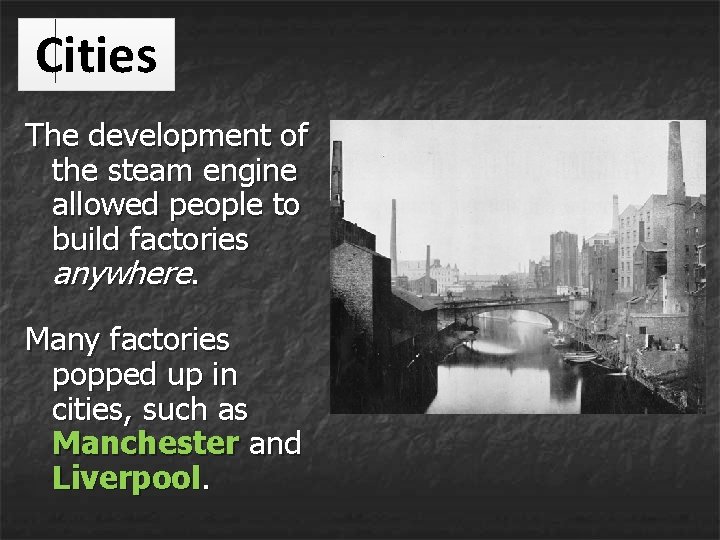
Cities The development of the steam engine allowed people to build factories anywhere. Many factories popped up in cities, such as Manchester and Liverpool.
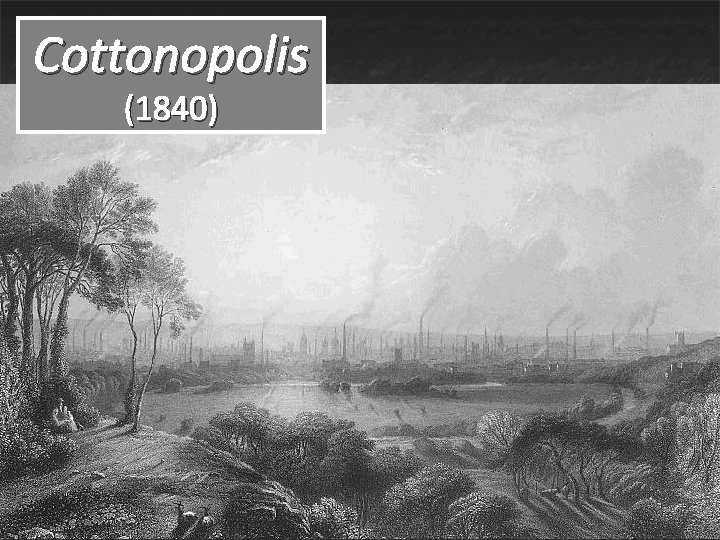
Cottonopolis (1840)
A Foreign Traveler’s Impression n Alexis de Tocqueville n n Journeys to England Ireland Visiting Manchester
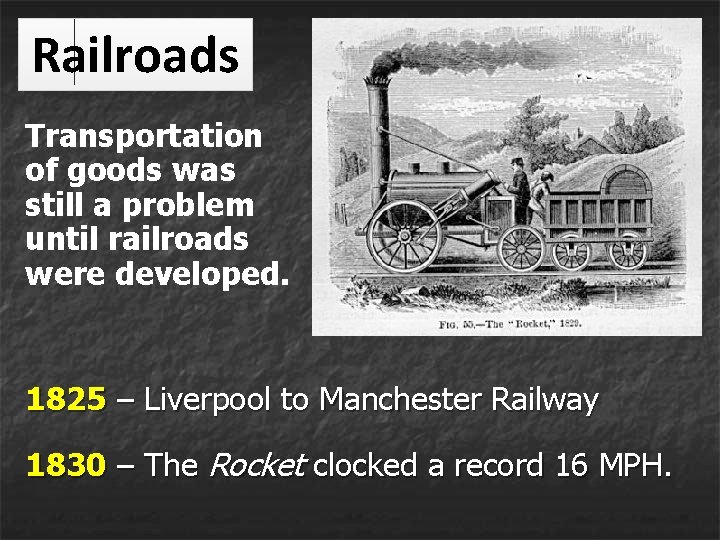
Railroads Transportation of goods was still a problem until railroads were developed. 1825 – Liverpool to Manchester Railway 1830 – The Rocket clocked a record 16 MPH.
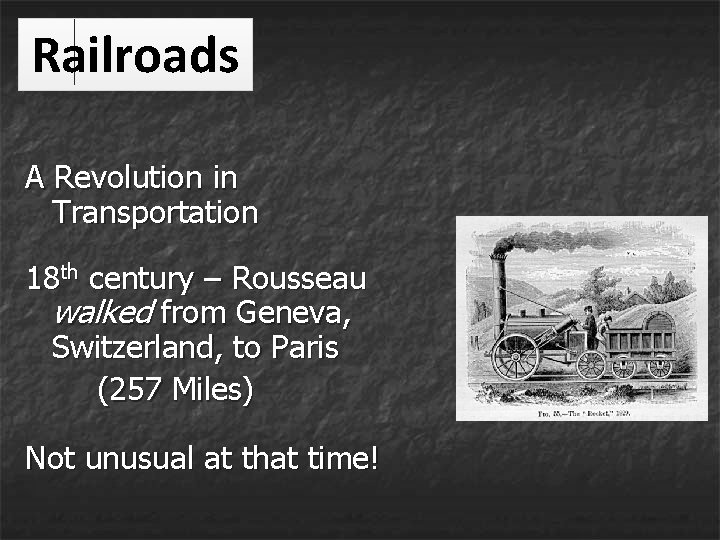
Railroads A Revolution in Transportation 18 th century – Rousseau walked from Geneva, Switzerland, to Paris (257 Miles) Not unusual at that time!
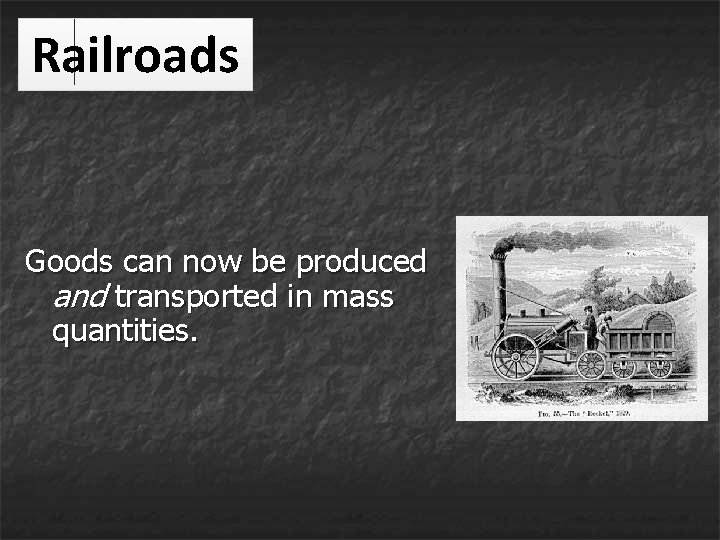
Railroads Goods can now be produced and transported in mass quantities.
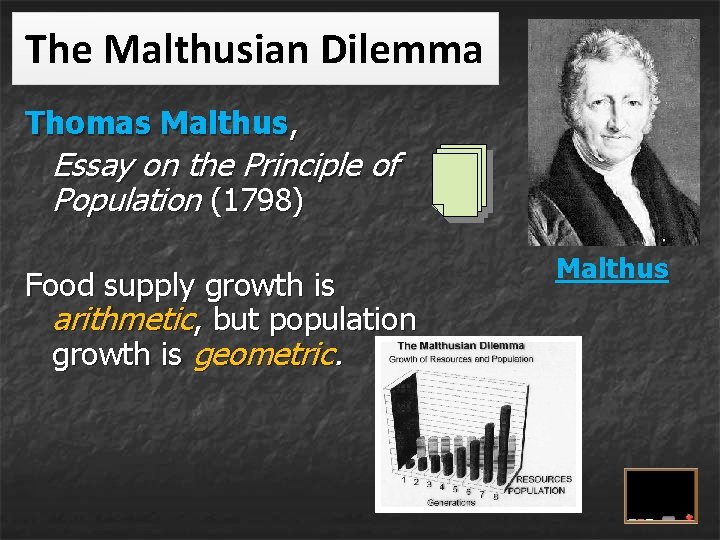
The Malthusian Dilemma Thomas Malthus, Essay on the Principle of Population (1798) Food supply growth is arithmetic, but population growth is geometric. Malthus
Population Growth D. Ricardo, Iron Law of Wages Higher wages will only result in population growth. Therefore, workers should only be paid subsistence wages.
“Dismal Science” Malthus and Ricardo cause others, such as Thomas Carlyle, to refer to economics as the “dismal science. ” Their theories were correct in the short run, but wrong in the long run. Production Possibilities Curve (Next Slide)
Production Possibilities Curve A good explanation of the PPC can be found here. New technology can make production (including food) more efficient. http: //www. pcecon. com/notes/prodposs. html
Standard of Living n Depends on Time Period n n 1820’s, 1830’s, 1850’s… Momentary shock, but conditions improved