
The Industrial Revolution Circa 1700 1850 The Industrial
- Slides: 38
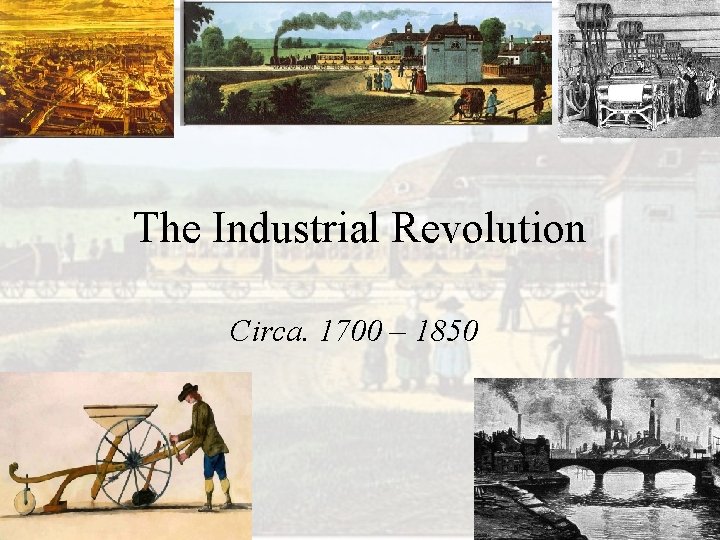
The Industrial Revolution Circa. 1700 – 1850
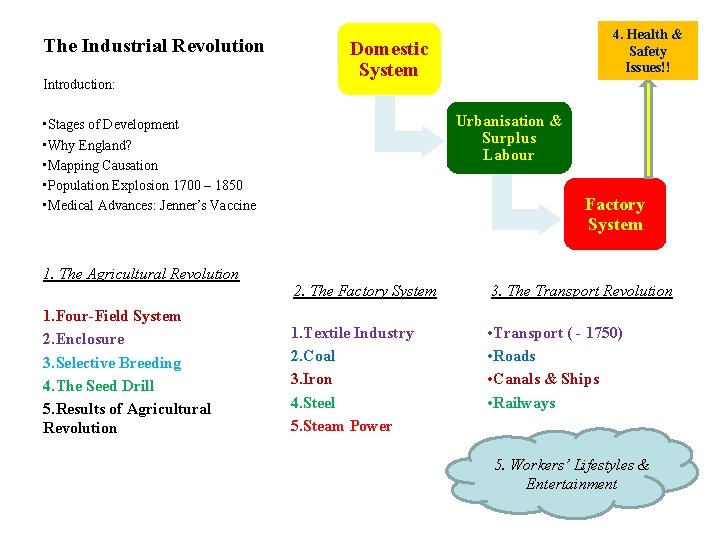
The Industrial Revolution Introduction: Domestic System Urbanisation & Surplus Labour • Stages of Development • Why England? • Mapping Causation • Population Explosion 1700 – 1850 • Medical Advances: Jenner’s Vaccine 1. The Agricultural Revolution 1. Four-Field System 2. Enclosure 3. Selective Breeding 4. The Seed Drill 5. Results of Agricultural Revolution 4. Health & Safety Issues!! Factory System 2. The Factory System 3. The Transport Revolution 1. Textile Industry 2. Coal 3. Iron 4. Steel 5. Steam Power • Transport ( - 1750) • Roads • Canals & Ships • Railways 5. Workers’ Lifestyles & Entertainment
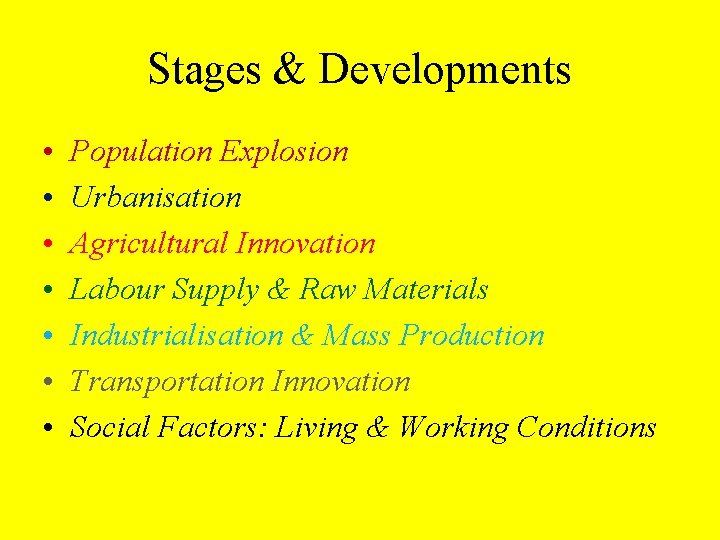
Stages & Developments • • Population Explosion Urbanisation Agricultural Innovation Labour Supply & Raw Materials Industrialisation & Mass Production Transportation Innovation Social Factors: Living & Working Conditions
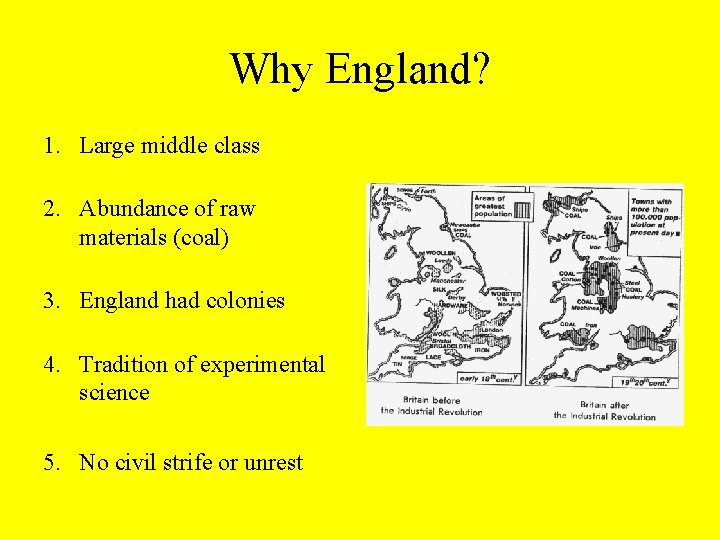
Why England? 1. Large middle class 2. Abundance of raw materials (coal) 3. England had colonies 4. Tradition of experimental science 5. No civil strife or unrest
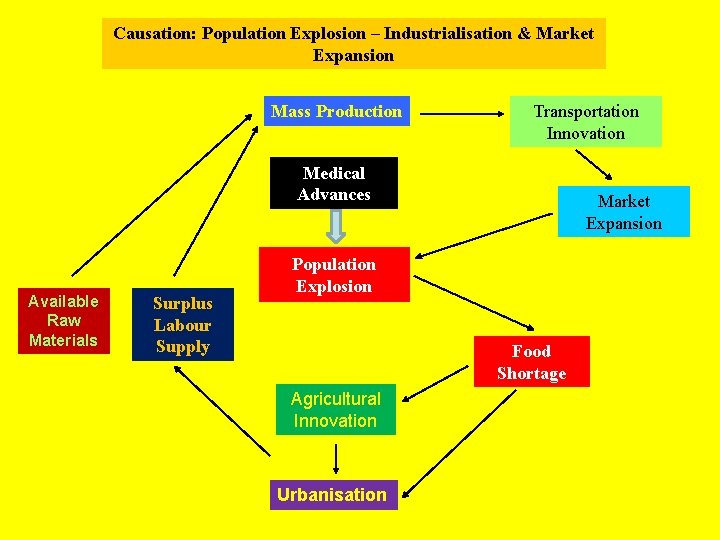
Causation: Population Explosion – Industrialisation & Market Expansion Mass Production Transportation Innovation Medical Advances Available Raw Materials Surplus Labour Supply Market Expansion Population Explosion Food Shortage Agricultural Innovation Urbanisation
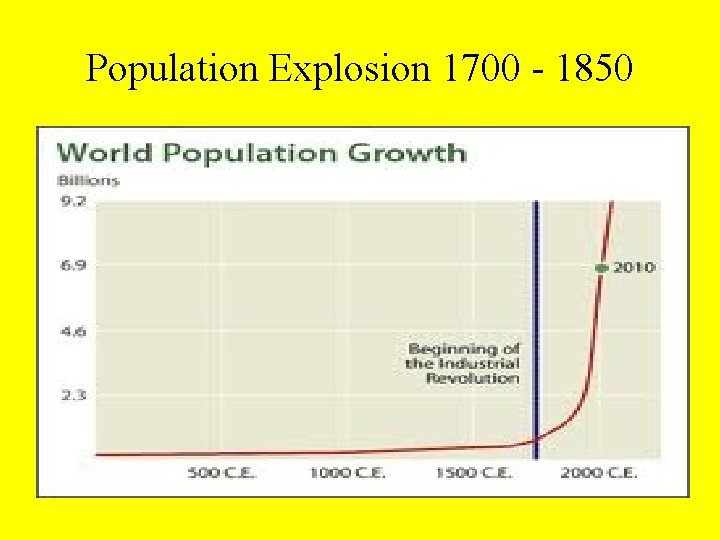
Population Explosion 1700 - 1850
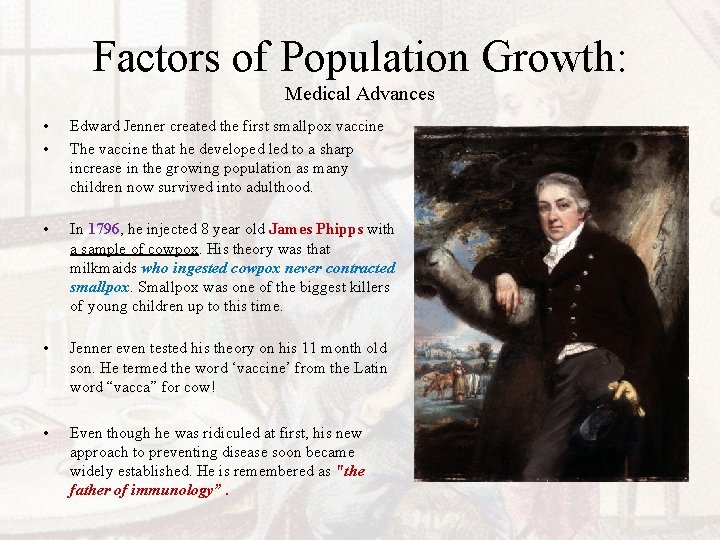
Factors of Population Growth: Medical Advances • • Edward Jenner created the first smallpox vaccine The vaccine that he developed led to a sharp increase in the growing population as many children now survived into adulthood. • In 1796, he injected 8 year old James Phipps with a sample of cowpox. His theory was that milkmaids who ingested cowpox never contracted smallpox. Smallpox was one of the biggest killers of young children up to this time. • Jenner even tested his theory on his 11 month old son. He termed the word ‘vaccine’ from the Latin word “vacca” for cow! • Even though he was ridiculed at first, his new approach to preventing disease soon became widely established. He is remembered as "the father of immunology”.
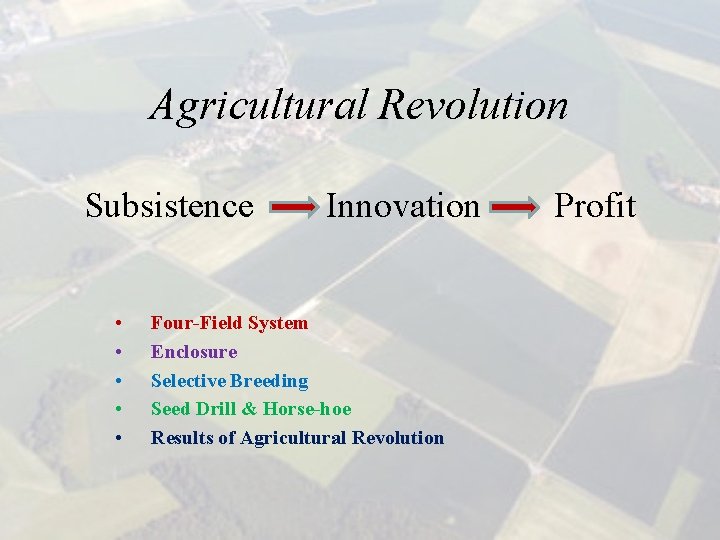
Agricultural Revolution Subsistence • • • Innovation Four-Field System Enclosure Selective Breeding Seed Drill & Horse-hoe Results of Agricultural Revolution Profit
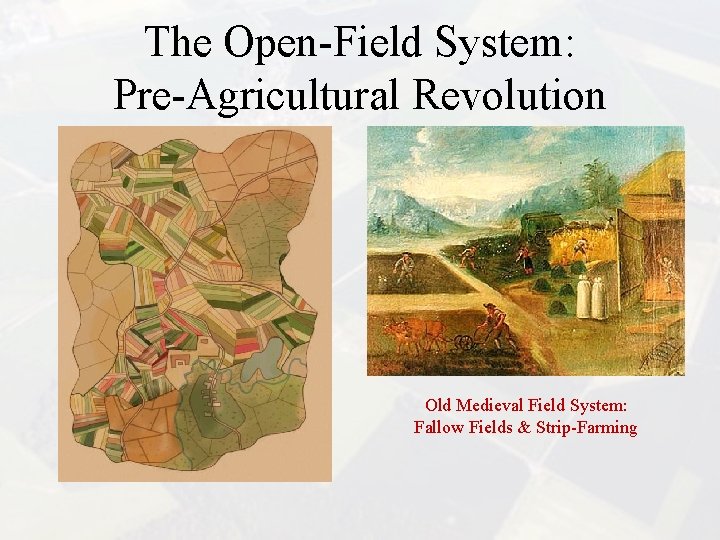
The Open-Field System: Pre-Agricultural Revolution Old Medieval Field System: Fallow Fields & Strip-Farming
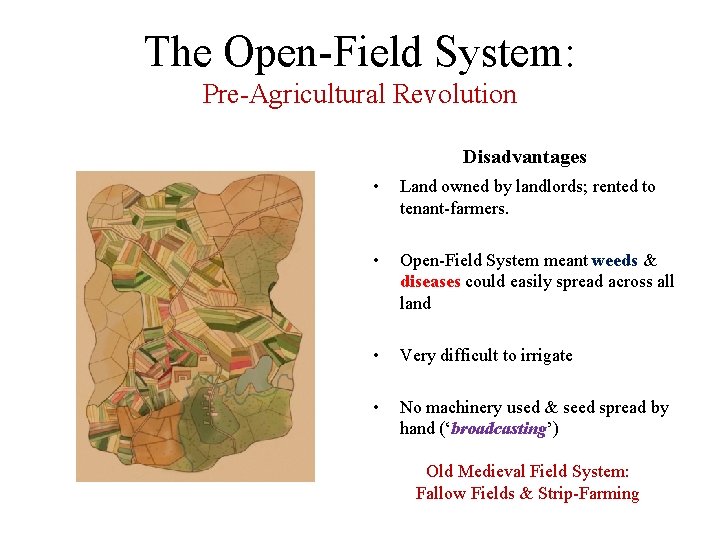
The Open-Field System: Pre-Agricultural Revolution Disadvantages • Land owned by landlords; rented to tenant-farmers. • Open-Field System meant weeds & diseases could easily spread across all land • Very difficult to irrigate • No machinery used & seed spread by hand (‘broadcasting’) Old Medieval Field System: Fallow Fields & Strip-Farming
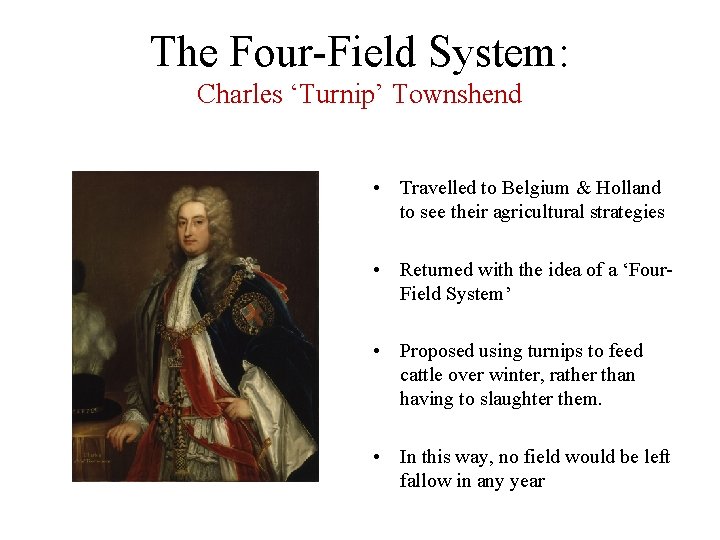
The Four-Field System: Charles ‘Turnip’ Townshend • Travelled to Belgium & Holland to see their agricultural strategies • Returned with the idea of a ‘Four. Field System’ • Proposed using turnips to feed cattle over winter, rather than having to slaughter them. • In this way, no field would be left fallow in any year
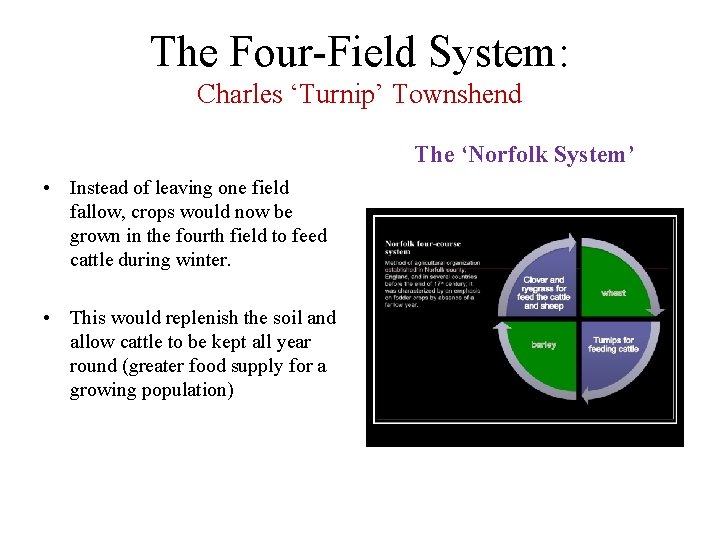
The Four-Field System: Charles ‘Turnip’ Townshend The ‘Norfolk System’ • Instead of leaving one field fallow, crops would now be grown in the fourth field to feed cattle during winter. • This would replenish the soil and allow cattle to be kept all year round (greater food supply for a growing population)
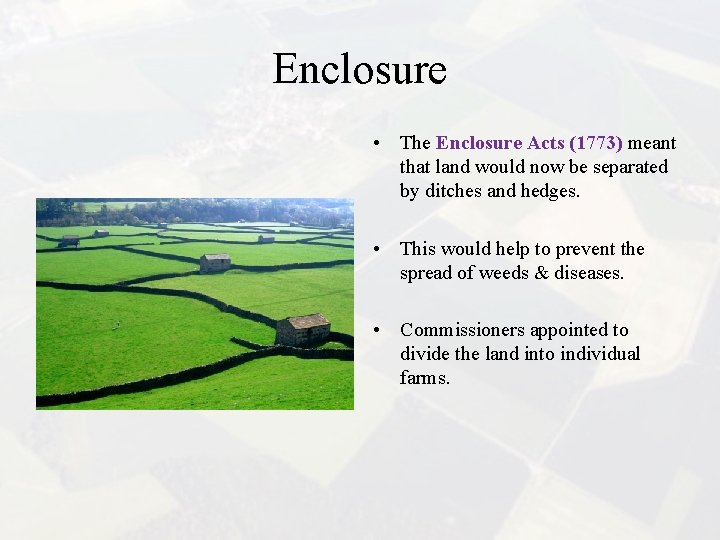
Enclosure • The Enclosure Acts (1773) meant that land would now be separated by ditches and hedges. • This would help to prevent the spread of weeds & diseases. • Commissioners appointed to divide the land into individual farms.
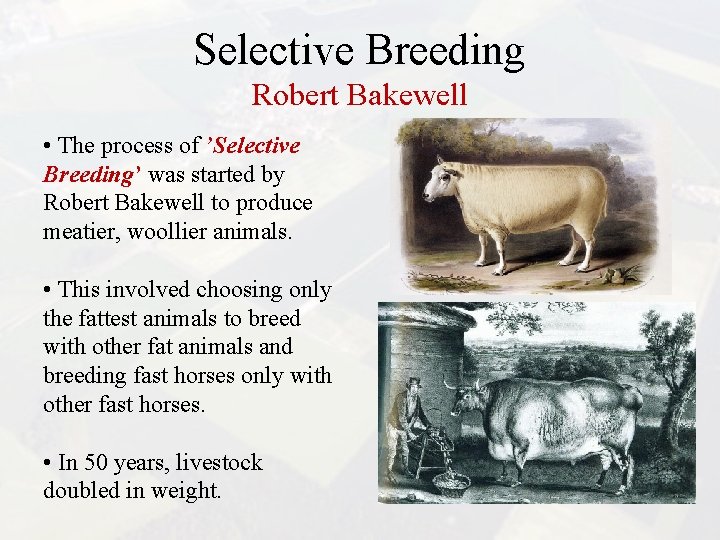
Selective Breeding Robert Bakewell • The process of ’Selective Breeding’ was started by Robert Bakewell to produce meatier, woollier animals. • This involved choosing only the fattest animals to breed with other fat animals and breeding fast horses only with other fast horses. • In 50 years, livestock doubled in weight.
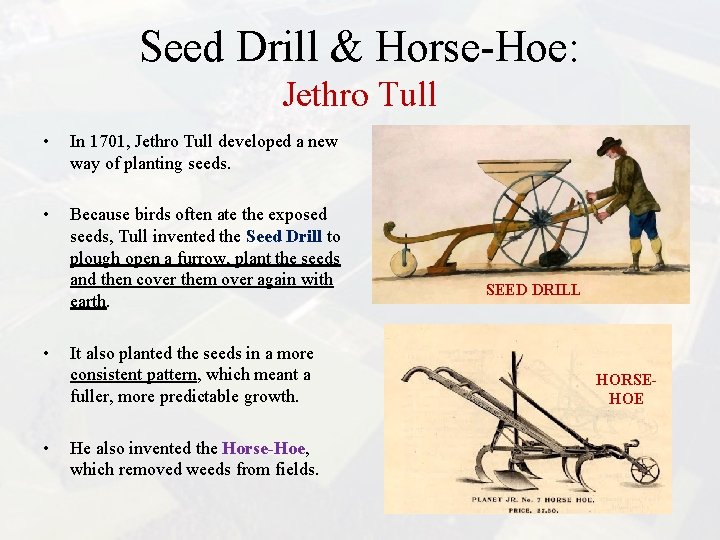
Seed Drill & Horse-Hoe: Jethro Tull • In 1701, Jethro Tull developed a new way of planting seeds. • Because birds often ate the exposed seeds, Tull invented the Seed Drill to plough open a furrow, plant the seeds and then cover them over again with earth. • • It also planted the seeds in a more consistent pattern, which meant a fuller, more predictable growth. He also invented the Horse-Hoe, which removed weeds from fields. SEED DRILL HORSEHOE
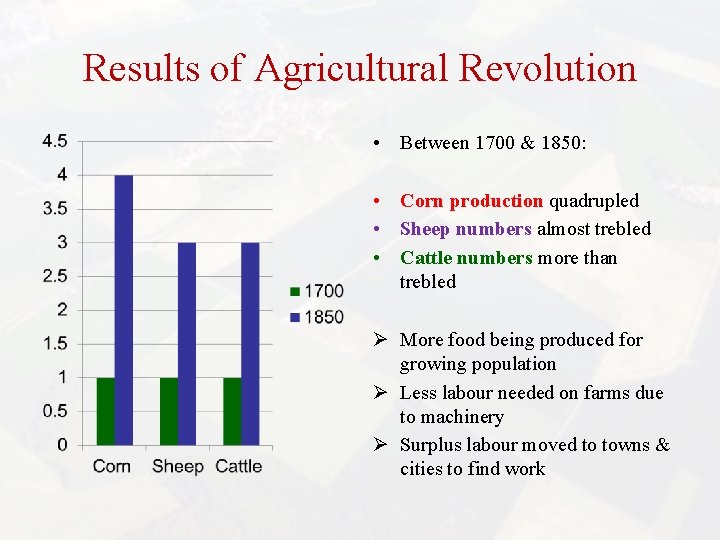
Results of Agricultural Revolution • Between 1700 & 1850: • Corn production quadrupled • Sheep numbers almost trebled • Cattle numbers more than trebled Ø More food being produced for growing population Ø Less labour needed on farms due to machinery Ø Surplus labour moved to towns & cities to find work
Urbanisation & The Factory System 1750 - 1850 • • • Urbanisation & Population Shift 1750 – 1850 The Domestic System The Factory System: Mass Production The Factory System: Protest & Reform Movements The Factory System: Robert Owen The Factory System: Reforms & New Laws The Factory System: Textiles The Factory System: Powering the Industrial Revolution: Coal The Factory System: Iron Production The Factory System: Steam Power
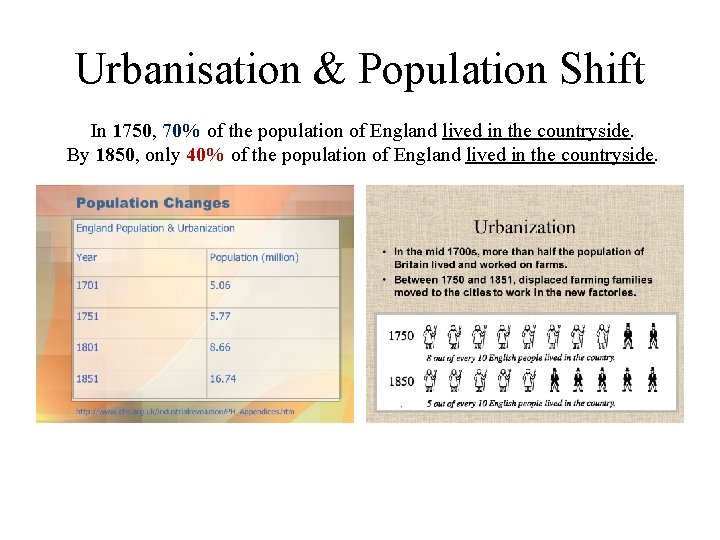
Urbanisation & Population Shift In 1750, 70% of the population of England lived in the countryside. By 1850, only 40% of the population of England lived in the countryside.
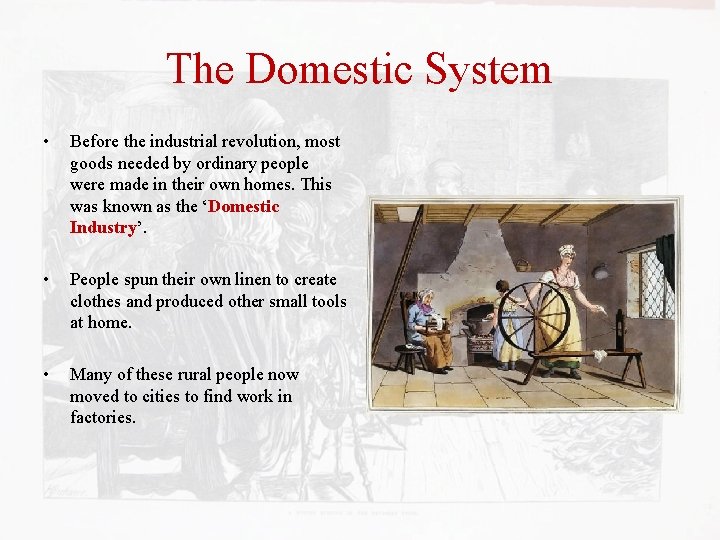
The Domestic System • Before the industrial revolution, most goods needed by ordinary people were made in their own homes. This was known as the ‘Domestic Industry’. • People spun their own linen to create clothes and produced other small tools at home. • Many of these rural people now moved to cities to find work in factories.
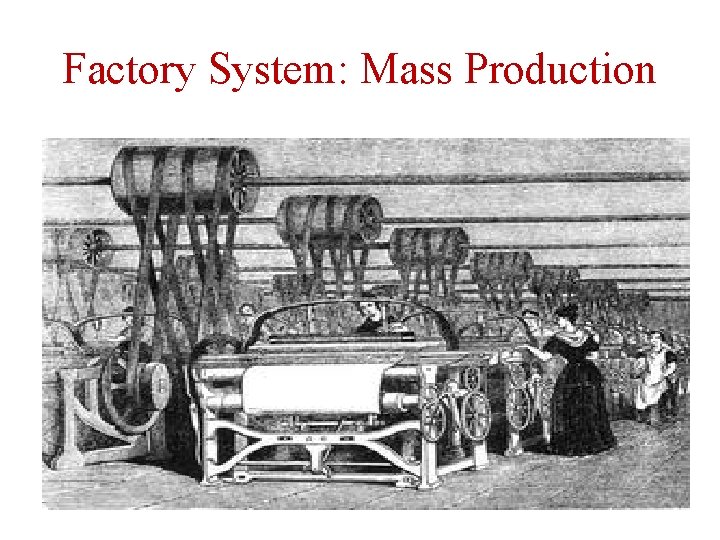
Factory System: Mass Production
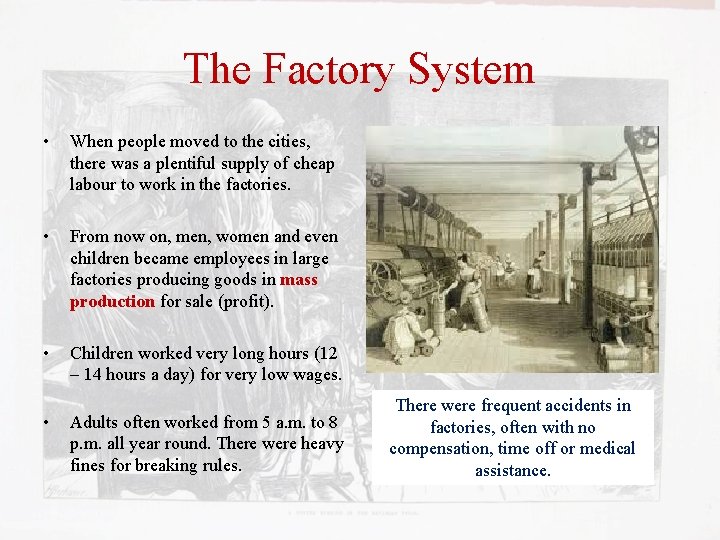
The Factory System • When people moved to the cities, there was a plentiful supply of cheap labour to work in the factories. • From now on, men, women and even children became employees in large factories producing goods in mass production for sale (profit). • Children worked very long hours (12 – 14 hours a day) for very low wages. • Adults often worked from 5 a. m. to 8 p. m. all year round. There were heavy fines for breaking rules. There were frequent accidents in factories, often with no compensation, time off or medical assistance.
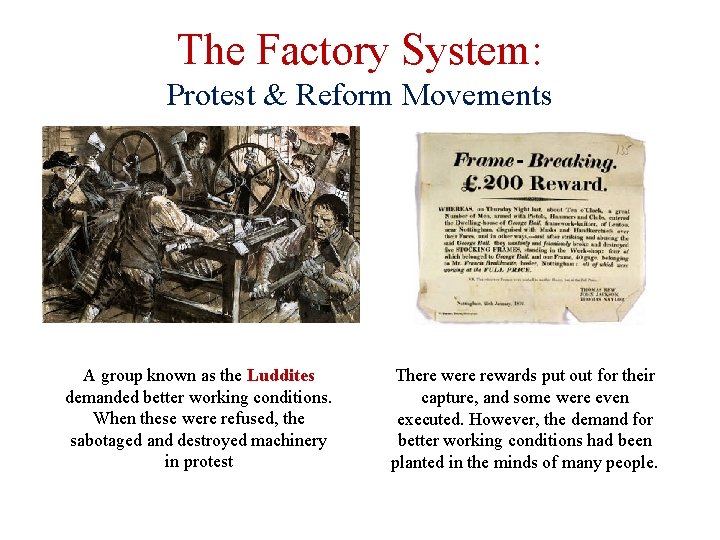
The Factory System: Protest & Reform Movements A group known as the Luddites demanded better working conditions. When these were refused, the sabotaged and destroyed machinery in protest There were rewards put out for their capture, and some were even executed. However, the demand for better working conditions had been planted in the minds of many people.
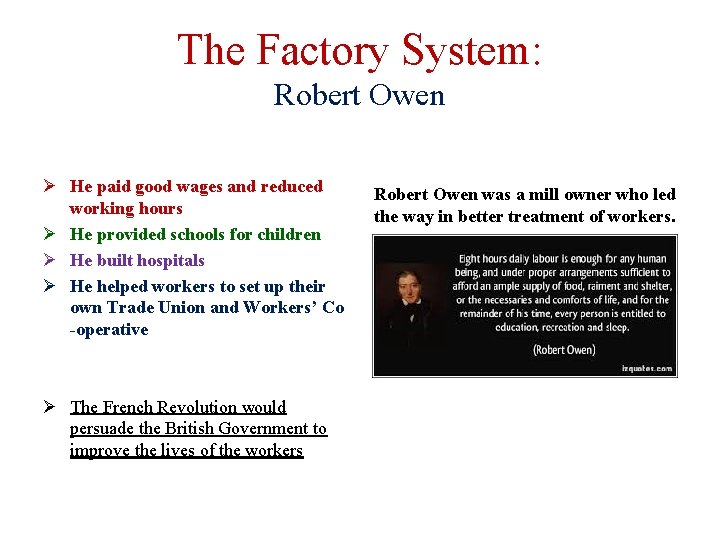
The Factory System: Robert Owen Ø He paid good wages and reduced working hours Ø He provided schools for children Ø He built hospitals Ø He helped workers to set up their own Trade Union and Workers’ Co -operative Ø The French Revolution would persuade the British Government to improve the lives of the workers Robert Owen was a mill owner who led the way in better treatment of workers.
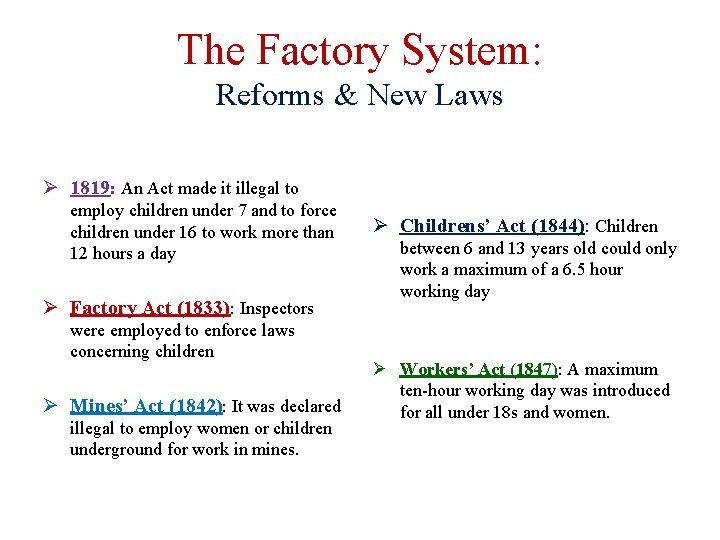
The Factory System: Reforms & New Laws Ø 1819: An Act made it illegal to employ children under 7 and to force children under 16 to work more than 12 hours a day Ø Factory Act (1833): Inspectors were employed to enforce laws concerning children Ø Mines’ Act (1842): It was declared illegal to employ women or children underground for work in mines. Ø Childrens’ Act (1844): Children between 6 and 13 years old could only work a maximum of a 6. 5 hour working day Ø Workers’ Act (1847): A maximum ten-hour working day was introduced for all under 18 s and women.
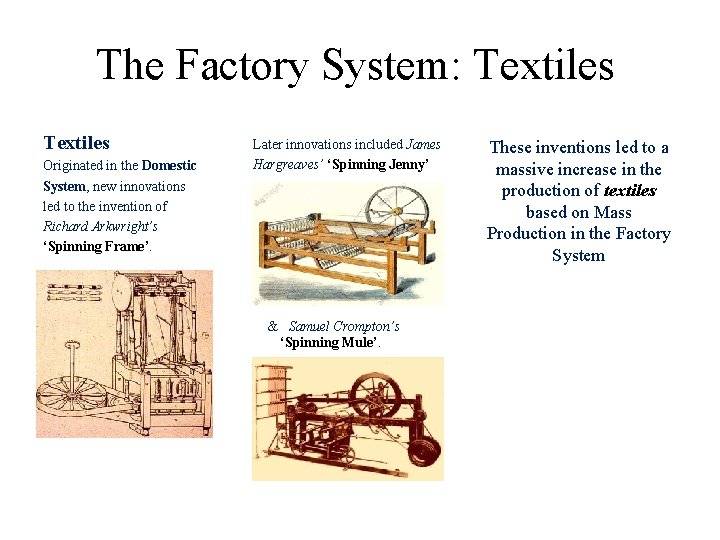
The Factory System: Textiles Originated in the Domestic System, new innovations led to the invention of Richard Arkwright’s ‘Spinning Frame’. Later innovations included James Hargreaves’ ‘Spinning Jenny’ & Samuel Crompton’s ‘Spinning Mule’. These inventions led to a massive increase in the production of textiles based on Mass Production in the Factory System
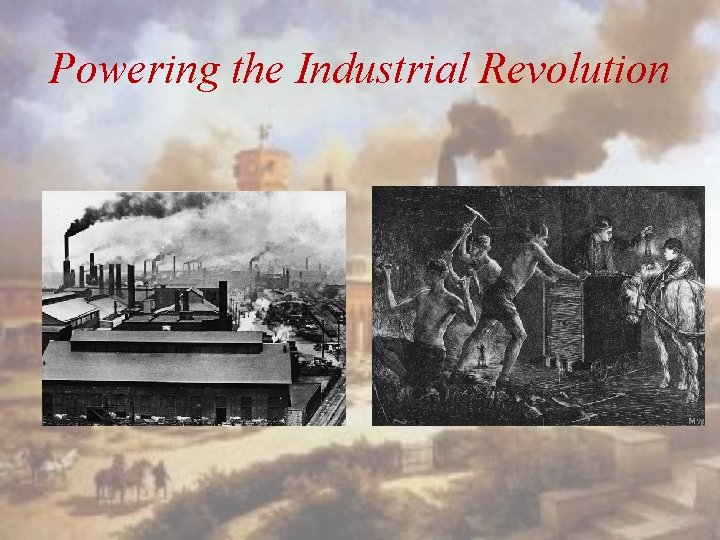
Powering the Industrial Revolution
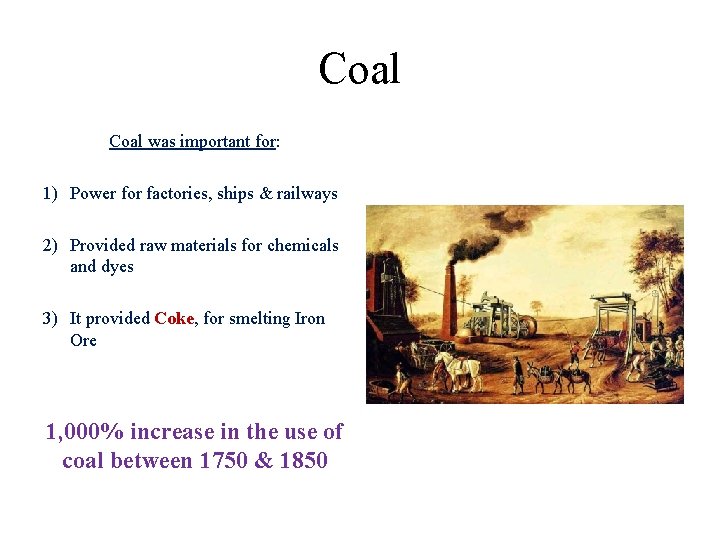
Coal was important for: 1) Power for factories, ships & railways 2) Provided raw materials for chemicals and dyes 3) It provided Coke, for smelting Iron Ore 1, 000% increase in the use of coal between 1750 & 1850
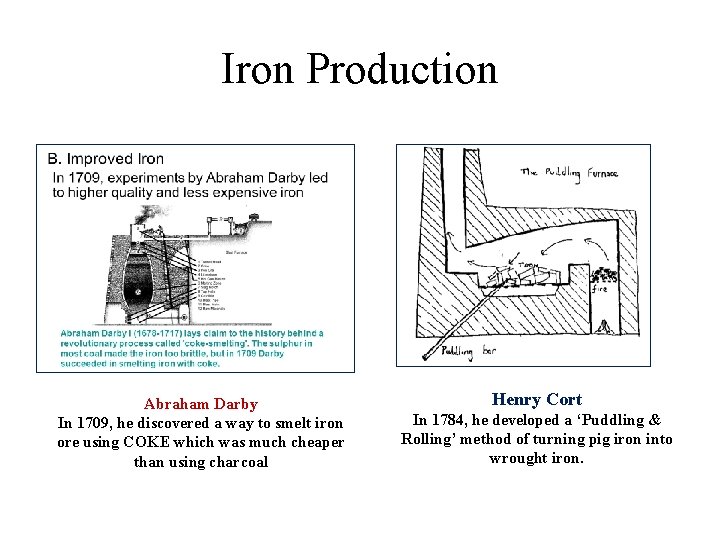
Iron Production Abraham Darby In 1709, he discovered a way to smelt iron ore using COKE which was much cheaper than using charcoal Henry Cort In 1784, he developed a ‘Puddling & Rolling’ method of turning pig iron into wrought iron.
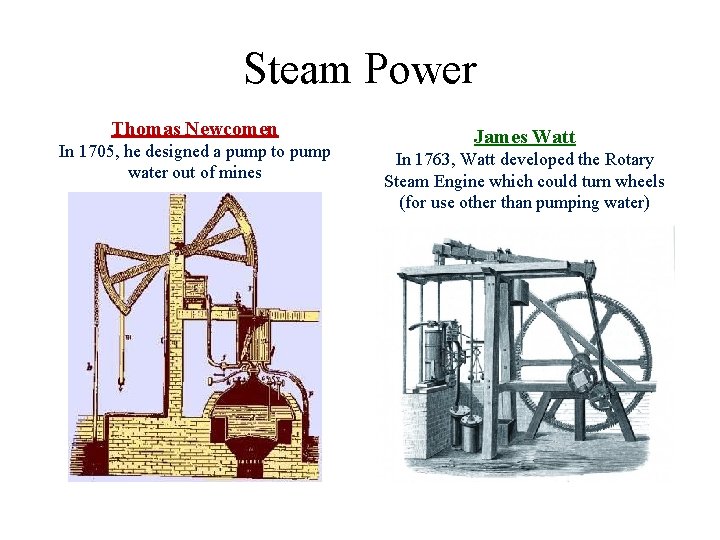
Steam Power Thomas Newcomen In 1705, he designed a pump to pump water out of mines James Watt In 1763, Watt developed the Rotary Steam Engine which could turn wheels (for use other than pumping water)
Why was Steam so Important? • It demanded large amounts of coal to heat water • More iron was needed, which was used to make steam engines • More factories were needed to house and use these steam engines • Trains were developed from the concept of steam power
The Revolution in Transportation • • • Old Transport New Roads: Macadam & Telford Turnpike Trusts Man-made Canals Steam-Powered Ships Railways
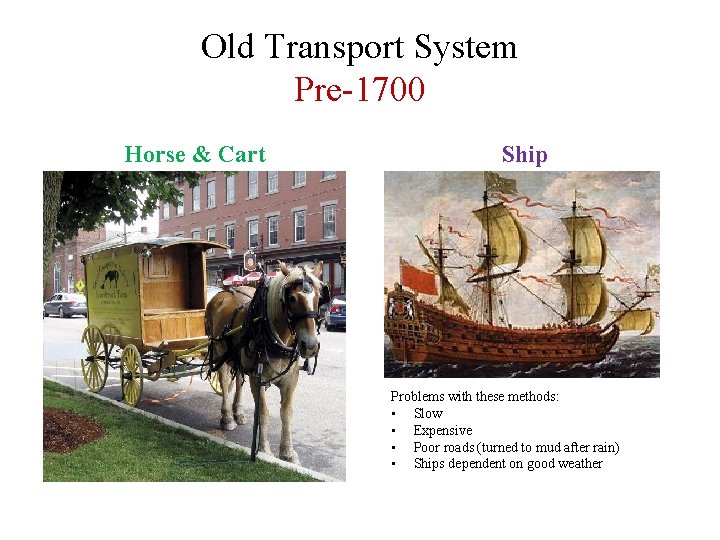
Old Transport System Pre-1700 Horse & Cart Ship Problems with these methods: • Slow • Expensive • Poor roads (turned to mud after rain) • Ships dependent on good weather
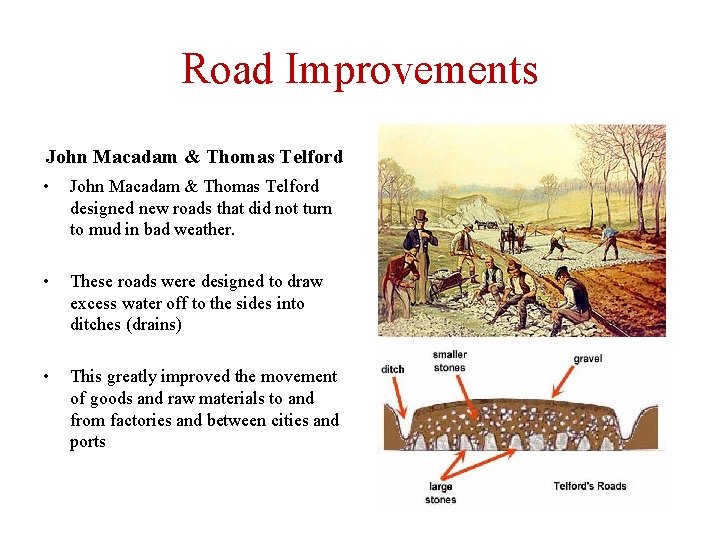
Road Improvements John Macadam & Thomas Telford • John Macadam & Thomas Telford designed new roads that did not turn to mud in bad weather. • These roads were designed to draw excess water off to the sides into ditches (drains) • This greatly improved the movement of goods and raw materials to and from factories and between cities and ports
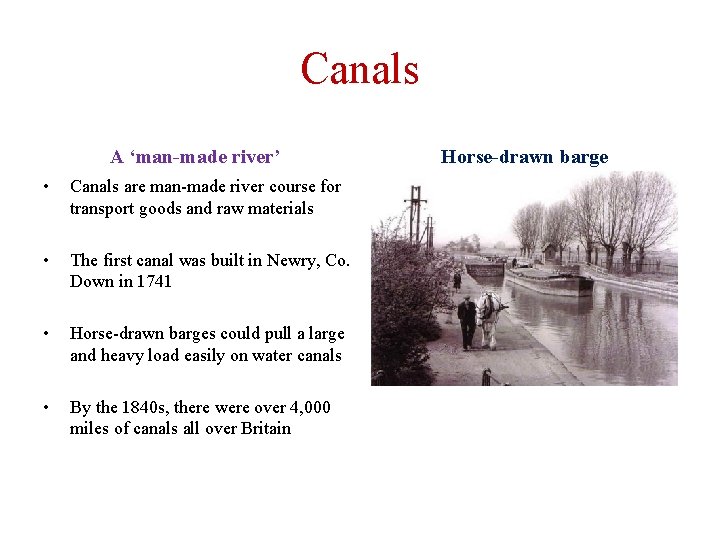
Canals A ‘man-made river’ • Canals are man-made river course for transport goods and raw materials • The first canal was built in Newry, Co. Down in 1741 • Horse-drawn barges could pull a large and heavy load easily on water canals • By the 1840 s, there were over 4, 000 miles of canals all over Britain Horse-drawn barge
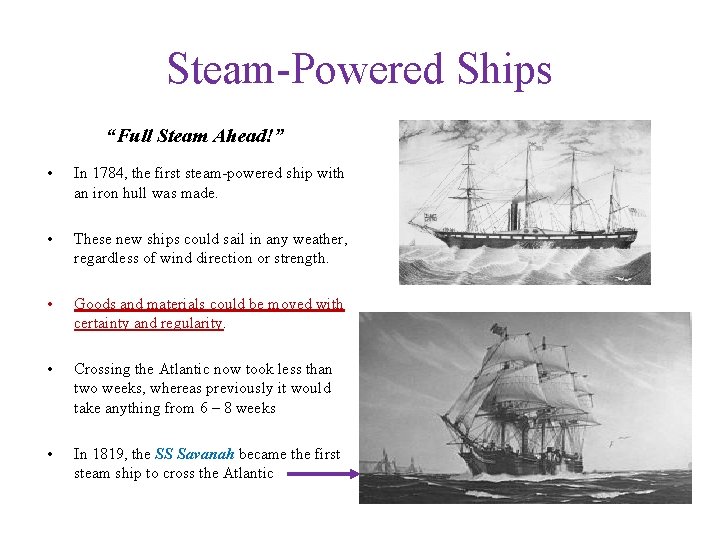
Steam-Powered Ships “Full Steam Ahead!” • In 1784, the first steam-powered ship with an iron hull was made. • These new ships could sail in any weather, regardless of wind direction or strength. • Goods and materials could be moved with certainty and regularity. • Crossing the Atlantic now took less than two weeks, whereas previously it would take anything from 6 – 8 weeks • In 1819, the SS Savanah became the first steam ship to cross the Atlantic
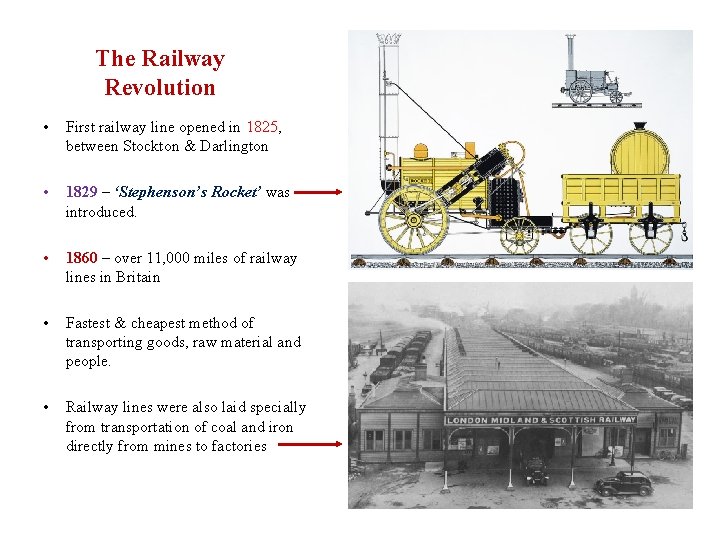
The Railway Revolution • First railway line opened in 1825, between Stockton & Darlington • 1829 – ‘Stephenson’s Rocket’ was introduced. • 1860 – over 11, 000 miles of railway lines in Britain • Fastest & cheapest method of transporting goods, raw material and people. • Railway lines were also laid specially from transportation of coal and iron directly from mines to factories
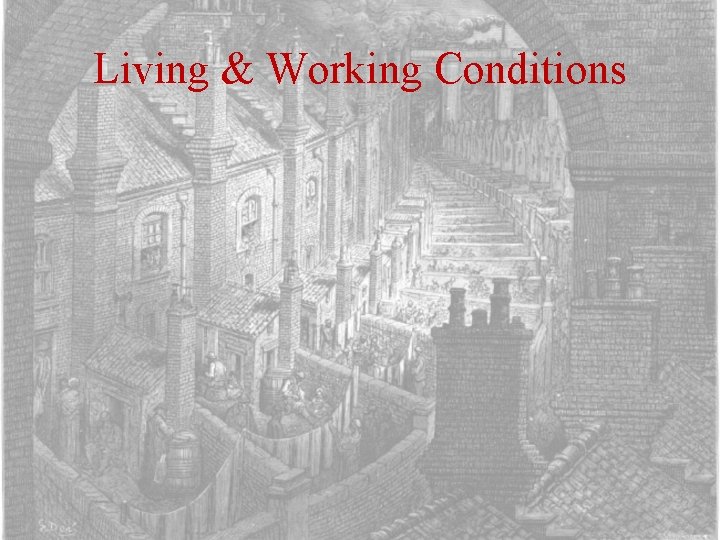
Living & Working Conditions
The New Urban ‘Working Class’ • Originally most of the new ‘working-class’ came from agricultural backgrounds (serfdom, cottiers & agricultural labourers) • Children were easily disciplined & could perform functions that adults could not • Children had no protection under law • This new class of working people lived in over-crowded tenement buildings in urban centres • Close relationship between education & work of children: uniforms, timekeeping, discipline, authority etc. • Women & children all worked in the new Industrial Revolution: maximising profit for owners