
The Industrial Revolution Before 1750 People made money
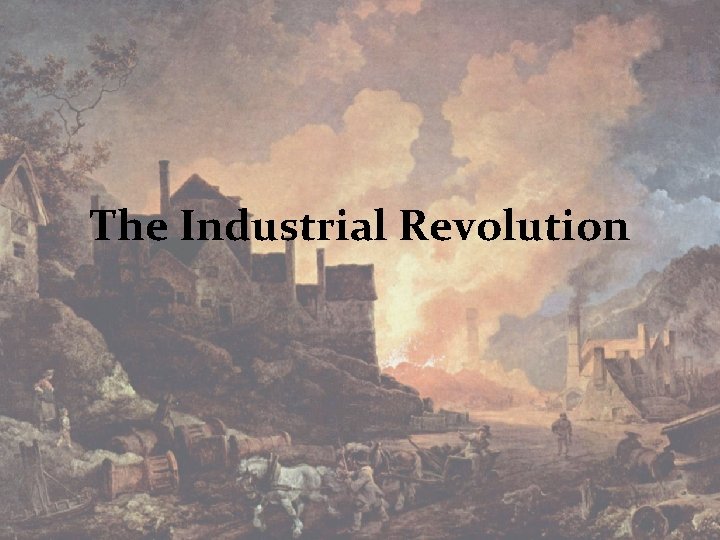
The Industrial Revolution
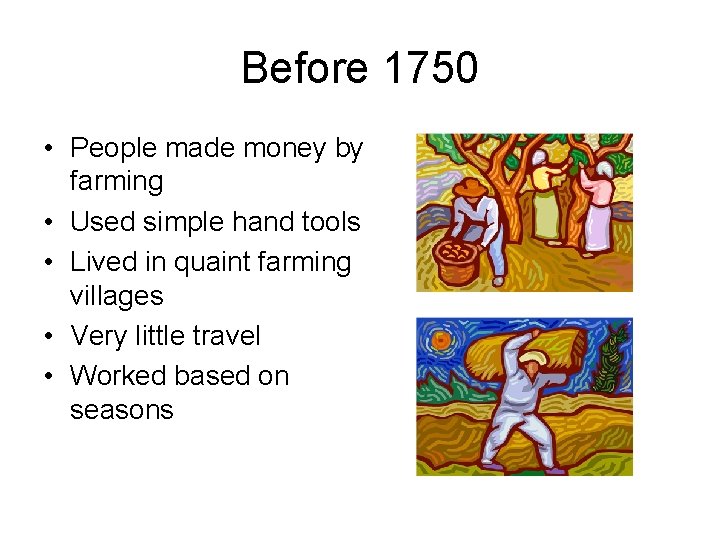
Before 1750 • People made money by farming • Used simple hand tools • Lived in quaint farming villages • Very little travel • Worked based on seasons
Before 1750 • Children helped out with farm work • Made their own clothes, grew their own food • Power provided by people, animals, water mills or windmills • Slow transportation (foot or animal-drawn wagons)
Agricultural Revolution • Enclosure Movement- large fields that are enclosed by fences Inside these “enclosures” wealthy farmers practiced… • Crop Rotation- the planting of different crops in different years to keep nutrients in the soil – Great improvement over the Medieval threefield system • Selective breeding of livestock.
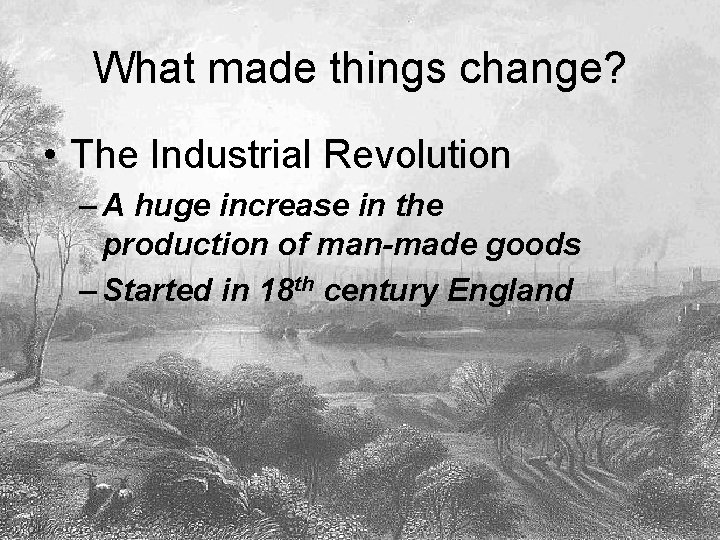
What made things change? • The Industrial Revolution – A huge increase in the production of man-made goods – Started in 18 th century England
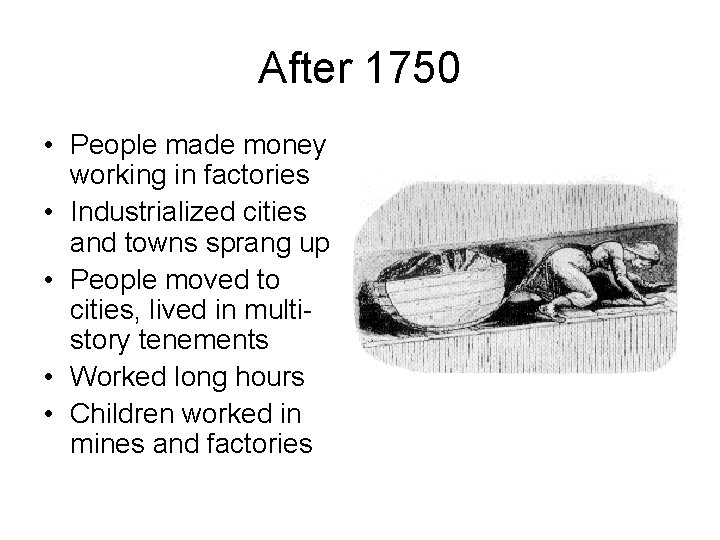
After 1750 • People made money working in factories • Industrialized cities and towns sprang up • People moved to cities, lived in multistory tenements • Worked long hours • Children worked in mines and factories

After 1750 • Purchased food and clothing from stores • A lot of factory-made products in the market • Focus on coal and steam for power source • New inventions like: telegraph, anesthetics, sewing machine • Faster transportation (train, steamship)
Factors of Production • Resources needed to produce goods and services that the industrial revolution required • Factors of Production were: – Land – Labor – Capital
Britain was the prime place for the Industrial Revolution to happen: • Why? Britain had… – Water power or coal to fuel the new machines – Iron ore to construct machines, tools, and buildings – Rivers for inland transportation – Harbors from which the merchant ships set sail
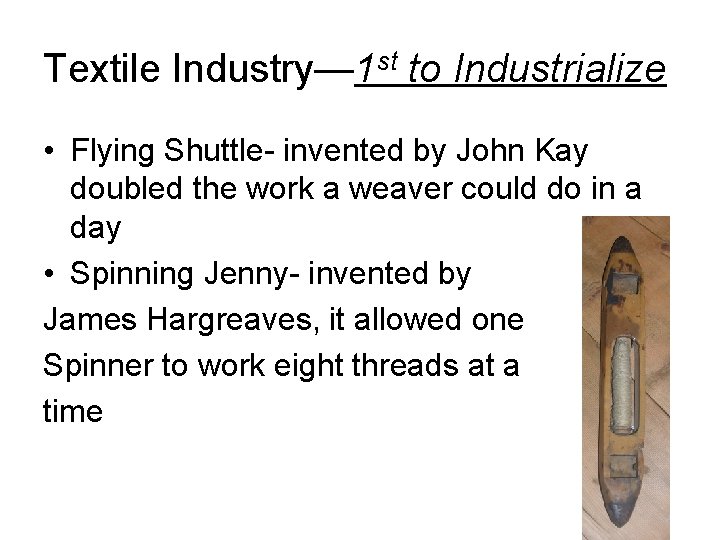
Textile Industry— 1 st to Industrialize • Flying Shuttle- invented by John Kay doubled the work a weaver could do in a day • Spinning Jenny- invented by James Hargreaves, it allowed one Spinner to work eight threads at a time
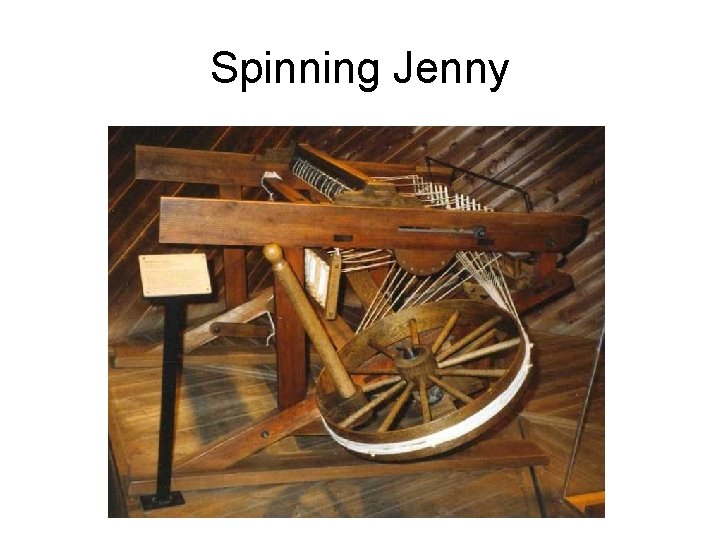
Spinning Jenny
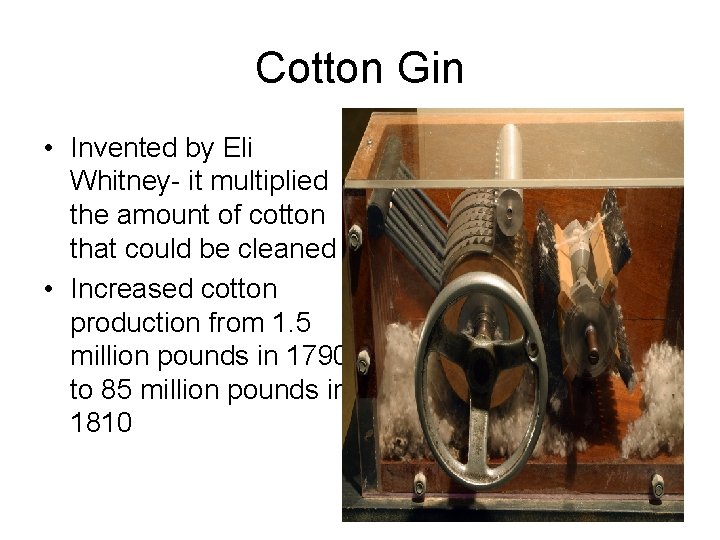
Cotton Gin • Invented by Eli Whitney- it multiplied the amount of cotton that could be cleaned • Increased cotton production from 1. 5 million pounds in 1790 to 85 million pounds in 1810
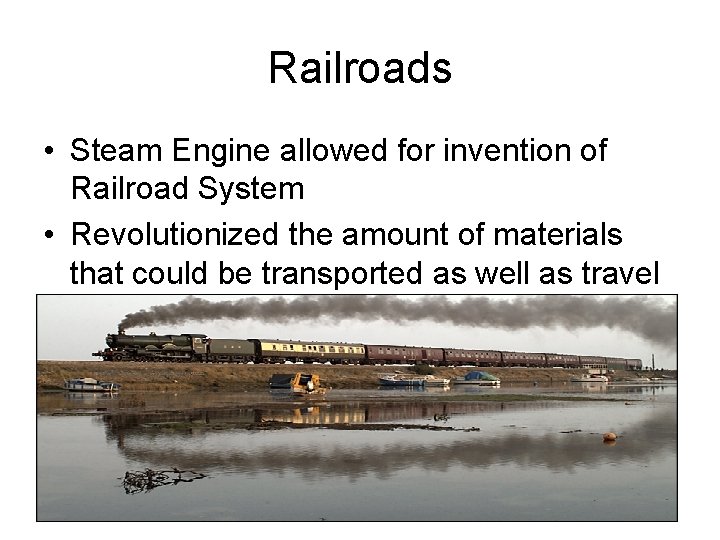
Railroads • Steam Engine allowed for invention of Railroad System • Revolutionized the amount of materials that could be transported as well as travel
- Slides: 13