
The Industrial Revolution and Latin America AP WORLD
- Slides: 17
The Industrial Revolution and Latin America AP WORLD HISTORY NOTES CHAPTER 18 (1750 -1914)
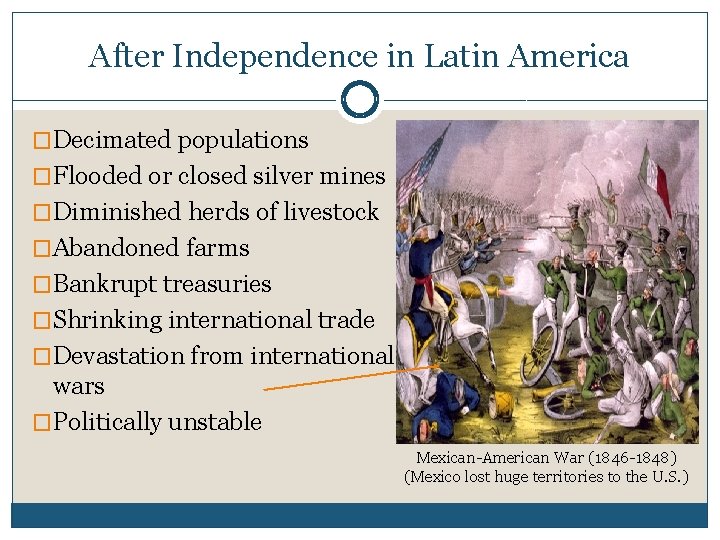
After Independence in Latin America �Decimated populations �Flooded or closed silver mines �Diminished herds of livestock �Abandoned farms �Bankrupt treasuries �Shrinking international trade �Devastation from international wars �Politically unstable Mexican-American War (1846 -1848) (Mexico lost huge territories to the U. S. )
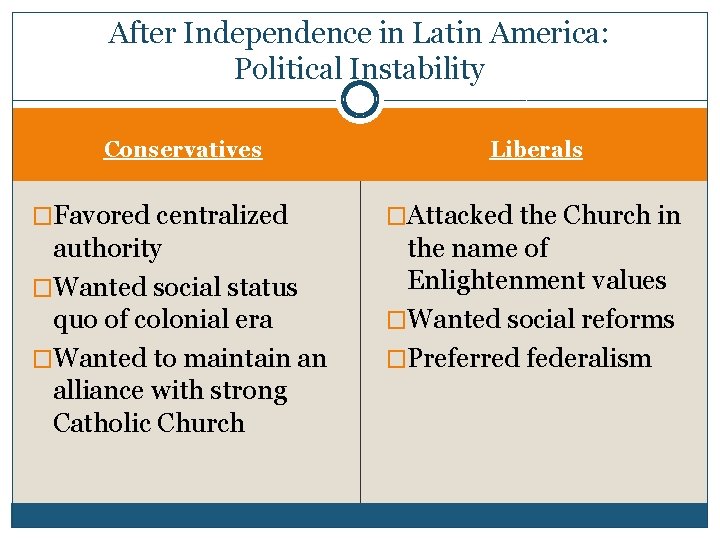
After Independence in Latin America: Political Instability Conservatives Liberals �Favored centralized �Attacked the Church in authority �Wanted social status quo of colonial era �Wanted to maintain an alliance with strong Catholic Church the name of Enlightenment values �Wanted social reforms �Preferred federalism
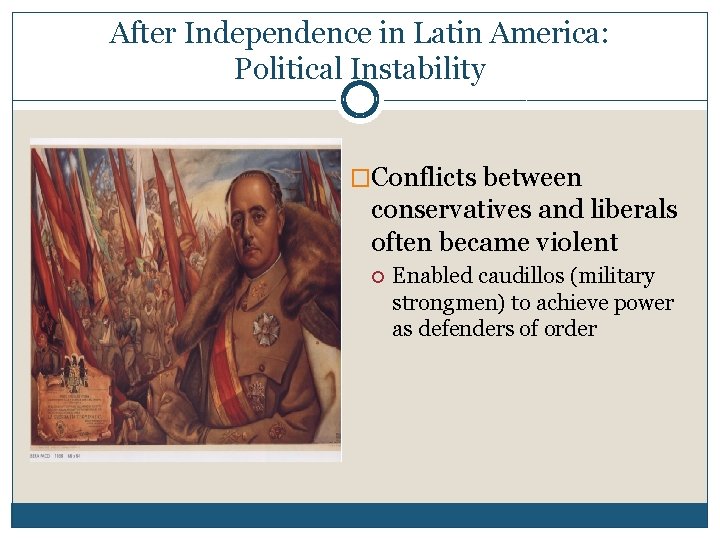
After Independence in Latin America: Political Instability �Conflicts between conservatives and liberals often became violent Enabled caudillos (military strongmen) to achieve power as defenders of order
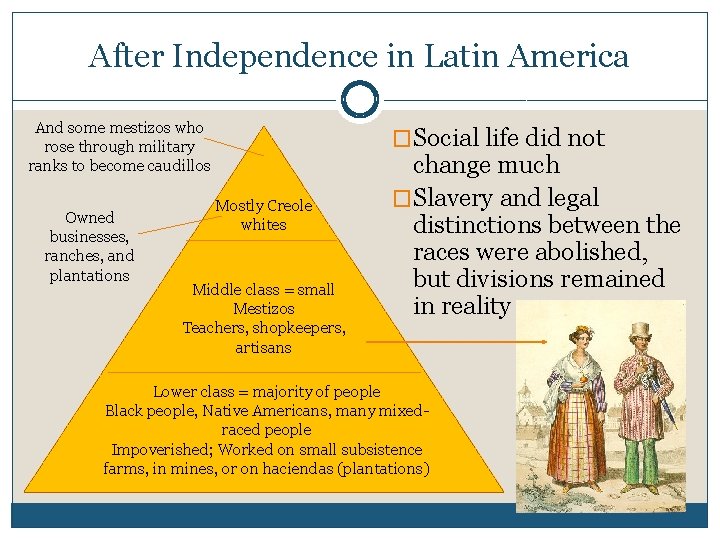
After Independence in Latin America And some mestizos who rose through military ranks to become caudillos Owned businesses, ranches, and plantations �Social life did not Mostly Creole whites Middle class = small Mestizos Teachers, shopkeepers, artisans change much �Slavery and legal distinctions between the races were abolished, but divisions remained in reality Lower class = majority of people Black people, Native Americans, many mixedraced people Impoverished; Worked on small subsistence farms, in mines, or on haciendas (plantations)
Facing the World Economy � 2 nd half of 1800 s = many countries in Latin America became more stable and started to integrate into the world economy driven by the industrialization of the U. S. and Western Europe �Rapid growth of Latin American exports to these countries Industrialized countries needed food products, raw materials, and markets of new Latin American states
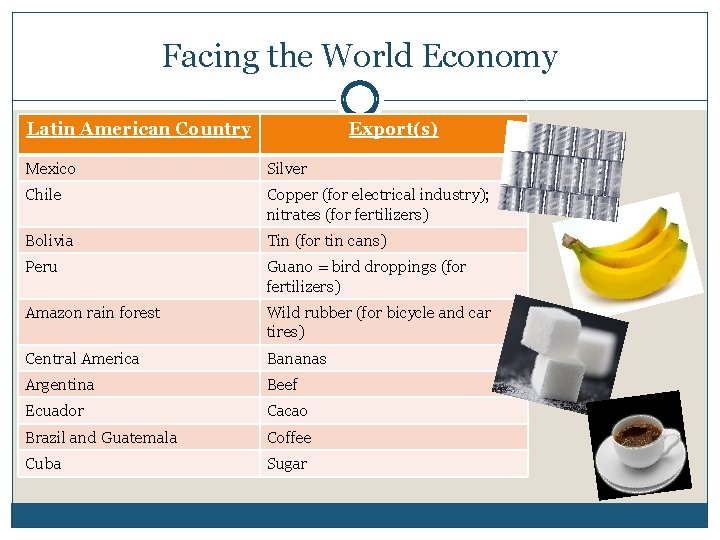
Facing the World Economy Latin American Country Export(s) Mexico Silver Chile Copper (for electrical industry); nitrates (for fertilizers) Bolivia Tin (for tin cans) Peru Guano = bird droppings (for fertilizers) Amazon rain forest Wild rubber (for bicycle and car tires) Central America Bananas Argentina Beef Ecuador Cacao Brazil and Guatemala Coffee Cuba Sugar
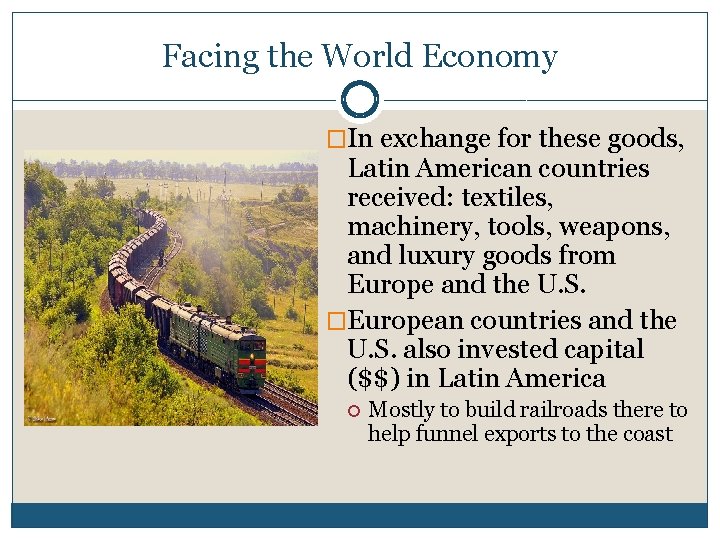
Facing the World Economy �In exchange for these goods, Latin American countries received: textiles, machinery, tools, weapons, and luxury goods from Europe and the U. S. �European countries and the U. S. also invested capital ($$) in Latin America Mostly to build railroads there to help funnel exports to the coast
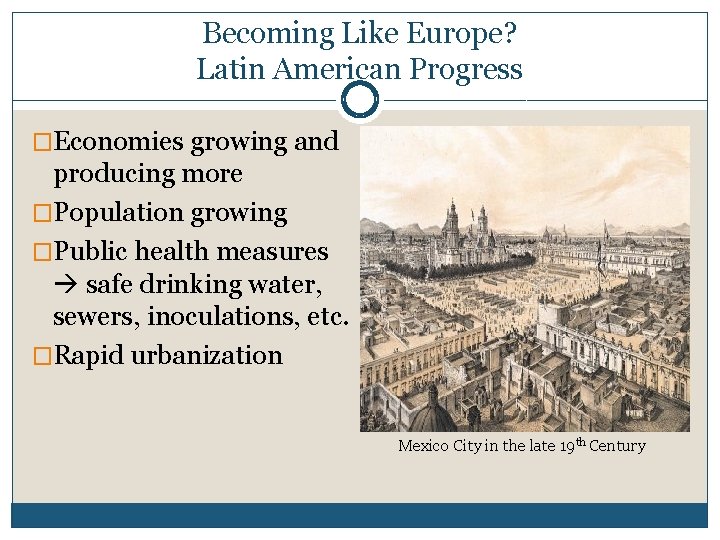
Becoming Like Europe? Latin American Progress �Economies growing and producing more �Population growing �Public health measures safe drinking water, sewers, inoculations, etc. �Rapid urbanization Mexico City in the late 19 th Century
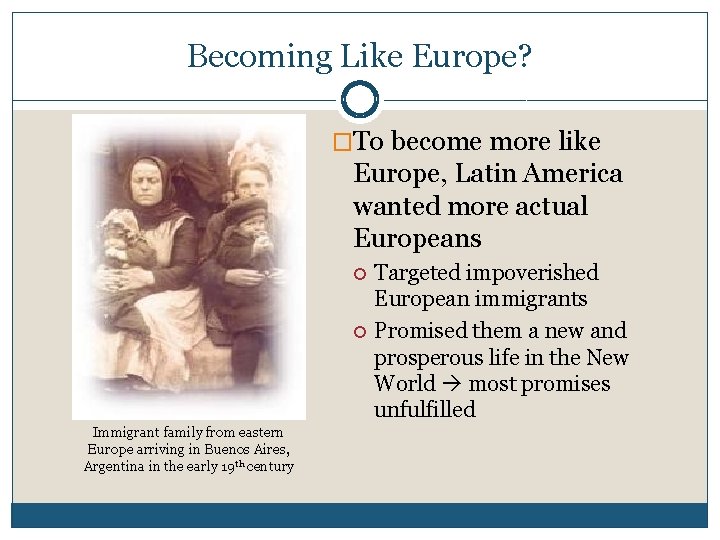
Becoming Like Europe? �To become more like Europe, Latin America wanted more actual Europeans Immigrant family from eastern Europe arriving in Buenos Aires, Argentina in the early 19 th century Targeted impoverished European immigrants Promised them a new and prosperous life in the New World most promises unfulfilled
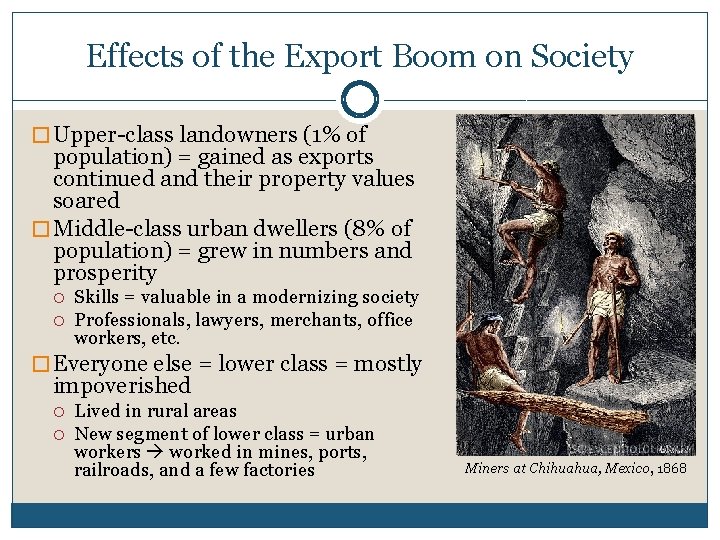
Effects of the Export Boom on Society � Upper-class landowners (1% of population) = gained as exports continued and their property values soared � Middle-class urban dwellers (8% of population) = grew in numbers and prosperity Skills = valuable in a modernizing society Professionals, lawyers, merchants, office workers, etc. � Everyone else = lower class = mostly impoverished Lived in rural areas New segment of lower class = urban workers worked in mines, ports, railroads, and a few factories Miners at Chihuahua, Mexico, 1868
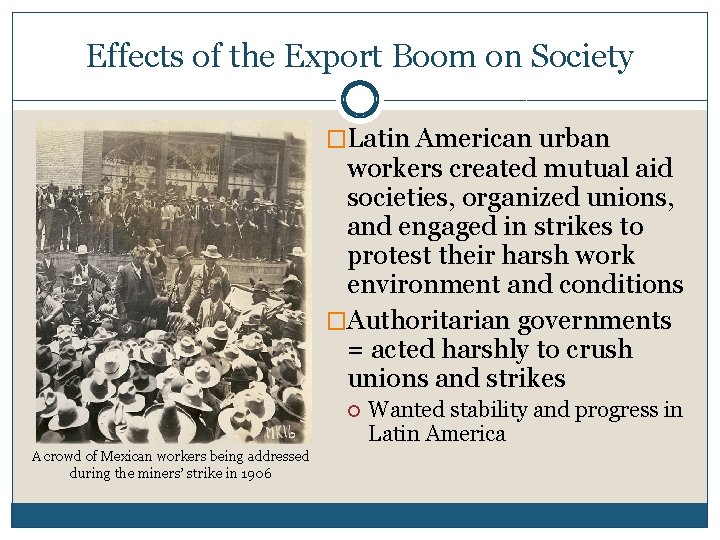
Effects of the Export Boom on Society �Latin American urban workers created mutual aid societies, organized unions, and engaged in strikes to protest their harsh work environment and conditions �Authoritarian governments = acted harshly to crush unions and strikes A crowd of Mexican workers being addressed during the miners’ strike in 1906 Wanted stability and progress in Latin America
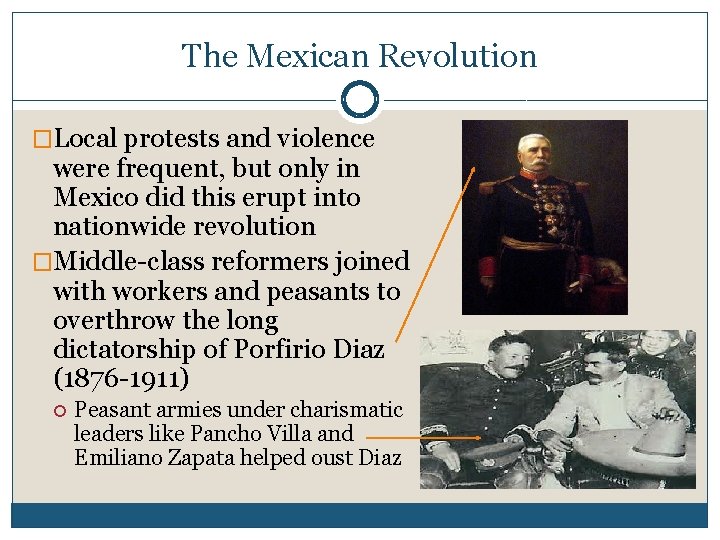
The Mexican Revolution �Local protests and violence were frequent, but only in Mexico did this erupt into nationwide revolution �Middle-class reformers joined with workers and peasants to overthrow the long dictatorship of Porfirio Diaz (1876 -1911) Peasant armies under charismatic leaders like Pancho Villa and Emiliano Zapata helped oust Diaz
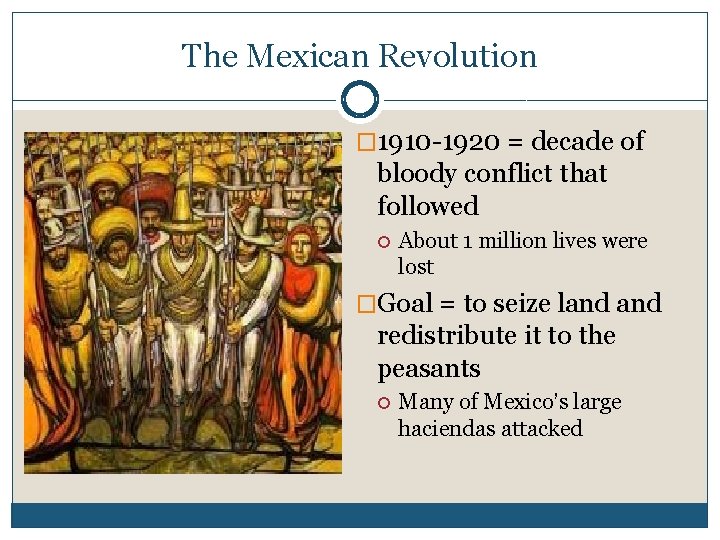
The Mexican Revolution � 1910 -1920 = decade of bloody conflict that followed About 1 million lives were lost �Goal = to seize land redistribute it to the peasants Many of Mexico’s large haciendas attacked
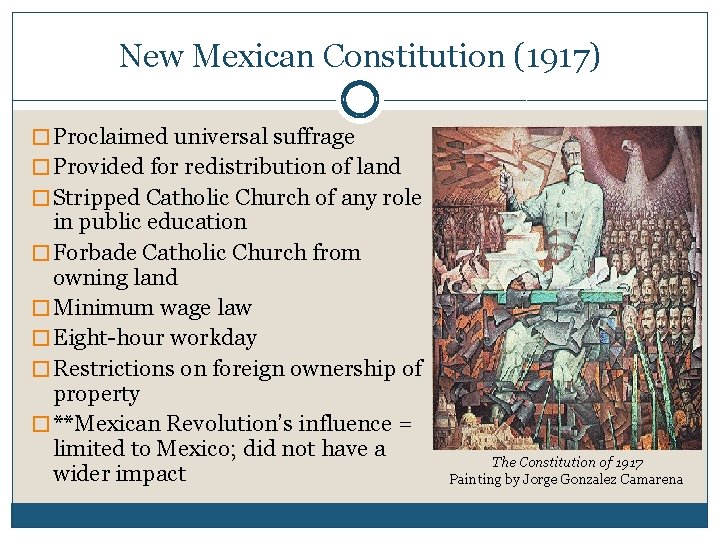
New Mexican Constitution (1917) � Proclaimed universal suffrage � Provided for redistribution of land � Stripped Catholic Church of any role in public education � Forbade Catholic Church from owning land � Minimum wage law � Eight-hour workday � Restrictions on foreign ownership of property � **Mexican Revolution’s influence = limited to Mexico; did not have a wider impact The Constitution of 1917 Painting by Jorge Gonzalez Camarena
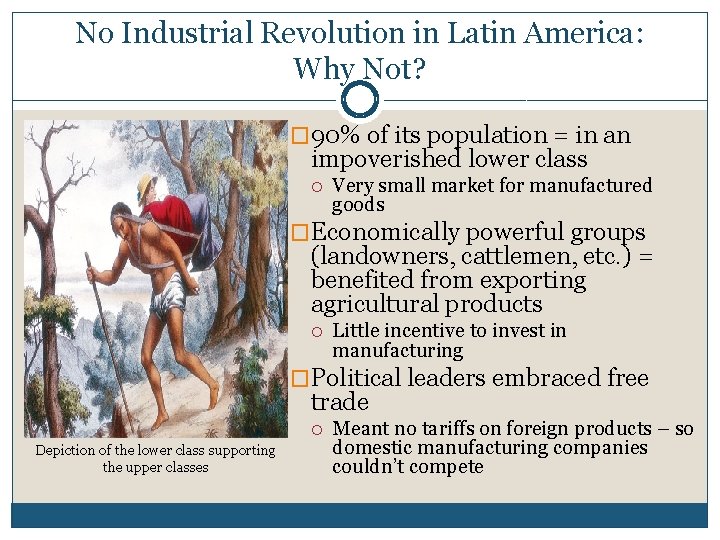
No Industrial Revolution in Latin America: Why Not? � 90% of its population = in an impoverished lower class Very small market for manufactured goods �Economically powerful groups (landowners, cattlemen, etc. ) = benefited from exporting agricultural products Little incentive to invest in manufacturing �Political leaders embraced free trade Depiction of the lower class supporting the upper classes Meant no tariffs on foreign products – so domestic manufacturing companies couldn’t compete
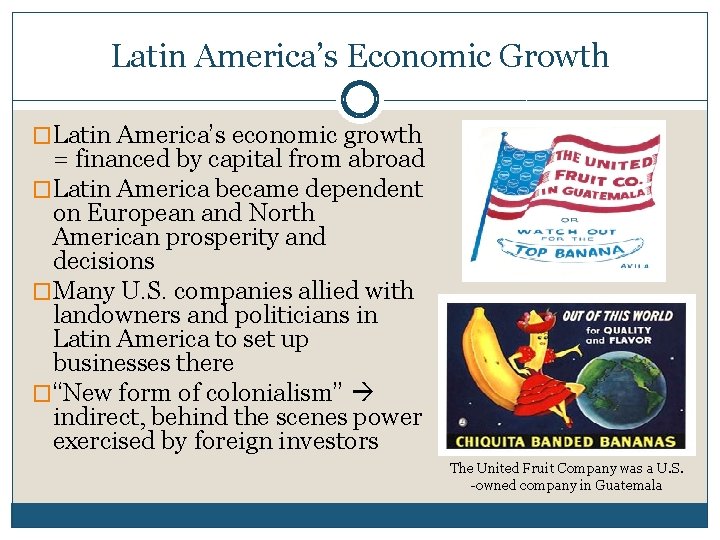
Latin America’s Economic Growth �Latin America’s economic growth = financed by capital from abroad �Latin America became dependent on European and North American prosperity and decisions �Many U. S. companies allied with landowners and politicians in Latin America to set up businesses there �“New form of colonialism” indirect, behind the scenes power exercised by foreign investors The United Fruit Company was a U. S. -owned company in Guatemala