
The Indus Valley Year One I can describe

The Indus Valley Year One
• I can describe the work of some key explorers who helped discover the Indus Valley civilisation and explain what they found. • I can tell you the names of some explorers who helped discover the Indus Valley civilisation. • I can describe what evidence these explorers uncovered and what it tells us about the Indus Valley civilisation.
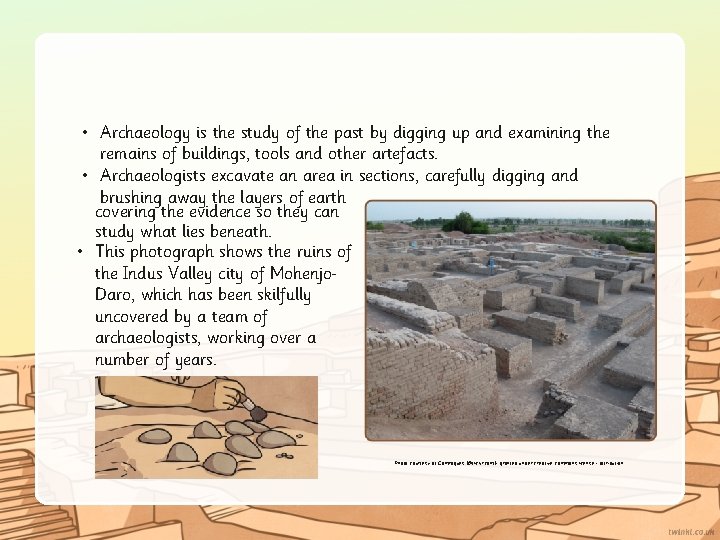
• Archaeology is the study of the past by digging up and examining the remains of buildings, tools and other artefacts. • Archaeologists excavate an area in sections, carefully digging and brushing away the layers of earth covering the evidence so they can study what lies beneath. • This photograph shows the ruins of the Indus Valley city of Mohenjo Daro, which has been skilfully uncovered by a team of archaeologists, working over a number of years. Photo courtesy of Comrogues (@flickr. com)- granted under creative commons license - attribution
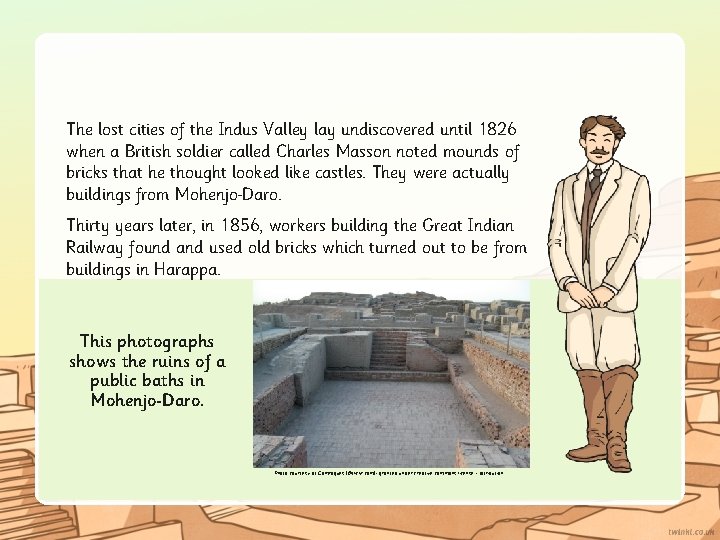
The lost cities of the Indus Valley lay undiscovered until 1826 when a British soldier called Charles Masson noted mounds of bricks that he thought looked like castles. They were actually buildings from Mohenjo Daro. Thirty years later, in 1856, workers building the Great Indian Railway found and used old bricks which turned out to be from buildings in Harappa. This photographs shows the ruins of a public baths in Mohenjo Daro. Photo courtesy of Comrogues (@flickr. com)- granted under creative commons license - attribution
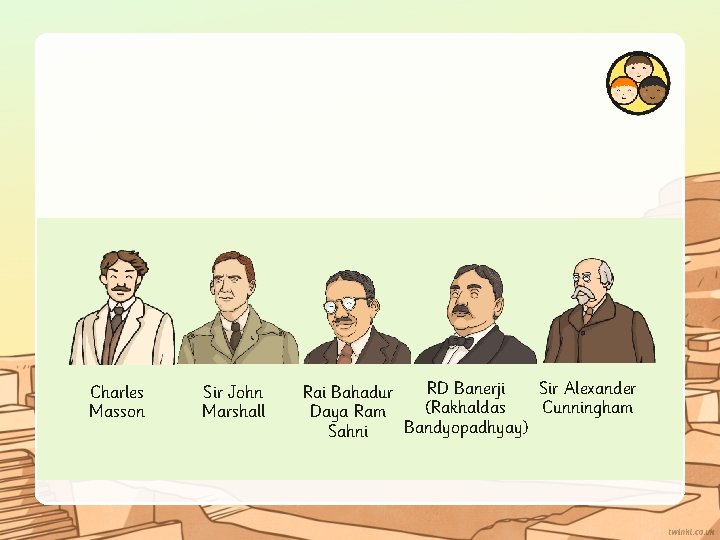
Charles Masson Sir John Marshall RD Banerji Sir Alexander Rai Bahadur (Rakhaldas Cunningham Daya Ram Bandyopadhyay) Sahni
• I can describe the work of some key explorers who helped discover the Indus Valley civilisation and explain what they found. • I can tell you the names of some explorers who helped discover the Indus Valley civilisation. • I can describe what evidence these explorers uncovered and what it tells us about the Indus Valley civilisation.
- Slides: 9