
The Indus River Valley Civilization Geographic River system
- Slides: 11
The Indus River Valley Civilization
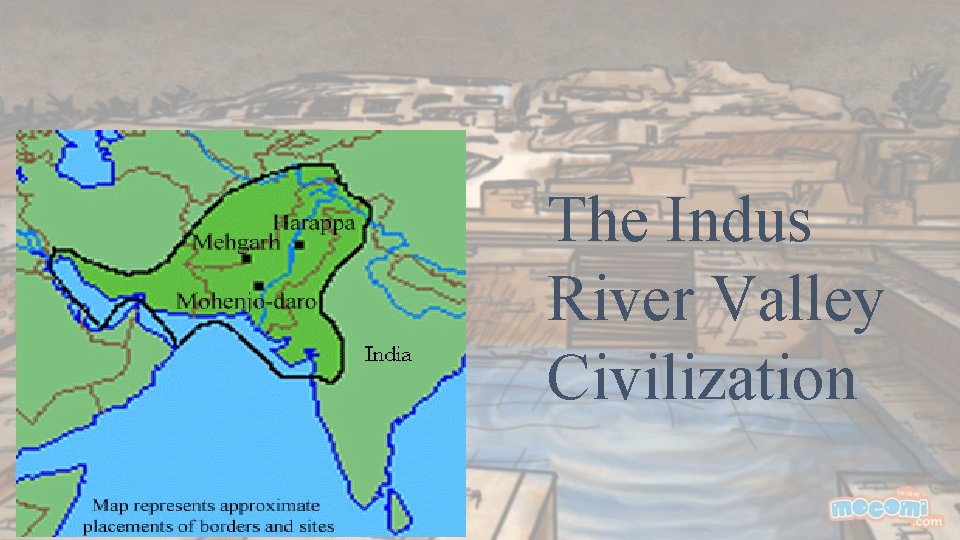
Geographic • • River system: Ganges and Indus – full of silt River-flow changes direction = farming impacts Monsoons- seasonal wind that brings HEAVY rain Indus Valley – 1 st civilization 2500 BCE • Harappa and Mohenjo Daro • Streets in a grid pattern • Centralized design- Citadel at the center with warehouses and meeting halls in it
Religion- Hinduism • Polytheistic faith of Hinduism formed along rivers by the Aryans • No specific founder – the people’s belief system • BRAHMAN- eternal being that created and preserves the world • Several of their gods are manifestations of Brahman- Vishnu (preserver), Shiva (Destroyer) • Reincarnation- a persons life now determines their next life- KARMA
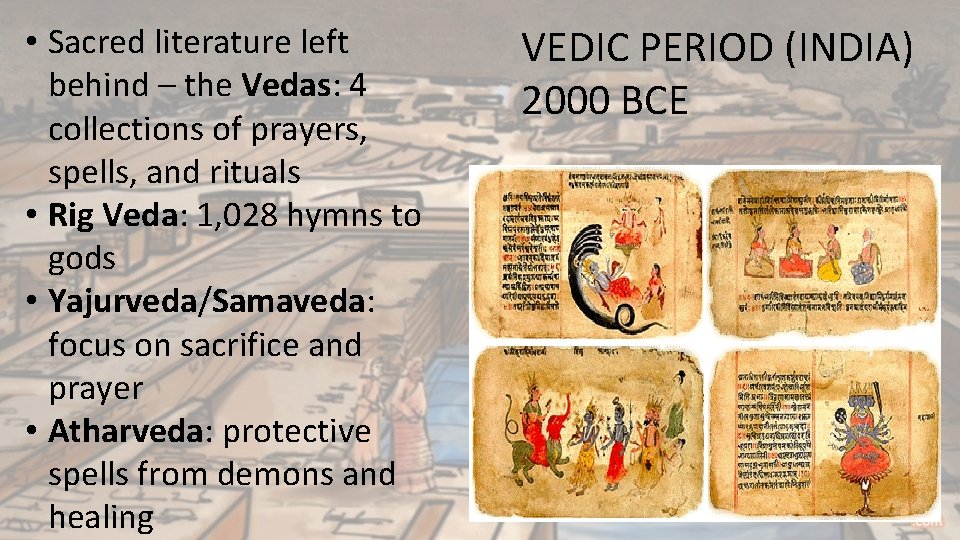
• Sacred literature left behind – the Vedas: 4 collections of prayers, spells, and rituals • Rig Veda: 1, 028 hymns to gods • Yajurveda/Samaveda: focus on sacrifice and prayer • Atharveda: protective spells from demons and healing VEDIC PERIOD (INDIA) 2000 BCE
4 . W h e r e d Plickers
Mauryan Empire • Led by Chandragupta Maurya • Gained most of his power through military and became dependent on strong centralized government to control his empire • Divided his empire into districts led by appointed relatives and generals • Chandragupta passed his throne on to his grandson ASHOKA in order to become a Jainist Monk • After converting to Buddhism, he left his violent wants and encouraged peace. He inscribed his policies on rocks throughout the kingdom to encourage peace and religious tolerance
Jainism • Around 500 BCE, a group of Hindus broke away and founded a new religion led by Mahavira • Hindus focus to much on ritual and that’s unnecessary • Achieve perfection by giving up all worldly possessions and controlling their actions • Ahimsa- NON VIOLENCE • Jains carefully avoid hurting any living creature • Vegetarian • Promised to tell the truth and avoid stealing
Gupta Empire • Chandra Gupta I • Divided the country into units and had a royal official govern each unit • Gupta rule became known as the Golden Age, or a period of great cultural achievements, peace and prosperity • Many great works of Sanskit literature were written during the Gupta period • Much of the art and architecture during the Gupta period was religious • Many temples built out of cliff faces • Gupta scholars devised a system of Hindu-Arabic Numerals which we
Buddhism • Siddhartha Gautama- the Buddha • Lived a very sheltered life free of hardship or suffering (he was a prince!), but when we learned that people died and got sick he resolved to find a way to overcome age and sickness to keep people from having to suffer • Sought enlightenment for 6 years as he traveled • He reached enlightenment under a tree after meditating all night long • Seeking NIRVANA- heaven/ state of perfect peace after death • If you don’t reach Nirvana- you are reborn
4 Noble Truths Buddhism 1. Suffering is part of human life 2. Suffering comes from desire for pleasure and material goods 3. Overcoming desire during life brings an end to suffering 4. Desires can be overcome by the Eightfold Path 8 Fold Path 1. Right View- Accept the 4 noble truths 2. Right attitude- moderation 3. Right speech- love not hate 4. Right action- fair 5. Right livelihood- avoid harm 6. Right effort- improvement 7. Right mindfulness- remain aware 8. Right concentration- ignore temptations
Social • Fierce social-class system based on Hinduism – the Hindu Caste • Your position in life is based on skin color and wealth – can’t change level! • Housing built on neighborhood model – functioning sewer system divided the people • Language is undecipherable