
The Indiana Physician Orders for Scope of Treatment
- Slides: 17
The Indiana Physician Orders for Scope of Treatment Program 1
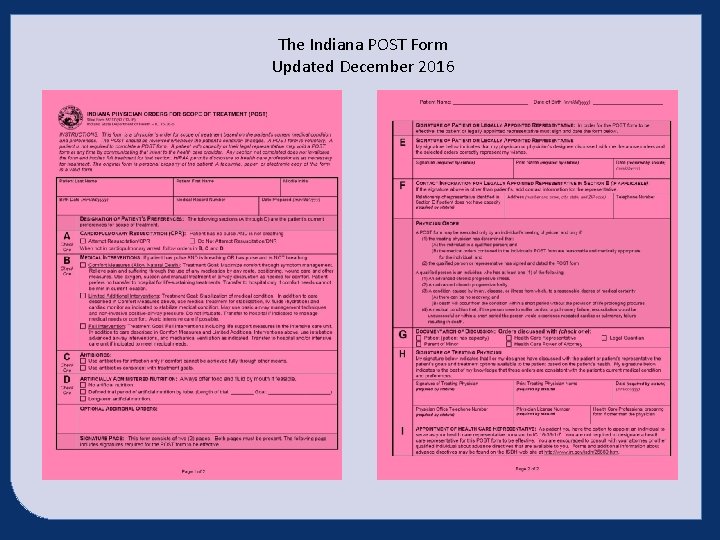
The Indiana POST Form Updated December 2016
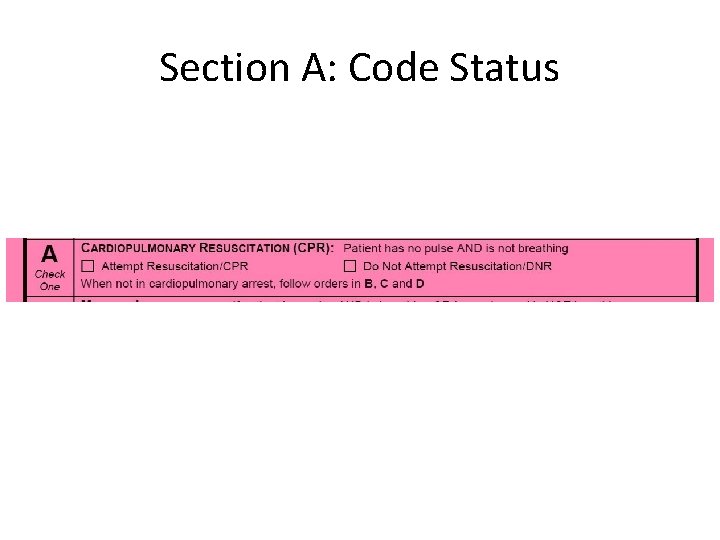
Section A: Code Status
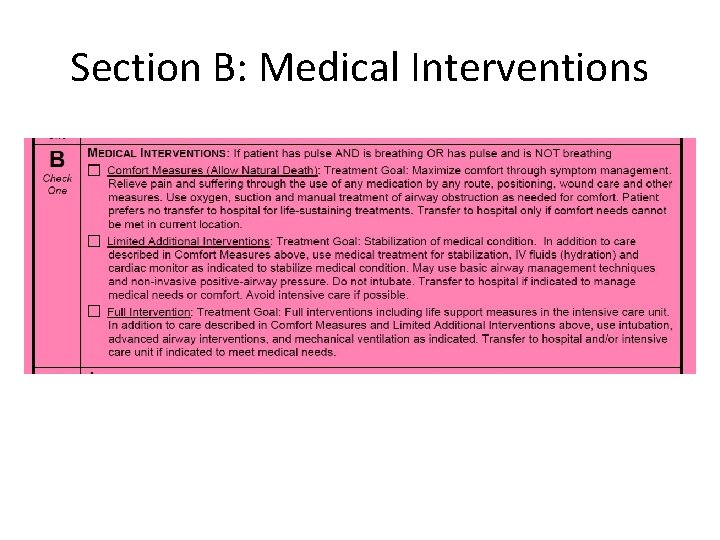
Section B: Medical Interventions
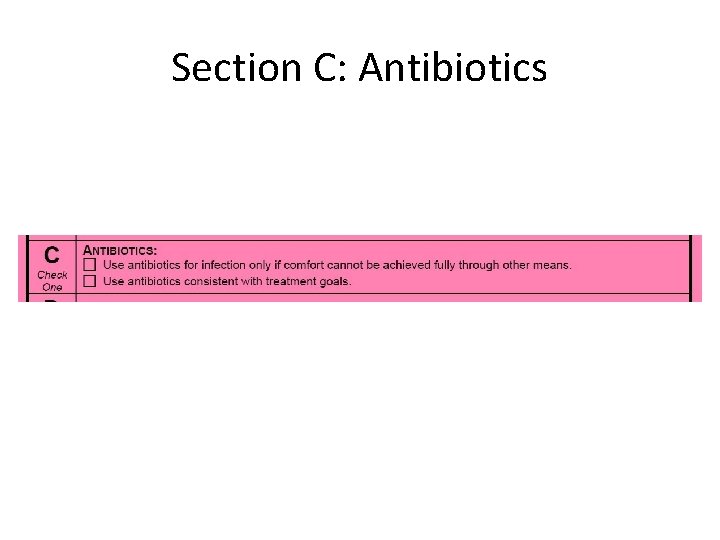
Section C: Antibiotics
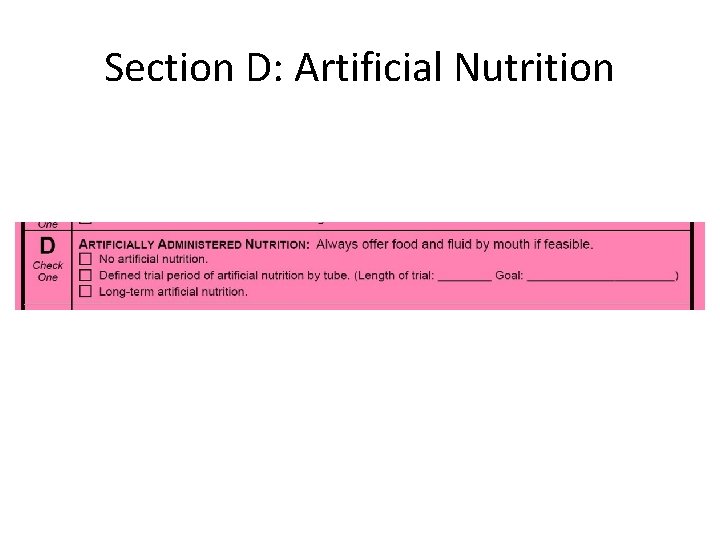
Section D: Artificial Nutrition
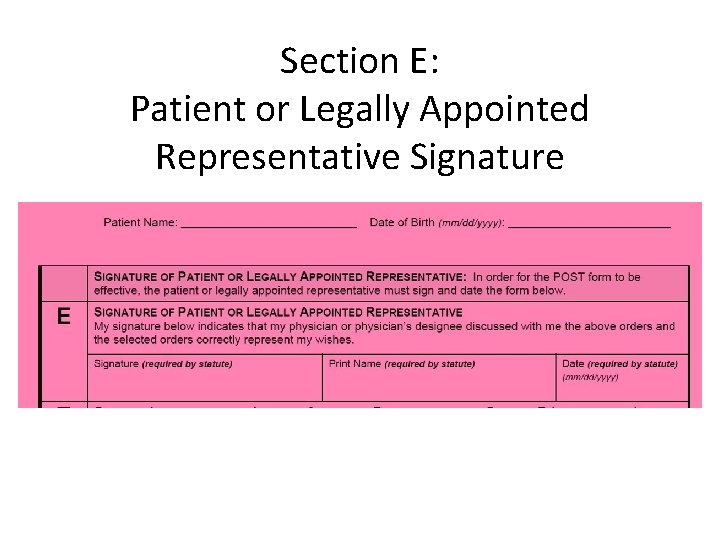
Section E: Patient or Legally Appointed Representative Signature
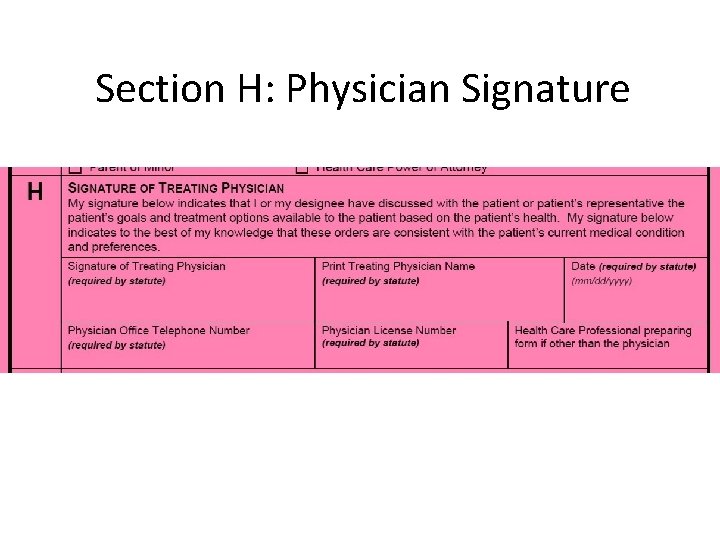
Section H: Physician Signature
Who can have a POST? • Must have one or more of the following conditions: – An advanced chronic progressive illness – An advanced chronic progressive frailty (Note: Frailty is a medical diagnosis) – A terminal condition – Unlikely to benefit from CPR • Would the patient’s physician be surprised if the patient died within the next 12 months?
Who can prepare a POST form with a patient? • Physician or his/her designee (TBD by physician) • Requires physician review and signature to activate the order; must provide license number, address, and phone number • Requires signature of the patient or their legally authorized representative
What if the patient lacks decisional capacity? • A POST form can be filled out based on a conversation with: – An appointed health care representative – A power of attorney for health care – A legally appointed guardian (includes parents of minor) • Decisions must be based on prior known wishes or best interest of patient
What if there is no legally authorized surrogate? • The POST form includes a space for a patient to appoint a HCR (and only an HCR, not a POA or guardian) – If a patient fills that section out, the appointment of the HCR on the POST form will supersede any prior appointment – HCR may only act when the patient lacks capacity and must do so in good faith according to the patient’s wishes
How do you use a POST Form? • All health care providers MUST follow the orders on a patient’s POST Form unless: – Revocation – Request for alternative treatment – Invalid execution – Conflicting religious or moral beliefs • Providers are not required to: – Deliver treatment that is inconsistent with the orders on a POST Form – Deliver medically inappropriate treatment (e. g. , change in condition)
Requests for Alternative Treatments • A patient/representative may request alternative treatments at any time – Example: A patient with comfort care orders may request to go to the hospital • If this happens, notify the treating physician • The treating physician must document: – Time/date/place of request being made – Time/date/place where MD was notified – Review POST orders with patient/rep and execute new POST if needed
Revoking a POST Form • A patient/representative may revoke by: – a signed and dated writing; – physical cancellation or destruction; or – an oral expression of their intent to revoke the POST form. • Any health care provider receiving notice of revocation must immediately notify the treating physician of the revocation.
Treating Physician Duties • Upon receiving notice of revocation, the treating physician must: – Document specifics of revocation in medical record including time, date, and place treating physician was notified – Cancel the POST form being revoked with a conspicuous note in the chart and/or on the POST form itself; – Notify any health care personnel responsible for the patient’s care that the POST form has been revoked; and – Notify the physician who signed the POST form of the revocation (if different than the treating physician executing the revocation).
For More Information Indiana Patient Preferences Coalition www. indianapost. org Indiana State Department of Health Advance Directives Resource Center http: //www. in. gov/isdh/25880. htm