
THE INDIAN PENAL CODE GENERAL PRINCIPLES 1 CRIMINAL



- Slides: 20
THE INDIAN PENAL CODE GENERAL PRINCIPLES 1
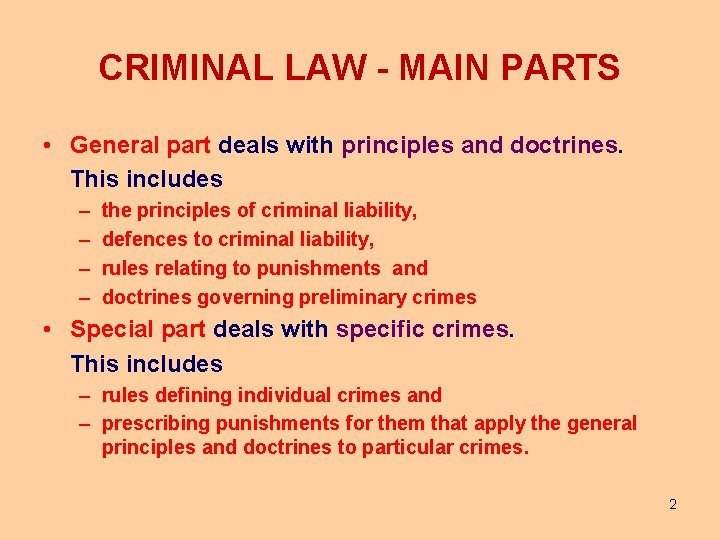
CRIMINAL LAW - MAIN PARTS • General part deals with principles and doctrines. This includes – – the principles of criminal liability, defences to criminal liability, rules relating to punishments and doctrines governing preliminary crimes • Special part deals with specific crimes. This includes – rules defining individual crimes and – prescribing punishments for them that apply the general principles and doctrines to particular crimes. 2
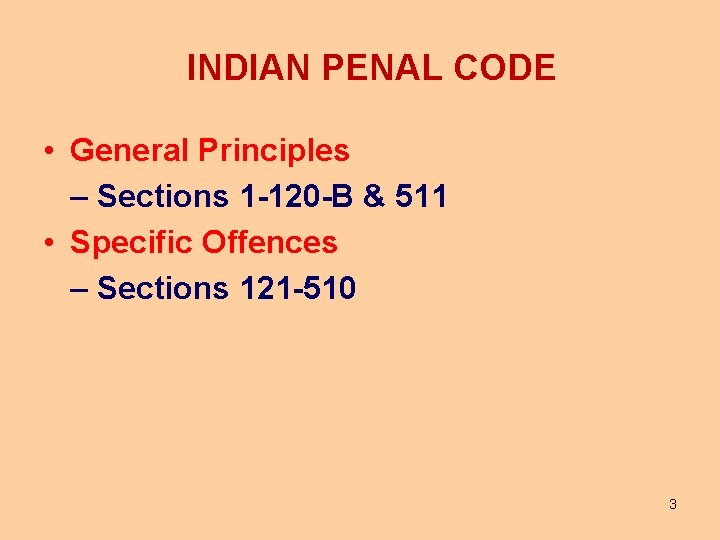
INDIAN PENAL CODE • General Principles – Sections 1 -120 -B & 511 • Specific Offences – Sections 121 -510 3
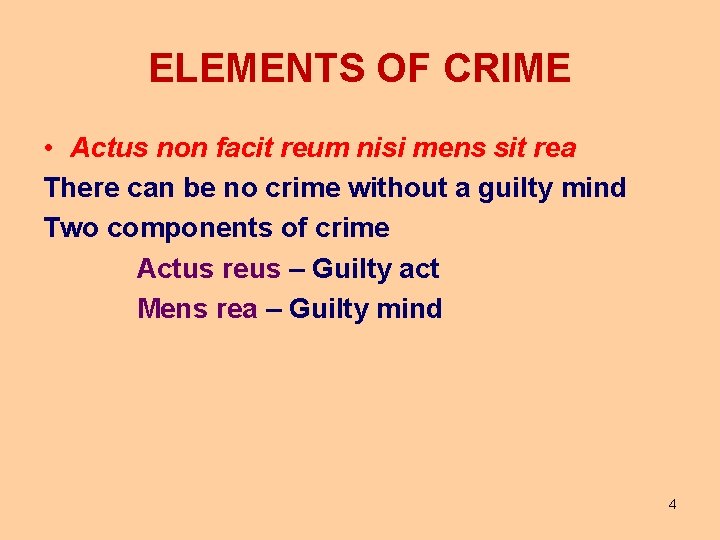
ELEMENTS OF CRIME • Actus non facit reum nisi mens sit rea There can be no crime without a guilty mind Two components of crime Actus reus – Guilty act Mens rea – Guilty mind 4
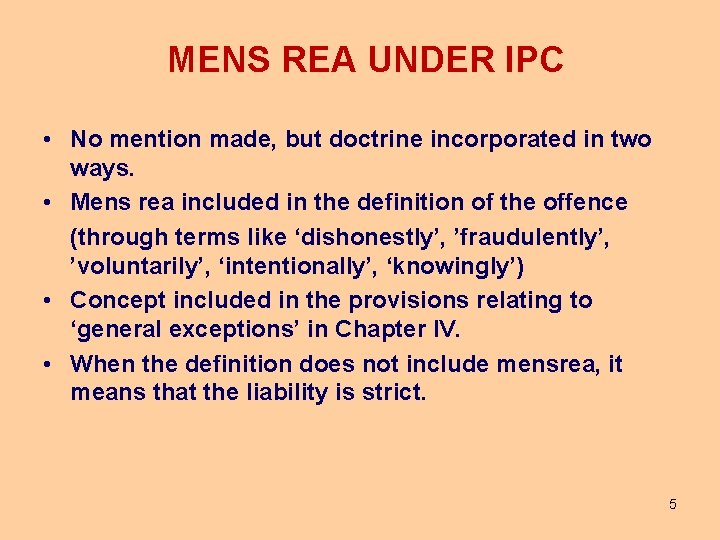
MENS REA UNDER IPC • No mention made, but doctrine incorporated in two ways. • Mens rea included in the definition of the offence (through terms like ‘dishonestly’, ’fraudulently’, ’voluntarily’, ‘intentionally’, ‘knowingly’) • Concept included in the provisions relating to ‘general exceptions’ in Chapter IV. • When the definition does not include mensrea, it means that the liability is strict. 5
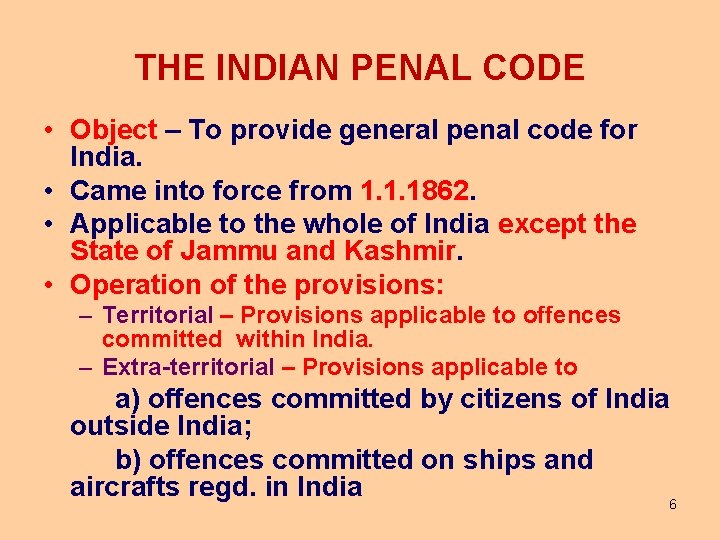
THE INDIAN PENAL CODE • Object – To provide general penal code for India. • Came into force from 1. 1. 1862. • Applicable to the whole of India except the State of Jammu and Kashmir. • Operation of the provisions: – Territorial – Provisions applicable to offences committed within India. – Extra-territorial – Provisions applicable to a) offences committed by citizens of India outside India; b) offences committed on ships and aircrafts regd. in India 6
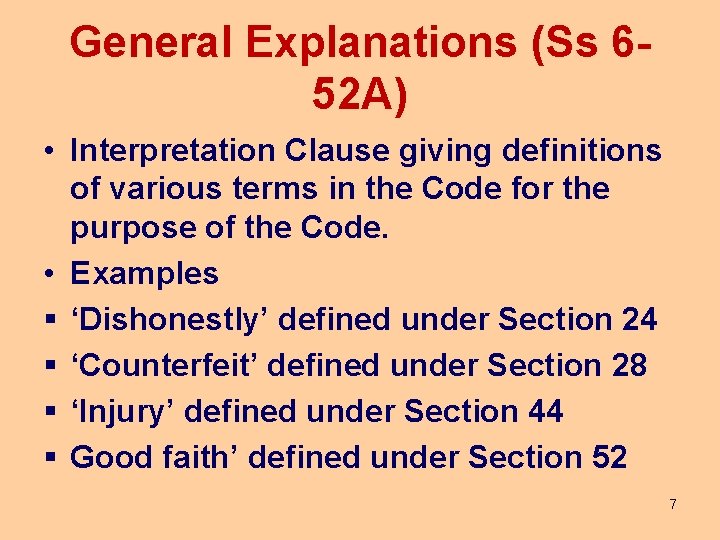
General Explanations (Ss 652 A) • Interpretation Clause giving definitions of various terms in the Code for the purpose of the Code. • Examples § ‘Dishonestly’ defined under Section 24 § ‘Counterfeit’ defined under Section 28 § ‘Injury’ defined under Section 44 § Good faith’ defined under Section 52 7
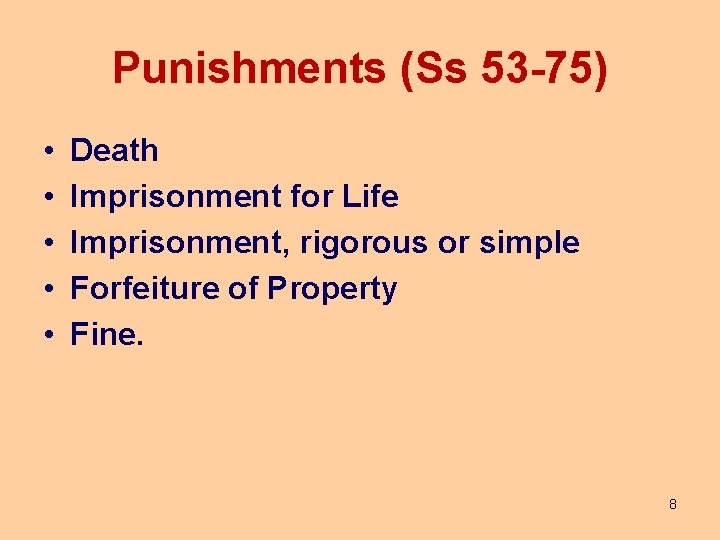
Punishments (Ss 53 -75) • • • Death Imprisonment for Life Imprisonment, rigorous or simple Forfeiture of Property Fine. 8
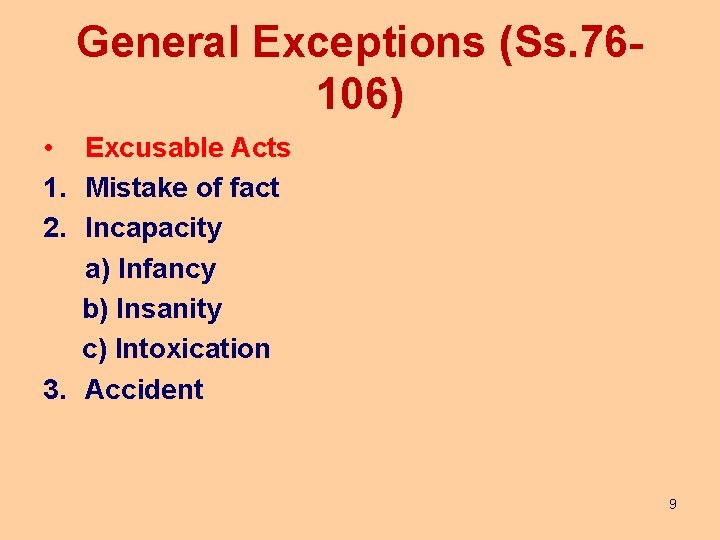
General Exceptions (Ss. 76106) • Excusable Acts 1. Mistake of fact 2. Incapacity a) Infancy b) Insanity c) Intoxication 3. Accident 9
• Justifiable Acts 1. Judicial Acts 2. Necessity 3. Consent 4. Communication in good faith 5. Compulsion 6. Trifles 7. Private defence 10
Abetment (Ss 107 – 120) • Instigating the commission of an offence • Engaging in conspiracy and doing any act towards committing an offence • Intentionally aiding in the commission of an offence 11
Criminal Conspiracy (Ss 120 A & 120 B) • When more than one persons agree to do an illegal act or a legal act by illegal means, it is Criminal Conspiracy 12
CLASSES OF OFFENCES • Offences against State – 121 to 130 – Waging war and sedition • Offences relating to Army, Navy and Air Force – 131 to 140 • Offences against public tranquility – 141 to 160 – Unlawful assembly, rioting • Offences by or relating to public servant – 166 to 171 13
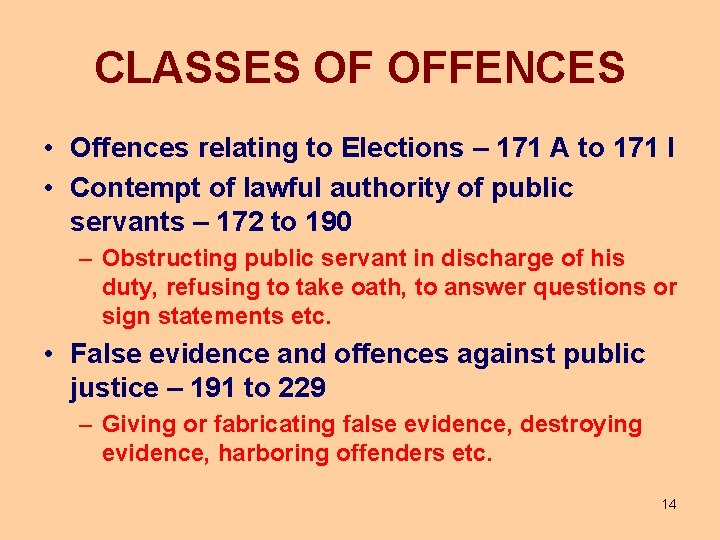
CLASSES OF OFFENCES • Offences relating to Elections – 171 A to 171 I • Contempt of lawful authority of public servants – 172 to 190 – Obstructing public servant in discharge of his duty, refusing to take oath, to answer questions or sign statements etc. • False evidence and offences against public justice – 191 to 229 – Giving or fabricating false evidence, destroying evidence, harboring offenders etc. 14
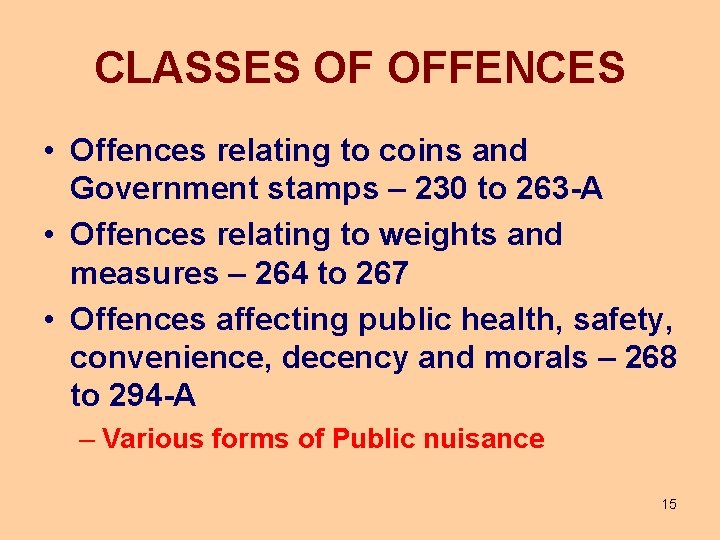
CLASSES OF OFFENCES • Offences relating to coins and Government stamps – 230 to 263 -A • Offences relating to weights and measures – 264 to 267 • Offences affecting public health, safety, convenience, decency and morals – 268 to 294 -A – Various forms of Public nuisance 15
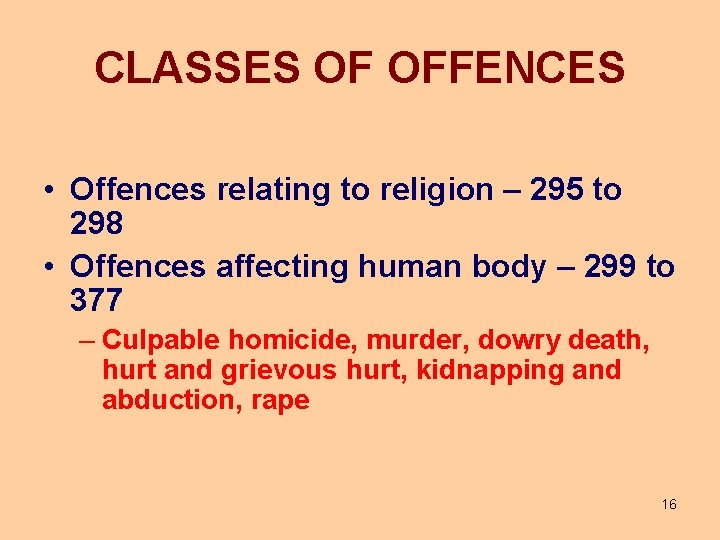
CLASSES OF OFFENCES • Offences relating to religion – 295 to 298 • Offences affecting human body – 299 to 377 – Culpable homicide, murder, dowry death, hurt and grievous hurt, kidnapping and abduction, rape 16
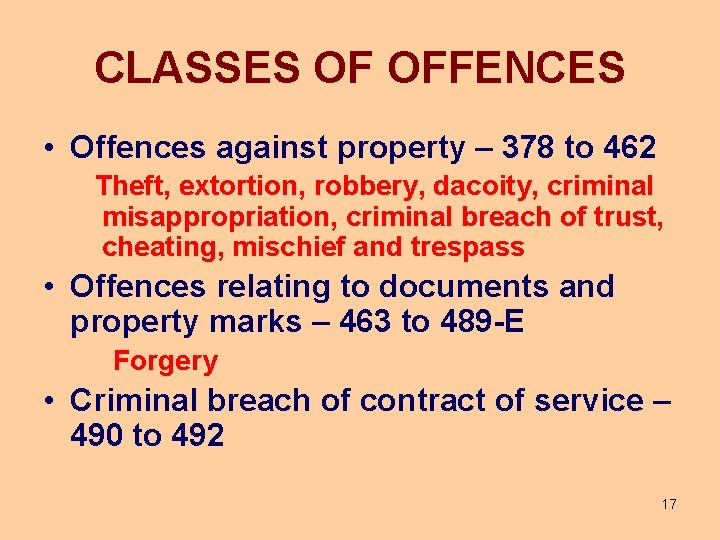
CLASSES OF OFFENCES • Offences against property – 378 to 462 Theft, extortion, robbery, dacoity, criminal misappropriation, criminal breach of trust, cheating, mischief and trespass • Offences relating to documents and property marks – 463 to 489 -E Forgery • Criminal breach of contract of service – 490 to 492 17
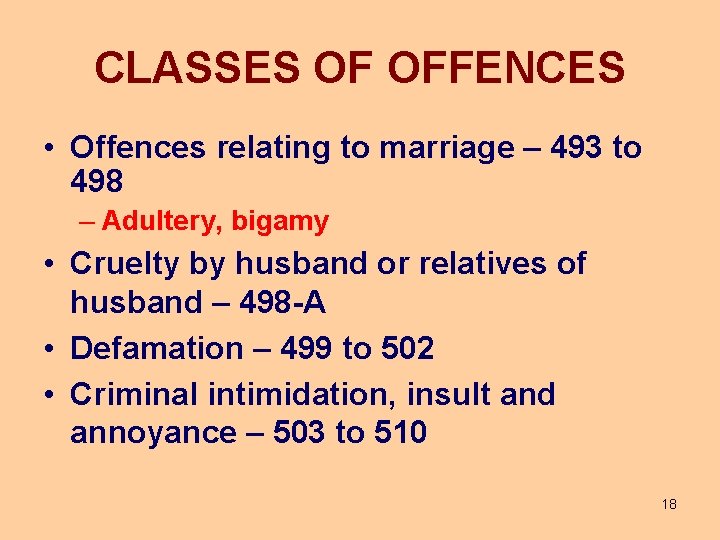
CLASSES OF OFFENCES • Offences relating to marriage – 493 to 498 – Adultery, bigamy • Cruelty by husband or relatives of husband – 498 -A • Defamation – 499 to 502 • Criminal intimidation, insult and annoyance – 503 to 510 18
ANY QUESTIONS ? 19
Thank you 20