
The India Eurasia collision Himalaya and the Tibetan
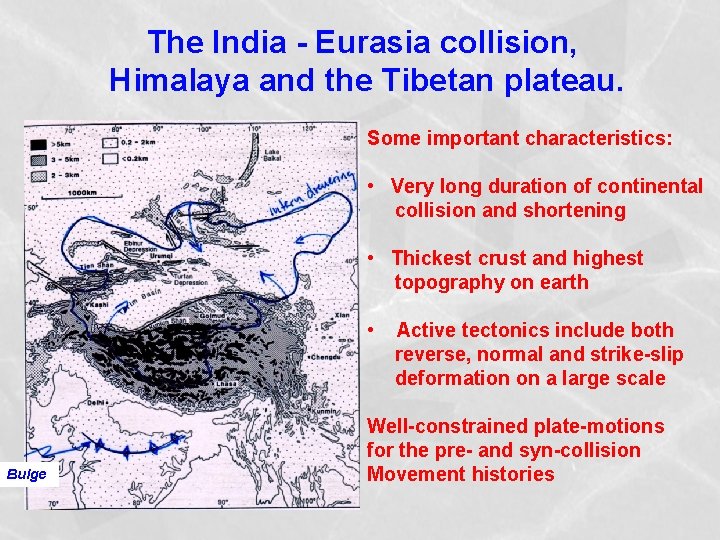
The India - Eurasia collision, Himalaya and the Tibetan plateau. Some important characteristics: • Very long duration of continental collision and shortening • Thickest crust and highest topography on earth • Bulge Active tectonics include both reverse, normal and strike-slip deformation on a large scale Well-constrained plate-motions for the pre- and syn-collision Movement histories
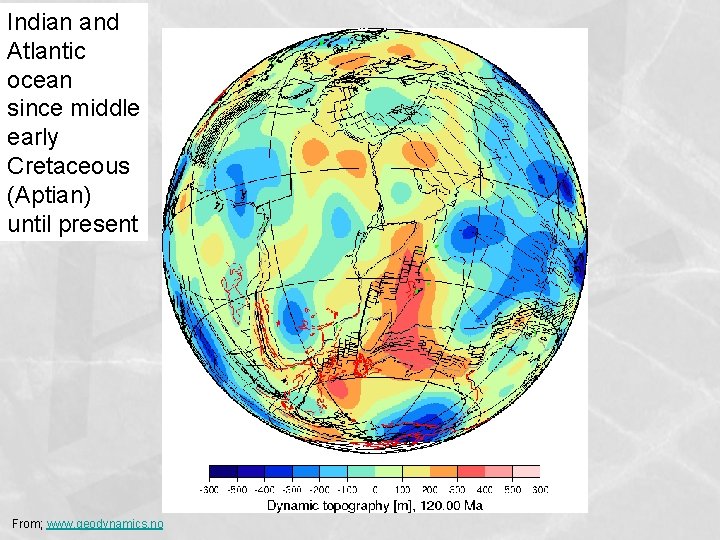
Indian and Atlantic ocean since middle early Cretaceous (Aptian) until present From; www. geodynamics. no
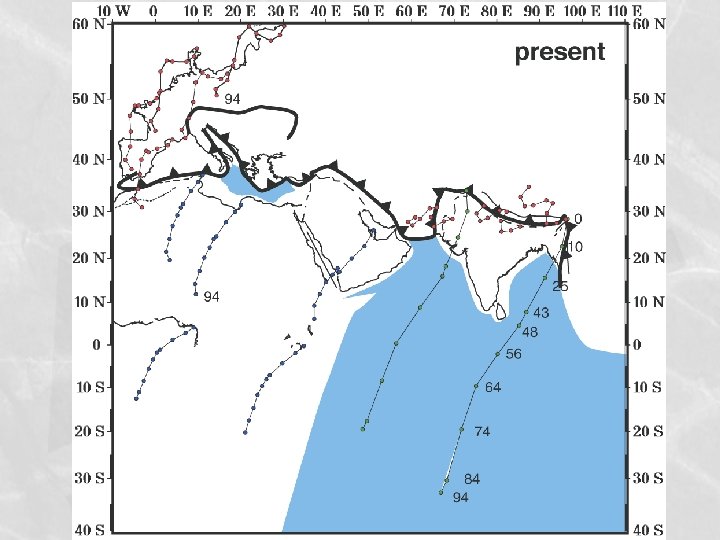
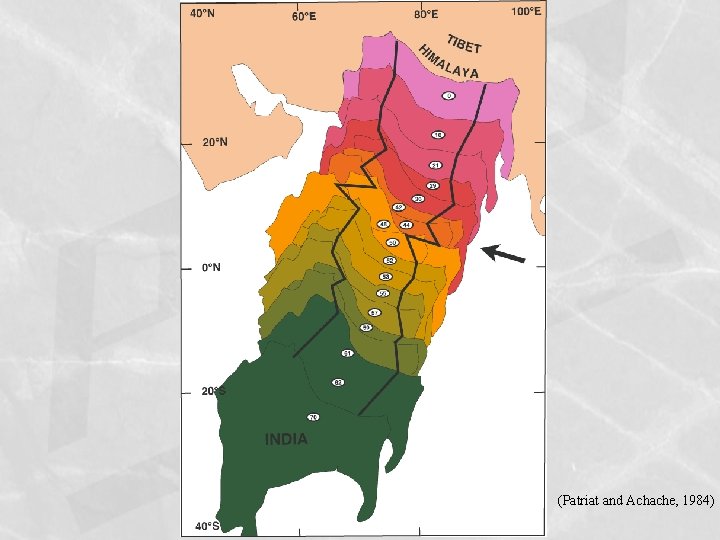
(Patriat and Achache, 1984)
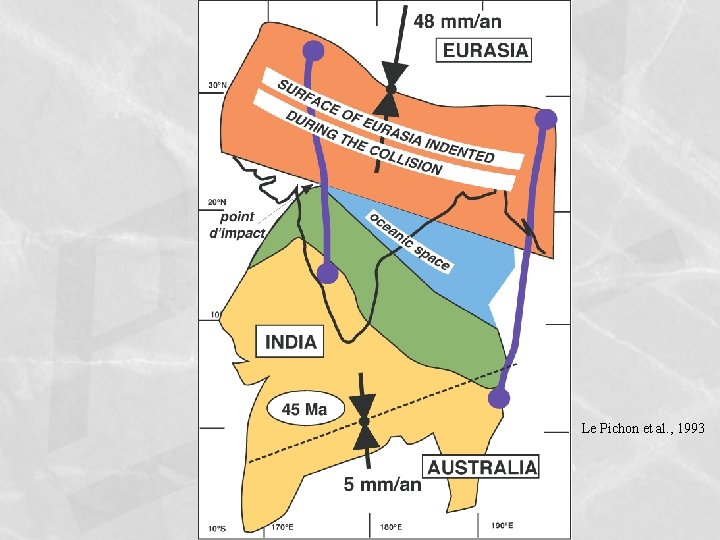
Le Pichon et al. , 1993
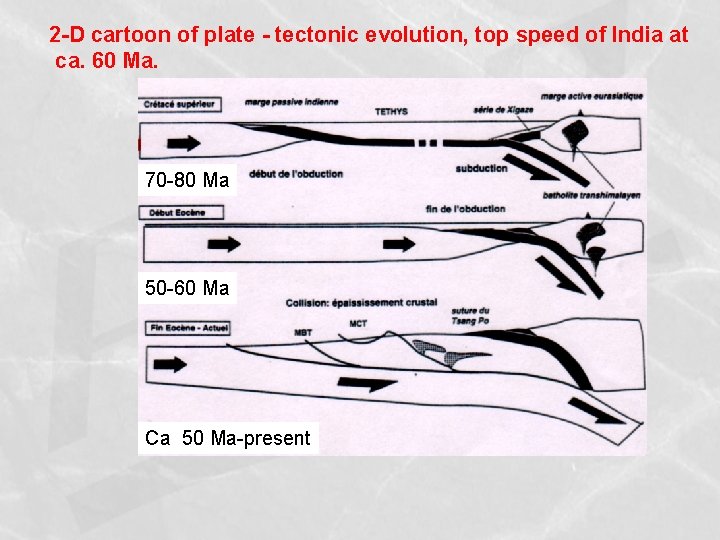
2 -D cartoon of plate - tectonic evolution, top speed of India at ca. 60 Ma. 70 -80 Ma 50 -60 Ma Ca 50 Ma-present
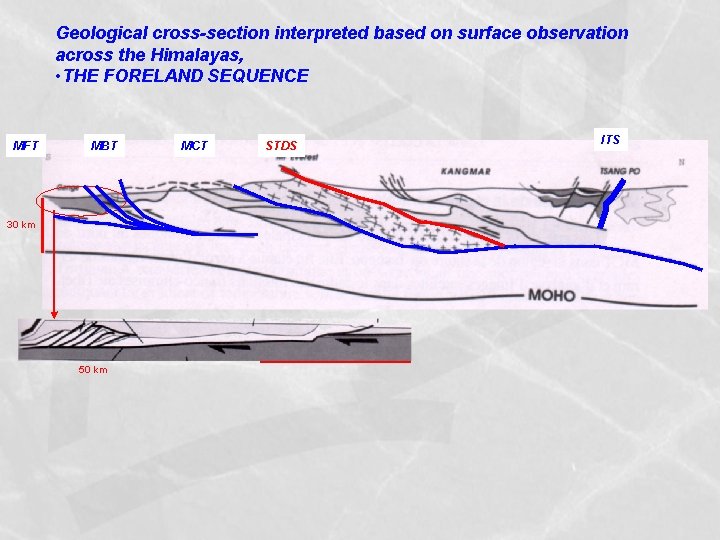
Geological cross-section interpreted based on surface observation across the Himalayas, • THE FORELAND SEQUENCE MFT MBT 30 km 50 km MCT STDS ITS
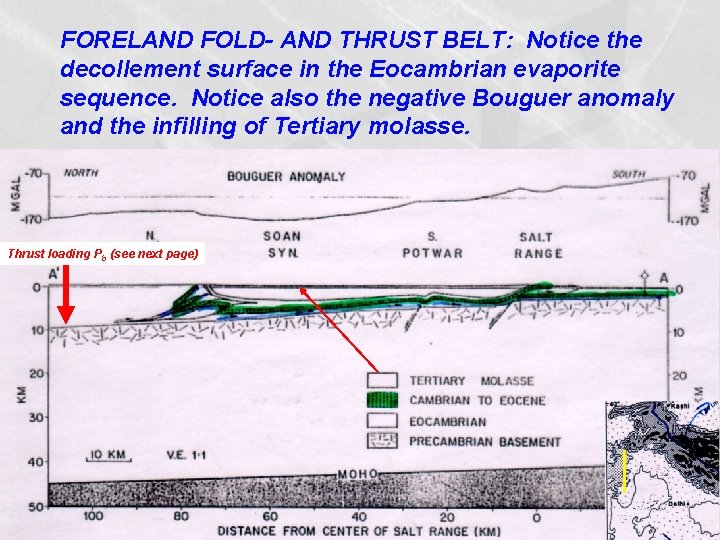
FORELAND FOLD- AND THRUST BELT: Notice the decollement surface in the Eocambrian evaporite sequence. Notice also the negative Bouguer anomaly and the infilling of Tertiary molasse. Thrust loading Pb (see next page)
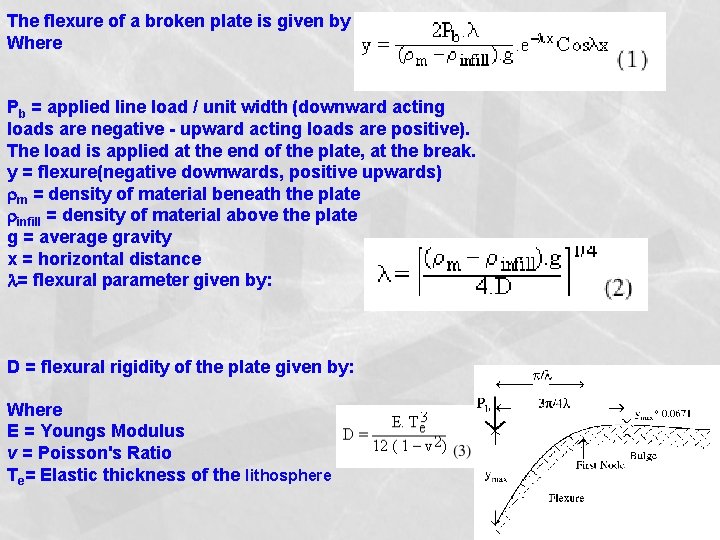
The flexure of a broken plate is given by : Where Pb = applied line load / unit width (downward acting loads are negative - upward acting loads are positive). The load is applied at the end of the plate, at the break. y = flexure(negative downwards, positive upwards) m = density of material beneath the plate infill = density of material above the plate g = average gravity x = horizontal distance = flexural parameter given by: D = flexural rigidity of the plate given by: Where E = Youngs Modulus v = Poisson's Ratio Te= Elastic thickness of the lithosphere
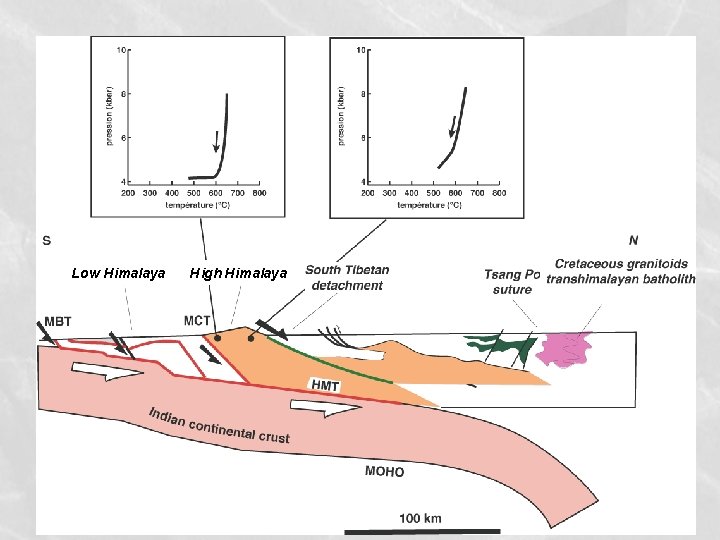
Low Himalaya High Himalaya
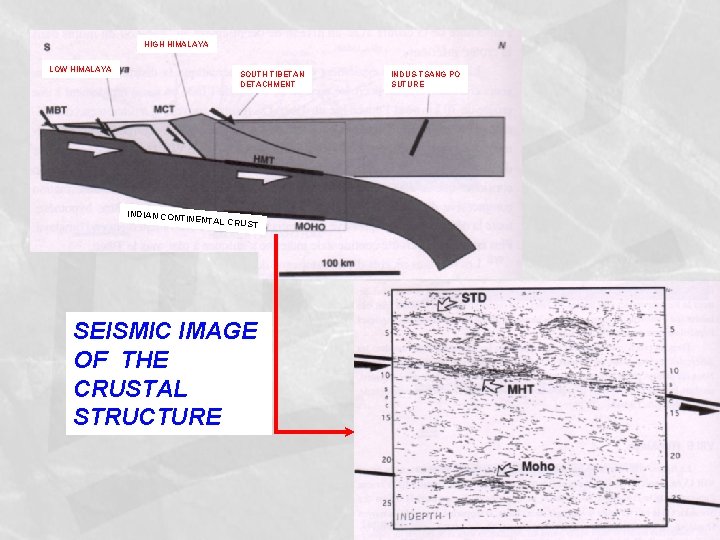
HIGH HIMALAYA LOW HIMALAYA SOUTH TIBETAN DETACHMENT INDIAN CON TI NENTAL CR UST SEISMIC IMAGE OF THE CRUSTAL STRUCTURE INDUS-TSANG PO SUTURE
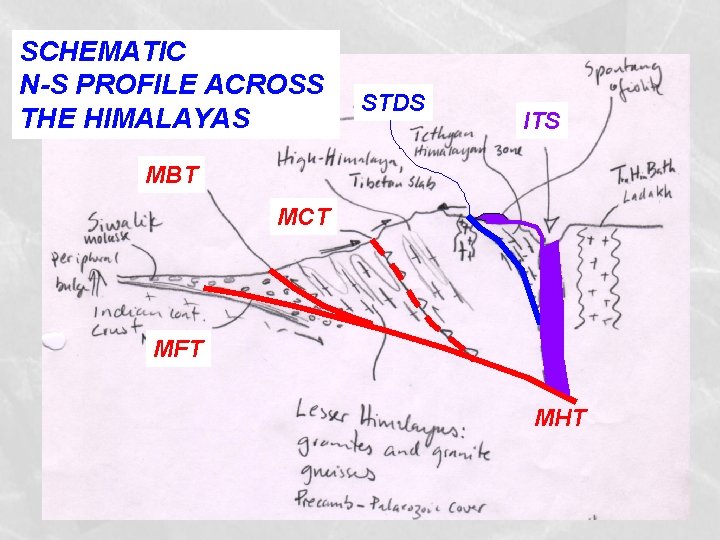
SCHEMATIC N-S PROFILE ACROSS THE HIMALAYAS STDS ITS MBT MCT MFT MHT
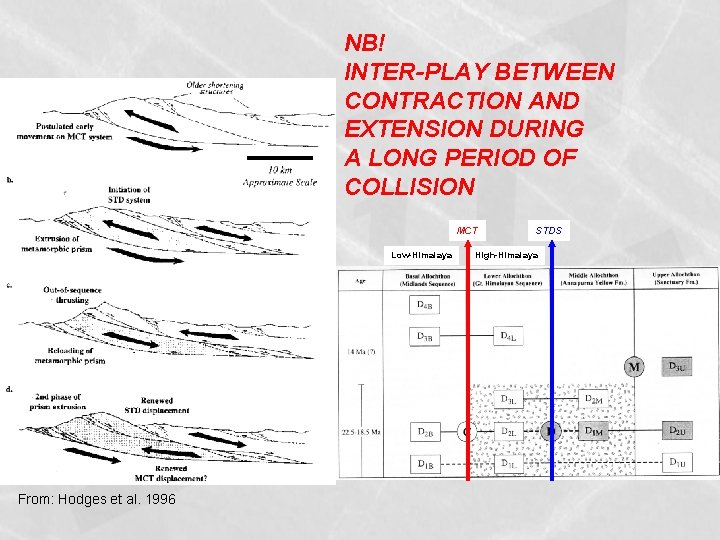
NB! INTER-PLAY BETWEEN CONTRACTION AND EXTENSION DURING A LONG PERIOD OF COLLISION MCT Low-Himalaya From: Hodges et al. 1996 STDS High-Himalaya
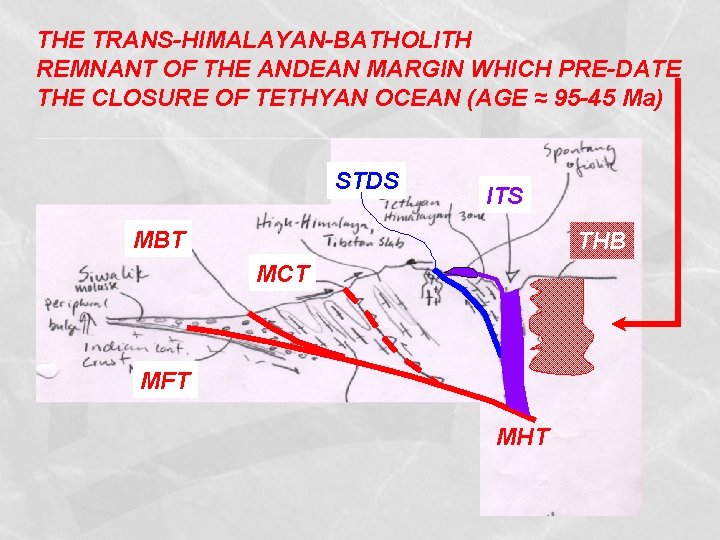
THE TRANS-HIMALAYAN-BATHOLITH REMNANT OF THE ANDEAN MARGIN WHICH PRE-DATE THE CLOSURE OF TETHYAN OCEAN (AGE ≈ 95 -45 Ma) STDS ITS MBT THB MCT MFT MHT
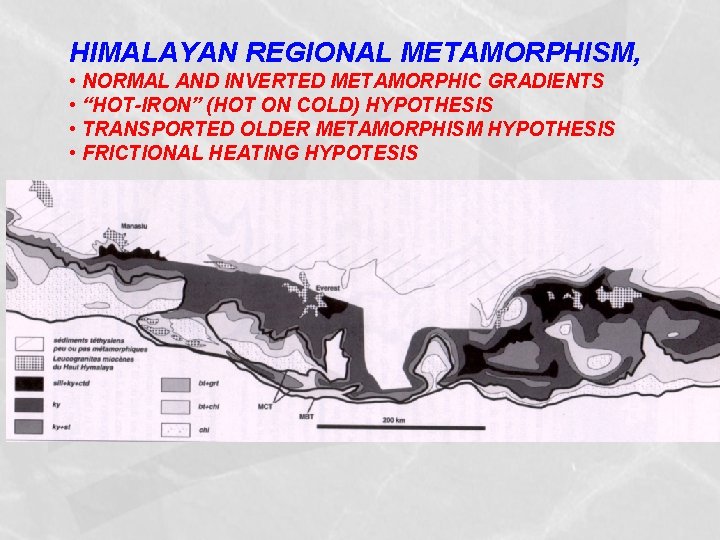
HIMALAYAN REGIONAL METAMORPHISM, • NORMAL AND INVERTED METAMORPHIC GRADIENTS • “HOT-IRON” (HOT ON COLD) HYPOTHESIS • TRANSPORTED OLDER METAMORPHISM HYPOTHESIS • FRICTIONAL HEATING HYPOTESIS
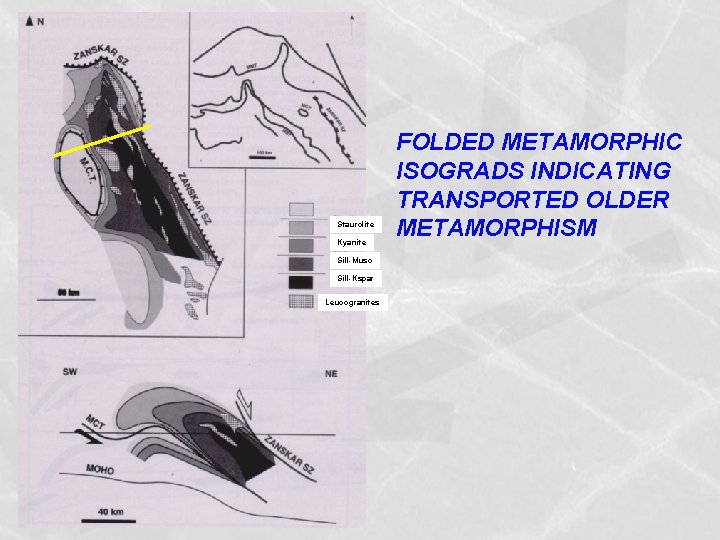
Staurolite Kyanite Sill-Musc Sill-Kspar Leucogranites FOLDED METAMORPHIC ISOGRADS INDICATING TRANSPORTED OLDER METAMORPHISM
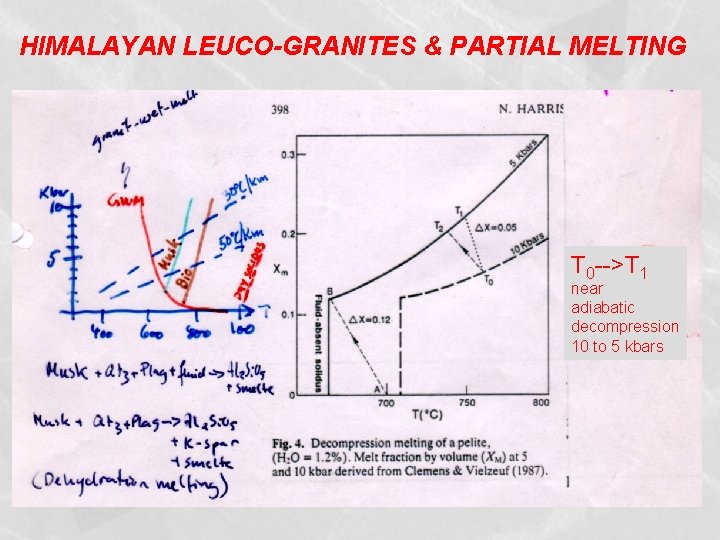
HIMALAYAN LEUCO-GRANITES & PARTIAL MELTING T 0 -->T 1 near adiabatic decompression 10 to 5 kbars
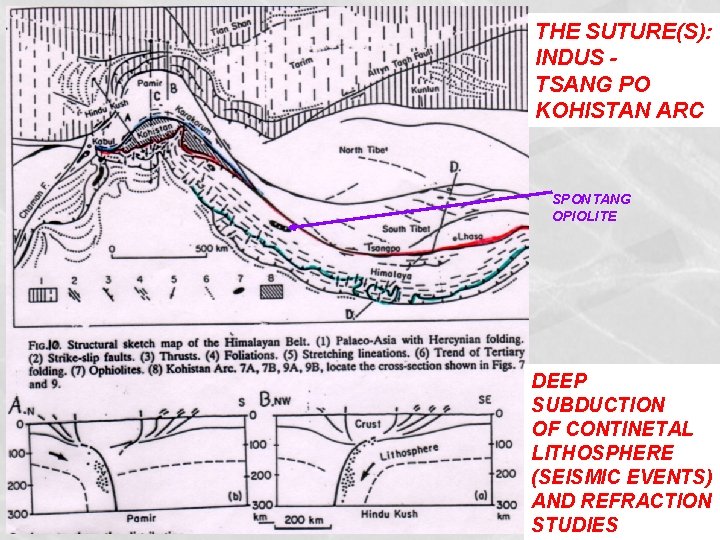
THE SUTURE(S): INDUS TSANG PO KOHISTAN ARC SPONTANG OPIOLITE DEEP SUBDUCTION OF CONTINETAL LITHOSPHERE (SEISMIC EVENTS) AND REFRACTION STUDIES
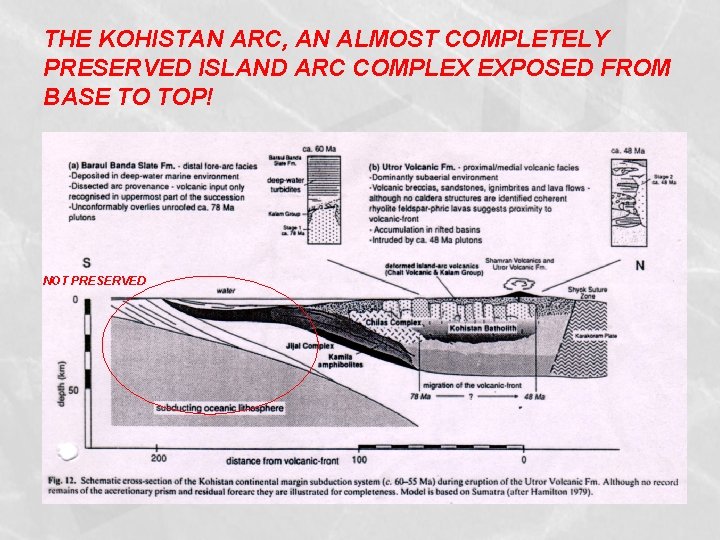
THE KOHISTAN ARC, AN ALMOST COMPLETELY PRESERVED ISLAND ARC COMPLEX EXPOSED FROM BASE TO TOP! NOT PRESERVED
CONTINUE WITH PRESENT DAY TECTONICS OF THE HIMALAYAN TIBETAN COLLISION ZONE
- Slides: 20