
The importance of economics in the adoption of
- Slides: 17
The importance of economics in the adoption of BC programs: use of budgets and case studies Karina Gallardo 1, Jay Brunner 2 School of Economic Sciences 1, Tree Fruit Research and Extension Center 2, Washington State University, Wenatchee, WA 98801
Content ü Background – Why economics and biological control? ü Problem statement – How to value benefits of biological control ü What are we doing? – Partial budgeting of pest management scenarios – Re-entry intervals – Valuation of non-market goods ü Preliminary results
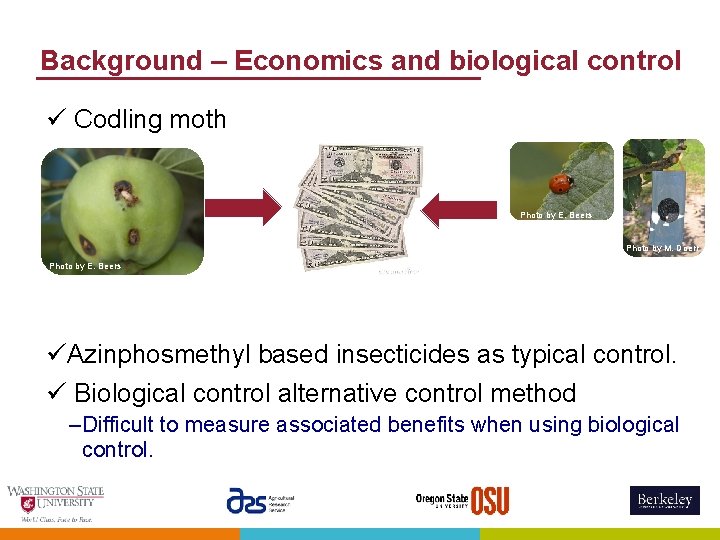
Background – Economics and biological control ü Codling moth Photo by E. Beers Photo by M. Doerr Photo by E. Beers üAzinphosmethyl based insecticides as typical control. ü Biological control alternative control method –Difficult to measure associated benefits when using biological control.
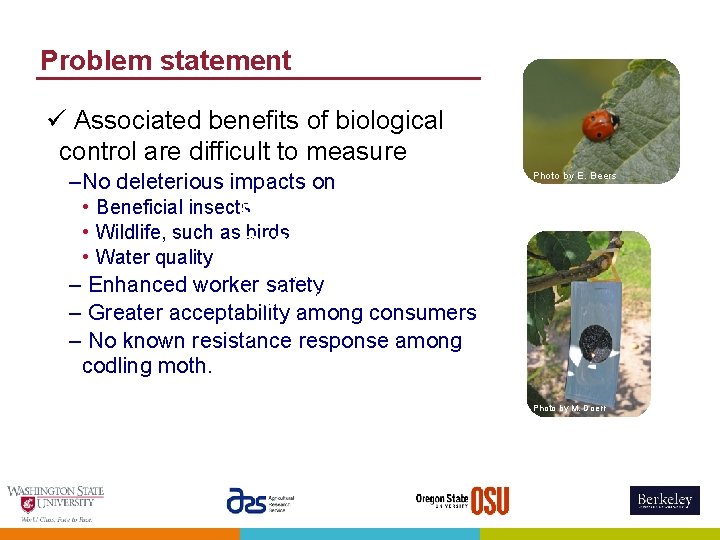
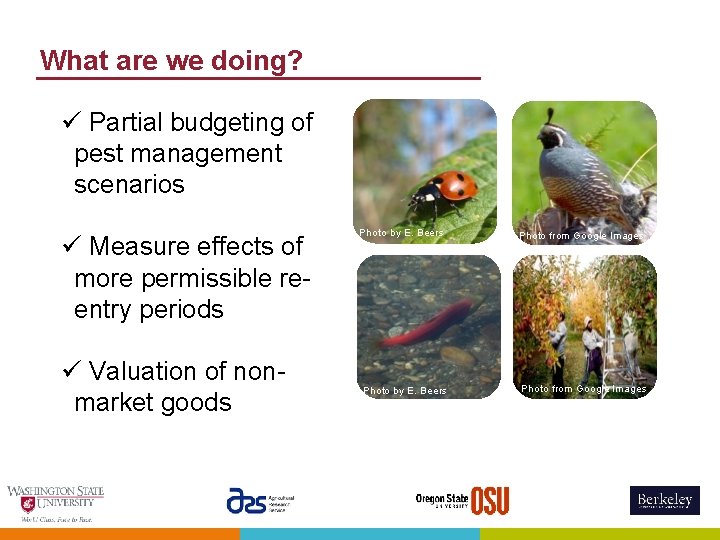
Problem statement ü Associated benefits of biological control are difficult to measure –No deleterious impacts on Photo by E. Beers • Beneficial insects. Partial budgeting of pest • Wildlife, such asmanagement birds scenarios • Water quality Re-entry intervals – Enhanced worker safety Valuation of non-market – Greater acceptability among consumers goods – No known resistance response among codling moth. Photo by M. Doerr
What are we doing? ü Partial budgeting of pest management scenarios ü Measure effects of more permissible reentry periods ü Valuation of nonmarket goods Photo by E. Beers Photo from Google Images
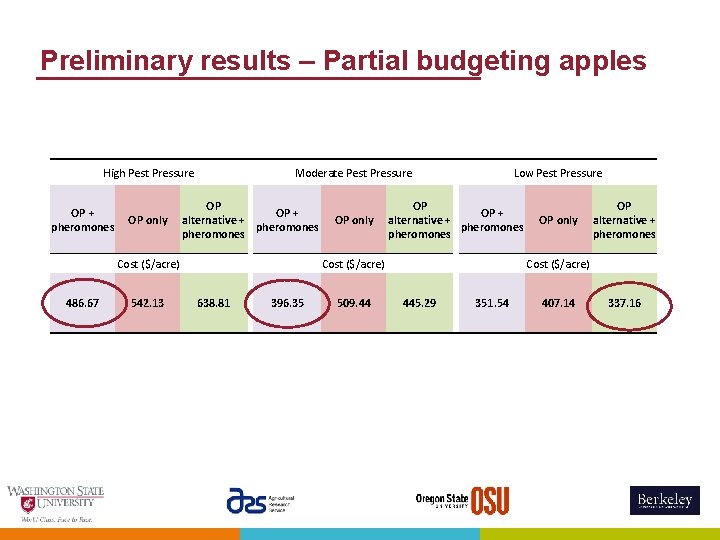
Preliminary results – Partial budgeting apples High Pest Pressure OP + pheromones OP only Moderate Pest Pressure OP OP + alternative + pheromones Cost ($/acre) 486. 67 542. 13 OP only Low Pest Pressure OP OP + alternative + pheromones Cost ($/acre) 638. 81 396. 35 509. 44 OP only OP alternative + pheromones Cost ($/acre) 445. 29 351. 54 407. 14 337. 16
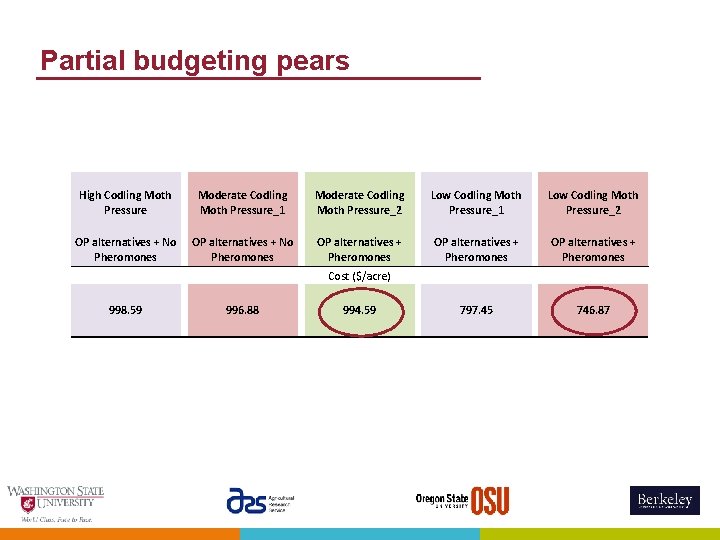
Partial budgeting pears High Codling Moth Pressure Moderate Codling Moth Pressure_1 Moderate Codling Moth Pressure_2 Low Codling Moth Pressure_1 Low Codling Moth Pressure_2 OP alternatives + No Pheromones OP alternatives + Pheromones 797. 45 746. 87 Cost ($/acre) 998. 59 996. 88 994. 59
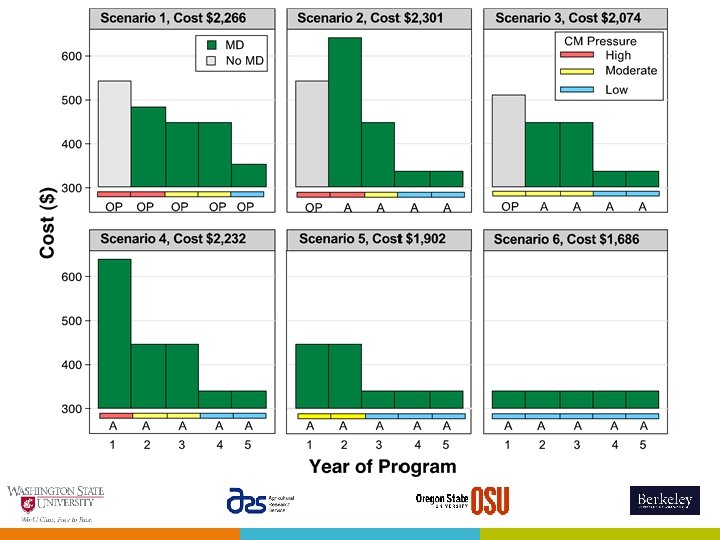
Cost tendencies over 5 years
Cost of BC
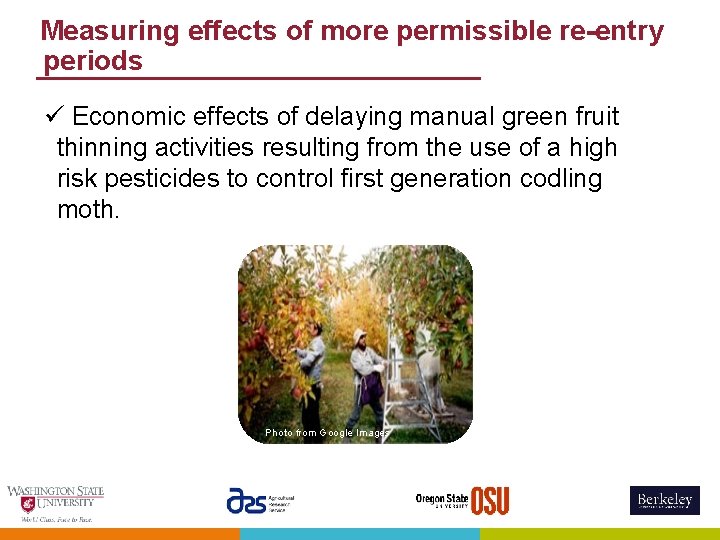
Measuring effects of more permissible re-entry periods ü Economic effects of delaying manual green fruit thinning activities resulting from the use of a high risk pesticides to control first generation codling moth. Photo from Google Images
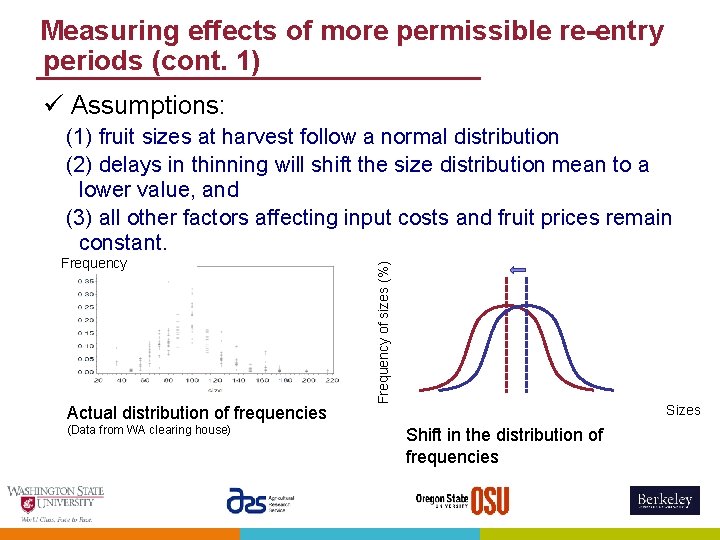
Measuring effects of more permissible re-entry periods (cont. 1) ü Assumptions: Frequency Actual distribution of frequencies (Data from WA clearing house) Frequency of sizes (%) (1) fruit sizes at harvest follow a normal distribution (2) delays in thinning will shift the size distribution mean to a lower value, and (3) all other factors affecting input costs and fruit prices remain constant. Sizes Shift in the distribution of frequencies
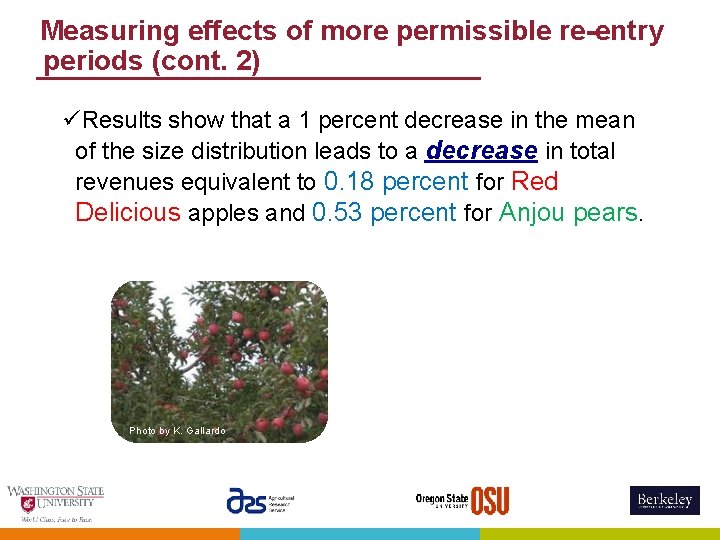
Measuring effects of more permissible re-entry periods (cont. 2) üResults show that a 1 percent decrease in the mean of the size distribution leads to a decrease in total revenues equivalent to 0. 18 percent for Red Delicious apples and 0. 53 percent for Anjou pears. Photo by K. Gallardo
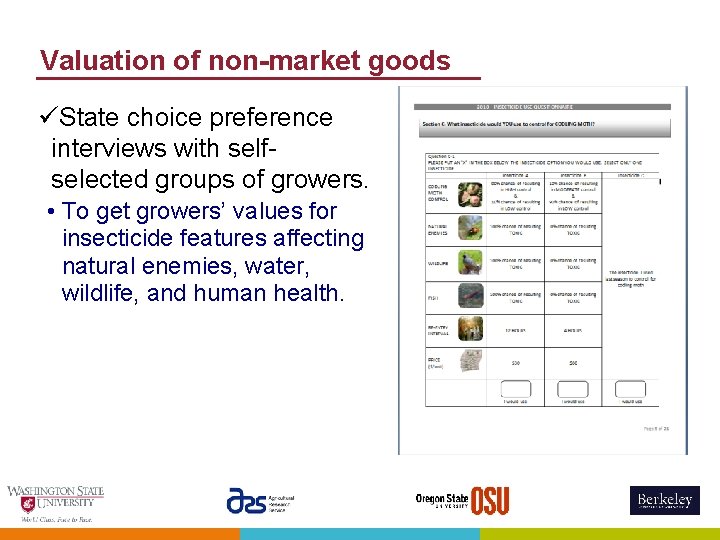
Valuation of non-market goods üState choice preference interviews with selfselected groups of growers. • To get growers’ values for insecticide features affecting natural enemies, water, wildlife, and human health.
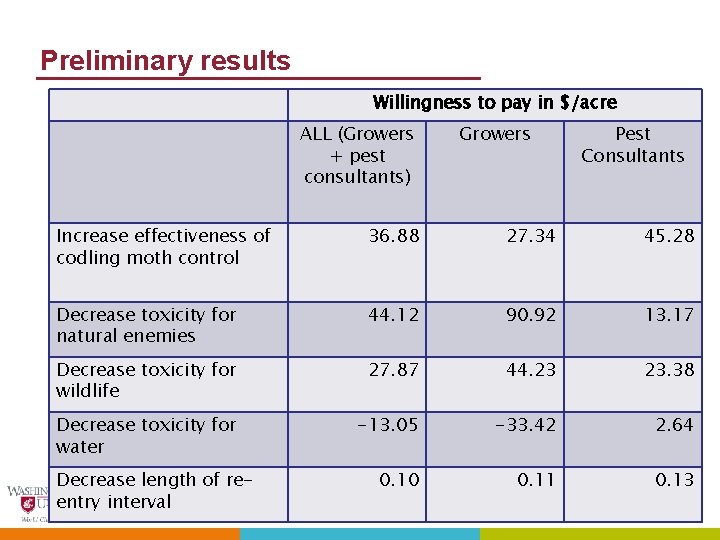
Preliminary results Willingness to pay in $/acre ALL (Growers + pest consultants) Growers Pest Consultants Increase effectiveness of codling moth control 36. 88 27. 34 45. 28 Decrease toxicity for natural enemies 44. 12 90. 92 13. 17 Decrease toxicity for wildlife 27. 87 44. 23 23. 38 Decrease toxicity for water -13. 05 -33. 42 2. 64 0. 10 0. 11 0. 13 Decrease length of reentry interval
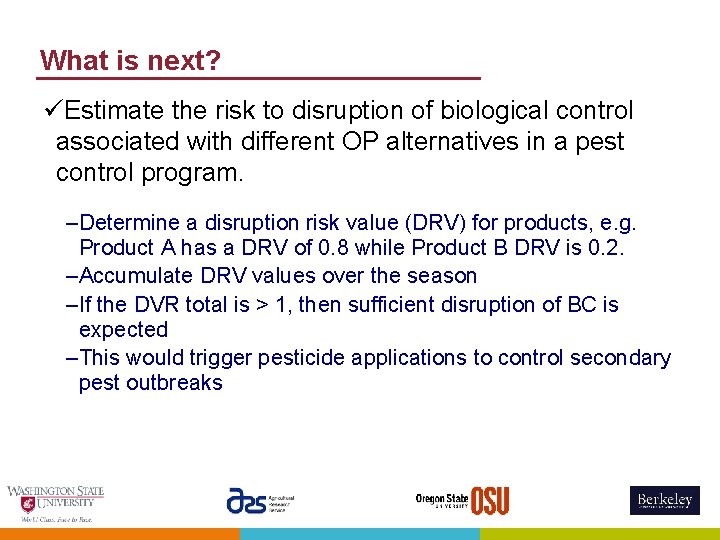
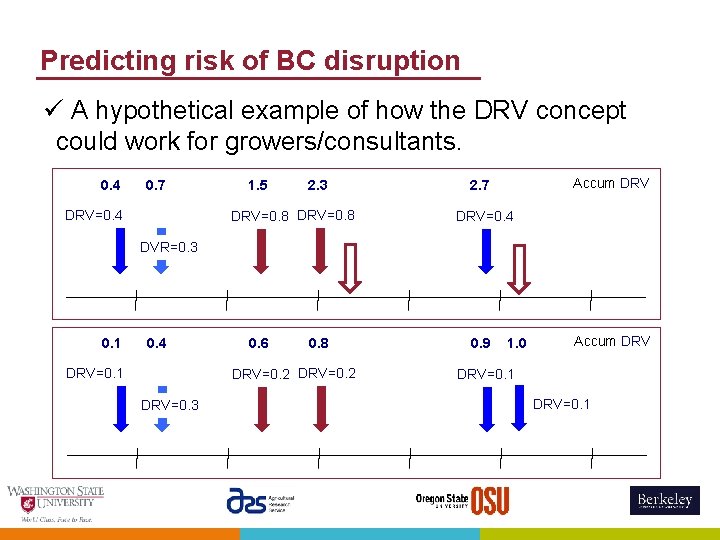
What is next? üEstimate the risk to disruption of biological control associated with different OP alternatives in a pest control program. –Determine a disruption risk value (DRV) for products, e. g. Product A has a DRV of 0. 8 while Product B DRV is 0. 2. –Accumulate DRV values over the season –If the DVR total is > 1, then sufficient disruption of BC is expected –This would trigger pesticide applications to control secondary pest outbreaks Brown mite. Photo by E. Beers.
Predicting risk of BC disruption ü A hypothetical example of how the DRV concept could work for growers/consultants. 0. 4 0. 7 DRV=0. 4 1. 5 2. 3 DRV=0. 8 Accum DRV 2. 7 DRV=0. 4 DVR=0. 3 0. 1 0. 4 DRV=0. 1 0. 6 0. 8 DRV=0. 2 DRV=0. 3 0. 9 1. 0 Accum DRV=0. 1 Brown mite. Photo by E. Beers.
THANK YOU QUESTIONS? Karina Gallardo 1, Jay Brunner 2 School of Economic Sciences -Tree Fruit Research and Extension – Washington State University. Wenatchee, WA. Email: karina_gallardo@wsu. edu 1 Tree Fruit Research and Extension Center - Washington State University, Wenatchee, WA. Email: jfb@wsu. edu 2