
The Importance of Cell Division Why would a



- Slides: 25
The Importance of Cell Division
Why would a cell want to divide?
Purpose of Cell Division Three purposes of cell division: 1. Reproduction 2. Repair 3. Growth
Cell Division For Reproduction • All cells use cell division to reproduce • Each division results in two new cells
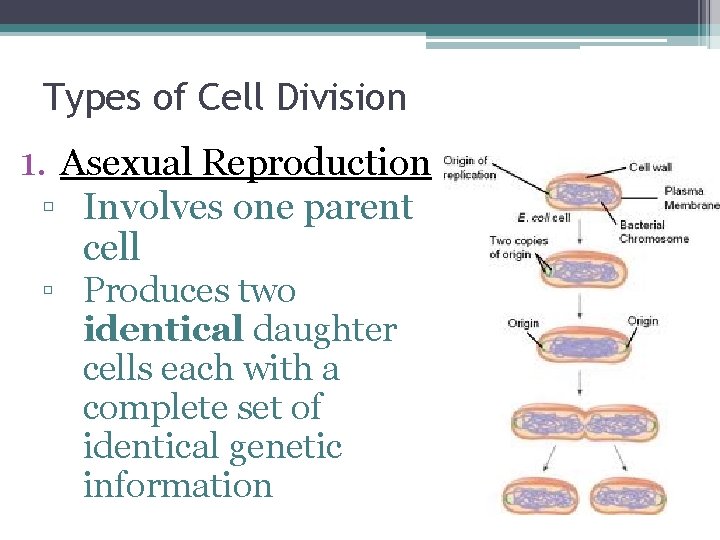
Types of Cell Division 1. Asexual Reproduction ▫ Involves one parent cell ▫ Produces two identical daughter cells each with a complete set of identical genetic information
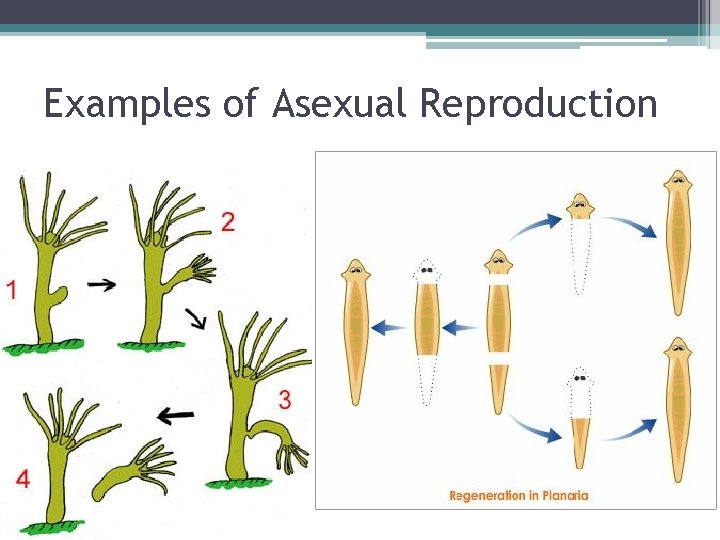
Examples of Asexual Reproduction
Types of Cell Division 2. Sexual Reproduction ▫ Involves two parent cells ▫ Each parent provides half the DNA found in the daughter cells. ▫ Produces offspring with characteristics from both parents.
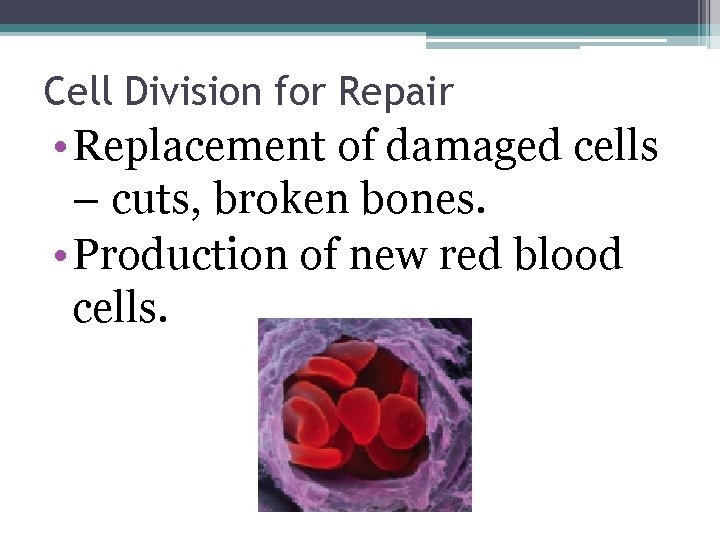
Cell Division for Repair • Replacement of damaged cells – cuts, broken bones. • Production of new red blood cells.
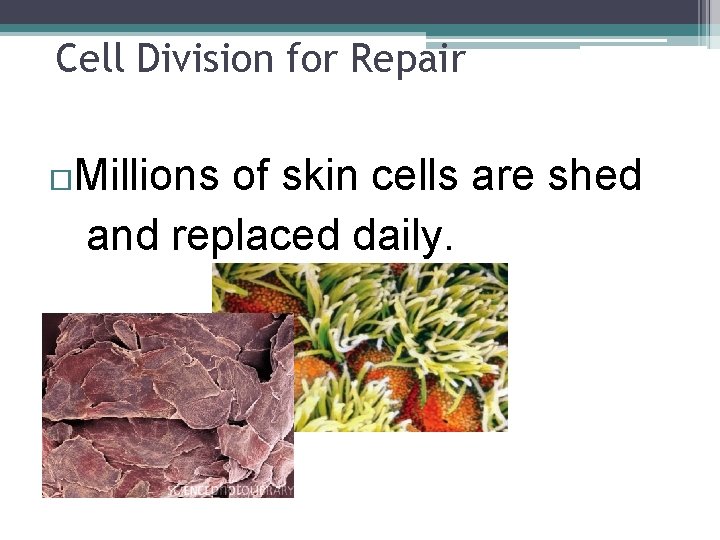
Cell Division for Repair Millions of skin cells are shed and replaced daily.
Cell Division for Growth • Growth is a matter of increasing the number of cells that are present • Cells getting bigger doesn’t work
Cell Division for Growth • Cells all need energy, nutrients, water and gases to grow. • Chemicals need to be in solution to be used. ØCells need water to use chemicals and get rid of waste.
Cell Division for Growth
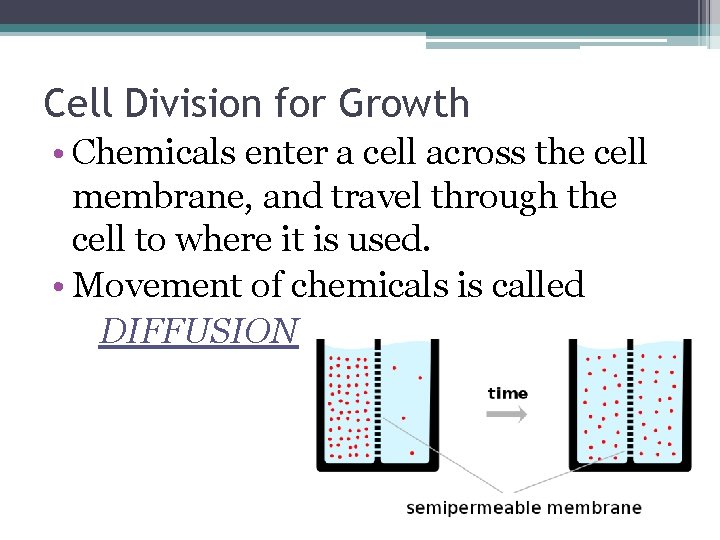
Cell Division for Growth • Chemicals enter a cell across the cell membrane, and travel through the cell to where it is used. • Movement of chemicals is called DIFFUSION
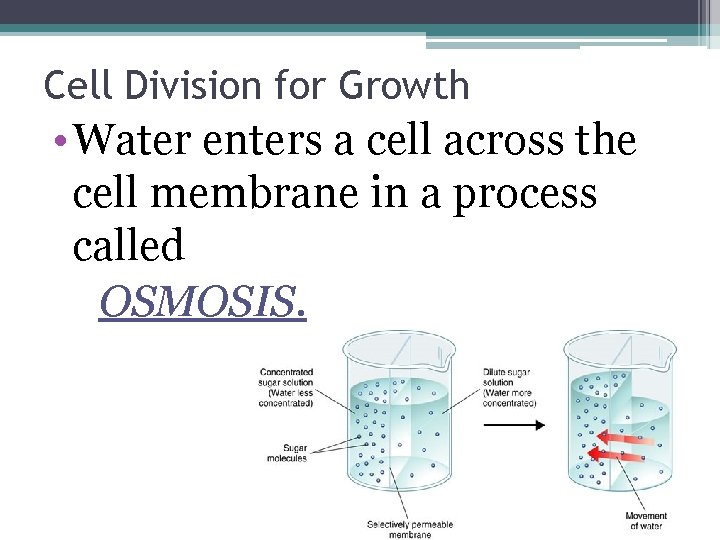
Cell Division for Growth • Water enters a cell across the cell membrane in a process called OSMOSIS.
Osmosis/Diffusion • …why do chemical particles move? ØChemicals move from an area of high concentration to low concentration. ØWater moves to where the solution is more concentrated.
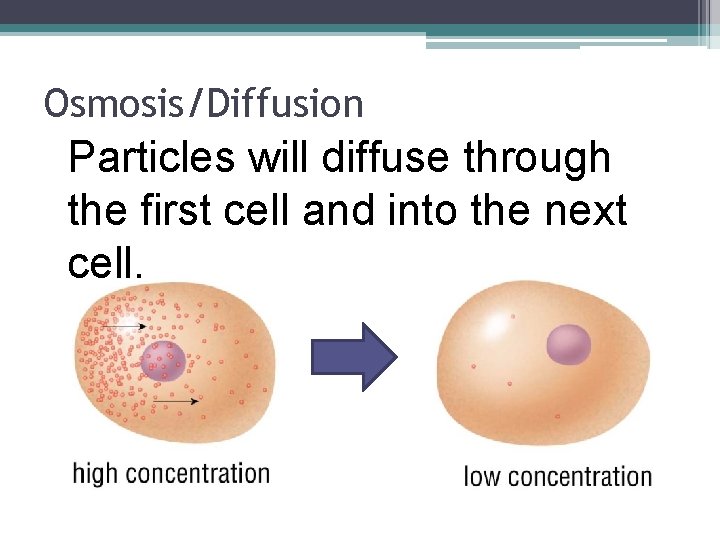
Osmosis/Diffusion Particles will diffuse through the first cell and into the next cell.
Osmosis/Diffusion Concentration is the amount of a substance present in a given volume of water.
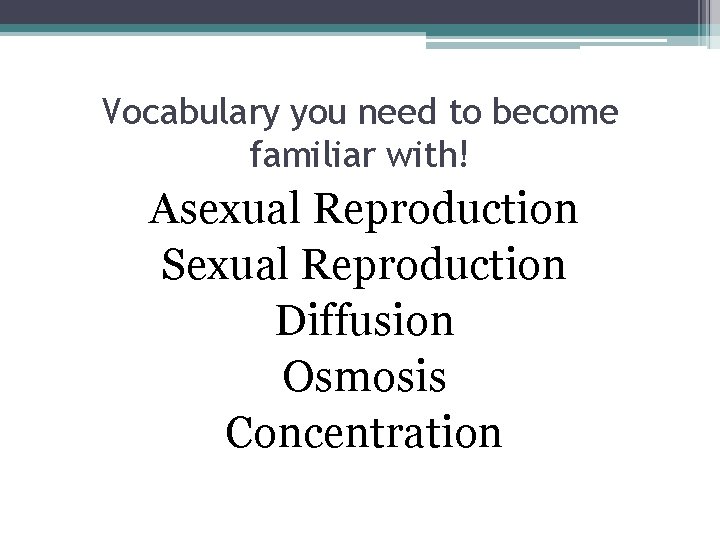
Vocabulary you need to become familiar with! Asexual Reproduction Sexual Reproduction Diffusion Osmosis Concentration
Homework! Page 37 Questions #1 - 6
Microscopes • Let’s read the rules! • Identify parts and functions ▫ Use Pg 605
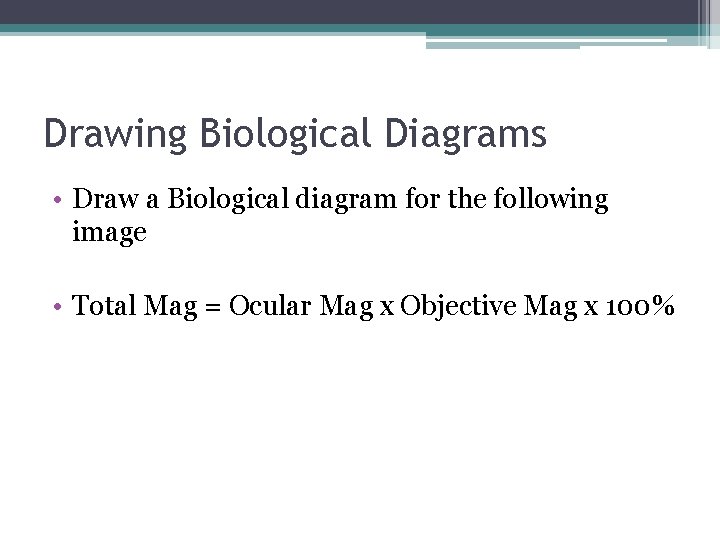
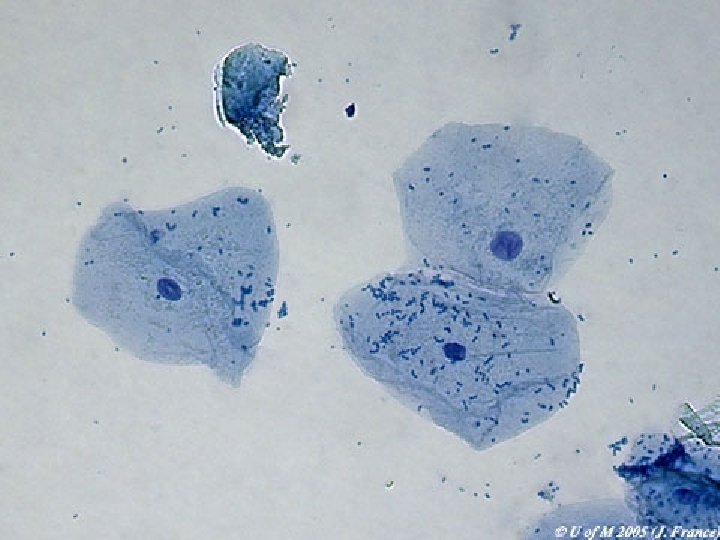
Drawing Biological Diagrams • Draw a Biological diagram for the following image • Total Mag = Ocular Mag x Objective Mag x 100%
Switch your Work
Did he/she? • Name (first and last), date and teacher's name in top right hand corner • Title is appropriate • Title is underlined and centred in middle of page • Pencil is used for diagram and labels • Clean, thick, sharp lines; stippling is used for dark areas • Diagram takes up at least ½ of the page • Accurate drawing (draws what is seen)
• Records total magnification; is correctly calculated • Total magnification is recorded under drawing • Labels are printed to the right of the diagram • Labels are aligned under each other • Label lines are drawn with a ruler and do not cross each other • All structures are labeled correctly