
THE IMPORTANCE OF BIOTECHNOLOGY Melaine Randle B Sc
THE IMPORTANCE OF BIOTECHNOLOGY Melaine Randle, B. Sc. (Hons), Ph. D. Candidate The Biotechnology Centre
What Is Biotechnology? �Manipulation of living organisms, systems to develop products. �Term coined by Hungarian engineer Karl Ereky in 1919. �Field integrates knowledge from biochemistry, microbiology and chemical engineering. �Includes genomics, recombinant gene technologies, applied immunology and development of pharmaceutical, diagnostic tests.
History �Used in agriculture, food production and medicine for thousands of years. �Bred productive animals to make stronger and more productive offsprings. �Fermentation: yeast cells to raise bread dough, ferment alcoholic beverages. �Microbial cultures; bacterial cells used to make cheeses and yogurts.
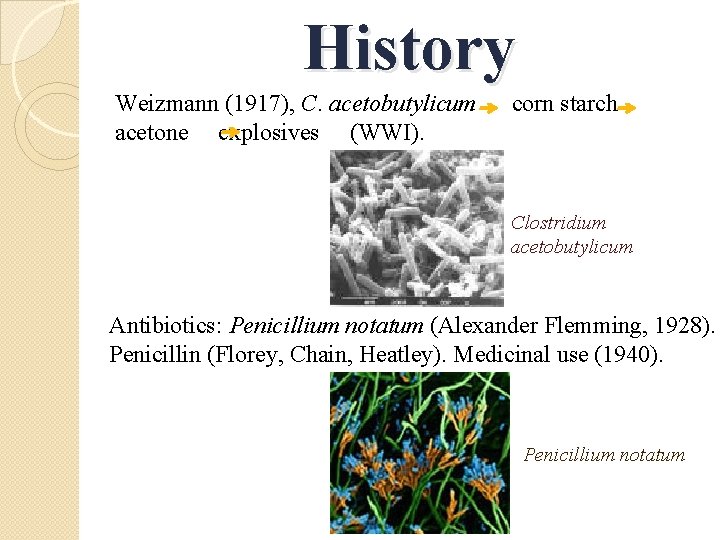
History Weizmann (1917), C. acetobutylicum acetone explosives (WWI). corn starch Clostridium acetobutylicum Antibiotics: Penicillium notatum (Alexander Flemming, 1928). Penicillin (Florey, Chain, Heatley). Medicinal use (1940). Penicillium notatum
Applications �Medical ◦ Drug production (eg. Insulin, antibiotics) ◦ Pharmacogenomics (genetic inheritance and response to drugs) ◦ Gene Therapy (replace defective genes) ◦ Genetic testing for diseases eg. Down’s Syndrome, Amniocentesis and Chorionic Villus sampling.
Applications �Chemical Industry ◦ Production of bulk chemicals eg. Ethanol, citric acid, acetone, butanol ◦ Synthesis of enzymes, amino acids, alkaloids �Food Industry ◦ Production of baker’s yeast, cheese, yogurt, soy sauce, flavours, colouring agents ◦ Brewing and wine making
Applications �Agriculture ◦ Crop yield ◦ Reduce vulnerability of crops to environmetal stresses ◦ Increased nutritional qualities ◦ Improved taste, texture or appearance of food ◦ Reduced dependence on fertilizers, pesticides ◦ Production of novel substances in crops ◦ Animal Biotechnology
Applications �Environment ◦ Bioremediation of soil and water polluted with chemicals ◦ Treatment of sewage and other organic waste ◦ Recovery of heavy metals from industrial sources
Biotechnology Techniques �DNA Isolation �DNA Amplification �DNA Cloning �Restriction Enzyme Digestion �Gel Electrophoresis �DNA Sequencing
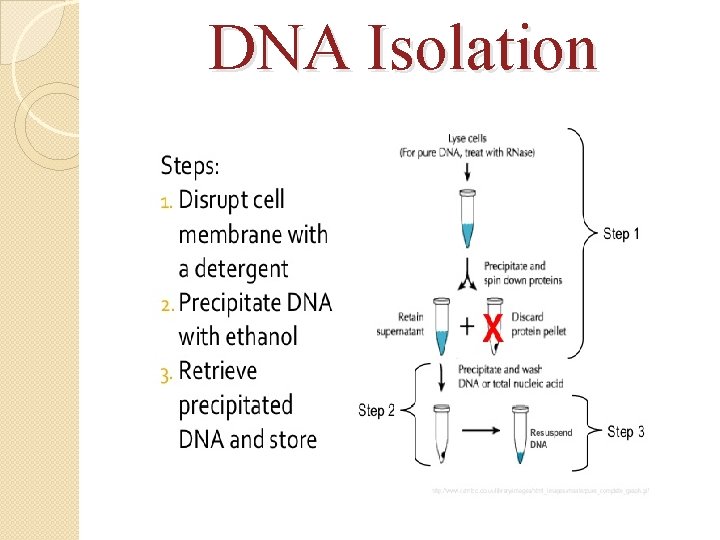
DNA Isolation
DNA Amplification �Polymerase Chain Reaction ◦ Kary Mullis (1986) ◦ Creates millions of copies of specific DNA sequence synthetically via thermal cycler ◦ Materials needed: �DNA template �d. NTPs (dinucleotide triphosphates) �Taq DNA Polymearse �Primers �Reaction buffer (+ sterile water)
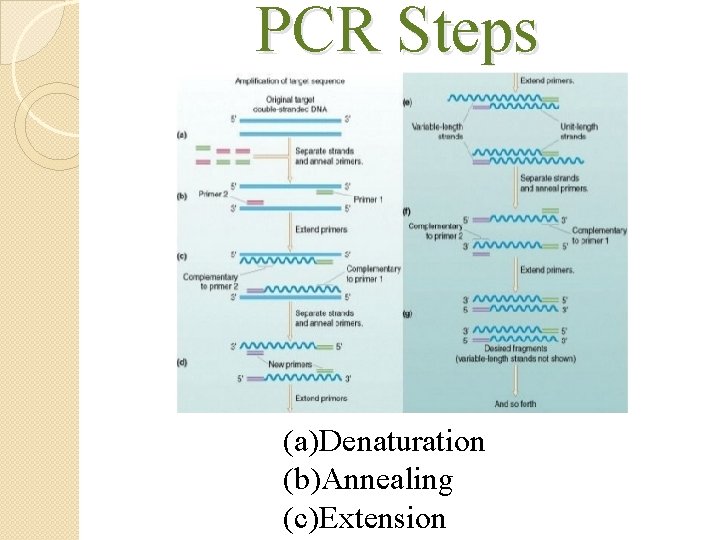
PCR Steps (a)Denaturation (b)Annealing (c)Extension
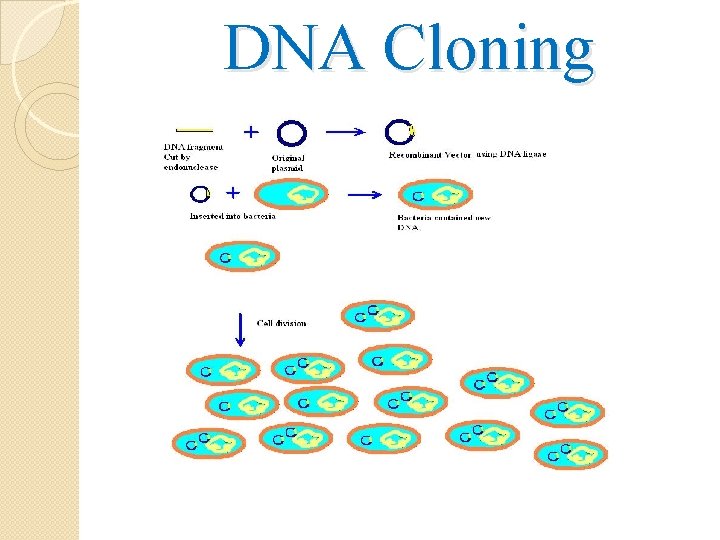
DNA Cloning
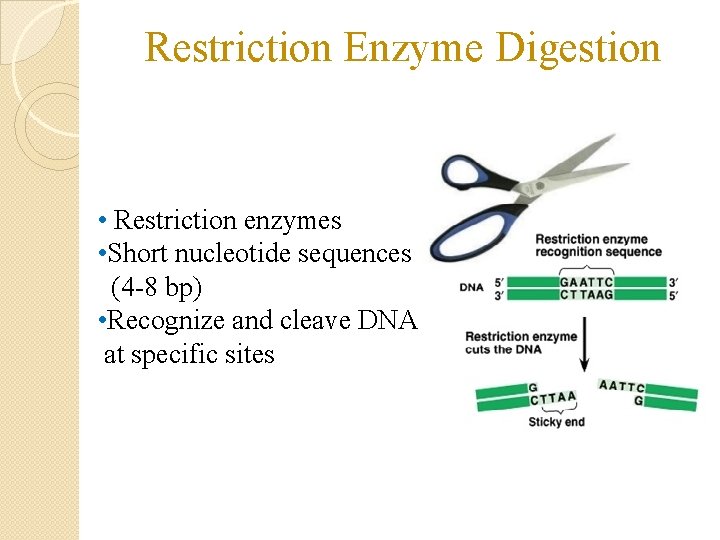
Restriction Enzyme Digestion • Restriction enzymes • Short nucleotide sequences (4 -8 bp) • Recognize and cleave DNA at specific sites
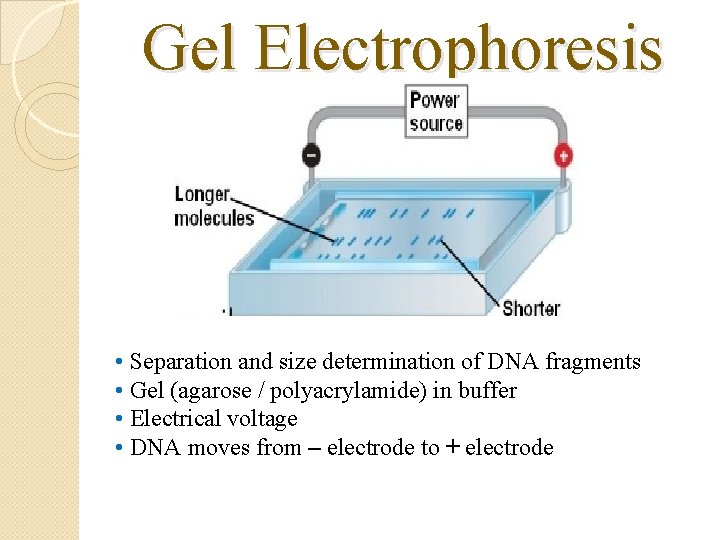
Gel Electrophoresis • Separation and size determination of DNA fragments • Gel (agarose / polyacrylamide) in buffer • Electrical voltage • DNA moves from – electrode to + electrode
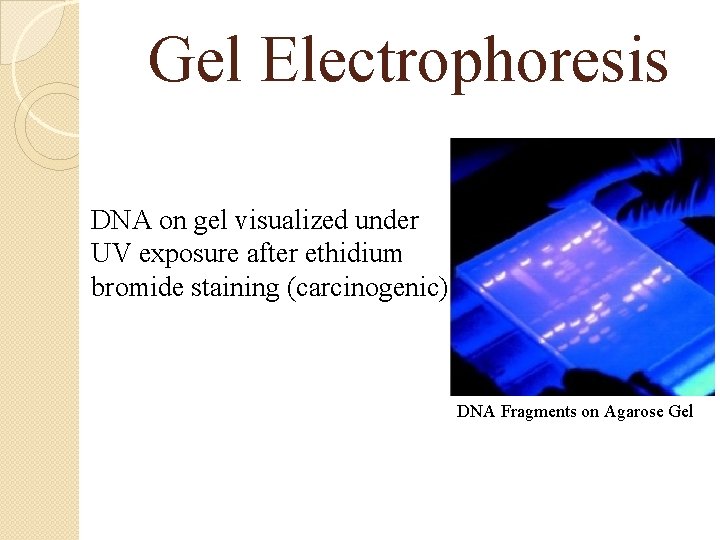
Gel Electrophoresis DNA on gel visualized under UV exposure after ethidium bromide staining (carcinogenic) DNA Fragments on Agarose Gel
DNA Sequencing �Dideoxy chain termination method (Sanger, 1975); Maxam and Gilbert Chemical Cleavage method �Currently – automated sequencing ◦ Array of nucleoide bases in a sequence of DNA
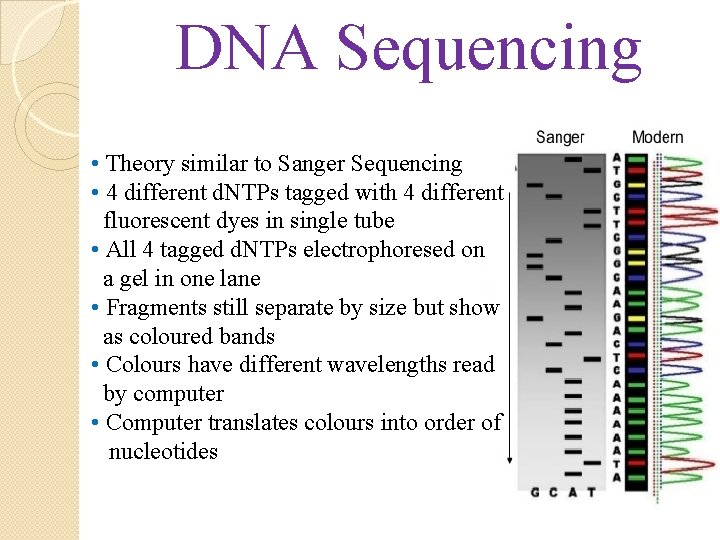
DNA Sequencing • Theory similar to Sanger Sequencing • 4 different d. NTPs tagged with 4 different fluorescent dyes in single tube • All 4 tagged d. NTPs electrophoresed on a gel in one lane • Fragments still separate by size but show as coloured bands • Colours have different wavelengths read by computer • Computer translates colours into order of nucleotides
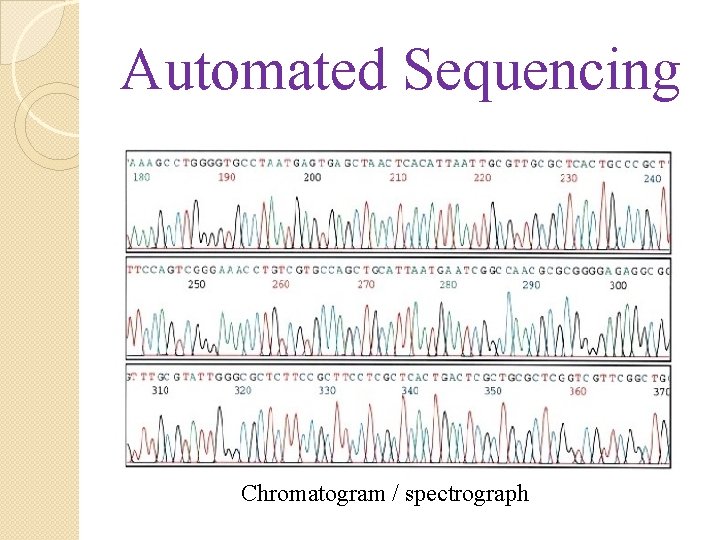
Automated Sequencing Chromatogram / spectrograph
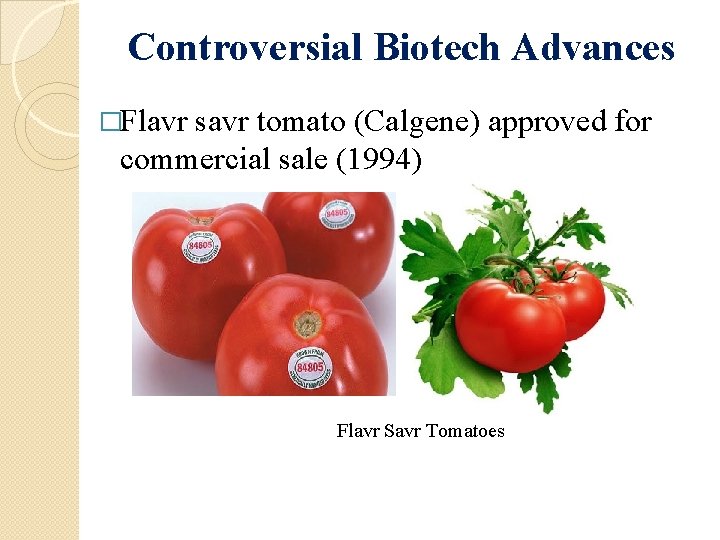
Controversial Biotech Advances �Flavr savr tomato (Calgene) approved for commercial sale (1994) Flavr Savr Tomatoes
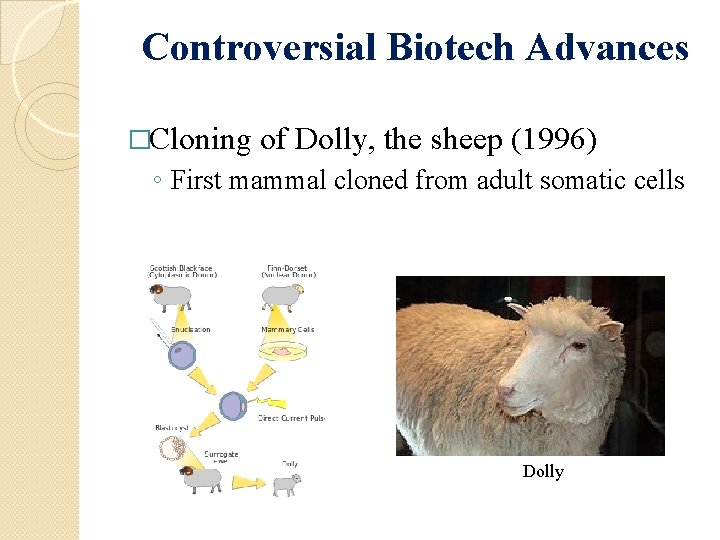
Controversial Biotech Advances �Cloning of Dolly, the sheep (1996) ◦ First mammal cloned from adult somatic cells Dolly
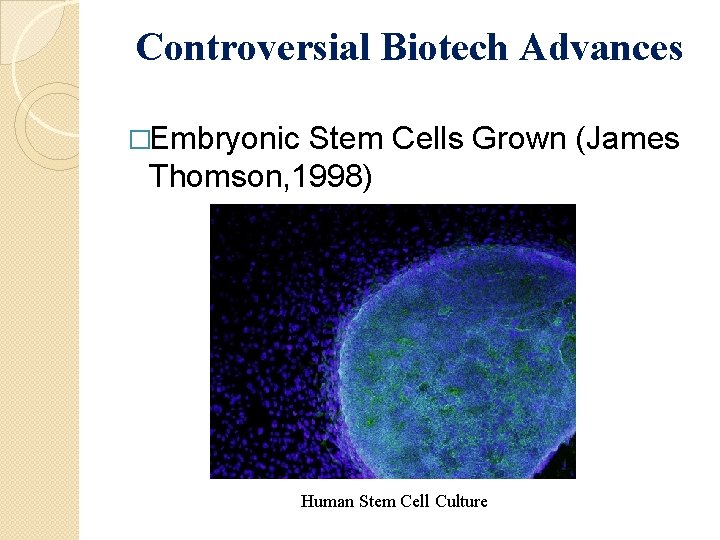
Controversial Biotech Advances �Embryonic Stem Cells Grown (James Thomson, 1998) Human Stem Cell Culture
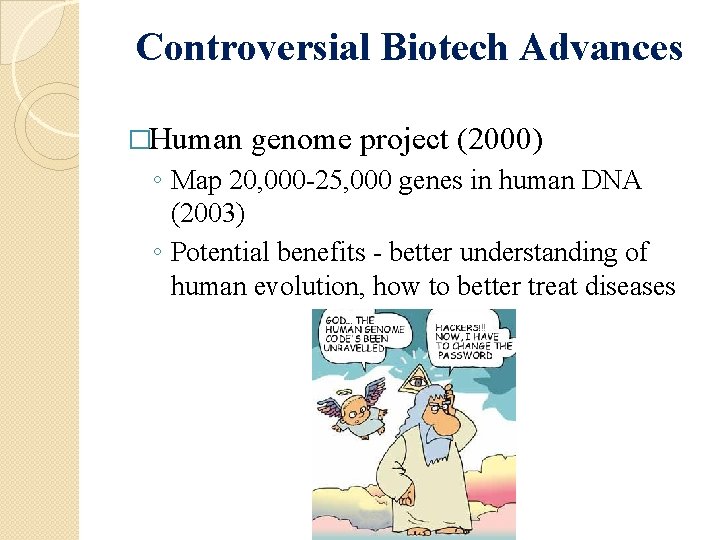
Controversial Biotech Advances �Human genome project (2000) ◦ Map 20, 000 -25, 000 genes in human DNA (2003) ◦ Potential benefits - better understanding of human evolution, how to better treat diseases
Biotech Concerns �Harm to Environment – effect of GMOs on ecosystem �Bioterrorism- terrorists create new Superbugs, infectious viruses, or toxins, which are incurable �Lab or production safety – concern for lab techs when working with organisms of unknown virulence. �Ethical issues – is cloning sacrilegious?
Biotech Earnings �Several Biotech companies worldwide �Earnings exceed USD billions annually. �B$10 in 3 rd quarter 2005 for just 25 biotech companies �Monsanto earned B$8. 3 in 2008 �US Ag. Biotech earned M$107. 5 (1993), earned B$10 (2000) �Ag. Biotech earned B$100 (2010) �Herbal Biotech B$8
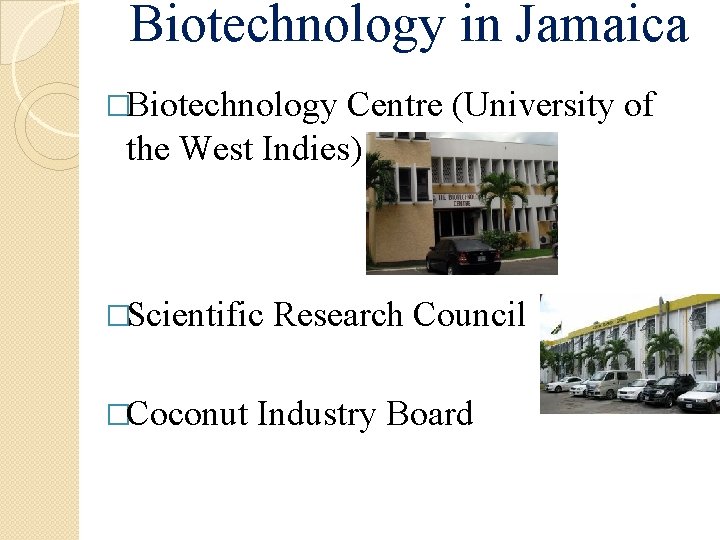
Biotechnology in Jamaica �Biotechnology Centre (University of the West Indies) �Scientific �Coconut Research Council Industry Board
The Biotechnology Centre - UWI �Established �Develop in 1989 the research capabilities and training programmes in biotechnology (post-graduate students)
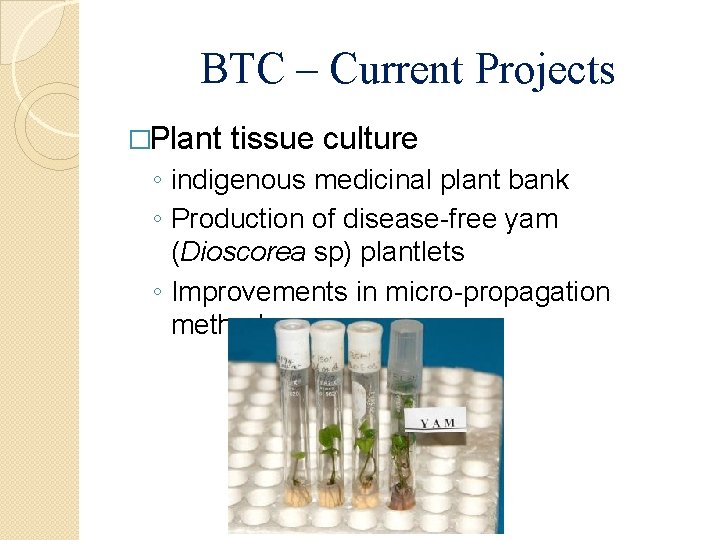
BTC – Current Projects �Plant tissue culture ◦ indigenous medicinal plant bank ◦ Production of disease-free yam (Dioscorea sp) plantlets ◦ Improvements in micro-propagation methods
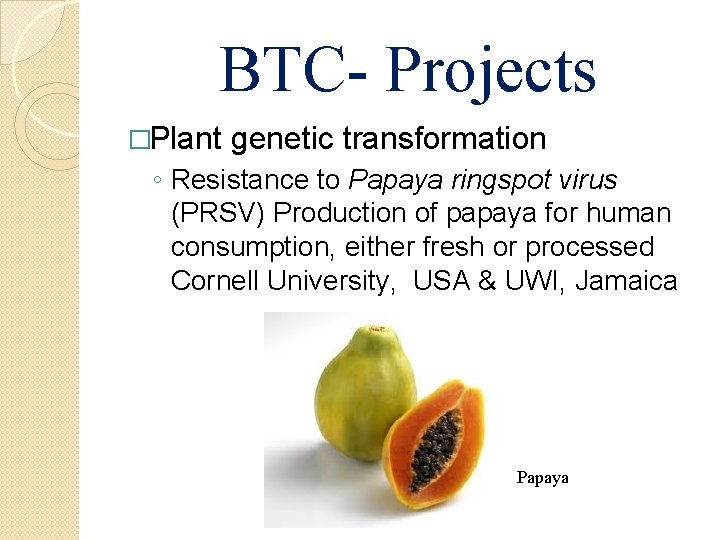
BTC- Projects �Plant genetic transformation ◦ Resistance to Papaya ringspot virus (PRSV) Production of papaya for human consumption, either fresh or processed Cornell University, USA & UWI, Jamaica Papaya
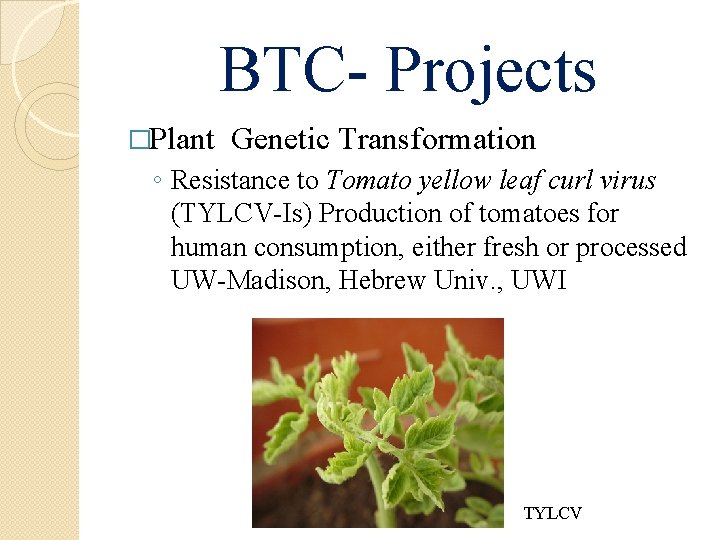
BTC- Projects �Plant Genetic Transformation ◦ Resistance to Tomato yellow leaf curl virus (TYLCV-Is) Production of tomatoes for human consumption, either fresh or processed UW-Madison, Hebrew Univ. , UWI TYLCV
BTC - Projects �Plant molecular virology ◦ Molecular diagnostics based on the polymerase chain reaction (PCR) technique had been developed for detecting geminiviruses, lethal yellowing (LY) phytoplasma, and Citrus tristeza virus (CTV)
Career Possibilities �Biotechnology companies �Major drug companies (biotechnology divisions). �Chemical companies with large agricultural chemical businesses also have substantial biotechnology labs ◦ Researcher; Chemist; Research Assistant ◦ Lab Tech
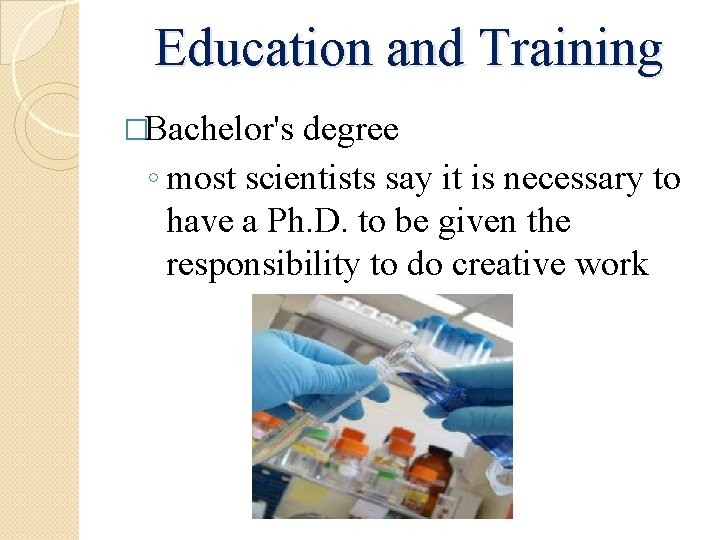
Education and Training �Bachelor's degree ◦ most scientists say it is necessary to have a Ph. D. to be given the responsibility to do creative work
Conclusion �Biotechnology offers great promise in: ◦ Improving the diagnosis and treatment of hereditary diseases ◦ Formulation and manufacture of safer drugs ◦ Production of environmentally friendly herbicides and pesticides ◦ Improvement in microbial processes to clean up the environment Making these promises a reality require effort and revision of several assumptions

Thank You
- Slides: 35