
The Imperfect Tense Imperfect Tense Endings AR VERBS
The Imperfect Tense
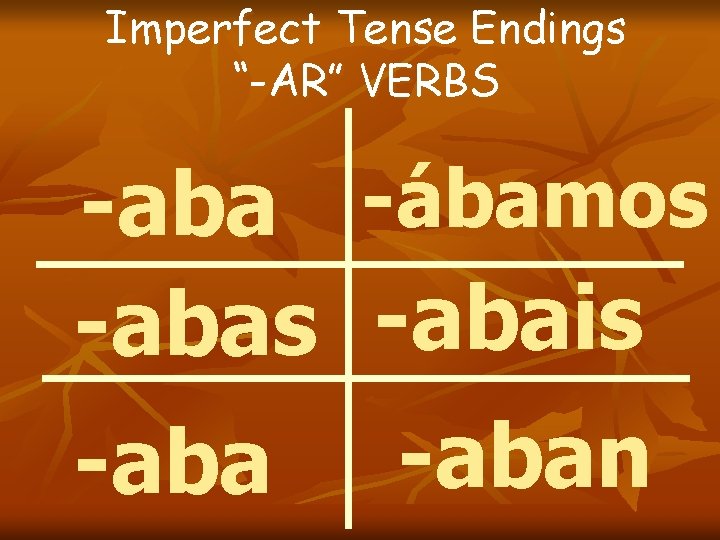
Imperfect Tense Endings “-AR” VERBS -aba -ábamos -abais -aban
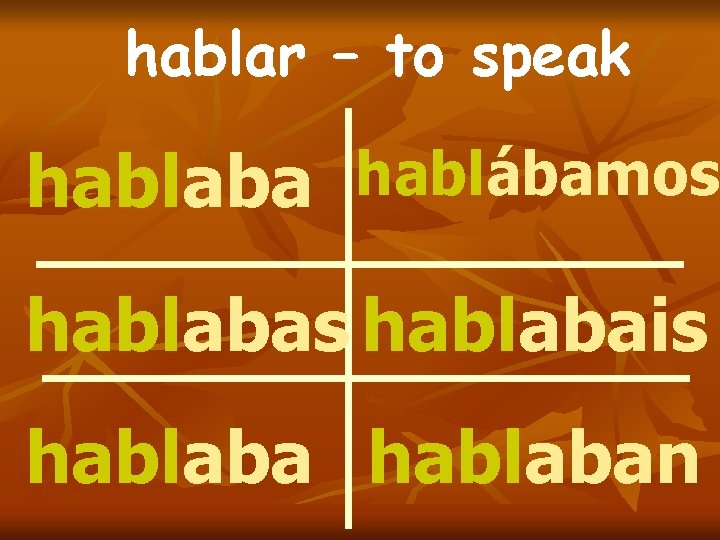
hablar – to speak hablaba hablábamos hablabais hablaban
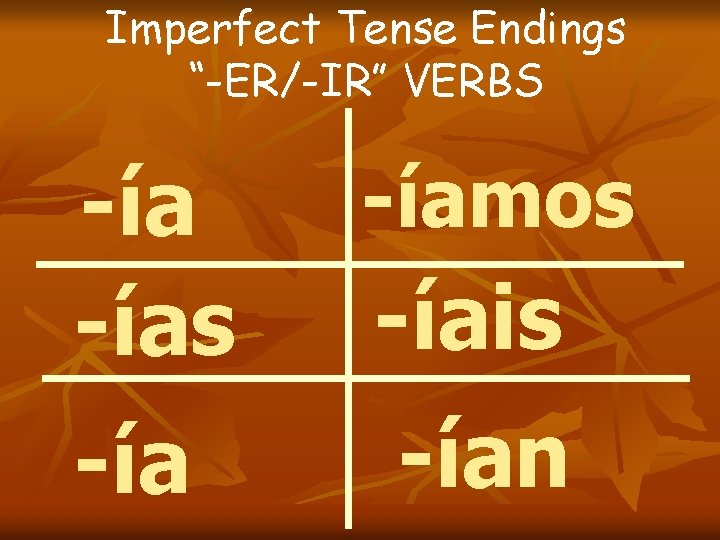
Imperfect Tense Endings “-ER/-IR” VERBS -ías -íamos -ían -íais
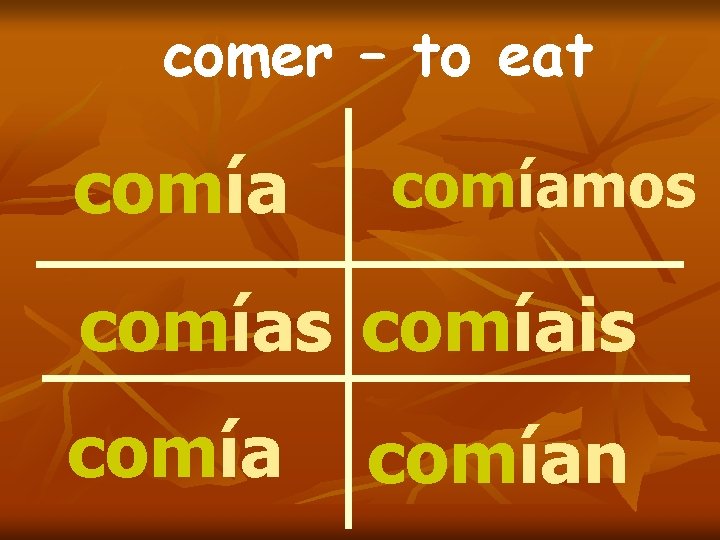
comer – to eat comíamos comíais comían
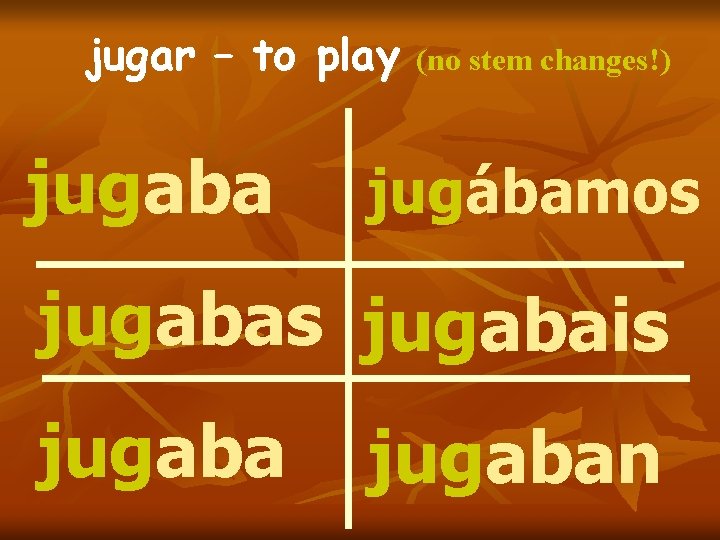
jugar – to play jugaba (no stem changes!) jugábamos jugabais jugaban

vivir – to live vivíamos vivíais vivían
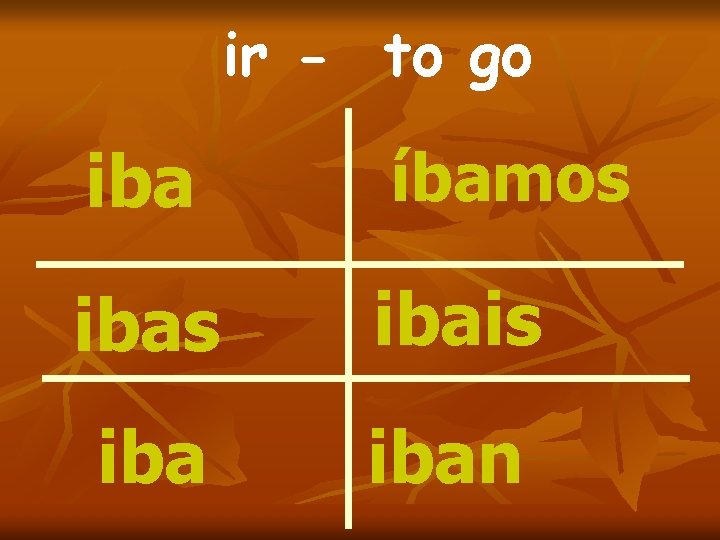
ir - to go iba íbamos ibais iban
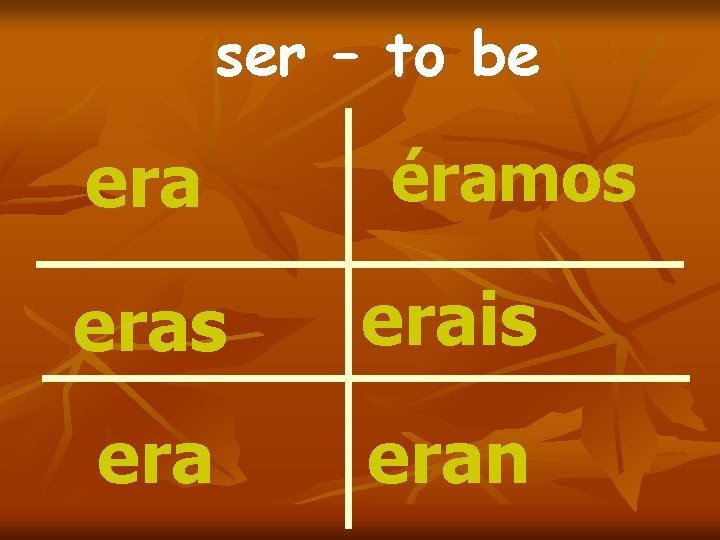
ser – to be era éramos erais eran
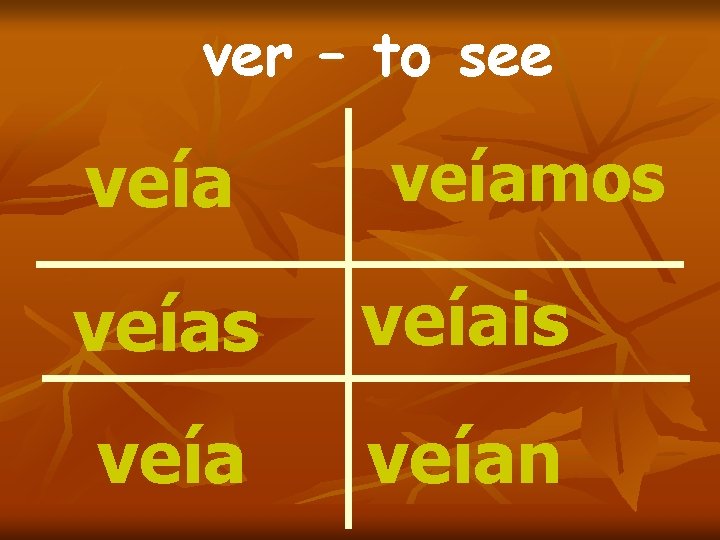
ver – to see veíamos veíais veían
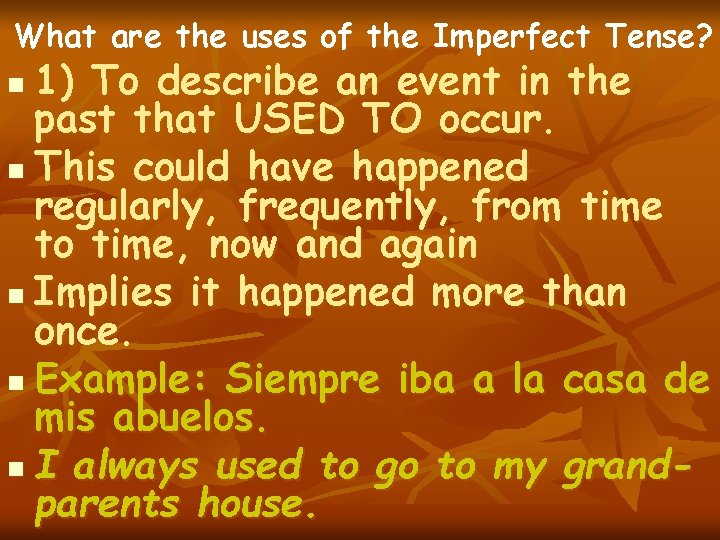
What are the uses of the Imperfect Tense? 1) To describe an event in the past that USED TO occur. n This could have happened regularly, frequently, from time to time, now and again n Implies it happened more than once. n Example: Siempre iba a la casa de mis abuelos. n I always used to go to my grandparents house. n
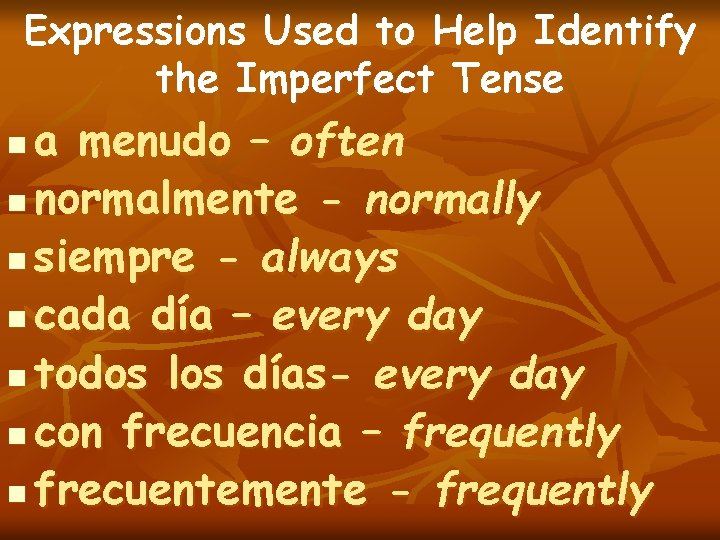
Expressions Used to Help Identify the Imperfect Tense a menudo – often n normalmente - normally n siempre - always n cada día – every day n todos los días- every day n con frecuencia – frequently n frecuentemente - frequently n
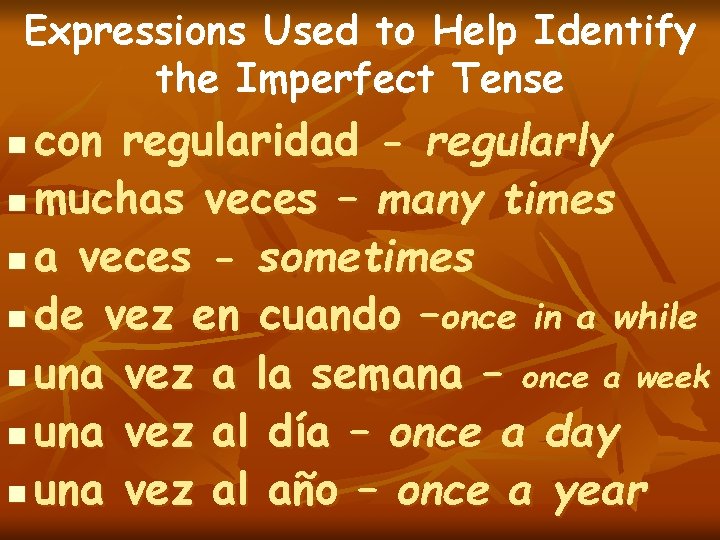
Expressions Used to Help Identify the Imperfect Tense con regularidad - regularly n muchas veces – many times n a veces - sometimes n de vez en cuando –once in a while n una vez a la semana – once a week n una vez al día – once a day n una vez al año – once a year n
Expressions Used to Help Identify the Imperfect Tense de niño/a n en mi niñez n cuando era niño/a n
Uses of the Imperfect Tense n 2)To indicate actions that WERE GOING ON at the time about which you are speaking. n Ongoing actions “-ing” n Example: Mientras hablaba, ellos jugaban al fútbol. n While I was talking, they were playing soccer.
Uses of the Imperfect Tense n 3) To DESCRIBE the way people that you are remembering looked or were. n Description / Personality n Example: Mi abuela era baja y simpática. n My grandmother was short and nice.
Uses of the Imperfect Tense 4) To express HOW OLD SOMEONE WAS IN THE PAST: AGE n Example: Mi abuelo tenía 60 años cuando yo nací. n My grandfather was 60 years old when I was born. n
Uses of the Imperfect Tense 5) To express past states of HEALTH/Feelings. n Example: Mi abuela estaba enferma. n My grandmother was sick. n Me sentía nerviosa… n
Uses of the Imperfect Tense 6) To set the BACKGROUND of a story. (DESCRIPTION) n Eran las ocho. (TIME) n n n Llovía mucho. (WEATHER) n n It was 8. It was raining. Estábamos en casa. (LOCATION) n We were at home.
Uses of the Imperfect Tense n 7) To express ATTITUDES and BELIEFS that were held at that time in the past. n Mental Activity – thought processes n Example: Yo creía que ella era delgada. n I thought she was thin.
Common Verbs of this Nature: n querer – to want n desear – to desire n preferir - to prefer n poder – to be able to n sentir – to be sorry , regret n pensar – to think n saber – to know n creer- to think, beleive
How do I conjugate in the Imperfect Tense? You drop the ENDING and add a given set of endings to the STEM. n Are there stem changes? n n n NO! Are there spelling changes? n NO!
How do I conjugate in the Imperfect Tense? Are there irregulars? YES n But…there are only THREE ! n IR , SER and VER n GUSTAR: Only two formsn gustaba / gustaban n Me gustaba bailar. n ¿Te gustaban las muñecas? n
How do I conjugate in the Imperfect Tense? To say “there was / there were” (“hay” in the present tense) : había n Example: Había muchas personas en la escuela. n There were a lot of people at school. n
- Slides: 24