
THE IMPACT OF RFID ON LIBRARY MANAGEMENT SYSTEMS
THE IMPACT OF RFID ON LIBRARY MANAGEMENT SYSTEMS’ DESIGN Marshall Breeding Director for Innovative Technology and Research Vanderbilt University Library Founder and Publisher, Library Technology Guides http: //www. librarytechnology. org/ CILIP RFID for 09 Nov, 2010 http: //twitter. com/mbreeding 2010 Libraries Conference
Summary Marshall will provide an challenging personal perspective on how system providers will respond to the challenges posed by RFID as it delivers many of the function previous managed by librarians. He will draw on his unique experience, and also engage with delegates in an Open Forum discussion session.
More examining the current state of play and giving us his vision of the future for library management.
Library Technology Guides o. y g o l o n h w i l. ww c e t y r bra
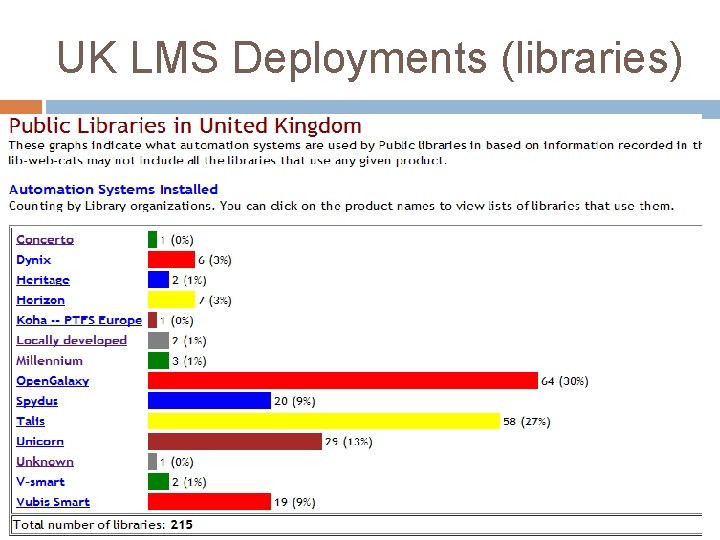
UK LMS Deployments (libraries)
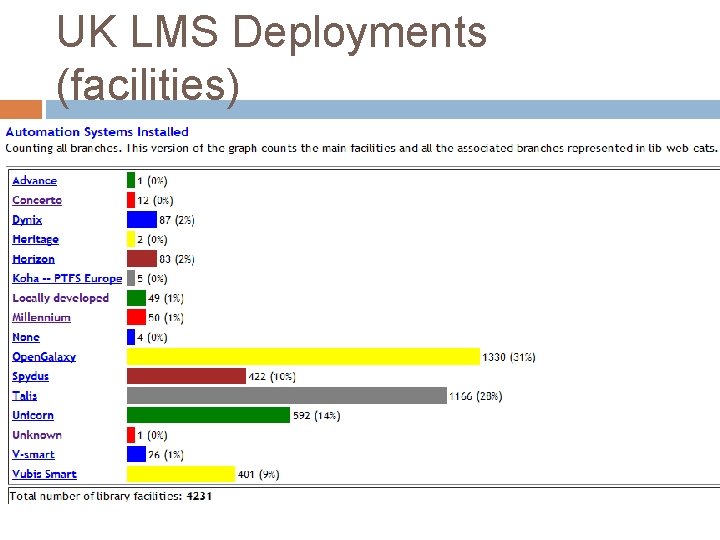
UK LMS Deployments (facilities)
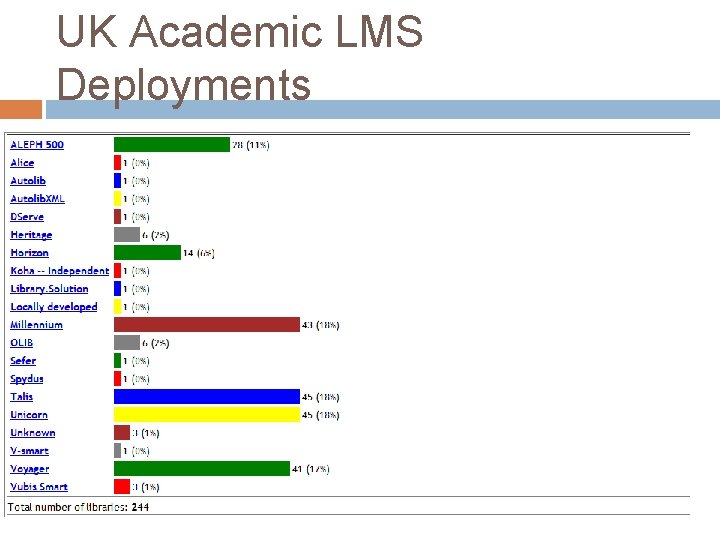
UK Academic LMS Deployments
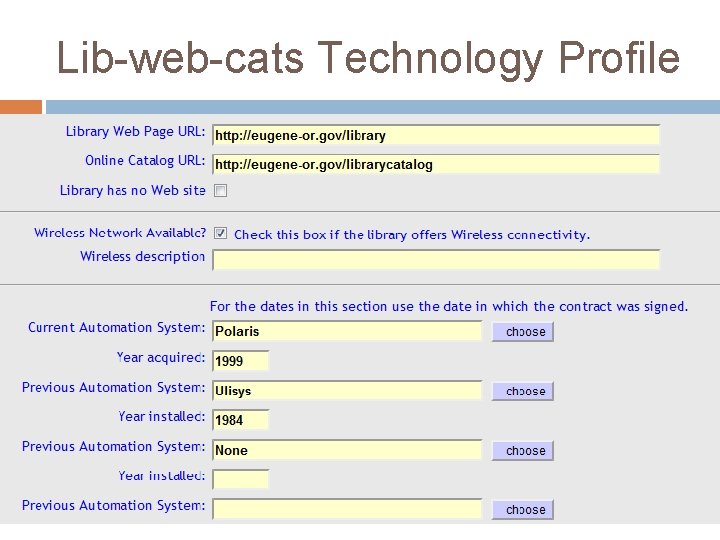
Lib-web-cats Technology Profile
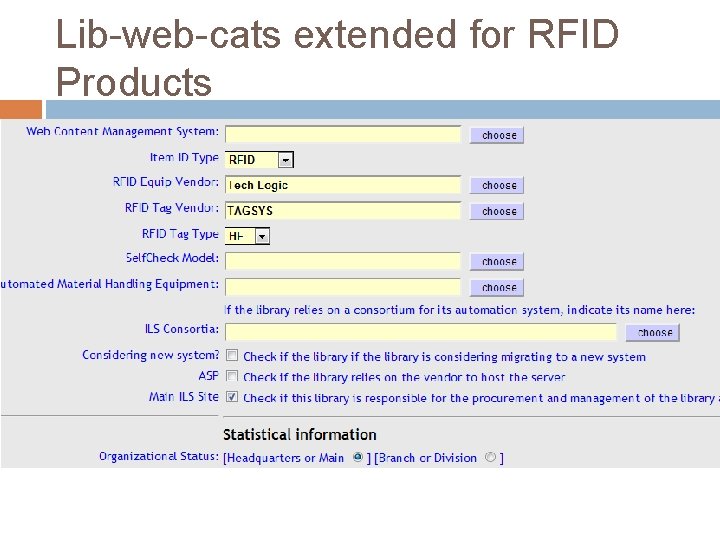
Lib-web-cats extended for RFID Products
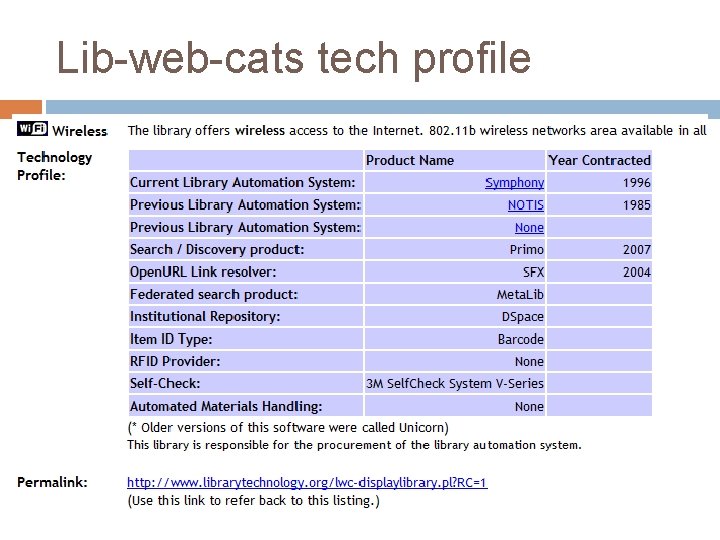
Lib-web-cats tech profile
Library Journal Automation Marketplace Published annually in April 1 issue Based on data provided by each vendor Focused primarily on North America � Context market of global library automation
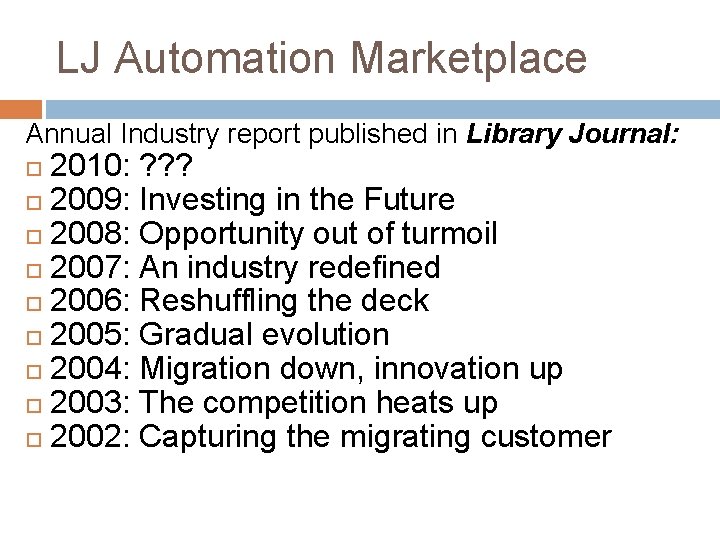
LJ Automation Marketplace Annual Industry report published in Library Journal: 2010: ? ? ? 2009: Investing in the Future 2008: Opportunity out of turmoil 2007: An industry redefined 2006: Reshuffling the deck 2005: Gradual evolution 2004: Migration down, innovation up 2003: The competition heats up 2002: Capturing the migrating customer
New Models… …no longer an industry where companies compete on the basis of the best or the most features in similar products but one where companies distinguish themselves through products and services that define different futures for their library customers.
Core Systems… Although ILS sales no longer completely define the library automation market, new sales and ongoing support of these flagship products continue as the largest and most reliable revenue stream.
General Findings Moderately slow year for Core ILS products Strong sales in Discovery Products � Strategy to move forward with new user interfaces and defer investments in ILS replacement � Current products deliver modern interfaces, while mainly addressing local content (ILS / local digital) � Emerging products bring vast collections of articles into the primary discovery layer: Webscale discovery
Key Context: Libraries in Transition Academic � Shift from Print > Electronic � Increasing emphasis on subscribed content, especially articles and databases Public � Increased emphasis on patron engagement – on premises and via the Web Strong emphasis on digitizing local collections Demands for enterprise integration and interoperability Period of crisis for many libraries through reduced funding
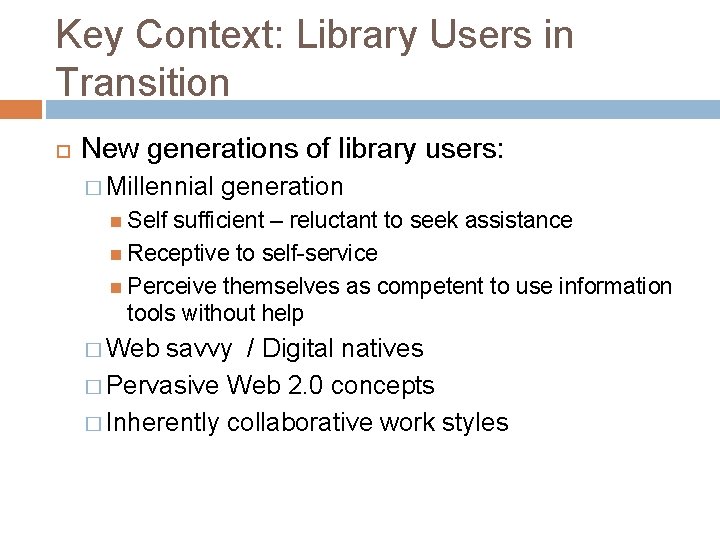
Key Context: Library Users in Transition New generations of library users: � Millennial generation Self sufficient – reluctant to seek assistance Receptive to self-service Perceive themselves as competent to use information tools without help � Web savvy / Digital natives � Pervasive Web 2. 0 concepts � Inherently collaborative work styles
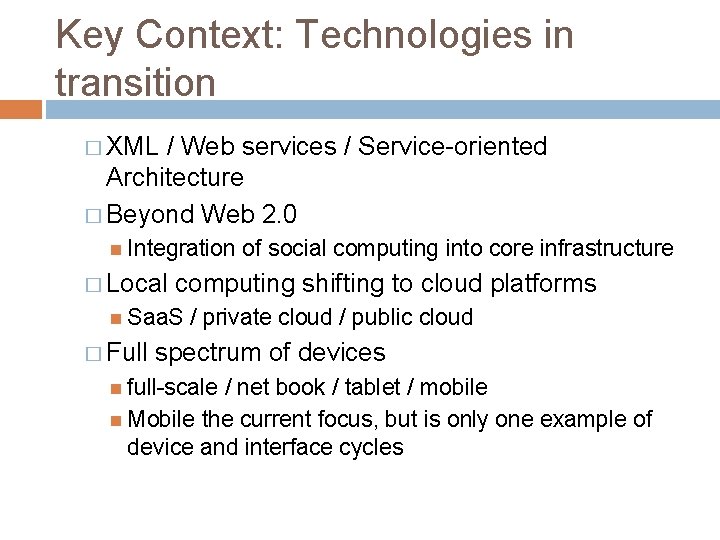
Key Context: Technologies in transition � XML / Web services / Service-oriented Architecture � Beyond Web 2. 0 Integration � Local computing shifting to cloud platforms Saa. S � Full of social computing into core infrastructure / private cloud / public cloud spectrum of devices full-scale / net book / tablet / mobile Mobile the current focus, but is only one example of device and interface cycles
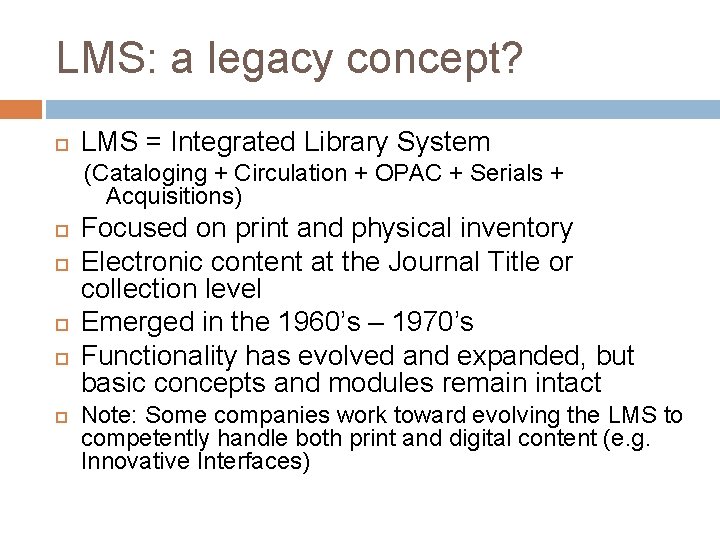
LMS: a legacy concept? LMS = Integrated Library System (Cataloging + Circulation + OPAC + Serials + Acquisitions) Focused on print and physical inventory Electronic content at the Journal Title or collection level Emerged in the 1960’s – 1970’s Functionality has evolved and expanded, but basic concepts and modules remain intact Note: Some companies work toward evolving the LMS to competently handle both print and digital content (e. g. Innovative Interfaces)
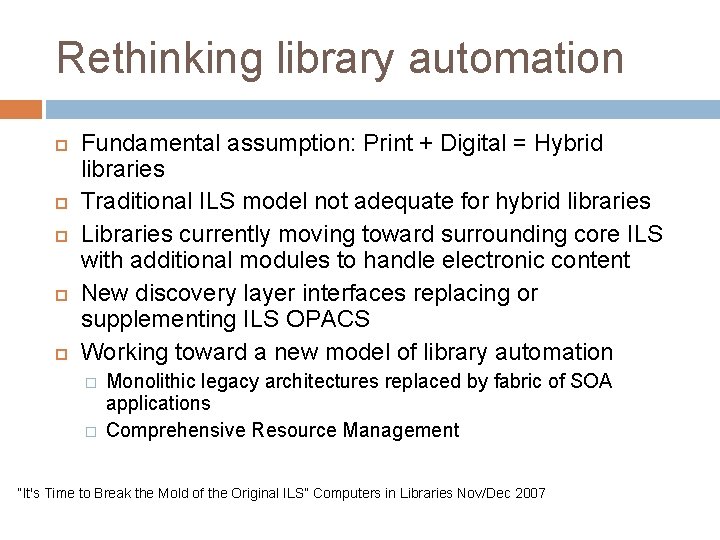
Rethinking library automation Fundamental assumption: Print + Digital = Hybrid libraries Traditional ILS model not adequate for hybrid libraries Libraries currently moving toward surrounding core ILS with additional modules to handle electronic content New discovery layer interfaces replacing or supplementing ILS OPACS Working toward a new model of library automation � � Monolithic legacy architectures replaced by fabric of SOA applications Comprehensive Resource Management “It's Time to Break the Mold of the Original ILS” Computers in Libraries Nov/Dec 2007
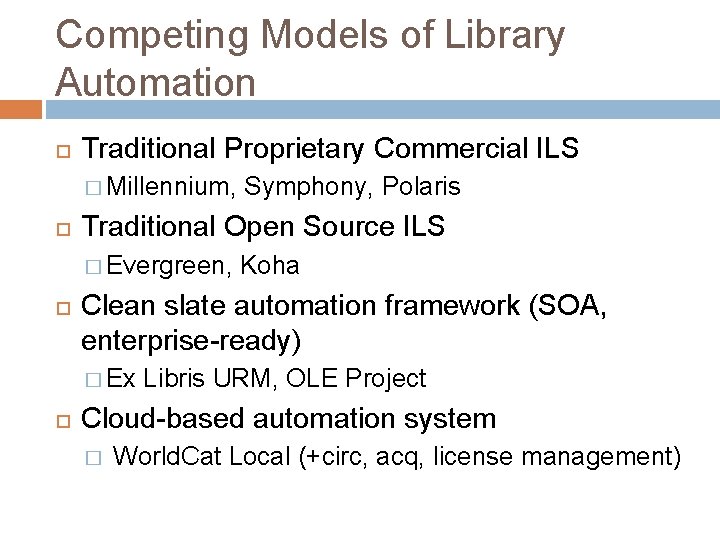
Competing Models of Library Automation Traditional Proprietary Commercial ILS � Millennium, Traditional Open Source ILS � Evergreen, Koha Clean slate automation framework (SOA, enterprise-ready) � Ex Symphony, Polaris Libris URM, OLE Project Cloud-based automation system � World. Cat Local (+circ, acq, license management)
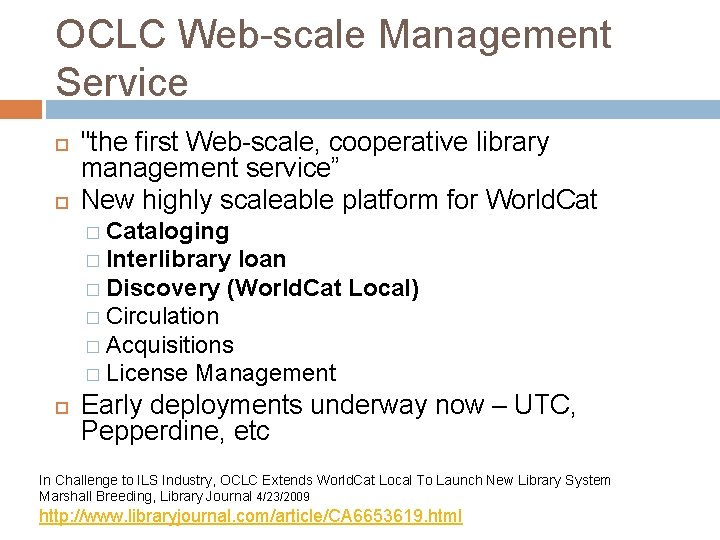
OCLC Web-scale Management Service "the first Web-scale, cooperative library management service” New highly scaleable platform for World. Cat � Cataloging � Interlibrary loan � Discovery (World. Cat Local) � Circulation � Acquisitions � License Management Early deployments underway now – UTC, Pepperdine, etc In Challenge to ILS Industry, OCLC Extends World. Cat Local To Launch New Library System Marshall Breeding, Library Journal 4/23/2009 http: //www. libraryjournal. com/article/CA 6653619. html
Open Source Library Automation Koha Evergreen Kuali OLE
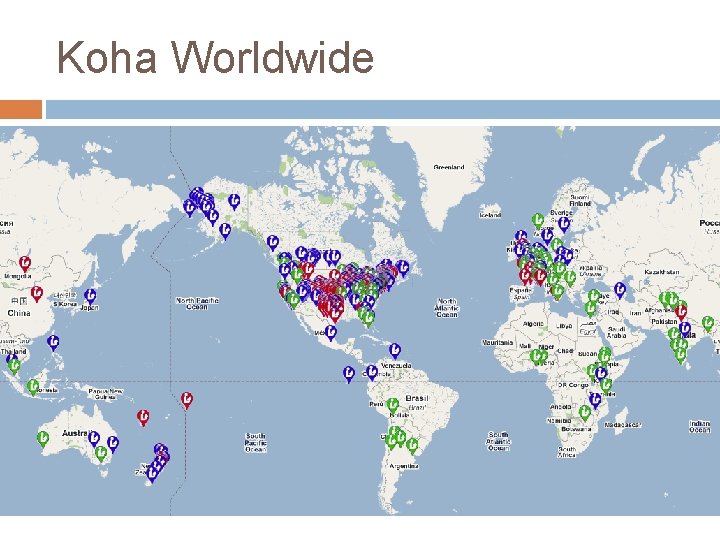
Koha Worldwide
The Shrinking LMS The Library Management System no longer stands as the single library automation product that provides comprehensive support for all aspects of library operations. Many libraries putting much less emphasis on LMS Manages workflows related to physical materials Investments in electronic content increasing Management of e-content handled outside of the ILS
…shrinking LMS Yet: libraries need comprehensive business automation more than ever. Mandate for more efficient operations. Do more with less. Proliferation of automation products needed to handle all aspects of libraries can overwhelm many libraries Libraries lack technical personnel and needed capital to purchase and manage multiple systems
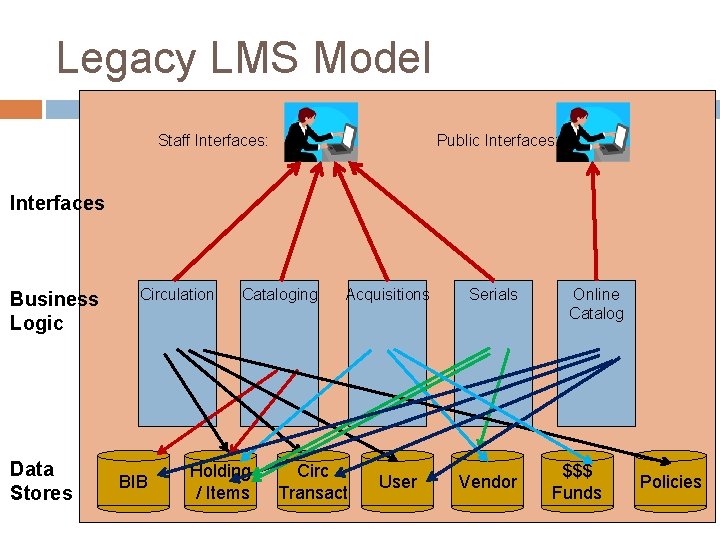
Legacy LMS Model Public Interfaces: Staff Interfaces: Interfaces Business Logic Data Stores Circulation BIB Cataloging Holding / Items Acquisitions Circ Transact User Serials Vendor Online Catalog $$$ Funds Policies
Breaking out of the mold Academic and Research libraries especially struggle with how to deal with managing increasing proportions of licensed electronic content LMS geared toward print materials New products aim to manage library resources spanning print and electronic; owned or licensed Examples: Ex Libris URM, Kuali OLE
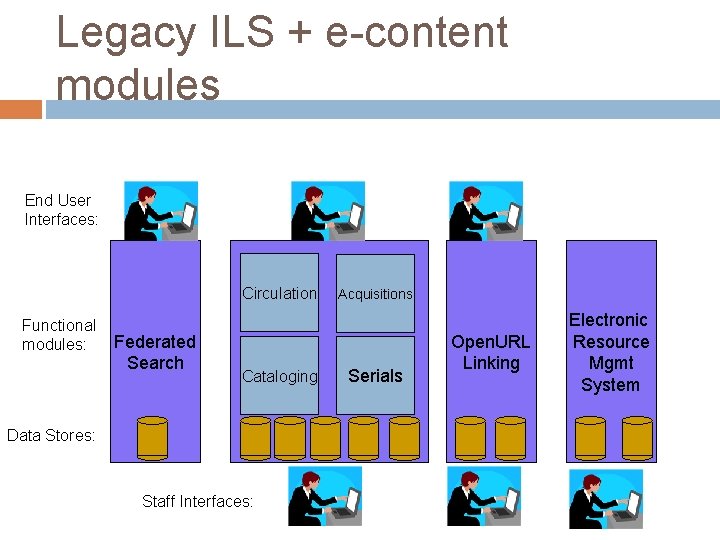
Legacy ILS + e-content modules End User Interfaces: Circulation Functional modules: Federated Search Cataloging Data Stores: Staff Interfaces: Acquisitions Serials Open. URL Linking Electronic Resource Mgmt System
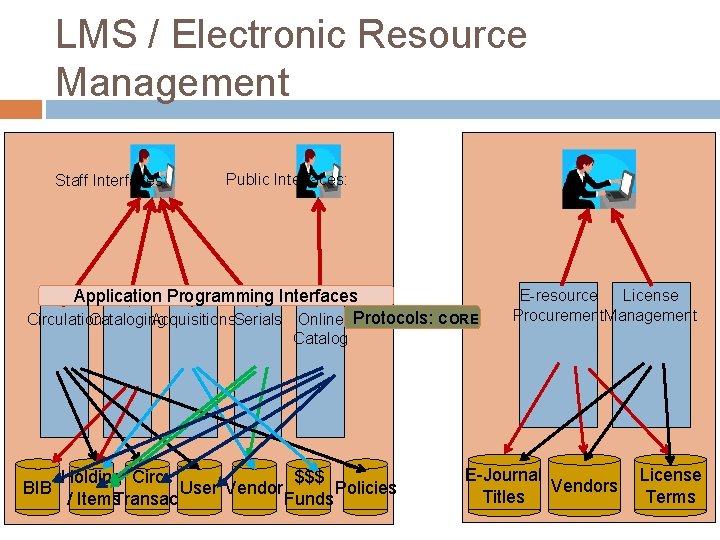
LMS / Electronic Resource Management Staff Interfaces: Public Interfaces: Application Programming Interfaces Circulation Cataloging Acquisitions. Serials Online Protocols: CORE ` E-resource License Procurement. Management Catalog BIB Holding Circ $$$ User Vendor Policies / Items. Transact Funds E-Journal Vendors Titles License Terms
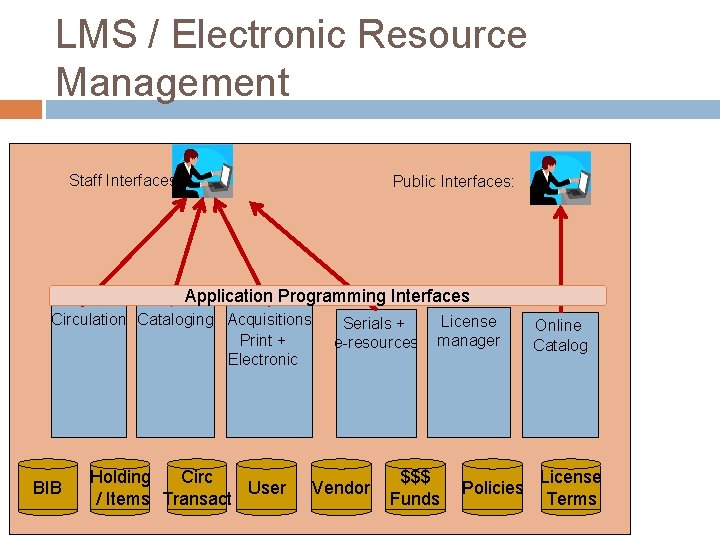
LMS / Electronic Resource Management Staff Interfaces: Public Interfaces: Application Programming Interfaces Circulation Cataloging Acquisitions Print + Electronic BIB Holding Circ User / Items Transact Serials + e-resources Vendor License manager $$$ Funds Policies Online Catalog License Terms
Application Programming Interfaces A set of tools used by programmers to: � Extend Functionality � Connect external systems � Extract or synchronize data Proprietary API’s common in LMS space Moving toward open API’s and Web Services
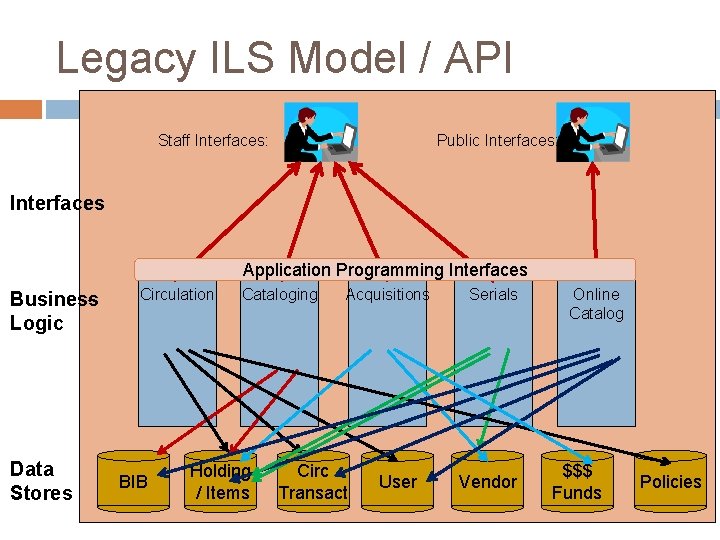
Legacy ILS Model / API Public Interfaces: Staff Interfaces: Interfaces Application Programming Interfaces Business ` Logic Data Stores Circulation BIB Cataloging Holding / Items Acquisitions Circ Transact User Serials Vendor Online Catalog $$$ Funds Policies
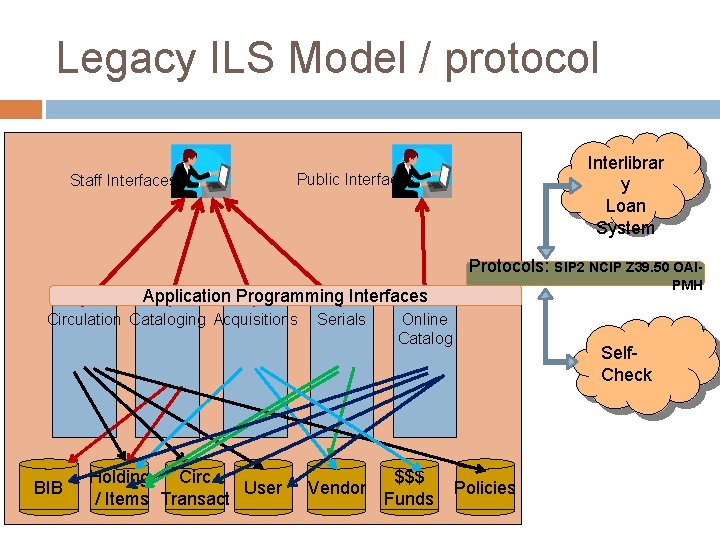
Legacy ILS Model / protocol Staff Interfaces: Interlibrar y Loan System Public Interfaces: Protocols: SIP 2 NCIP Z 39. 50 OAIPMH Application Programming Interfaces Circulation Cataloging Acquisitions BIB Holding Circ User / Items Transact Serials Vendor Online Catalog $$$ Funds Self. Check Policies
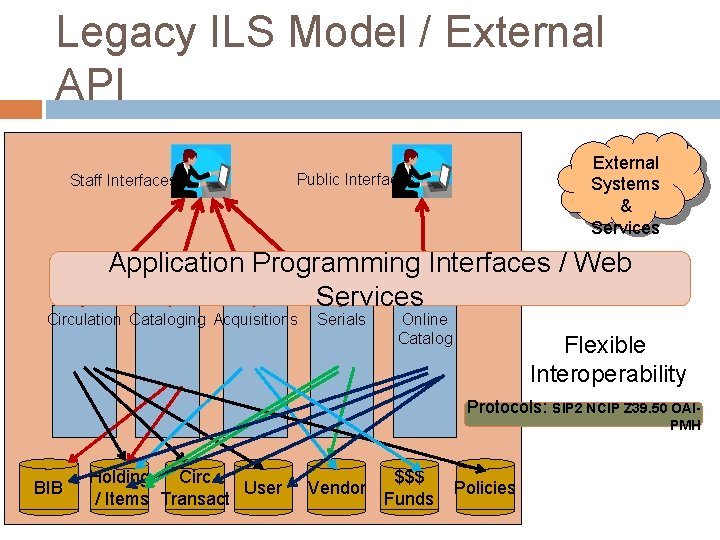
Legacy ILS Model / External API Staff Interfaces: External Systems & Services Public Interfaces: Application Programming Interfaces / Web Services Circulation Cataloging Acquisitions Serials Online Catalog Flexible Interoperability Protocols: SIP 2 NCIP Z 39. 50 OAIPMH BIB Holding Circ User / Items Transact Vendor $$$ Funds Policies
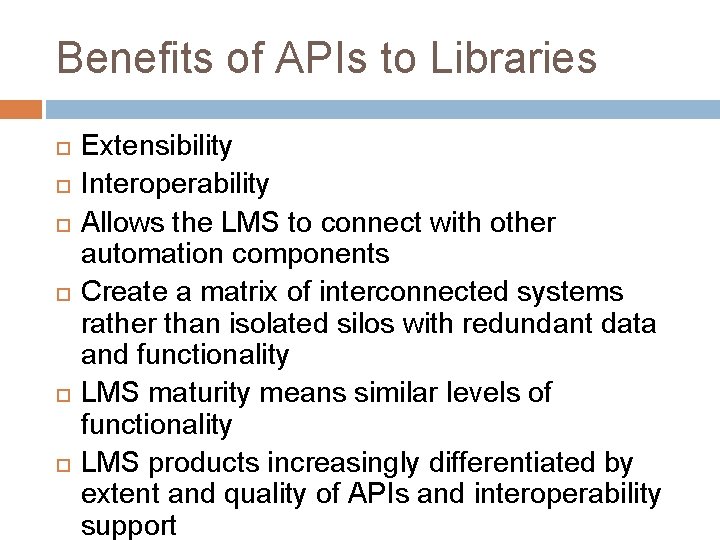
Benefits of APIs to Libraries Extensibility Interoperability Allows the LMS to connect with other automation components Create a matrix of interconnected systems rather than isolated silos with redundant data and functionality LMS maturity means similar levels of functionality LMS products increasingly differentiated by extent and quality of APIs and interoperability support
Decoupled Discovery Online Catalogs delivered with LMS products seen as not suitable for current Web-savvy library uses Need to modernize the interface Expand the scope to encompass all aspects of library collections
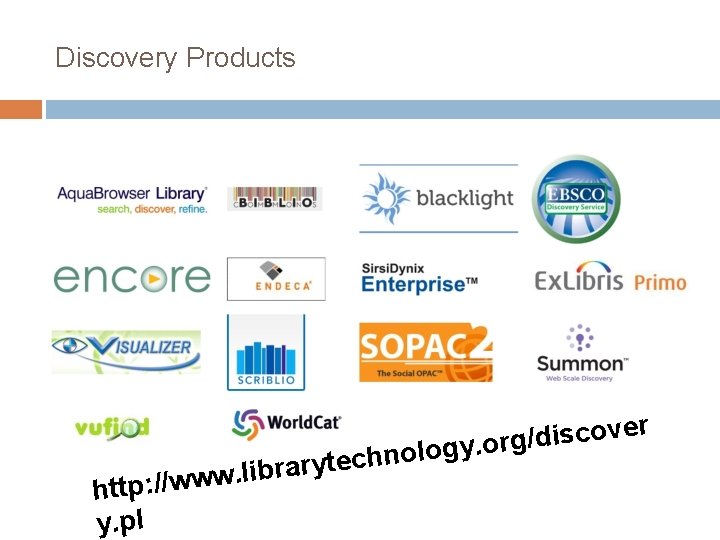
Discovery Products y r a r b i l. w http: //ww y. pl r e v o c s i d g/ r o. y g o l o techn
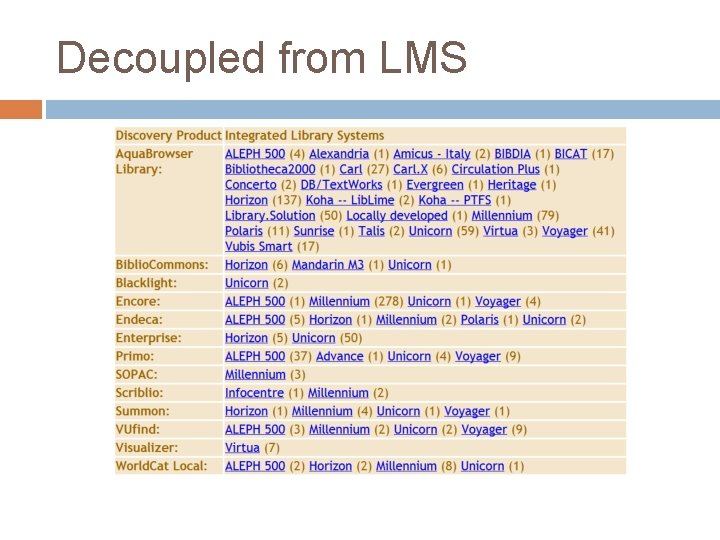
Decoupled from LMS
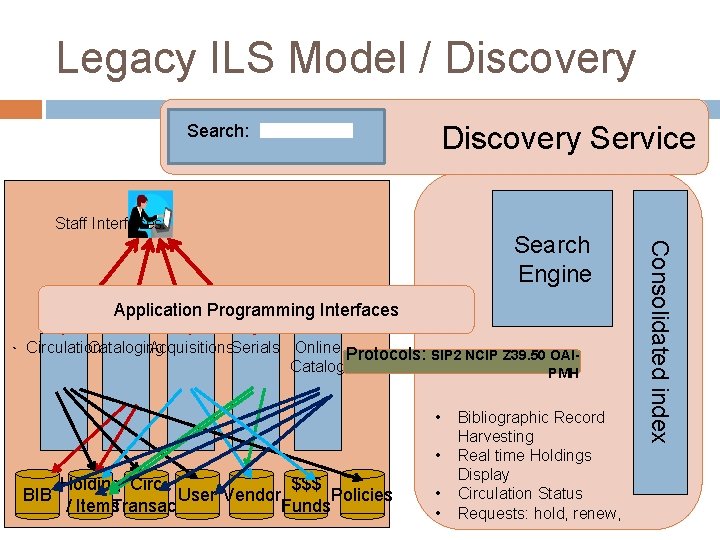
Legacy ILS Model / Discovery Service Search: Staff Interfaces: Application Programming Interfaces Cataloging Acquisitions. Serials Online Protocols: SIP 2 NCIP Z 39. 50 OAI` Circulation Catalog PMH • • BIB Holding Circ $$$ User Vendor Policies / Items. Transact Funds • • Bibliographic Record Harvesting Real time Holdings Display Circulation Status Requests: hold, renew, Consolidated index Search Engine
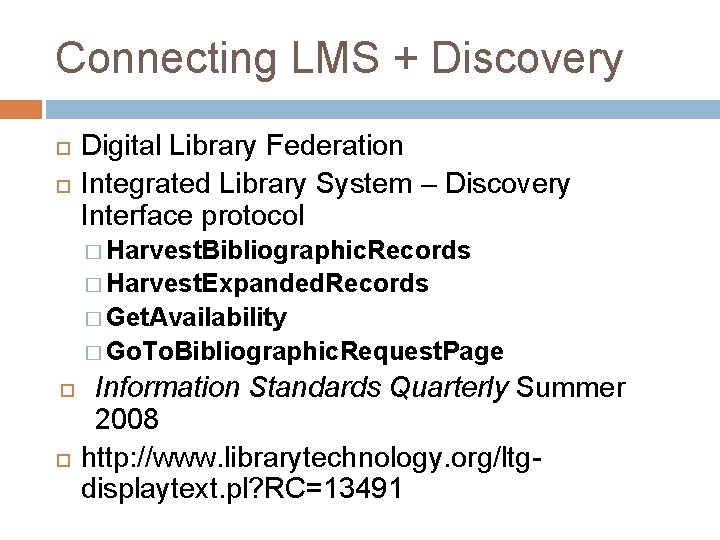
Connecting LMS + Discovery Digital Library Federation Integrated Library System – Discovery Interface protocol � Harvest. Bibliographic. Records � Harvest. Expanded. Records � Get. Availability � Go. To. Bibliographic. Request. Page Information Standards Quarterly Summer 2008 http: //www. librarytechnology. org/ltgdisplaytext. pl? RC=13491
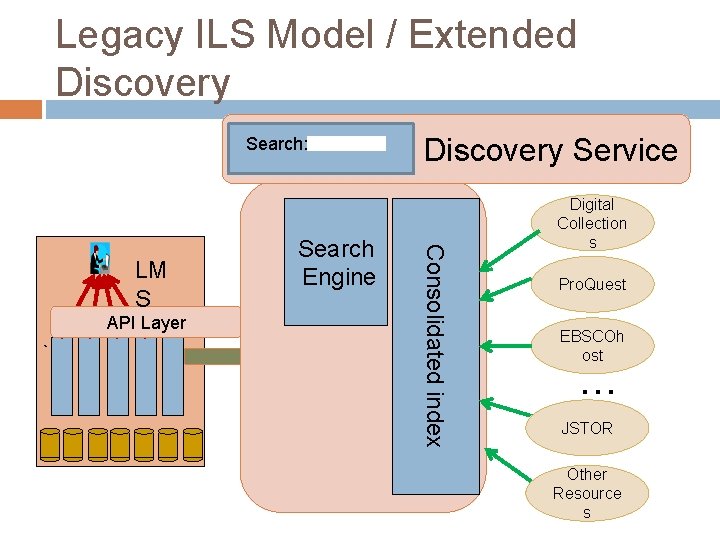
Legacy ILS Model / Extended Discovery Search: API Layer ` Consolidated index LM S Search Engine Discovery Service Digital Collection s Pro. Quest EBSCOh ost … JSTOR Other Resource s
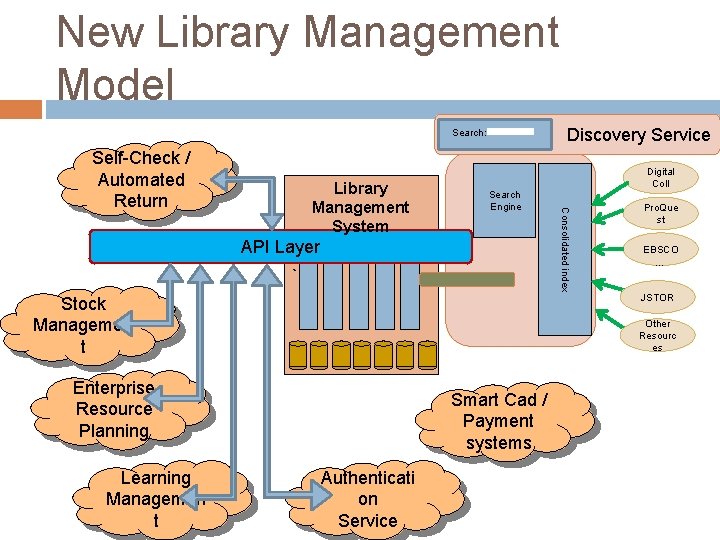
New Library Management Model Discovery Service Search: Library Management System Search Engine API Layer ` Stock Managemen t Pro. Que st EBSCO … JSTOR Other Resourc es Enterprise Resource Planning Learning Managemen t Digital Coll Consolidated index Self-Check / Automated Return Smart Cad / Payment systems Authenticati on Service
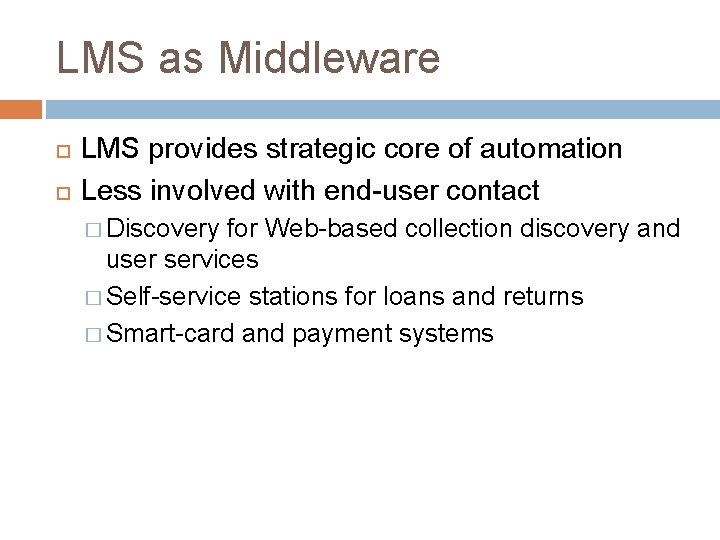
LMS as Middleware LMS provides strategic core of automation Less involved with end-user contact � Discovery for Web-based collection discovery and user services � Self-service stations for loans and returns � Smart-card and payment systems
RFID & LMS Can RFID deliver value beyond self-check and AMH? Need enhanced interoperability models Leverage existing standards and API’s in the same way that the ILS-DI protocols provided needed support to connect LMS and Discovery products Provide comprehensive automation model that helps libraries improve service and increase value to their communities
Questions and discussion
- Slides: 46