
The Impact of Psychosocial Factors on Diabetes Amy
The Impact of Psychosocial Factors on Diabetes Amy Walters, Ph. D Psychologist Director of Behavioral Health Services St. Luke’s Humphreys Diabetes Center
Objectives �Clarify differences between type 1 and type 2 diabetes �Identify impact of psycho-social factors on diabetes �Understand the importance of support for behavior change goals �Learn practical strategies to enhance health behavior and cope more effectively with diabetes
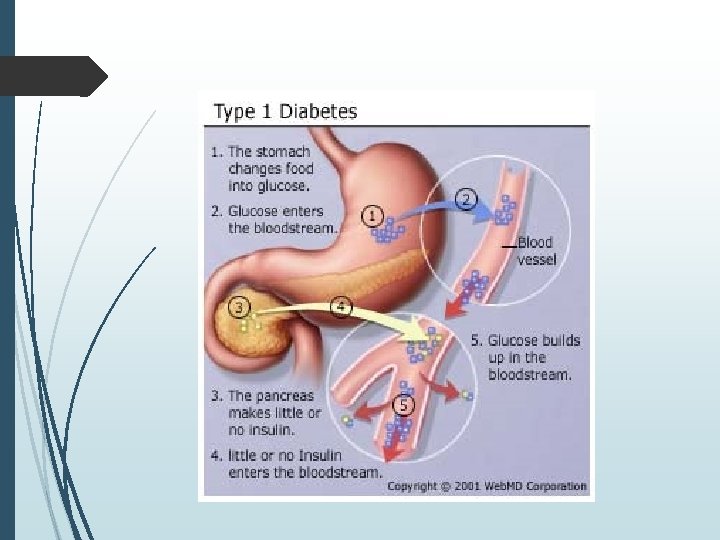
What is Diabetes? � Disease of insulin production and use - body stops making insulin, can’t make enough or cells become resistant to insulin � Two Types: � Type 1 (juvenile diabetes) - autoimmune � Type 2 - metabolic � Insulin is required for cells to use glucose as fuel. Blood glucose levels become too high and cause damage to various systems � Unmanaged diabetes leads to serious complications including vascular disease (micro and macro), nerve disease (neuropathy & amputation) kidney disease, eye disease and death
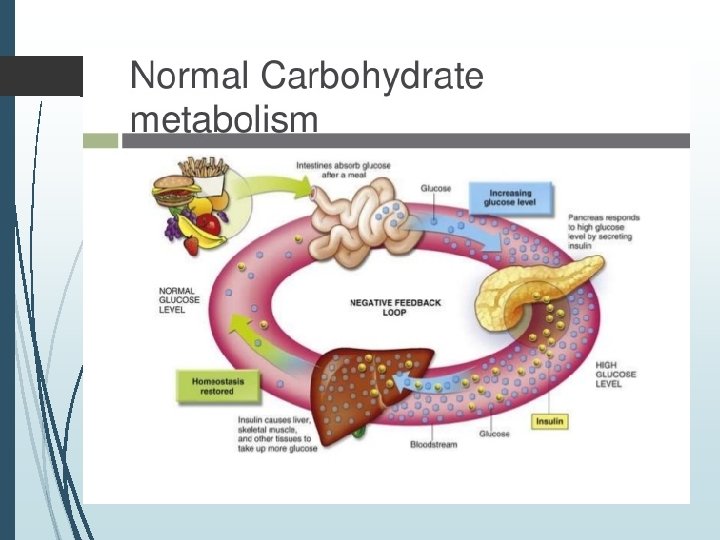
Healthy system simplified � Glucose = fuel for cells � All cells need glucose to run � Glucose comes from foods we eat (carbohydrates) � Carbs turn to glucose in stomach and enter bloodstream – need insulin (produced by the pancreas) to be used by organs and muscles for fuel � Additional glucose stored in liver (glycogen) and as fat
Type 1 Diabetes Basics � Auto-immune disease (genetic predisposition with environmental trigger) � Typically diagnosed in childhood (adolescent and adult onset possible) � Insulin dependent from diagnosis – life threatening if omitted (diabetic ketoacidosis) � Insulin delivery through syringe, pen or pump � Requires rigorous daily medical regimen for lifetime � Glucose monitoring 4 -6 x per day; insulin taken for adjustments � Each meal carbohydrates must be calculated and insulin dosed accordingly
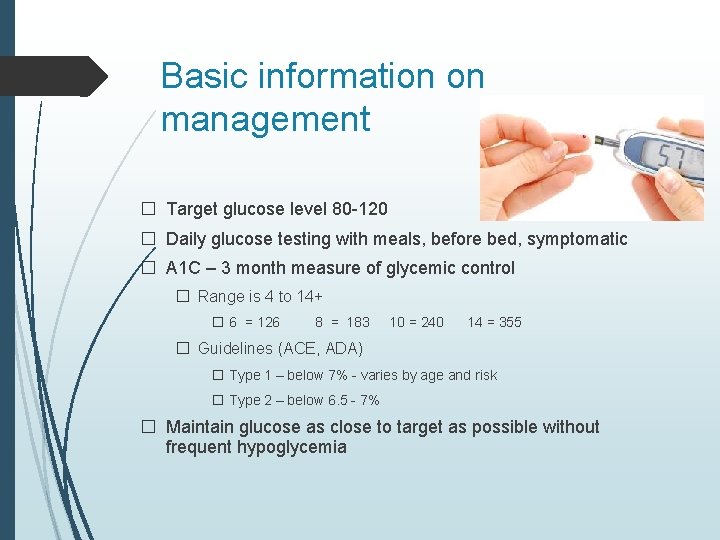
Basic information on management � Target glucose level 80 -120 � Daily glucose testing with meals, before bed, symptomatic � A 1 C – 3 month measure of glycemic control � Range is 4 to 14+ � 6 = 126 8 = 183 10 = 240 14 = 355 � Guidelines (ACE, ADA) � Type 1 – below 7% - varies by age and risk � Type 2 – below 6. 5 - 7% � Maintain glucose as close to target as possible without frequent hypoglycemia
Insulin � Insulin is a hormone produced in the pancreas necessary for glucose metabolism (aids in fat storage) � Many different forms � Rapid acting (bolus – Novolog, Humalog, Apidra) � Long acting (basal – Lantus, Levemir, Tresiba) � Short/Intermediate acting (Regular, NPH) * older � Concentrated (U 500, U 300 - Toujeo) � Pre-Mixed (70/30, 50/50, 75/25) � Inhaled
Technology � Insulin Pumps � Deliver rapid acting insulin through a sub-cutaneous infusion set; must be changed every 2 -3 days � Basal insulin is delivered every few minutes automatically, bolus insulin must be calculated and entered manually � Advantages: convenience, increased accuracy in dosing (smaller units, change basal), fewer pokes � Disadvantages: cost, more trouble shooting/issues, no longacting safety net � Continuous glucose sensor/monitor � Gives real time reading of glucose levels through interstitial fluid; shows trends of glucose � Common brands: Dex Com, Libre, Medtronic
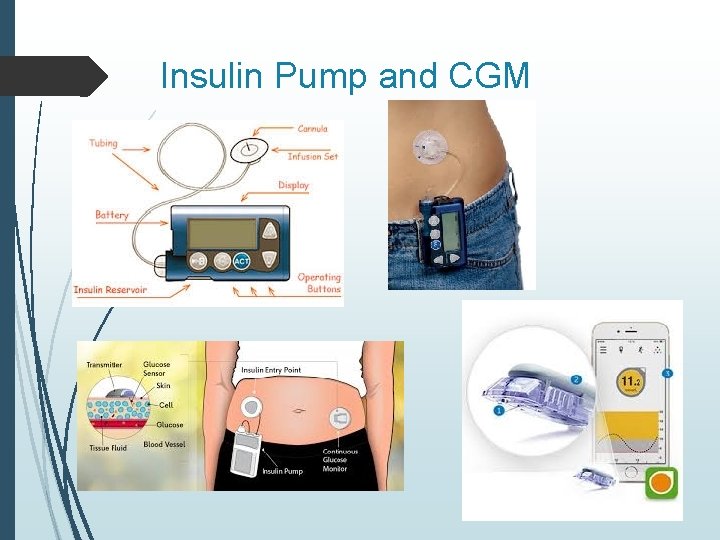
Insulin Pump and CGM
Hypoglycemia � Risk when insulin is used � Abnormally low glucose levels (>70) � Symptoms: � Shakiness, sweating, nausea, dizziness, hunger, irritable, fatigue, confusion, rapid heart rate, weakness, anxious � Can lead to unconsciousness, seizure, death � Requires immediate treatment � Rule of 15 � 15 g rapid acting carbs, wait 15 minutes, re-test and treat if needed � Fear of hypoglycemia can be a barrier to treatment
Hyperglycemia � Hyperglycemia causes long-term damage to the body (complications) � Symptoms: fatigue, sleepiness, irritability, excessive thirst, hunger, frequent urination, headache, blurry vision � Factors contributing to high glucose levels: Miscalculating carbohydrates Medications Missing or under-dosing insulin Compromised insulin Illness Stress Hormones Pump malfunction Decreased activity Changes in sleep � Testing glucose regularly is important in order to catch and treat high glucose and avoid DKA
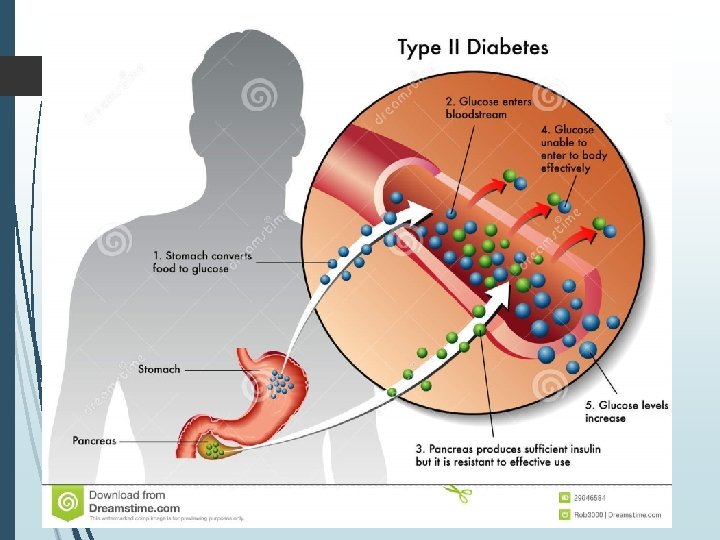
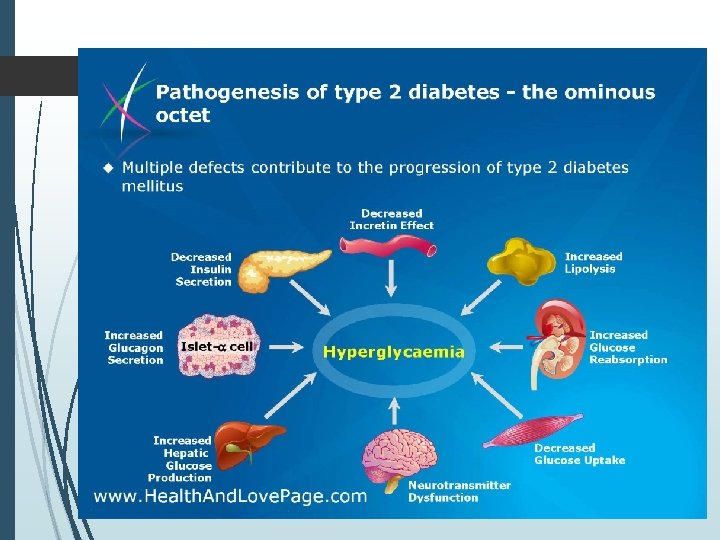
Type 2 Diabetes Basics � Metabolic condition – strong genetic component; obesity is risk factor � Cells become insulin resistant, pancreas works to overproduce insulin, glucose builds up in bloodstream � Often asymptomatic until advanced stage; “silent killer” resulting in nerve are cardiovascular damage � Treatment is a combination of oral medications and injectables � Progression: monotherapy, dual therapy, triple therapy � Metformin, GLP 1, SGLT 2, DPP 4, TZD, etc and eventually insulin � Weight management is a challenge – insulin resistance cycle
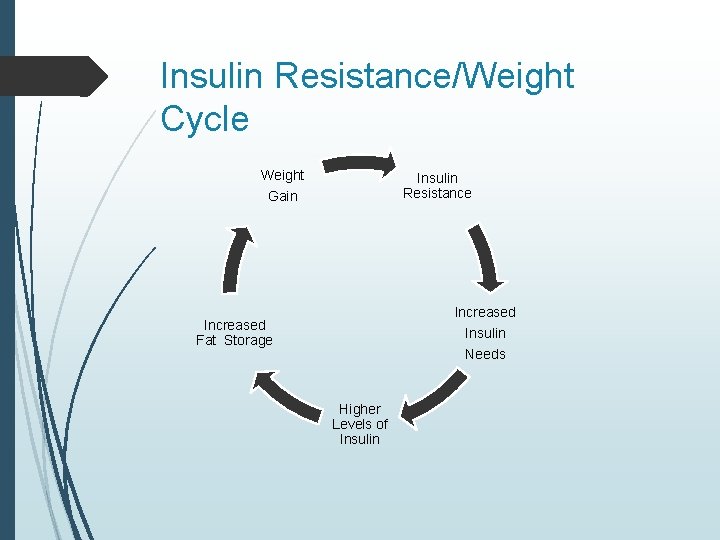
Insulin Resistance/Weight Cycle Weight Gain Insulin Resistance Increased Fat Storage Insulin Needs Higher Levels of Insulin
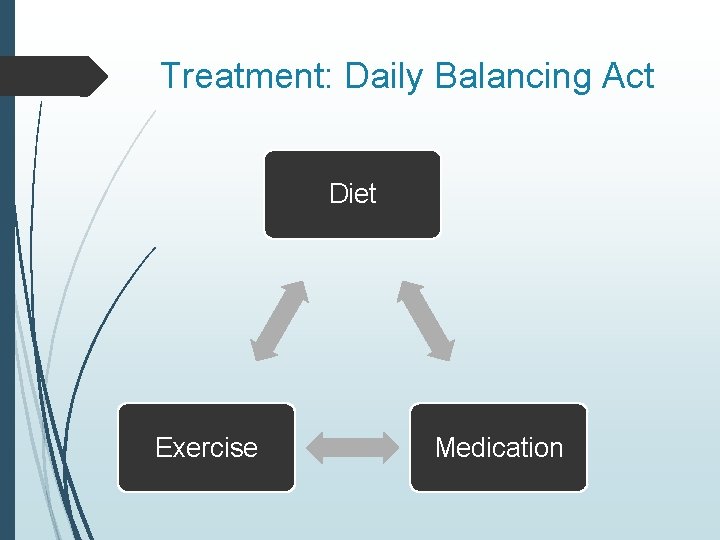
Treatment: Daily Balancing Act Diet Exercise Medication
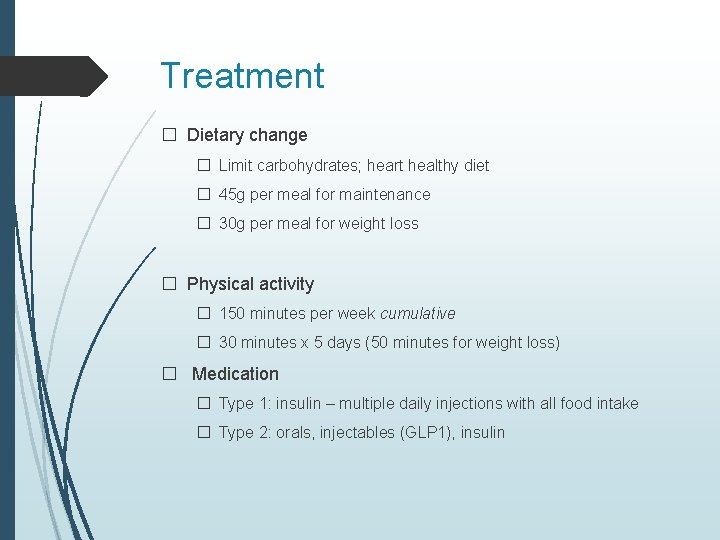
Treatment � Dietary change � Limit carbohydrates; heart healthy diet � 45 g per meal for maintenance � 30 g per meal for weight loss � Physical activity � 150 minutes per week cumulative � 30 minutes x 5 days (50 minutes for weight loss) � Medication � Type 1: insulin – multiple daily injections with all food intake � Type 2: orals, injectables (GLP 1), insulin
How do psycho-social factors impact diabetes and chronic disease?
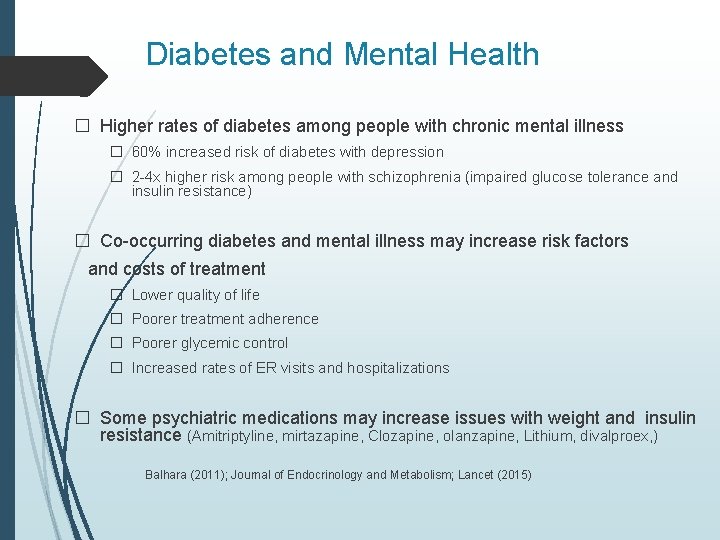
Diabetes and Mental Health � Higher rates of diabetes among people with chronic mental illness � 60% increased risk of diabetes with depression � 2 -4 x higher risk among people with schizophrenia (impaired glucose tolerance and insulin resistance) � Co-occurring diabetes and mental illness may increase risk factors and costs of treatment � Lower quality of life � Poorer treatment adherence � Poorer glycemic control � Increased rates of ER visits and hospitalizations � Some psychiatric medications may increase issues with weight and insulin resistance (Amitriptyline, mirtazapine, Clozapine, olanzapine, Lithium, divalproex, ) Balhara (2011); Journal of Endocrinology and Metabolism; Lancet (2015)
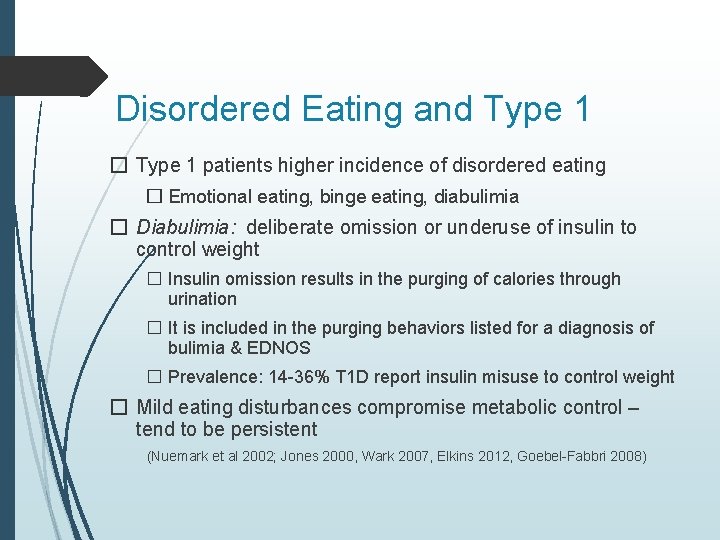
Disordered Eating and Type 1 � Type 1 patients higher incidence of disordered eating � Emotional eating, binge eating, diabulimia � Diabulimia: deliberate omission or underuse of insulin to control weight � Insulin omission results in the purging of calories through urination � It is included in the purging behaviors listed for a diagnosis of bulimia & EDNOS � Prevalence: 14 -36% T 1 D report insulin misuse to control weight � Mild eating disturbances compromise metabolic control – tend to be persistent (Nuemark et al 2002; Jones 2000, Wark 2007, Elkins 2012, Goebel-Fabbri 2008)
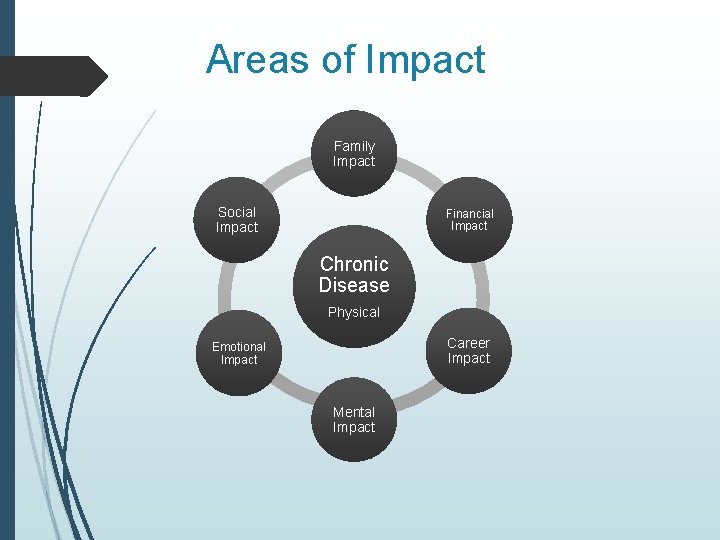
Areas of Impact Family Impact Social Impact Financial Impact Chronic Disease Physical Career Impact Emotional Impact Mental Impact
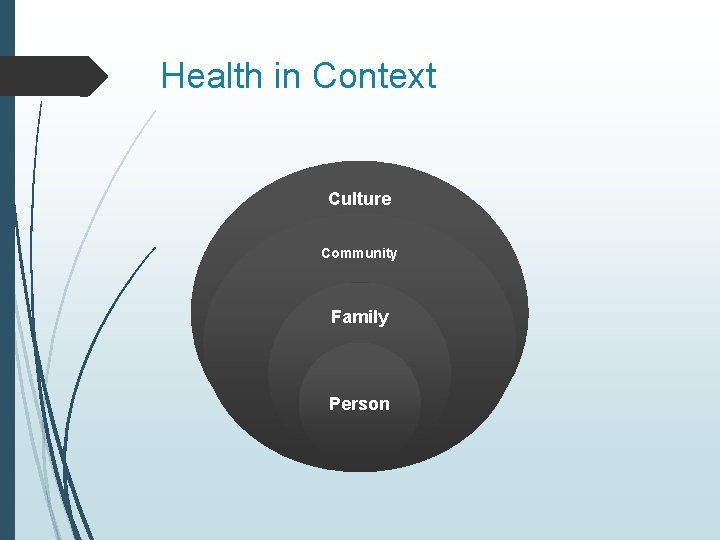
Health in Context Culture Community Family Person
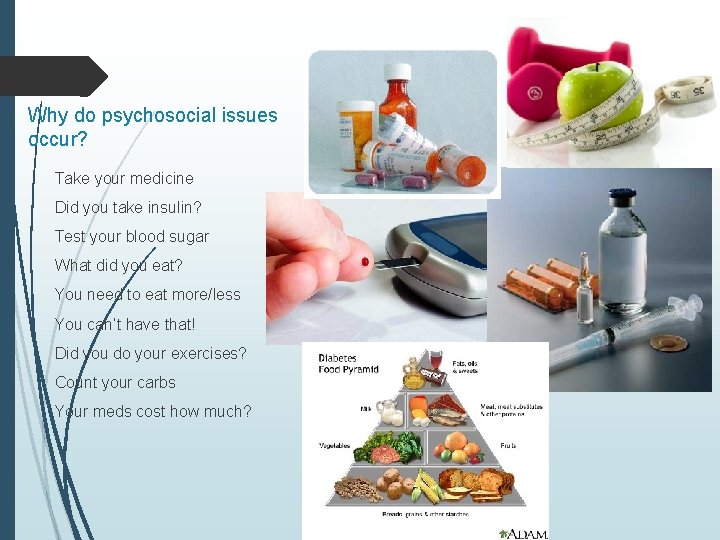
Why do psychosocial issues occur? Take your medicine Did you take insulin? Test your blood sugar What did you eat? You need to eat more/less You can’t have that! Did you do your exercises? Count your carbs Your meds cost how much?
Psycho-social Impact � Patients report: � significant feelings of grief and loss which recur at various times in life � lifelong issues with social isolation, hopeless, helplessness, guilt, frustration, fear & ineffectiveness � feeling as if their chronic illness rules their lives and defines them as individuals � struggling to balance the demands of their illness with the demands of their lives � Depression and anxiety are common among people with chronic illness (30 to 50%) Anderson, B and Brackett, J. (2005 ).
Adherence � Most chronic diseases have adherence rates below 50% �the majority of patients are non-adherent! �Poor adherence is the norm, not the exception � Self-report of adherence has poor accuracy across conditions �We over-report success and under-report issues �It’s not lying, it’s human nature �The proof is in the data � Pediatric adherence rates decline from childhood to adolescence Bodenheimer et al (2002); Dunbar and Stevens (2007)
Understanding Adherence � Good adherence- carry out 80% of recommendations � Factors impact adherence � self-efficacy � initial adherence (interruption vs motivation) � multi-behaviors regimens � schedule changes or disruptions � Reasons they miss: � #1 forgetting � #2 varied dosing based upon symptoms (+/-) � #3 Schedule disruptions (travel, dining out, interruptions) Dunbar et al 1996; Conn et al 1994
It’s All About Change Successful adjustment to diagnosis and management of chronic disease is all about change �changes in behavior �changes in emotion �changes in thinking
Addressing Behavior Change It is the elephant in the room � Behavior change is required to meet all other treatment goals (diet, exercise, medical regimen, healthy lifestyle) � Healthy coping is critical to adjustment and adherence . . . BUT it is often an unsupported treatment recommendation for patients with chronic illness
Result “I know what to do, I just can’t do it!” Ø I feel frustrated Ø I feel like a failure Ø I give up and. . . go for the chocolate, eat what I like, lay on the couch and watch TV, skip my meds. . .
Supporting Behavior Change �Health information is necessary but seldom sufficient to affect behavior change �Approximately 90% of patients who successfully lose weight experience relapse �Non- adherence with medical regimen is the norm not the exception. �Mental health professionals have expertise in supporting behavior change and are valuable members of the treatment team (Jordan-Marsh et al, 1984)
Helping Patients Live Well with Diabetes 3 main factors � Maintaining motivation and building resilience � Coping and stress management � Behavior change – its all about change (behaviors, emotions & thinking patterns)
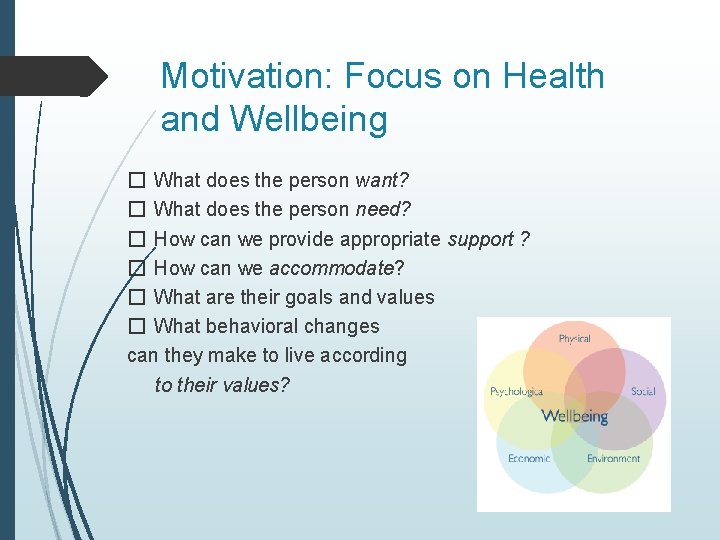
Motivation: Focus on Health and Wellbeing � What does the person want? � What does the person need? � How can we provide appropriate support ? � How can we accommodate? � What are their goals and values � What behavioral changes can they make to live according to their values?
5 Keys to Success & Wellness (BRASS) Motivation and Resilience – perception is key � Balance – in life and care � Realistic – goals & expectations � Attitude – Loco – let go of perfection, objective, caring, optimistic � Support – personal & professional � Stress – coping & management
Ways to improve adherence � Contextual Interview � work to understand the context of the situation (Work, love, play, health, 3 Ts) � Functional Assessment – � What is barrier – external or internal? � Financial � Understanding of instructions � Transportation � Avoidance � Negative reinforcement � What is the function of the behavior – control, avoidance, revenge � Problem solve physical barriers � Internal barriers � Use MI and ACT to connect to values, enhance motivation and awareness of barriers (Beechy and Bauman 2018)
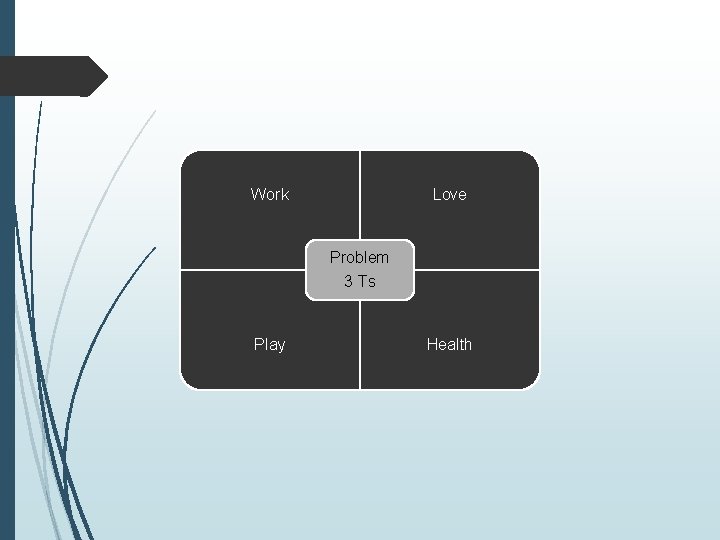
Love Work Problem 3 Ts Play Health
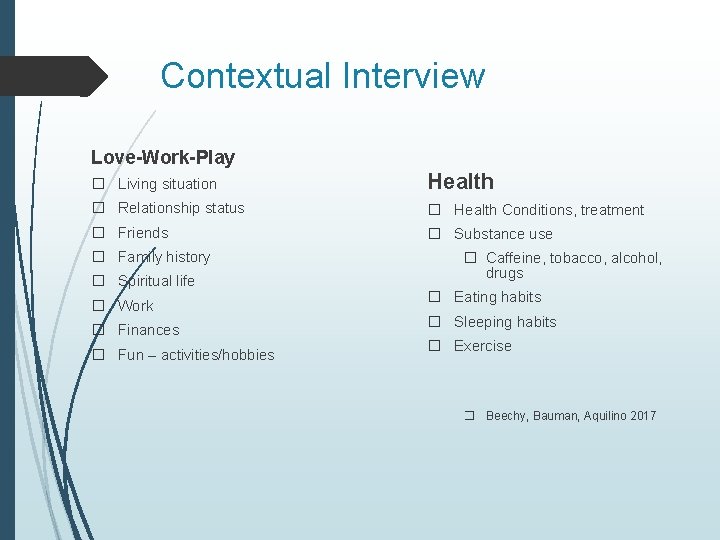
Contextual Interview Love-Work-Play � Living situation Health � Relationship status � Health Conditions, treatment � Friends � Substance use � Family history � Spiritual life � Work � Finances � Fun – activities/hobbies � Caffeine, tobacco, alcohol, drugs � Eating habits � Sleeping habits � Exercise � Beechy, Bauman, Aquilino 2017
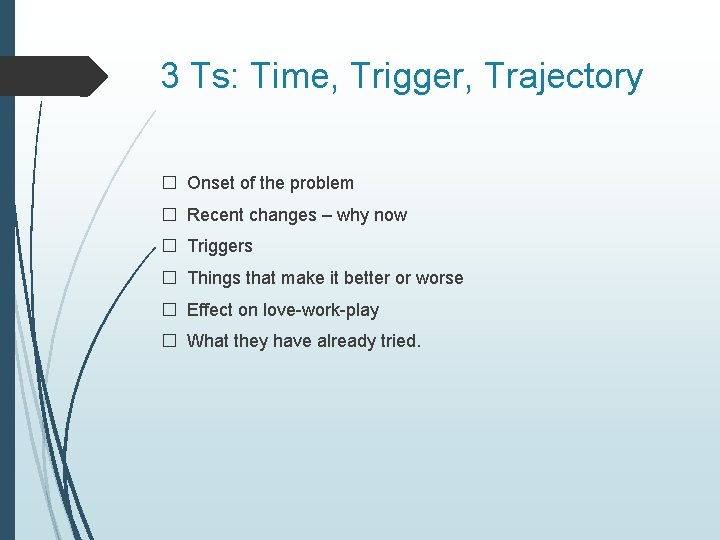
3 Ts: Time, Trigger, Trajectory � Onset of the problem � Recent changes – why now � Triggers � Things that make it better or worse � Effect on love-work-play � What they have already tried.
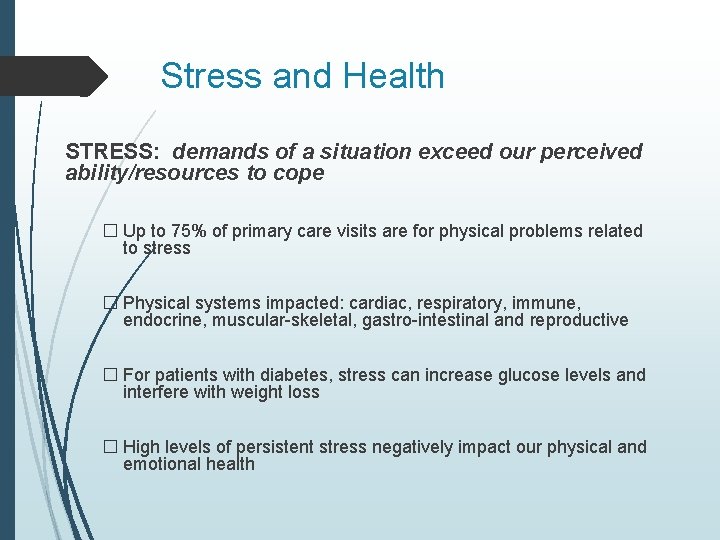
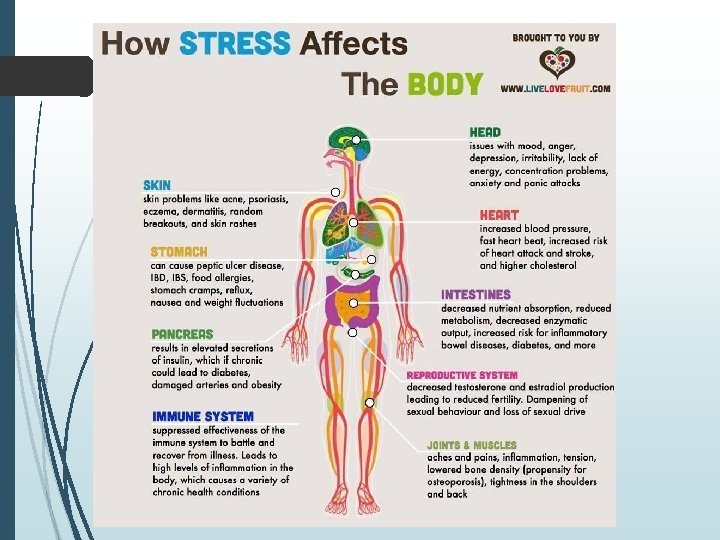
Stress and Health STRESS: demands of a situation exceed our perceived ability/resources to cope � Up to 75% of primary care visits are for physical problems related to stress � Physical systems impacted: cardiac, respiratory, immune, endocrine, muscular-skeletal, gastro-intestinal and reproductive � For patients with diabetes, stress can increase glucose levels and interfere with weight loss � High levels of persistent stress negatively impact our physical and emotional health
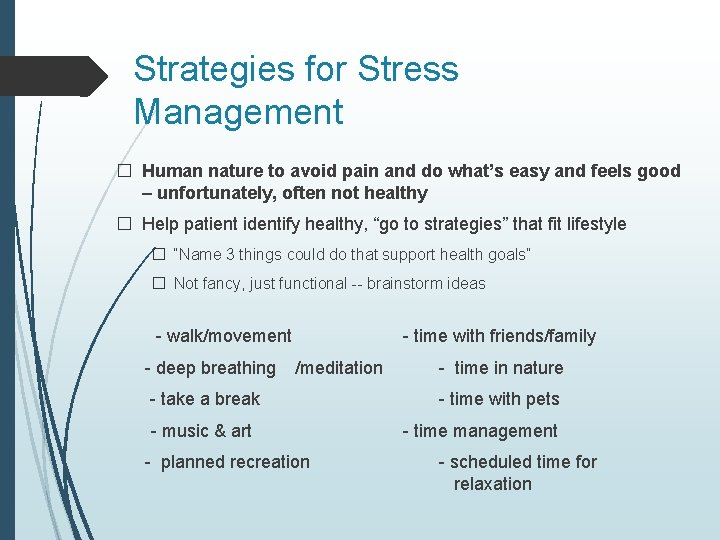
Strategies for Stress Management � Human nature to avoid pain and do what’s easy and feels good – unfortunately, often not healthy � Help patient identify healthy, “go to strategies” that fit lifestyle � “Name 3 things could do that support health goals” � Not fancy, just functional -- brainstorm ideas - walk/movement - deep breathing - time with friends/family /meditation - take a break - music & art - planned recreation - time in nature - time with pets - time management - scheduled time for relaxation
How do we support behavior change? �Understanding �Guidance �Strategy
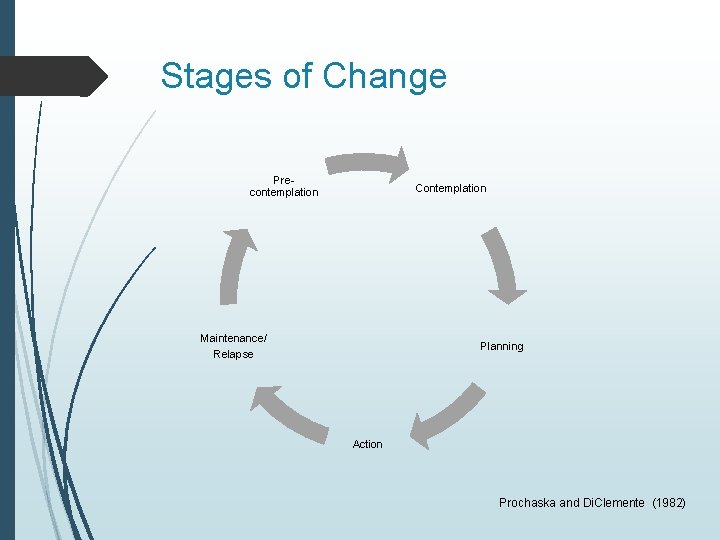
Stages of Change Precontemplation Contemplation Maintenance/ Relapse Planning Action Prochaska and Di. Clemente (1982)
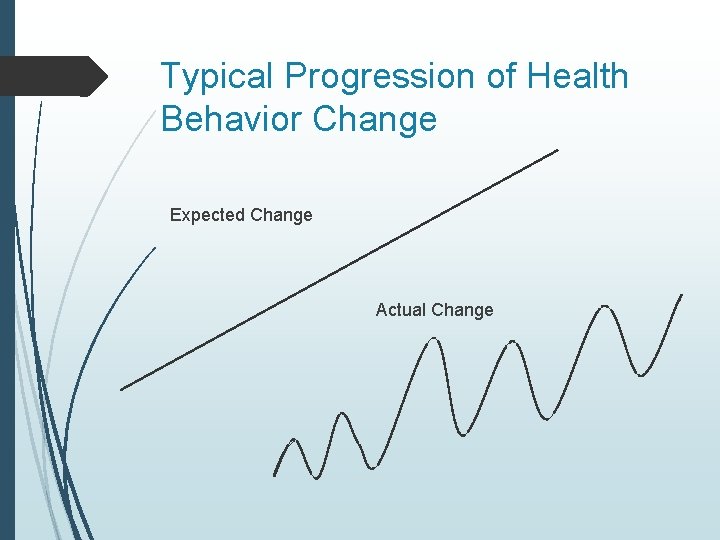
Typical Progression of Health Behavior Change Expected Change Actual Change
Guiding Patient Behavior Change Motivational Interviewing (Miller and Rollnick) � Patient-centered (agenda and goals) � Guiding style -encourage self-based problem solve �dancing not wrestling, guiding not directing, consulting not instructing � Active listening – empathetic, non-judgmental � Open ended questions to evoke patient’s interests, desires and reactions � Explore concerns � Affirm and acknowledge positive effort and steps
Paradox of change “ when people feel accepted for who they are and what they do (regardless of how unhealthy) it allows them the freedom to consider change, rather than needing to defend against it” (Miller and Rollnick, 2010) Studies suggest empathy is the best predictor of patient behavior change
Case Conceptualization The 4 Qs of case conceptualization; � What is the concern � Why does it create a problem � What to do next (behavior plan) � How to do it (skill building) Work to understand the nature of the behavior: 3 Ts – time, trajectory, triggers? What need does it serve? Is it helping them achieve their goals? Sperry et al 2005 ; Robinson and Strosahl 2017
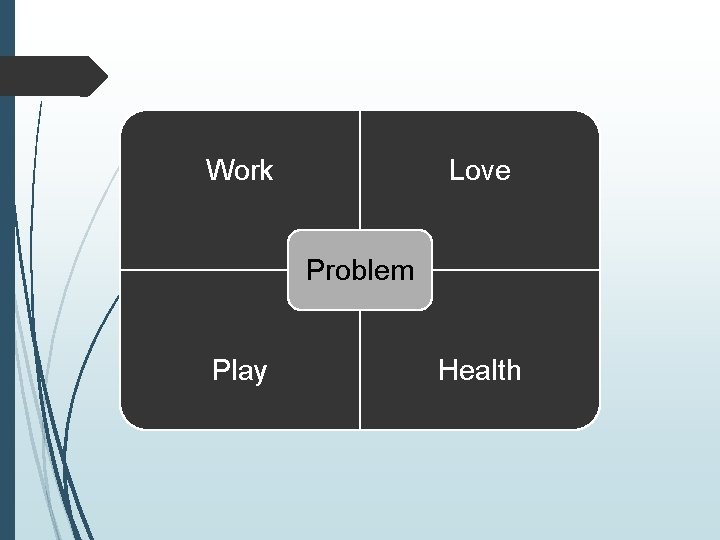
Work Love Problem Play Health
Functional Assessment to Understand Behavior � Based in behavioral psychology � Identify basic elements which drive and maintain the current behavioral pattern � Do current thoughts, feelings, behaviors and environment support or sabotage desired goal? � What are triggers and sustaining elements? � What would happen if these elements changed? � Brainstorm options for change at each level using MI
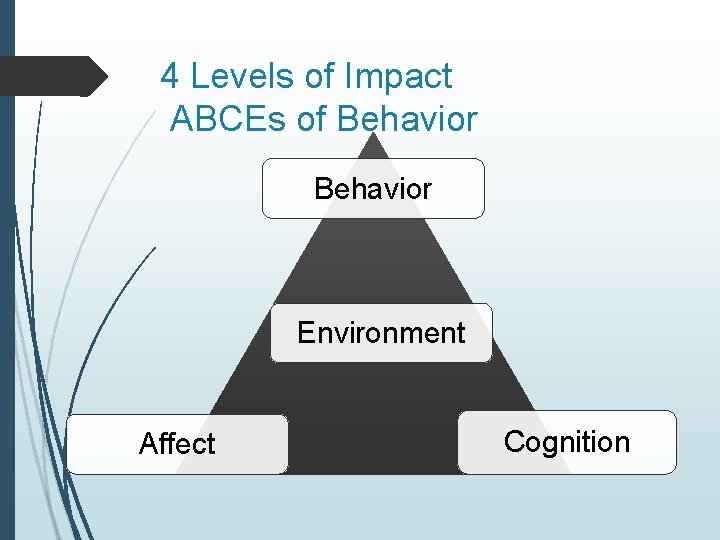
4 Levels of Impact ABCEs of Behavior Environment Affect Cognition
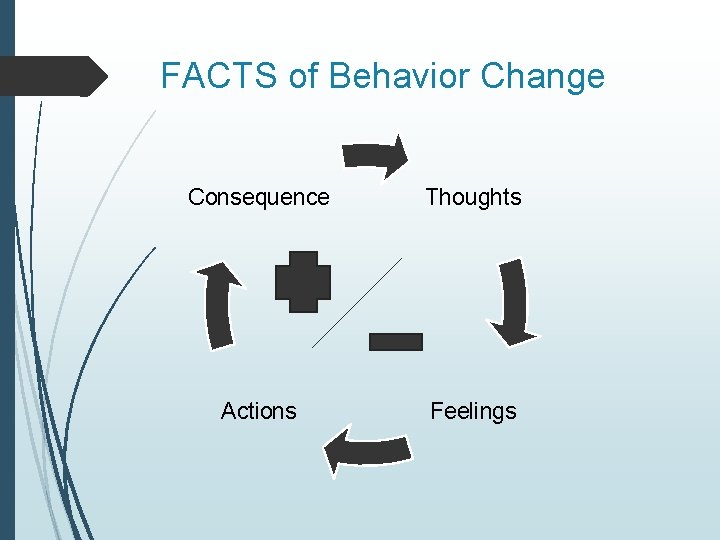
FACTS of Behavior Change Consequence Thoughts Actions Feelings
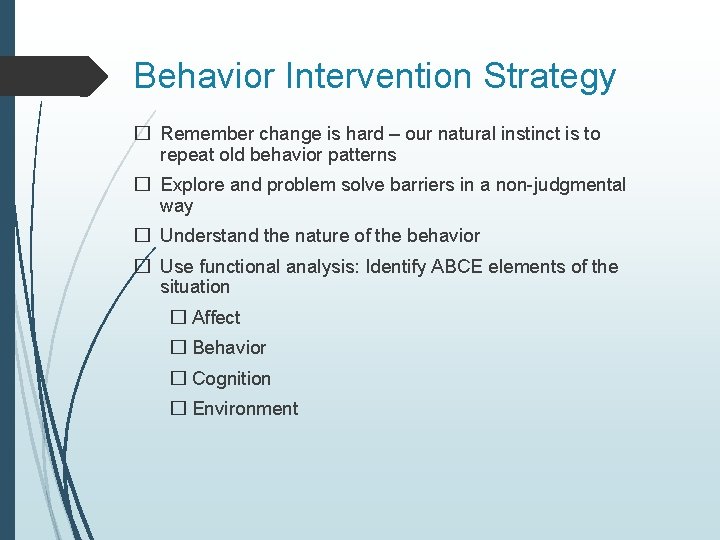
Behavior Intervention Strategy � Remember change is hard – our natural instinct is to repeat old behavior patterns � Explore and problem solve barriers in a non-judgmental way � Understand the nature of the behavior � Use functional analysis: Identify ABCE elements of the situation � Affect � Behavior � Cognition � Environment
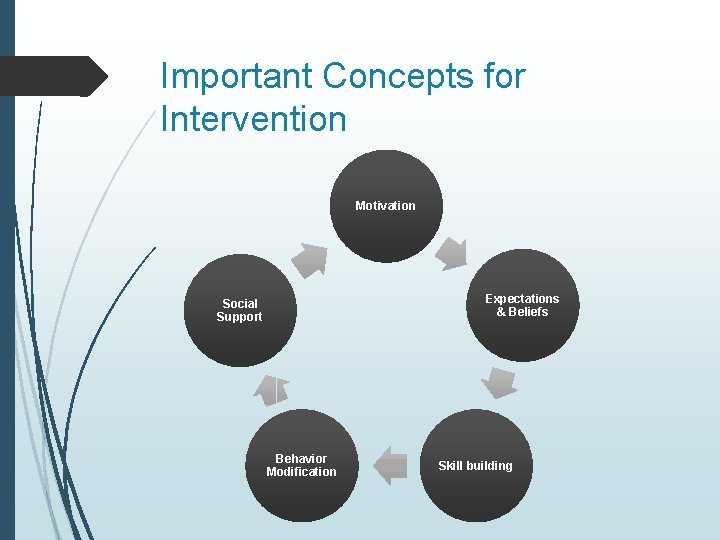
Important Concepts for Intervention Motivation Expectations & Beliefs Social Support Behavior Modification Skill building
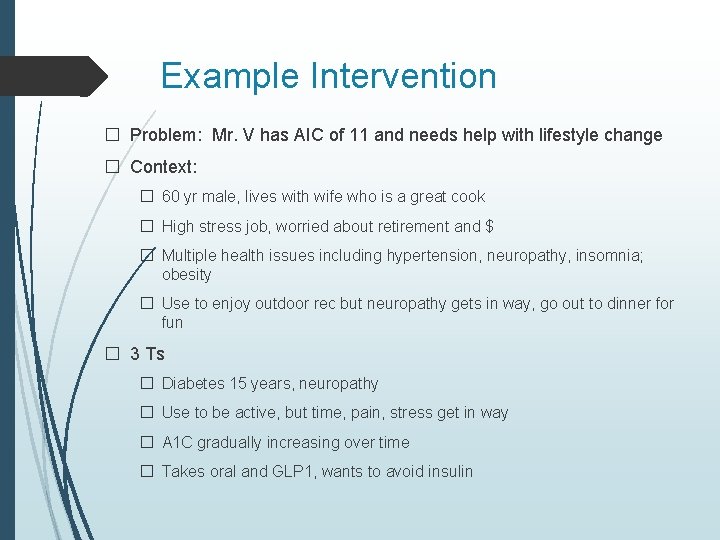
Example Intervention � Problem: Mr. V has AIC of 11 and needs help with lifestyle change � Context: � 60 yr male, lives with wife who is a great cook � High stress job, worried about retirement and $ � Multiple health issues including hypertension, neuropathy, insomnia; obesity � Use to enjoy outdoor rec but neuropathy gets in way, go out to dinner for fun � 3 Ts � Diabetes 15 years, neuropathy � Use to be active, but time, pain, stress get in way � A 1 C gradually increasing over time � Takes oral and GLP 1, wants to avoid insulin
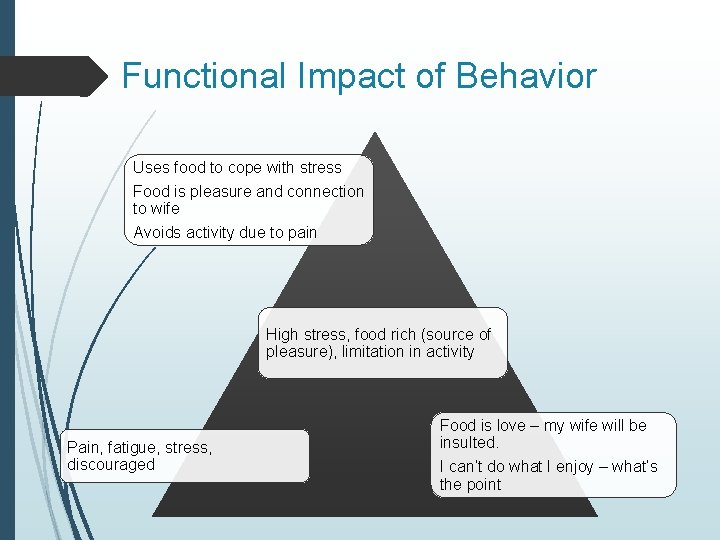
Functional Impact of Behavior Uses food to cope with stress Food is pleasure and connection to wife Avoids activity due to pain High stress, food rich (source of pleasure), limitation in activity Pain, fatigue, stress, discouraged Food is love – my wife will be insulted. I can’t do what I enjoy – what’s the point
Intervention Ideas � Increase activity � Biggest bang for buck – glucose, stress, sleep, obesity, fatigue � Other forms physical activity – start small to ensure success � Recreation – adapted form, non-food based � Family meeting to discuss healthy food choices, other types of entertainment, other ways show love � Changes to environment (remove high temptation foods, make activity part of routine, prioritize health with time) � Work on sleep hygiene � Stress management training � 3 things to do when stressed before turn to food � Meditation, deep breathing � CBT/ACT: beliefs around food, behavioral engagement, value-based living, pain management
Role Play � Select a partner � Practice the contextual interview, then develop an intervention. � Case: 46 yr old female with type 2 diabetes on insulin. Struggles with consistently testing glucose levels and taking insulin. Long history of weight management issues with frequent emotional eating. Single mother with high levels of stress.
Key Concepts for Intervention � Normalization – chronic disease isn’t for “sissys” � Person first – challenge they face, not their identity; D impact on what else matters in life � Communication-with patient, family, medical team � Adaptability – energy, cognition, behavior � Hope & Optimism - “Can Do” approach, never too late to make a positive impact � Skills training – targeted areas as needed � Values- tie intervention to core values
Strategies for Making Change Lifestyle and behavior take years to develop and also take time to change � Set realistic goals � Take small steps (shape behavior, SAG) � Choose one area of focus. Make a specific, concrete plan. Record progress and check in. � Set up the environment for success � Acknowledge and reward successes, problem-solve difficulties � Engage social supports � Identify and connect to values to enhance motivation � Plan for set-backs, practice acceptance, problem-solve
Result: Hope, inspiration, behavior change, gratitude
Case Example Patient � “Betty” - female in mid 60 s, presented with poorly controlled diabetes and depression. Not testing glucose levels, inconsistent with insulin use. � Diabetes 15+ years and always struggled with adherence (denial, ignoring, avoidance, resentment). A 1 C: 10. 7; � Treatment regimen: Glyburide, Invokana, metformin; Insulin (Lantus and Novo. Log � Married, retired, chronic pain from neuropathy; Inconsistent eating habits & several serving daily of Coke. Hypersomnia (up to 12 hours)
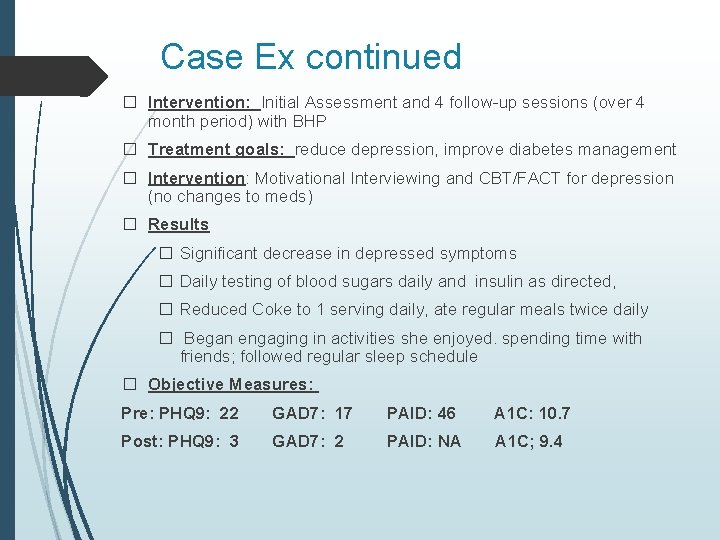
Case Ex continued � Intervention: Initial Assessment and 4 follow-up sessions (over 4 month period) with BHP � Treatment goals: reduce depression, improve diabetes management � Intervention: Motivational Interviewing and CBT/FACT for depression (no changes to meds) � Results � Significant decrease in depressed symptoms � Daily testing of blood sugars daily and insulin as directed, � Reduced Coke to 1 serving daily, ate regular meals twice daily � Began engaging in activities she enjoyed. spending time with friends; followed regular sleep schedule � Objective Measures: Pre: PHQ 9: 22 GAD 7: 17 PAID: 46 A 1 C: 10. 7 Post: PHQ 9: 3 GAD 7: 2 PAID: NA A 1 C; 9. 4
Take Home Points � Psycho-social factors have a significant impact on diabetes (bio-psychosocial model) � Think about health in system context - bidirectional impact � Change is a process (not linear) – meet patients where they are - use MI to guide change � Change is hard and chronic illness is exhausting – issues with adherence are the rule, not the exception � Normalize – strive for typical developmental tasks � SAG principle – Small Achievable Goals � Small changes can have big effects – celebrate the small victories
Contact Information Amy Walters, Ph. D, Licensed Psychologist Director of Behavioral Health, St. Luke’s HDC 331 -1155 awalters@slhs. org
References � Anderson, B and Brackett, J. (2005 ). Diabetes in Children. In Snoek, F. and Skinner, T. Psychology in Diabetes Care – 2 nd Edition (pp 1 -25). England: John Wiley & Sons. � Conn V, Taylor S, Miller R. (1994) Cognitive impairment and medication adherence. Journal of Gerontology Nursing ; 20(7): 41– 47. � J. Dunbar and Stephens (2001 )Treatment adherence in chronic disease Journal of Clinical 54 (2001) S 57–S 60 � Dunbar-Jacob J, Kwoh C, Rohay J, Burke L, Sereika S, Starz R. (1996) Adherence in chronic disease. Paper presented at the Fourth International Congress of Behavioral Medicine, Washington, DC. � Fennell (2003) Managing Chronic illness using the 4 phase treatment approach. Hoboken, NJ: Wiley � Havermans T, Colpaert K, Dupont LJ (2008). Quality of life in patients with cystic fibrosis: association with anxiety and depression; Journal of Cystic Fibrosis; 7(6) 581 -584.
References cont. � Ingersol K and Cohen J (2008). The impact of medication regimen factors on adherence to chronic treatment: a review of literature. Journal of Behavioral Medicine, 31: 213 -224. � Quittner AL, Goldbeck L, Abbott J, et al (2014). Prevalence of depression and anxiety in patients with cystic fibrosis and parent caregivers: results of the international depression epidemiological study across nine countries. Thorax; 69: 1090 -97. � Smith BA, Modi AC, Quittner AL, et al. (2010). Depressive symptoms in children with cystic fibrosis and parents and its effects on adherence to airway clearance. Pediatric Pulmonology, 45 (8): 756 -63. � Sperry et al 2005 Health promotion and health counseling: Effective psychotherapeutic strategies. Boston: Allyn & Bacon � Types of insulin: https: //www. health. com/health/gallery/0, , 20402402, 00. html �
- Slides: 67