
The Impact of Epidemiology in Public Health Robert
The Impact of Epidemiology in Public Health Robert Hirokawa, Dr. PH Epidemiologist, Science and Research Group HHI / TSP, Hawaii Department of Health
3 Core Functions of Public Health The Institutes of Medicine (IOM) defines the three core functions of public health as: n Assessment n Policy development n Assurance
10 Essential Public Health Services Monitor health status to identify community problems. Diagnose and investigate health problems and health hazards in the community. Inform, educate, and empower people about health issues. Evaluate effectiveness, accessibility, and quality of personal and population- based health services. Research for new insights and innovative solutions to health problems.
10 Essential Public Health Services Mobilize community partnerships and action to identify and solve health problems. Develop policies and plans that support individual and community health efforts. Enforce laws and regulations that protect health and ensure safety. Link people to needed personal health services and assure the provision of health care when otherwise unavailable. Assure a competent public health and personal health care workforce.
Epidemiology Defined The study of distribution and determinants of health and disease in human populations
3 Essential Components of Epidemiology Disease distribution – person, place, time Disease determinants – causal relationships Disease frequency n n Expected levels Endemic Epidemic Pandemic
Types of Epidemiologic Studies Descriptive Analytic
Descriptive Studies Frequency of occurrence of a particular condition Patterns of occurrence n n n Person Place Time
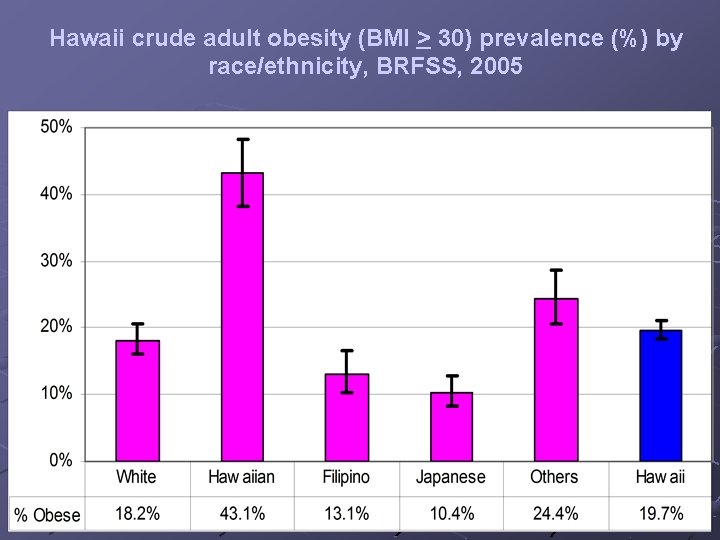
Hawaii crude adult obesity (BMI > 30) prevalence (%) by race/ethnicity, BRFSS, 2005
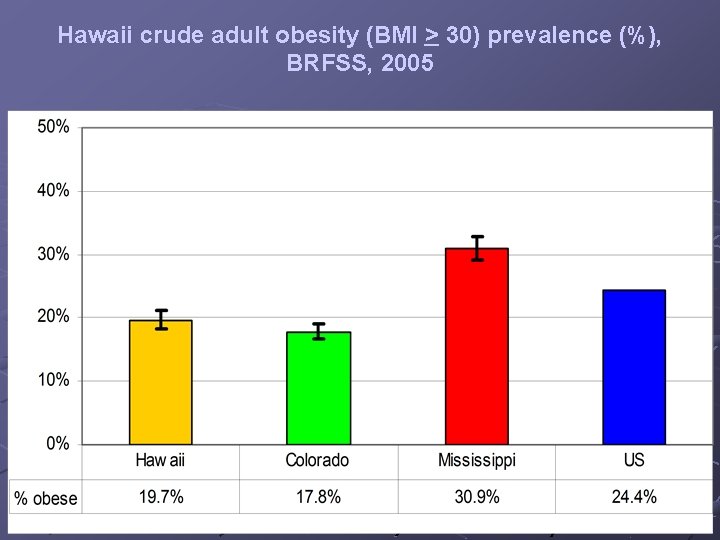
Hawaii crude adult obesity (BMI > 30) prevalence (%), BRFSS, 2005
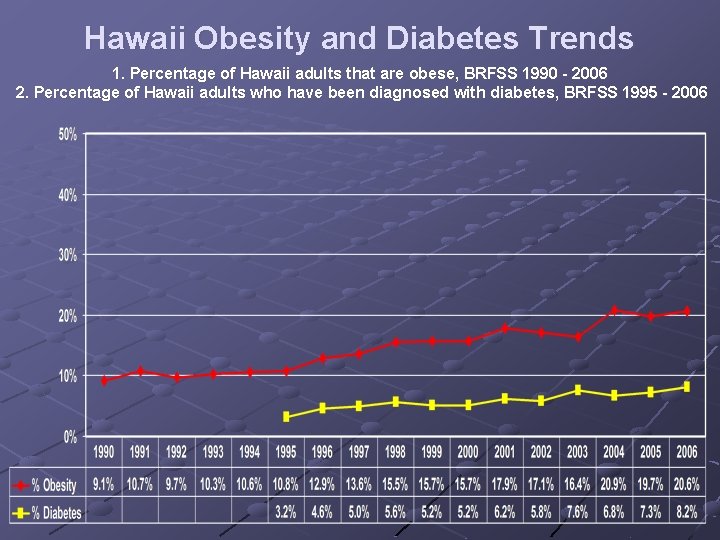
Hawaii Obesity and Diabetes Trends 1. Percentage of Hawaii adults that are obese, BRFSS 1990 - 2006 2. Percentage of Hawaii adults who have been diagnosed with diabetes, BRFSS 1995 - 2006
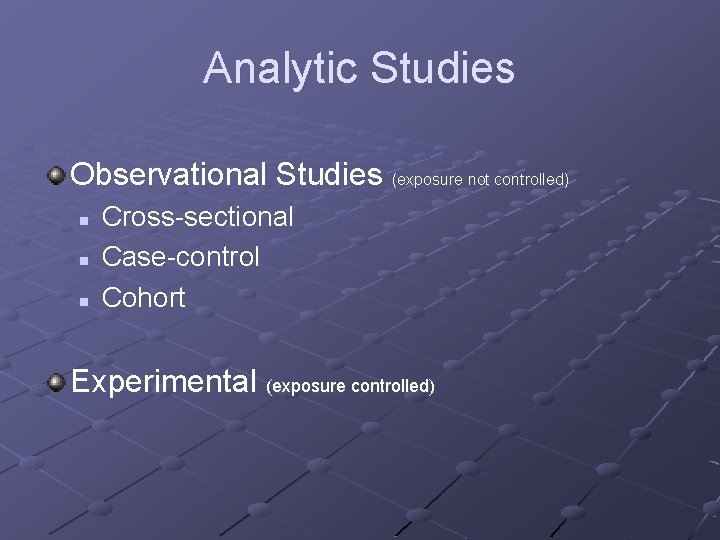
Analytic Studies Observational Studies (exposure not controlled) n n n Cross-sectional Case-control Cohort Experimental (exposure controlled)
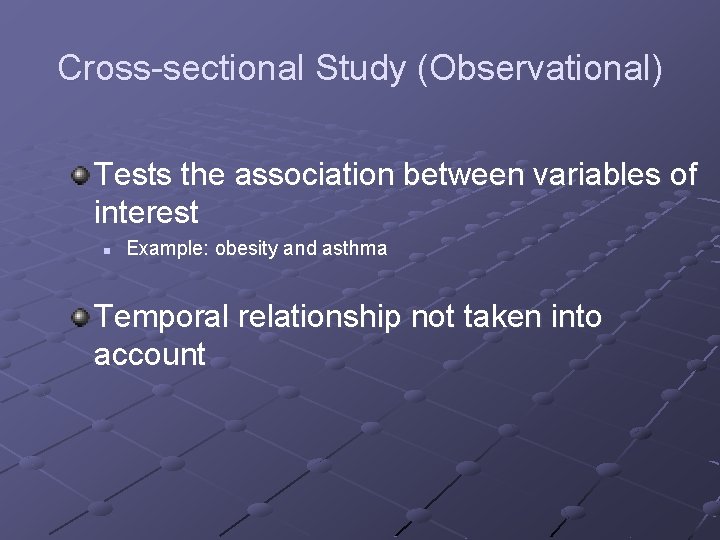
Cross-sectional Study (Observational) Tests the association between variables of interest n Example: obesity and asthma Temporal relationship not taken into account
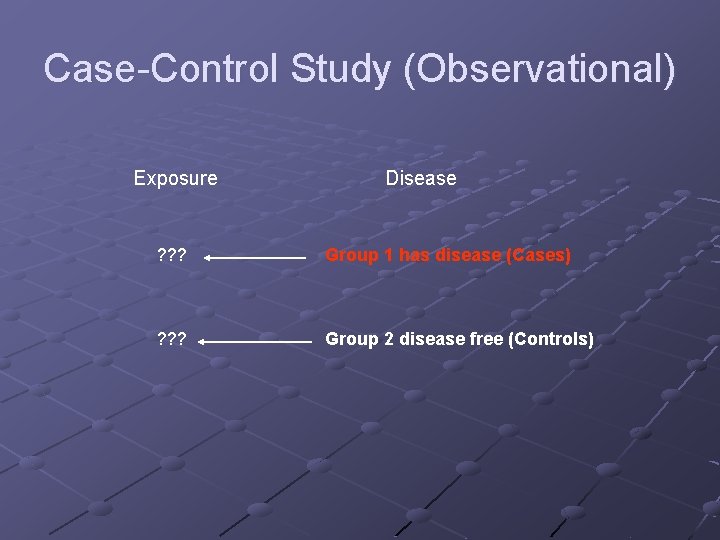
Case-Control Study (Observational) Exposure Disease ? ? ? Group 1 has disease (Cases) ? ? ? Group 2 disease free (Controls)
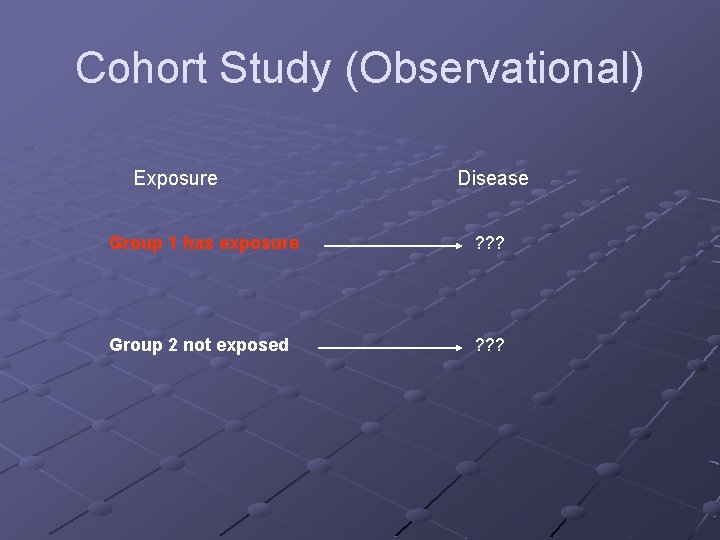
Cohort Study (Observational) Exposure Disease Group 1 has exposure ? ? ? Group 2 not exposed ? ? ?
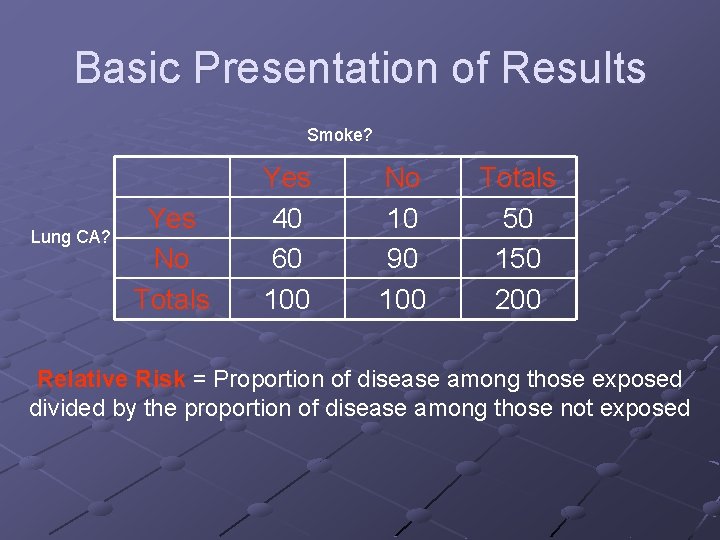
Basic Presentation of Results Smoke? Lung CA? Yes No Totals Yes 40 60 100 No 10 90 100 Totals 50 150 200 Relative Risk = Proportion of disease among those exposed divided by the proportion of disease among those not exposed
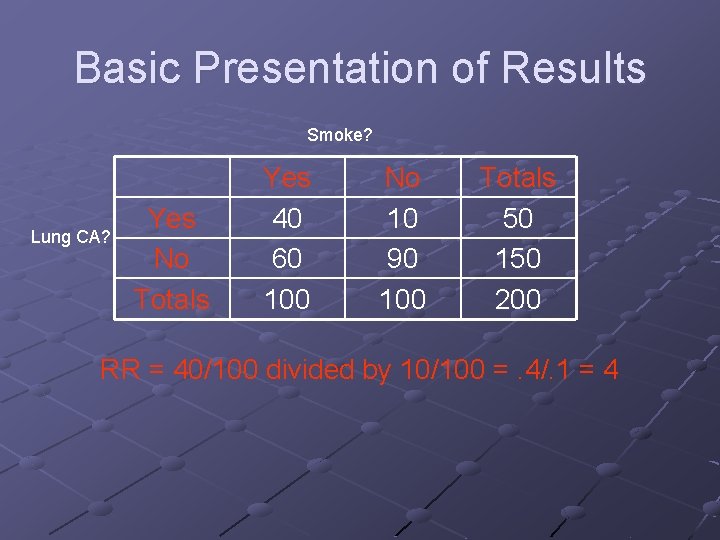
Basic Presentation of Results Smoke? Lung CA? Yes No Totals Yes 40 60 100 No 10 90 100 Totals 50 150 200 RR = 40/100 divided by 10/100 =. 4/. 1 = 4
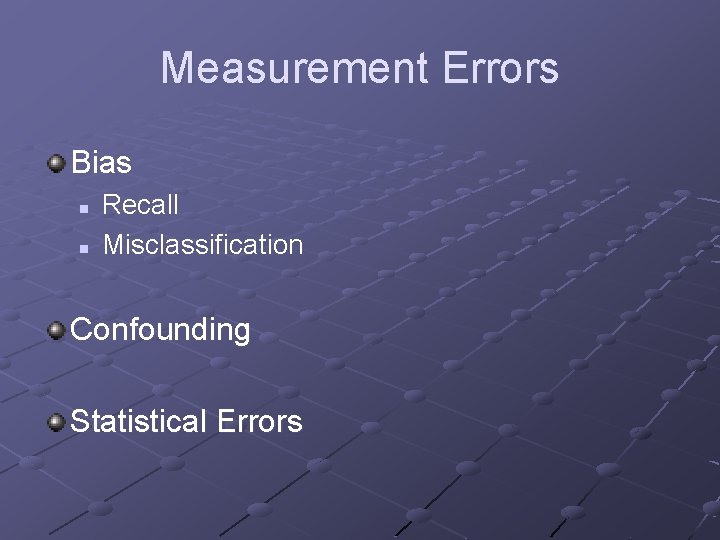
Measurement Errors Bias n n Recall Misclassification Confounding Statistical Errors
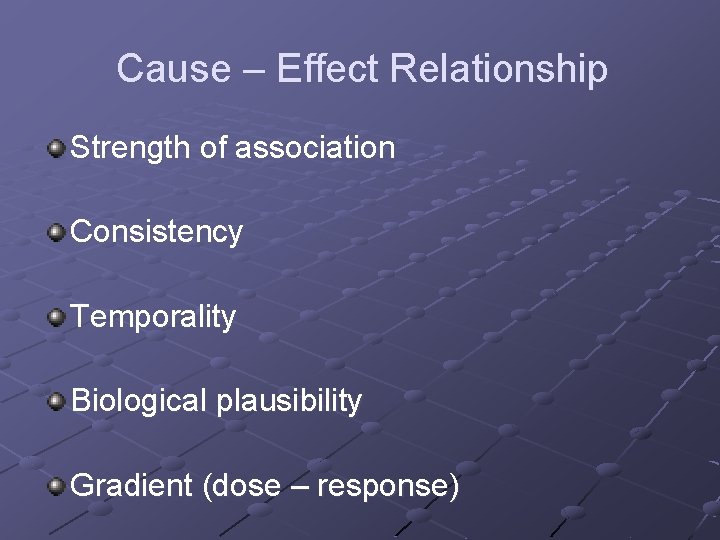
Cause – Effect Relationship Strength of association Consistency Temporality Biological plausibility Gradient (dose – response)
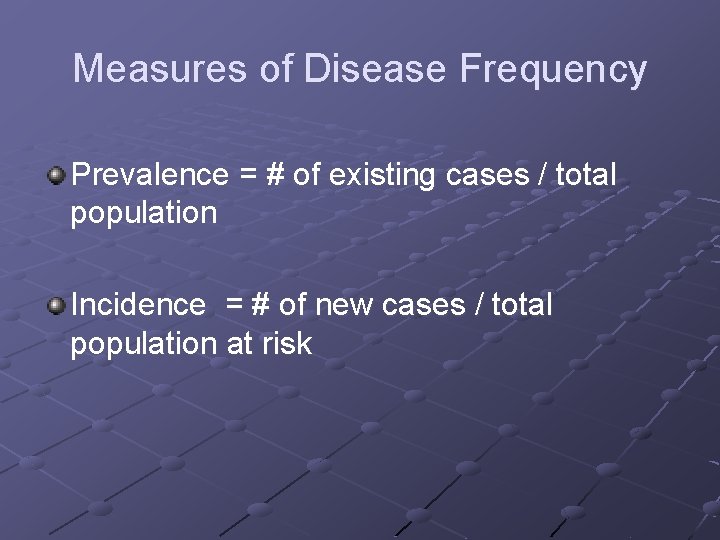
Measures of Disease Frequency Prevalence = # of existing cases / total population Incidence = # of new cases / total population at risk
Commonly Used Measures Crude Category-specific (age, gender, geography) Age-adjusted

Experimental Study Clinical Trial n Exposure is controlled
In Summary: Impact of Epidemiology in Public Health Improved understanding of the distribution and determinants of health and disease in human populations Used to drive program planning, resource allocation, interventions, and evaluation

Thank you!
- Slides: 24