
The impact of BEPS on tax systems in
The impact of BEPS on tax systems in developing economies – The example of India Sriram Govind, LL. M December 5, 2016 1
Structure § Introduction § BEPS: A broad run-through § Developing country perspectives on BEPS § India’s tax system – A Brief Overview § India and BEPS Implementation § The Multilateral Instrument & India § Concluding remarks – parallels for Serbia? 2
Introduction § Direct tax – promote cross-border investment – source v. residence – but double taxation! § Early 1920 s to 1990 s – prevent double taxation – League of Nations -> OECD Model/UN Model – Over 3000 bilateral tax treaties! § Post 1990 s – tax avoidance – domestic antiavoidance rules -> treaty anti-avoidance rules § Skip to 2015 – MNCs – serial tax avoidance – OECD/G-20 – BEPS Project! 3
Structure § Introduction § BEPS: A broad run-through § Developing country perspectives on BEPS § India’s tax system – A Brief Overview § India and BEPS Implementation § The Multilateral Instrument & India § Concluding remarks – parallels for Serbia? 4
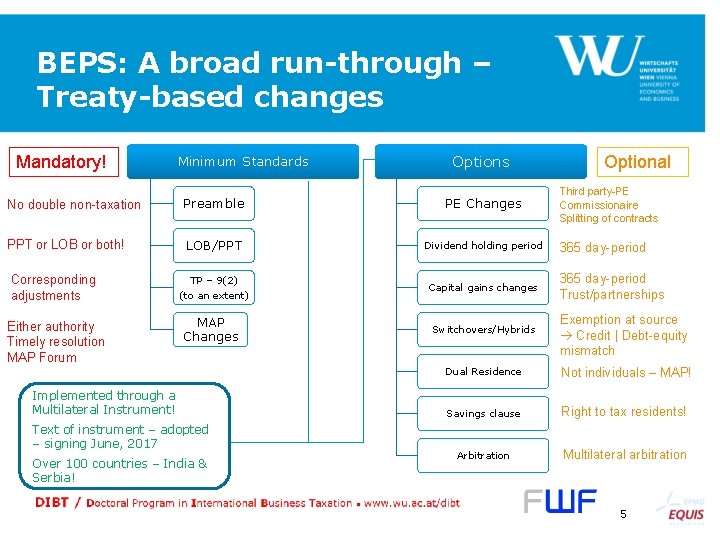
BEPS: A broad run-through – Treaty-based changes Mandatory! Minimum Standards Options No double non-taxation Preamble PE Changes PPT or LOB or both! LOB/PPT Dividend holding period TP – 9(2) (to an extent) Capital gains changes Corresponding adjustments Either authority Timely resolution MAP Forum MAP Changes Implemented through a Multilateral Instrument! Text of instrument – adopted – signing June, 2017 Over 100 countries – India & Serbia! Switchovers/Hybrids Optional Third party-PE Commissionaire Splitting of contracts 365 day-period Trust/partnerships Exemption at source Credit | Debt-equity mismatch Dual Residence Not individuals – MAP! Savings clause Right to tax residents! Arbitration Multilateral arbitration 5
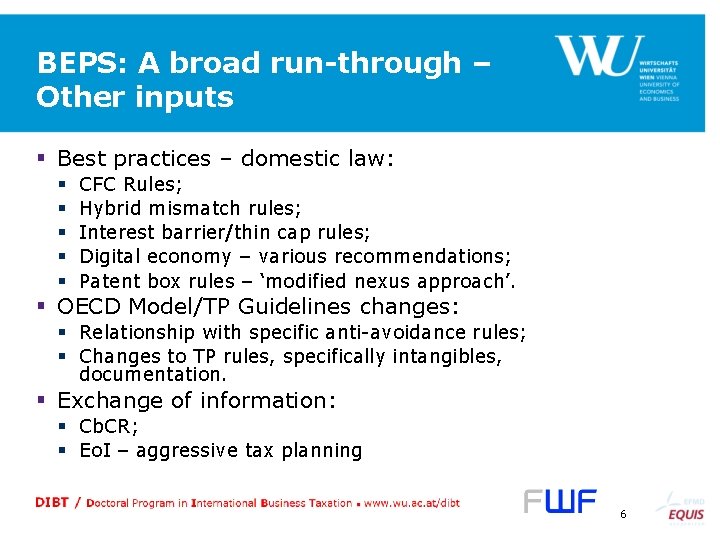
BEPS: A broad run-through – Other inputs § Best practices – domestic law: § § § CFC Rules; Hybrid mismatch rules; Interest barrier/thin cap rules; Digital economy – various recommendations; Patent box rules – ‘modified nexus approach’. § OECD Model/TP Guidelines changes: § Relationship with specific anti-avoidance rules; § Changes to TP rules, specifically intangibles, documentation. § Exchange of information: § Cb. CR; § Eo. I – aggressive tax planning 6
Structure § Introduction § BEPS: A broad run-through § Developing country perspectives on BEPS § India’s tax system – A Brief Overview § India and BEPS Implementation § The Multilateral Instrument & India § Concluding remarks – parallels for Serbia? 7
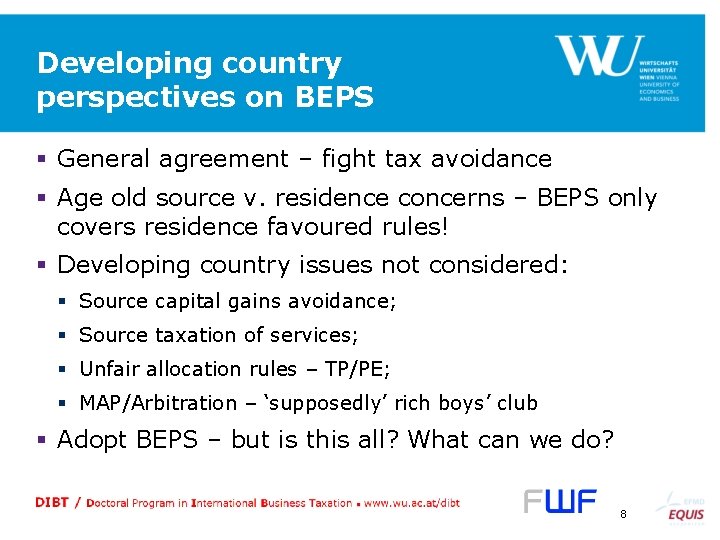
Developing country perspectives on BEPS § General agreement – fight tax avoidance § Age old source v. residence concerns – BEPS only covers residence favoured rules! § Developing country issues not considered: § Source capital gains avoidance; § Source taxation of services; § Unfair allocation rules – TP/PE; § MAP/Arbitration – ‘supposedly’ rich boys’ club § Adopt BEPS – but is this all? What can we do? 8
Structure § Introduction § BEPS: A broad run-through § Developing country perspectives on BEPS § India’s tax system – A Brief Overview § India and BEPS Implementation § The Multilateral Instrument & India § Concluding remarks – parallels for Serbia? 9
India’s tax system – A Brief Overview § India – common law system, schedular; § Residents - worldwide income, non-residents - India-sourced income; § Indian source – broad – NR to NR CG tax, service fee to NR tax, indirect transfer etc. ; § Broad tax treaty network – around 100 active tax treaties – follows UN Model, but ‘own’ model too (technical services article, service PE!); § Withholding tax for domestic/foreign income streams – better compliance! 10
India’s tax system – A Brief Overview § Common law – Court decisions – binding – Courts very active on tax! § Tax avoidance becoming an issue – Courts have dealt with issue multiple times: § Azadi Bachao – ‘Treaty shopping’ is legal, needed for FDI; § Vodafone – Economic substance if treaty benefits denied. § PEs and more PEs – Several decisions – what is PE, how to attribute? § ‘Arm’s length’ for TP (follows OECD) – many, MANY cases – progressive, yet aggressive! 11
Structure § Introduction § BEPS: A broad run-through § Developing country perspectives on BEPS § India’s tax system – A Brief Overview § India and BEPS Implementation § The Multilateral Instrument & India § Concluding remarks – parallels for Serbia? 12
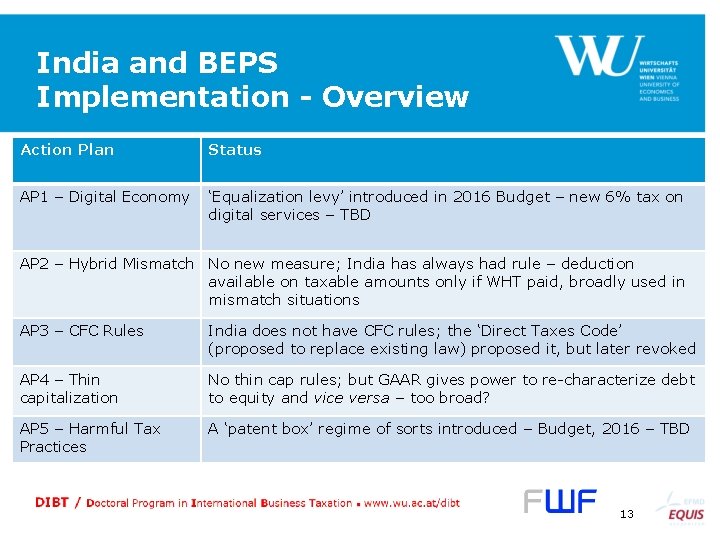
India and BEPS Implementation - Overview Action Plan Status AP 1 – Digital Economy ‘Equalization levy’ introduced in 2016 Budget – new 6% tax on digital services – TBD AP 2 – Hybrid Mismatch No new measure; India has always had rule – deduction available on taxable amounts only if WHT paid, broadly used in mismatch situations AP 3 – CFC Rules India does not have CFC rules; the ‘Direct Taxes Code’ (proposed to replace existing law) proposed it, but later revoked AP 4 – Thin capitalization No thin cap rules; but GAAR gives power to re-characterize debt to equity and vice versa – too broad? AP 5 – Harmful Tax Practices A ‘patent box’ regime of sorts introduced – Budget, 2016 – TBD 13
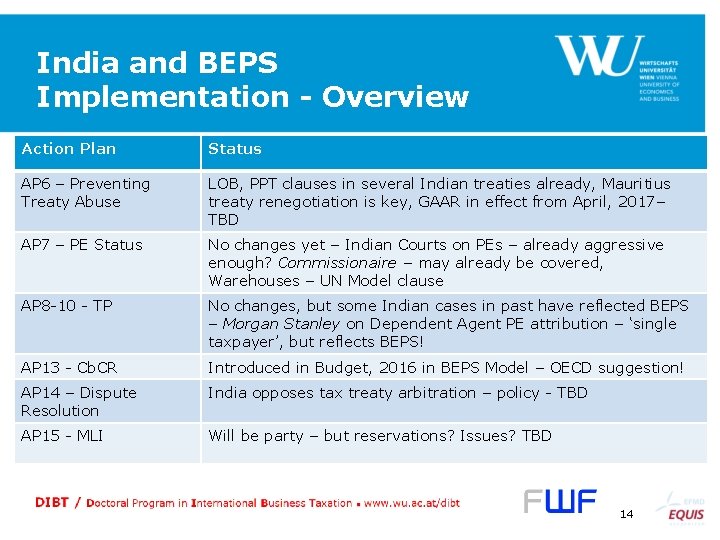
India and BEPS Implementation - Overview Action Plan Status AP 6 – Preventing Treaty Abuse LOB, PPT clauses in several Indian treaties already, Mauritius treaty renegotiation is key, GAAR in effect from April, 2017– TBD AP 7 – PE Status No changes yet – Indian Courts on PEs – already aggressive enough? Commissionaire – may already be covered, Warehouses – UN Model clause AP 8 -10 - TP No changes, but some Indian cases in past have reflected BEPS – Morgan Stanley on Dependent Agent PE attribution – ‘single taxpayer’, but reflects BEPS! AP 13 - Cb. CR Introduced in Budget, 2016 in BEPS Model – OECD suggestion! AP 14 – Dispute Resolution India opposes tax treaty arbitration – policy - TBD AP 15 - MLI Will be party – but reservations? Issues? TBD 14
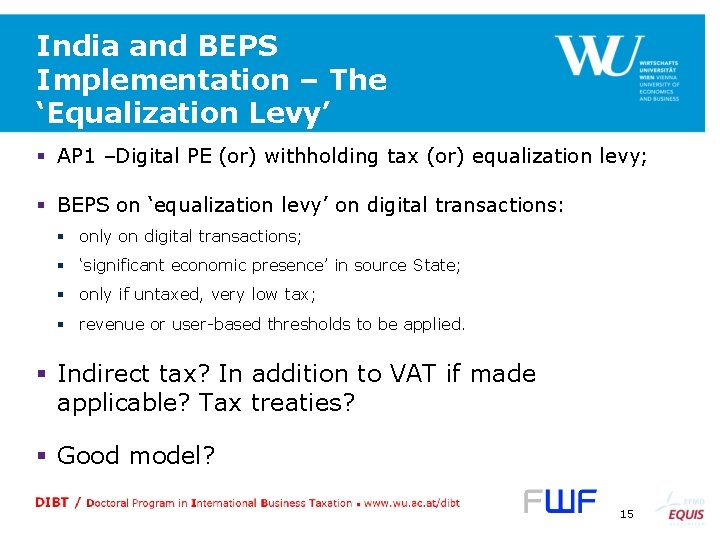
India and BEPS Implementation – The ‘Equalization Levy’ § AP 1 –Digital PE (or) withholding tax (or) equalization levy; § BEPS on ‘equalization levy’ on digital transactions: § only on digital transactions; § ‘significant economic presence’ in source State; § only if untaxed, very low tax; § revenue or user-based thresholds to be applied. § Indirect tax? In addition to VAT if made applicable? Tax treaties? § Good model? 15
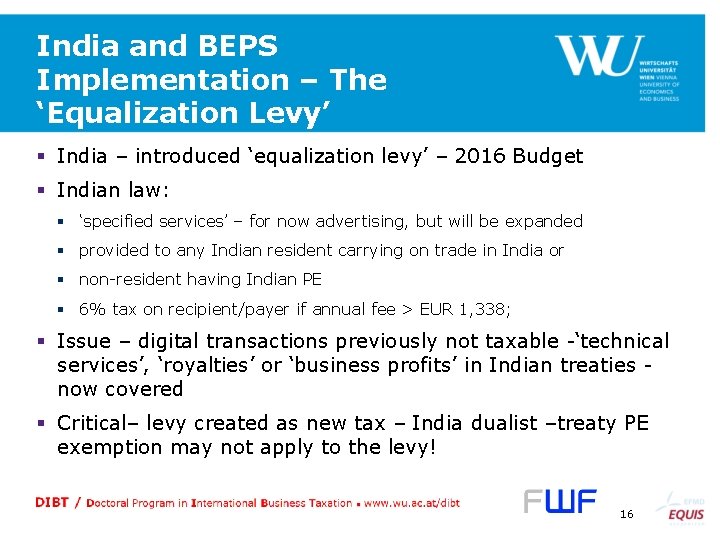
India and BEPS Implementation – The ‘Equalization Levy’ § India – introduced ‘equalization levy’ – 2016 Budget § Indian law: § ‘specified services’ – for now advertising, but will be expanded § provided to any Indian resident carrying on trade in India or § non-resident having Indian PE § 6% tax on recipient/payer if annual fee > EUR 1, 338; § Issue – digital transactions previously not taxable -‘technical services’, ‘royalties’ or ‘business profits’ in Indian treaties - now covered § Critical– levy created as new tax – India dualist –treaty PE exemption may not apply to the levy! 16
India and BEPS Implementation – Patent boxes § BEPS – AP 5 – ‘modified nexus approach’ – reduced rate regime for IP - benefits only to the extent of R&D expenditure incurred by taxpayer itself! § Indian ‘patent box’ regime introduced – 2016 Budget § company - 10% tax on income from worldwide commercialization of patents - developed and registered in India – otherwise 30% tax applicable § ‘modified nexus’ approach complied with - ‘developed’ linked to expenditure incurred on R&D § But why just patents? OECD allows more – could be expanded! 17
India and BEPS Implementation – Dispute Resolution § Over 1. 5 billion people – proactive Courts – uncertain tax code - Disputes! § >30, 000 tax cases in Courts, ~EUR 5000 million in revenues locked – overburdened Courts – alternatives? § Advance rulings for big cases – success in past, but overcrowding § APAs – very successful in the recent past – several huge US, UK related disputes resolved – few bilateral APAs too! § MAP in treaties – huge failure in India – BEPS measures make it better? Unlikely! § Indian policy – no arbitration! – sovereignty, developed country bias stated – mediation? – UN process! 18
India and BEPS Implementation – Abuse provisions § India – several anti-avoidance rules – source perspective: § GAAR – ‘main purpose’ – tax avoidance – broad re-characterization – applicable from 2017 – even covers ‘thin capitalization’; § Indirect transfer rules – capital gains avoidance – Vodafone case – yet, issues of treaty applicability, valuation; § Other SAARs – blacklisting countries with no Eo. I, prevent undervaluation for capital gains, broad application of TP! § No ‘savings clause’ usually – apply Indian rules more aggressively? – No taxpayer rights protection! § Treaties – ‘beneficial ownership’ usually; some ‘LOB clauses’ - US treaty– similar to BEPS Model; 19
India and BEPS Implementation – Abuse provisions § (In)famous India-Mauritius treaty – renegotiated recently to - LOB for CGT exemption – only till 2018 – after, full source tax on capital gains on shares starts; § UK, Luxembourg, UAE treaties contain a clause called ‘LOB’ § In fact – PPT clauses – ‘main purpose or one of the main purposes’ – even BEFORE BEPS! § Indian Courts – pro-taxpayer till date – treaty benefits protected if no LOB rule in treaties – GAAR? Yet to see! § Multilateral instrument to renegotiate all treaties – apply BEPS LOB/PPT to all treaties? Issues? 20
Structure § Introduction § BEPS: A broad run-through § Developing country perspectives on BEPS § India’s tax system – A Brief Overview § India and BEPS Implementation § The Multilateral Instrument & India § Concluding remarks – parallels for Serbia? 21
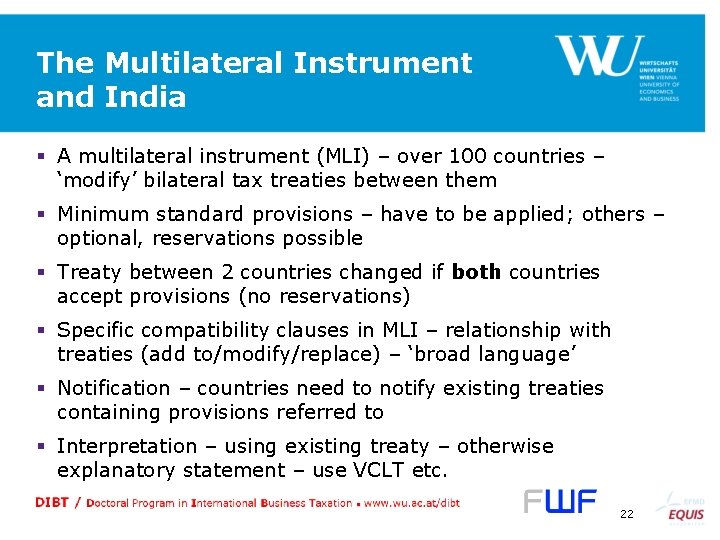
The Multilateral Instrument and India § A multilateral instrument (MLI) – over 100 countries – ‘modify’ bilateral tax treaties between them § Minimum standard provisions – have to be applied; others – optional, reservations possible § Treaty between 2 countries changed if both countries accept provisions (no reservations) § Specific compatibility clauses in MLI – relationship with treaties (add to/modify/replace) – ‘broad language’ § Notification – countries need to notify existing treaties containing provisions referred to § Interpretation – using existing treaty – otherwise explanatory statement – use VCLT etc. 22
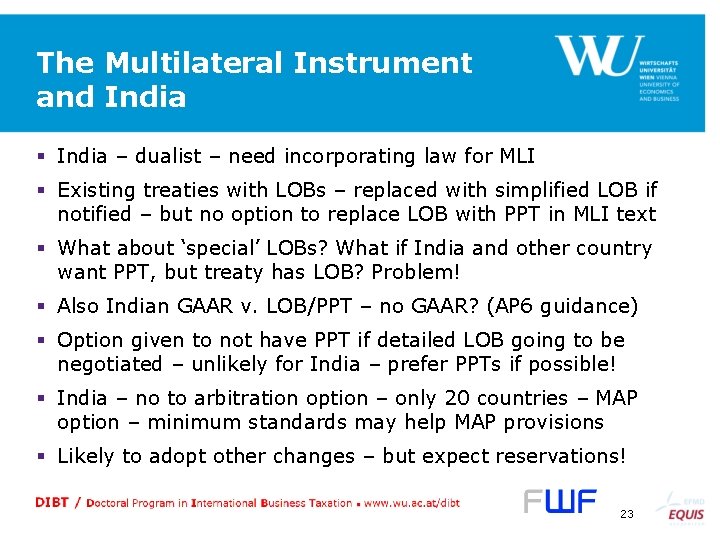
The Multilateral Instrument and India § India – dualist – need incorporating law for MLI § Existing treaties with LOBs – replaced with simplified LOB if notified – but no option to replace LOB with PPT in MLI text § What about ‘special’ LOBs? What if India and other country want PPT, but treaty has LOB? Problem! § Also Indian GAAR v. LOB/PPT – no GAAR? (AP 6 guidance) § Option given to not have PPT if detailed LOB going to be negotiated – unlikely for India – prefer PPTs if possible! § India – no to arbitration option – only 20 countries – MAP option – minimum standards may help MAP provisions § Likely to adopt other changes – but expect reservations! 23
Structure § Introduction § BEPS: A broad run-through § Developing country perspectives on BEPS § India’s tax system – A Brief Overview § India and BEPS Implementation § The Multilateral Instrument & India § Concluding remarks – parallels for Serbia? 24
Concluding remarks – parallels for Serbia? § BEPS – all well and good – more focus on ‘double nontaxation’ – at the cost of double taxation? § BEPS, EU ATAP – double taxation through CFC, exit tax rules – why does noone care? § Fair balance – tax avoidance v. taxpayer rights; Subjective rules like PPT - aggressive tax authorities – ensure not too potent a weapon § MLI – such a great opportunity to make tax rules uniform – still no consensus, so many reservations! § Developing countries – is BEPS biggest concern? Unfair allocation rules! PE/TP rules, low WHT rates decided by big States – need for change! 25
Concluding remarks – parallels for Serbia? § IMPORTANT NOW - How is this information helpful for you? § Non-aligned movement – India-Serbia relations! – mutual understanding – tax treaty since 2006 § Serbia – some guidance based on shared concerns: § More source taxation – domestically and in treaties – use UN Model, Indian treaties for guidance; § Work with UN Committee – guidance tailored for net capital importing economies – TP, dispute resolution etc. ; § Develop appropriate TP policy for companies/PEs – people-specific functions, location savings – more attribution to source State; § Fair approach to taxation – aggressive tax authorities – not always more compliance – Slippery slope framework (Kirchler et al. ) – more trust! § Stop use of residence favoured rules – eg. CFC rules – look at modern structures – a diverted profits tax? UK, Australia, France! 26

THANK YOU FOR YOUR ATTENTION! Any Questions? 27
Contact Details Sriram Govind, LL. M. Research and Teaching Associate (Doctorate in International Business Taxation) Institute for Austrian and International Tax Law WU Wirtschaftsuniversität Wien Vienna University of Economics and Business Welthandelsplatz 1, Building D 3, 1020 Vienna, Austria Tel. : +43 1 313 36 -5657 E-Mail: sriram. govind@wu. ac. at www. wu. ac. at/taxlaw (Institute) www. international-tax-law. at (LL. M. International Tax Law) www. wu. ac. at/dibt (Doctoral Program in International Business Taxation) Linked. In: https: //at. linkedin. com/in/sriramgovind 28
- Slides: 28