
The Immune System The First Lines of Defense
- Slides: 14
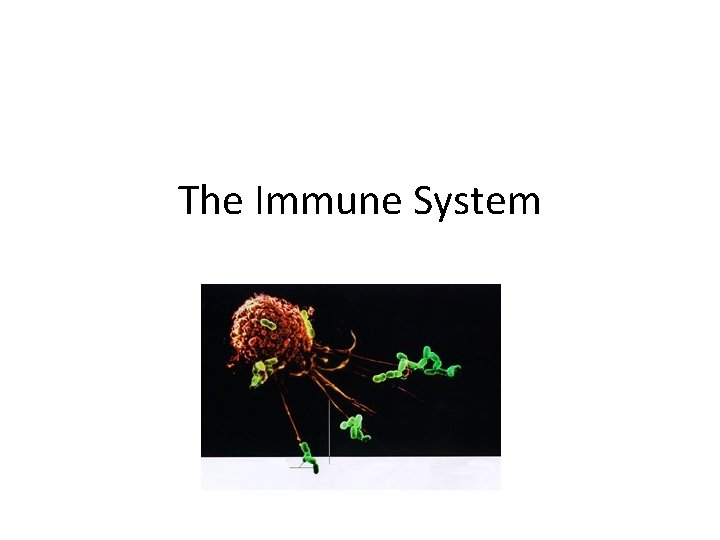
The Immune System
• The First Lines of Defense: – Skin – Antimicrobial proteins – Cilia – Gastric Juice – Symbiotic bacteria – your ‘microbiome’
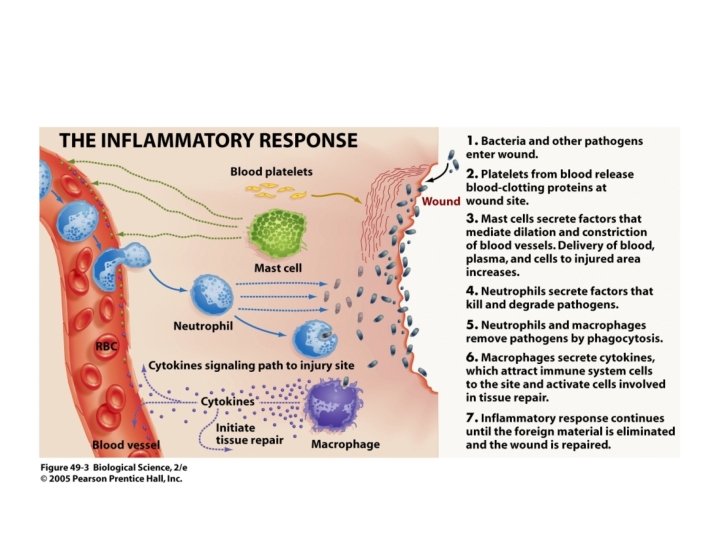
This is directly from the Cliffs book. . . so make sure you read that • Second Line of Defense – Phagocytes – Complement – promote cell lysis – Interferons - ‘interfere’ with viral reproduction – Inflammatory response • • Histamine Vasodilation Phagocytes Complement
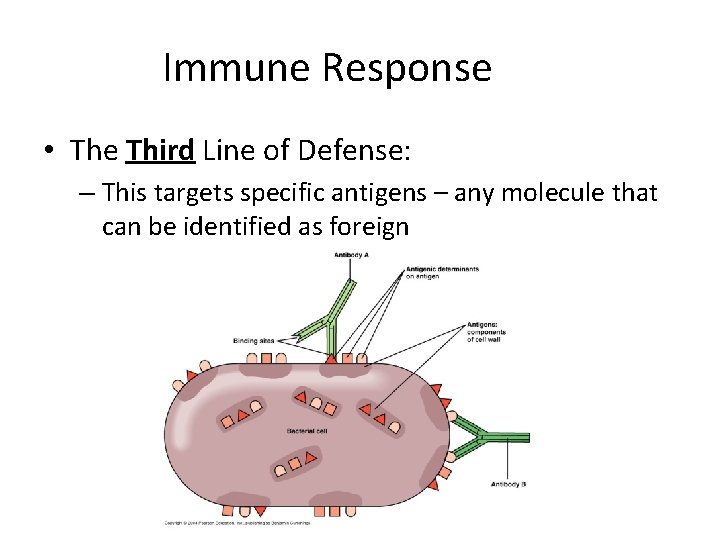
Immune Response • The Third Line of Defense: – This targets specific antigens – any molecule that can be identified as foreign
Major Histocompatibility Complex • The MHC allows the immune system to differentiate between self and non-self cells. - Made up of glycoproteins - Found on the membranes of all body cells - 20 genes code for these; unlikely that two people have the same set
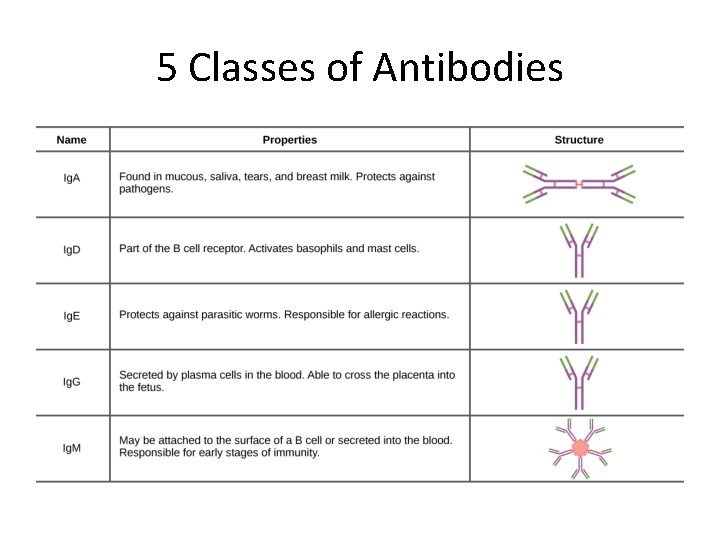
Lymphocytes! • Primary Agent of the Immune Response – B Cells – originate and mature in the Bone Marrow – Respond to antigens through antigen receptors called antibodies • Y shaped proteins, 5 different classes
5 Classes of Antibodies
T cells • Lymphocytes that originate in the bone marrow but mature in the thymus gland – Have antigen receptors, but they are not antibodies – You should read up on the additional information. . .
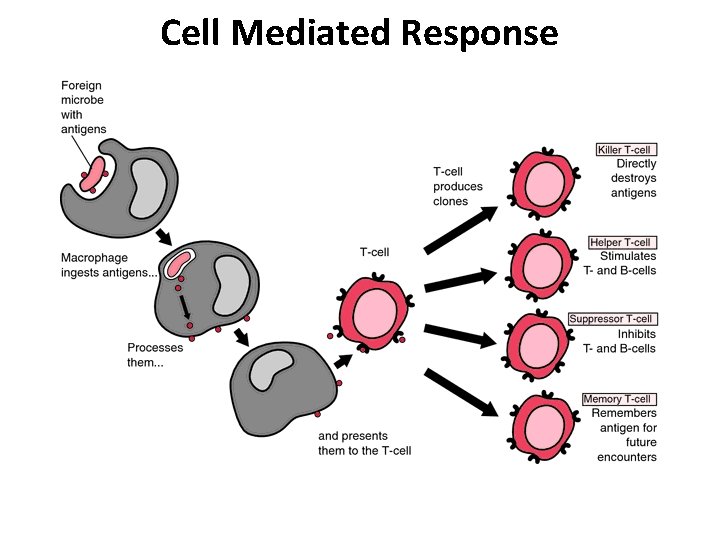
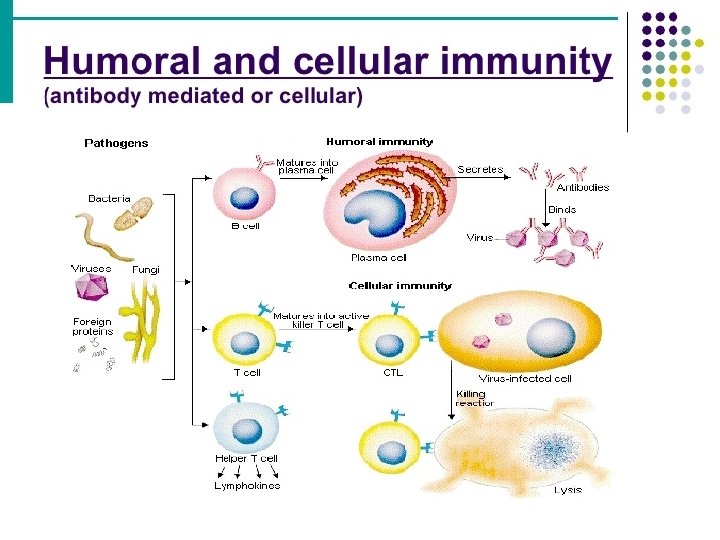
Responses of the Immune System 1. CELL MEDICATED 2. HUMORAL • Cell-mediated response – Uses T cells to respond to any non self cell, including cells invaded by pathogens.
Cell Mediated Response
The Humeral Response • Involves most cells and responds to antigens or pathogens - B cells produce plasma cells - B cells produce memory cells - Macrophage and helper T cells stimulate the production of additional B cells
Why aren’t we dead? • 1. Antibodies • 2. Vaccines • 3. Passive Immunity – placenta, breast milk