
The Immune System Protection Against Disease Brainpop Immunity
The Immune System: Protection Against Disease Brainpop Immunity
What is Immunity? n A series of defenses that involve non-specific and specific attacks on disease causing agents (pathogen) n Pathogen – any disease causing microorganism / microbe (bacteria or virus) *Pathogens are Pathetic!!!! n Antigens – proteins on the surface of pathogens which trigger an immune response

Non-specific Defenses n Not directed at any specific pathogen, guard against all disease causing substances.
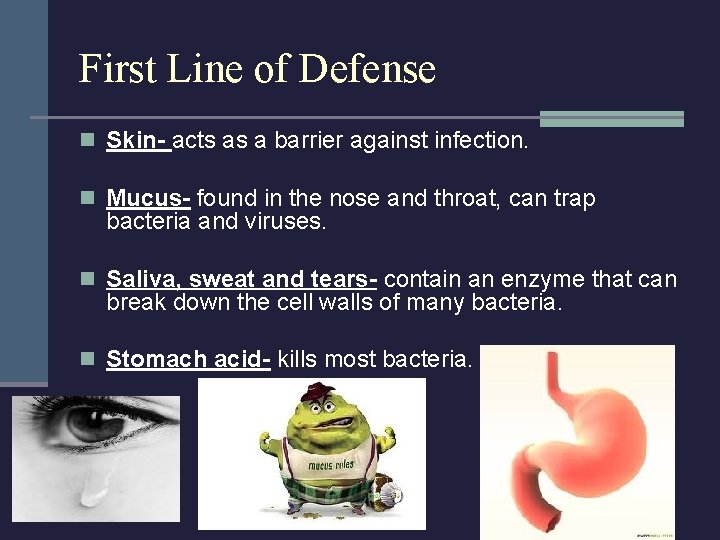
First Line of Defense n Skin- acts as a barrier against infection. n Mucus- found in the nose and throat, can trap bacteria and viruses. n Saliva, sweat and tears- contain an enzyme that can break down the cell walls of many bacteria. n Stomach acid- kills most bacteria.
Second Line of Defense n Inflammatory Response- reaction to tissue damage caused by injury or infection. n Blood vessels expand leak white blood cells into the infected area. n Many of these white blood cells are phagocytes, they engulf and destroy bacteria by the process of phagocytosis.
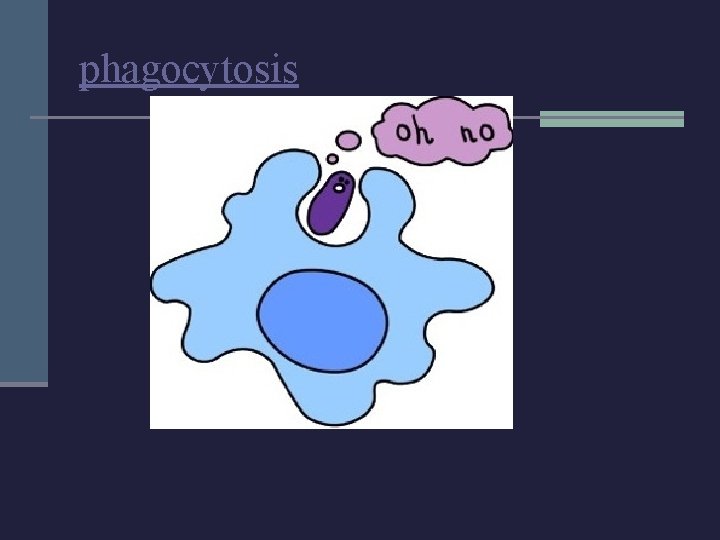
phagocytosis
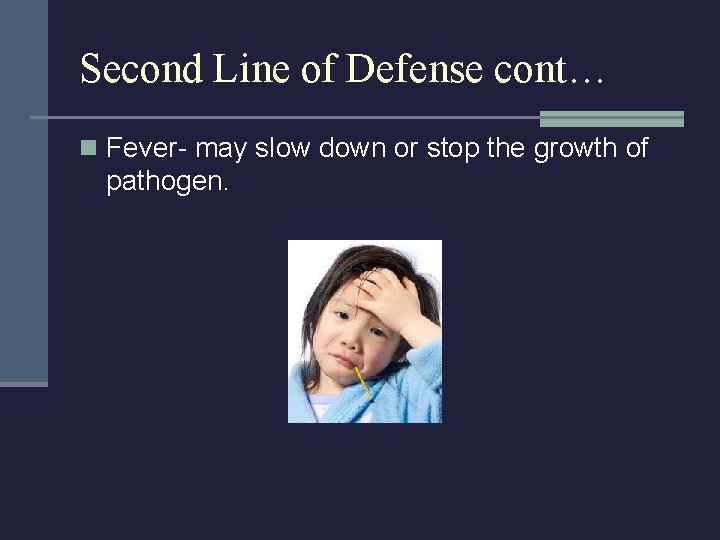
Second Line of Defense cont… n Fever- may slow down or stop the growth of pathogen.
Specific Defenses n White blood cells There are several different types of white blood cells: n 1. B-cells n 2. Killer T-cells n 3. Helper T-cells n
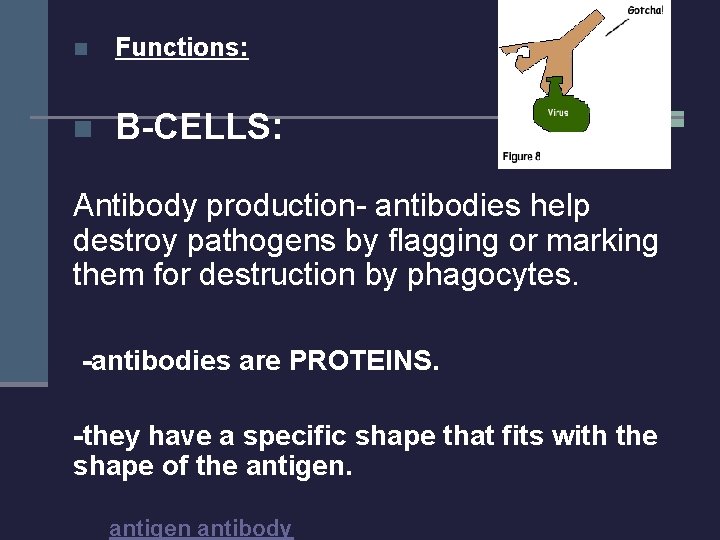
n Functions: n B-CELLS: Antibody production- antibodies help destroy pathogens by flagging or marking them for destruction by phagocytes. -antibodies are PROTEINS. -they have a specific shape that fits with the shape of the antigen antibody

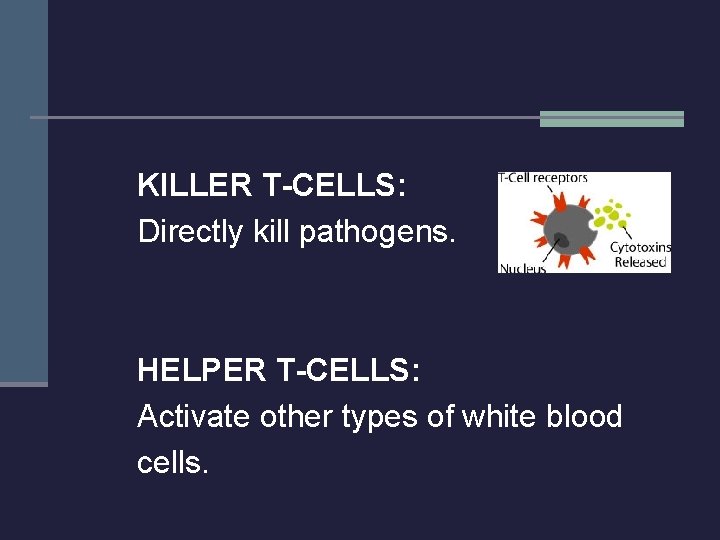
KILLER T-CELLS: Directly kill pathogens. HELPER T-CELLS: Activate other types of white blood cells.
Different ways in which immunity can be acquired: n Active Immunity: the antigen-antibody occurs in the body in response to either contact with the disease OR by receiving a vaccination. This type of immunity is lifelong. n Vaccine- injection with a dead or weakened pathogen. brainpop vaccine
n Passive Immunity: a temporary form of immunity can be produced by the introduction of antibodies into the body. This immunity is temporary.
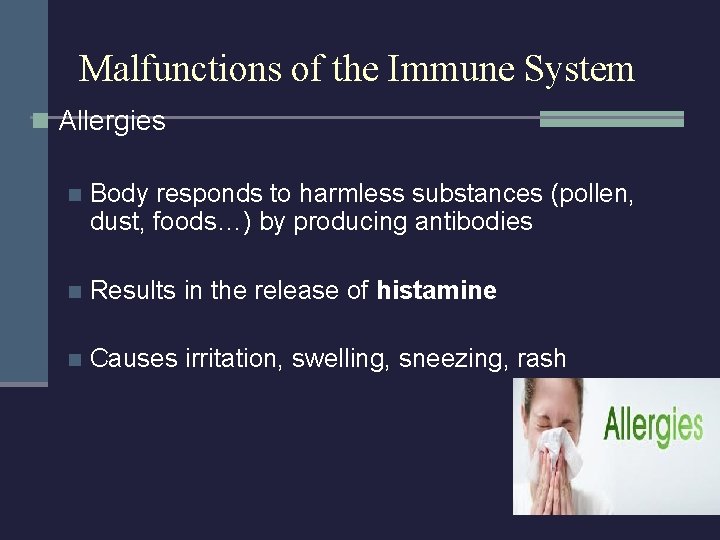
Malfunctions of the Immune System n Allergies n Body responds to harmless substances (pollen, dust, foods…) by producing antibodies n Results in the release of histamine n Causes irritation, swelling, sneezing, rash
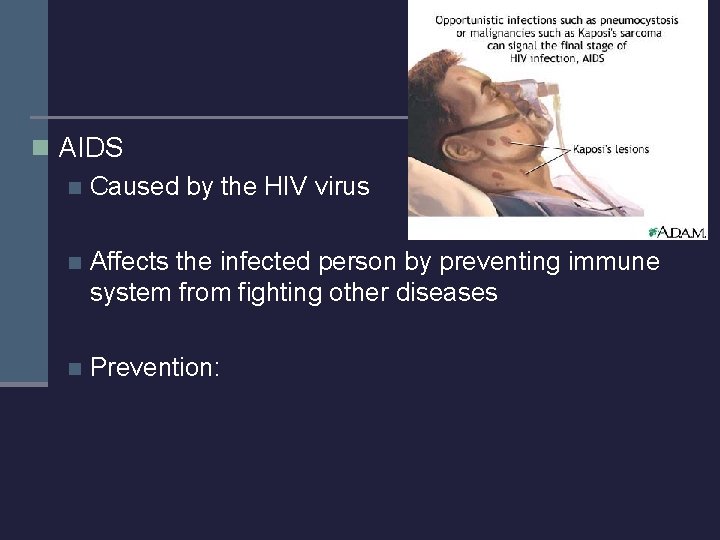
n AIDS n Caused by the HIV virus n Affects the infected person by preventing immune system from fighting other diseases n Prevention:
n Rejection of organ transplants n Occurs when the recipient’s body produces antibodies in response to the donor’s organ n May be treated with immunosuppressant drugs n Who would be the best person to donate an organ?
- Slides: 17