
THE IMMUNE SYSTEM Nonspecific vs specific defenses Nonspecific
- Slides: 68
THE IMMUNE SYSTEM
Nonspecific vs. specific defenses • Nonspecific defenses do not distinguish one infectious microbe from another • Specific defenses recognize and defend against invading microbes and cancer cells
Nonspecific defenses • Skin is a barrier that most bacteria and viruses can’t penetrate – Acids secreted by skin prohibit growth of many microbes – Sweat, saliva, and tears contain enzymes that attack bacterial cell walls • Mucus produced in digestive and respiratory systems also protects against microbes
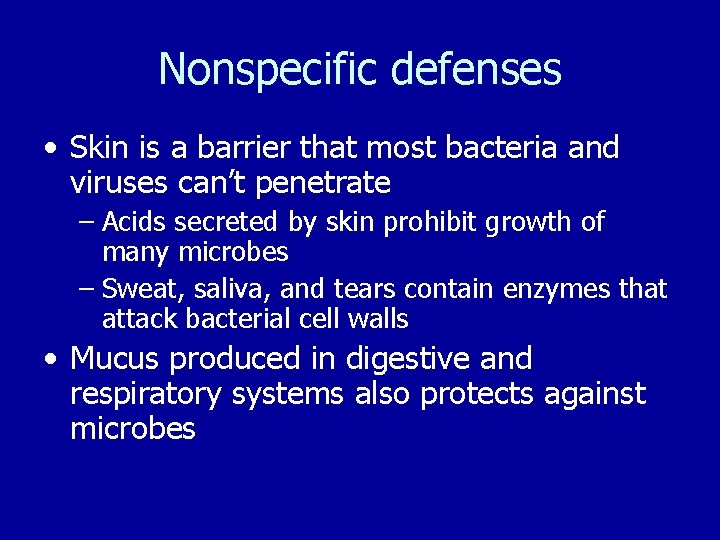
Nonspecific defenses • Microbes that penetrate skin, digestive, or respiratory systems face neutrophils and monocytes – macrophages that “eat” bacteria and viruses • Interferons and complement proteins attack microbes either directly or indirectly by impeding their reproduction
Nonspecific defenses • Interferons are produced by infected cells – Diffuse to healthy cells where they cause the cell to inhibit viral production • Complement proteins are activated by microbes or immune system – Coat infected cells –easier to eat – Can amplify inflammatory response
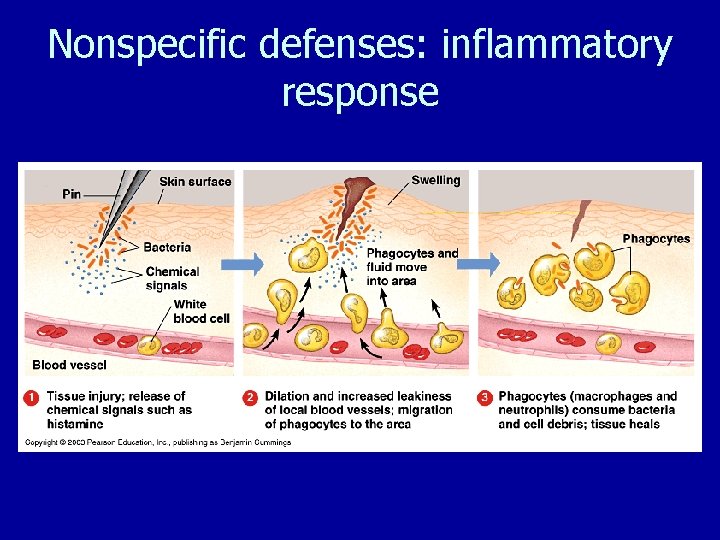
Nonspecific defenses: inflammatory response
Nonspecific defenses: inflammatory response • Redness, heat, and swelling caused by – Increase in blood flow, fluid, and cells • Inflammatory response disinfects and cleans injured tissues – Pus = dead white cells and fluid • Systemic response is widespread – Toxins or microorganisms released in bloodstream • Circulates through body
Nonspecific defenses: inflammatory response • Systemic response cont’d. – Inflammatory weapons: increase white blood cells, fever • Low-grade fever can stimulate phagocytosis and inhibit growth of many microorganisms
Lymphatic system
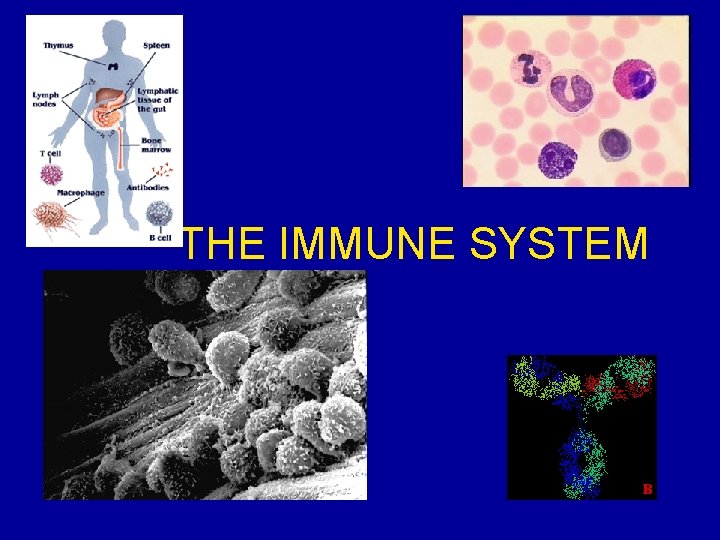
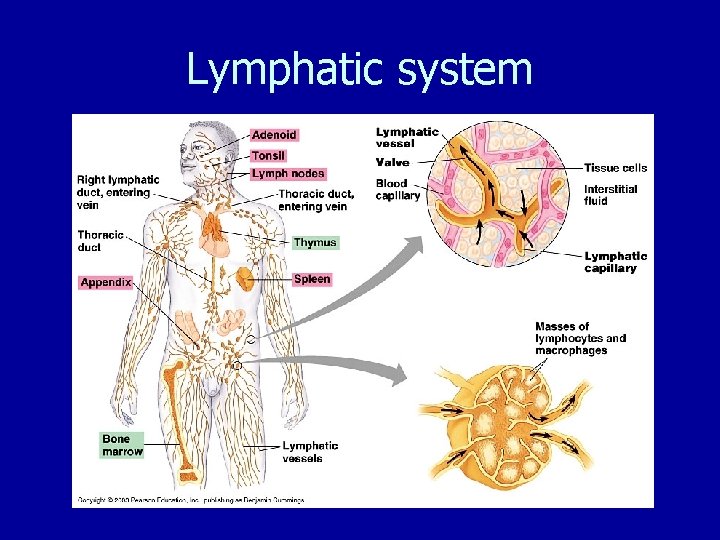
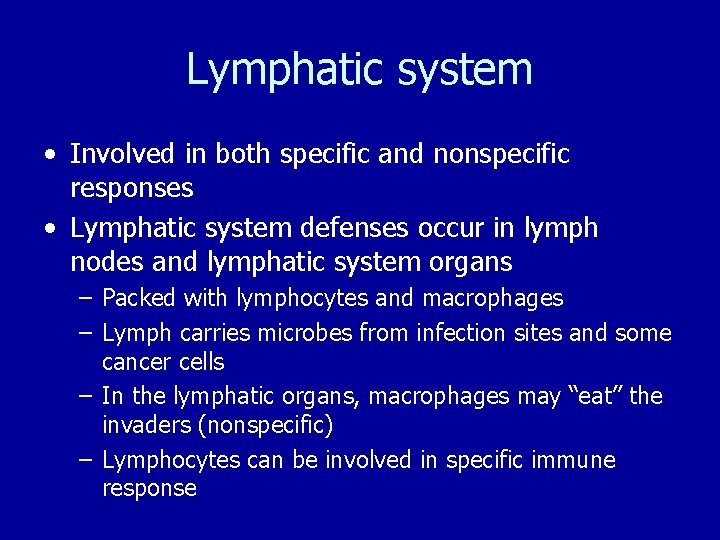
Lymphatic system • Involved in both specific and nonspecific responses • Lymphatic system defenses occur in lymph nodes and lymphatic system organs – Packed with lymphocytes and macrophages – Lymph carries microbes from infection sites and some cancer cells – In the lymphatic organs, macrophages may “eat” the invaders (nonspecific) – Lymphocytes can be involved in specific immune response
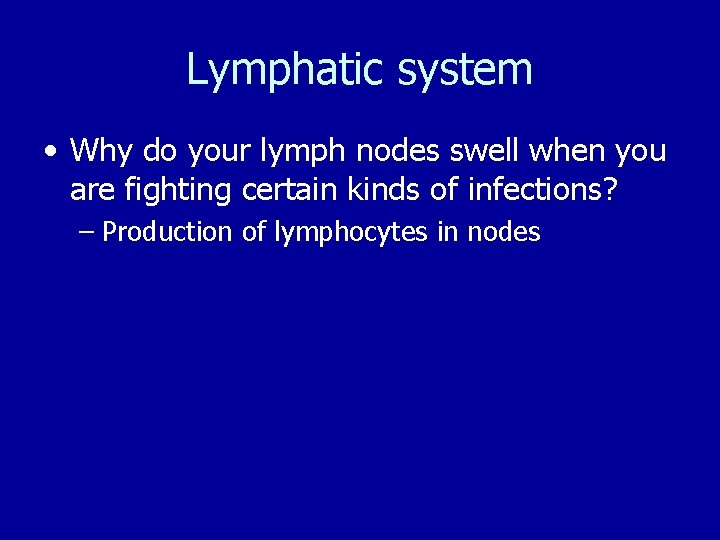
Lymphatic system • Why do your lymph nodes swell when you are fighting certain kinds of infections? – Production of lymphocytes in nodes
IN PAIRS in your notebook • Describe the types of nonspecific responses your body has at its disposal if it were to be: – Invaded by a microbe – Cut
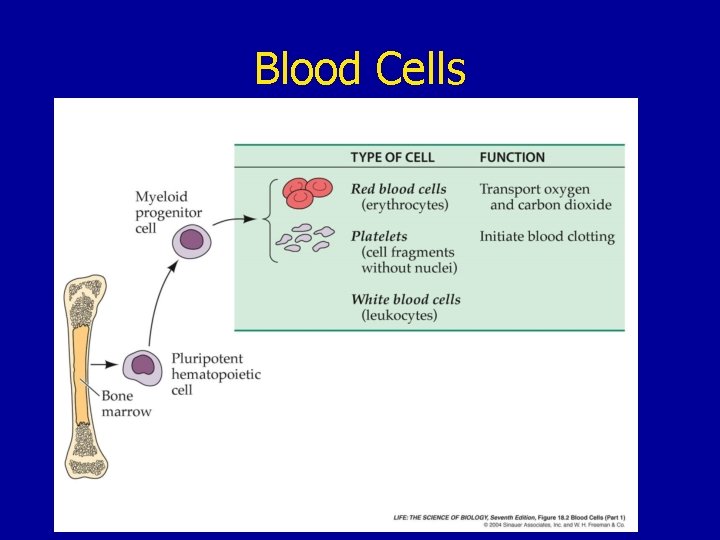
Blood Cells
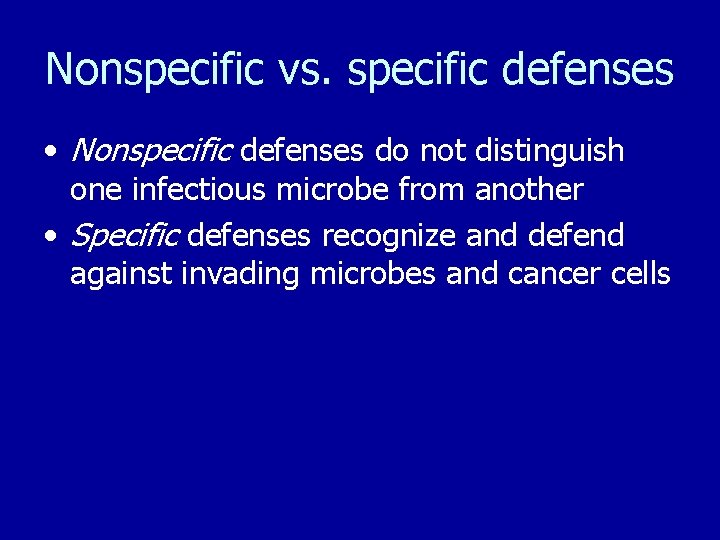
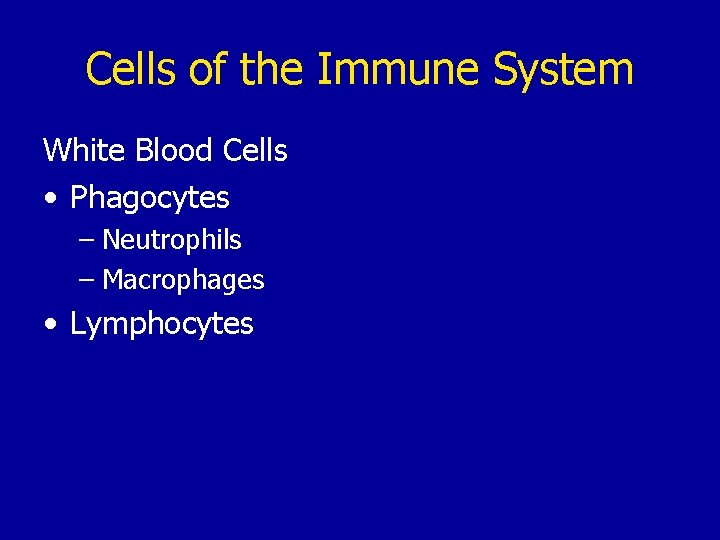
Cells of the Immune System White Blood Cells • Phagocytes – Neutrophils – Macrophages • Lymphocytes
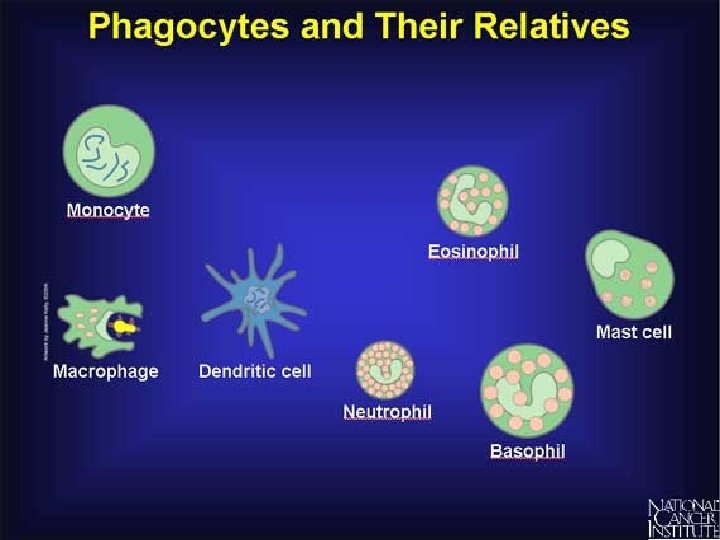
Phagocytes • Produced throughout life by the bone marrow. • Scavengers – remove dead cells and microorganisms.
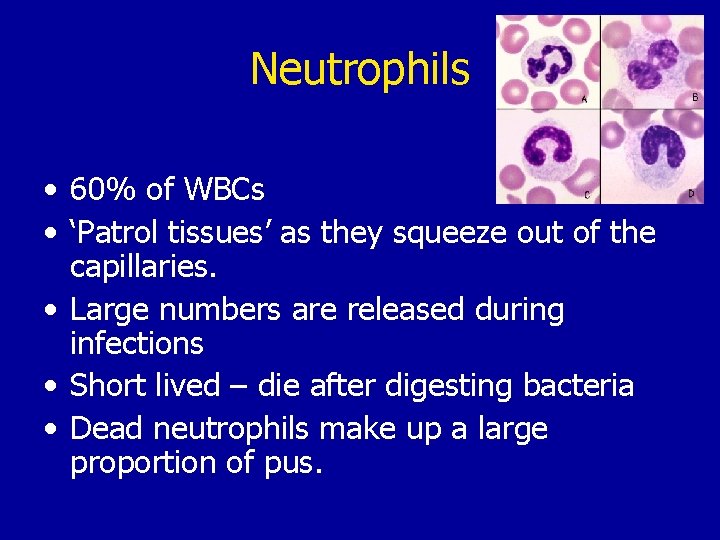
Neutrophils • 60% of WBCs • ‘Patrol tissues’ as they squeeze out of the capillaries. • Large numbers are released during infections • Short lived – die after digesting bacteria • Dead neutrophils make up a large proportion of pus.
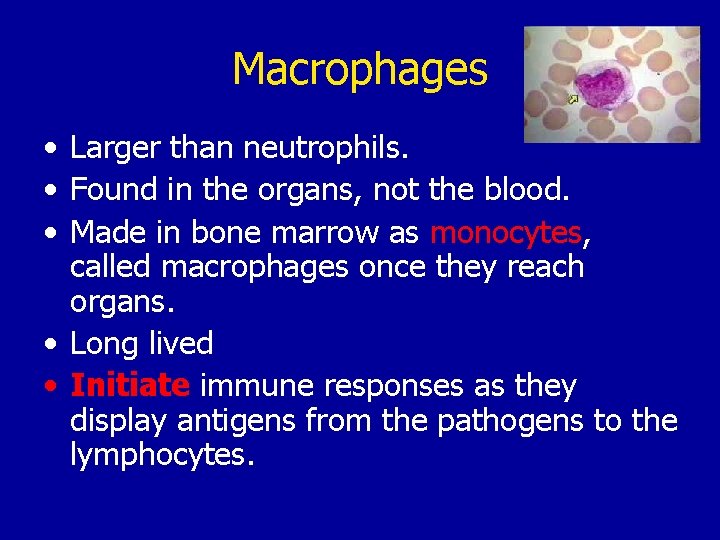
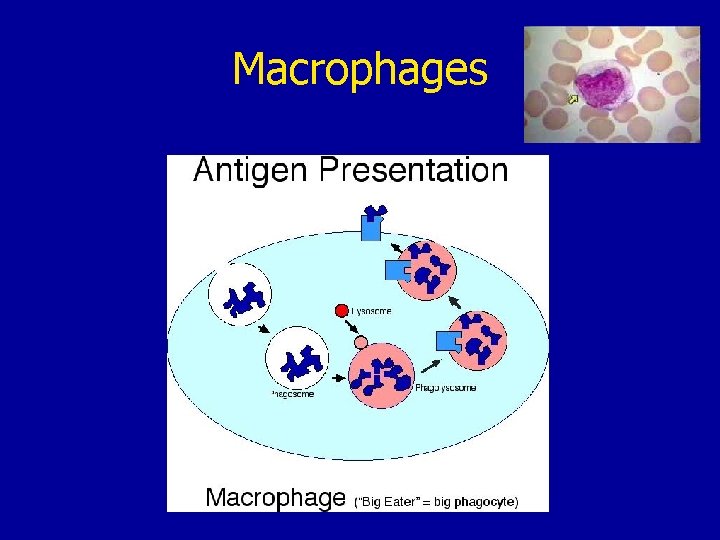
Macrophages • Larger than neutrophils. • Found in the organs, not the blood. • Made in bone marrow as monocytes, called macrophages once they reach organs. • Long lived • Initiate immune responses as they display antigens from the pathogens to the lymphocytes.
Macrophages
Phagocytosis
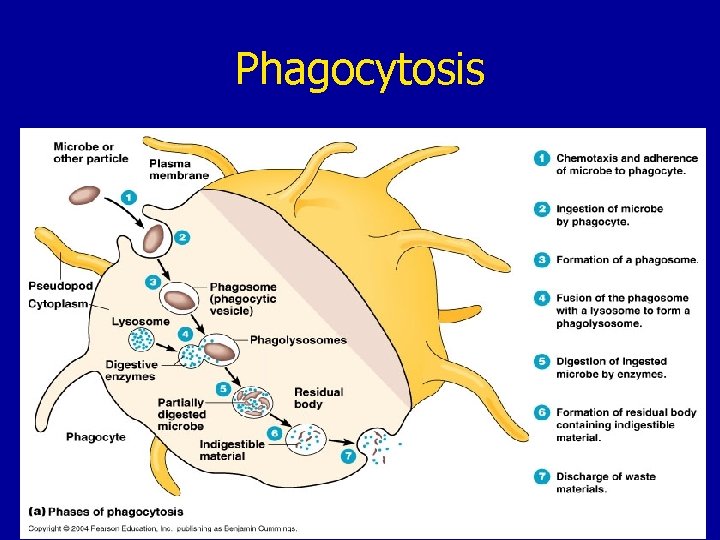
Phagocytosis • If cells are under attack they release histamine. • Histamine plus chemicals from pathogens mean neutrophils are attracted to the site of attack. • Pathogens are attached to antibodies and neutrophils have antibody receptors. • Enodcytosis of neutrophil membrane phagocytic vacuole. • Lysosomes attach to phagocytic vacuole pathogen digested by proteases
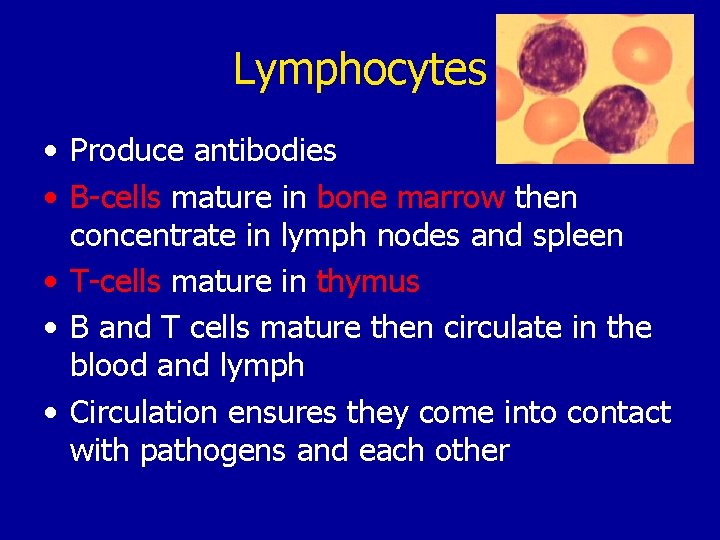
Lymphocytes • Produce antibodies • B-cells mature in bone marrow then concentrate in lymph nodes and spleen • T-cells mature in thymus • B and T cells mature then circulate in the blood and lymph • Circulation ensures they come into contact with pathogens and each other
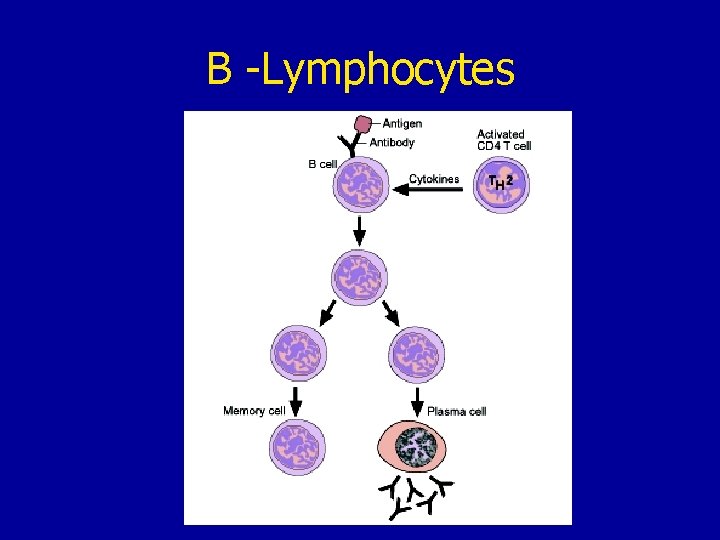
B -Lymphocytes • There are c. 10 million different Blymphocytes, each of which make a different antibody. • The huge variety is caused by genes coding for abs changing slightly during development. • There a small group of clones of each type of B-lymphocyte
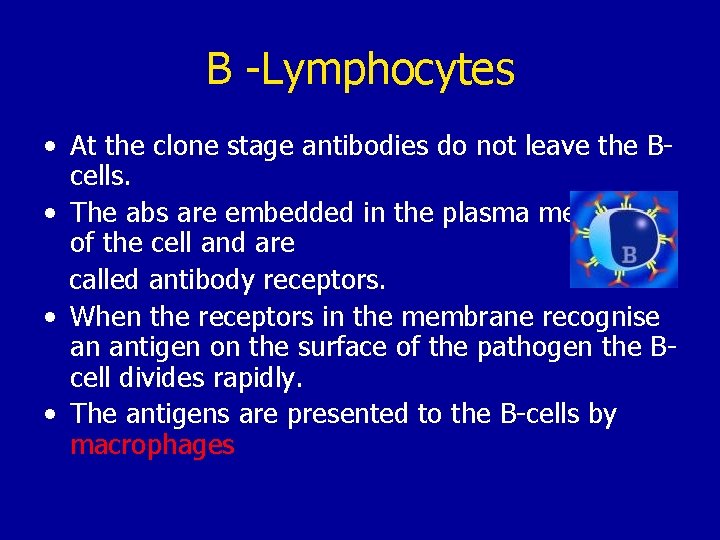
B -Lymphocytes • At the clone stage antibodies do not leave the Bcells. • The abs are embedded in the plasma membrane of the cell and are called antibody receptors. • When the receptors in the membrane recognise an antigen on the surface of the pathogen the Bcell divides rapidly. • The antigens are presented to the B-cells by macrophages
B -Lymphocytes
B -Lymphocytes • Some activated B cells PLASMA CELLS these produce lots of antibodies, < 1000/sec • The antibodies travel to the blood, lymph, lining of gut and lungs. • The number of plasma cells goes down after a few weeks • Antibodies stay in the blood longer but eventually their numbers go down too.
B -Lymphocytes • Some activated B cells MEMORY CELLS. • Memory cells divide rapidly as soon as the antigen is reintroduced. • There are many more memory cells than there were clone cells. • When the pathogen/infection infects again it is destroyed before any symptoms show.
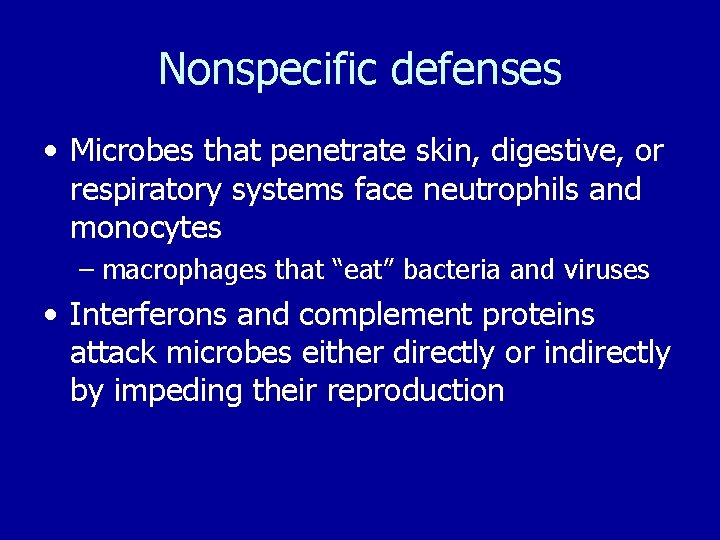
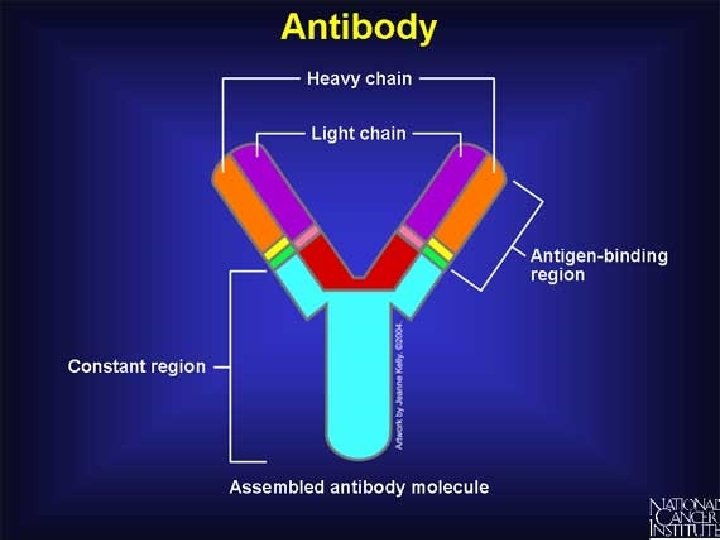
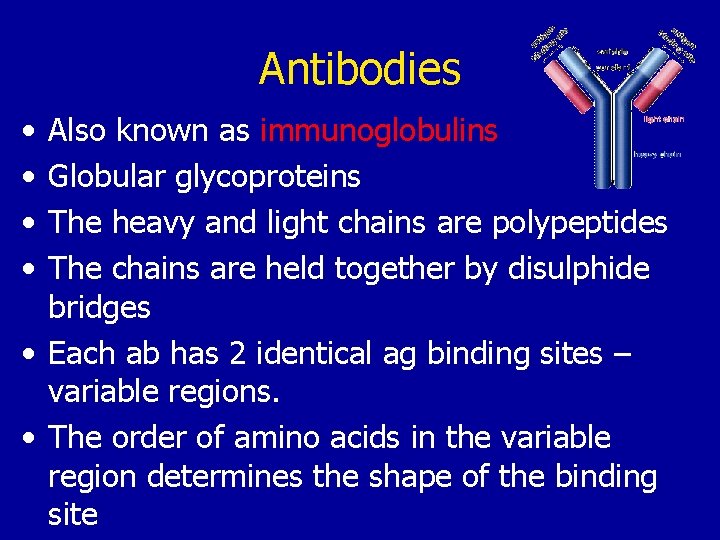
Antibodies • • Also known as immunoglobulins Globular glycoproteins The heavy and light chains are polypeptides The chains are held together by disulphide bridges • Each ab has 2 identical ag binding sites – variable regions. • The order of amino acids in the variable region determines the shape of the binding site
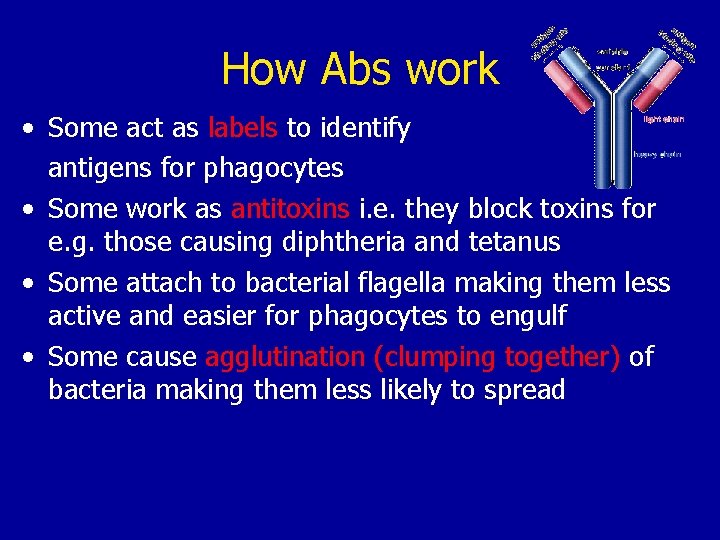
How Abs work • Some act as labels to identify antigens for phagocytes • Some work as antitoxins i. e. they block toxins for e. g. those causing diphtheria and tetanus • Some attach to bacterial flagella making them less active and easier for phagocytes to engulf • Some cause agglutination (clumping together) of bacteria making them less likely to spread
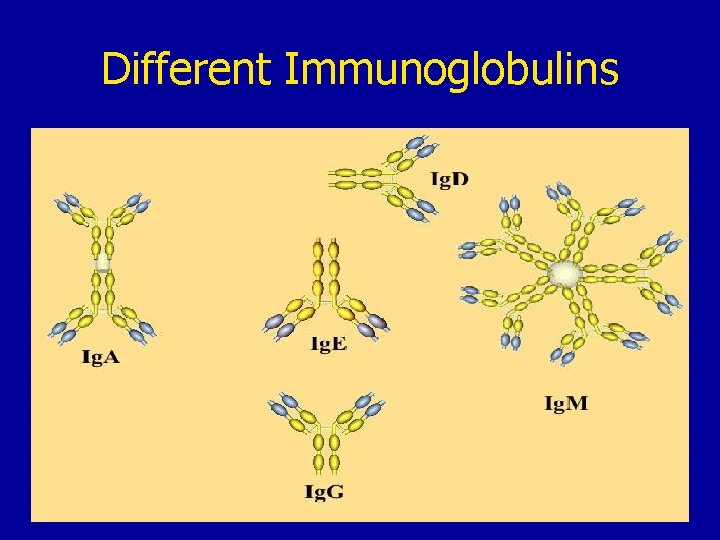
Different Immunoglobulins
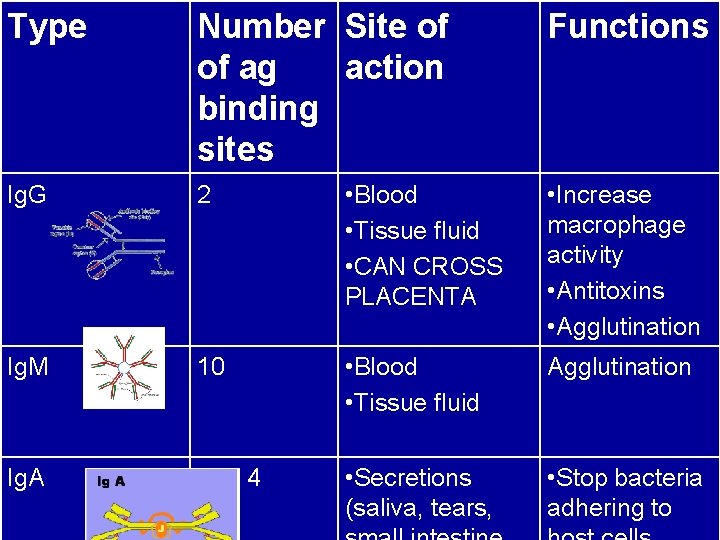
Type Number Site of of ag action binding sites Functions Ig. G 2 • Blood • Tissue fluid • CAN CROSS PLACENTA • Increase macrophage activity • Antitoxins • Agglutination Ig. M 10 • Blood • Tissue fluid Agglutination Ig. A 2 or 4 • Secretions (saliva, tears, • Stop bacteria adhering to
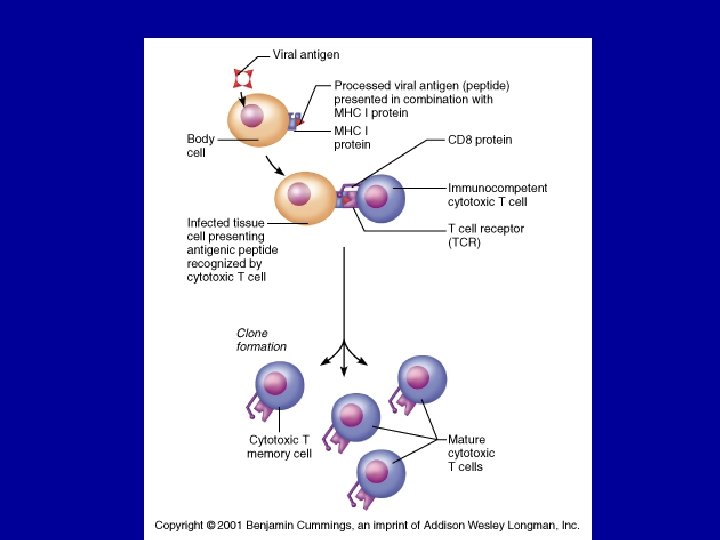
T-Lymphocytes • Mature T-cells have T cell receptors which have a very similar structure to antibodies and are specific to 1 antigen. • They are activated when the receptor comes into contact with the Ag with another host cell (e. g. on a macrophage membrane or an invaded body cell)
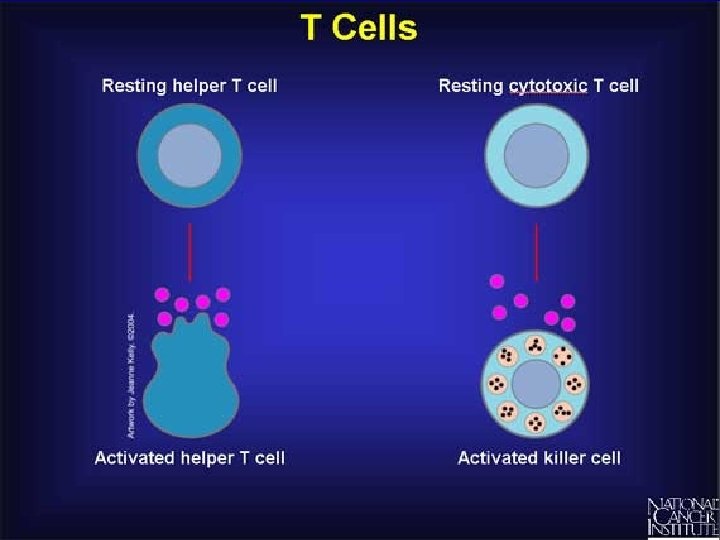
T-Lymphocytes • After activation the cell divides to form: • T-helper cells – secrete CYTOKINES help B cells divide stimulate macrophages • Cytotoxic T cells (killer T cells) Kill body cells displaying antigen • Memory T cells remain in body
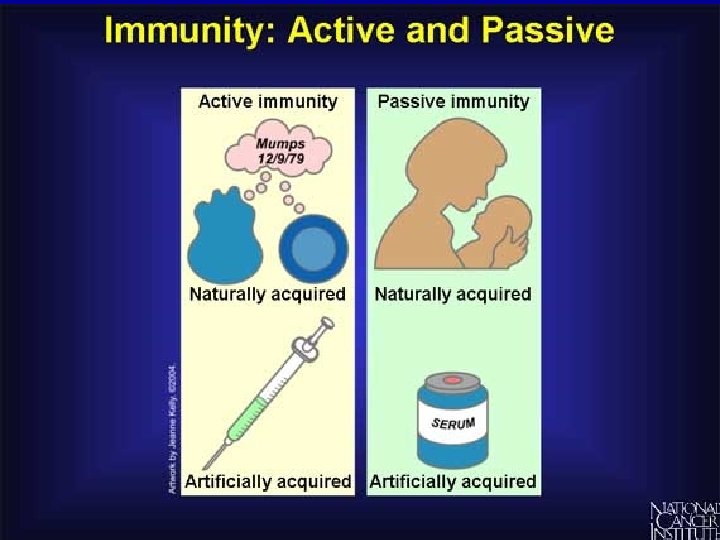
Active and Passive Immunity Active immunity Lymphocytes are activated by antigens on the surface of pathogens Natural active immunity - acquired due to infection Artificial active immunity – vaccination Takes time for enough B and T cells to be produced to mount an effective response.
Active and Passive Immunity Passive immunity B and T cells are not activated and plasma cells have not produced antibodies. The antigen doesn’t have to be encountered for the body to make the antibodies. Antibodies appear immediately in blood but protection is only temporary.
Active and Passive Immunity Artificial passive immunity Used when a very rapid immune response is needed e. g. after infection with tetanus. Human antibodies are injected. In the case of tetanus these are antitoxin antibodies. Antibodies come from blood donors who have recently had the tetanus vaccination. Only provides short term protection as abs destroyed by phagocytes in spleen and liver.
Active and Passive Immunity Natural passive immunity A mother’s antibodies pass across the placenta to the foetus and remain for several months. Colostrum (the first breast milk) contains lots of Ig. A which remain on surface of the baby’s gut wall and pass into blood
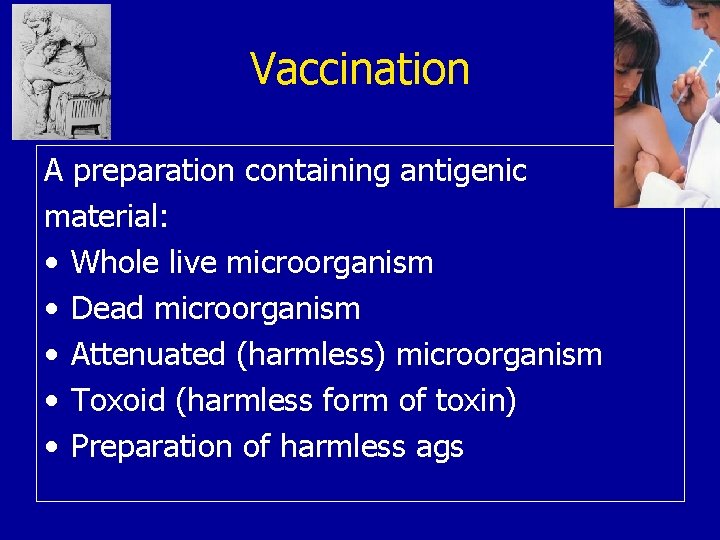
Vaccination A preparation containing antigenic material: • Whole live microorganism • Dead microorganism • Attenuated (harmless) microorganism • Toxoid (harmless form of toxin) • Preparation of harmless ags
Vaccination • Injection into vein or muscle • Oral
Vaccination Why aren’t they always effective? • Natural infections persist within the body for a long time so the immune system has time to develop an effective response, vaccinations from dead m-os do not do this. • Less effective vaccines need booster injections to stimulate secondary responses
Vaccination Why aren’t they always effective? • Some people don’t respond well/at all to vaccinations • Defective immune systems • Malnutrition particularly protein
Vaccination Why aren’t they always effective? • Antigenic variation caused by mutation • Antigenic drift – small changes (still recognised by memory cells) • Antigenic shift – large changes (no longer recognised)
Vaccination Why aren’t they always effective? • No vaccines against protoctists (malaria and sleeping sickness) • Many stages to Plamodium life cycle with many antigens so vaccinations would have to be effective against all stages (or be effective just against infective stage but given in very small time period).
Vaccination Why aren’t they always effective? • Sleeping sickness – Trypanosoma has a thousand different ags and changes them every 4 -5 days
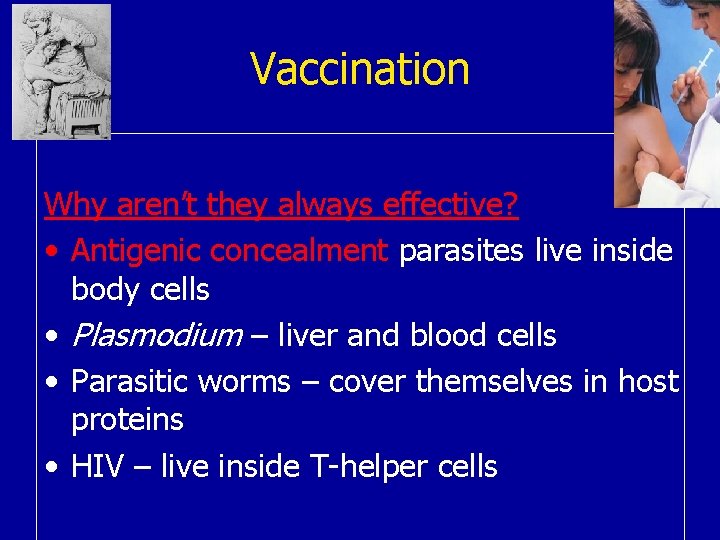
Vaccination Why aren’t they always effective? • Antigenic concealment parasites live inside body cells • Plasmodium – liver and blood cells • Parasitic worms – cover themselves in host proteins • HIV – live inside T-helper cells
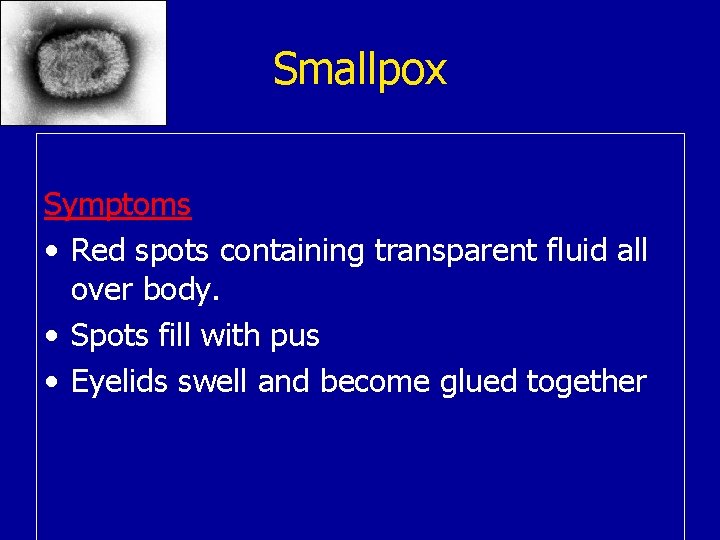
Smallpox Symptoms • Red spots containing transparent fluid all over body. • Spots fill with pus • Eyelids swell and become glued together
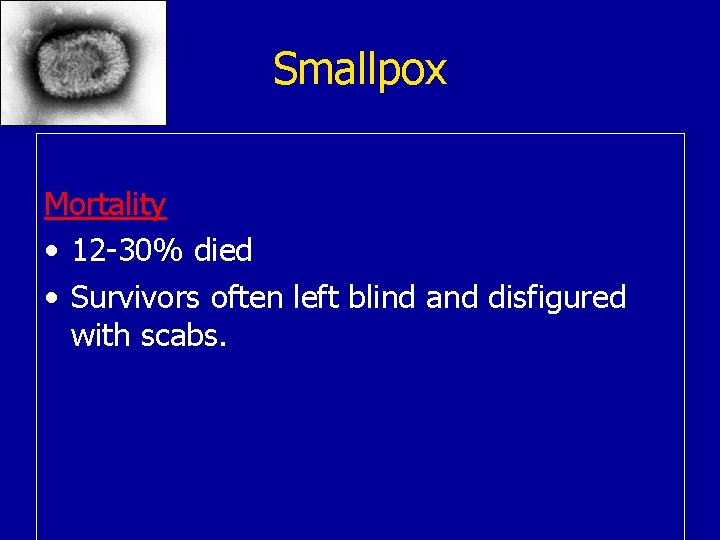
Smallpox Mortality • 12 -30% died • Survivors often left blind and disfigured with scabs.
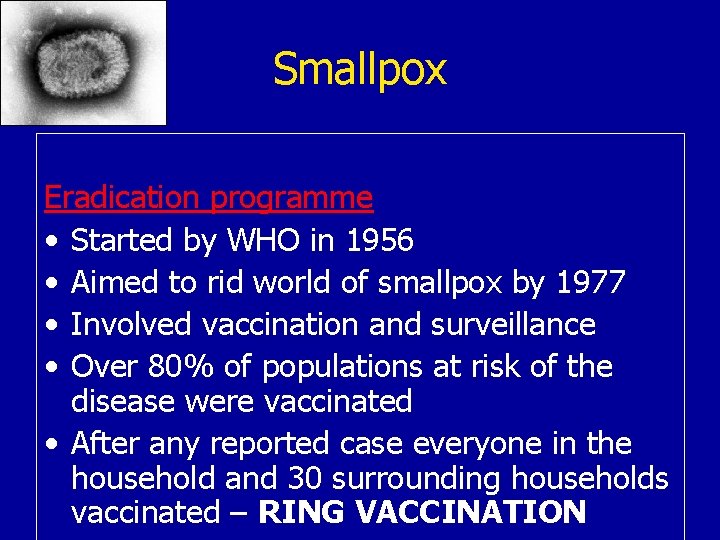
Smallpox Eradication programme • Started by WHO in 1956 • Aimed to rid world of smallpox by 1977 • Involved vaccination and surveillance • Over 80% of populations at risk of the disease were vaccinated • After any reported case everyone in the household and 30 surrounding households vaccinated – RING VACCINATION
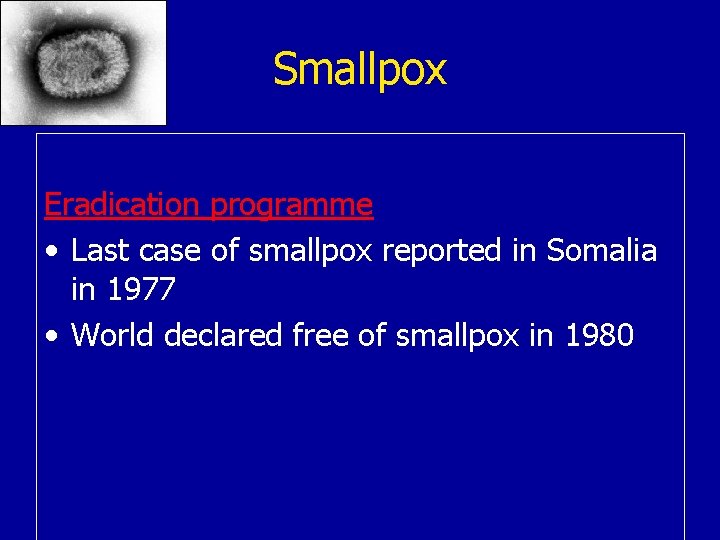
Smallpox Eradication programme • Last case of smallpox reported in Somalia in 1977 • World declared free of smallpox in 1980
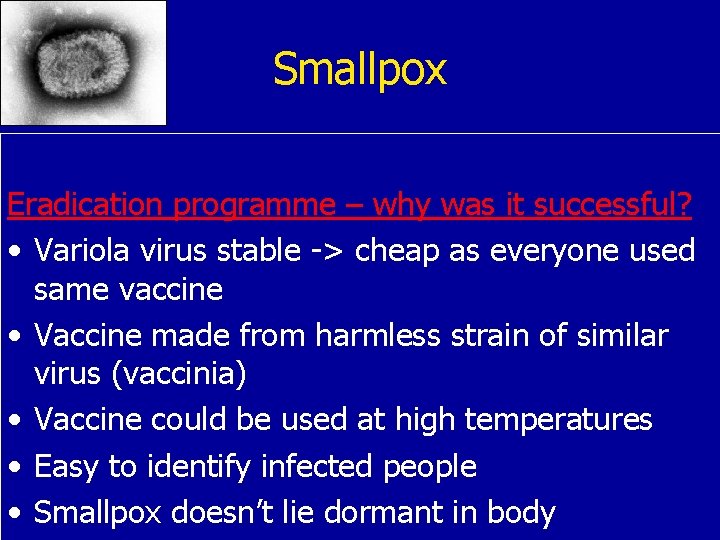
Smallpox Eradication programme – why was it successful? • Variola virus stable -> cheap as everyone used same vaccine • Vaccine made from harmless strain of similar virus (vaccinia) • Vaccine could be used at high temperatures • Easy to identify infected people • Smallpox doesn’t lie dormant in body
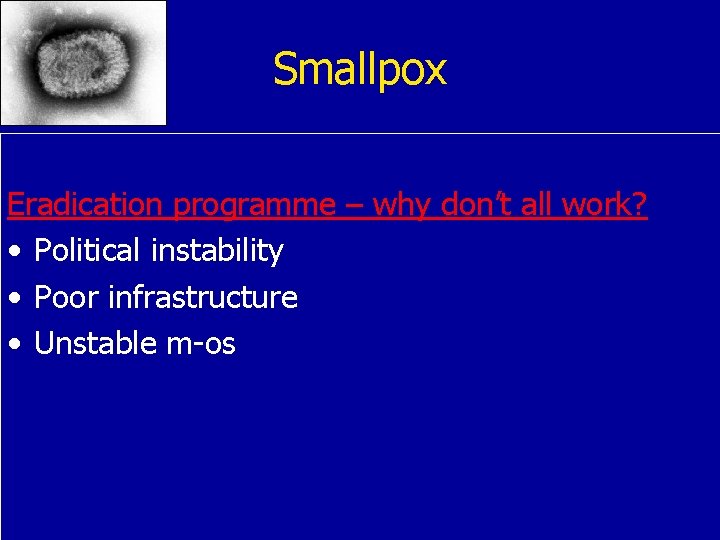
Smallpox Eradication programme – why don’t all work? • Political instability • Poor infrastructure • Unstable m-os
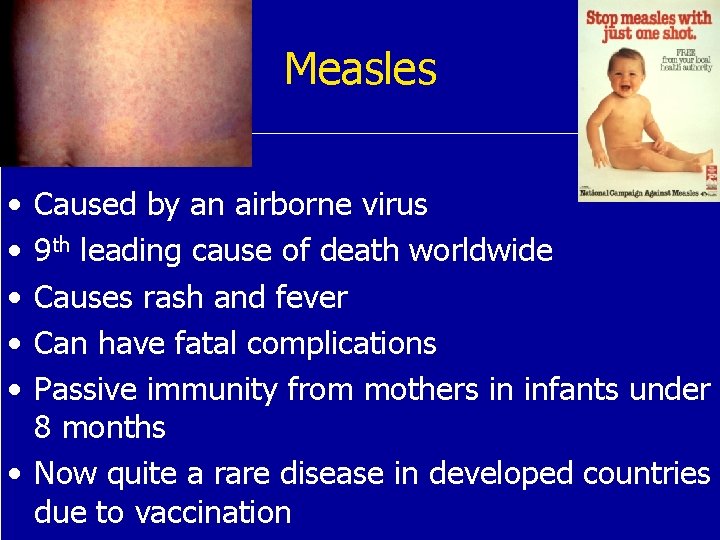
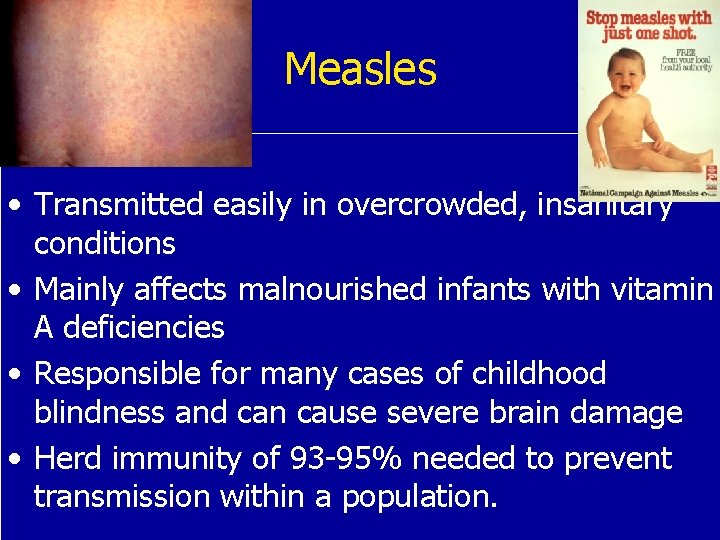
Measles • • • Caused by an airborne virus 9 th leading cause of death worldwide Causes rash and fever Can have fatal complications Passive immunity from mothers in infants under 8 months • Now quite a rare disease in developed countries due to vaccination
Measles • Transmitted easily in overcrowded, insanitary conditions • Mainly affects malnourished infants with vitamin A deficiencies • Responsible for many cases of childhood blindness and can cause severe brain damage • Herd immunity of 93 -95% needed to prevent transmission within a population.
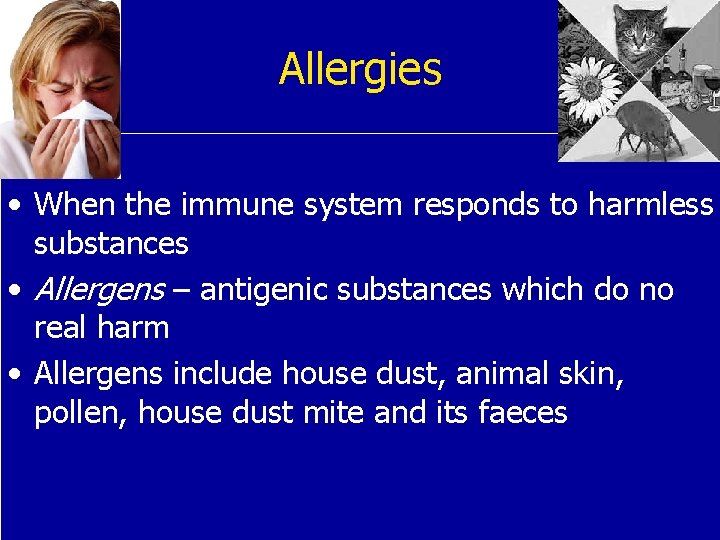
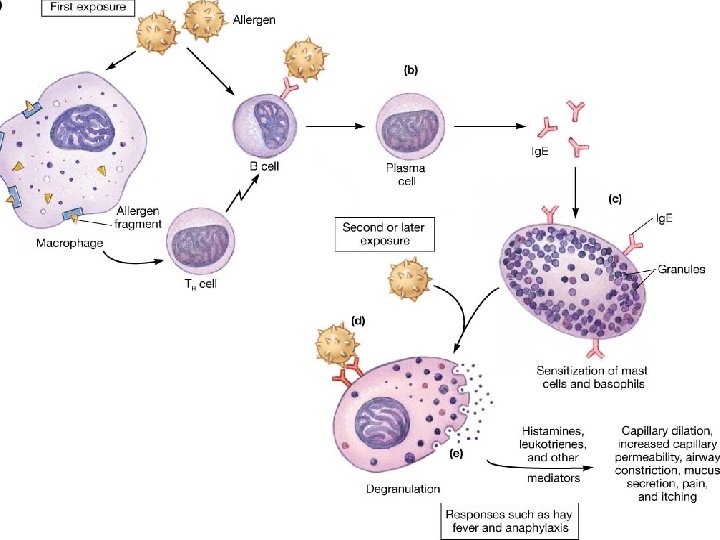
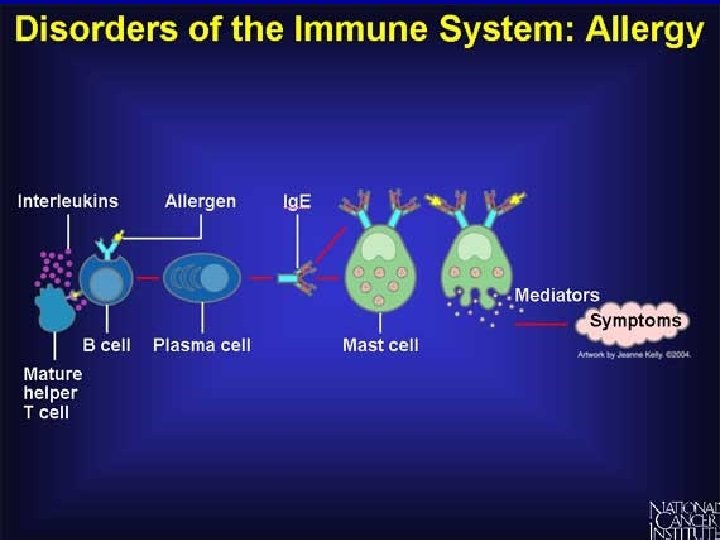
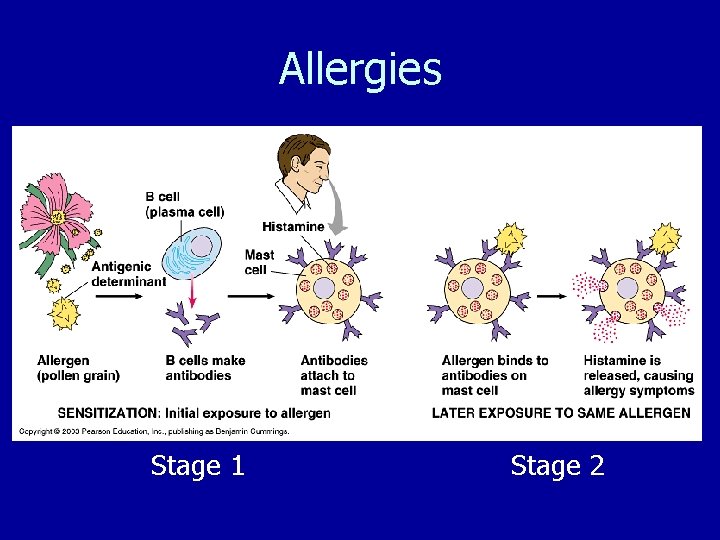
Allergies • When the immune system responds to harmless substances • Allergens – antigenic substances which do no real harm • Allergens include house dust, animal skin, pollen, house dust mite and its faeces
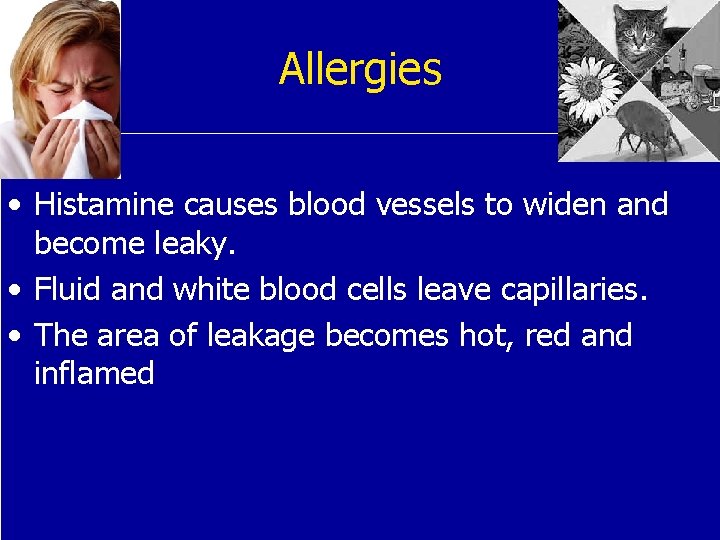
Allergies • Histamine causes blood vessels to widen and become leaky. • Fluid and white blood cells leave capillaries. • The area of leakage becomes hot, red and inflamed
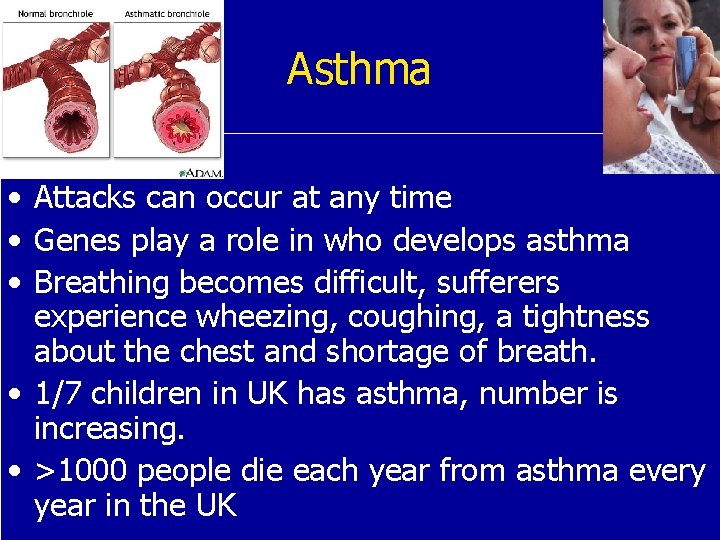
Asthma • Attacks can occur at any time • Genes play a role in who develops asthma • Breathing becomes difficult, sufferers experience wheezing, coughing, a tightness about the chest and shortage of breath. • 1/7 children in UK has asthma, number is increasing. • >1000 people die each year from asthma every year in the UK
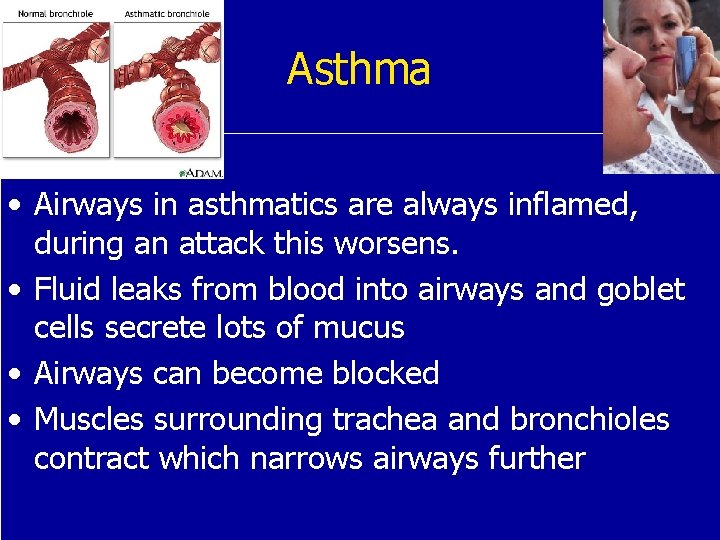
Asthma • Airways in asthmatics are always inflamed, during an attack this worsens. • Fluid leaks from blood into airways and goblet cells secrete lots of mucus • Airways can become blocked • Muscles surrounding trachea and bronchioles contract which narrows airways further
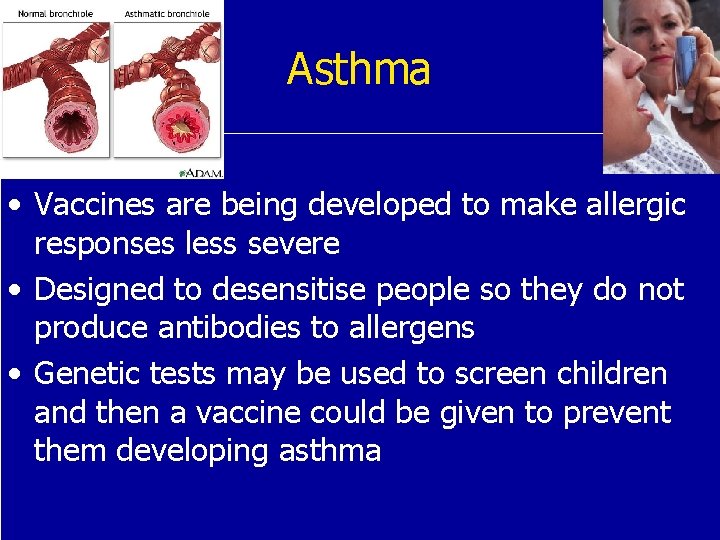
Asthma • Vaccines are being developed to make allergic responses less severe • Designed to desensitise people so they do not produce antibodies to allergens • Genetic tests may be used to screen children and then a vaccine could be given to prevent them developing asthma
Allergies Stage 1 Stage 2
Autoimmune Diseases • MS: T cells attack myelin –a protein that insulates the axons of neurons (a brain thing) – Most common chronic neurological disease in developed countries
Immunodeficiency diseases • SCID (Severe Combined Immunodeficiency): T and/or B cells are absent or inactive – “bubble” people
HIV/AIDS • HIV destroys the immune system by infecting helper T cells • Eventually develop AIDS – Body cannot carry out cell-mediated or humoral response • Die from opportunistic infections • 36. 1 million people have HIV/AIDS • 5. 3 million new cases each year