
The Immune System Macrophage eating a bacteria http
The Immune System
Macrophage eating a bacteria • http: //www. youtube. com/watch? v=NN 9 EHZugwl 8
The Immune System • The immune system is a functional system (NOT an organ system) • Function – immune system protects us against foreign invaders such as bacteria and viruses by recognizing self (harmless) versus non-self (harmful) • structure – trillions of immune cells (ie lymphocytes – recall? ) • pathogens – = viruses, bacteria & other micro – organisms that cause disease • the body must resist the continual attack of pathogens using 3 lines of defense…

3 Lines of Defense: The Nonspecific and Specific Lines • We will look at 3 lines of defense – The first 2 are non-specific • Indiscriminately blocks against / attacks foreign invaders – It doesn’t pick and choose – The 3 rd is specific • Specifically recognizes and targets certain invaders
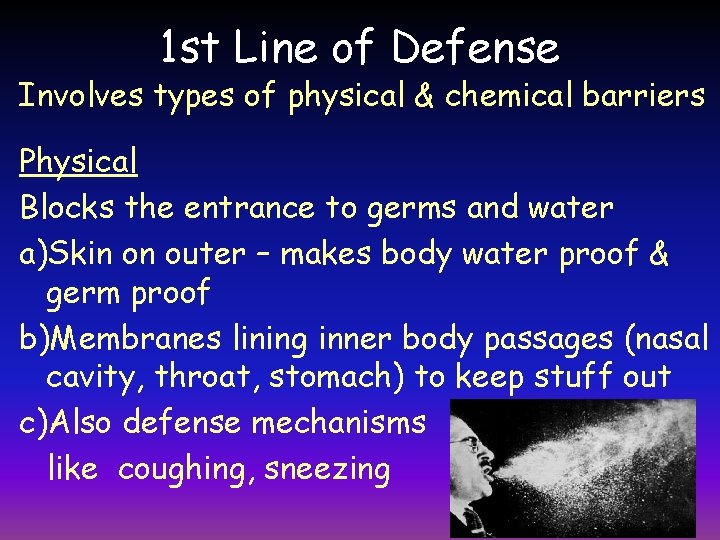
1 st Line of Defense Involves types of physical & chemical barriers Physical Blocks the entrance to germs and water a)Skin on outer – makes body water proof & germ proof b)Membranes lining inner body passages (nasal cavity, throat, stomach) to keep stuff out c)Also defense mechanisms like coughing, sneezing
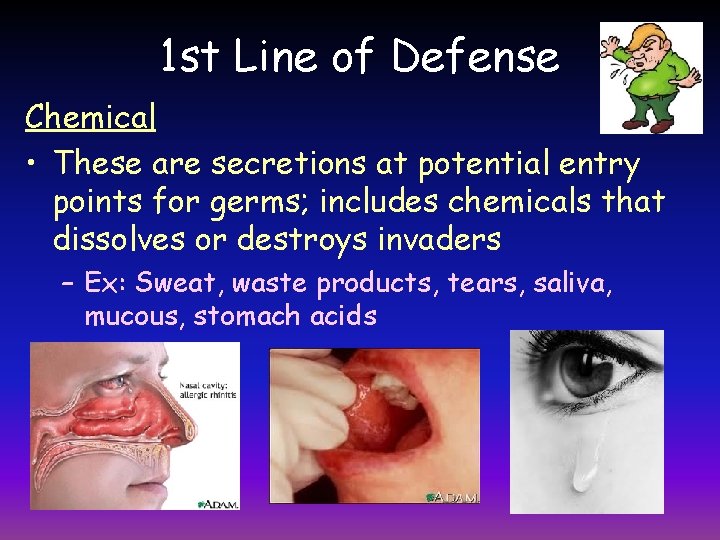
1 st Line of Defense Chemical • These are secretions at potential entry points for germs; includes chemicals that dissolves or destroys invaders – Ex: Sweat, waste products, tears, saliva, mucous, stomach acids
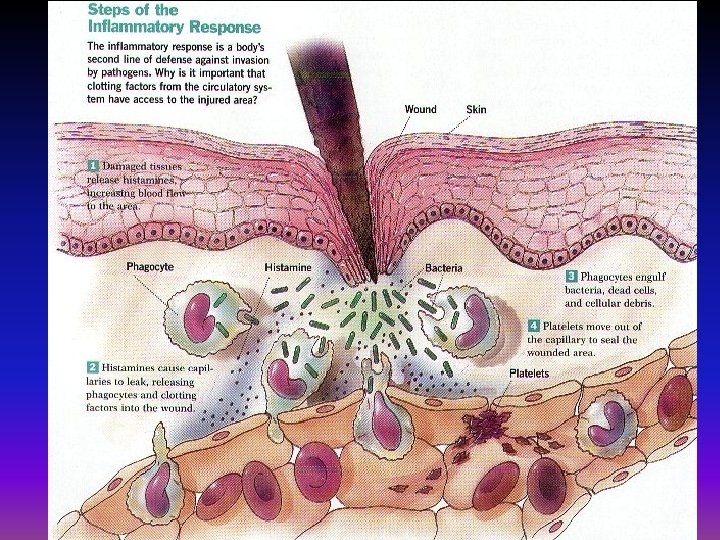
2 nd Line of Defense – The Inflammatory Response • If pathogen passes 1 st line, then 2 nd line kicks in • Results in the inflammatory response (which signals brain) • Steps: 1. Damaged tissue releases histamines which increase blood flow to that area. 2. Histamines also cause capillaries to become ‘leaky’ to blood plasma → damaged tissue (goes into)
3. Swelling attracts certain phagocytic WBC’s – Note: Phagocytes are cells which "eat" foreign material to destroy them a) Neutrophils - phagocytize bacteria only b) Monocytes (macrophages) - "big eaters" phagocytize just about anything • *Once monocytes leave blood vessels and enter tissue they become macrophages (=“big eater”) c) Eosinophils - secrete enzymes to kill parasitic worms among other pathogens (not a phagocyte) https: //www. youtube. com/watch? v=fw_I 21 Rn. BWg 4. They attack & digest large quantities of pathogens by phagocytosis or via secreting enzymes 5. Platelets seal up damaged tissue 6. Pus forms at site of infection (mixture of WBC’s, dead bacteria & water) • 4 signs of inflammation: - redness - swelling - heat - pain
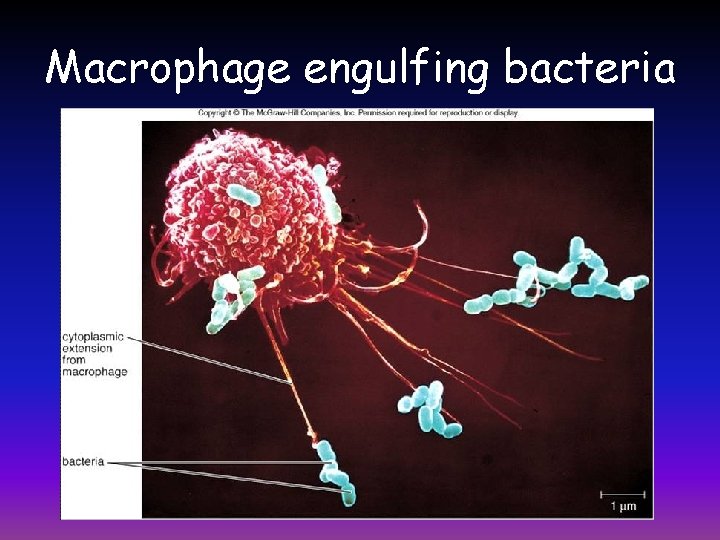
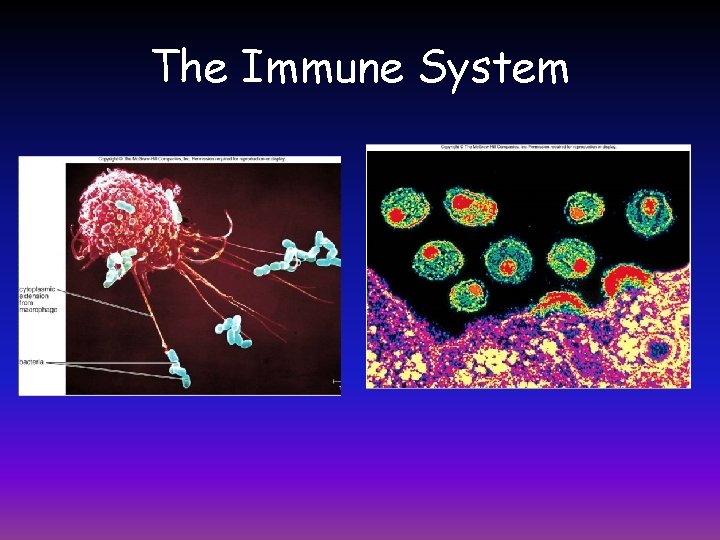
Macrophage engulfing bacteria
http: //www. youtube. com/watch? v=Cmb. WE 3 j. LUg. M
3 rd Line of Defense – The Immune Response • If 2 nd line fails the 3 rd line must be activated • The immune response is the body’s final method of defense • Immune response is different from 1 st & 2 nd line because this system CAN identify different types of pathogens & produce antibodies & cells to attack that SPECIFIC invader
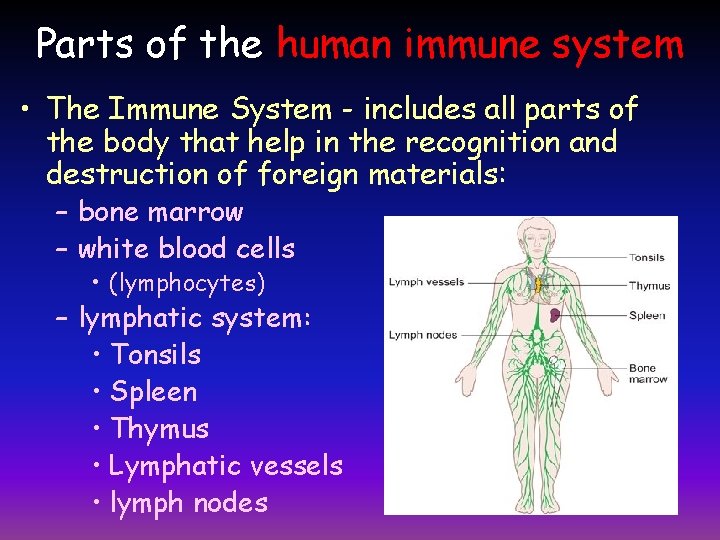
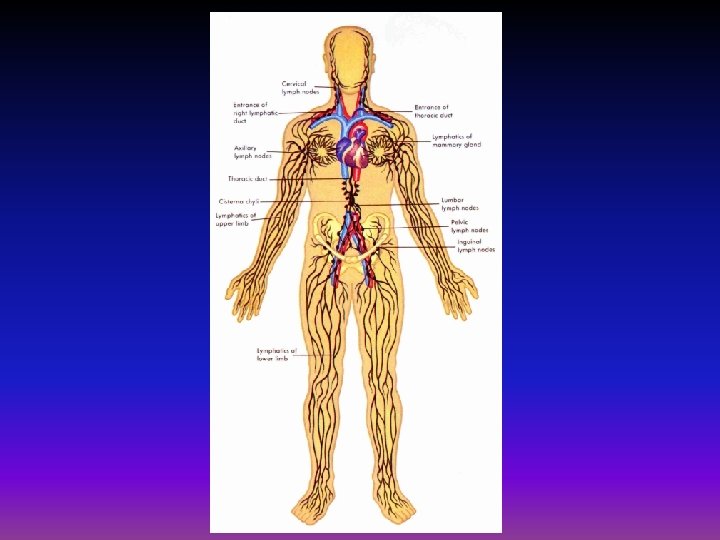
Parts of the human immune system • The Immune System - includes all parts of the body that help in the recognition and destruction of foreign materials: – bone marrow – white blood cells • (lymphocytes) – lymphatic system: • Tonsils • Spleen • Thymus • Lymphatic vessels • lymph nodes
Steps of Immune Response 1. Pathogen enters body passing 1 st & 2 nd line defenses 2. Surface of pathogen (bacteria) contains proteins called antigens 3. SPECIFIC WBC’s (lymphocytes) are produced to attack that specific pathogen with those antigen markers 4. 2 types of lymphocytes produced: a) T cells (mature in the thymus…made in the bone marrow) – clean up the TISSUE b) B cells (made in bone marrow) – clean up the Blood
Steps of Immune Response 5. Step 5 a) T cells – attack pathogen directly and digest it by phagocytosis or chemical attack • Clean up TISSUE • Cleans up BLOOD b) B cells – identify antigen & produce a specific antibody (protein) that binds to pathogen & kills it – combination of B & T cells can usually destroy invading pathogen • Sometimes medicines called antibiotics must be taken if body’s immune system cannot destroy pathogen • Penicillin • Streptomycin • Amoxicillin
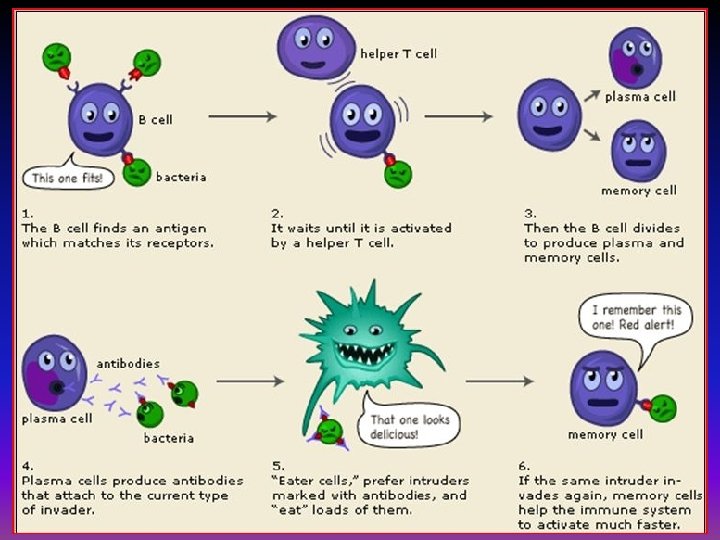
The T-Cells (T-lymphocytes) T cells come in THREE different types, helper T-cells killer T-cells, and memory T-cells Helper T cells • primary task is to activate B cells AND Killer T cells • 1 ST the helper T cells themselves must be activated – happens when a macrophage which has eaten an invader, present an antigen fragment from the invader on its own surface, – helper T cell recognizes the antigen & it becomes activated. • Once activated, helper T cells start to divide and to produce proteins that activate B cells and the killer T cells
The T-Cells (T-lymphocytes) Killer T cells (aka cytotoxic t cells) • Stimulated into dividing, and ‘switched on’, by Helper T cells • Have special receptors that are used to search each cell that it meets. (search SPECIFICALLY for certain pathogens) • If one of our body cells is infected, the antigen from the intruder can be found on our infected cell’s surface → the Killer T will recognize and kill the invader! T Memory Cells • Killer T cells can also produce T memory cells – these hang around in our bodies long after the infection in case it ever comes back – This is how vaccines work
B-Cells (B-lymphocytes) • B cells also have receptors that search for the antigens of invaders • If finds → connects to it • The B cell now needs proteins produced by Helper T cells to become fully activated • When activated, the B cell starts to divide to produce clones of itself. • During this process, two new cell types are created – plasma cells and – B memory cells.
B-Cells (B-lymphocytes) The plasma cell • specializes in producing antibodies • Release ~30 thousand antibodies / second • Antibodies: 1. Recognize and bind to antigens • This makes a flag for the invader to be eaten by macrophages 2. neutralize toxins that may be released by pathogen 3. incapacitate viruses (by binding to them) preventing them from infecting new cells
B-Cells (B-lymphocytes) B Memory Cells • Hang around after the infection is gone → "remember" specific intruders • The second time an intruder tries to invade the body, B and T memory cells help the immune system to activate much faster. • Invaders are wiped out before the infected human feels any symptoms • = immunity!!!
• http: //highered. mcgrawhill. com/sites/0072495855/student_vie w 0/chapter 24/animation__the_immune _response. html • Note – cytotoxic t cells = killer t cells
Immunity is either… Natural Immunity • immunity you were born with Acquired Immunity • immunity that you get or develop during your life
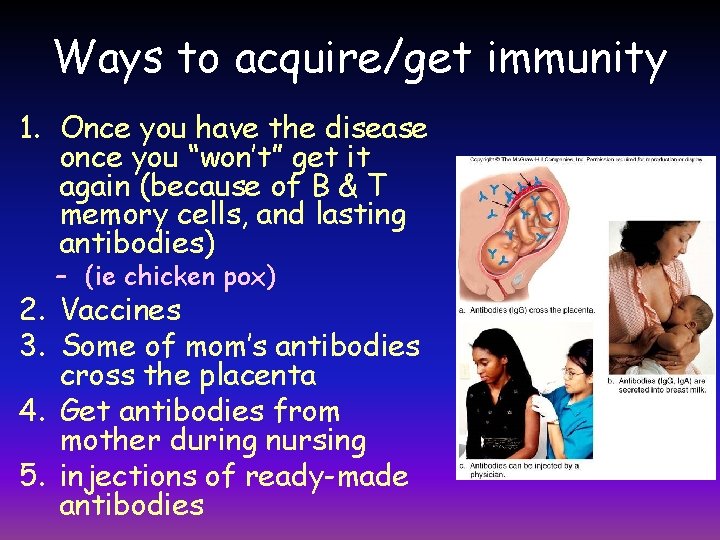
Ways to acquire/get immunity 1. Once you have the disease once you “won’t” get it again (because of B & T memory cells, and lasting antibodies) – (ie chicken pox) 2. Vaccines 3. Some of mom’s antibodies cross the placenta 4. Get antibodies from mother during nursing 5. injections of ready-made antibodies
Vaccines • https: //www. youtube. com/watch? v=3 a. N hz. LUL 2 ys Why Vaccines Work • https: //www. youtube. com/watch? v=wqb H 40 Y 9 XJw Nova – Vaccines – Calling the Shots
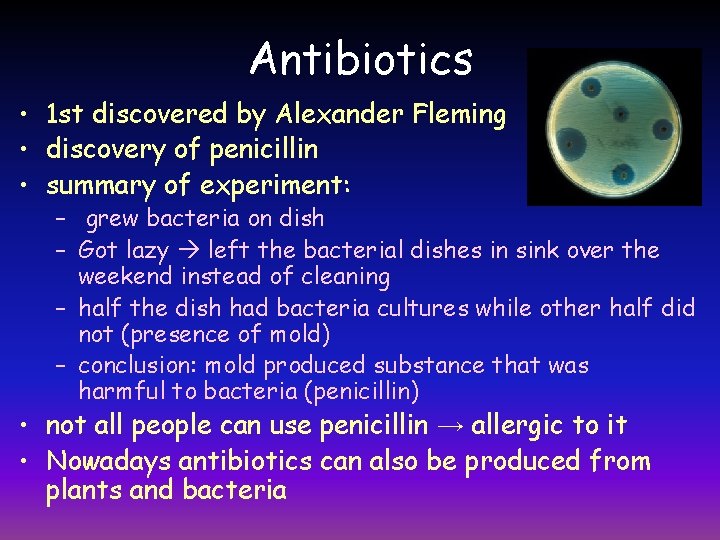
Antibiotics • 1 st discovered by Alexander Fleming • discovery of penicillin • summary of experiment: – grew bacteria on dish – Got lazy left the bacterial dishes in sink over the weekend instead of cleaning – half the dish had bacteria cultures while other half did not (presence of mold) – conclusion: mold produced substance that was harmful to bacteria (penicillin) • not all people can use penicillin → allergic to it • Nowadays antibiotics can also be produced from plants and bacteria
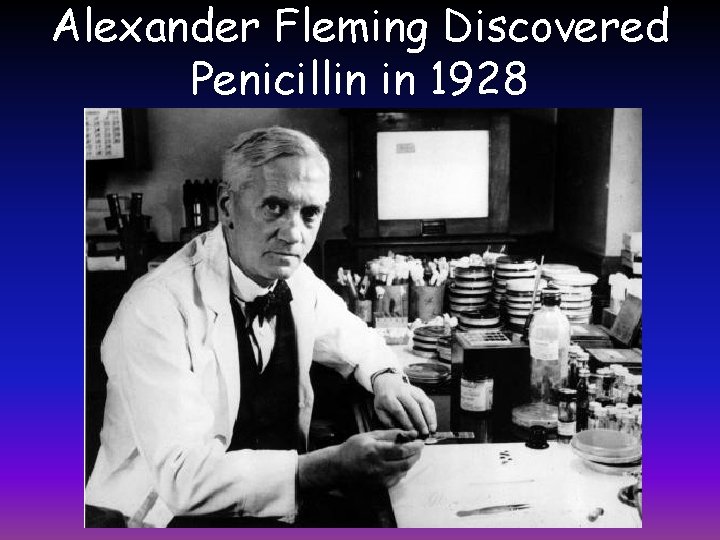
Alexander Fleming Discovered Penicillin in 1928
HIV & AIDS • Acquired Immune Deficiency Syndrome – Acquired = picked up from other infected people – Immune deficiency = break down of the body’s immune system – Syndrome – a group of symptoms that indicate disease
• AIDS is caused by a virus called HIV (Human Immunodeficiency Virus) • Body recognizes when HIV enters and sends out killer T cells to attack • Other lines of defense 1 st, 2 nd, & B cells are useless against HIV • When killer T cells ingest HIV by phagocytosis the virus is not killed! HIV actually lives inside & is protected • Virus may stay dormant (non active) for years (no symptoms but infectious) • One day HIV becomes active & begins to reproduce killing the host T cells • This seriously weakens the body’s immune system, because the person has no 3 rd line of defense
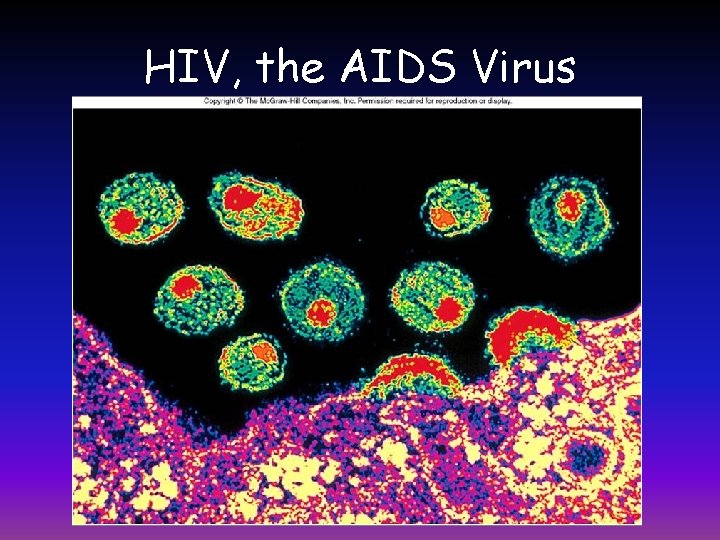
HIV, the AIDS Virus
• If the person acquires a common sickness, the body cannot fight diseases or infections • now develop full blown AIDS • Because immune system is weak, AIDS patient develops serious infections & possible cancer • 2 diseases are major causes of death – bacterial pneumonia – blood vessel cancer (Kaposi’s sarcoma) • Once full blown AIDS is developed survival rate → 0% • Life span in this final stage is less that 5 years • No known vaccine or cure!

• http: //www. youtube. com/watch? v=ITw. G 6 O 9 G 81 g • http: //www. youtube. com/watch? v=Psrd. K RQfaxk • http: //www. ctvnews. ca/health/hivresurfaces-in-canadian-child-afterbreak-in-drug-treatment-1. 1804770

http: //www. youtube. com/watch? v=68 I 7 Jl. Vhuh. Y&feature=channel https: //www. youtube. com/watch? v=ITw. G 6 O 9 G 81 g
Other Immune Disorders 1. Allergies • • • a rapid overreaction of our inflammatory response to an allergen – Ex: Dust, pollen (hay fever), animal fur, insect bites, certain foods these factors are called allergens Symptoms: runny nose, swelling, sneezing, coughing, hives, anaphylaxis Symptoms are caused by the release of histamines at these various sites – created during inflammatory response (nose, eyes, skin) which is unnecessary, because of no actual threat (pathogen) Sudafed and Benadryl counteract body’s over production of histamine
2. Autoimmune Diseases • body mistakes own body cells as pathogens (invaders) & produces antibodies to destroy our own cells • Examples – juvenile diabetes – body produces antibodies that attack & destroy pancreas cells that produce insulin – multiple sclerosis – body accidentally produces antibodies that attack normal nerve cells • Leads to nerve disorders & paralysis
3. Cancer • Occurs when normal body cells mutate & begin to divide & reproduce out of control • Most of the time, the immune system detects abnormal antigens on the surface of cancer cells & produces specific killer T cells in response to kill them • sometimes the cancer is ignored by the immune system & is allowed to grow & spread • cancer cells spread through the blood system to various areas = metastasis
How is Cancer Caused? • Caused by damage to DNA of chromosomes – Each time a cell divides, ‘mistakes’ or errors in the replication of DNA can take place – These mistakes build up over time, which is why the majority of cancers are seen in older people – Cancer can also be inherited (damaged genes passed on to the offspring), such as breast cancer • Another cause of cancer is damage to the gene responsible for stopping the copying if damaged DNA – this only needs one mistake, whereas general mistakes can take many cell divisions before they cause cancer
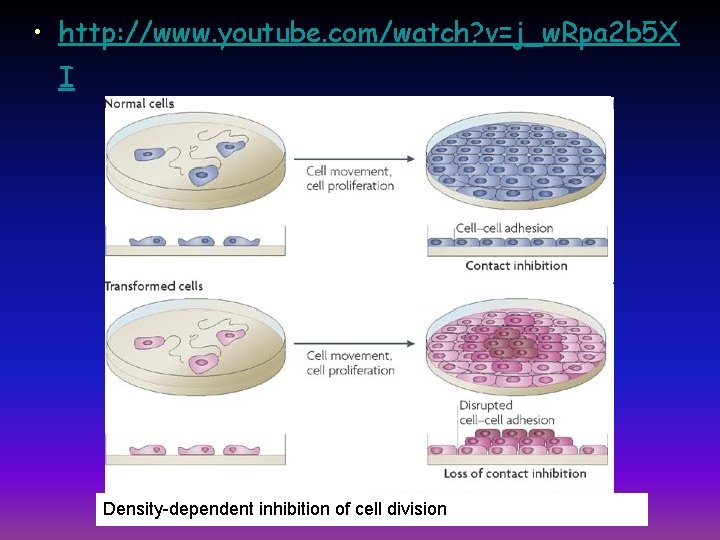
• http: //www. youtube. com/watch? v=j_w. Rpa 2 b 5 X I Density-dependent inhibition of cell division
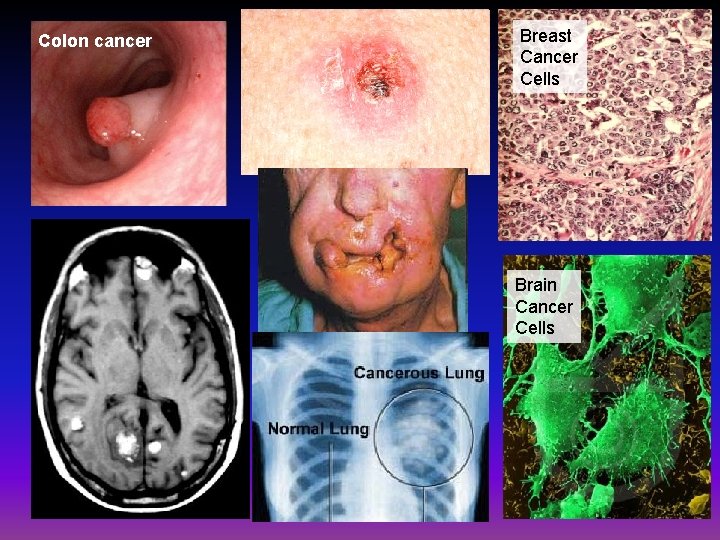
Colon cancer Breast Cancer Cells Brain Cancer Cells
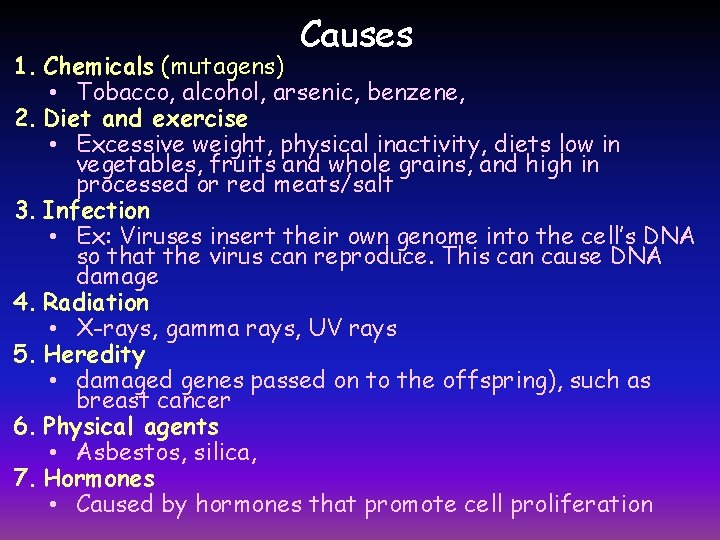
Causes 1. Chemicals (mutagens) • Tobacco, alcohol, arsenic, benzene, 2. Diet and exercise • Excessive weight, physical inactivity, diets low in vegetables, fruits and whole grains, and high in processed or red meats/salt 3. Infection • Ex: Viruses insert their own genome into the cell’s DNA so that the virus can reproduce. This can cause DNA damage 4. Radiation • X-rays, gamma rays, UV rays 5. Heredity • damaged genes passed on to the offspring), such as breast cancer 6. Physical agents • Asbestos, silica, 7. Hormones • Caused by hormones that promote cell proliferation
- Slides: 41