
The ideological lenses of opposing groups often lead
- Slides: 45
“The ideological lenses of opposing groups often lead them to understand the same political event from two (or more) stunningly different perspectives” – Michael Dawson, political scientist Group Identity, Ideology, and Activism UNEVEN ROADS, CHAPTER 8
Chapter Objectives • • • Why Group Identity, Ideology, and Activism Matter Race, Ethnicity, and Public Opinion The Political Impact of Racialization Activist Pathways to Empowerment The Legacy of Grassroots and Civil Rights Activism Mobilizing for a Changed Future
Why Group Identity and Activism Matter • Politics or the use of and/or the desire for political power and empowerment involves: • Collective action or the process of individuals coming together and agreeing to act in ways they consider mutually beneficial. Well, it is difficult to have collective action if persons do not see themselves as belong to a group. • Group identity is the social or cultural commonality an individual recognizes he or she shares with others so to claim membership in a specific community. Race, ethnicity, gender, are among the categories individuals may use as identities to connect to others.
Why Group Identity and Activism Matter • Group Identity can, among other things, promote: • Inter-Group Conflict or clashes between groups who see their economic or political interests as clashing. For example, in the 1990 s there were a series of clashes between Korean American grocery store owners and African American customers in New York, NY and Los Angles, CA based on perceived cultural differences. • Ethnic Solidarity involves members of an ethnic group uniting in order to independently pursue common interests. For example, there is a history of ethnic nationalism or calls for group independence, autonomy, and sometimes separation from non-group members among Latinos (e. g. the Chicano ‘Brown Berets’), African Americans (e. g. the ‘Black Panthers’), and Asian Americans (e. g. the ‘East Wind’). Given what we know about race, are such groups equivalent to the White Nationalism of White Supremacist groups (e. g. the ‘Klu Klux Klan’? )
Public Opinion and Political Socialization Consensus and Divided Opinion Forming Public Opinion: Political Socialization The family Education as a source of political socialization Peers and peer group influence Opinion leaders’ influence 5
Public Opinion and Political Socialization The Media and Public Opinion The popularity of the media The impact of new media Political Events and Public Opinion 6
The Influence of Demographic Factors Educational Achievement Economic Status Religious Denomination Religious Commitment and Beliefs 7
Race, Ethnicity, and Public Opinion • To understand, how individuals think about politics we need to first provide a few key definitions: • Public Opinion represents the various attitudes or views large communities of people hold about politics and actions of government. It thus inherently establishes the range of views most likely expressed when a population is polled or surveyed. It is different from… • Political Ideology or the arrangement of political attitudes into specific or systematic schemes that justify specific interpretations of what is a in a community’s best interests. Economic conservatives like Texas U. S. Senator Ted Cruz (R) believe government should regulate and interfere with the economy very little to ensure free markets. Economic liberals like former U. S. Secretary of State Hillary Clinton (D) believe government should regulate the economy to the degree it ensures
Race, Ethnicity, and Public Opinion Political socialization is the process through which many Americans develop their political ideologies for it is a process whereby children and others are taught and thus learn the political values, beliefs, and norms of their families and communities and thus those they are directly or indirectly expected to embrace. • Collective memory is a part of the above because it is the generation-togeneration process where communities or groups recall and pass down certain important and often traumatic events that shape the ideologies of future generations. For example, in 1955 the brutal murder of a Black teenager Emmitt Till in Money, MS for a simple social “offense” stirred a Civil Rights generation weary of Jim Crow segregation. In 2015, the killing of the unarmed Black teenager Michael Brown in Ferguson, MO by a white police officer, in a town with a history of racialized policing, will likely inspire the fair policing activism of the “Black Lives Matter” movement and others for a long while. •
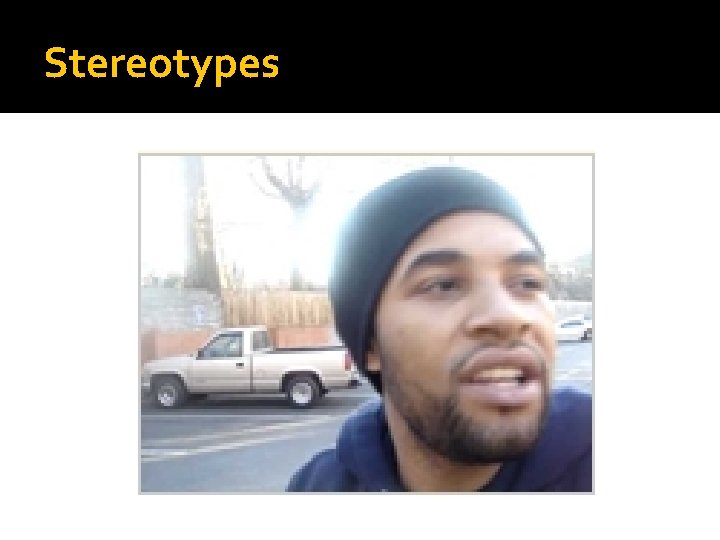
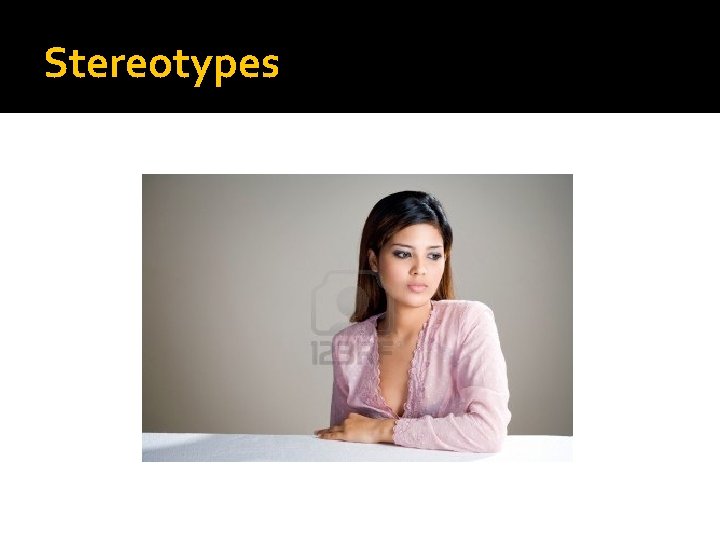
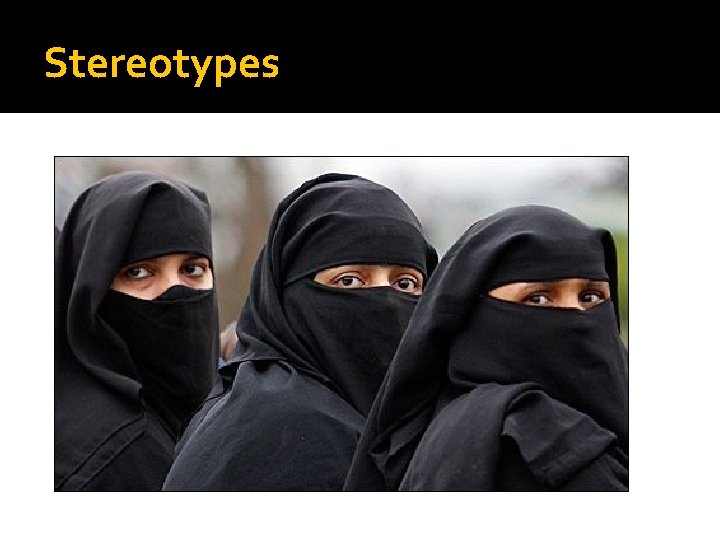
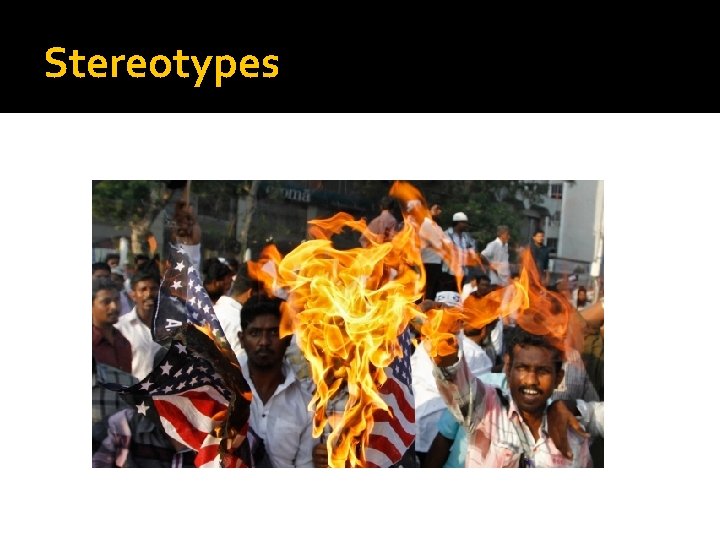
Stereotypes
Stereotypes What do they do for fun? Wthey
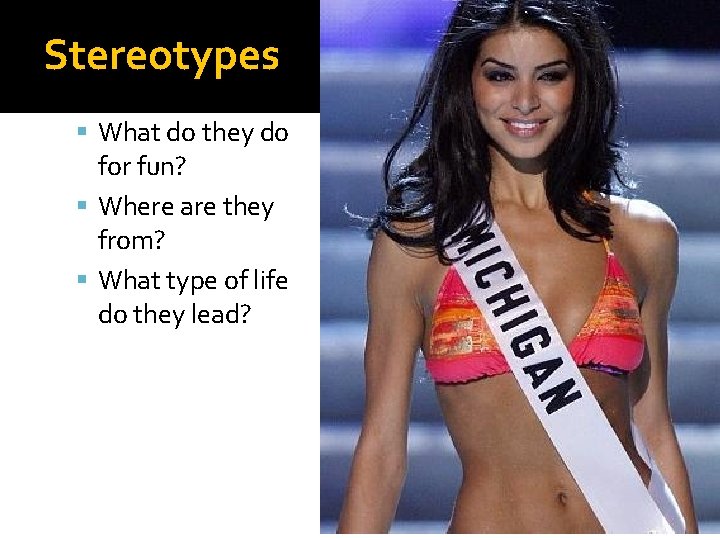
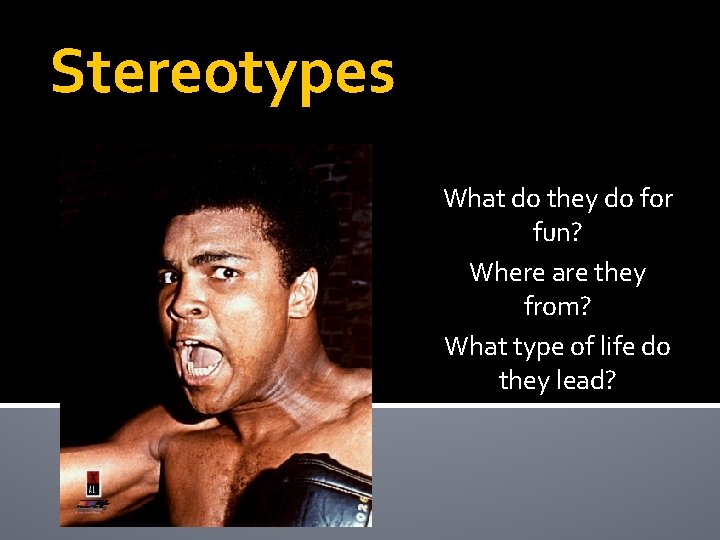
Stereotypes What do they do for fun? Where are they from? What type of life do they lead?
Stereotypes Where are they from? What type of life do they lead?
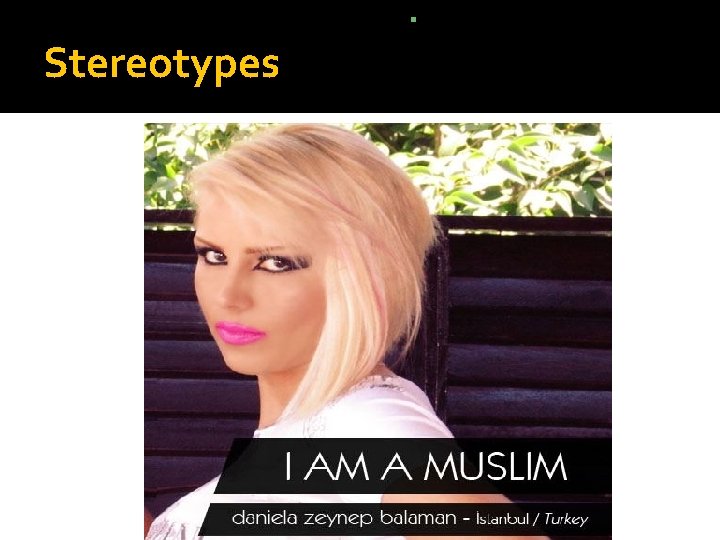
▪? Stereotypes
Stereotypes What do they do for fun? Where are they from?
Stereotypes What do they do for fun? Where are they from? What type of life do they lead?
Stereotypes What do they do for fun?
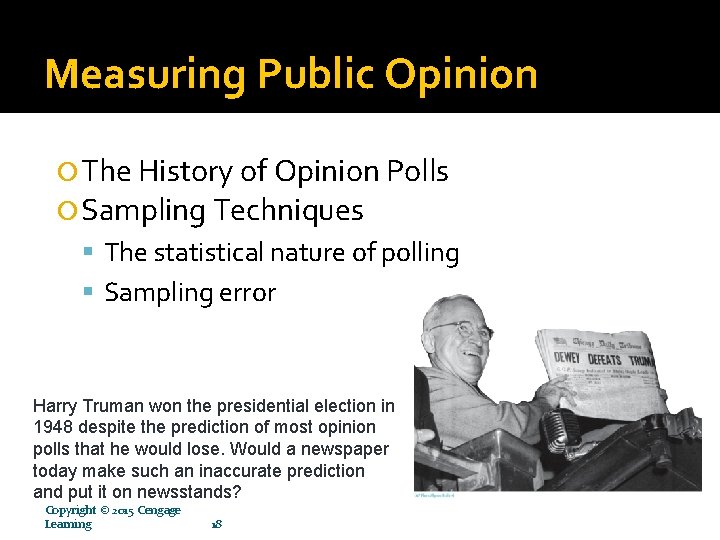
Measuring Public Opinion The History of Opinion Polls Sampling Techniques The statistical nature of polling Sampling error Harry Truman won the presidential election in 1948 despite the prediction of most opinion polls that he would lose. Would a newspaper today make such an inaccurate prediction and put it on newsstands? Copyright © 2015 Cengage Learning 18
Measuring Public Opinion Additional Problems with Polls Poll Questions Unscientific and Fraudulent Polls Copyright © 2015 Cengage Learning 19
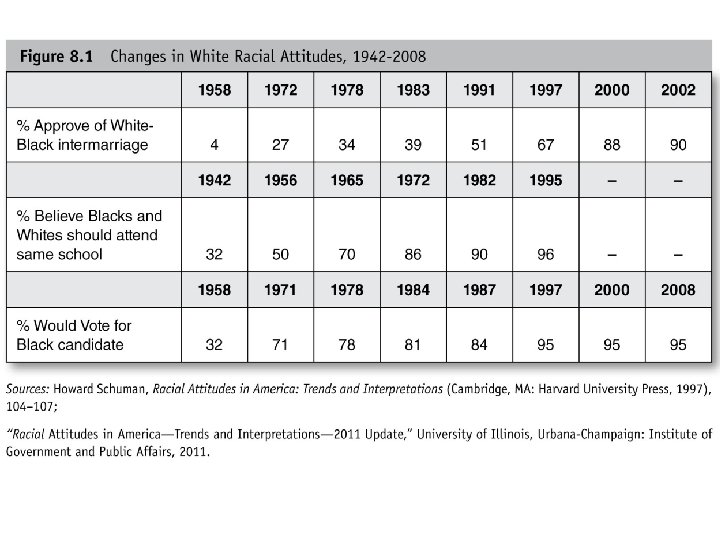
Race, Ethnicity, and Public Opinion • Measuring Racial Attitudes: Political and other social scientists are concerned with whether or not survey or poll questions properly measure how race impacts individual political attitudes: • Explicit Racial Attitudes: These are where respondents hold racially prejudicial or even racist views against others groups such as when Whites oppose Whites and Blacks marrying, attending school together, or oppose voting for Black candidates. (see Figure 8. 1 next slide) • Implicit Racial Attitudes: These are subconsciously held negative biases or prejudicial feelings about other groups that don’t involve cognitive, rational thought but are based more on emotions and feelings such as likability, sympathy, fear, or disgust. Police officers who shoot unarmed Black and other minority youth may be acting out of these implicit biases.
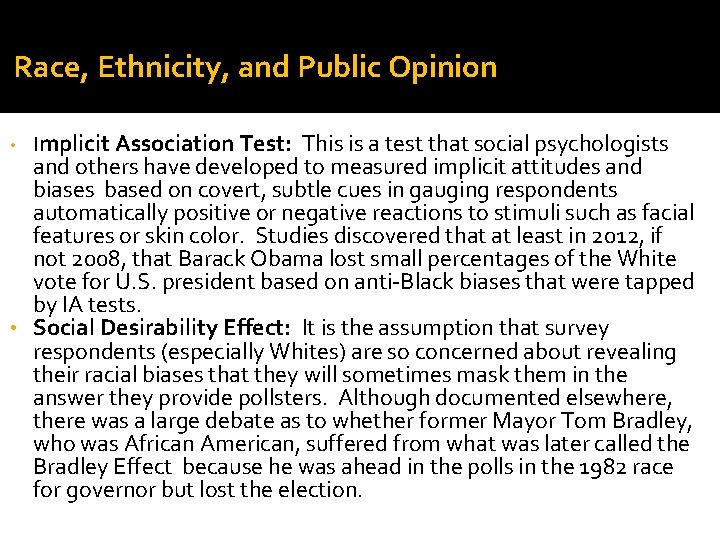
Race, Ethnicity, and Public Opinion • Implicit Association Test: This is a test that social psychologists and others have developed to measured implicit attitudes and biases based on covert, subtle cues in gauging respondents automatically positive or negative reactions to stimuli such as facial features or skin color. Studies discovered that at least in 2012, if not 2008, that Barack Obama lost small percentages of the White vote for U. S. president based on anti-Black biases that were tapped by IA tests. • Social Desirability Effect: It is the assumption that survey respondents (especially Whites) are so concerned about revealing their racial biases that they will sometimes mask them in the answer they provide pollsters. Although documented elsewhere, there was a large debate as to whether former Mayor Tom Bradley, who was African American, suffered from what was later called the Bradley Effect because he was ahead in the polls in the 1982 race for governor but lost the election.
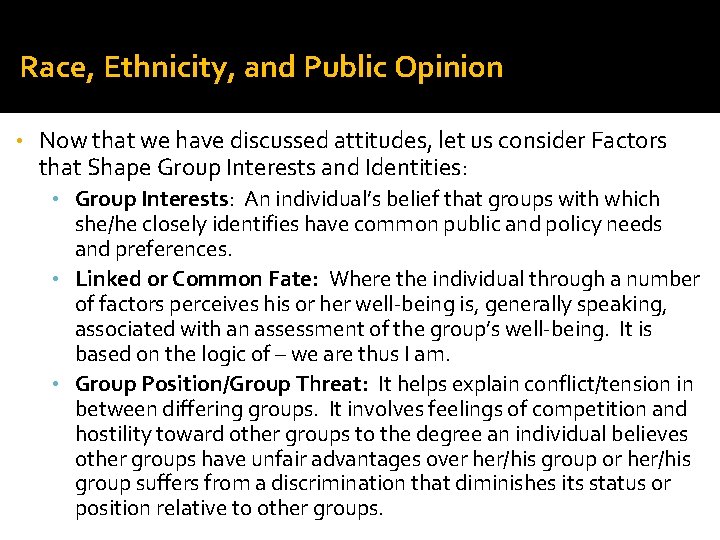
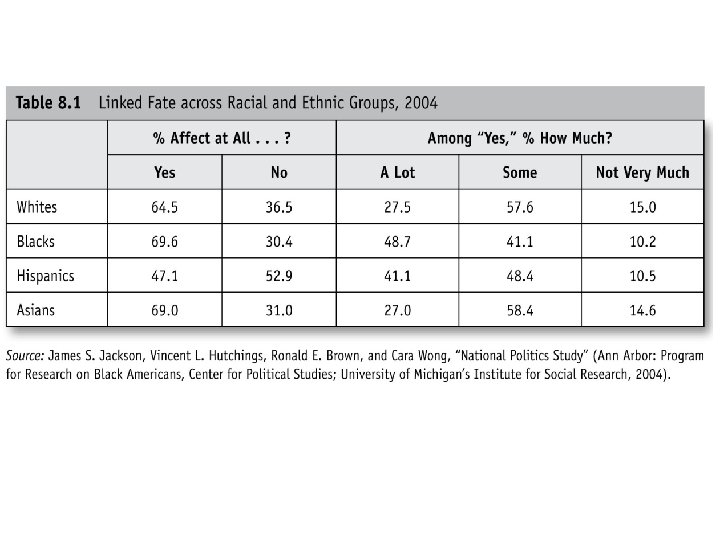
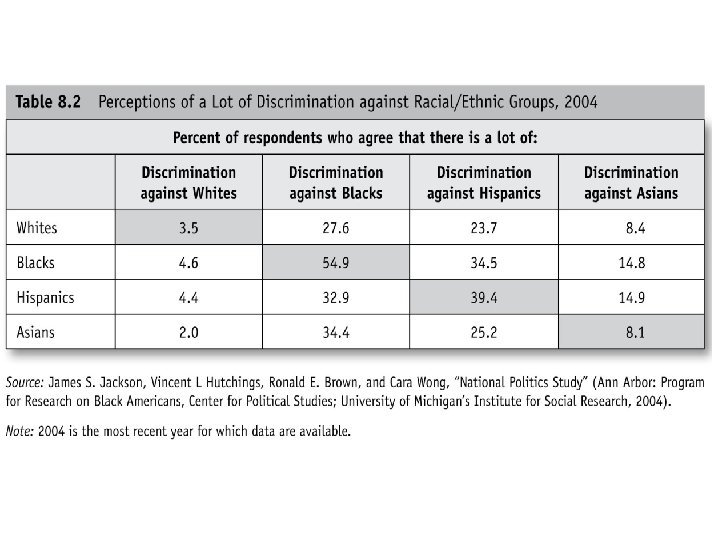
Race, Ethnicity, and Public Opinion • Now that we have discussed attitudes, let us consider Factors that Shape Group Interests and Identities: • Group Interests: An individual’s belief that groups with which she/he closely identifies have common public and policy needs and preferences. • Linked or Common Fate: Where the individual through a number of factors perceives his or her well-being is, generally speaking, associated with an assessment of the group’s well-being. It is based on the logic of – we are thus I am. • Group Position/Group Threat: It helps explain conflict/tension in between differing groups. It involves feelings of competition and hostility toward other groups to the degree an individual believes other groups have unfair advantages over her/his group or her/his group suffers from a discrimination that diminishes its status or position relative to other groups.
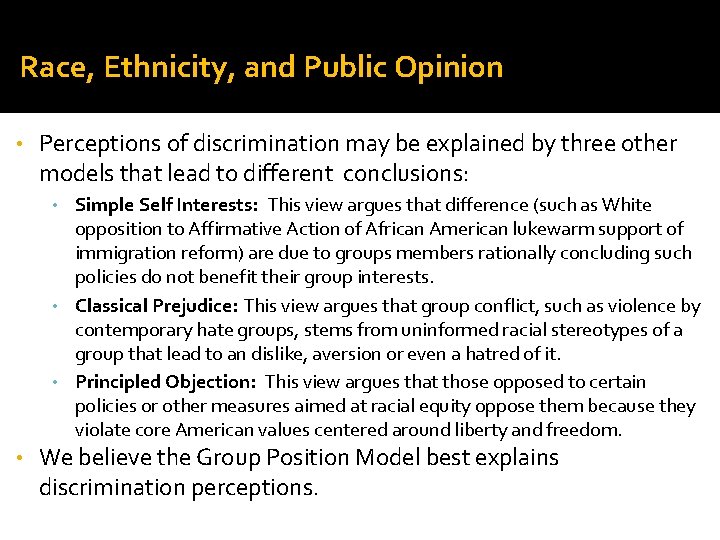
Race, Ethnicity, and Public Opinion • Perceptions of discrimination may be explained by three other models that lead to different conclusions: • Simple Self Interests: This view argues that difference (such as White opposition to Affirmative Action of African American lukewarm support of immigration reform) are due to groups members rationally concluding such policies do not benefit their group interests. • Classical Prejudice: This view argues that group conflict, such as violence by contemporary hate groups, stems from uninformed racial stereotypes of a group that lead to an dislike, aversion or even a hatred of it. • Principled Objection: This view argues that those opposed to certain policies or other measures aimed at racial equity oppose them because they violate core American values centered around liberty and freedom. • We believe the Group Position Model best explains discrimination perceptions.
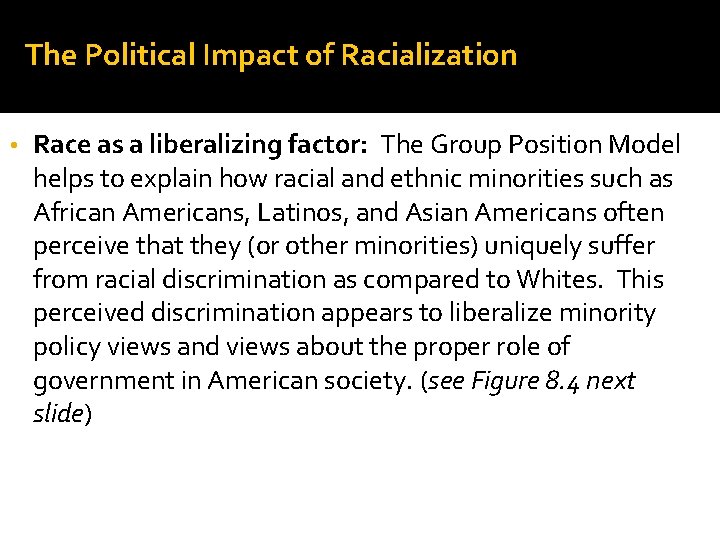
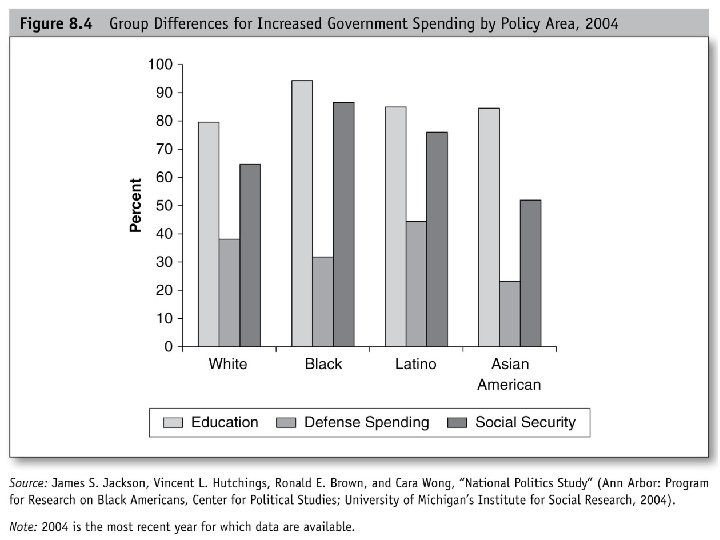
The Political Impact of Racialization • Race as a liberalizing factor: The Group Position Model helps to explain how racial and ethnic minorities such as African Americans, Latinos, and Asian Americans often perceive that they (or other minorities) uniquely suffer from racial discrimination as compared to Whites. This perceived discrimination appears to liberalize minority policy views and views about the proper role of government in American society. (see Figure 8. 4 next slide)
Public Opinion and the Political Process The Most Important Problems Public Opinion and Policymaking Politicians make own decisions ▪ Trade-offs Copyright © 2015 Cengage Learning 29
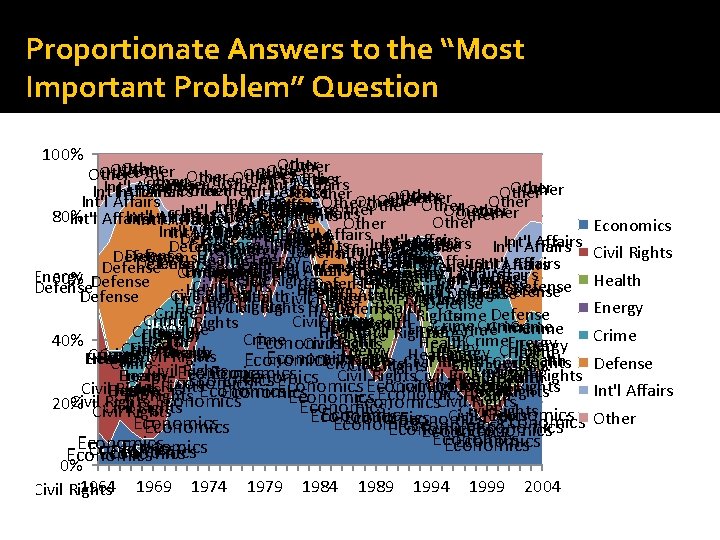
Proportionate Answers to the “Most Important Problem” Question. Figure 2. 9: rtion 100% Other Other Other Other Int'l Affairs Other Other Affairs. Other Int'l. Defense Affairs Int'l Affairs Other Other Int'l Affairs Other Crime Defense Other Int'l. Defense Affairs Int'l Affairs Other Energy Other Int'l Affairs Defense Other Health Other Int'l Affairs Other Civil Rights Int'l Affairs Defense 80% Defense Int'l Affairs Crime Other Int'l Affairs Other Crime Defense Crime Int'l Affairs Defense Int'l Affairs Crime Int'l Affairs Int'l Energy Defense Energy Health Affairs Int'l. Affairs Health Crime Int'l Affairs Int'l Defense Int'l Affairs Defense Civil Rights Defense Crime Defense Civil Rights Crime Defense Int'l Affairs Energy Defense Int'l Affairs Defense Crime Defense Int'l. Affairs Crime Health Energy. Defense Int'l Affairs Defense Energy Defense Int'l. Affairs Defense Int'l Health Energy Defense Civil Rights Int'l Affairs Energy Civil Rights Health Energy Defense Crime Int'l Affairs Defense Health Energy 60% Defense Int'l. Defense Affairs Defense Energy Crime Civil Rights Crime Energy Int'l Affairs Defense Crime Civil Rights Defense Crime Defense Energy Defense Health Defense Int'l Affairs Civil Rights Defense Health Int'l Affairs Health. Civil. Crime Defense Civil Rights Energy Health Defense Health Crime Defense Civil Rights Crime Health Civil Rights Health Crime Energy Crime Crime Civil Rights Health Energy Health Crime Energy Crime 40% Health Energy Health Economics Civil Rights Energy Crime Health Energy Crime Energy Health Crime Health Civil Rights Health Energy Health Economics Health Civil Rights Energy Civil Rights Crime. Civil Rights Economics Rights Energy Economics Energy Health. Economics Civil Rights Health Economics Economics Energy Civil Rights Civil. Energy Rights Health Civil Rights Economics Civil Rights Health Economics Civil Rights Economics 20% Economics Rights Civil Rights Economics Economics Economics Economics 0% 1964 Civil Rights 1969 1974 Economics Economics 1979 1984 1989 1994 1999 2004 Economics Civil Rights Health Energy Crime Defense Int'l Affairs Other
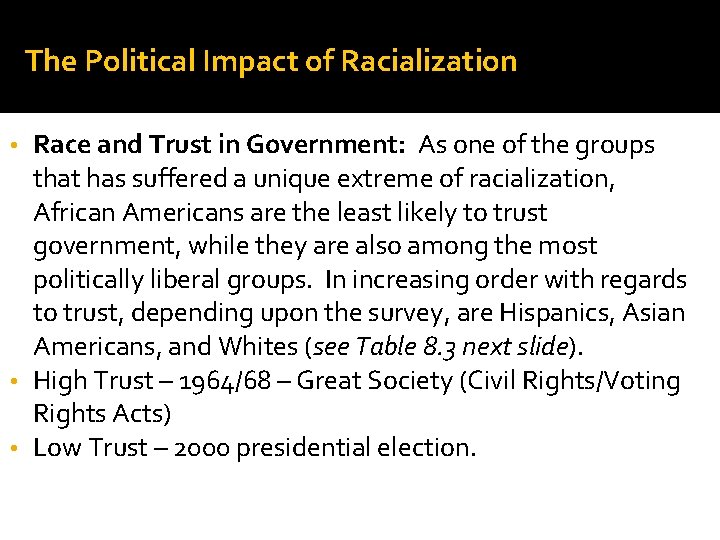
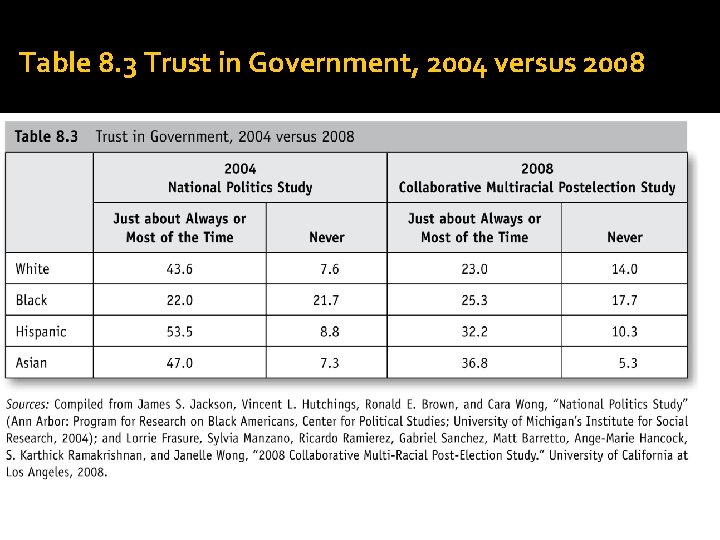
The Political Impact of Racialization Race and Trust in Government: As one of the groups that has suffered a unique extreme of racialization, African Americans are the least likely to trust government, while they are also among the most politically liberal groups. In increasing order with regards to trust, depending upon the survey, are Hispanics, Asian Americans, and Whites (see Table 8. 3 next slide). • High Trust – 1964/68 – Great Society (Civil Rights/Voting Rights Acts) • Low Trust – 2000 presidential election. •
Table 8. 3 Trust in Government, 2004 versus 2008
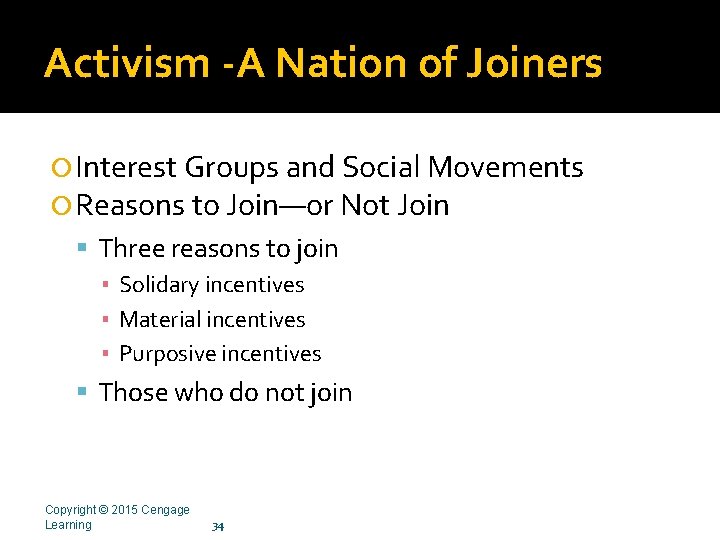
Activism -A Nation of Joiners Interest Groups and Social Movements Reasons to Join—or Not Join Three reasons to join ▪ Solidary incentives ▪ Material incentives ▪ Purposive incentives Those who do not join Copyright © 2015 Cengage Learning 34
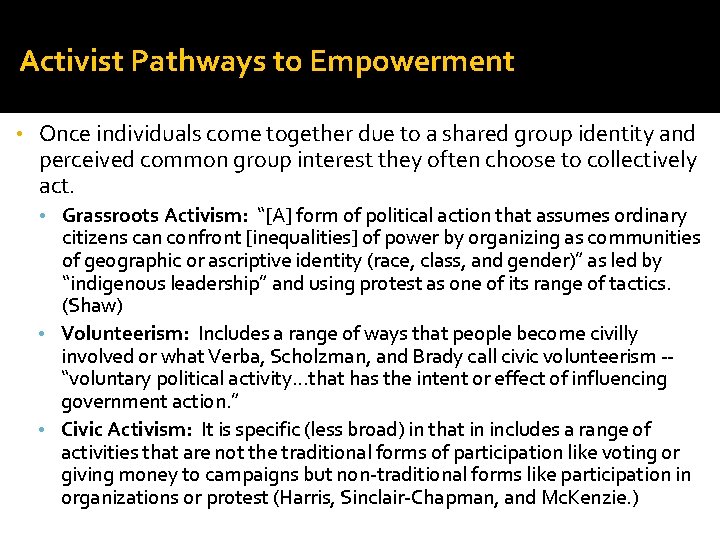
Activist Pathways to Empowerment • Once individuals come together due to a shared group identity and perceived common group interest they often choose to collectively act. • Grassroots Activism: “[A] form of political action that assumes ordinary citizens can confront [inequalities] of power by organizing as communities of geographic or ascriptive identity (race, class, and gender)” as led by “indigenous leadership” and using protest as one of its range of tactics. (Shaw) • Volunteerism: Includes a range of ways that people become civilly involved or what Verba, Scholzman, and Brady call civic volunteerism -“voluntary political activity…that has the intent or effect of influencing government action. ” • Civic Activism: It is specific (less broad) in that in includes a range of activities that are not the traditional forms of participation like voting or giving money to campaigns but non-traditional forms like participation in organizations or protest (Harris, Sinclair-Chapman, and Mc. Kenzie. )
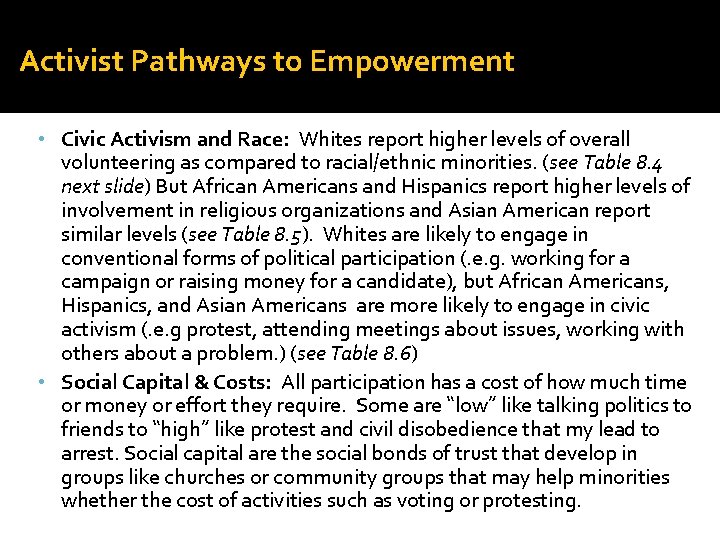
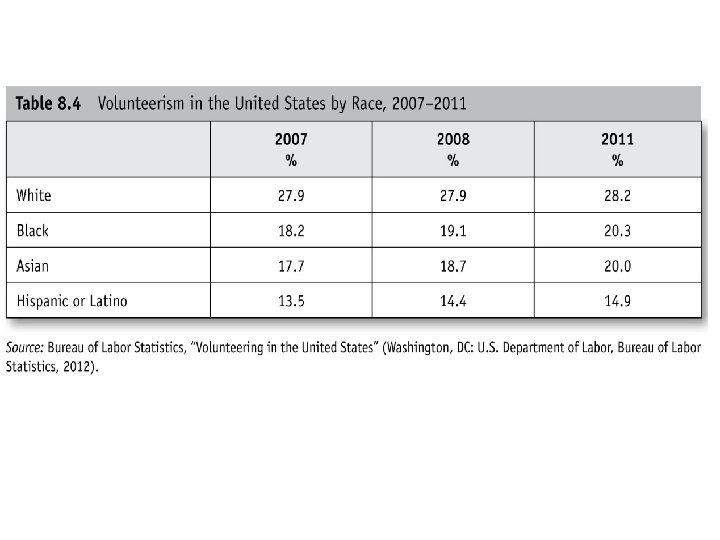
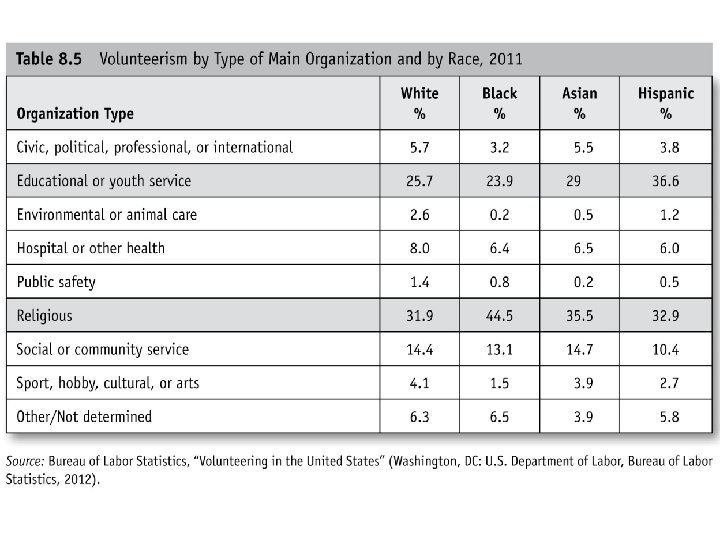
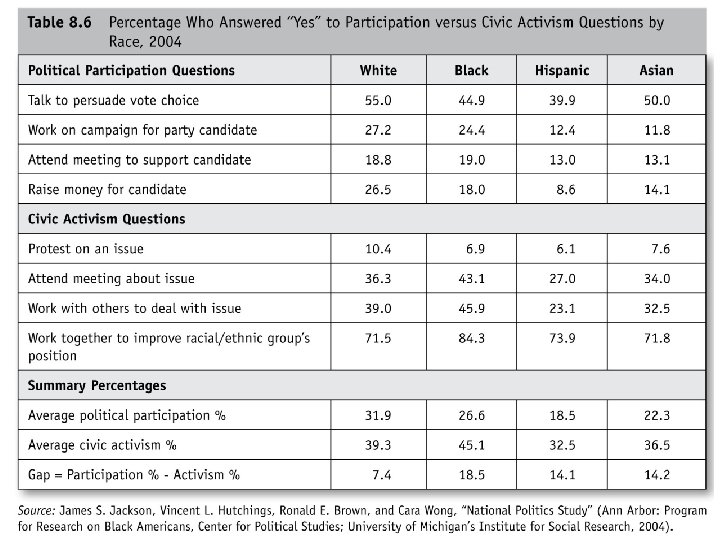
Activist Pathways to Empowerment • Civic Activism and Race: Whites report higher levels of overall volunteering as compared to racial/ethnic minorities. (see Table 8. 4 next slide) But African Americans and Hispanics report higher levels of involvement in religious organizations and Asian American report similar levels (see Table 8. 5). Whites are likely to engage in conventional forms of political participation (. e. g. working for a campaign or raising money for a candidate), but African Americans, Hispanics, and Asian Americans are more likely to engage in civic activism (. e. g protest, attending meetings about issues, working with others about a problem. ) (see Table 8. 6) • Social Capital & Costs: All participation has a cost of how much time or money or effort they require. Some are “low” like talking politics to friends to “high” like protest and civil disobedience that my lead to arrest. Social capital are the social bonds of trust that develop in groups like churches or community groups that may help minorities whether the cost of activities such as voting or protesting.
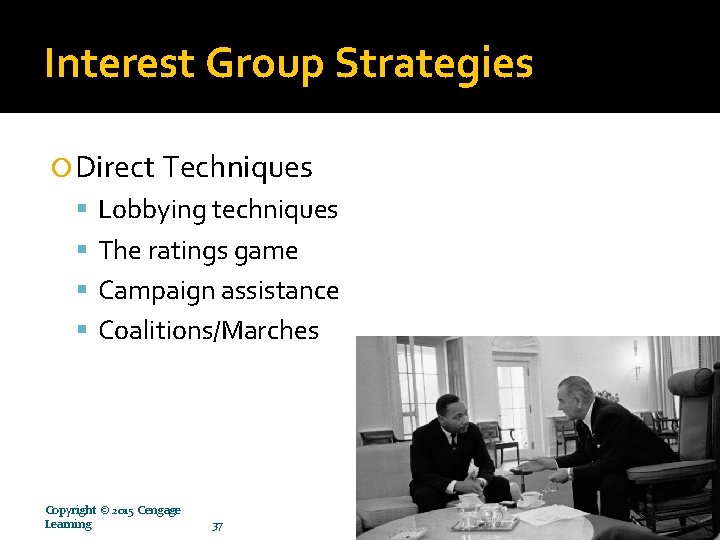
Interest Group Strategies Direct Techniques Lobbying techniques The ratings game Campaign assistance Coalitions/Marches Copyright © 2015 Cengage Learning 37
Interest Group Strategies Indirect Techniques Generating public pressure ▪ Climate control by using public relations techniques to create favorable public opinion towards an interest group. Using constituents as lobbyists Marches and boycotts (buycotts) Copyright © 2015 Cengage Learning 38
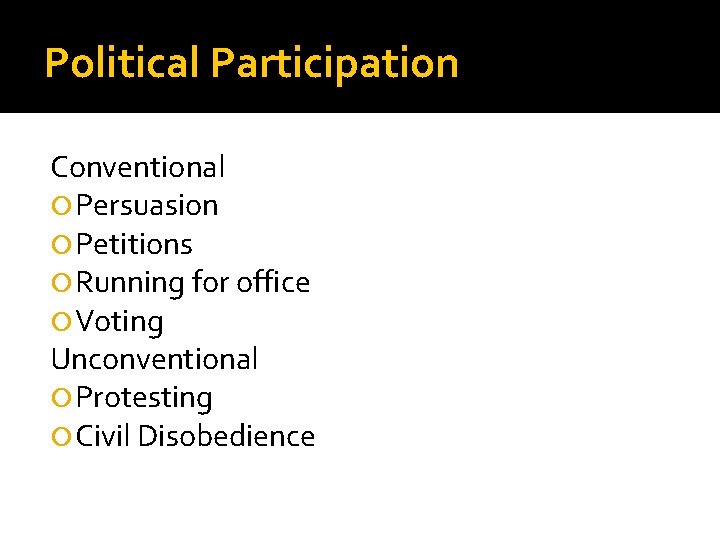
Political Participation Conventional Persuasion Petitions Running for office Voting Unconventional Protesting Civil Disobedience
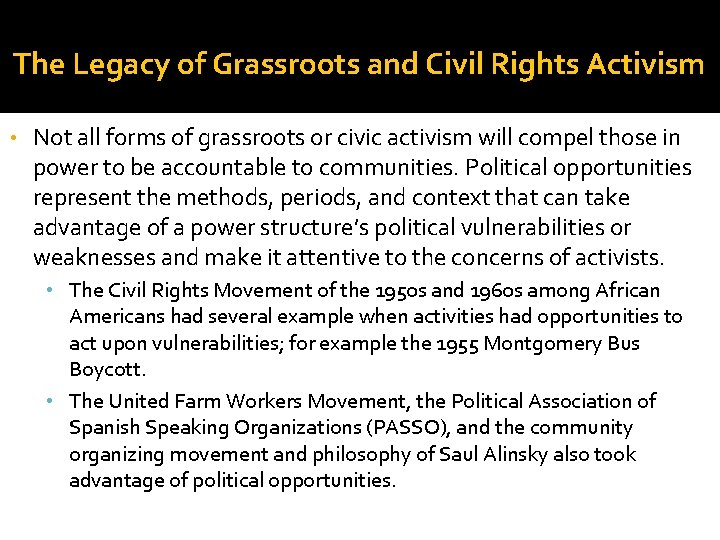
The Legacy of Grassroots and Civil Rights Activism • Not all forms of grassroots or civic activism will compel those in power to be accountable to communities. Political opportunities represent the methods, periods, and context that can take advantage of a power structure’s political vulnerabilities or weaknesses and make it attentive to the concerns of activists. • The Civil Rights Movement of the 1950 s and 1960 s among African Americans had several example when activities had opportunities to act upon vulnerabilities; for example the 1955 Montgomery Bus Boycott. • The United Farm Workers Movement, the Political Association of Spanish Speaking Organizations (PASSO), and the community organizing movement and philosophy of Saul Alinsky also took advantage of political opportunities.
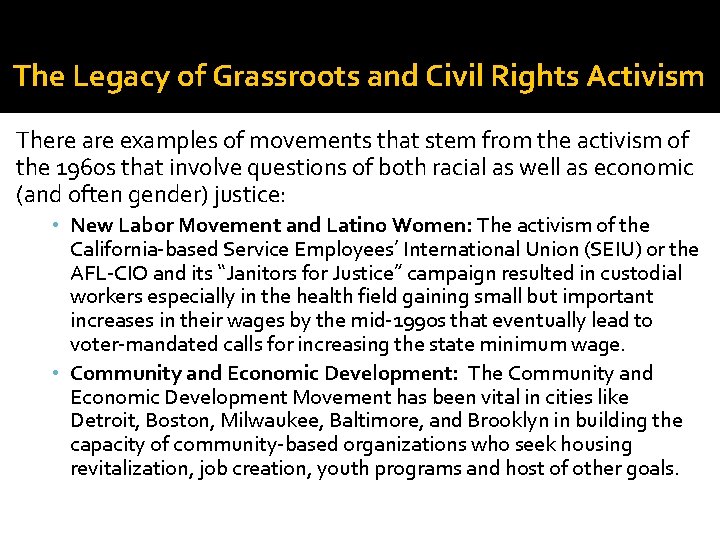
The Legacy of Grassroots and Civil Rights Activism There are examples of movements that stem from the activism of the 1960 s that involve questions of both racial as well as economic (and often gender) justice: • New Labor Movement and Latino Women: The activism of the California-based Service Employees’ International Union (SEIU) or the AFL-CIO and its “Janitors for Justice” campaign resulted in custodial workers especially in the health field gaining small but important increases in their wages by the mid-1990 s that eventually lead to voter-mandated calls for increasing the state minimum wage. • Community and Economic Development: The Community and Economic Development Movement has been vital in cities like Detroit, Boston, Milwaukee, Baltimore, and Brooklyn in building the capacity of community-based organizations who seek housing revitalization, job creation, youth programs and host of other goals.
Mobilizing for a Change Future • This chapter’s objective was for you to understand: (1) how group identities shape racial attitudes and public opinion; (20 how group identity in terms shapes ideology; (3) how persons can used their perceptions of racial/ethnic linked fates and group interests to collectively act; and (3) when they collectively act what might occur. • While there are many examples of how race and ethnicity and prompt groups to assume positions on the extremes of each other (the New Black Panther Party or the Tea Party), much of American politics frequently occurs in between such extremes.