
The Ideal Performance State What is the Ideal
- Slides: 21
The Ideal Performance State
What is the Ideal Performance State? Also known as: The Zone Flow Easy Speed Kobe: http: //www. youtube. com/watch? v=wl 49 zc 8 g 3 DY Jason Mc. Elwain http: //www. youtube. com/watch? v=1 fw 1 Ccx. CUgg
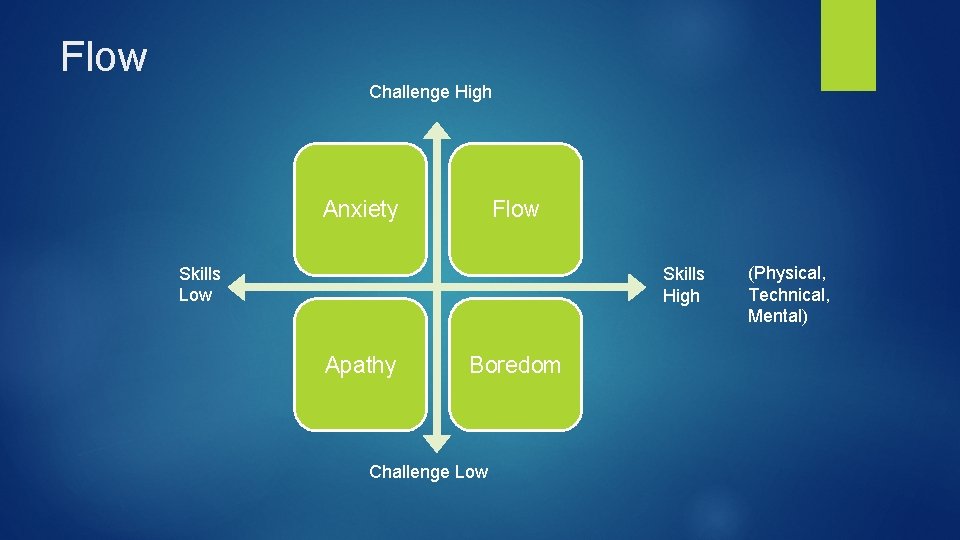
Flow Challenge High Anxiety Flow Skills Low Skills High Apathy Boredom Challenge Low (Physical, Technical, Mental)
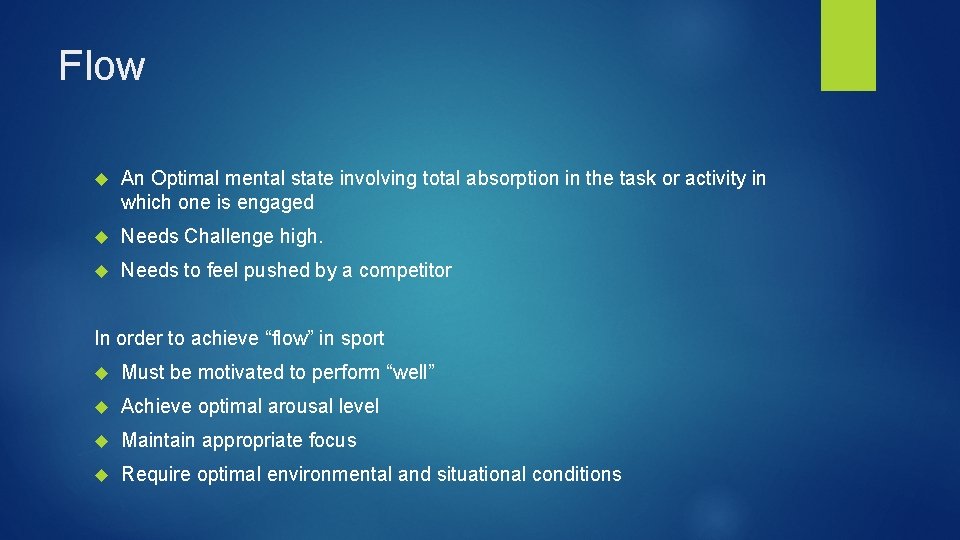
Flow An Optimal mental state involving total absorption in the task or activity in which one is engaged Needs Challenge high. Needs to feel pushed by a competitor In order to achieve “flow” in sport Must be motivated to perform “well” Achieve optimal arousal level Maintain appropriate focus Require optimal environmental and situational conditions
Psychological Skills Many different psychological methods can be used to improve psychological skill performance in physical activity. Psychological methods used to improve key areas of mental skill performance include: Concentration Confidence Motivation Arousal
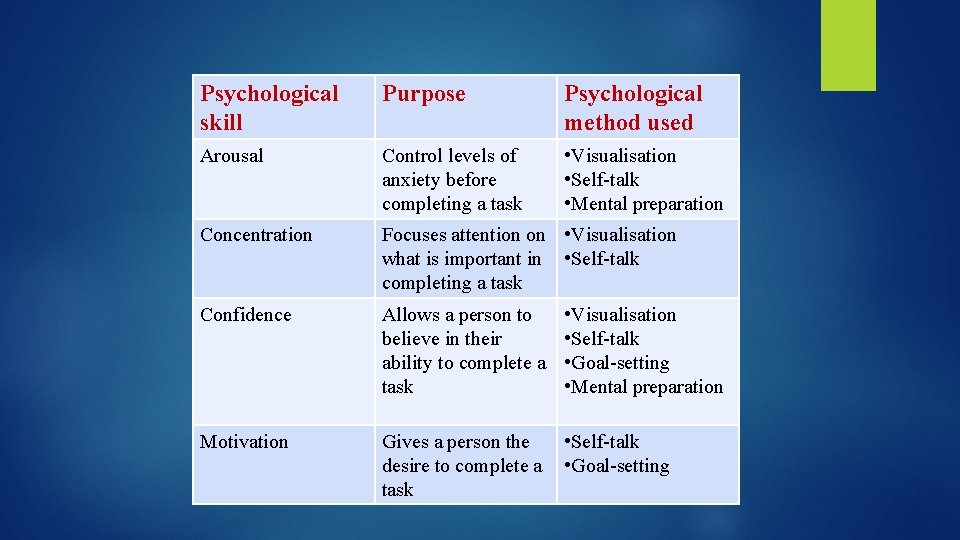
Psychological skill Purpose Psychological method used Arousal Control levels of anxiety before completing a task • Visualisation • Self-talk • Mental preparation Concentration Focuses attention on • Visualisation what is important in • Self-talk completing a task Confidence Allows a person to believe in their ability to complete a task • Visualisation • Self-talk • Goal-setting • Mental preparation Motivation Gives a person the desire to complete a task • Self-talk • Goal-setting
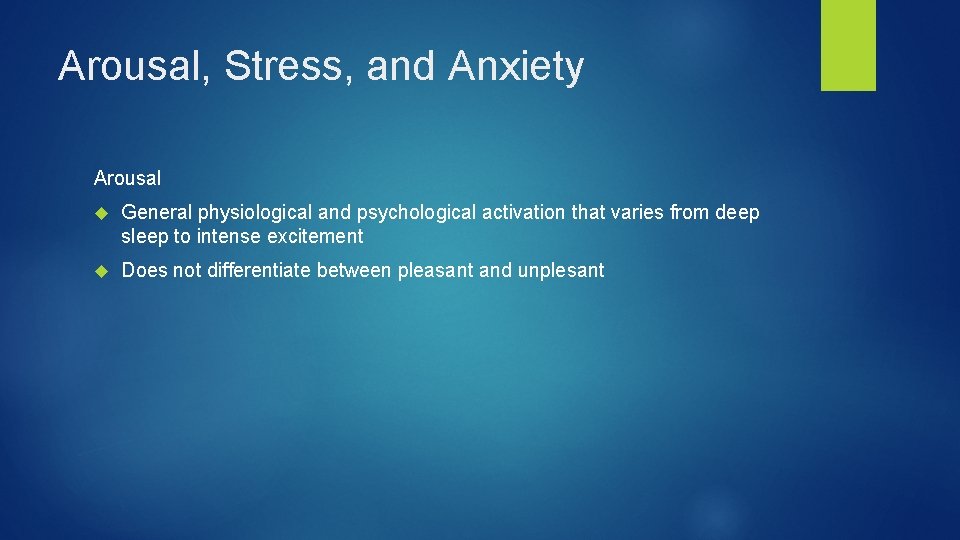
Arousal, Stress, and Anxiety Arousal General physiological and psychological activation that varies from deep sleep to intense excitement Does not differentiate between pleasant and unplesant
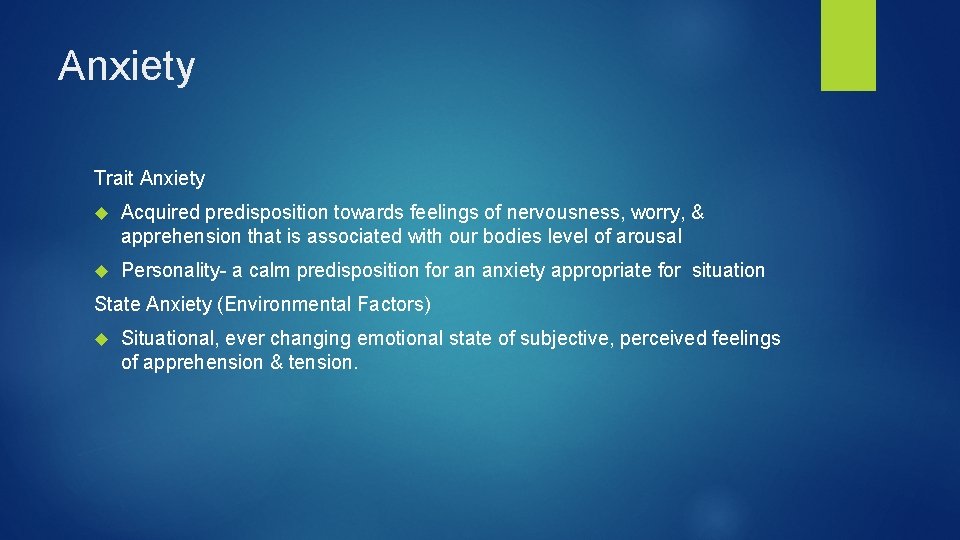
Anxiety Trait Anxiety Acquired predisposition towards feelings of nervousness, worry, & apprehension that is associated with our bodies level of arousal Personality- a calm predisposition for an anxiety appropriate for situation State Anxiety (Environmental Factors) Situational, ever changing emotional state of subjective, perceived feelings of apprehension & tension.
Stress Stress: A response that occurs when there is a substantial imbalance between one‘s physical & psychological demands and their perceived resources/ability to meet them.
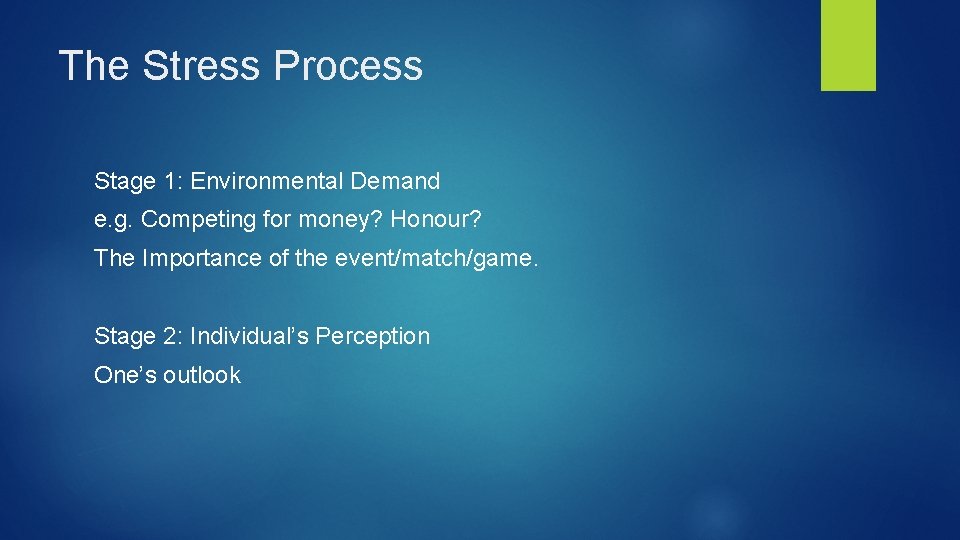
The Stress Process Stage 1: Environmental Demand e. g. Competing for money? Honour? The Importance of the event/match/game. Stage 2: Individual’s Perception One’s outlook
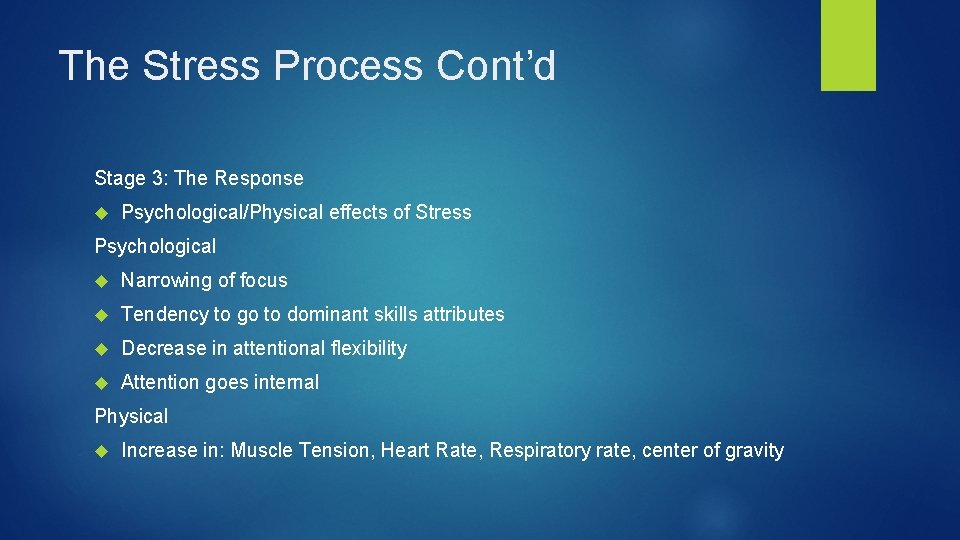
The Stress Process Cont’d Stage 3: The Response Psychological/Physical effects of Stress Psychological Narrowing of focus Tendency to go to dominant skills attributes Decrease in attentional flexibility Attention goes internal Physical Increase in: Muscle Tension, Heart Rate, Respiratory rate, center of gravity
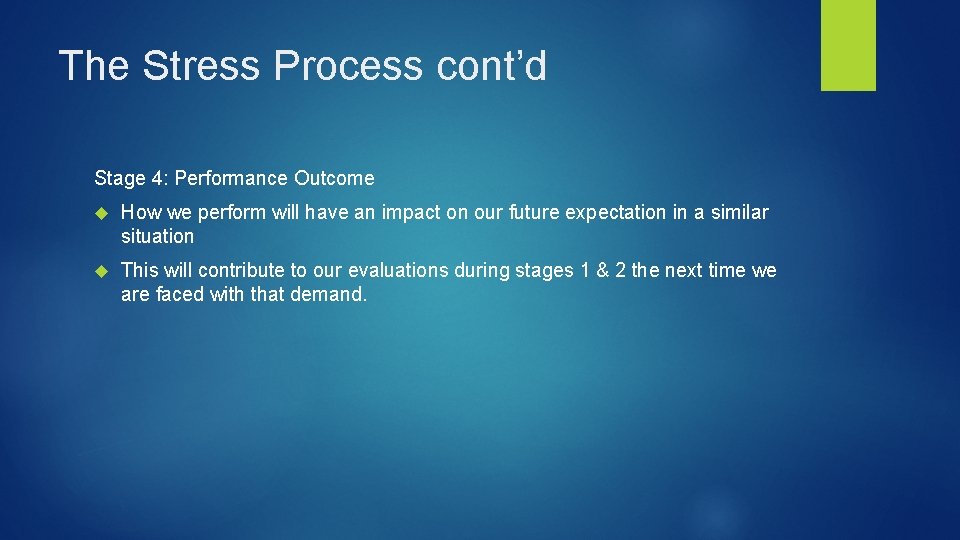
The Stress Process cont’d Stage 4: Performance Outcome How we perform will have an impact on our future expectation in a similar situation This will contribute to our evaluations during stages 1 & 2 the next time we are faced with that demand.
Arousal is the mental state of readiness a person is in before and during activity. It involves the levels of stress and anxiety most people experience before a challenging activity. Some nerves / anxiety is necessary before competition, as it energises and brings the person up to an optimal level of arousal, however, too much stress ( usually caused b the pressure to perform well) can interfere with performance. You need an optimal amount of intensity to perform your best—not too much and not too little. More intensity is not necessarily better, even in high-intensity pursuits. Increased intensity can either help you reach greater heights or make you fall flat on your face. The goal is to free yourself to perform rather than force yourself to perform
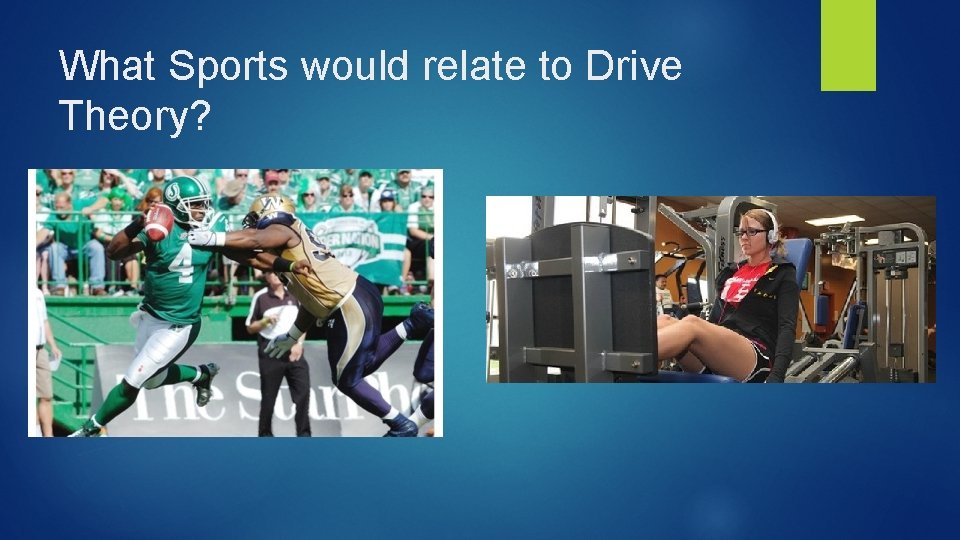
Exploring Arousal Theory Drive Theory As arousal increases, so does performance. A common belief has traditionally been that the more “psyched up” a person is before they perform an activity, the better they will perform. This leads to becoming over-aroused, which leads to mistakes because they become overly enthusiastic. As arousal levels increase, dominant responses occur. Music could regulate arousal levels. https: //www. youtube. com/watch? v=J 7 sf 73 u 37 Fw https: //www. youtube. com/watch? v=ofbnp. Vbtq. Tc&feature=youtu. be
What Sports would relate to Drive Theory?
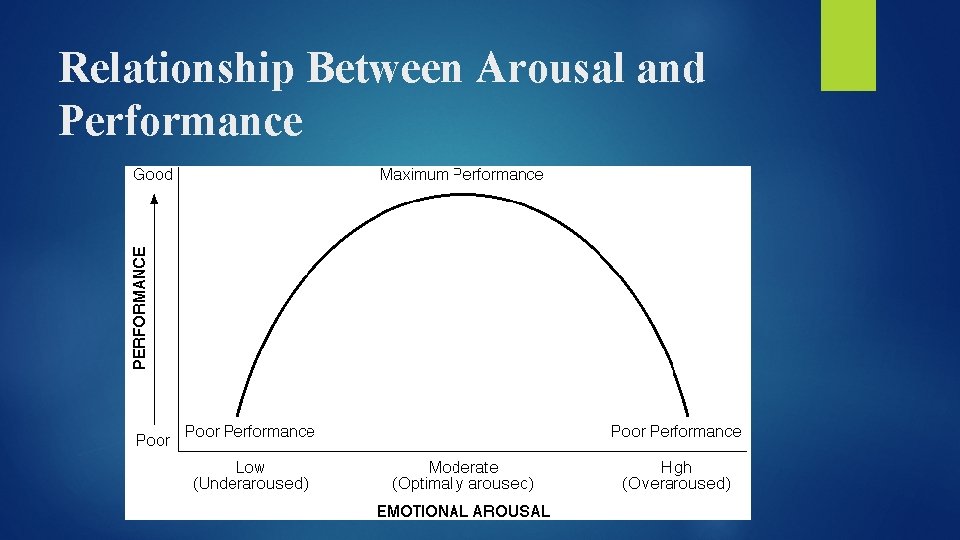
The Inverted “U” Theory of Arousal The Inverted U Theory of Arousal suggests that there is an optimal state of mental preparation which will lead to good performance. When an individual is under or over aroused, performance decreases. Background and personality affect the level of arousal needed to perform. Over Aroused Under Aroused Inability to concentrate Looking/sounding tired Over aggressive Careless Fear / worry Easily distracted
Relationship Between Arousal and Performance
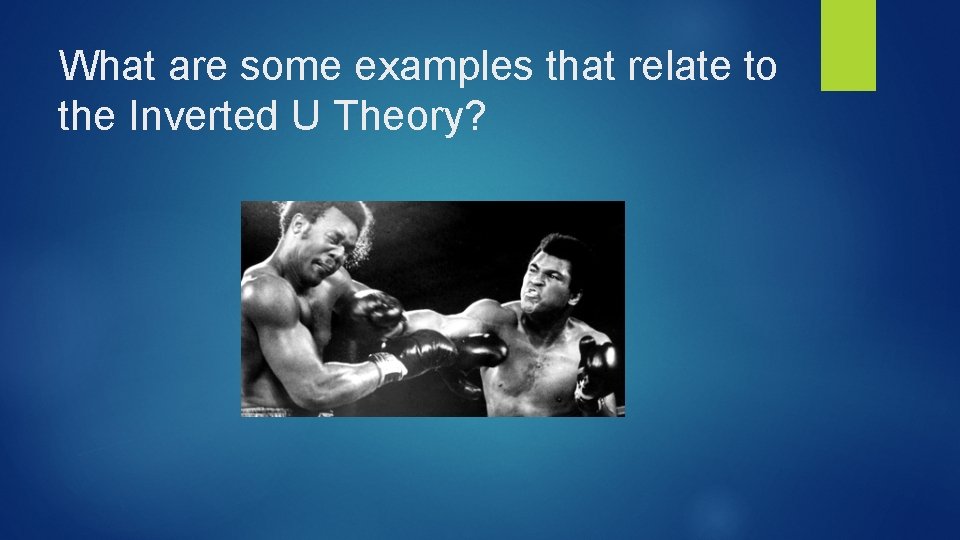
What are some examples that relate to the Inverted U Theory?
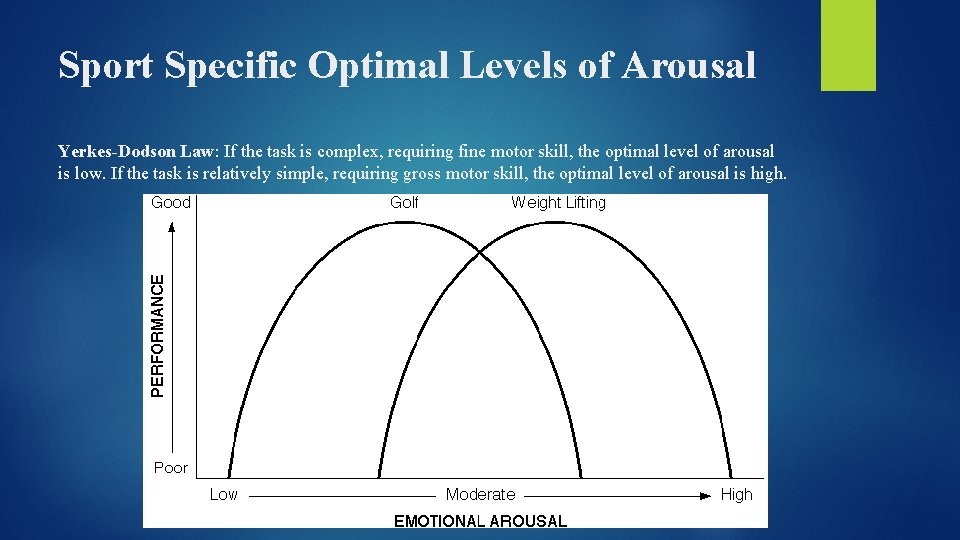
Sport Specific Optimal Levels of Arousal Yerkes-Dodson Law: If the task is complex, requiring fine motor skill, the optimal level of arousal is low. If the task is relatively simple, requiring gross motor skill, the optimal level of arousal is high.
Other’s? Reversal Theory Response is dependant on how performer interprets arousal & subsequently their performance E. g. If an increase in heart rate is labelled as “excitement” then it will result in a positive performance. If labelled as “anxiety” then negative Social Facilitation Presence of others improves performance on well learned or simple skills Presence of others inhibits or lessens performance on unlearned or complex tasks
Assignment 1) Make a 60 minute playlist that will assist you to reach your optimal arousal state. 2) Need to list song title, length of each song, and bpm’s. Playlist must equal to at least 60 mins. 3) For each song, provide a short explanation why it is in your playlist. E. g. Tempo, how it pertains to your sport, your feelings when you hear that song, it’s a current song, etc. www. songbpm. com is a good resource