
The Ideal Organization An Overview The Ideal Organization
- Slides: 28
The Ideal Organization An Overview
The Ideal Organization Three stages of evolution: Stage 1 – A VISION Stage 2 – VALUES, CULTURE, STRUCTURE Stage 3 – MISSION, PURPOSE, STRATEGIC PLAN, PLAN EXECUTION
The Ideal Organization It all begins with a VISION of what the organization looks like, now and in the future. VISION The VISION Statement is the BIG PICTURE “Without a vision, the people perish” Proverbs 29: 18 (KJV)
Values
Integrity Transparency Honesty Humility Diversity
Life Balance Employee Stewardship Wholeness Growth Mentoring and Coaching
Commitment Market Awareness Stakeholder Awareness Self-discipline Perseverance
Teamwork Trust Communication Accountability Collaboration Respect Positivity
Quality Creativity Excellence
Culture
Culture Organizational Culture – a system of shared values and beliefs that influence worker behavior. (Dubrin, 2007)
Culture Discipline Golden Rule Profit Sharing Influence Based
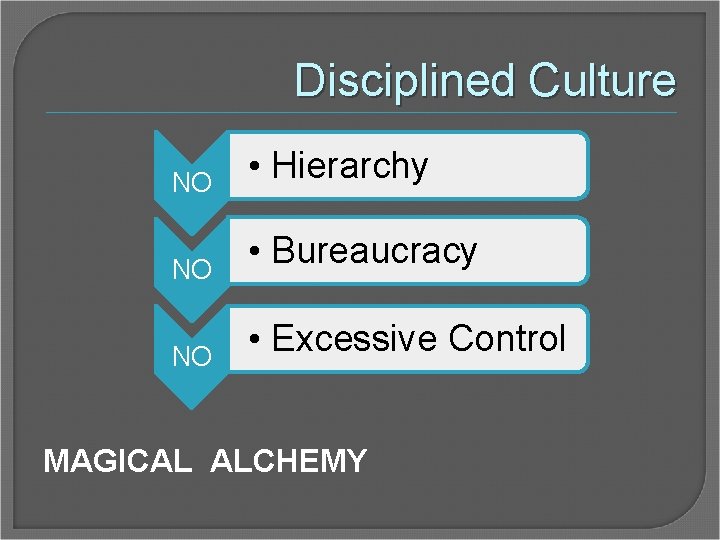
Disciplined Culture NO NO NO • Hierarchy • Bureaucracy • Excessive Control MAGICAL ALCHEMY
Golden Rule Actions speak volumes Model Leadership Ethically driven
Influence Based Culture Power – Open System • Checks and Balances • CEO has veto power but rarely used • Ideal Example– Level 5 Leader Self-effacing, quite, reserved, even shy, personal humility, professional will
Profit Sharing Everyone has a say Everyone gets a piece Everyone grows
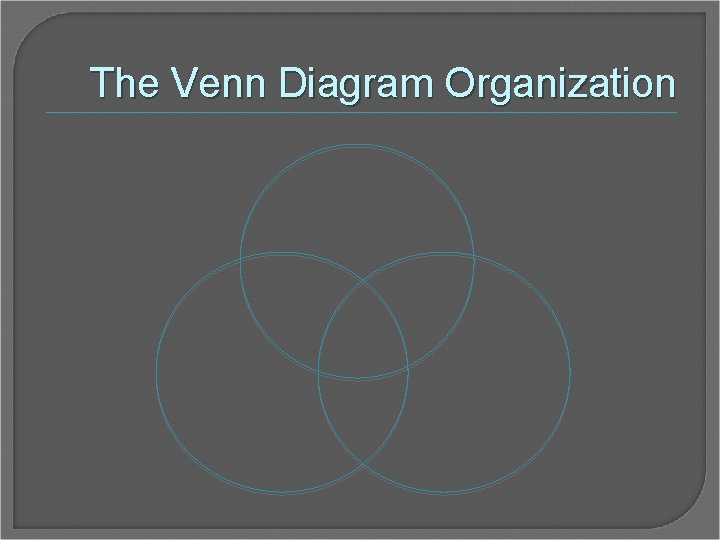
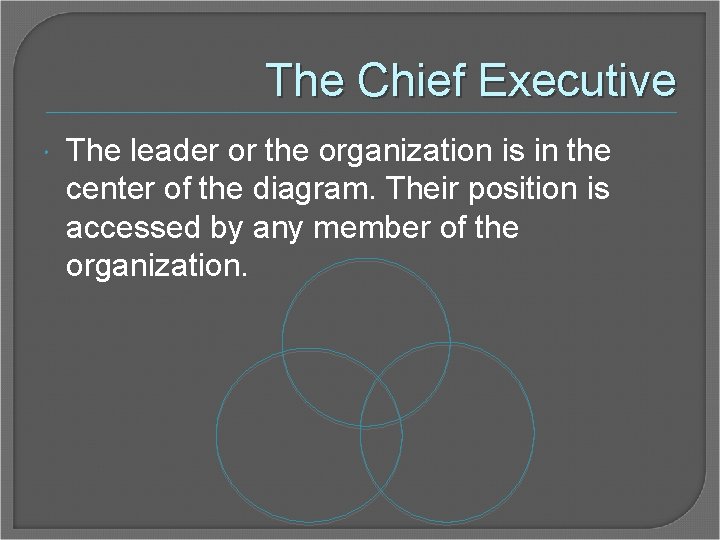
The Venn Diagram Organization
The Circles The circles represent no higher or lower power. There are three circles that group three departments of the organization.
Departmental Workers Departmental workers are specialists in their particular area of work.
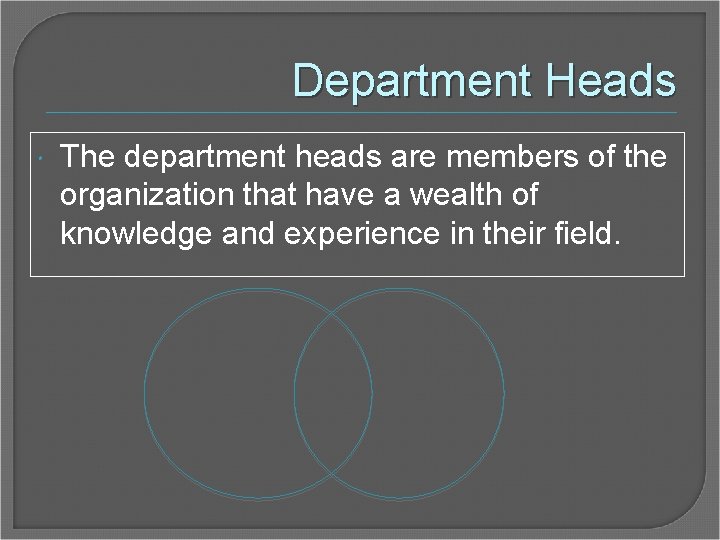
Department Heads The department heads are members of the organization that have a wealth of knowledge and experience in their field.
The Chief Executive The leader or the organization is in the center of the diagram. Their position is accessed by any member of the organization.
The Ideal Organization The VISION is driven by an underlying PURPOSE is what drives us to have a VISION or to do something The PURPOSE statement is the WHY we are doing something
The Ideal Organization The PURPOSE and the VISION become pragmatic with the MISSION Statement MISSION The MISSION is what we are actually going to do and accomplish The MISSION is the WHAT
The Ideal Organization • The MISSION is executed through a STRATEGIC PLAN • • The STRATEGIC PLAN contains the detailed actions necessary to execute the MISSION The STRATEGIC PLAN is the WHO, HOW, WHEN, and the WHERE
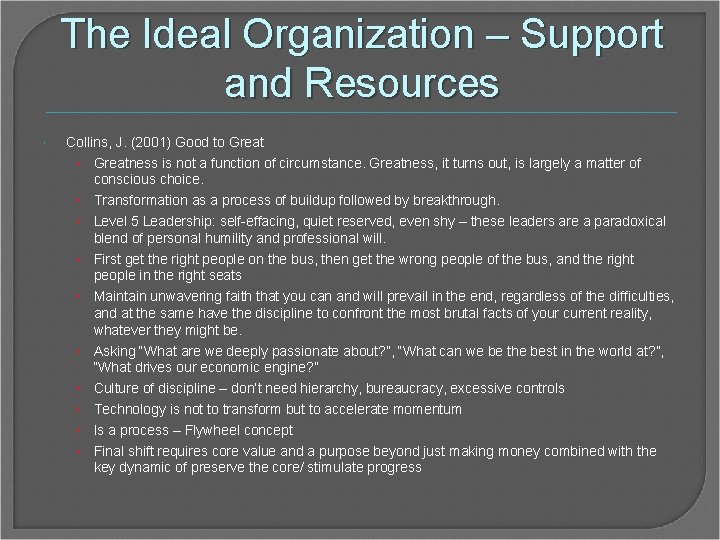
The Ideal Organization – Support and Resources Collins, J. (2001) Good to Great • Greatness is not a function of circumstance. Greatness, it turns out, is largely a matter of conscious choice. • Transformation as a process of buildup followed by breakthrough. • Level 5 Leadership: self-effacing, quiet reserved, even shy – these leaders are a paradoxical blend of personal humility and professional will. • First get the right people on the bus, then get the wrong people of the bus, and the right people in the right seats • Maintain unwavering faith that you can and will prevail in the end, regardless of the difficulties, and at the same have the discipline to confront the most brutal facts of your current reality, whatever they might be. • Asking “What are we deeply passionate about? ”, “What can we be the best in the world at? ”, “What drives our economic engine? ” • Culture of discipline – don’t need hierarchy, bureaucracy, excessive controls • Technology is not to transform but to accelerate momentum • Is a process – Flywheel concept • Final shift requires core value and a purpose beyond just making money combined with the key dynamic of preserve the core/ stimulate progress
The Ideal Organization – Support and Resources Dubrin, A. J. (2007) Fundamentals of Organizational Behavior • • Organic structure p. 315 Combination of formal and informal organization p. 316 Decentralized p. 317 Flat organization structure p. 325 Our own personal experiences • Similar desires of an ideal organization • Past experiences • Don’s line of work
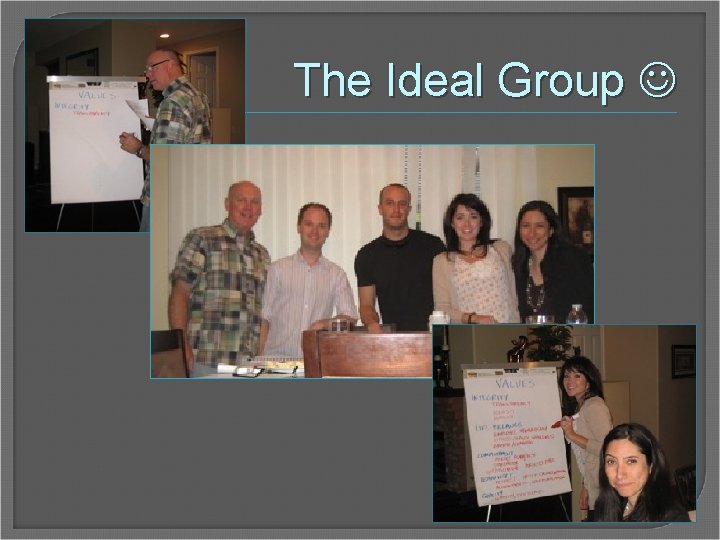
The Ideal Organization – Team Dynamics Collaboration Creativity – used flip charts to brainstorm ideas Experiences in life: age, gender, cultural backgrounds, careers, etc. Communication through emails was not working but face-to-face meetings did.
The Ideal Group