
The ICF Best of both worlds or the
The ICF Best of both worlds or the medical model in disguise? David Webb DSARC Conference, Sydney, June 2009 ICF = International Classification of Functioning, Disability and Health (WHO 2001) • aims to be an “operational” model of disability • supersedes (medical model) ICIDH • claims to be a marriage of social and medical models, giving the best of both worlds • has many fine elements to it. . . but. . .
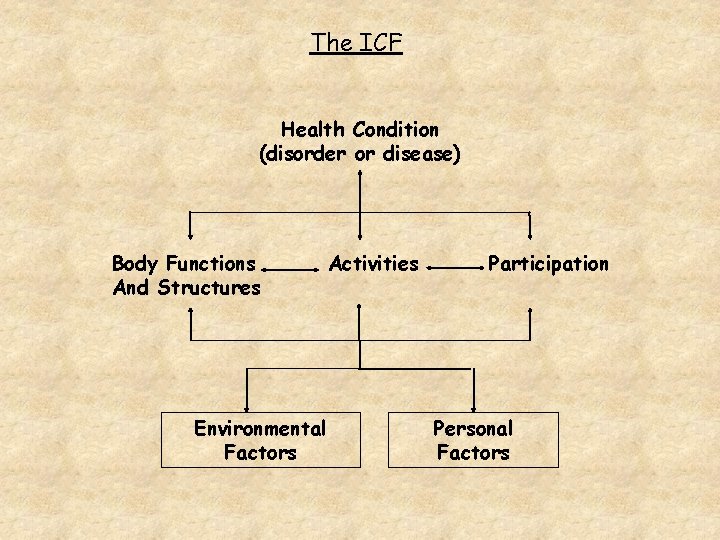
The ICF Health Condition (disorder or disease) Body Functions And Structures Environmental Factors Activities Participation Personal Factors
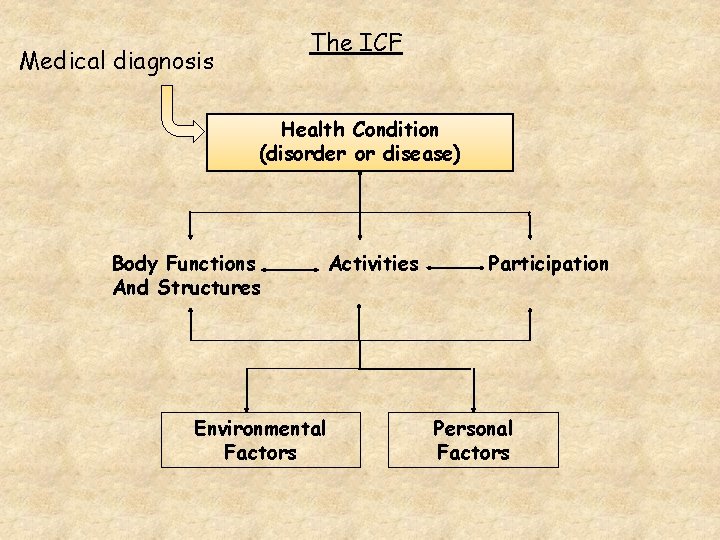
The ICF Medical diagnosis Health Condition (disorder or disease) Body Functions And Structures Environmental Factors Activities Participation Personal Factors
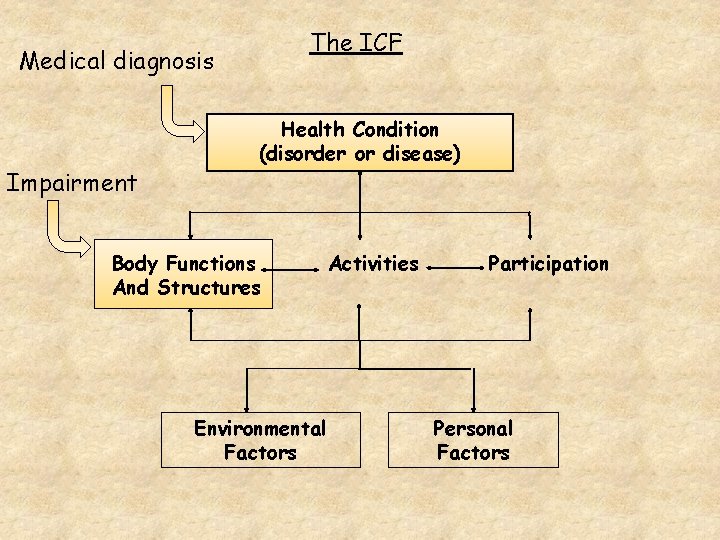
The ICF Medical diagnosis Impairment Health Condition (disorder or disease) Body Functions And Structures Environmental Factors Activities Participation Personal Factors
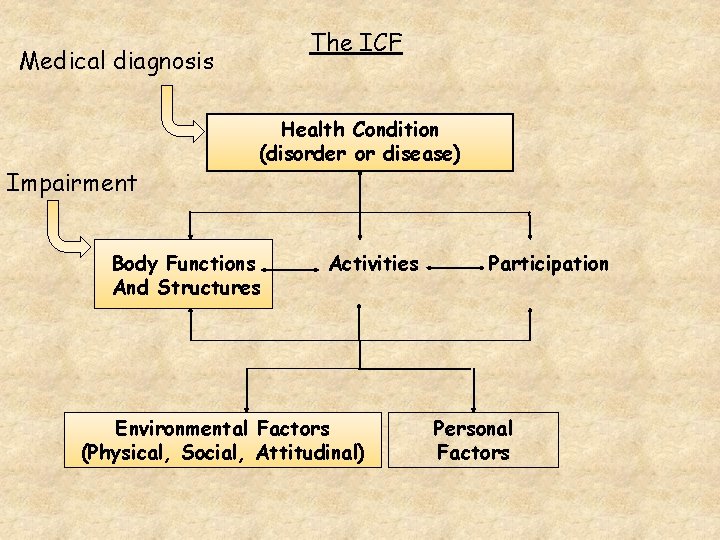
The ICF Medical diagnosis Impairment Health Condition (disorder or disease) Body Functions And Structures Activities Environmental Factors (Physical, Social, Attitudinal) Participation Personal Factors

The ICF Medical diagnosis Impairment Health Condition (disorder or disease) Body Functions And Structures Activities Environmental Factors (Physical, Social, Attitudinal) Participation Personal Factors Empty
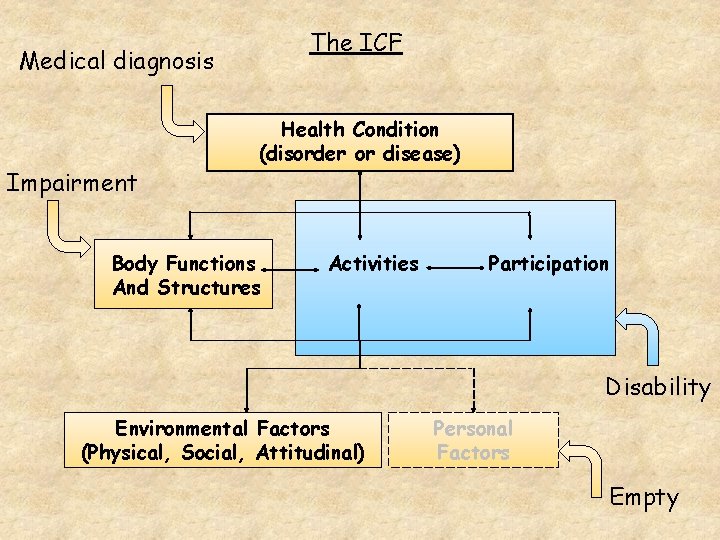
The ICF Medical diagnosis Impairment Health Condition (disorder or disease) Body Functions And Structures Activities Participation Disability Environmental Factors (Physical, Social, Attitudinal) Personal Factors Empty
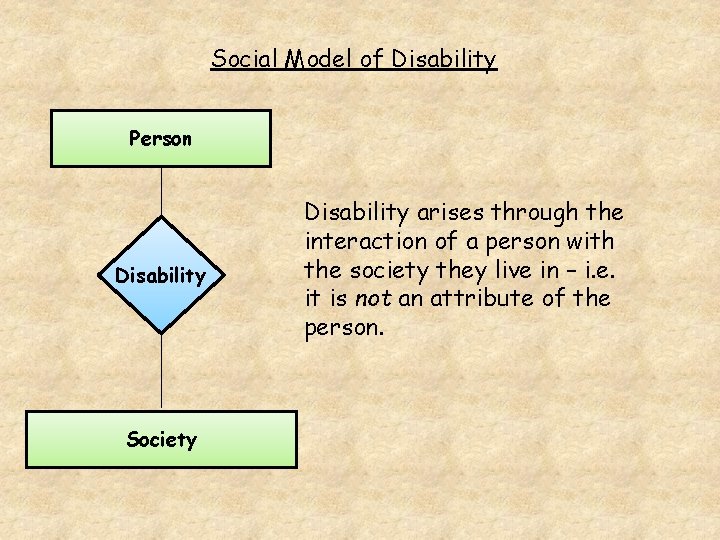
Social Model of Disability Person Disability Society Disability arises through the interaction of a person with the society they live in – i. e. it is not an attribute of the person.
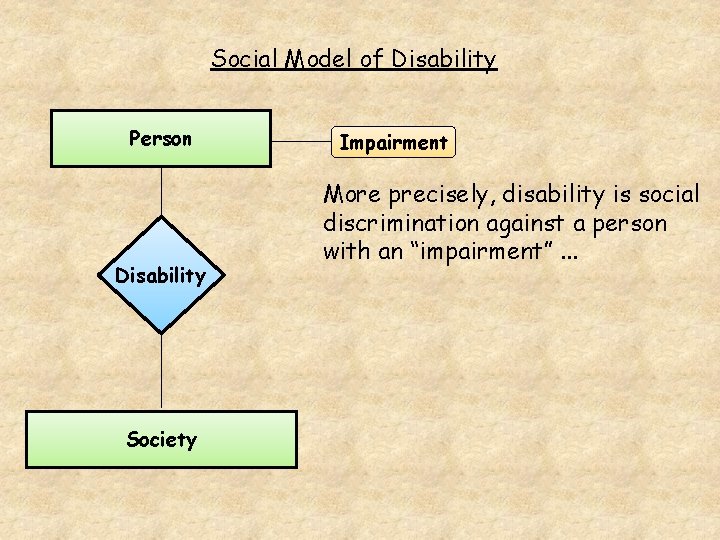
Social Model of Disability Person Disability Society Impairment More precisely, disability is social discrimination against a person with an “impairment”. . .
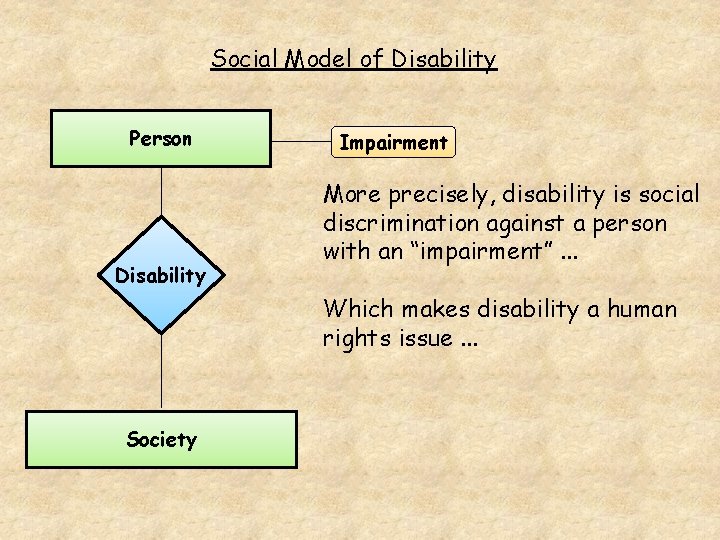
Social Model of Disability Person Disability Impairment More precisely, disability is social discrimination against a person with an “impairment”. . . Which makes disability a human rights issue. . . Society
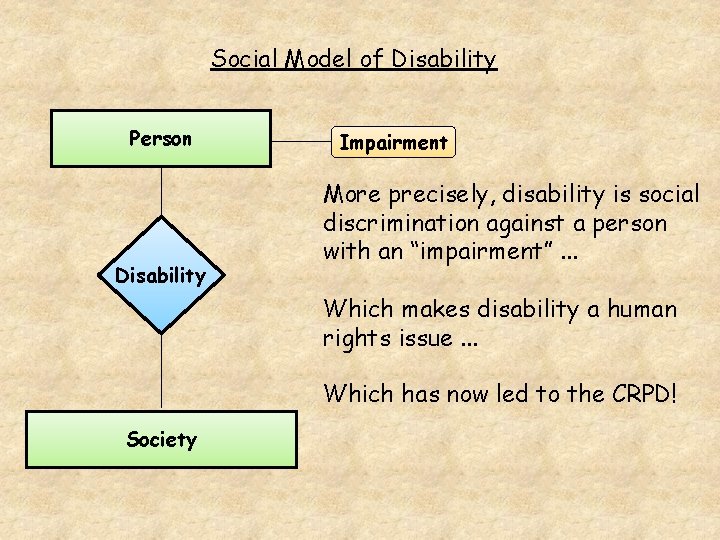
Social Model of Disability Person Disability Impairment More precisely, disability is social discrimination against a person with an “impairment”. . . Which makes disability a human rights issue. . . Which has now led to the CRPD! Society
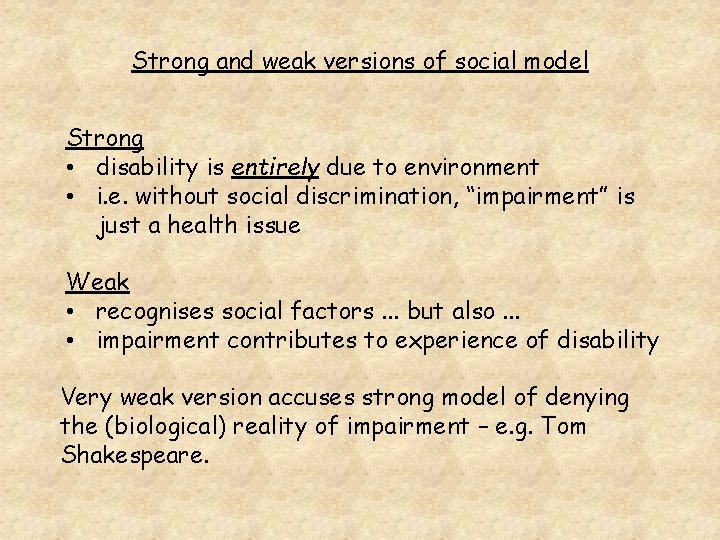
Strong and weak versions of social model Strong • disability is entirely due to environment • i. e. without social discrimination, “impairment” is just a health issue Weak • recognises social factors. . . but also. . . • impairment contributes to experience of disability Very weak version accuses strong model of denying the (biological) reality of impairment – e. g. Tom Shakespeare.
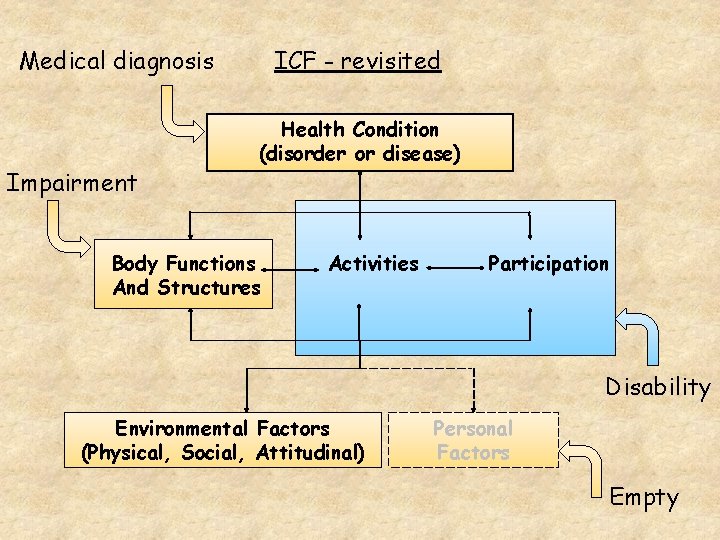
Medical diagnosis Impairment ICF - revisited Health Condition (disorder or disease) Body Functions And Structures Activities Participation Disability Environmental Factors (Physical, Social, Attitudinal) Personal Factors Empty
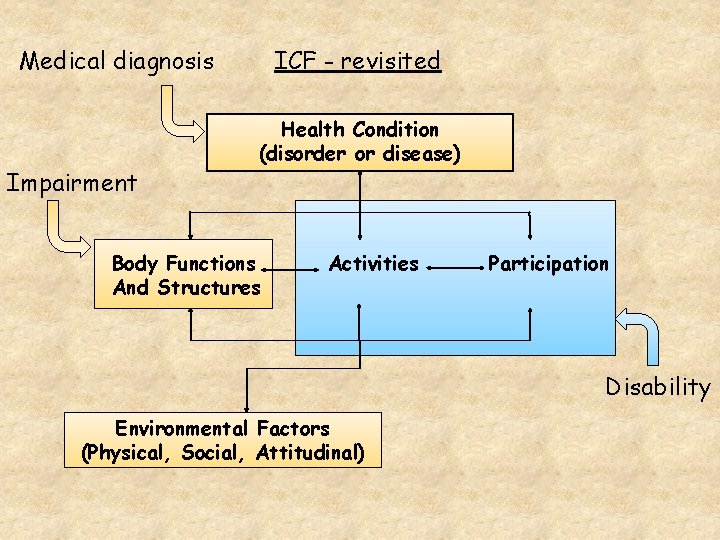
Medical diagnosis Impairment ICF - revisited Health Condition (disorder or disease) Body Functions And Structures Activities Participation Disability Environmental Factors (Physical, Social, Attitudinal)
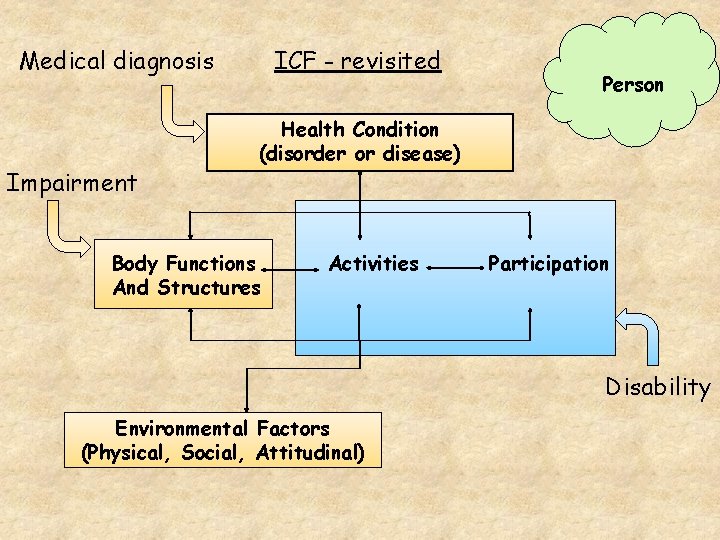
Medical diagnosis Impairment ICF - revisited Person Health Condition (disorder or disease) Body Functions And Structures Activities Participation Disability Environmental Factors (Physical, Social, Attitudinal)
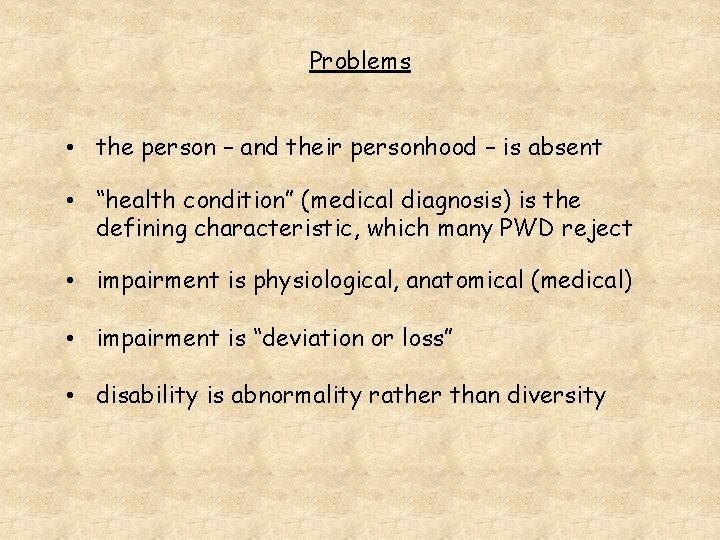
Problems • the person – and their personhood – is absent • “health condition” (medical diagnosis) is the defining characteristic, which many PWD reject • impairment is physiological, anatomical (medical) • impairment is “deviation or loss” • disability is abnormality rather than diversity
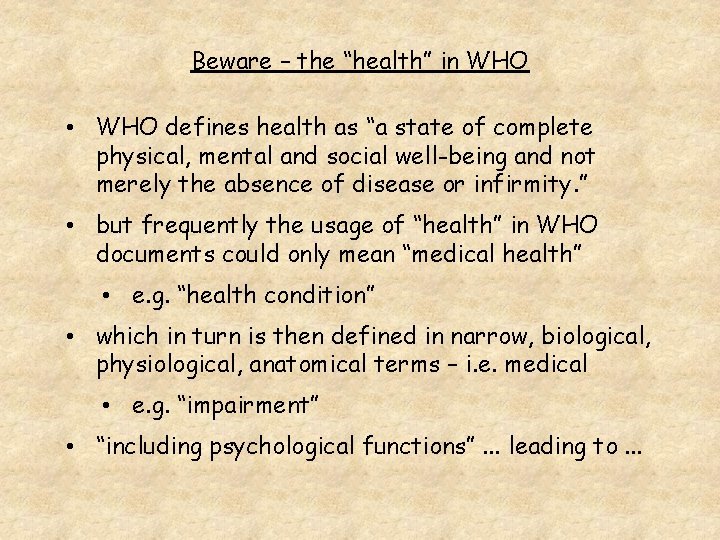
Beware – the “health” in WHO • WHO defines health as “a state of complete physical, mental and social well-being and not merely the absence of disease or infirmity. ” • but frequently the usage of “health” in WHO documents could only mean “medical health” • e. g. “health condition” • which in turn is then defined in narrow, biological, physiological, anatomical terms – i. e. medical • e. g. “impairment” • “including psychological functions”. . . leading to. . .
Special problems for psychosocial disability • not recognised without a psychiatric diagnosis • but science of psychiatric diagnosis is contested • psychological distress reduced to biological impairment of the brain • psychiatric diagnosis as discrimination: • environmental factor contributing to stigma • foundation of psychiatric force
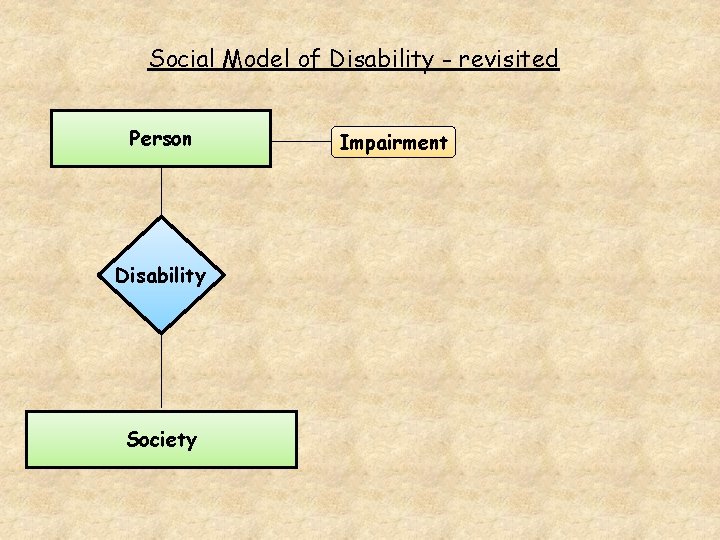
Social Model of Disability - revisited Person Disability Society Impairment
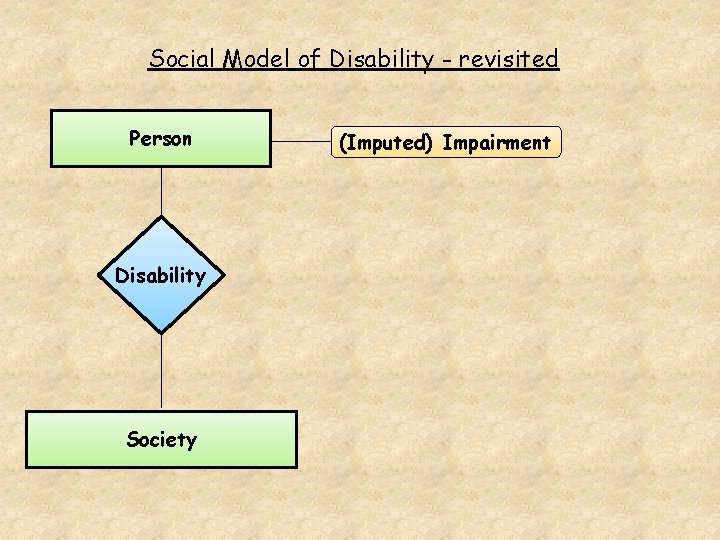
Social Model of Disability - revisited Person Disability Society (Imputed) Impairment
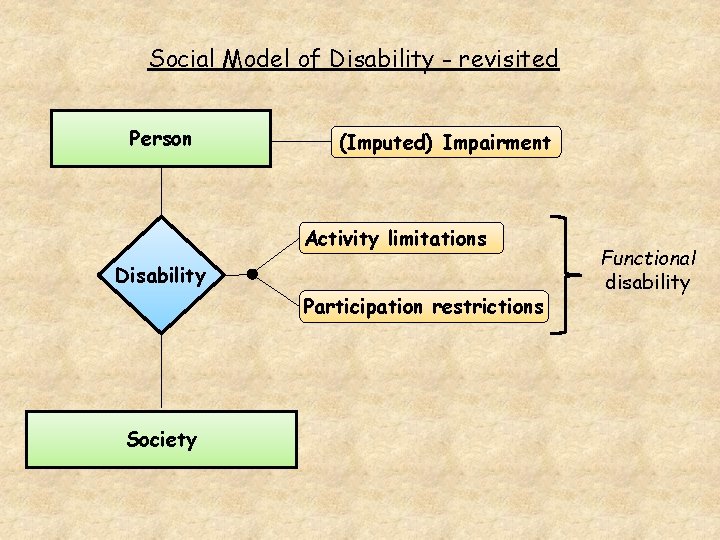
Social Model of Disability - revisited Person (Imputed) Impairment Activity limitations Disability Participation restrictions Society Functional disability
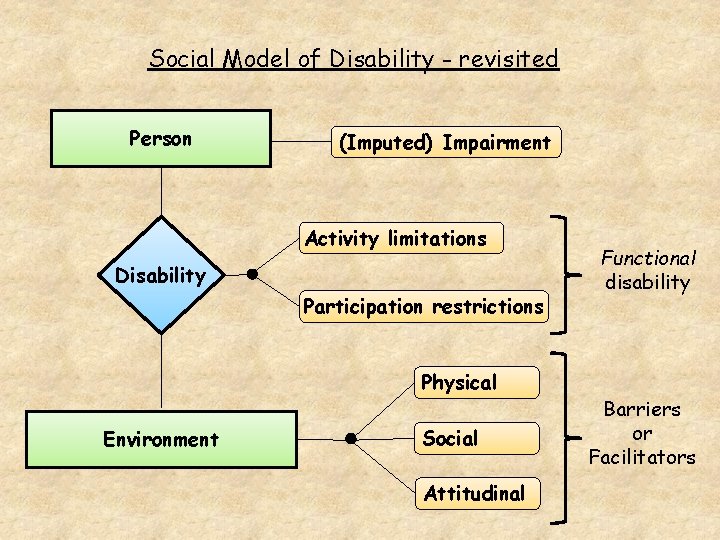
Social Model of Disability - revisited Person (Imputed) Impairment Activity limitations Disability Participation restrictions Physical Environment Social Attitudinal Functional disability Barriers or Facilitators
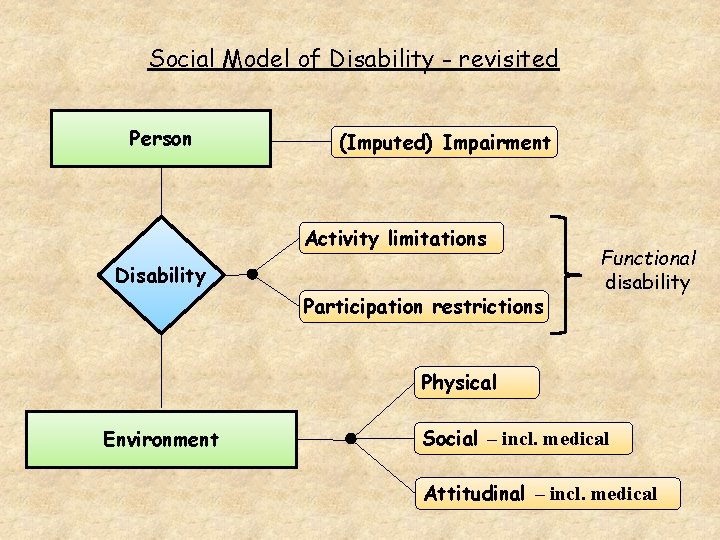
Social Model of Disability - revisited Person (Imputed) Impairment Activity limitations Disability Participation restrictions Functional disability Physical Environment Social – incl. medical Attitudinal – incl. medical
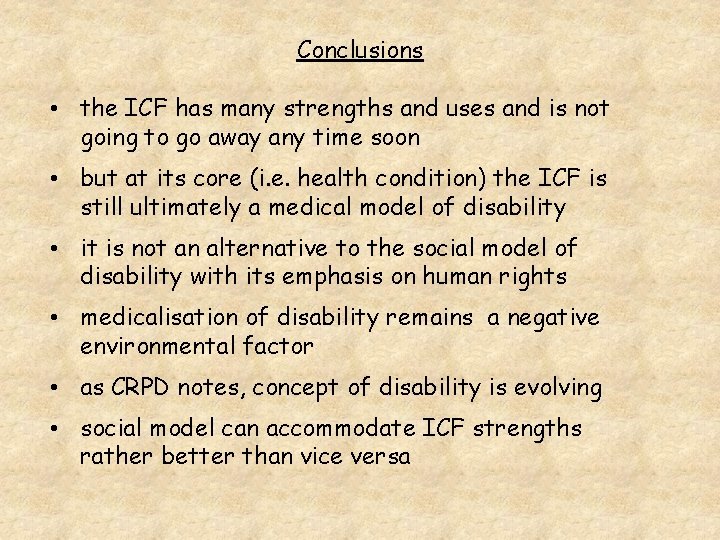
Conclusions • the ICF has many strengths and uses and is not going to go away any time soon • but at its core (i. e. health condition) the ICF is still ultimately a medical model of disability • it is not an alternative to the social model of disability with its emphasis on human rights • medicalisation of disability remains a negative environmental factor • as CRPD notes, concept of disability is evolving • social model can accommodate ICF strengths rather better than vice versa
- Slides: 24