
The Hydrosphere The Ocean in Motion Waves Waves

- Slides: 46
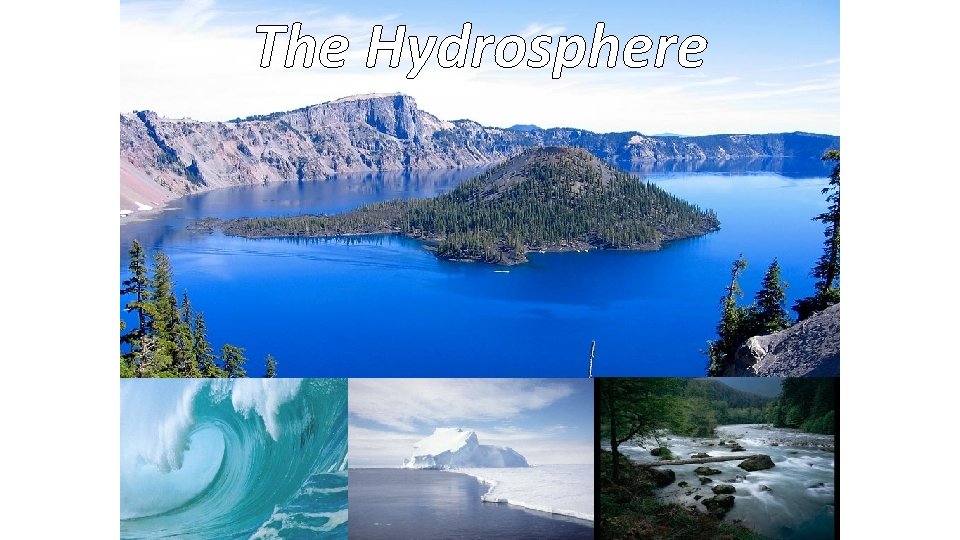
The Hydrosphere
The Ocean in Motion Waves
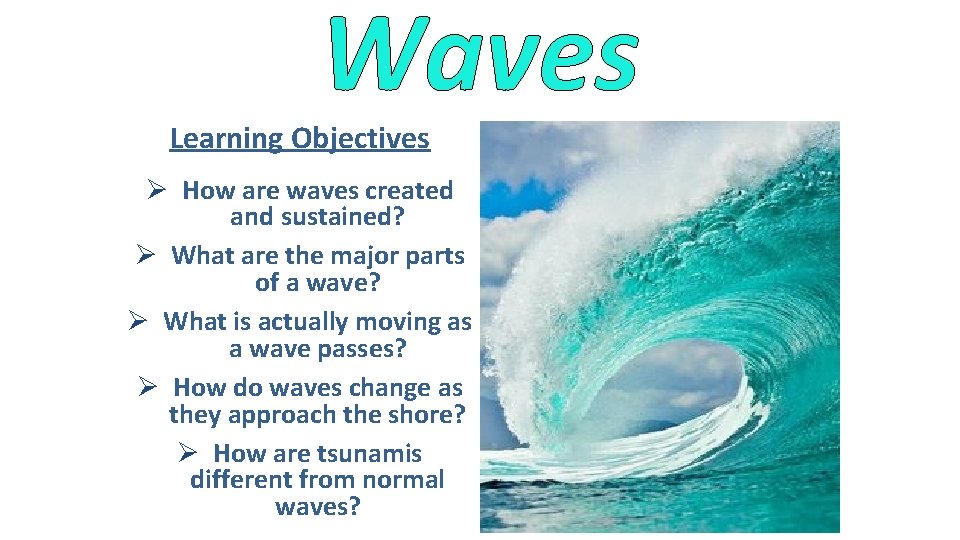
Waves Learning Objectives Ø How are waves created and sustained? Ø What are the major parts of a wave? Ø What is actually moving as a wave passes? Ø How do waves change as they approach the shore? Ø How are tsunamis different from normal waves?
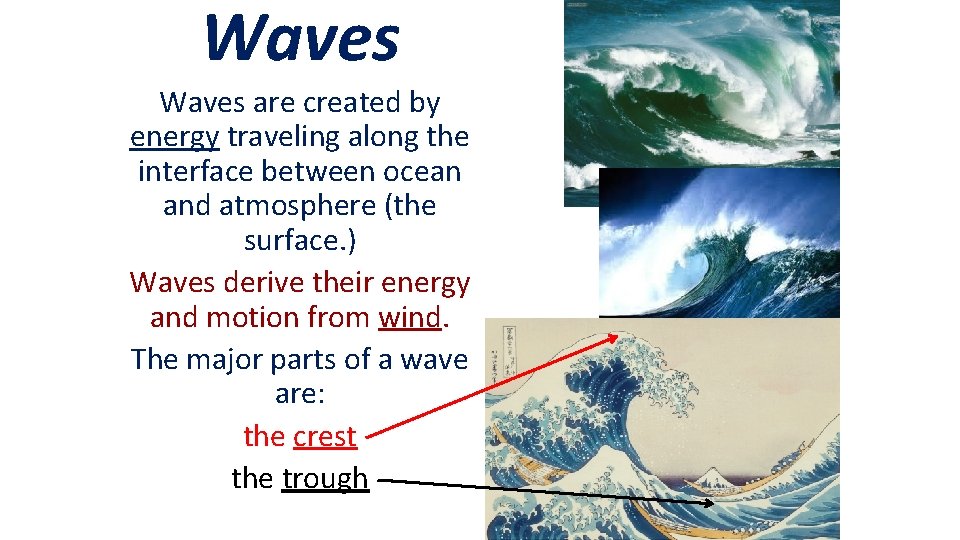
Waves are created by energy traveling along the interface between ocean and atmosphere (the surface. ) Waves derive their energy and motion from wind. The major parts of a wave are: the crest the trough
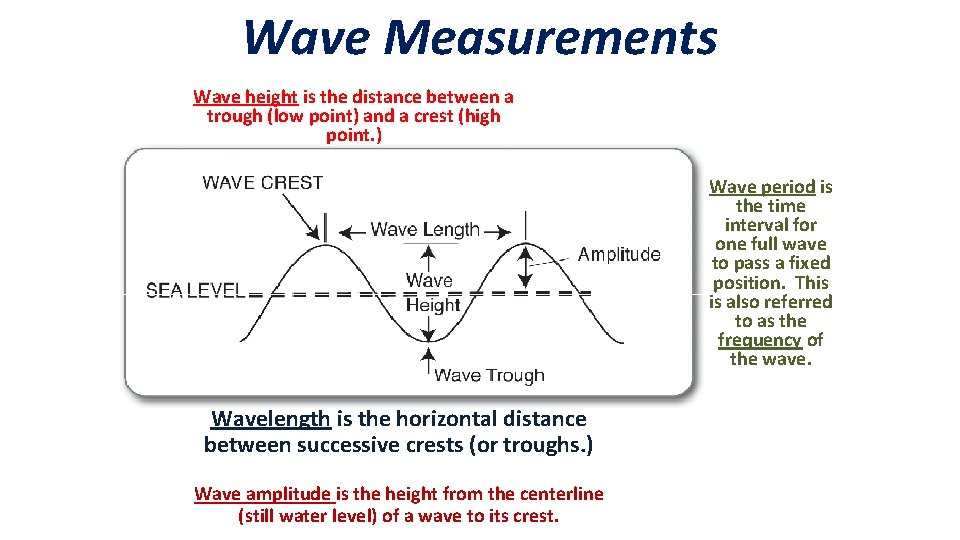
Wave Measurements Wave height is the distance between a trough (low point) and a crest (high point. ) Wave period is the time interval for one full wave to pass a fixed position. This is also referred to as the frequency of the wave. Wavelength is the horizontal distance between successive crests (or troughs. ) Wave amplitude is the height from the centerline (still water level) of a wave to its crest.
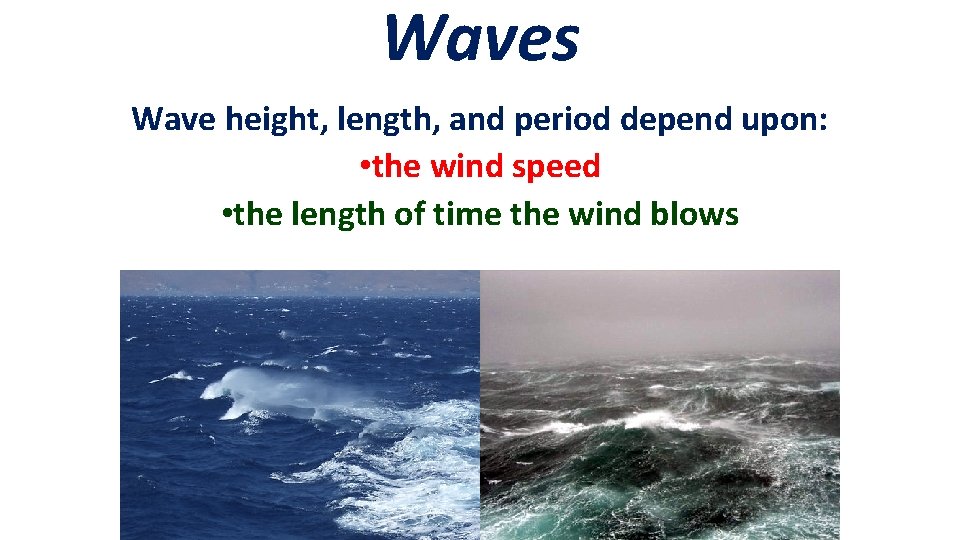
Waves Wave height, length, and period depend upon: • the wind speed • the length of time the wind blows
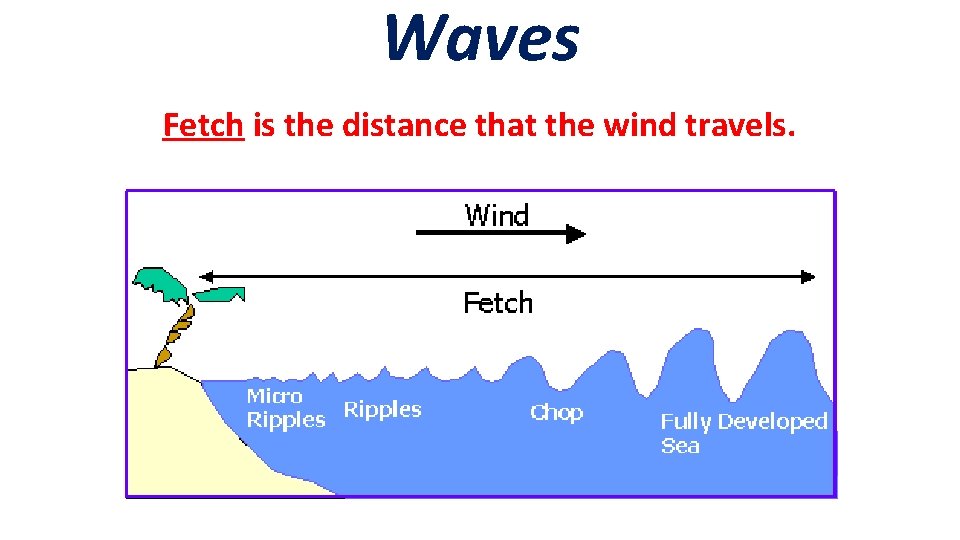
Waves Fetch is the distance that the wind travels.
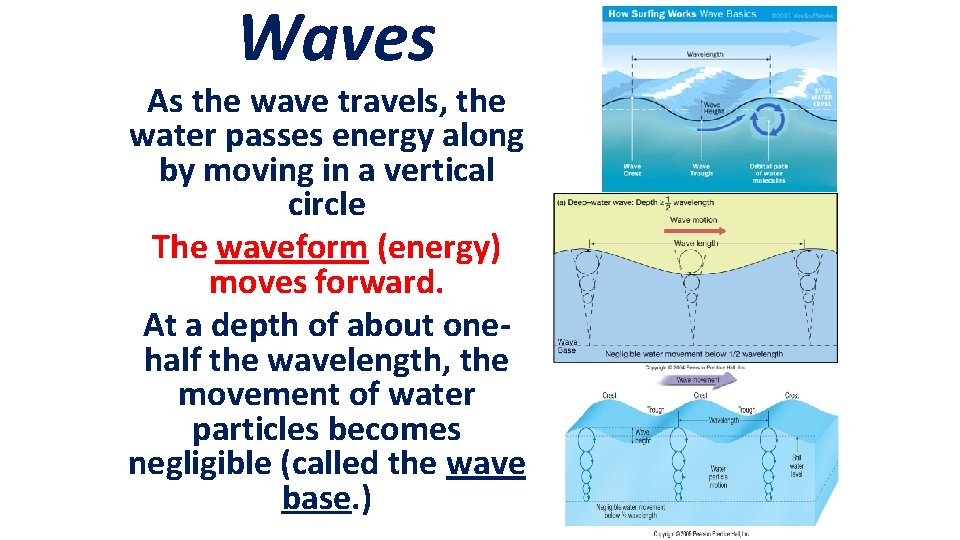
Waves As the wave travels, the water passes energy along by moving in a vertical circle The waveform (energy) moves forward. At a depth of about onehalf the wavelength, the movement of water particles becomes negligible (called the wave base. )
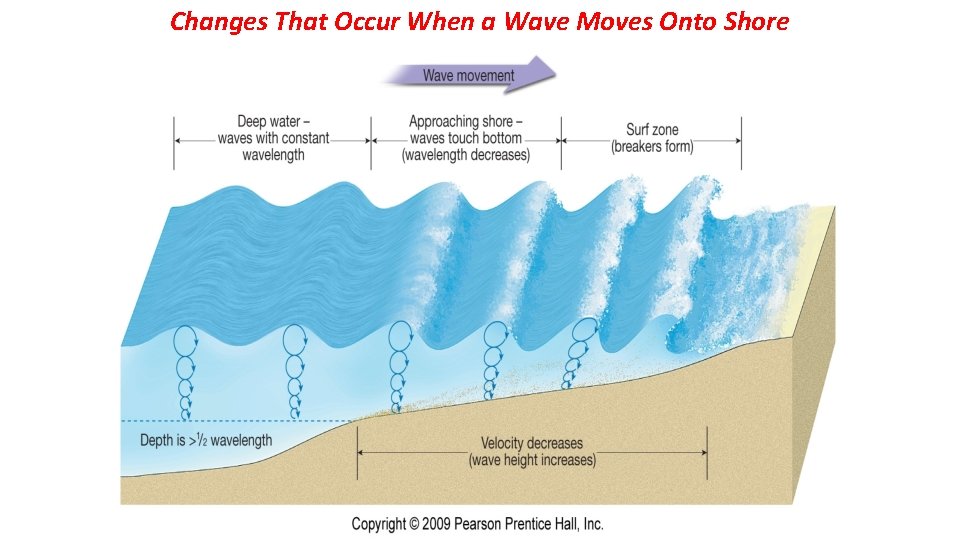
Changes That Occur When a Wave Moves Onto Shore Figure 15. 14
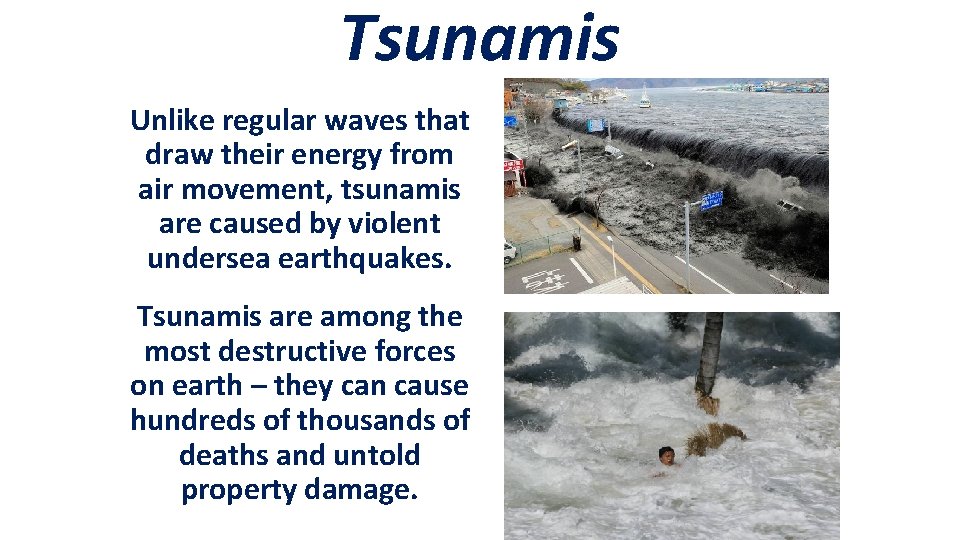
Tsunamis Unlike regular waves that draw their energy from air movement, tsunamis are caused by violent undersea earthquakes. Tsunamis are among the most destructive forces on earth – they can cause hundreds of thousands of deaths and untold property damage.
Waves Summary Ø How are waves created and sustained? … by energy traveling along the interface between ocean and atmosphere (the surface. ) Waves derive their energy, motion, and sustainability from wind.
Waves Summary Ø What are the major parts of a wave? the crest, trough, wave height, wave length, wave period, amplitude, wave base
Waves Summary Ø What is actually moving as a wave passes? The water passes energy along by moving in a vertical circle. The waveform (energy) moves forward.
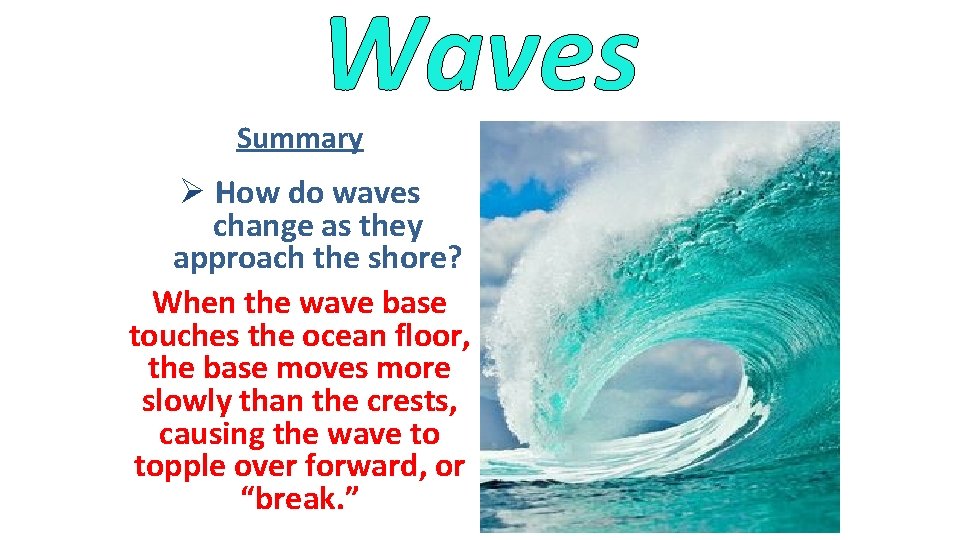
Waves Summary Ø How do waves change as they approach the shore? When the wave base touches the ocean floor, the base moves more slowly than the crests, causing the wave to topple over forward, or “break. ”
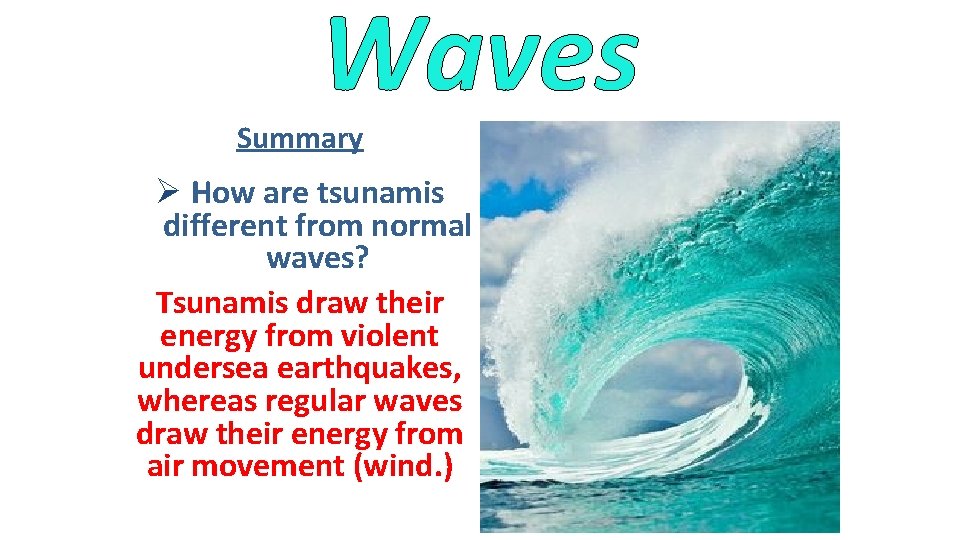
Waves Summary Ø How are tsunamis different from normal waves? Tsunamis draw their energy from violent undersea earthquakes, whereas regular waves draw their energy from air movement (wind. )
The Ocean in Motion Tides
Tides Learning Objectives Ø What is a tide? Ø What are the different types of tidal patterns? Ø What causes tides? Ø What are the different types of tides? Ø Where is the largest tide on Earth found? Ø What is the Saltstraumen?
Tides are important physical forces in our ocean 18 l Gravitational interactions between the sun, moon and earth are the primary causes of tides l Different positions of the sun and moon create two different types of tides: spring tides and neap tides l Tides play an important role in the life cycle of many marine organisms
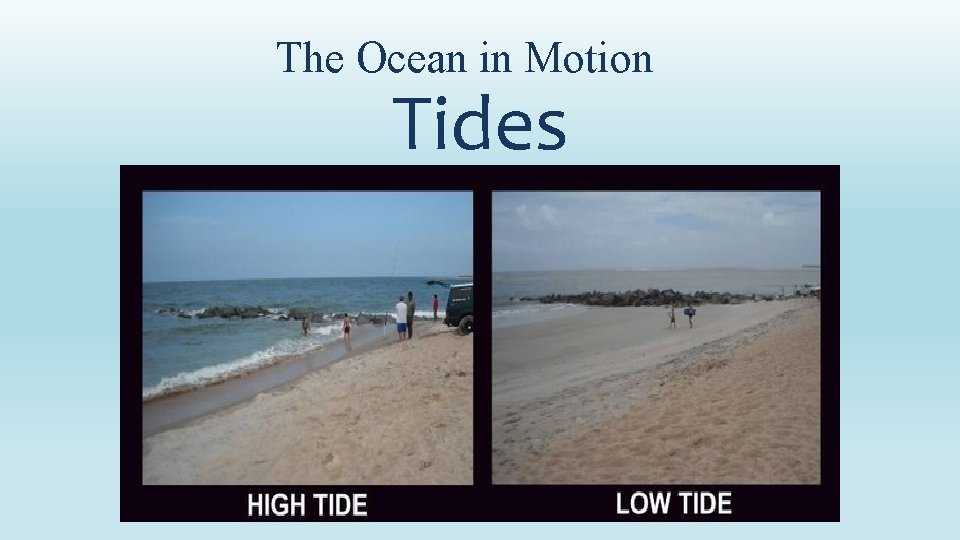
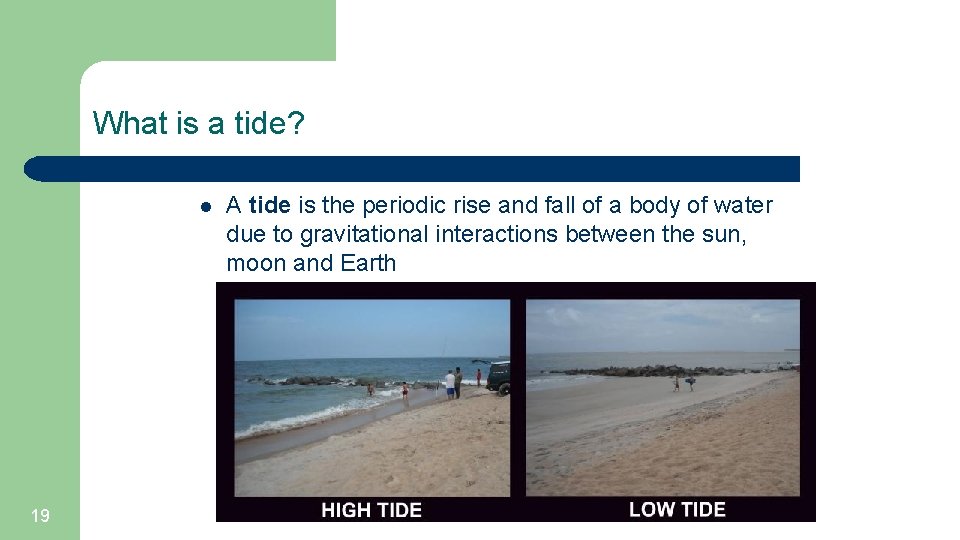
What is a tide? l 19 A tide is the periodic rise and fall of a body of water due to gravitational interactions between the sun, moon and Earth
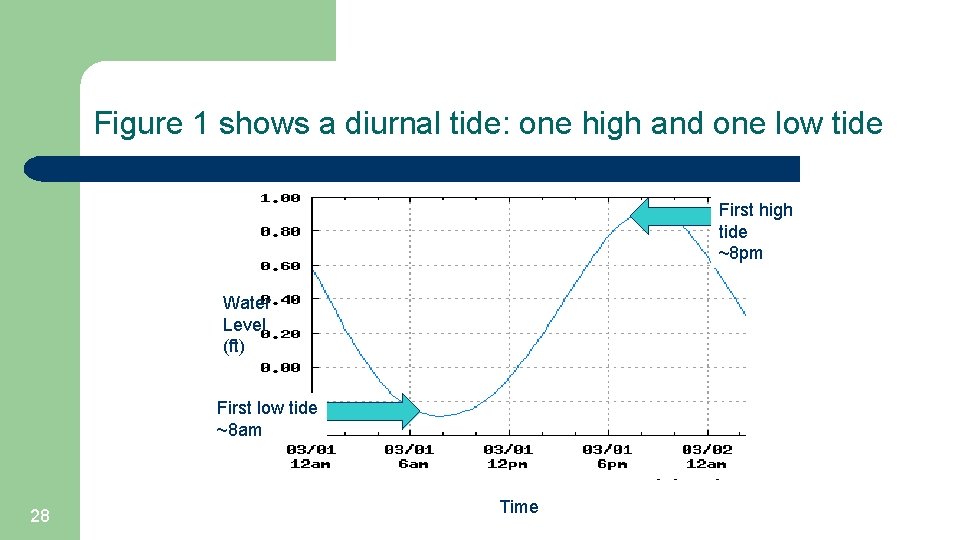
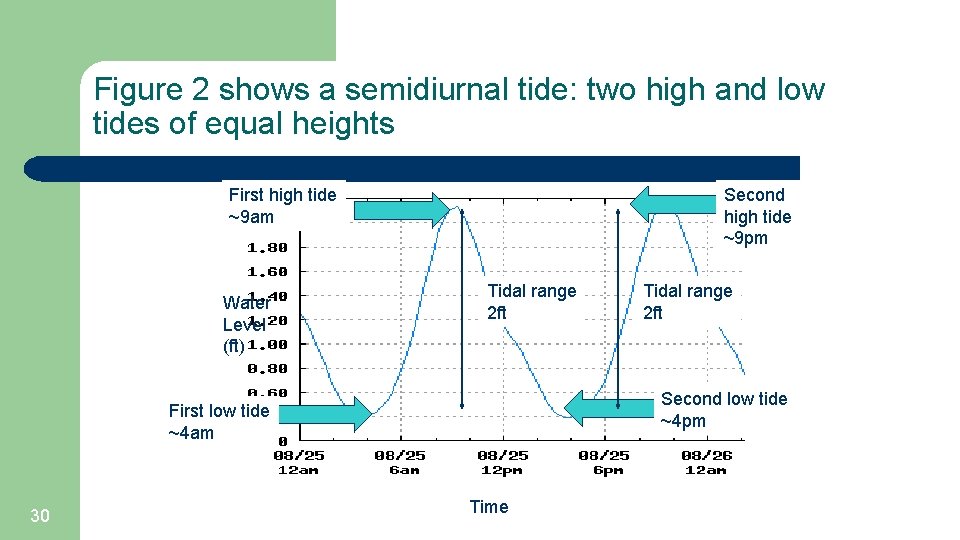
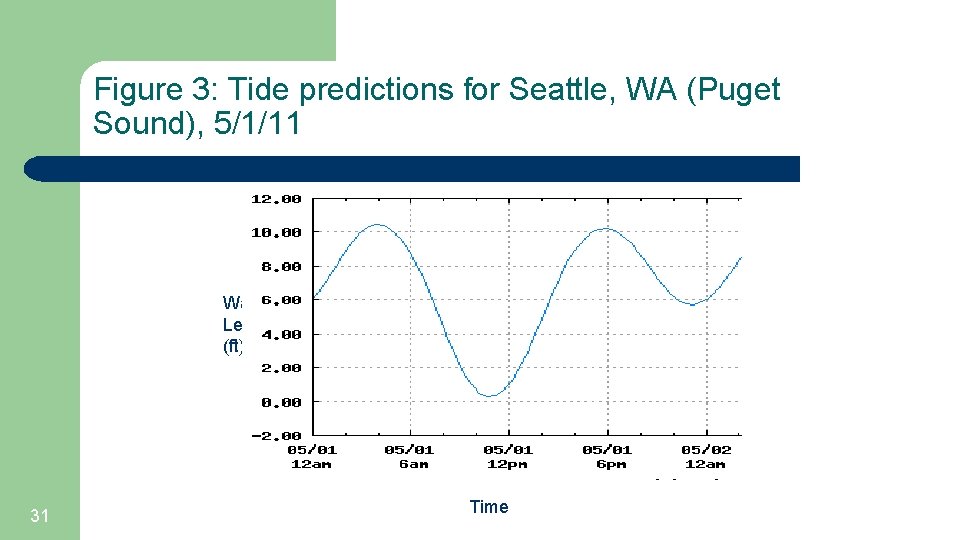
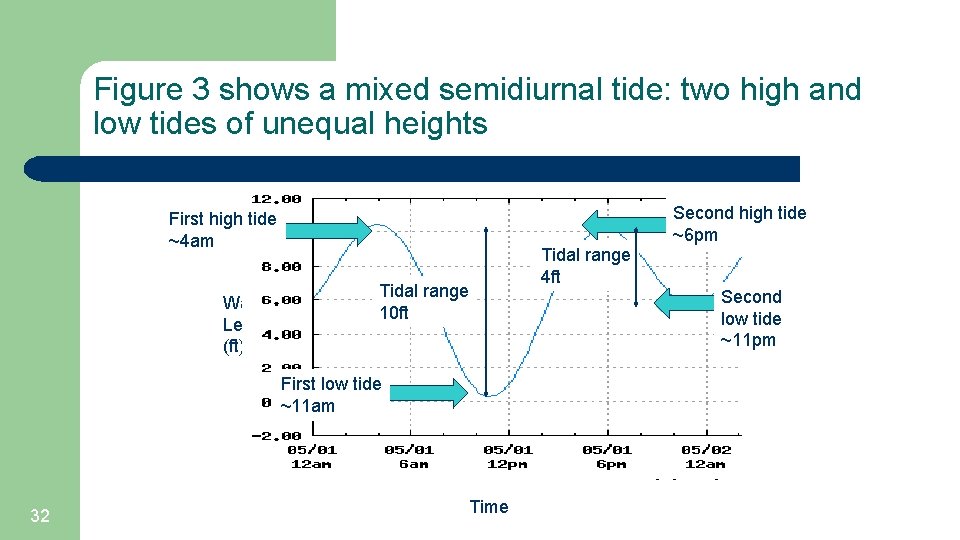
Tidal patterns vary around the world l l 20 Some places have one low tide and one high tide per day (diurnal tides) Other places have two high and low tides per day approximately equal in size (semidiurnal tides) If the two high and low tides of a semidiurnal tide are unequal in size, they are call mixed semidiurnal tides The US has examples of semidiurnal tides (East Coast), diurnal tides (some areas of the Gulf of Mexico) and mixed tides (Pacific Coast)
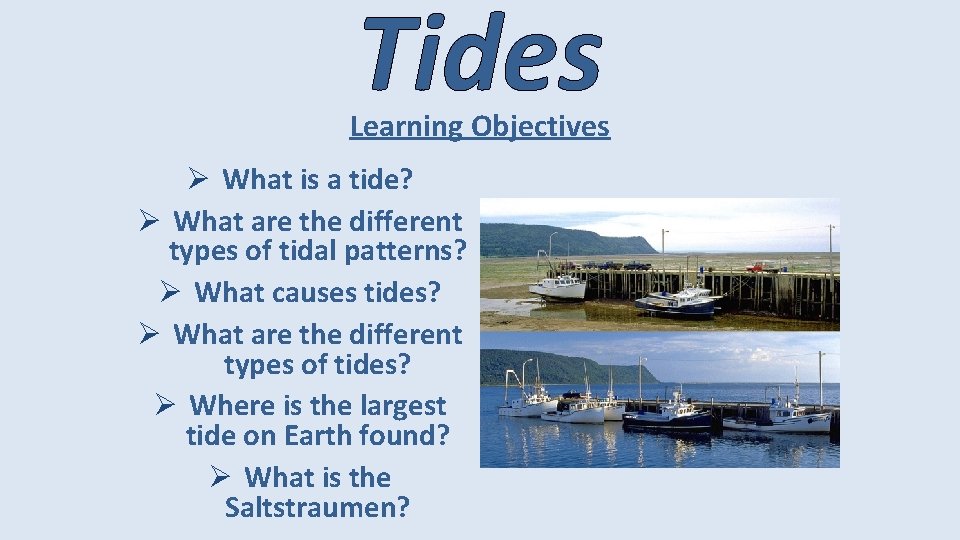
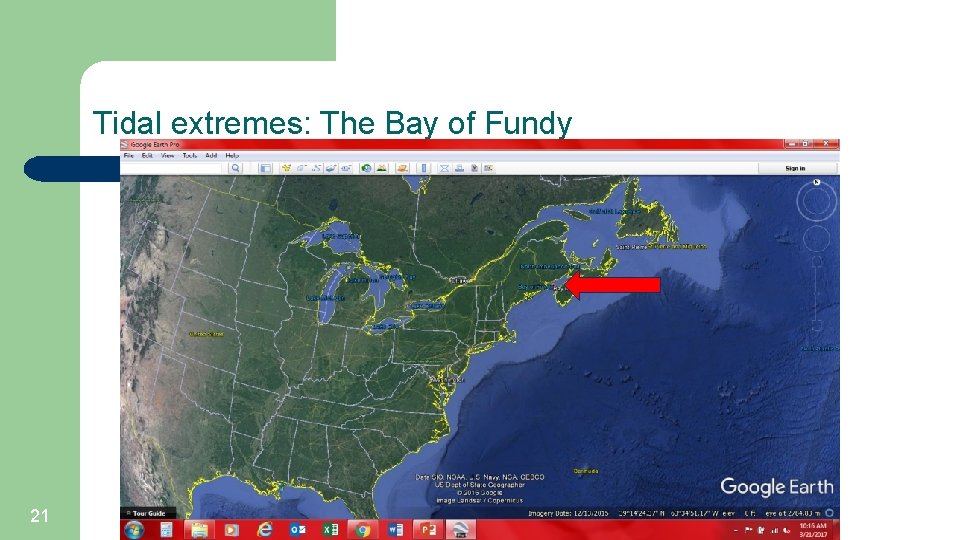
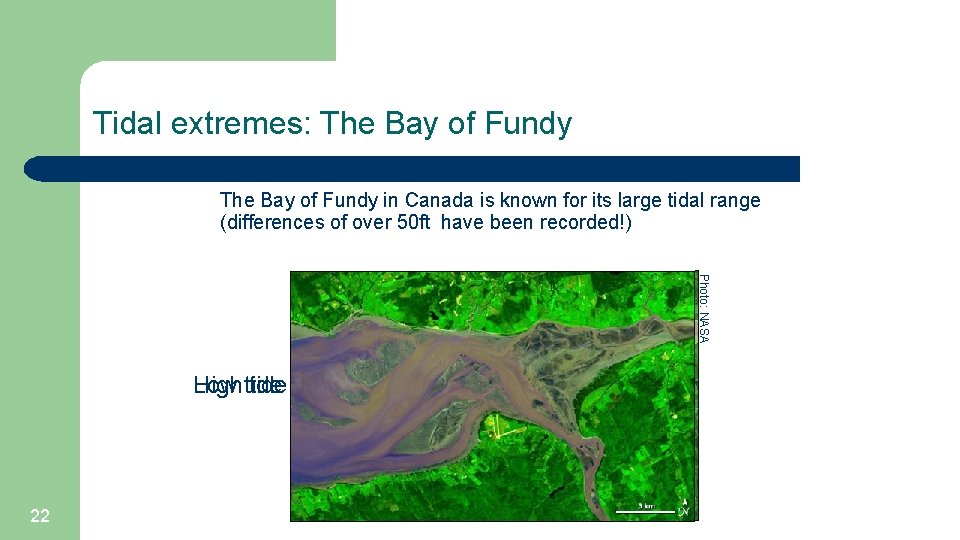
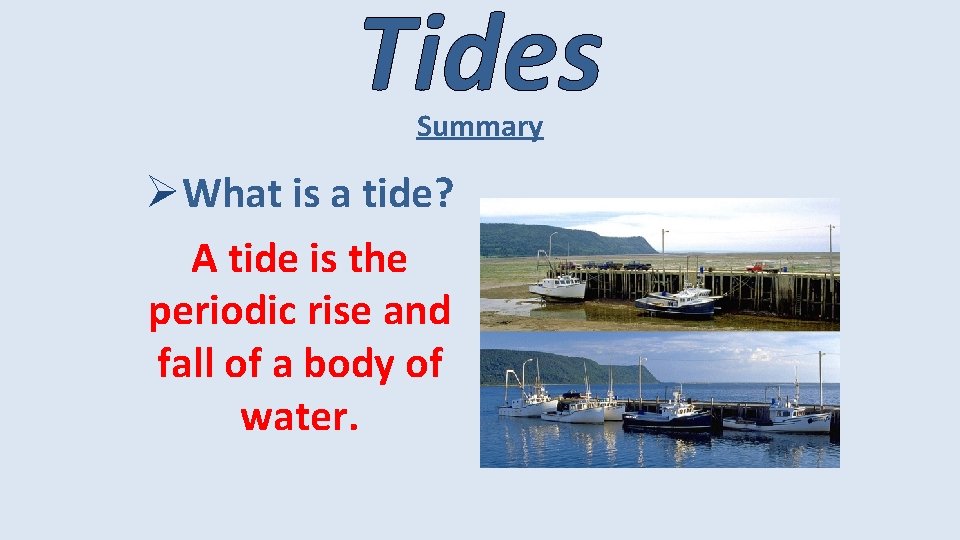
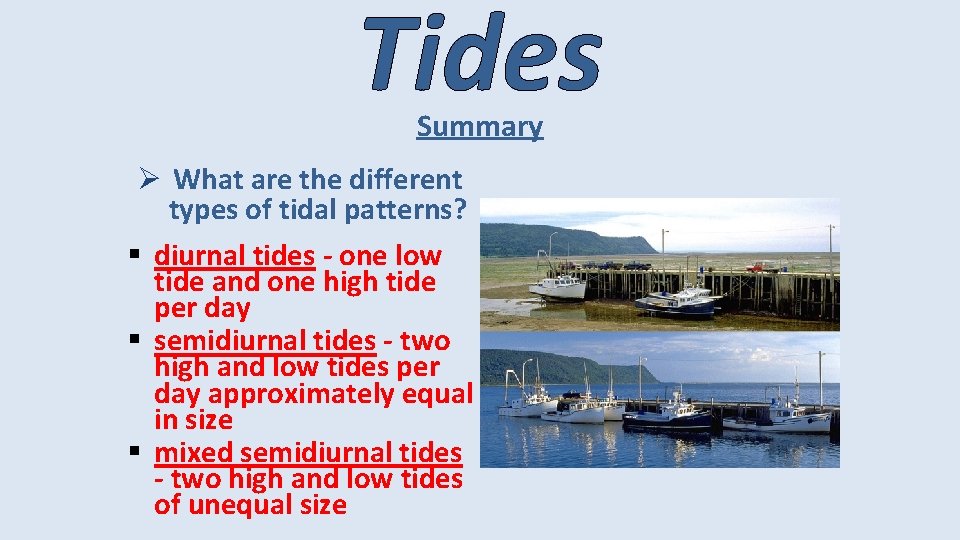
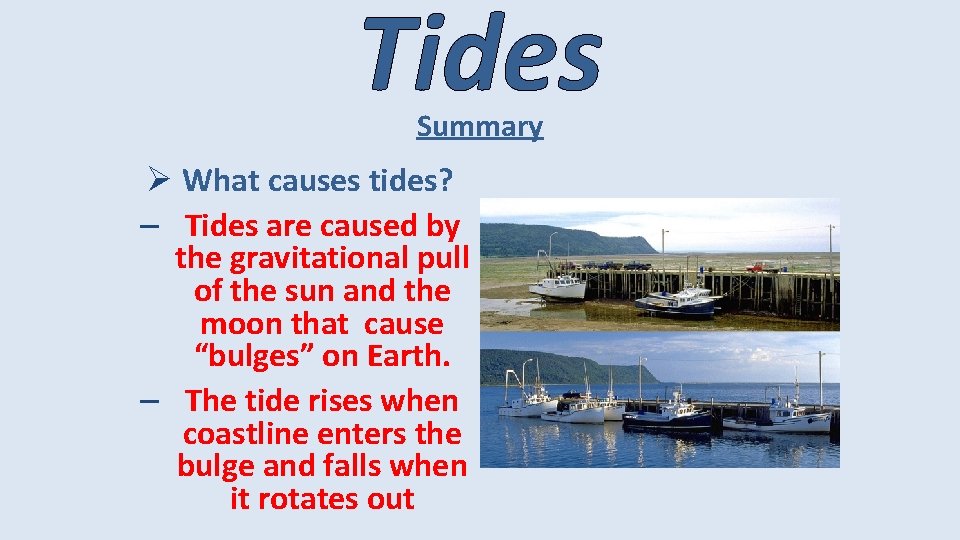
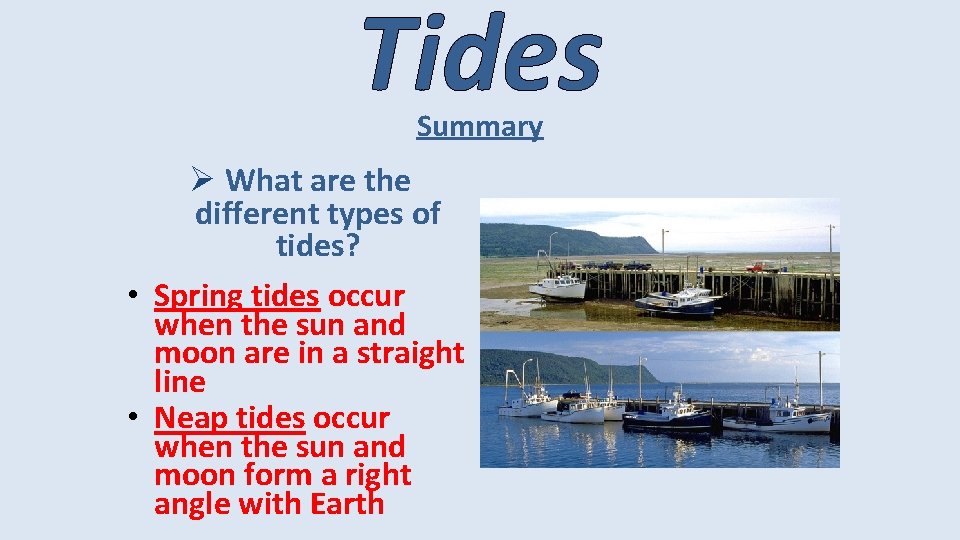
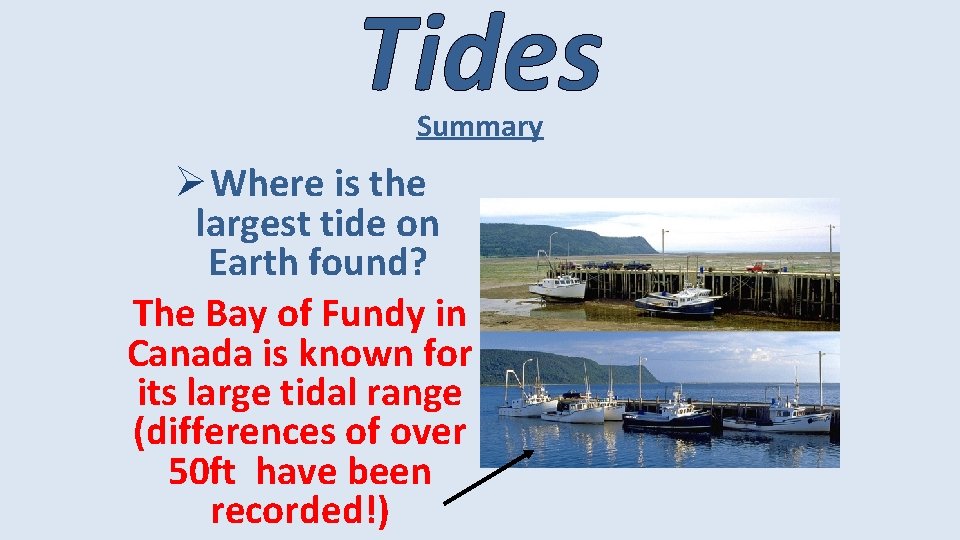
Tidal extremes: The Bay of Fundy in Canada is known for its large tidal range (differences of over 50 ft have been recorded!) Photo: NASA 21
Tidal extremes: The Bay of Fundy in Canada is known for its large tidal range (differences of over 50 ft have been recorded!) Photo: NASA High tide Low tide 22
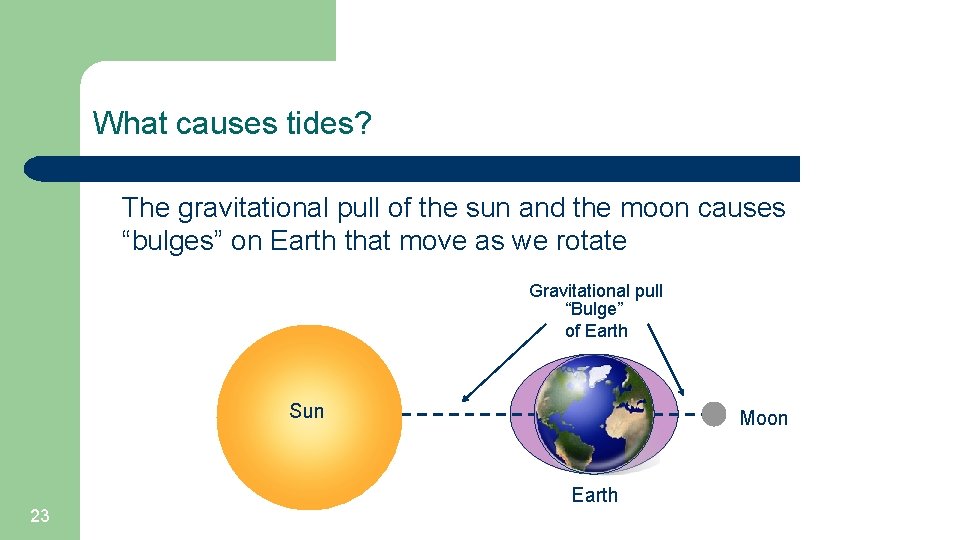
What causes tides? The gravitational pull of the sun and the moon causes “bulges” on Earth that move as we rotate Gravitational pull “Bulge” of Earth Sun 23 Moon Earth
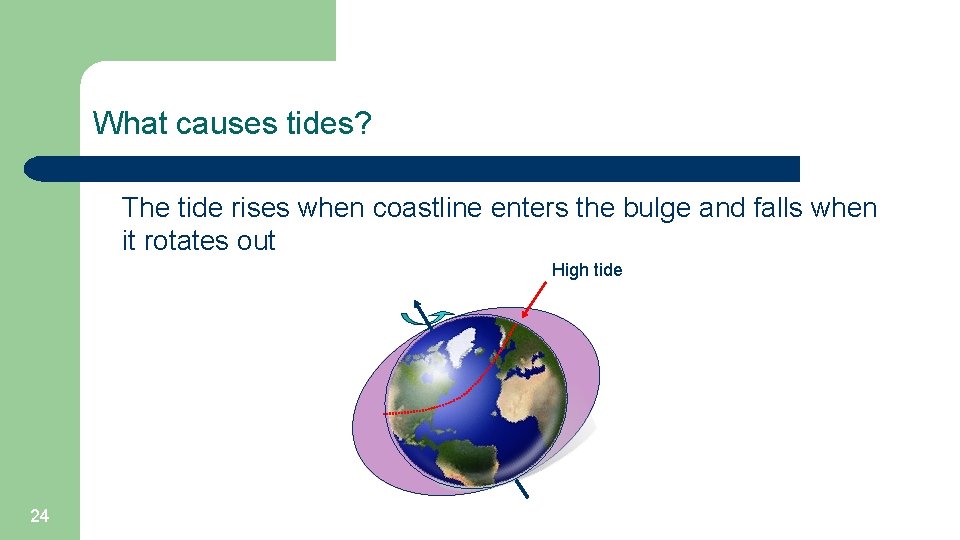
What causes tides? The tide rises when coastline enters the bulge and falls when it rotates out High tide 24
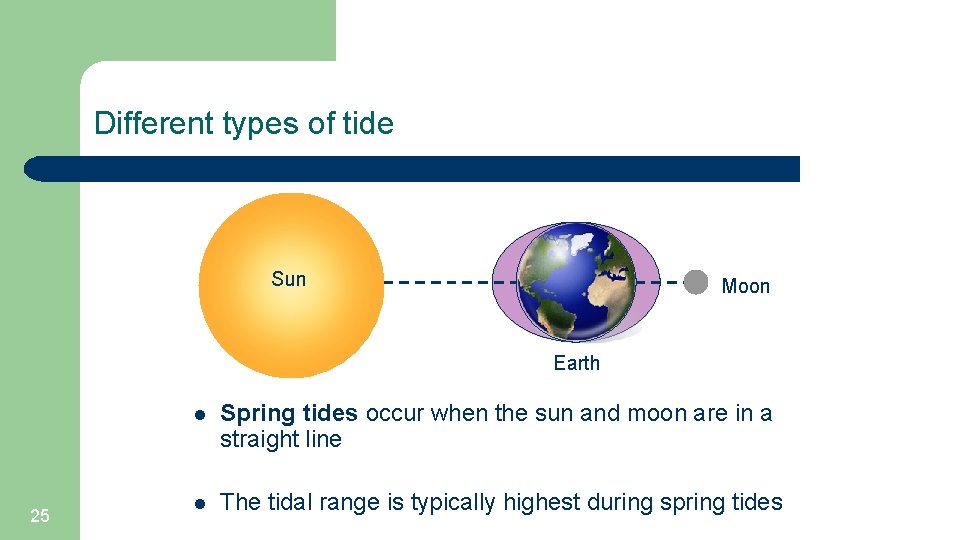
Different types of tide Sun Moon Earth 25 l Spring tides occur when the sun and moon are in a straight line l The tidal range is typically highest during spring tides
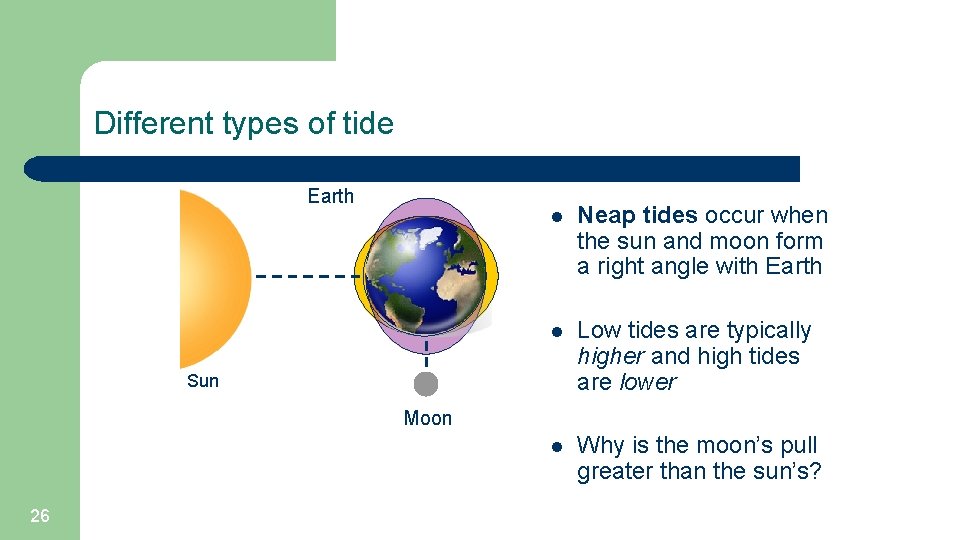
Different types of tide Earth l Neap tides occur when the sun and moon form a right angle with Earth l Low tides are typically higher and high tides are lower l Why is the moon’s pull greater than the sun’s? Sun Moon 26
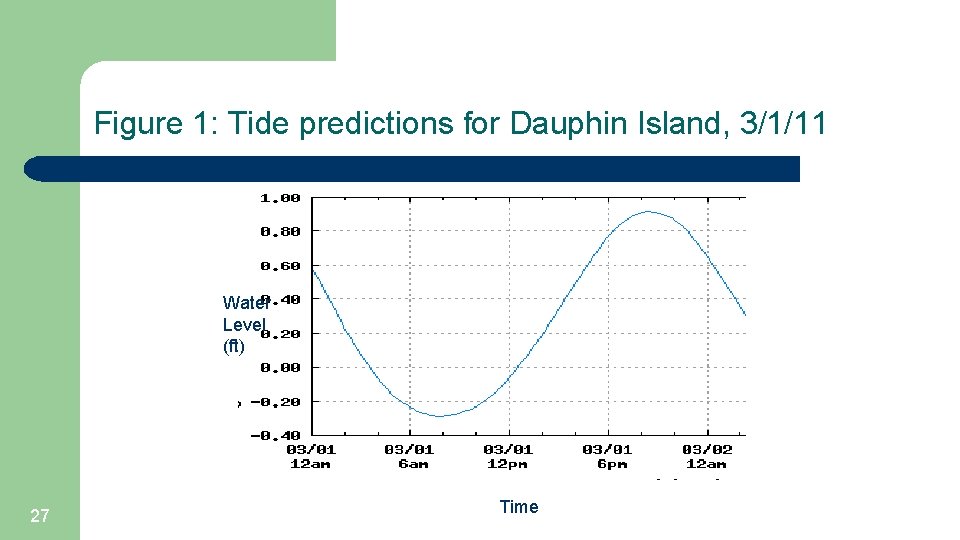
Figure 1: Tide predictions for Dauphin Island, 3/1/11 Water Level (ft) 27 Time
Figure 1 shows a diurnal tide: one high and one low tide First high tide ~8 pm Water Level (ft) First low tide ~8 am 28 Time
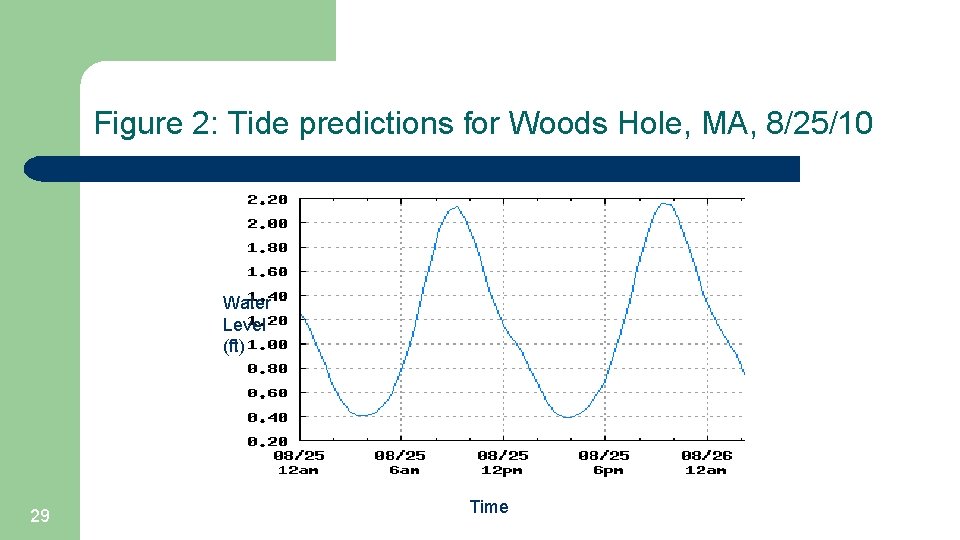
Figure 2: Tide predictions for Woods Hole, MA, 8/25/10 Water Level (ft) 29 Time
Figure 2 shows a semidiurnal tide: two high and low tides of equal heights Second high tide ~9 pm First high tide ~9 am Water Level (ft) Tidal range 2 ft Second low tide ~4 pm First low tide ~4 am 30 Tidal range 2 ft Time
Figure 3: Tide predictions for Seattle, WA (Puget Sound), 5/1/11 Water Level (ft) 31 Time
Figure 3 shows a mixed semidiurnal tide: two high and low tides of unequal heights Second high tide ~6 pm First high tide ~4 am Water Level (ft) Tidal range 10 ft First low tide ~11 am 32 Time Tidal range 4 ft Second low tide ~11 pm
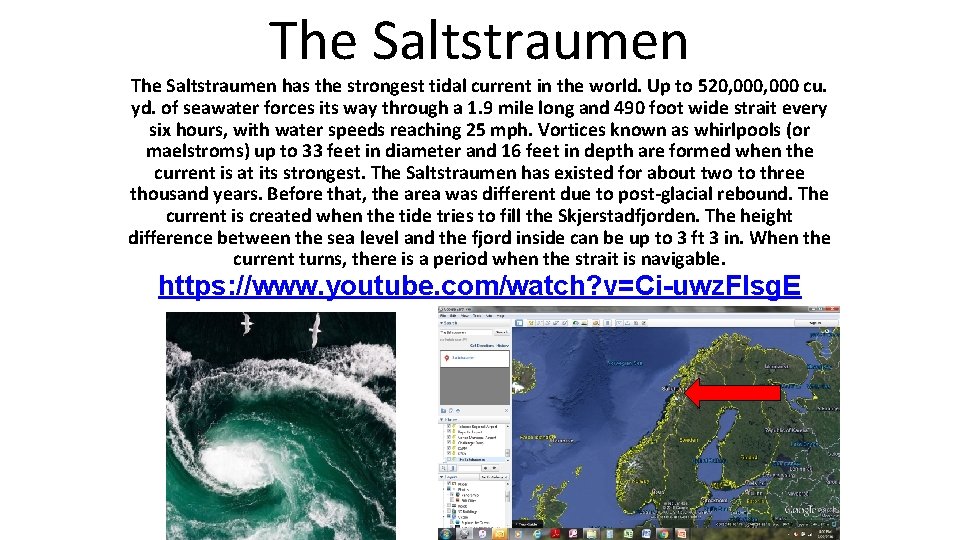
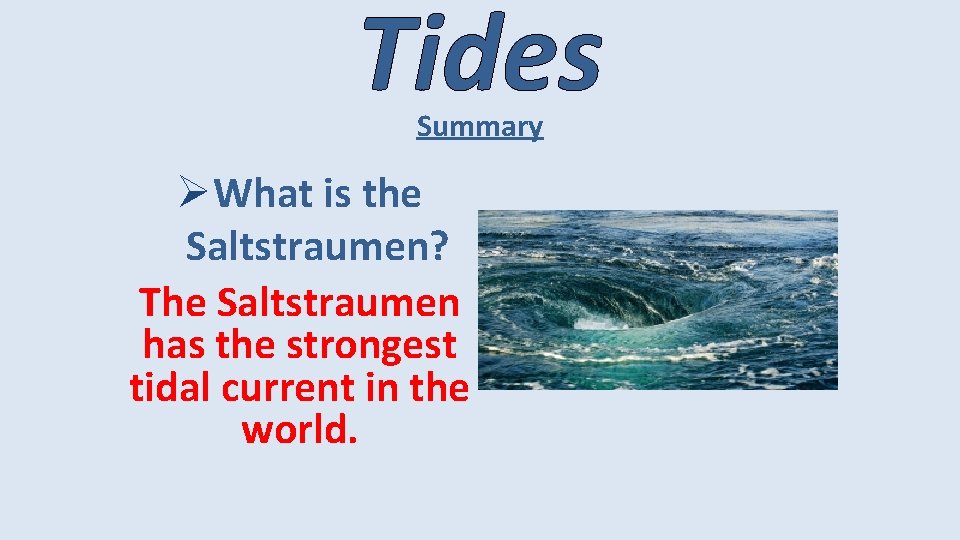
The Saltstraumen has the strongest tidal current in the world. Up to 520, 000 cu. yd. of seawater forces its way through a 1. 9 mile long and 490 foot wide strait every six hours, with water speeds reaching 25 mph. Vortices known as whirlpools (or maelstroms) up to 33 feet in diameter and 16 feet in depth are formed when the current is at its strongest. The Saltstraumen has existed for about two to three thousand years. Before that, the area was different due to post-glacial rebound. The current is created when the tide tries to fill the Skjerstadfjorden. The height difference between the sea level and the fjord inside can be up to 3 ft 3 in. When the current turns, there is a period when the strait is navigable. https: //www. youtube. com/watch? v=Ci-uwz. FIsg. E
Tides Summary ØWhat is a tide? A tide is the periodic rise and fall of a body of water.
Tides Summary Ø What are the different types of tidal patterns? § diurnal tides - one low tide and one high tide per day § semidiurnal tides - two high and low tides per day approximately equal in size § mixed semidiurnal tides - two high and low tides of unequal size
Tides Summary Ø What causes tides? – Tides are caused by the gravitational pull of the sun and the moon that cause “bulges” on Earth. – The tide rises when coastline enters the bulge and falls when it rotates out
Tides Summary Ø What are the different types of tides? • Spring tides occur when the sun and moon are in a straight line • Neap tides occur when the sun and moon form a right angle with Earth
Tides Summary Ø Where is the largest tide on Earth found? The Bay of Fundy in Canada is known for its large tidal range (differences of over 50 ft have been recorded!)
Tides Summary ØWhat is the Saltstraumen? The Saltstraumen has the strongest tidal current in the world.
Exploring the Deep Ocean
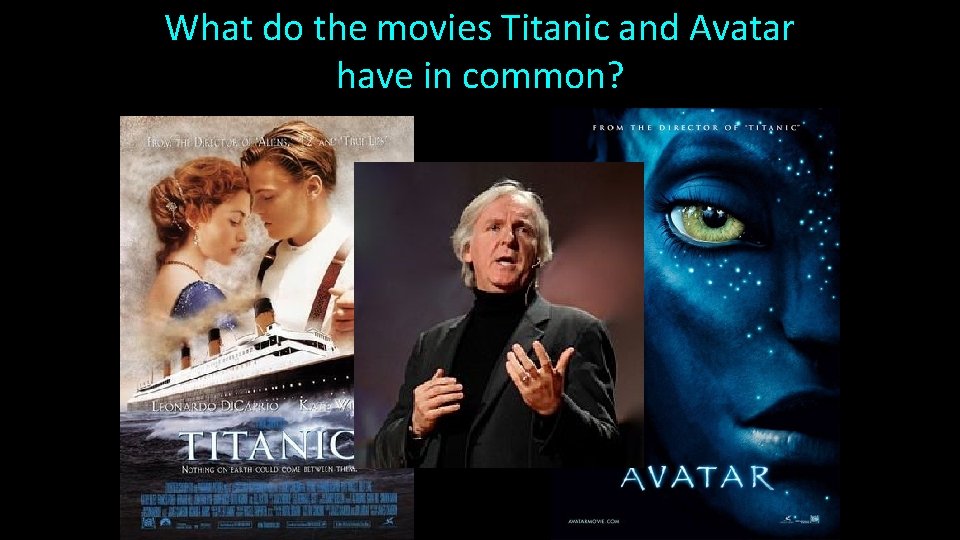
What do the movies Titanic and Avatar have in common?
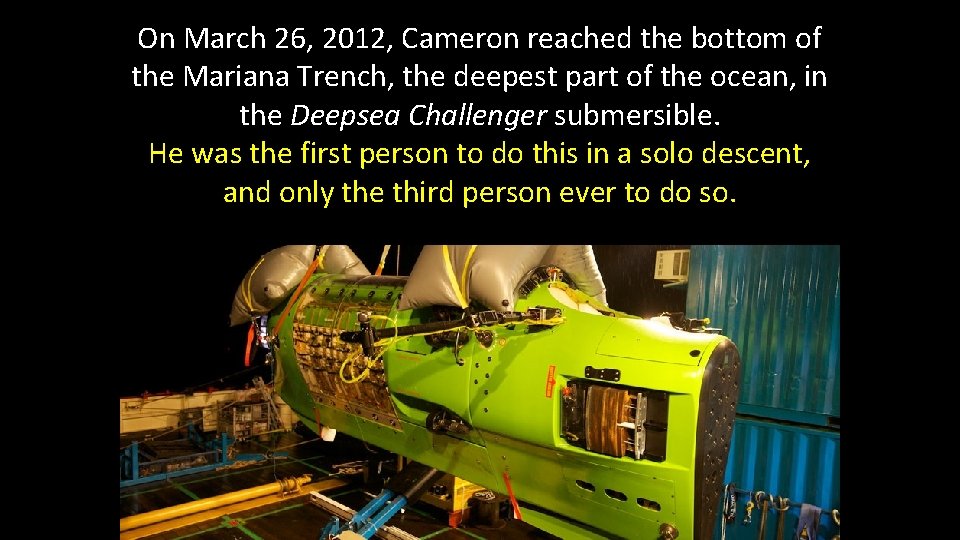
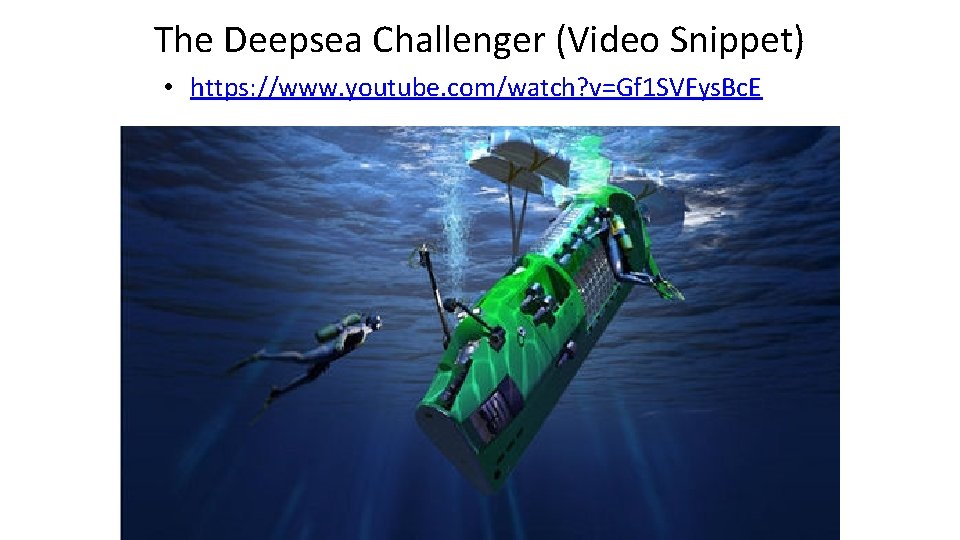
On March 26, 2012, Cameron reached the bottom of the Mariana Trench, the deepest part of the ocean, in the Deepsea Challenger submersible. He was the first person to do this in a solo descent, and only the third person ever to do so.
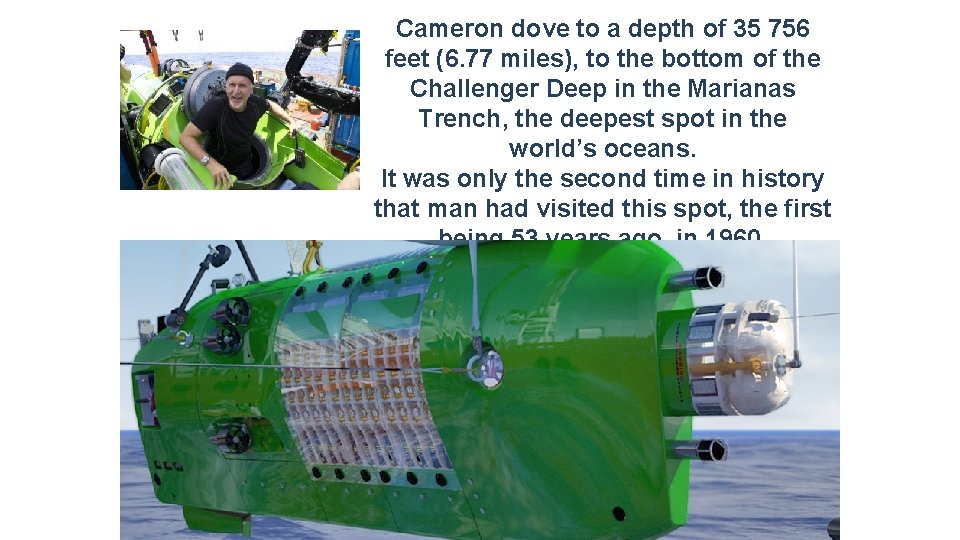
Cameron dove to a depth of 35 756 feet (6. 77 miles), to the bottom of the Challenger Deep in the Marianas Trench, the deepest spot in the world’s oceans. It was only the second time in history that man had visited this spot, the first being 53 years ago, in 1960.
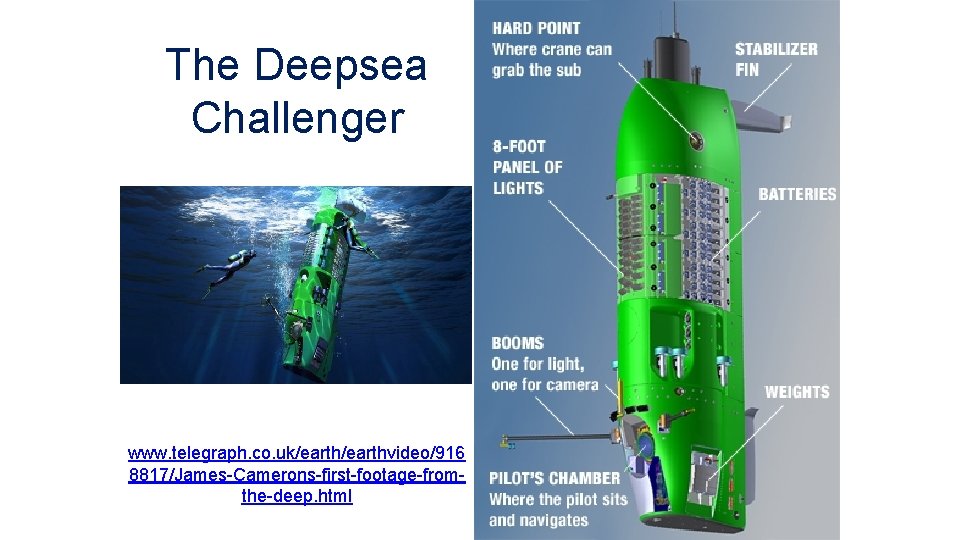
The Deepsea Challenger www. telegraph. co. uk/earthvideo/916 8817/James-Camerons-first-footage-fromthe-deep. html
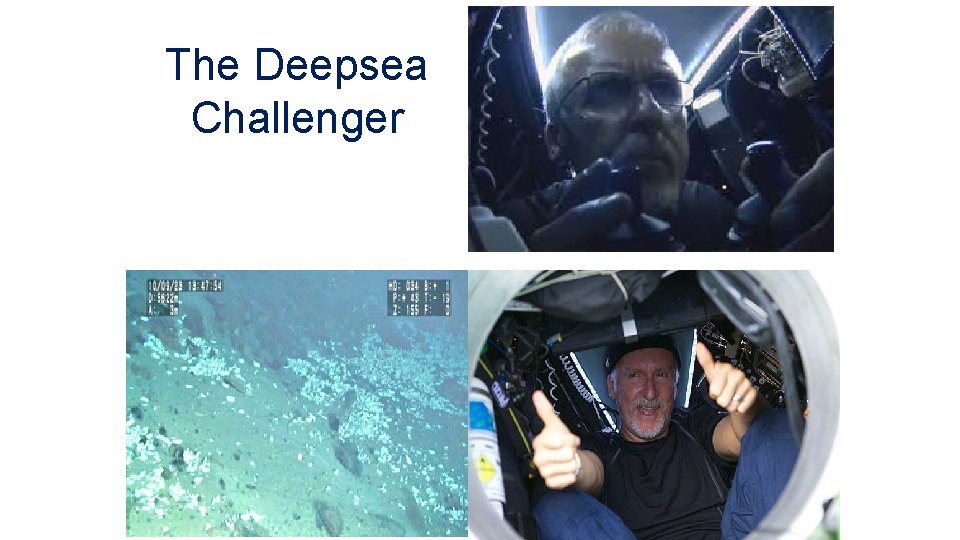
The Deepsea Challenger
The Deepsea Challenger (Video Snippet) • https: //www. youtube. com/watch? v=Gf 1 SVFys. Bc. E