
The Hydrosphere The Hydrosphere This includes water in
- Slides: 12
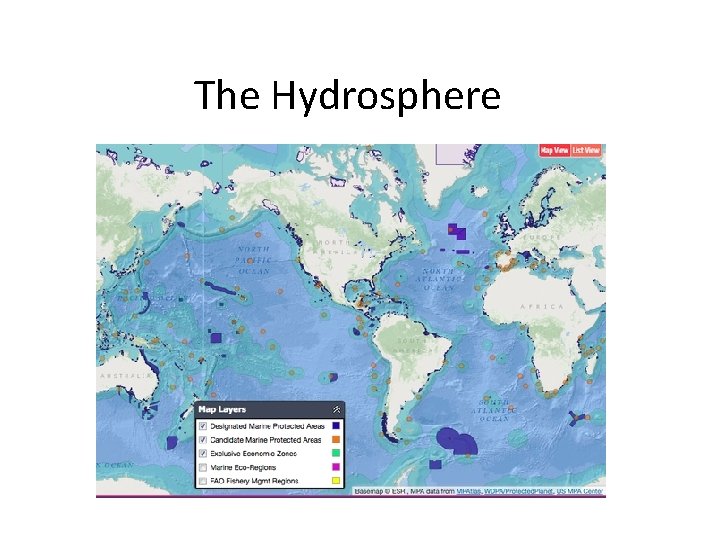
The Hydrosphere
The Hydrosphere • This includes water in the oceans, lakes, rivers, wetlands, soil, rock layers beneath the Earth’s surface and in the clouds.
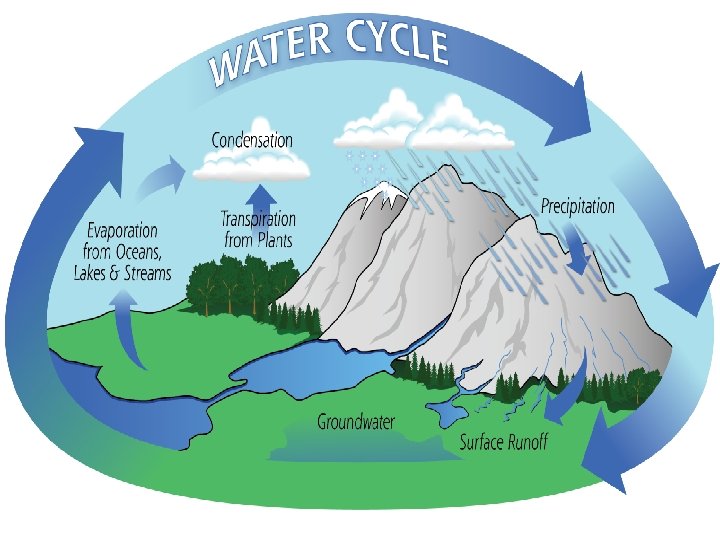
The Water Cycle • The water cycle is the continuous movement of water from the ocean to the atmosphere to the land back to the ocean • Has 3 major processes
1 st Major Processes 1. Evaporation- is the change of water from a liquid to a gas. • Water continually evaporates from the oceans, lakes, streams and soil, but the majority evaporates from oceans.
2 nd Major Process 2. Condensation- is the change of state from a gas to a liquid. ●Water vapor forms water droplets from dust particles which then form clouds in which the droplets collide to form larger, heavier drops which then fall from the clouds as rain.
3 rd Major Process 3. Precipitation is any form of water to the Earth’s surface from the clouds. -includes: rain snow sleet hail.
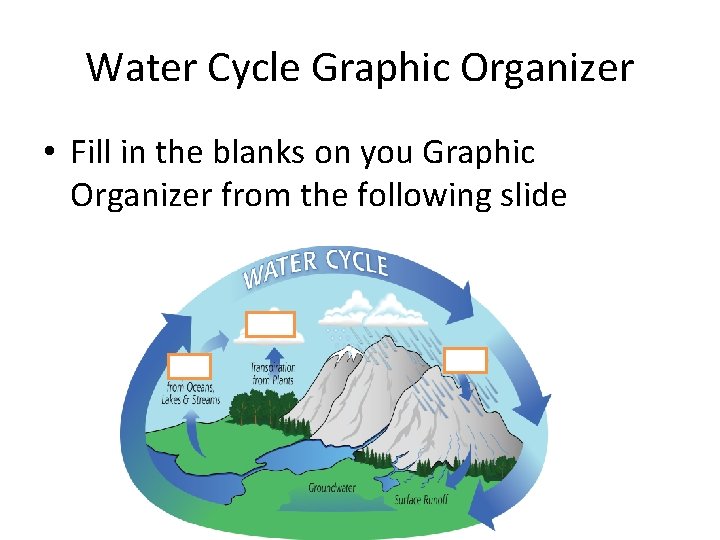
Water Cycle Graphic Organizer • Fill in the blanks on you Graphic Organizer from the following slide
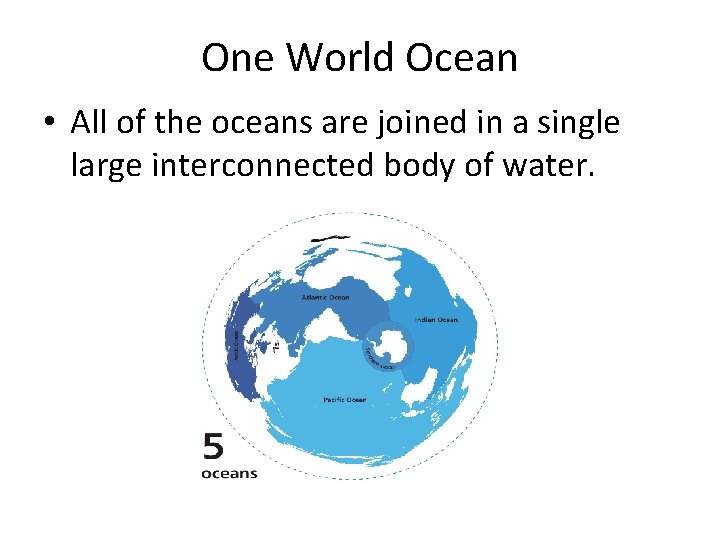
One World Ocean • All of the oceans are joined in a single large interconnected body of water.
Global Temperature Regulator • The world ocean plays important roles in the regulation of the planet’s environment. • Local temperature in different areas of the planet are also regulated by the world ocean.
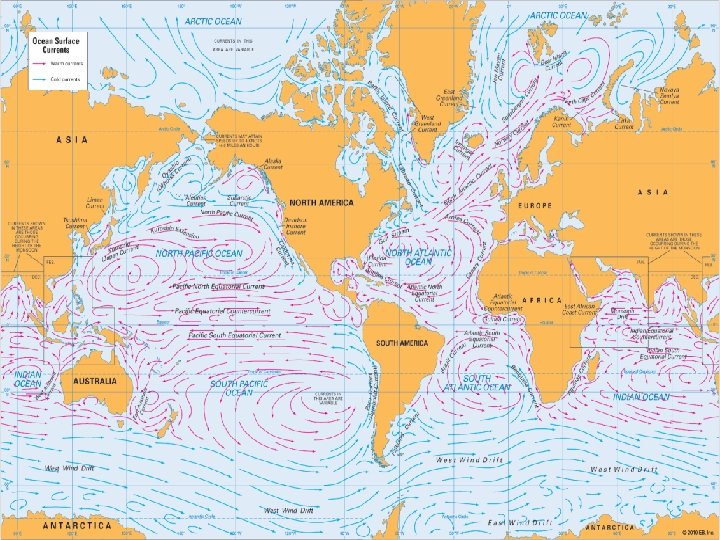
Global Temperature Regulator • Currents circulate warm water causing land areas they flow by to have more moderate temperatures. • For example, the British Isles are warmed by the water of the Gulf Stream