
The Hydrosphere All the different forms of water
- Slides: 16
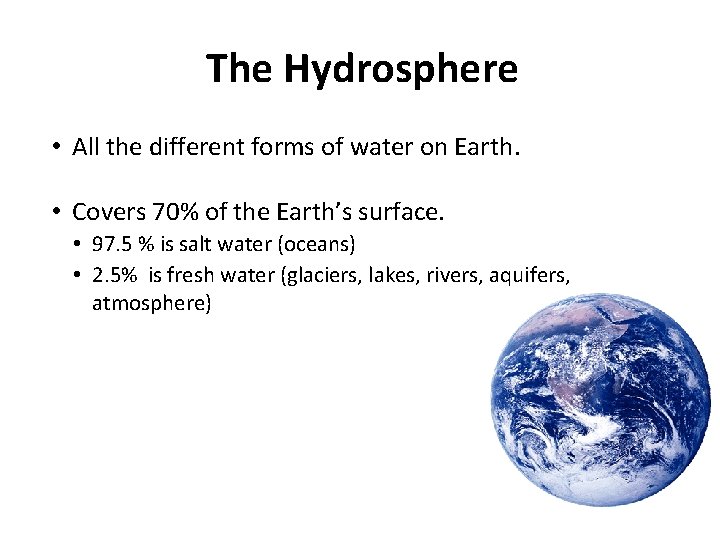
The Hydrosphere • All the different forms of water on Earth. • Covers 70% of the Earth’s surface. • 97. 5 % is salt water (oceans) • 2. 5% is fresh water (glaciers, lakes, rivers, aquifers, atmosphere)
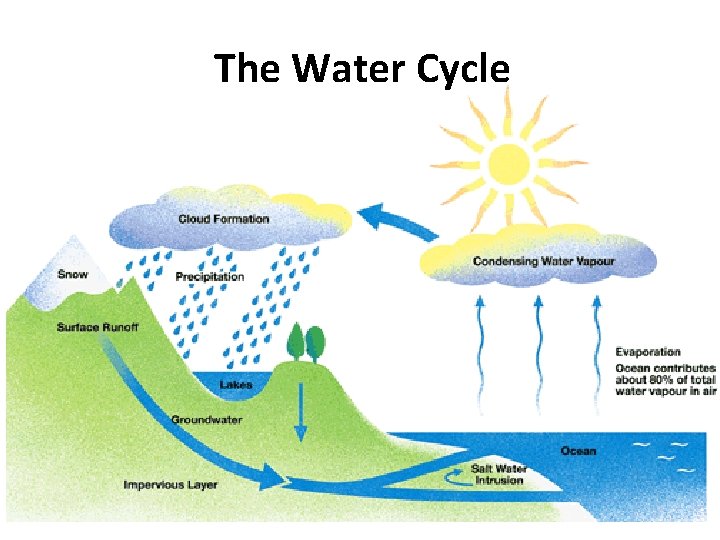
The Water Cycle
The Water Cycle • Evaporation of liquid water into a vapour. • Transpiration in plants. • Vapour rises and cools. • Condenses and changes back into liquid to form clouds. • When water droplets become too large they fall as precipitation (rain, snow, hail, etc). • Frozen precipitation stored as snow or glaciers. • Rain/melting snow runs back into lakes/oceans.
The Hydrosphere • Three Effects on the Earth’s climate: 1. Moderates Earth’s temperature. 2. Distributes heat. 3. Acts as a carbon sink.
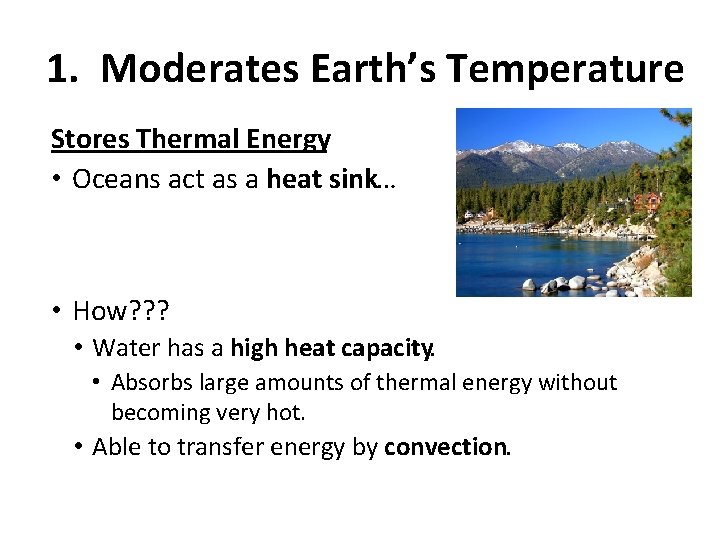
1. Moderates Earth’s Temperature Stores Thermal Energy • Oceans act as a heat sink… • How? ? ? • Water has a high heat capacity. • Absorbs large amounts of thermal energy without becoming very hot. • Able to transfer energy by convection.
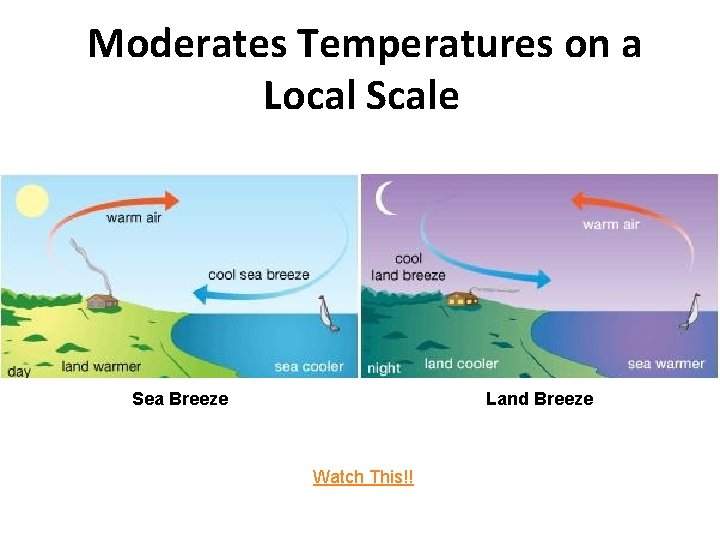
Moderates Temperatures on a Local Scale Sea Breeze Land Breeze Watch This!!
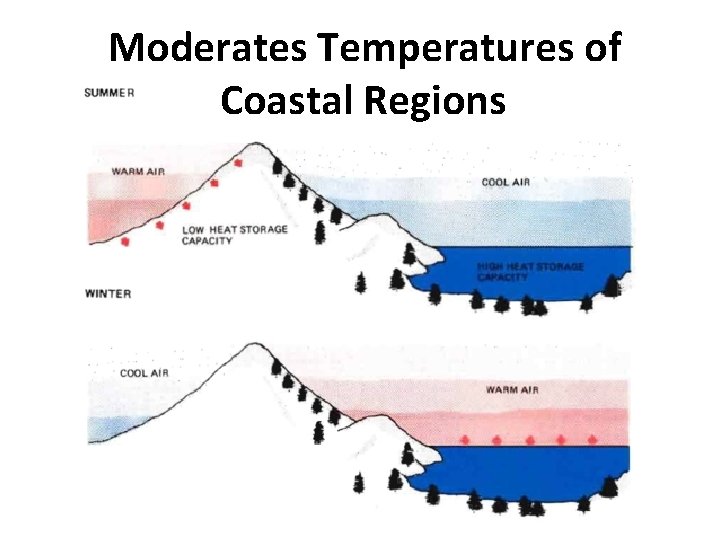
Moderates Temperatures of Coastal Regions
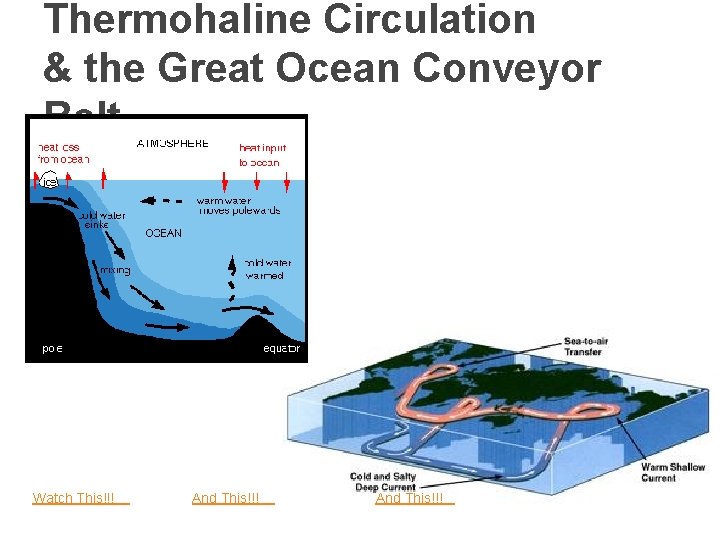
2. Distribution of Heat Great Ocean Conveyor Belt (Thermohaline Circulation) *Driven by temperature and salinity differences which impact density. * • Warm equatorial surface water moves toward poles: • It cools down. • It becomes saltier due to evaporation and formation of ice. • Colder, saltier water sinks to create a deep ocean current. • Causes continuous movement of the warm equatorial water.
Thermohaline Circulation & the Great Ocean Conveyor Belt Watch This!!! And This!!!
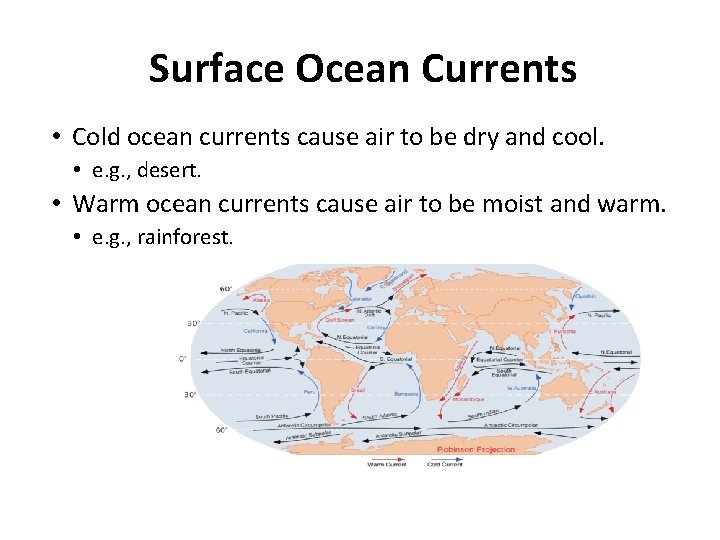
Surface Ocean Currents • Cold ocean currents cause air to be dry and cool. • e. g. , desert. • Warm ocean currents cause air to be moist and warm. • e. g. , rainforest.
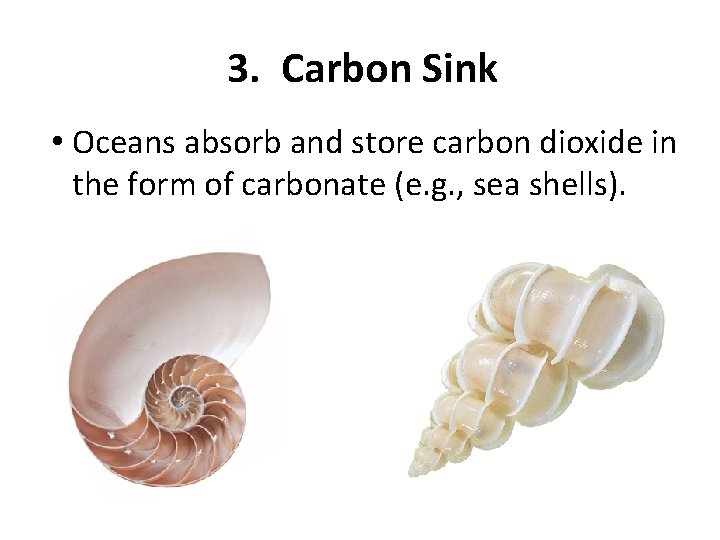
3. Carbon Sink • Oceans absorb and store carbon dioxide in the form of carbonate (e. g. , sea shells).
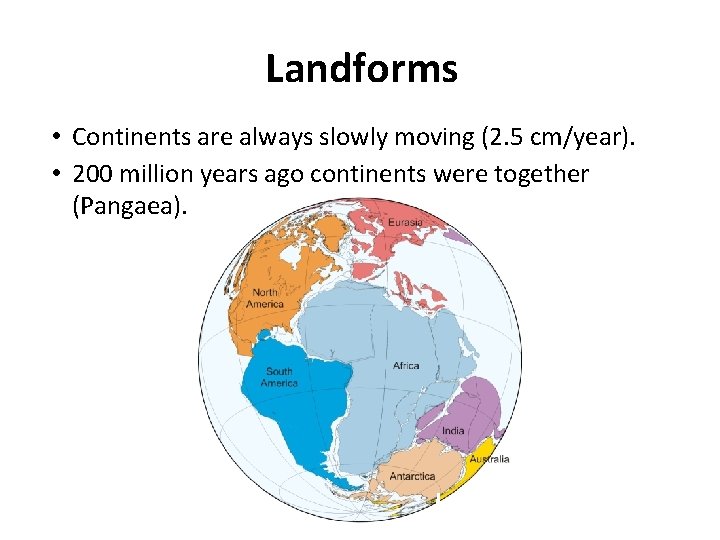
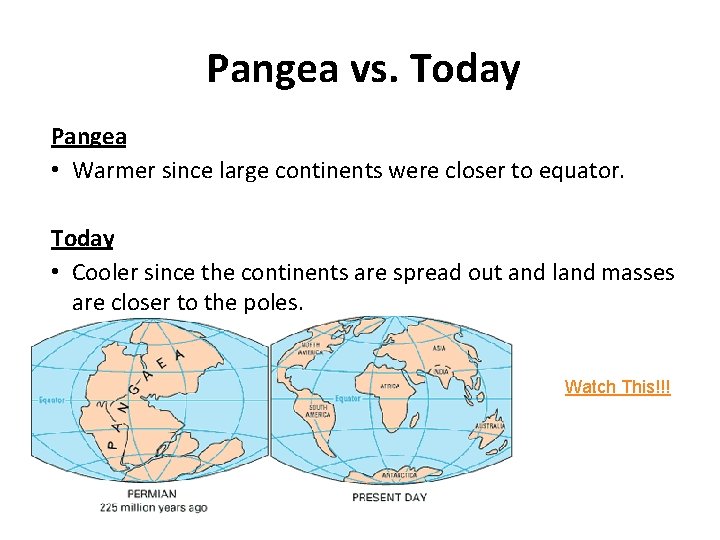
Landforms • Continents are always slowly moving (2. 5 cm/year). • 200 million years ago continents were together (Pangaea).
Pangea vs. Today Pangea • Warmer since large continents were closer to equator. Today • Cooler since the continents are spread out and land masses are closer to the poles. Watch This!!!
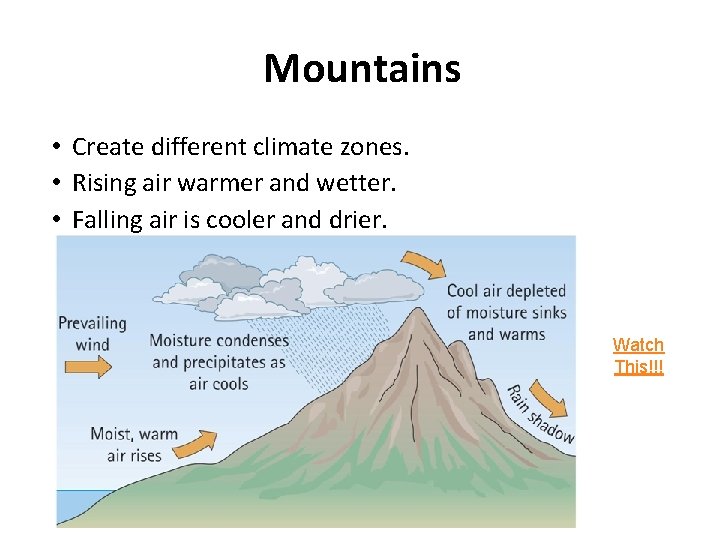
Mountains • Create different climate zones. • Rising air warmer and wetter. • Falling air is cooler and drier. Watch This!!!
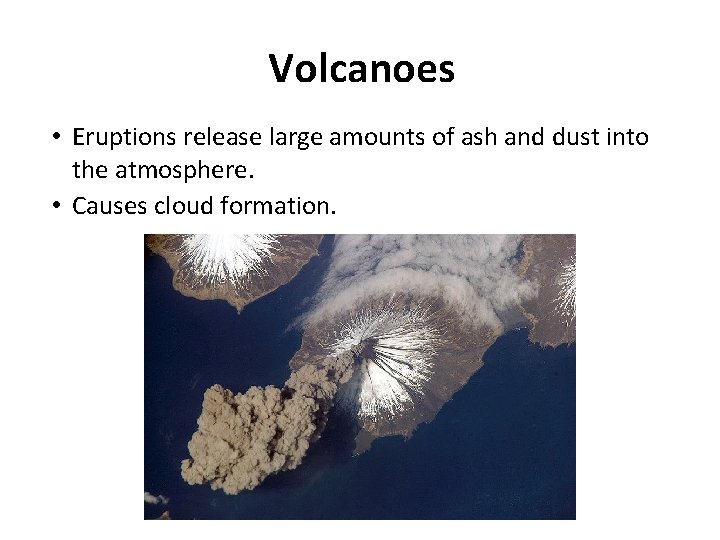
Volcanoes • Eruptions release large amounts of ash and dust into the atmosphere. • Causes cloud formation.
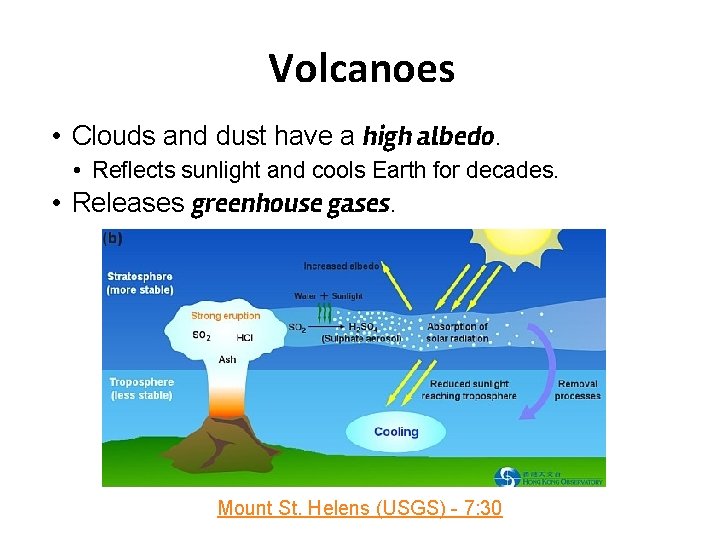
Volcanoes • Clouds and dust have a high albedo. • Reflects sunlight and cools Earth for decades. • Releases greenhouse gases. Mount St. Helens (USGS) - 7: 30