
The Hydrologic Cycle The Earths hydrologic cycle illustrates
- Slides: 14
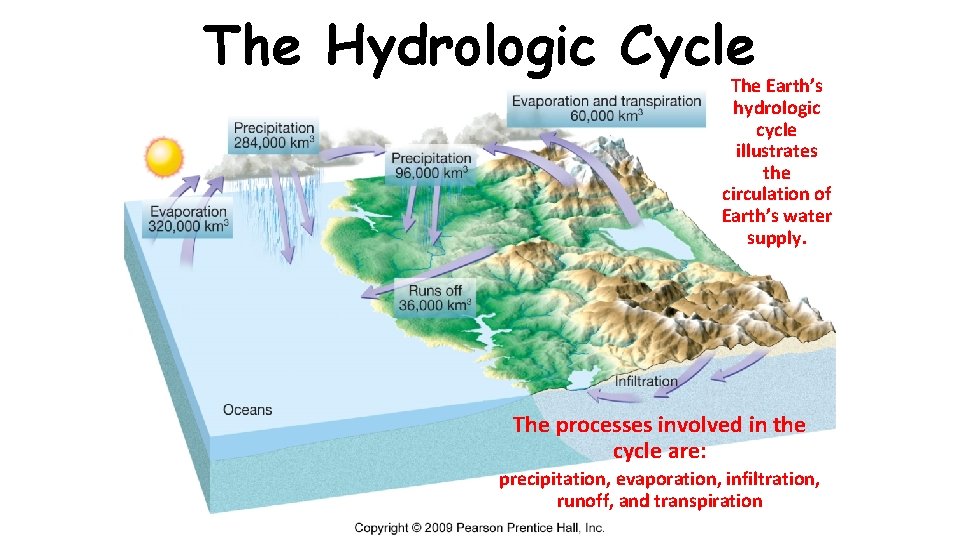
The Hydrologic Cycle The Earth’s hydrologic cycle illustrates the circulation of Earth’s water supply. The processes involved in the cycle are: precipitation, evaporation, infiltration, runoff, and transpiration
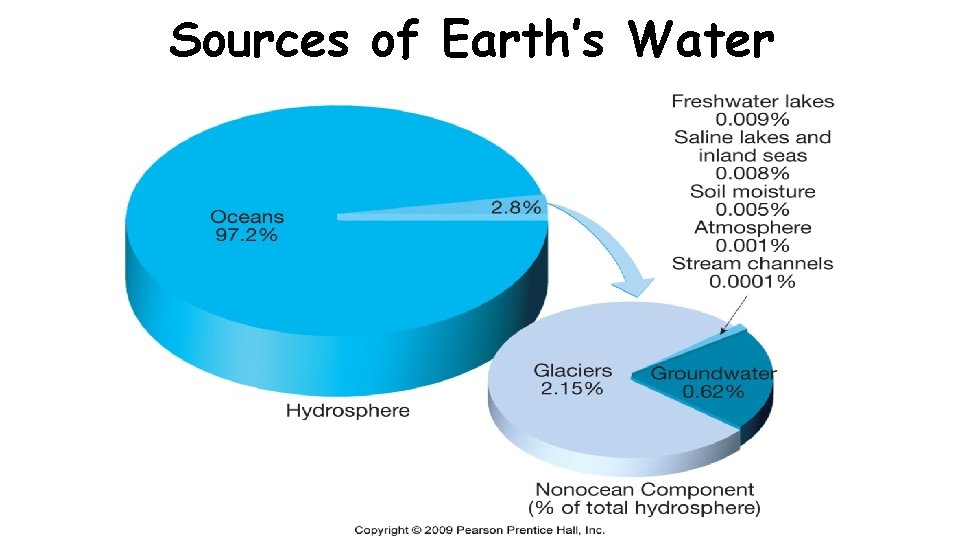
Sources of Earth’s Water Figure 5. 2
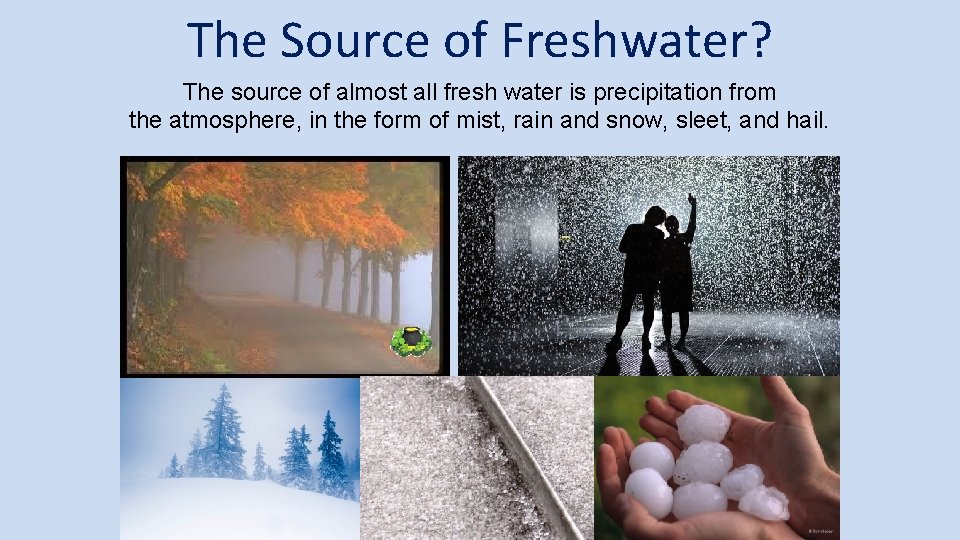
The Source of Freshwater? The source of almost all fresh water is precipitation from the atmosphere, in the form of mist, rain and snow, sleet, and hail.
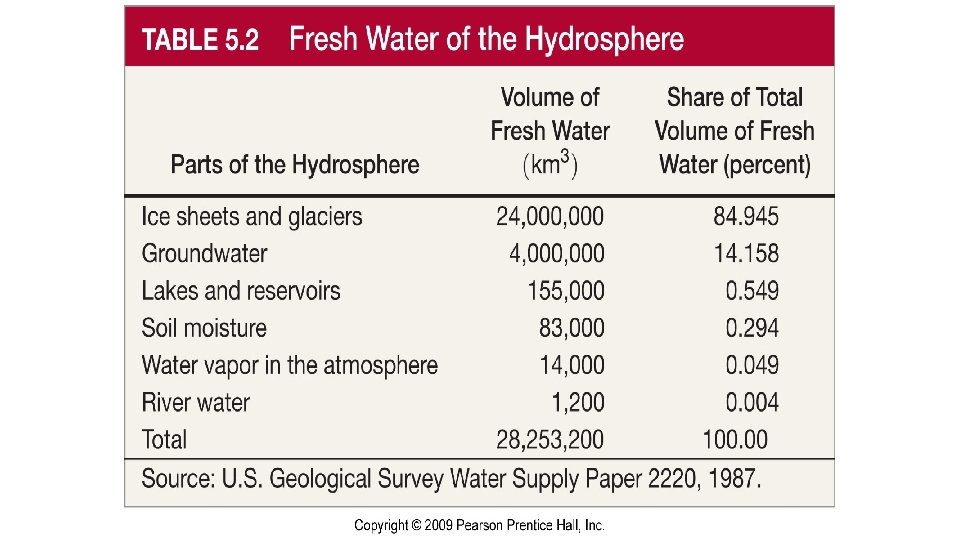
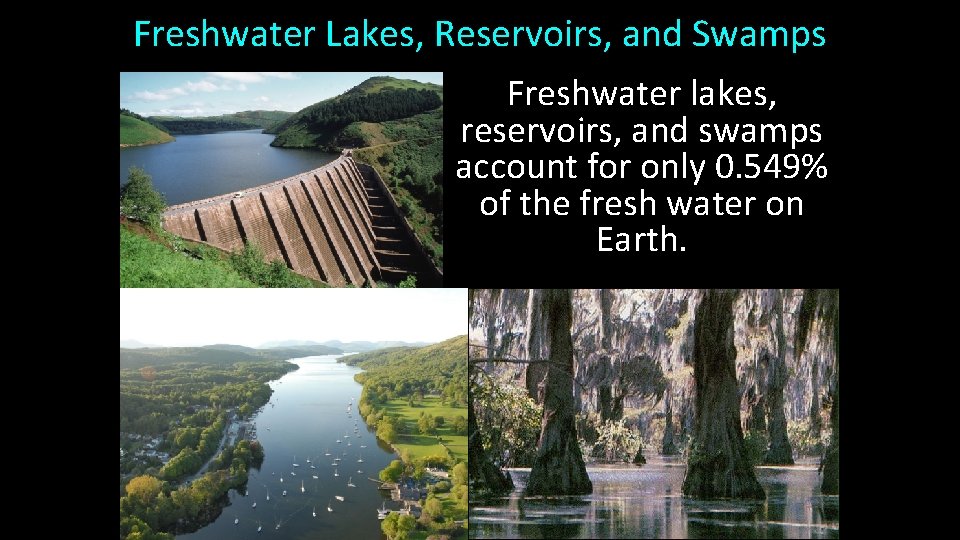
Freshwater Lakes, Reservoirs, and Swamps Freshwater lakes, reservoirs, and swamps account for only 0. 549% of the fresh water on Earth.
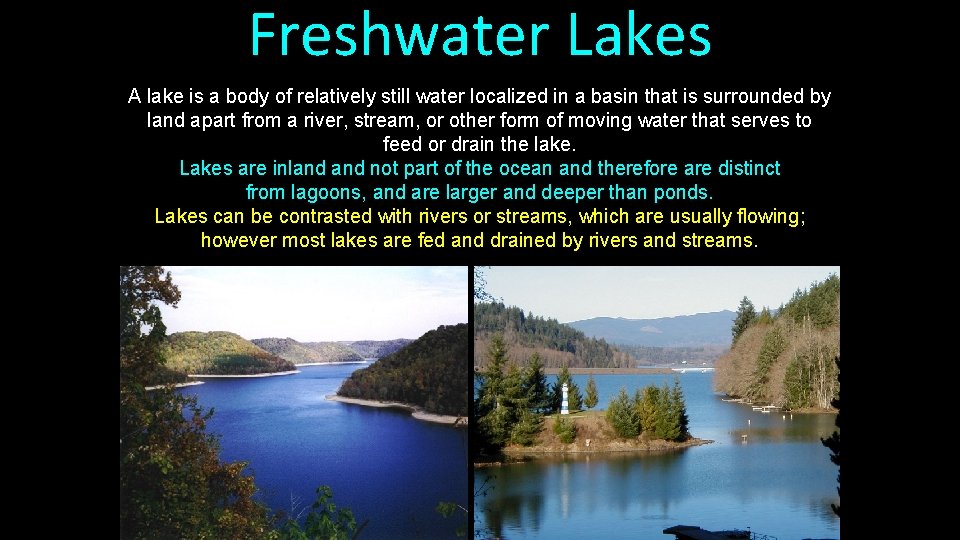
Freshwater Lakes A lake is a body of relatively still water localized in a basin that is surrounded by land apart from a river, stream, or other form of moving water that serves to feed or drain the lake. Lakes are inland not part of the ocean and therefore are distinct from lagoons, and are larger and deeper than ponds. Lakes can be contrasted with rivers or streams, which are usually flowing; however most lakes are fed and drained by rivers and streams.
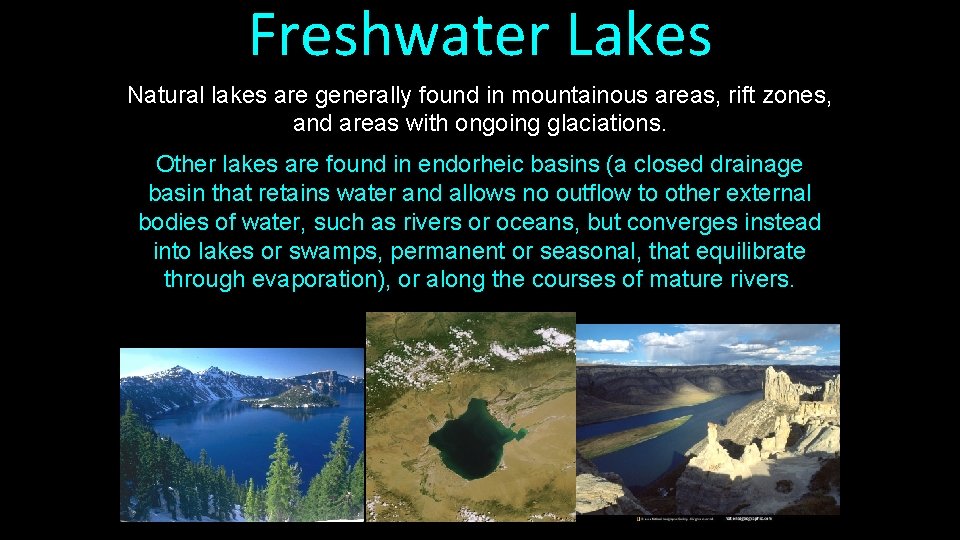
Freshwater Lakes Natural lakes are generally found in mountainous areas, rift zones, and areas with ongoing glaciations. Other lakes are found in endorheic basins (a closed drainage basin that retains water and allows no outflow to other external bodies of water, such as rivers or oceans, but converges instead into lakes or swamps, permanent or seasonal, that equilibrate through evaporation), or along the courses of mature rivers.
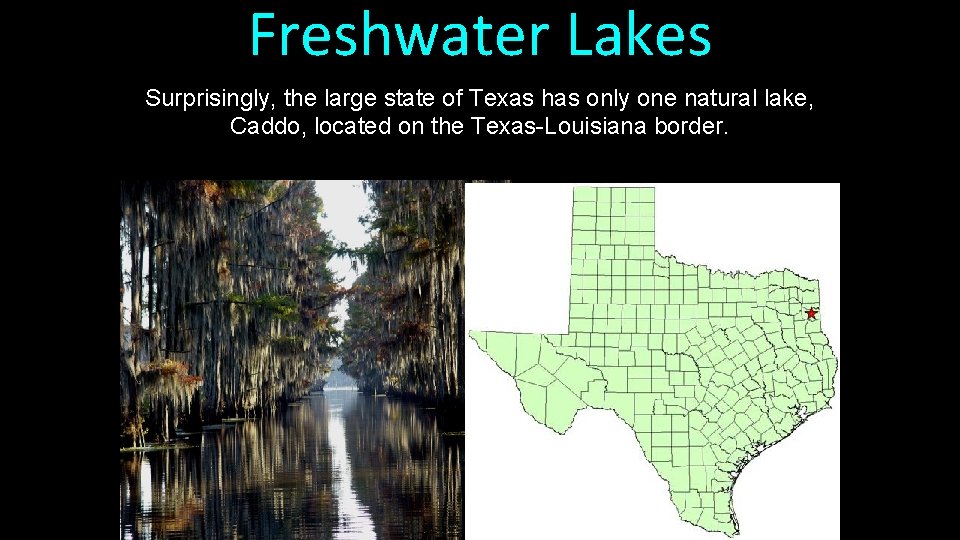
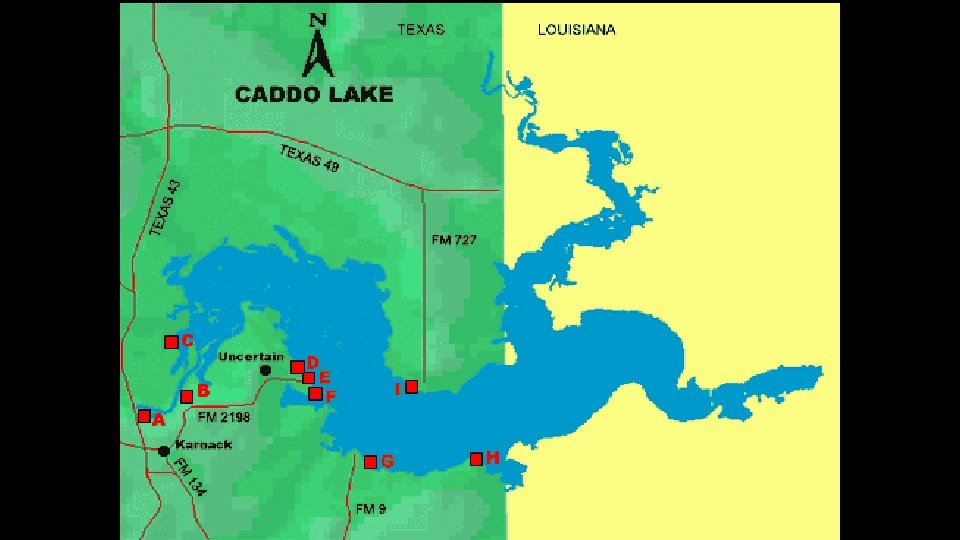
Freshwater Lakes Surprisingly, the large state of Texas has only one natural lake, Caddo, located on the Texas-Louisiana border.
Freshwater Lakes Surprisingly, the large state of Texas has only one natural lake, Caddo lake, located on the Texas-Louisiana border.
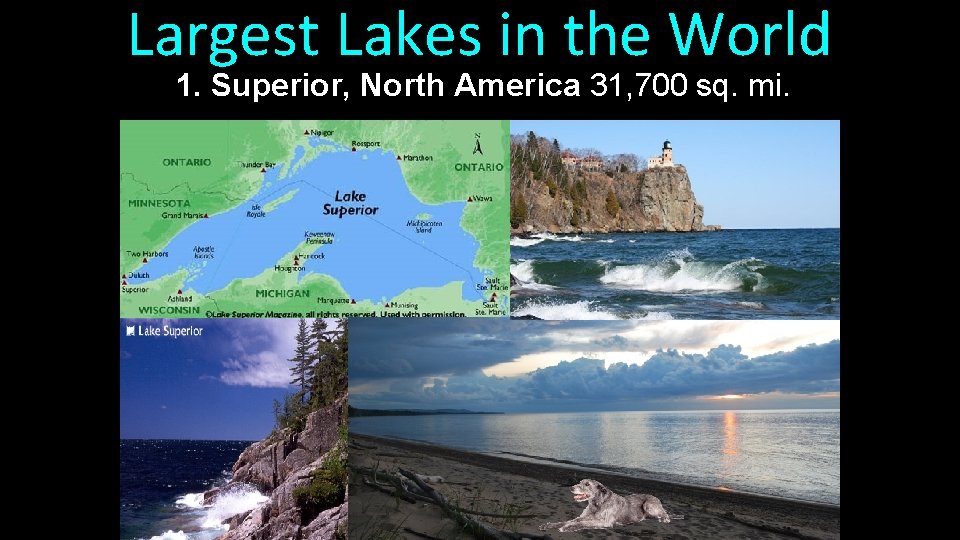
Largest Lakes in the World 1. Superior, North America 31, 700 sq. mi.
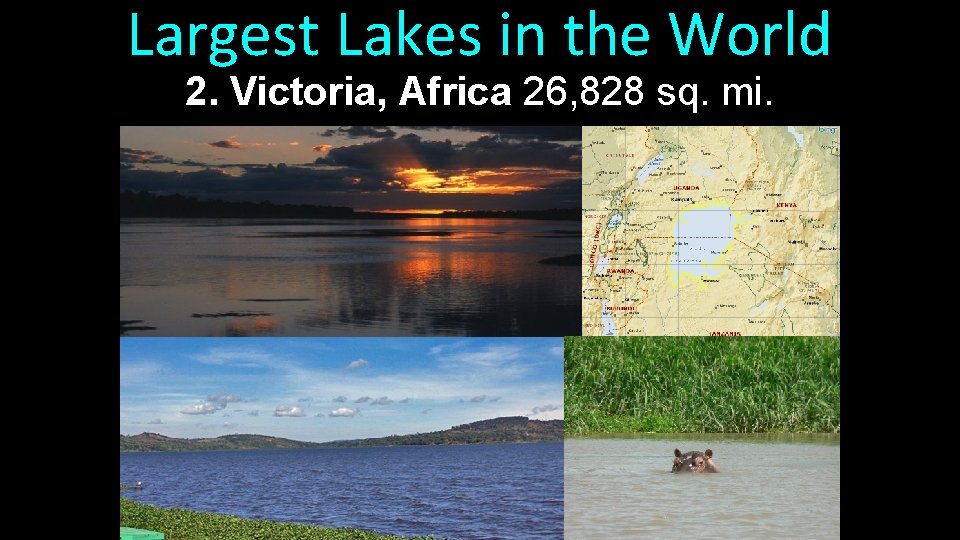
Largest Lakes in the World 2. Victoria, Africa 26, 828 sq. mi.
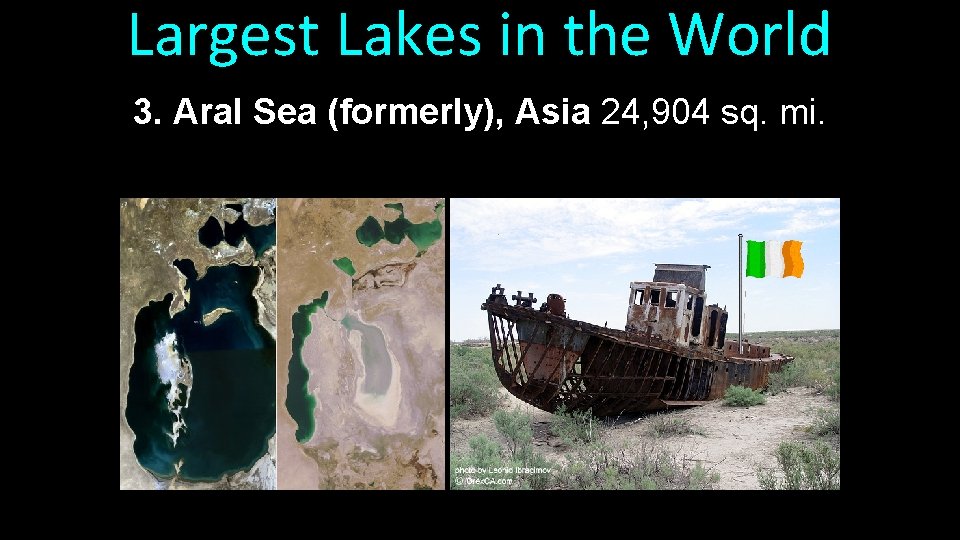
Largest Lakes in the World 3. Aral Sea (formerly), Asia 24, 904 sq. mi.
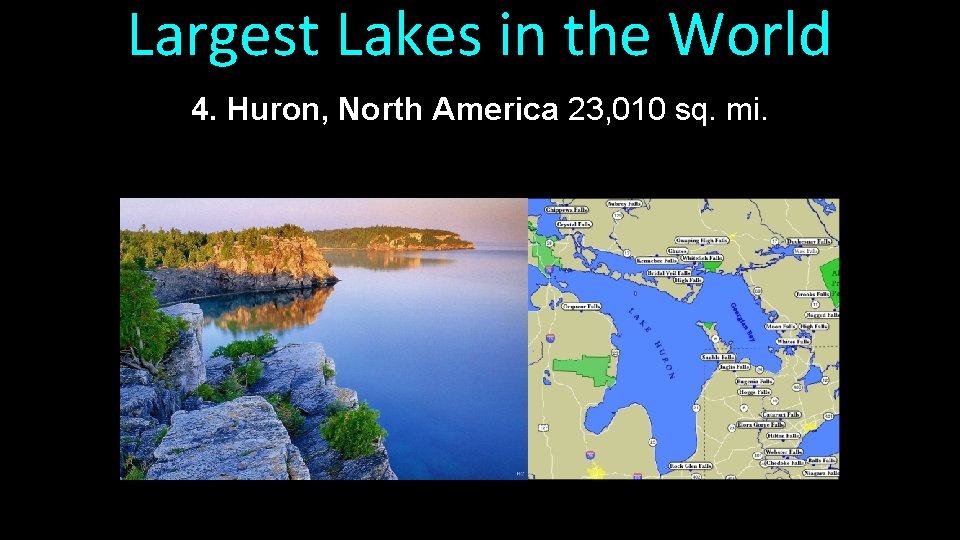
Largest Lakes in the World 4. Huron, North America 23, 010 sq. mi.
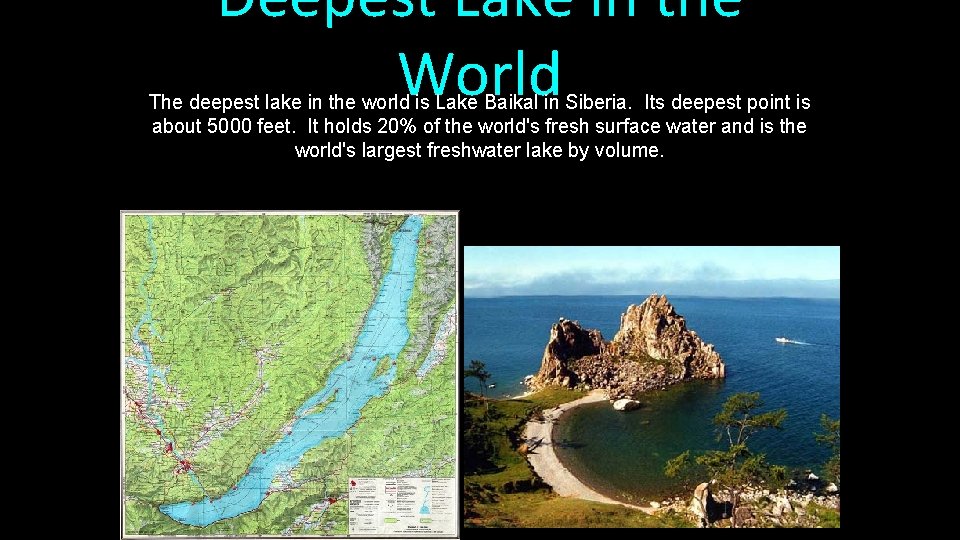
Deepest Lake in the World The deepest lake in the world is Lake Baikal in Siberia. Its deepest point is about 5000 feet. It holds 20% of the world's fresh surface water and is the world's largest freshwater lake by volume.