
The hydrologic cycle Running water Streamflow Two types
- Slides: 31
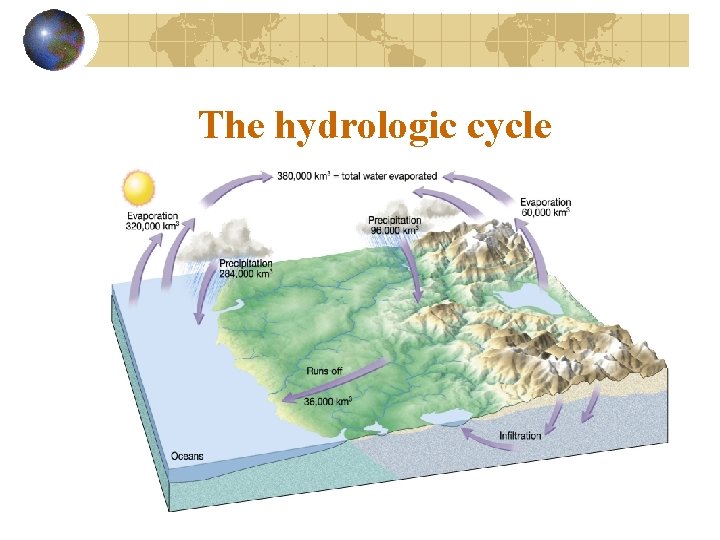
The hydrologic cycle
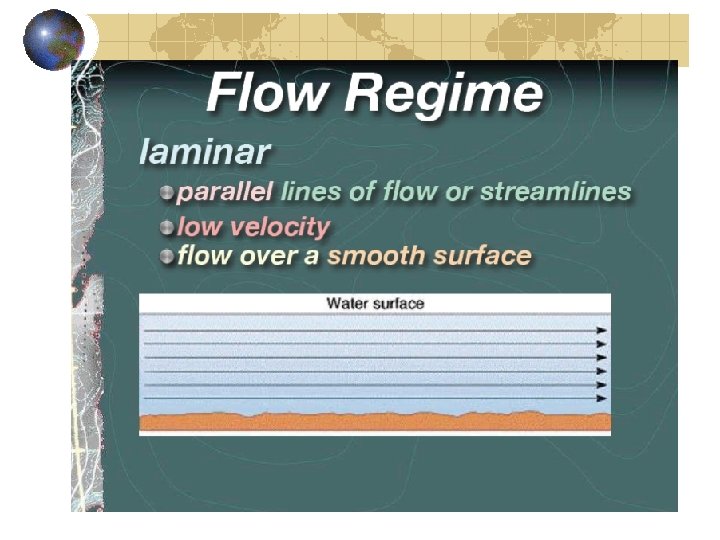
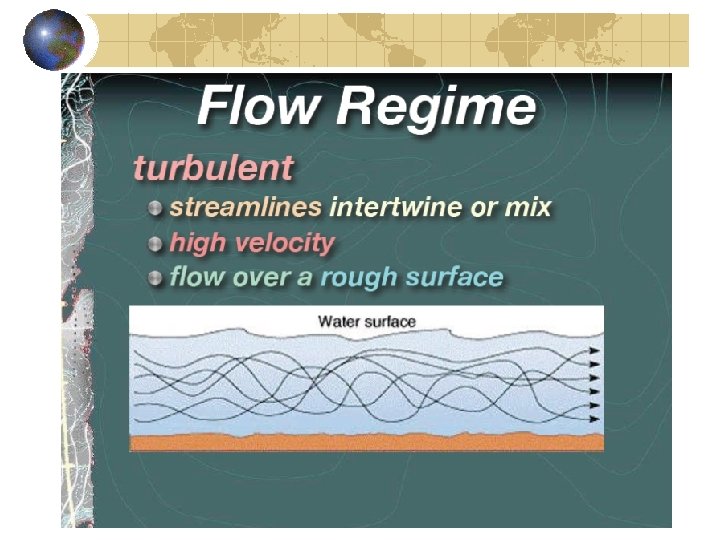
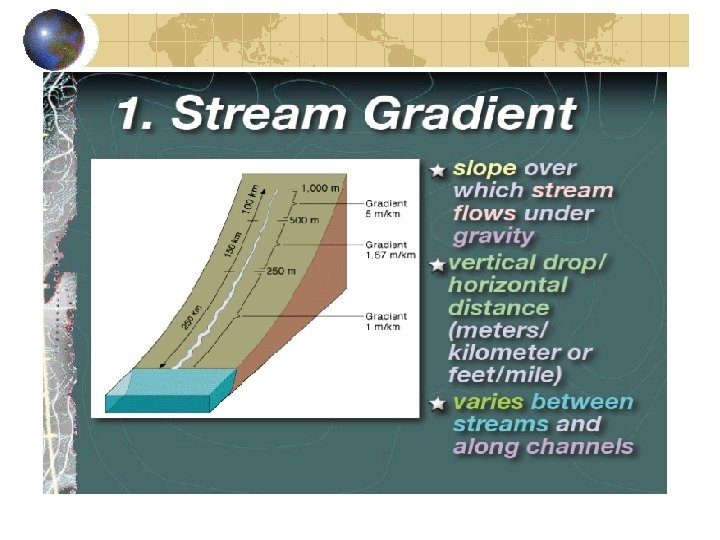
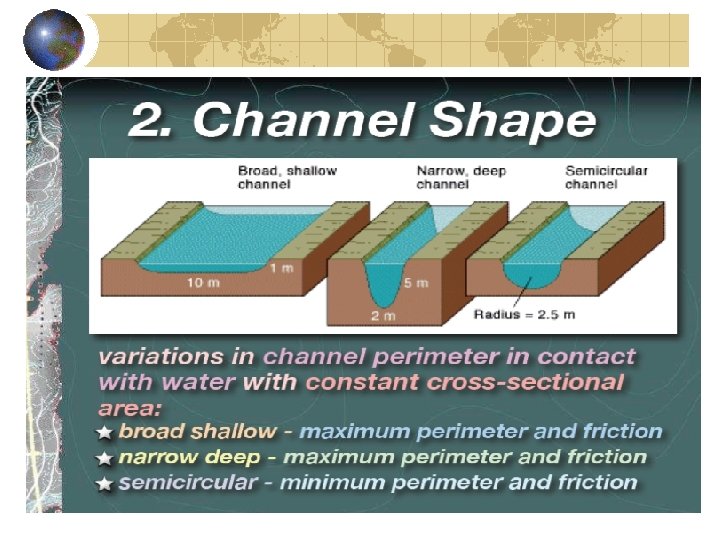
Running water Streamflow • Two types of flow determined primarily by velocity – Laminar flow – Turbulent flow • Factors that determine velocity – Gradient, or slope – Channel characteristics including shape, size, and roughness
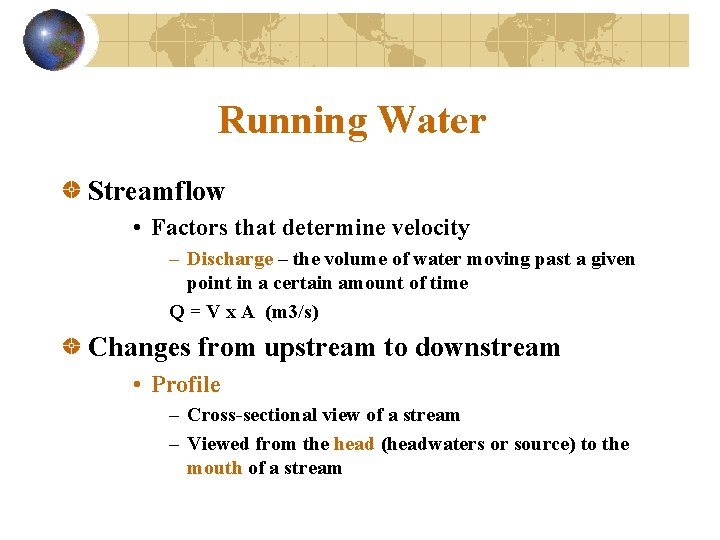
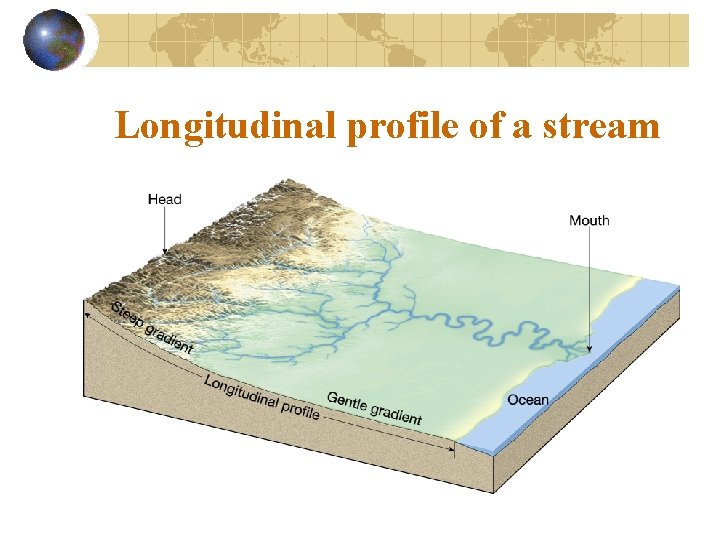
Running Water Streamflow • Factors that determine velocity – Discharge – the volume of water moving past a given point in a certain amount of time Q = V x A (m 3/s) Changes from upstream to downstream • Profile – Cross-sectional view of a stream – Viewed from the head (headwaters or source) to the mouth of a stream
Changes from upstream to downstream • Profile – Profile is a smooth curve – Gradient decreases downstream – Velocity – Discharge – Channel size
Longitudinal profile of a stream
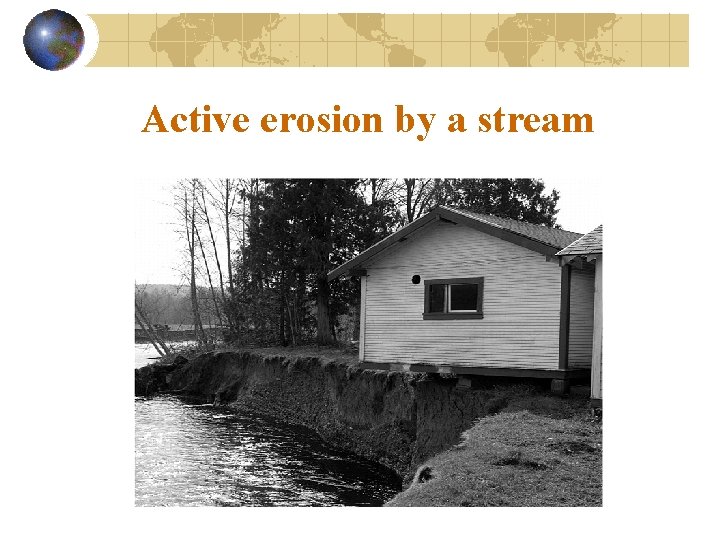
WORK OF STREAMS 1 -Erosion , 2 -Transportation, 3 -Deposition 1 -Stream erosion • Lifting loosely consolidated particles by – Abrasion – Dissolution • Stronger currents lift particles more effectively
Active erosion by a stream
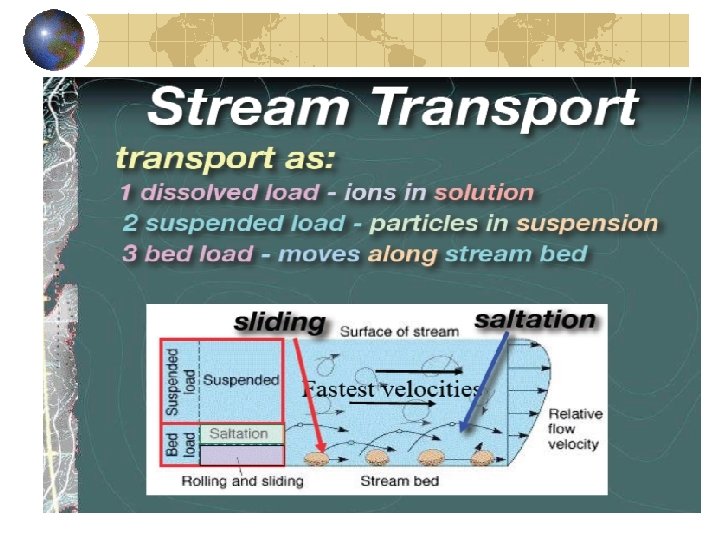
WORK OF STREAMS 2 -Transport of sediment by streams: • Transported material is called the stream’s load • Types of load – Dissolved load – Suspended load – Bed load • Capacity – the maximum load a stream can transport
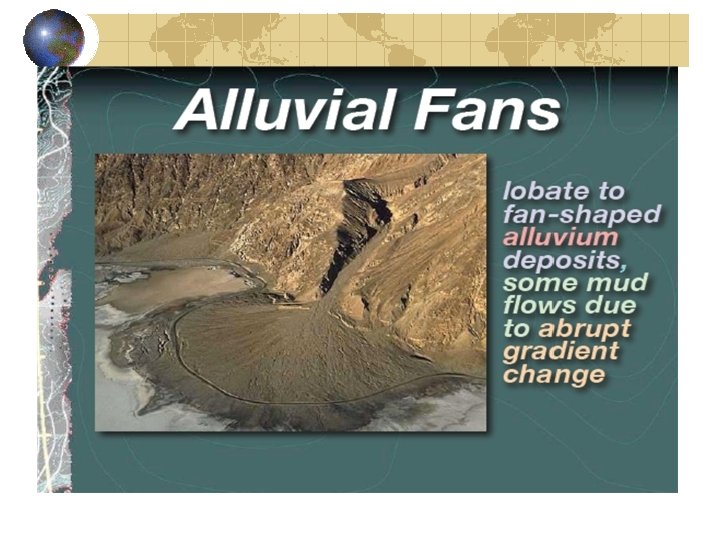
WORK OF STREAMS 3 - Deposition of sediment by a stream • Caused by a decrease in velocity – Competence is reduced – Sediment begins to drop out • Stream sediments – Generally well sorted – Stream sediments are known as alluvium
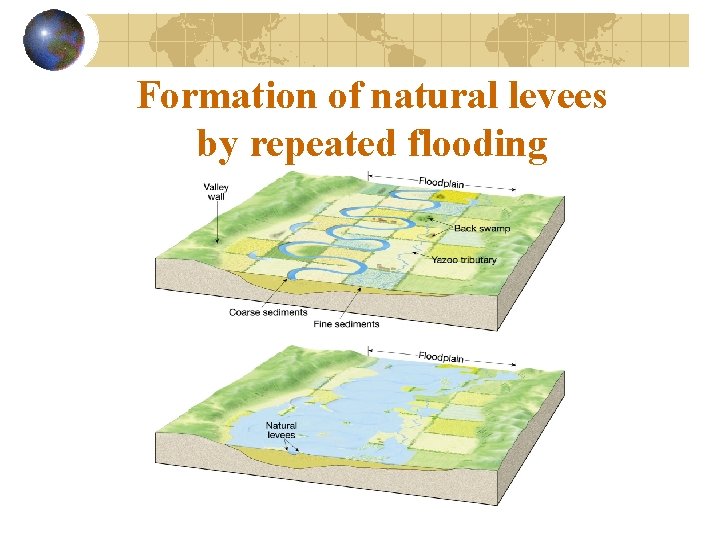
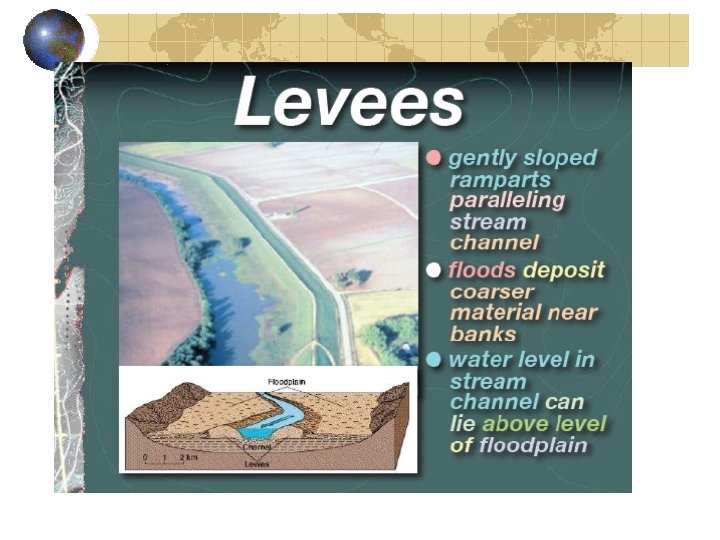
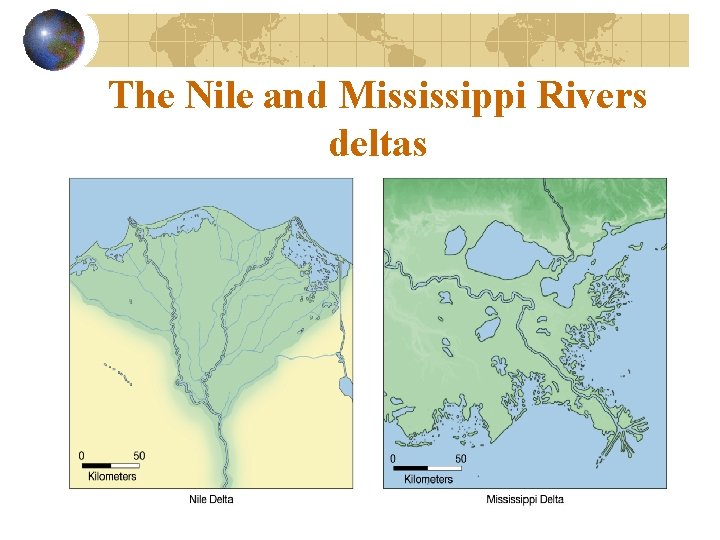
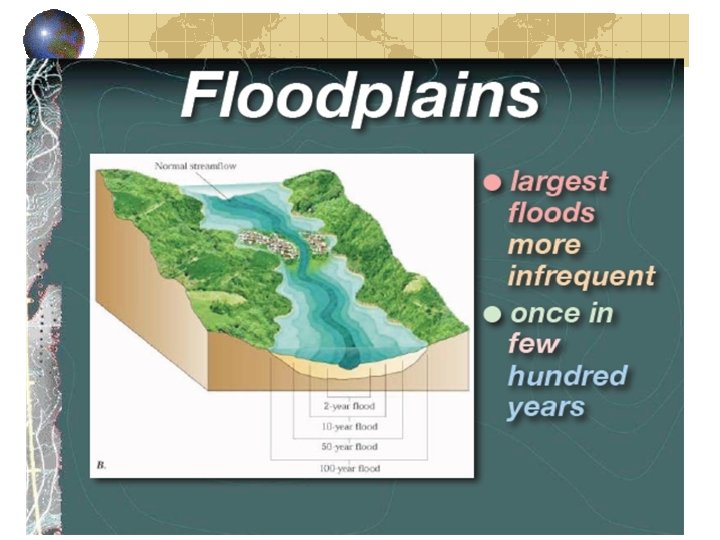
Deposition of sediment by a stream • Channel deposits ( mostly Sand & gravel) • Deltas • Floodplain deposits – Natural levees – form parallel to the stream channel by successive floods over many years
Formation of natural levees by repeated flooding
The Nile and Mississippi Rivers deltas
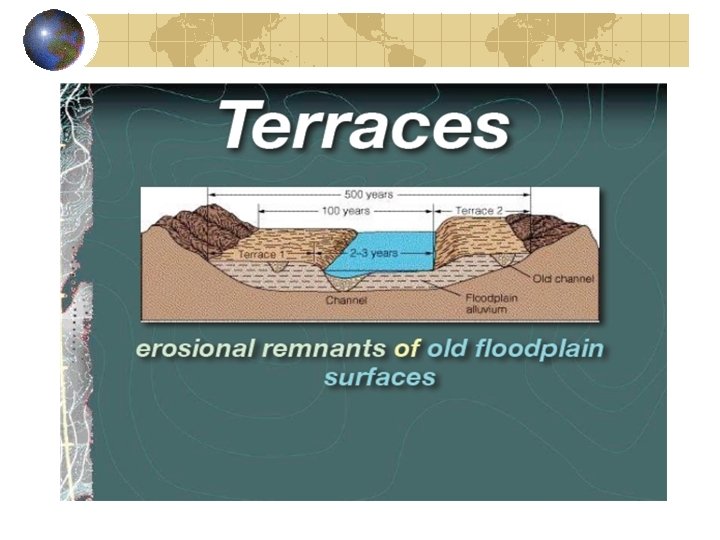
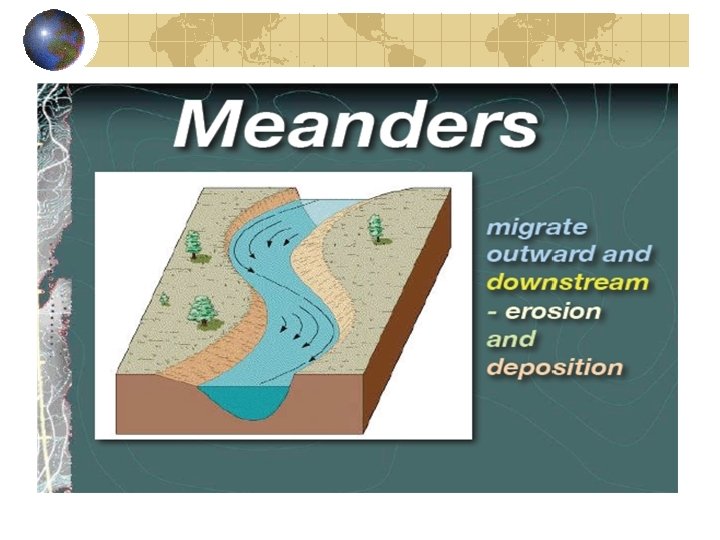
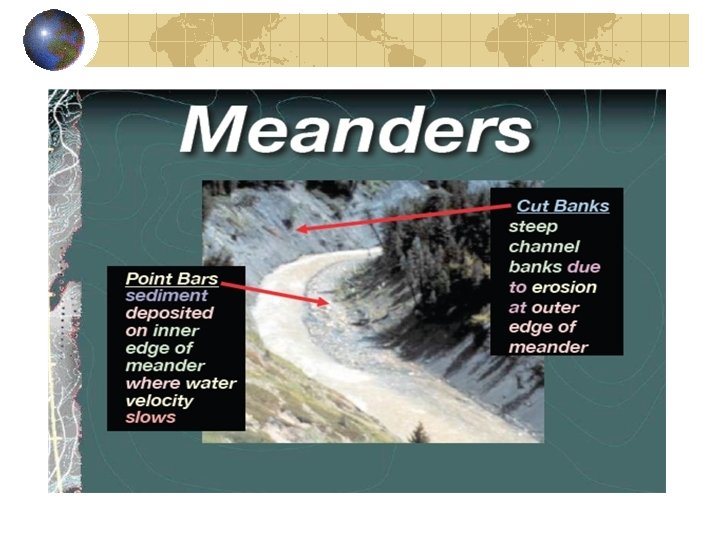
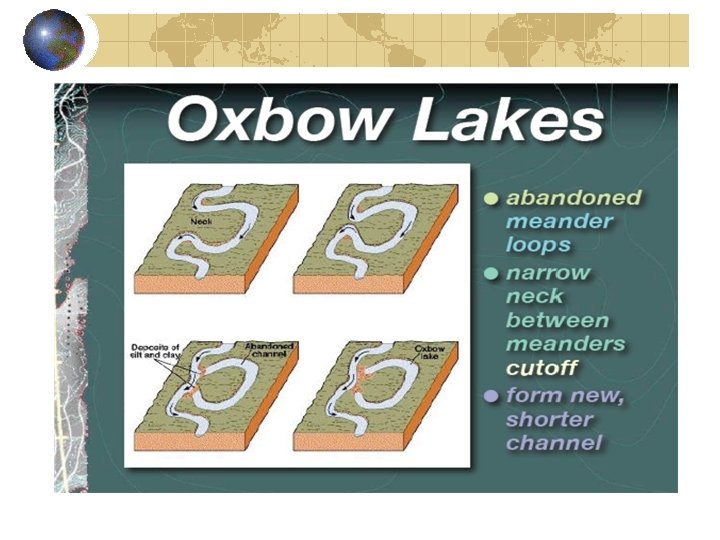
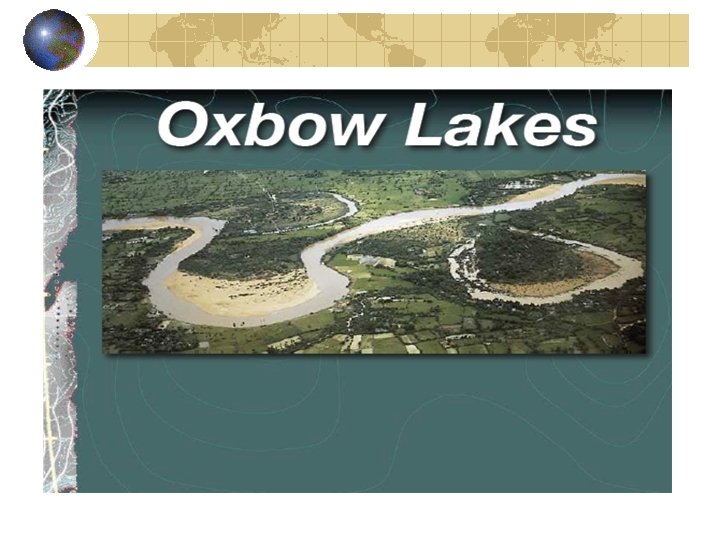
Running water Stream valleys: (1 -Narrow V ; 2 - Wide) • Features of wide valleys often include – Floodplains – Erosional floodplains – Depositional floodplains – Meanders – Cut bank
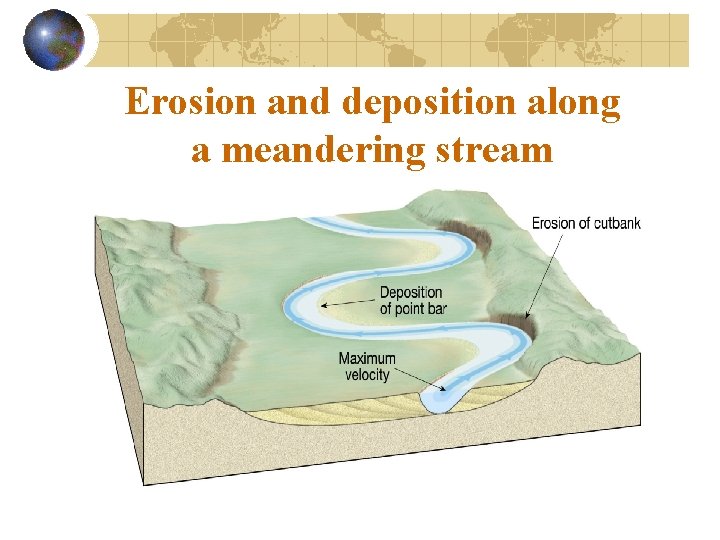
Erosion and deposition along a meandering stream
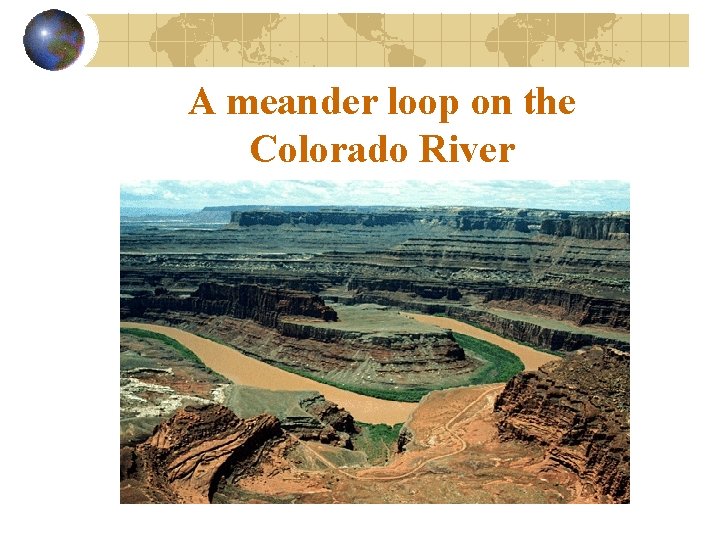
A meander loop on the Colorado River