
The hybrid mind Materiality and cognitive processes Roger
The hybrid mind: Materiality and cognitive processes Roger Säljö 2021 -02 -28 www. gu. se
Background • All societies have a need to reproduce knowledge, skills, values and identities of its members and communities; i. e. maintain (and develop) their cultural memory 2 www. gu. se
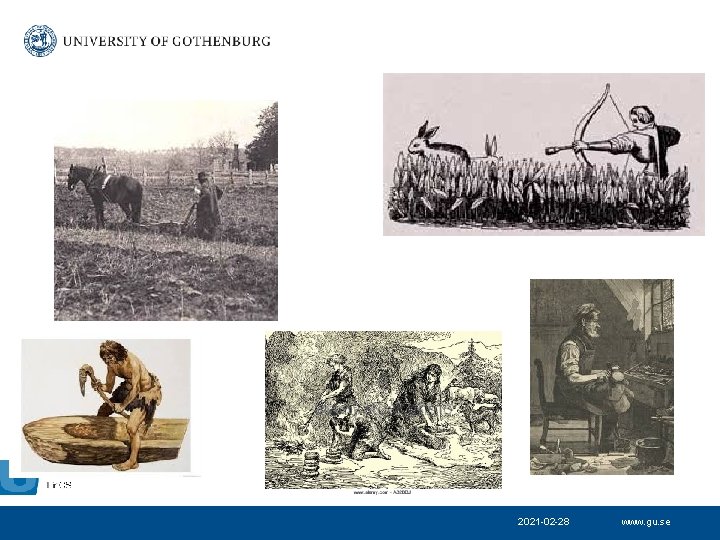
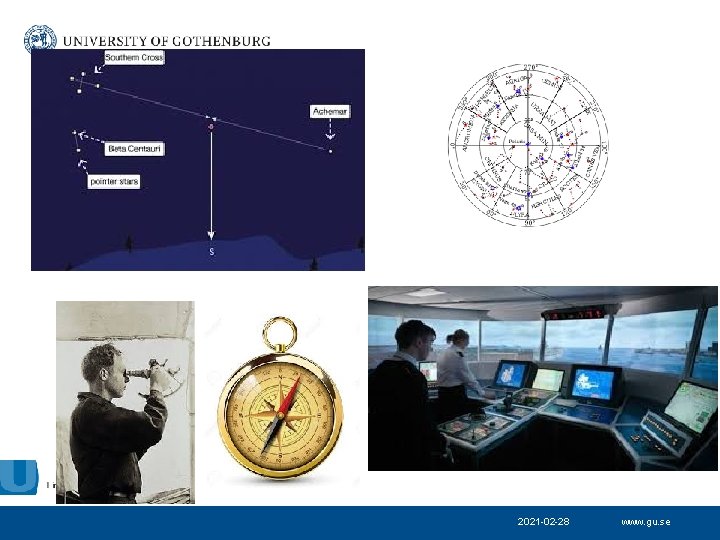
Background • Human learning and development-at the individual as well as collective-level cannot be understood without taking into account our capacities to transform our environment – Physical technologies (wheel, bows, tractors …) – Intellectual technologies (alphabets, numbers, concepts …) – Symbolic technologies (documentation, information processing …) • Hybrid mind (Donald, 2000) is a mind that operates in collaboration and co-ordination with such resources 2021 -02 -28 www. gu. se
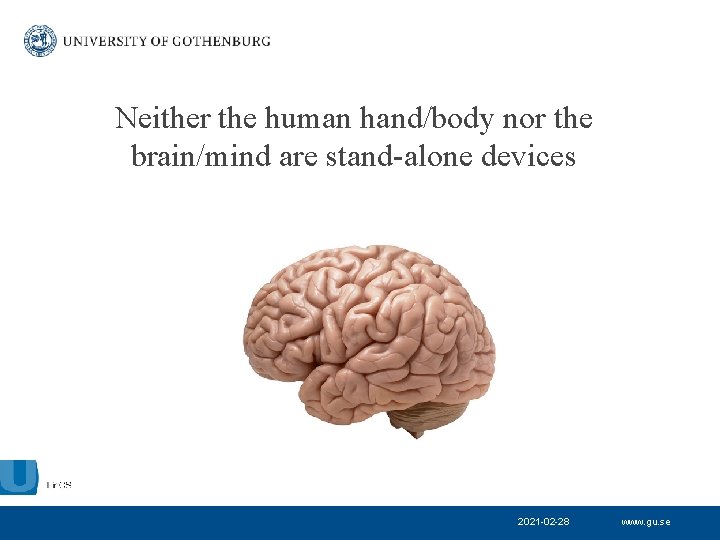
Neither the human hand/body nor the brain/mind are stand-alone devices 2021 -02 -28 www. gu. se
2021 -02 -28 www. gu. se
2021 -02 -28 www. gu. se
Outline • How we externalize human experiences in symbolic/material form through media (and other artefacts); the role of symbolic technologies • How we build up a cultural memory through documentary practices using artificial memory systems(AMS) (or external symbolic storages, ESS) • The interaction by individuals with the social memory, i. e. how we learn to ‘represent’ and use ‘representations’ – literacy, numeracy etc. • Emergence of epistemic practices (as an alternative to ‘learning’) relevant for new symbolic technologies and where materiality is always an important element www. gu. se
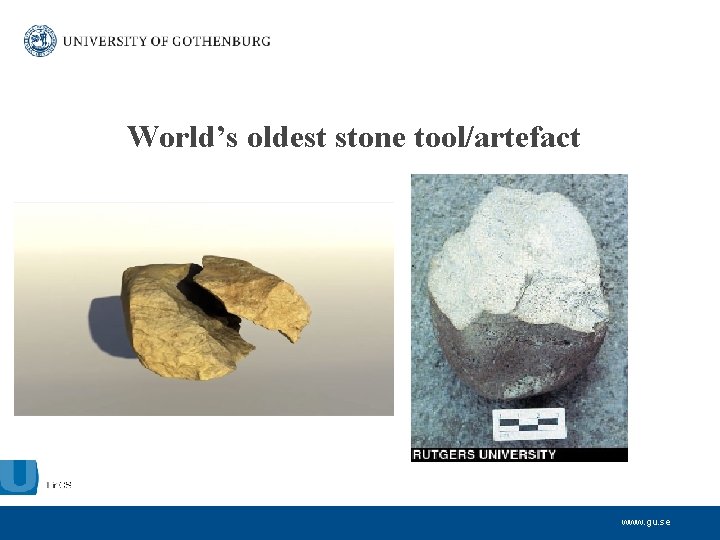
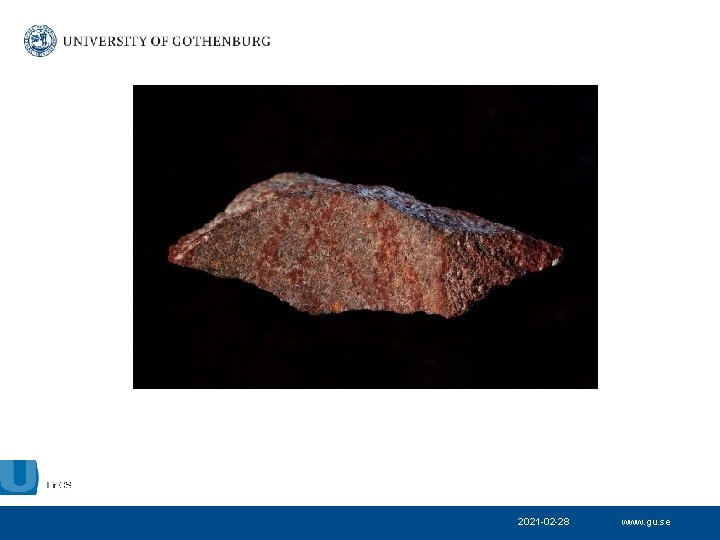
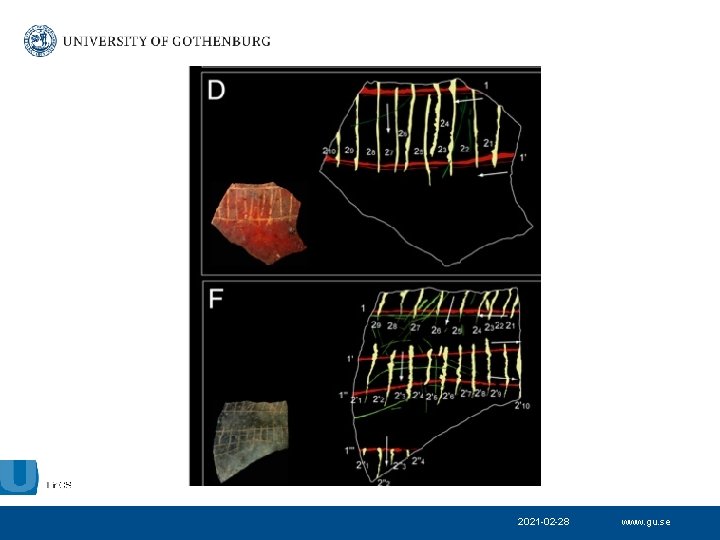
World’s oldest stone tool/artefact www. gu. se
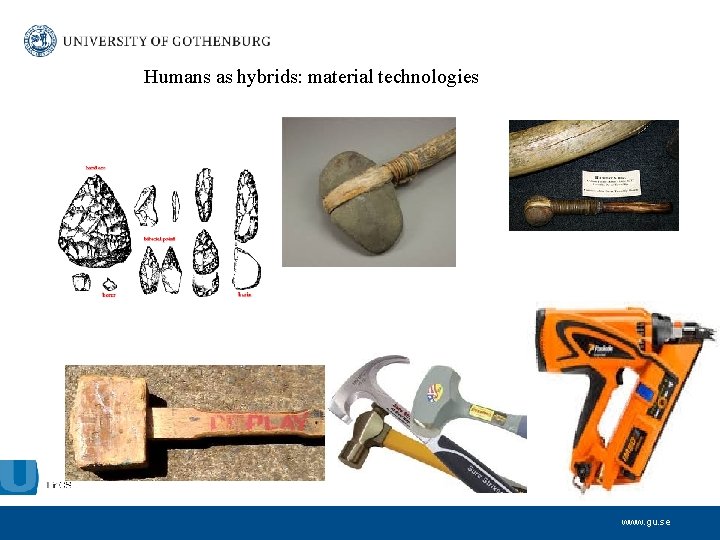
Humans as hybrids: material technologies www. gu. se
2021 -02 -28 www. gu. se
2021 -02 -28 www. gu. se
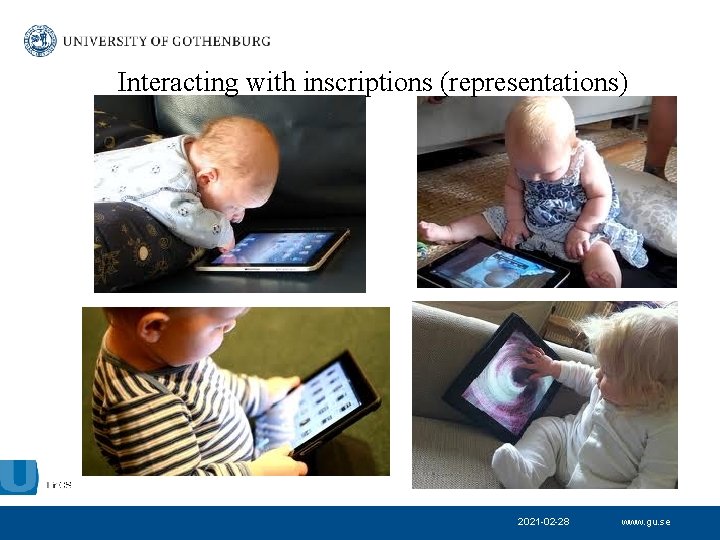
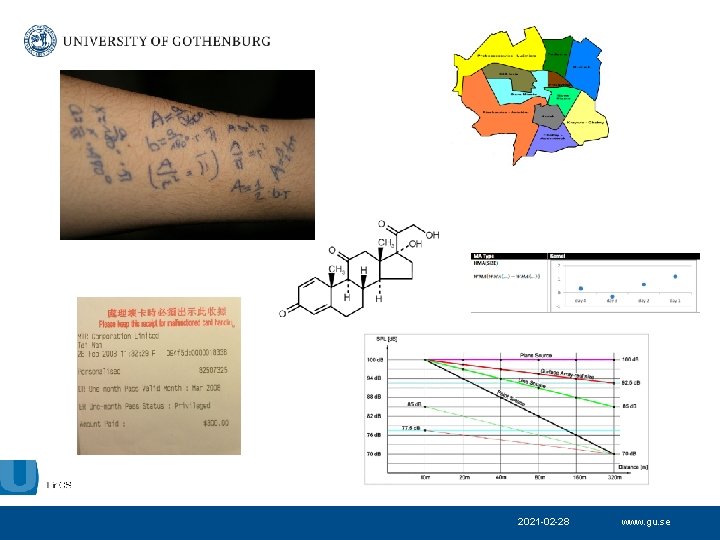
Interacting with inscriptions (representations) 2021 -02 -28 www. gu. se
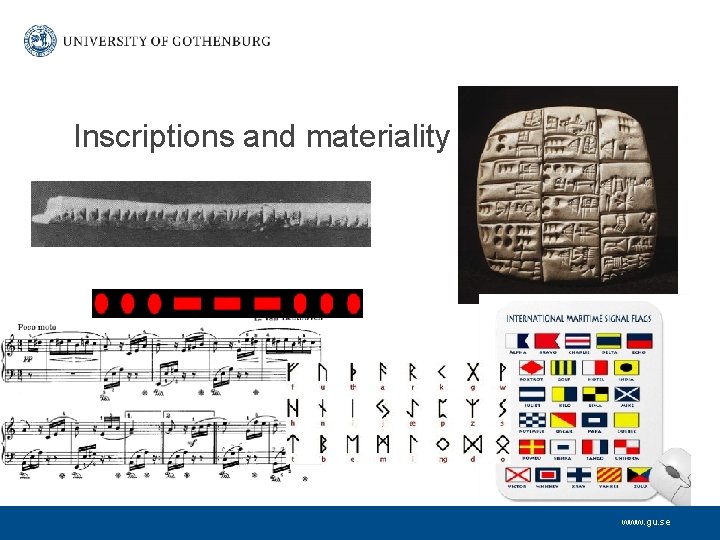
Inscriptions and materiality www. gu. se
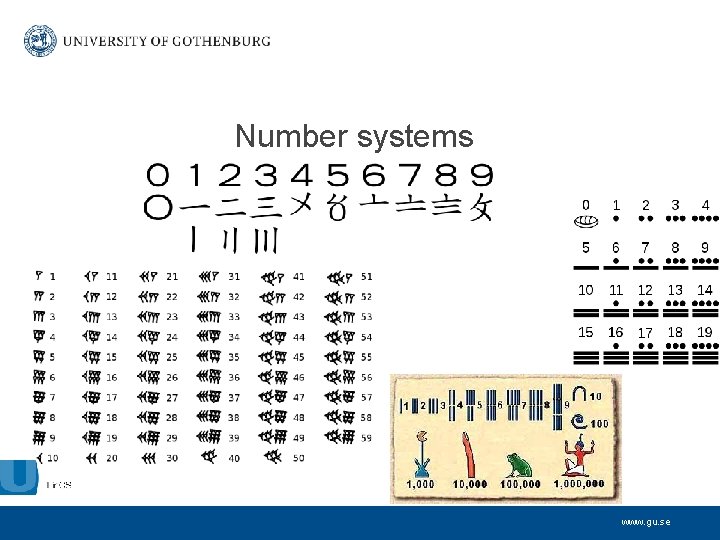
Number systems www. gu. se
2021 -02 -28 www. gu. se
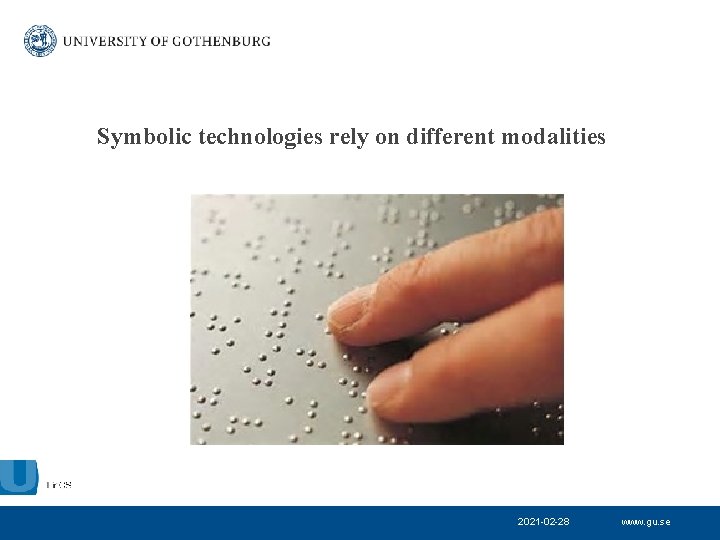
Symbolic technologies rely on different modalities 2021 -02 -28 www. gu. se
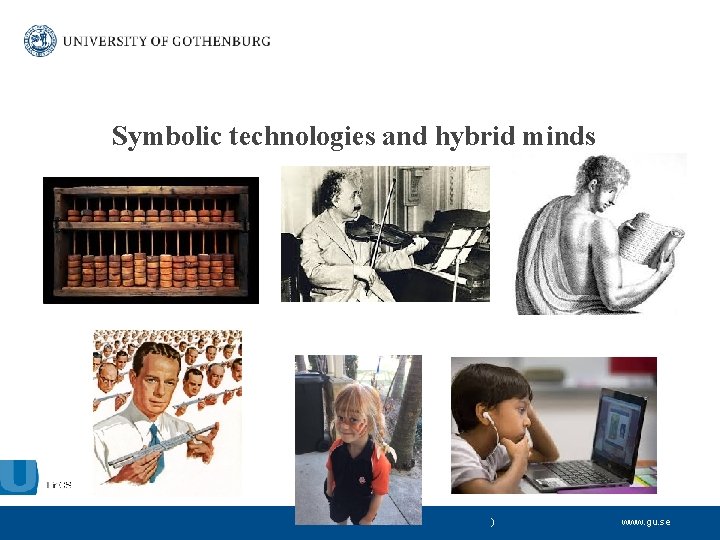
Symbolic technologies and hybrid minds ) www. gu. se
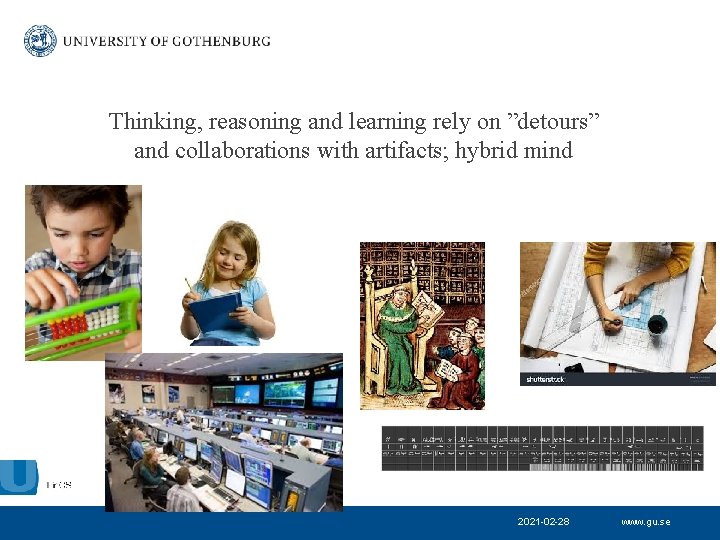
Thinking, reasoning and learning rely on ”detours” and collaborations with artifacts; hybrid mind 2021 -02 -28 www. gu. se
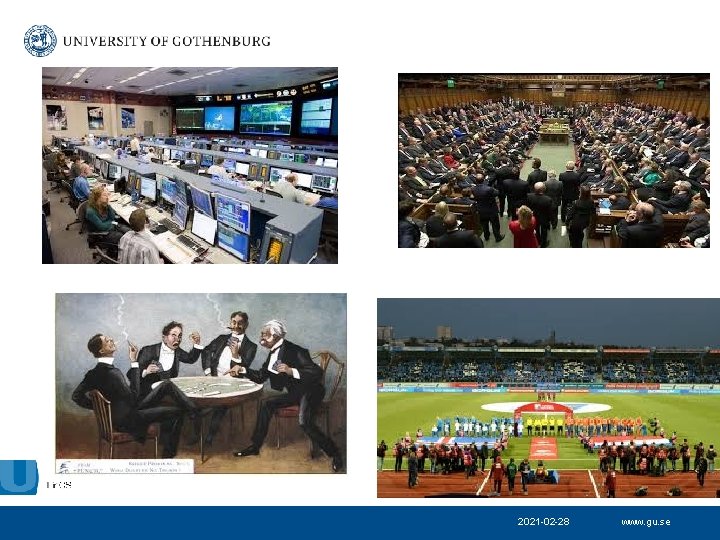
Humans have a unique capacity for ”mind sharing” (Donald, 2008) • And for many generations during thousands of years, we have systematically worked to increase our capacities for communication and sharing of experiences by – building increasingly complex communities – Developing technologies/cultural tools that allow us to do build communities that go beyond those that require physical proximity 2021 -02 -28 www. gu. se
2021 -02 -28 www. gu. se
The notion of a hybrid mind • The human mind operates in symbiosis with material and symbolic tools of the cultural memory • Our minds and mindful practices rely on productive “mergers and coalitions” (Clark, 2003) with symbolic artefacts • No sharp line of division between minds/reasoning and artefacts, thinking as emergent • A hybrid mind develops through an adaptation to a world that is designed • For research and theorizing: the unit of analysis www. gu. se
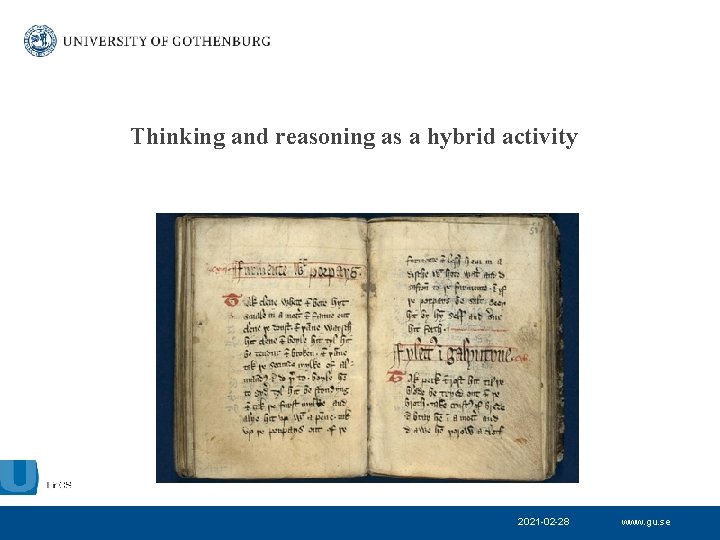
Thinking and reasoning as a hybrid activity 2021 -02 -28 www. gu. se
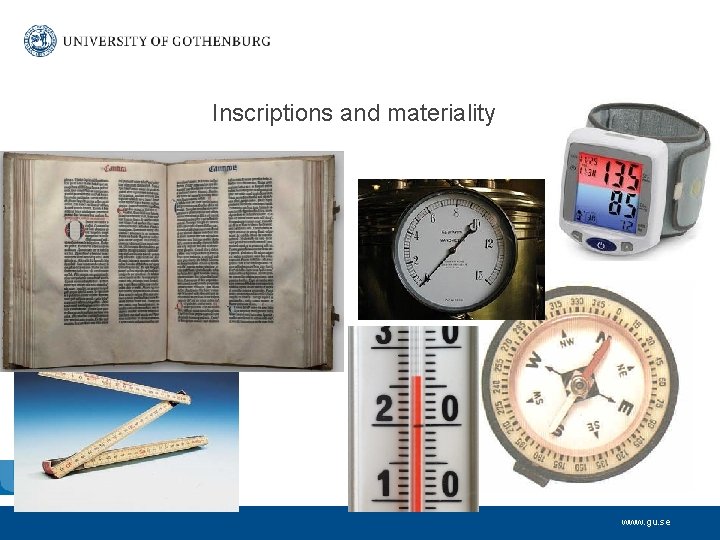
Inscriptions and materiality www. gu. se
Externalization • Externalization of human experiences – Through communicative practices (language, body …) – Through inscriptions – Through technologies (material artefacts using inscriptions) • … results in the building up of external memory fields in which hybrid minds operate (Donald, 2000) www. gu. se
Inscriptions • Inscriptions rely on materiality • All representational tools rely on interpretive practices and interpretive communities • Processes of reification/fixation of meaning • The act of using objectifications as a creative process www. gu. se
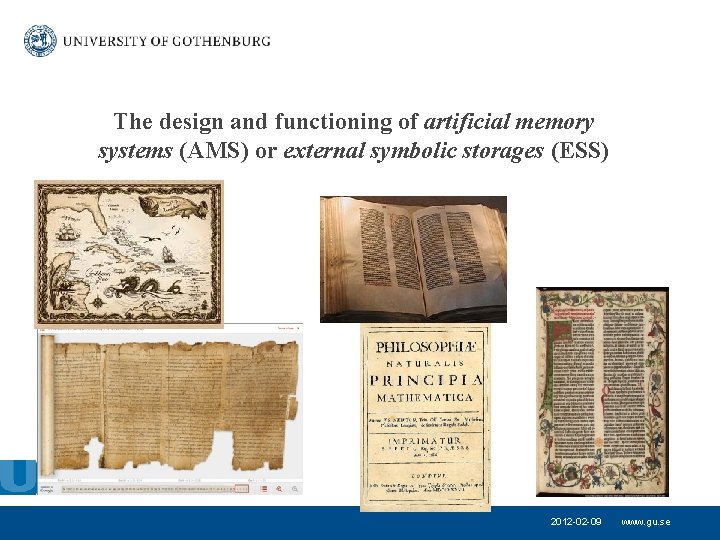
The design and functioning of artificial memory systems (AMS) or external symbolic storages (ESS) 2012 -02 -09 www. gu. se
The use of symbolic technologies shape societies and human minds • The duality of text and literacy practices; • Writing, for instance, is both an internal, psychological process of committing thoughts and ideas to a visuographic form, and at the same time ”writing is ’out there’; it exists along with other social artifacts of culture, and forms part of a broader social context” (Barton & Hamilton, 1999, p. 799). 2021 -02 -28 www. gu. se
Texts and text-based realities • All men are mortal • Alex is a man • Alex is mortal • All men have four legs • Alex is a man • Alex has four legs www. gu. se
Technological inventions and the institutional embeddedness of inscriptions and ESS/AMS 2021 -02 -28 www. gu. se
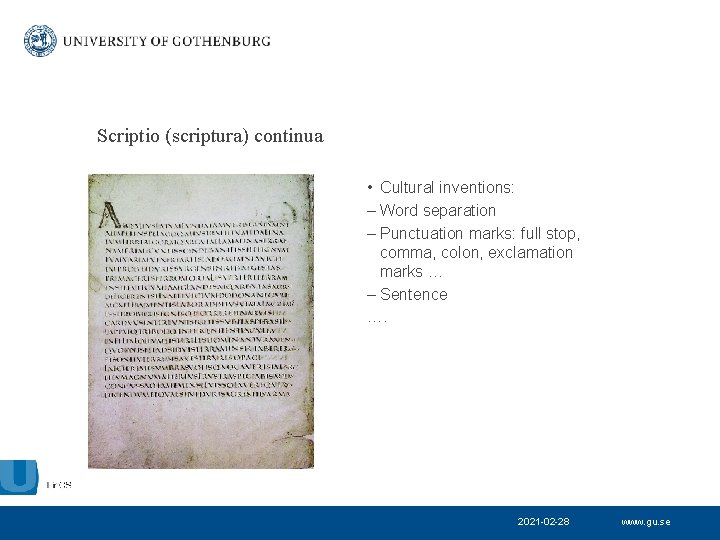
Scriptio (scriptura) continua • Cultural inventions: – Word separation – Punctuation marks: full stop, comma, colon, exclamation marks … – Sentence …. 2021 -02 -28 www. gu. se
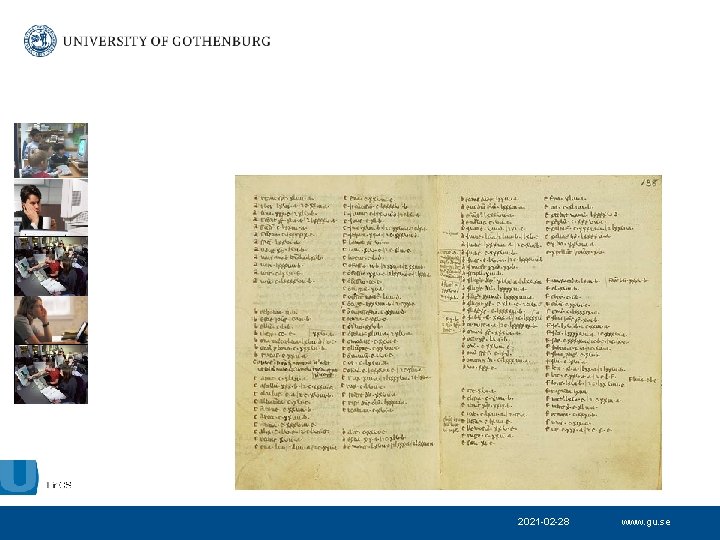
Texts in a new activity system: Epistemic practices of the university • Introduction of –Silent reading –Compilations, compendia –Headings, paragraphs, margins –Indices • New meaning making practices –Critical reading –Conceptual inquiry –Knowledge production –…. www. gu. se
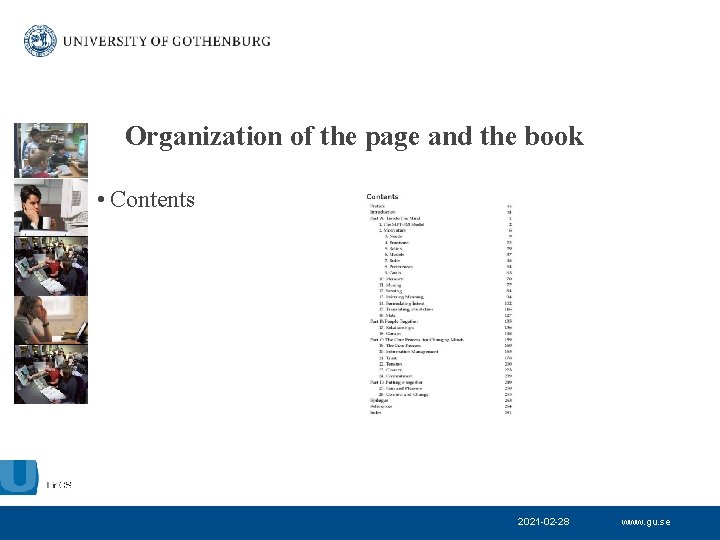
Organization of the page and the book • Contents 2021 -02 -28 www. gu. se
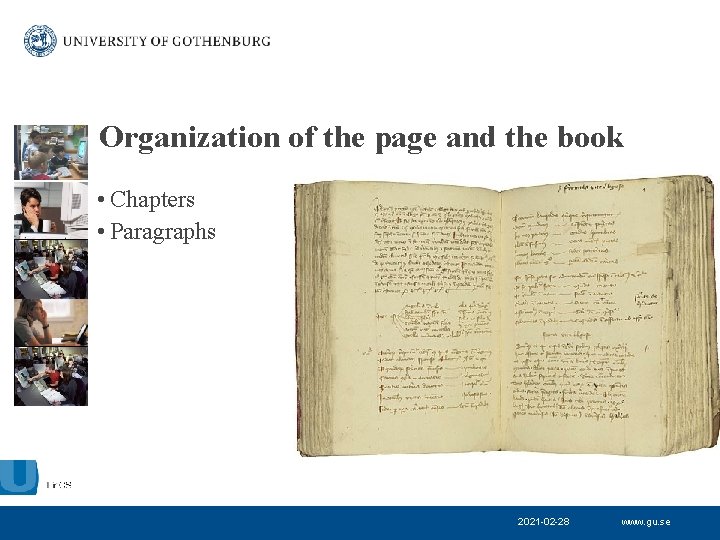
Organization of the page and the book • Chapters • Paragraphs 2021 -02 -28 www. gu. se
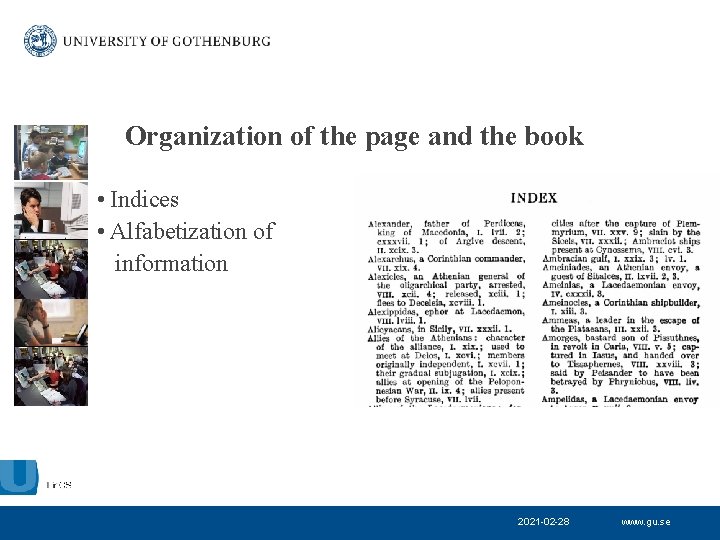
Organization of the page and the book • Indices • Alfabetization of information 2021 -02 -28 www. gu. se
2021 -02 -28 www. gu. se
Characteristics of ESS/AMS • Exist in public space • Are relatively permanent • Can be used repeatedly • Are unlimited in their capacity • Organized on the basis of explicit and (semi-)public rules • Are increasingly accessible • Use relies on socialization into specific meaning-making and literacy practices www. gu. se

’Externalization’ or objectification of …. • Information (texts, spoken narratives, analytical procedures etc. ) www. gu. se
’Externalization’ or objectification of • …. human thought processes www. gu. se
Externalization of cognitive functions • Computer software (spell and grammar checks, statistical analysis packages etc. ) • Search engines • Book-keeping programs • Graphical calculators • Facerecognition devices • GPS-navigators • AI development • …. www. gu. se
Transformations of learning/epistemic practices • Technologies transform our access points (Giddens, 2000) to the cultural memory • Technology functions as a ’black box’ (Latour), tensions between black boxing and white boxing • We increasingly learn from the ’complex’ to the ’elementary’, symbolic technologies are ’restless’ • We ’understand’ as part of practices, we do not necessarily ’understand’ as part of hierachically organized knowledge (such as in the disciplines) • Learning is in the performative • The human mind is relational www. gu. se
- Slides: 40