
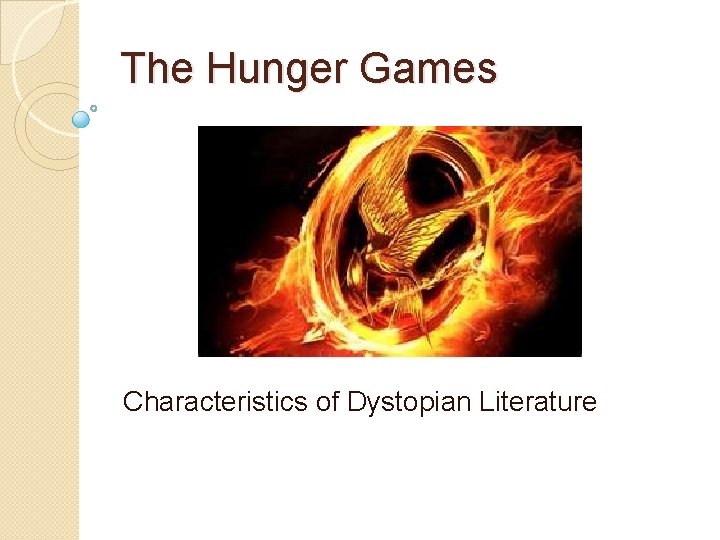
The Hunger Games Characteristics of Dystopian Literature Dystopian
- Slides: 11
The Hunger Games Characteristics of Dystopian Literature
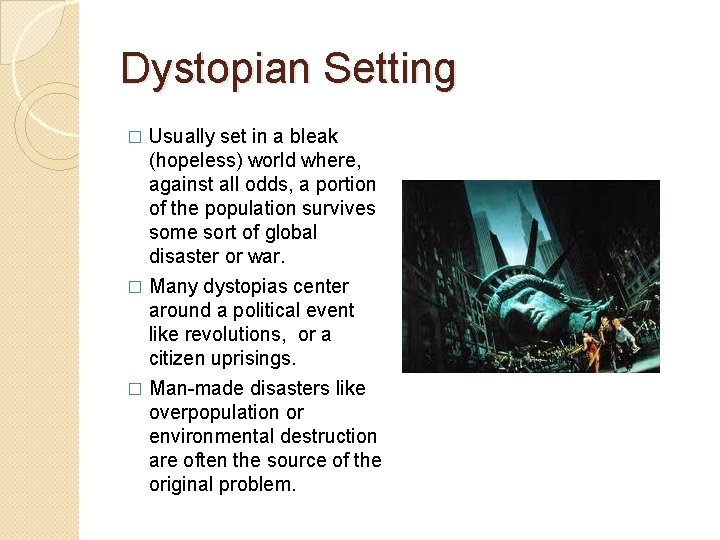
Dystopian Setting Usually set in a bleak (hopeless) world where, against all odds, a portion of the population survives some sort of global disaster or war. � Many dystopias center around a political event like revolutions, or a citizen uprisings. � Man-made disasters like overpopulation or environmental destruction are often the source of the original problem. �
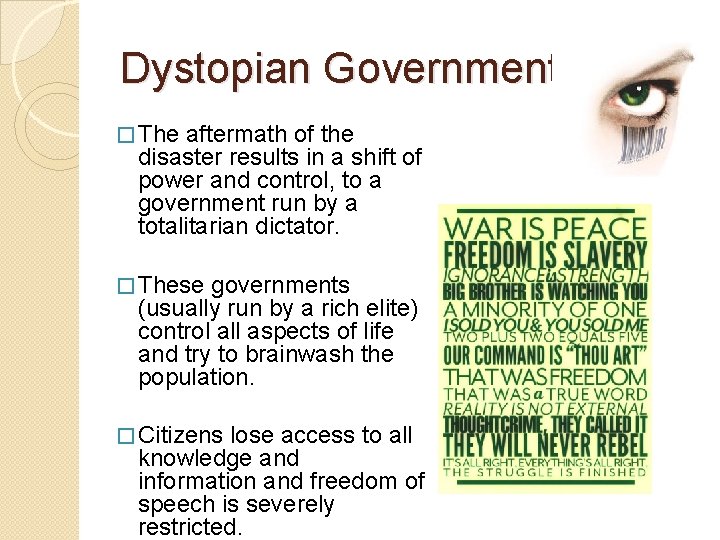
Dystopian Government � The aftermath of the disaster results in a shift of power and control, to a government run by a totalitarian dictator. � These governments (usually run by a rich elite) control all aspects of life and try to brainwash the population. � Citizens lose access to all knowledge and information and freedom of speech is severely restricted.
�The majority of people are cut-off and isolated from the ruling elite and spend most of their day struggling to provide food and shelter for their families. �Everyone must obey the government or face severe penalties. �People are encouraged to spy on each other and report back to the government.
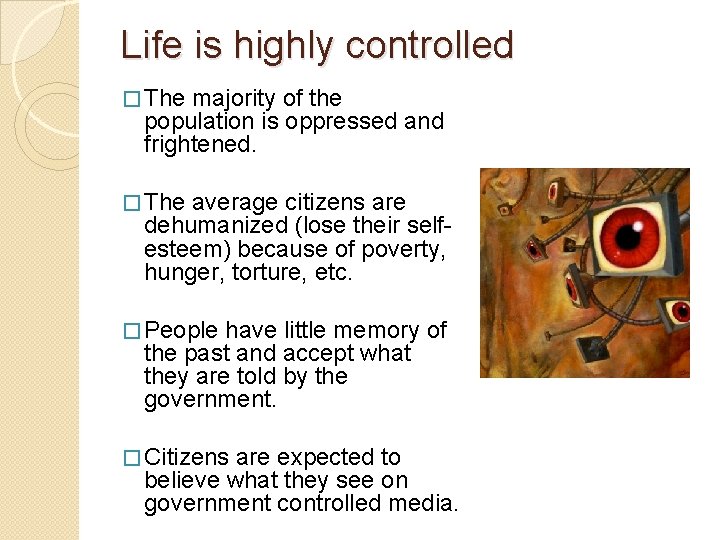
Life is highly controlled � The majority of the population is oppressed and frightened. � The average citizens are dehumanized (lose their selfesteem) because of poverty, hunger, torture, etc. � People have little memory of the past and accept what they are told by the government. � Citizens are expected to believe what they see on government controlled media.
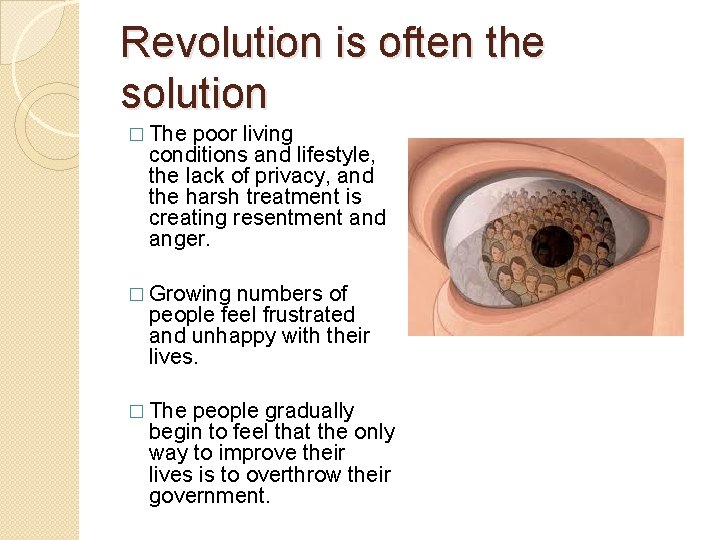
Revolution is often the solution � The poor living conditions and lifestyle, the lack of privacy, and the harsh treatment is creating resentment and anger. � Growing numbers of people feel frustrated and unhappy with their lives. � The people gradually begin to feel that the only way to improve their lives is to overthrow their government.
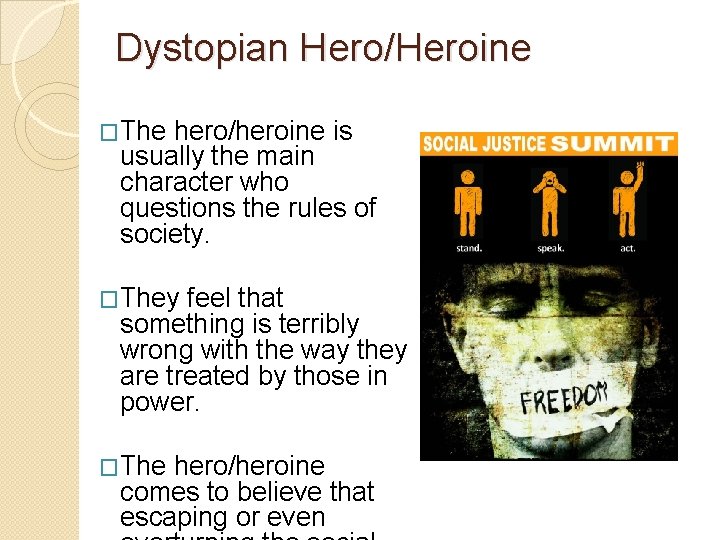
Dystopian Hero/Heroine �The hero/heroine is usually the main character who questions the rules of society. �They feel that something is terribly wrong with the way they are treated by those in power. �The hero/heroine comes to believe that escaping or even
�They decide to act and risk their own lives to change things. �Sometimes the hero/heroine manages to escape or start an uprising. But, ultimately fail to change anything. �Sometimes they themselves give in and end up conforming to the society's rules.
Dystopias: Common Themes Typical themes include warnings about: � too much government control over the lives of citizens � blind faith in government and technology as solutions to problems � laws restricting freedom of information and freedom of speech � government control over media invasion of personal privacy—viewing personal records without court orders.
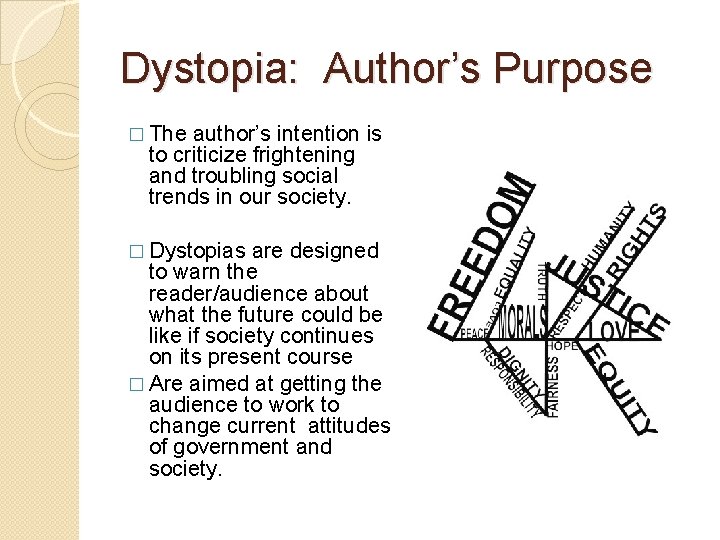
Dystopia: Author’s Purpose � The author’s intention is to criticize frightening and troubling social trends in our society. � Dystopias are designed to warn the reader/audience about what the future could be like if society continues on its present course � Are aimed at getting the audience to work to change current attitudes of government and society.
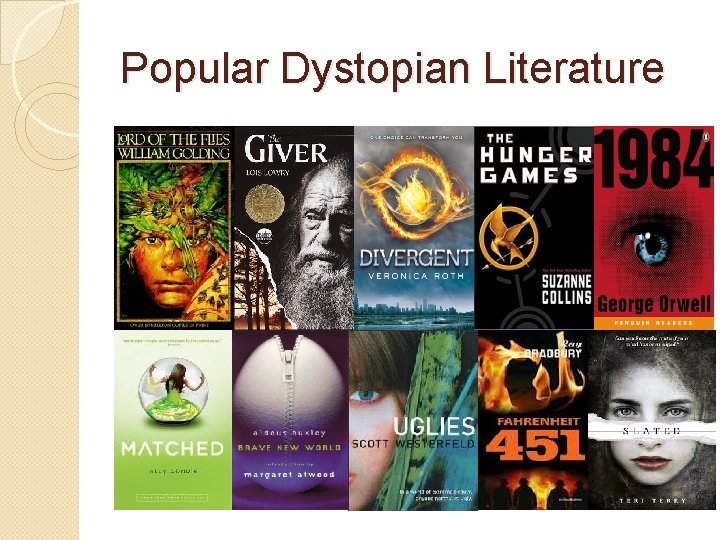
Popular Dystopian Literature