
THE HUMAN WORLD Population Culture Political and Economic
- Slides: 43
THE HUMAN WORLD Population, Culture, Political and Economic Systems, Resources, Trade and the Environment
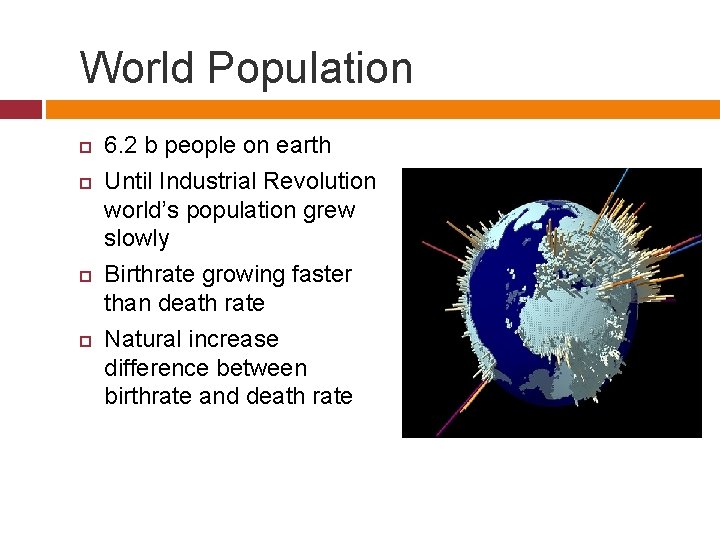
World Population 6. 2 b people on earth Until Industrial Revolution world’s population grew slowly Birthrate growing faster than death rate Natural increase difference between birthrate and death rate
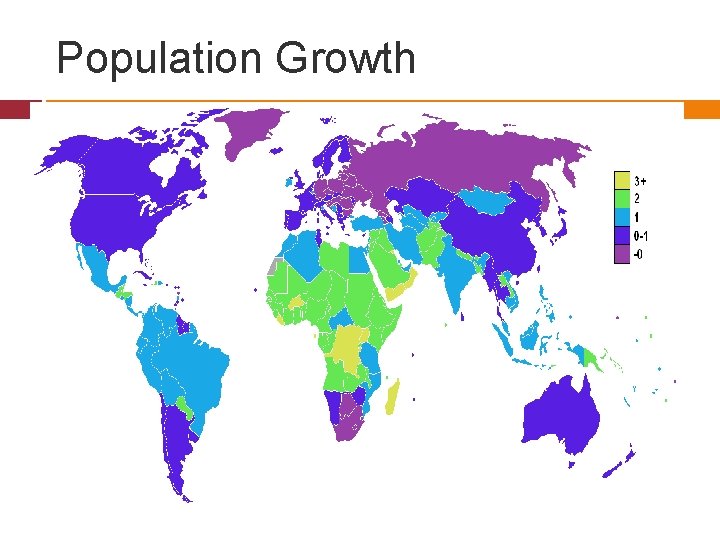
Why population rates vary Improved healthcare, advanced technology, better nutrition lower death rate In industrialized countries this accompanied by low birthrate Some countries have reached zero population growth Developing world (Latin America, Africa, Asia) birthrate high Large families (cultural feelings)
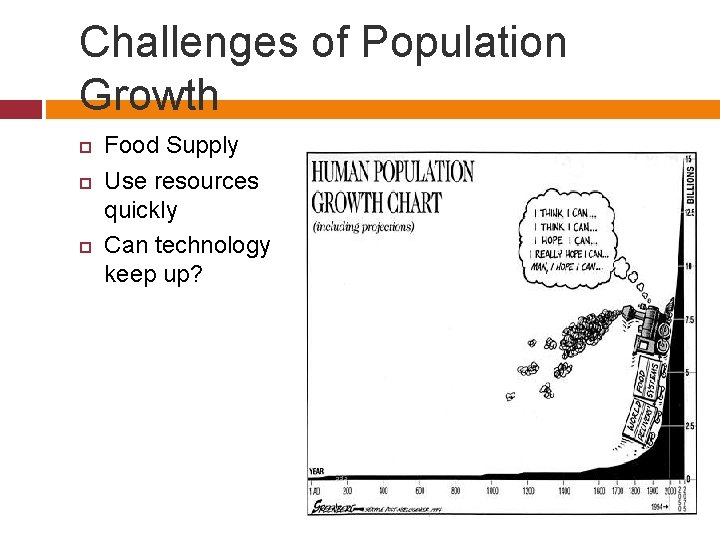
Population Growth
Challenges of Population Growth Food Supply Use resources quickly Can technology keep up?
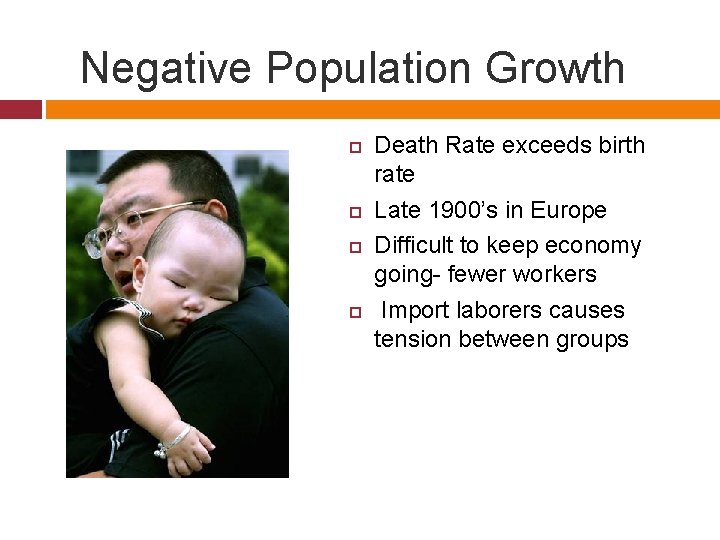
Negative Population Growth Death Rate exceeds birth rate Late 1900’s in Europe Difficult to keep economy going- fewer workers Import laborers causes tension between groups
Population Distrbution Human settlement is uneven Less than one- third of planet inhabited Most live near water, fertile soil and climate that makes life sustainable Asia 60% of worlds population Europe, N. A. most live in urban areas
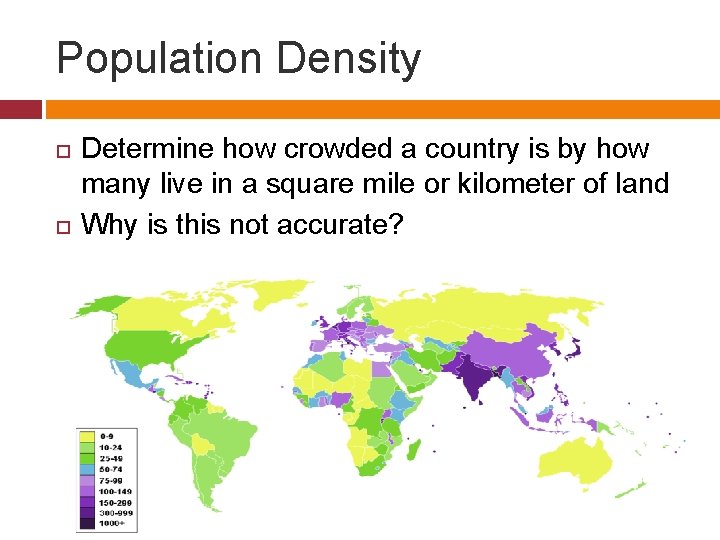
Population Density Determine how crowded a country is by how many live in a square mile or kilometer of land Why is this not accurate?
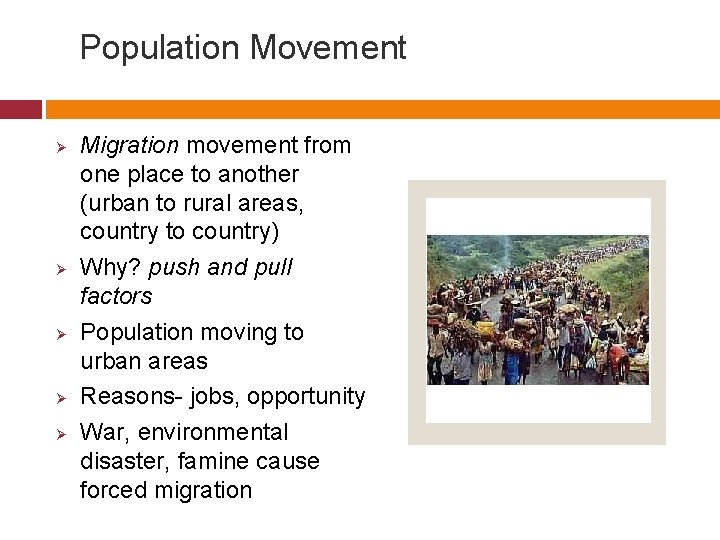
Population Movement Ø Ø Ø Migration movement from one place to another (urban to rural areas, country to country) Why? push and pull factors Population moving to urban areas Reasons- jobs, opportunity War, environmental disaster, famine cause forced migration
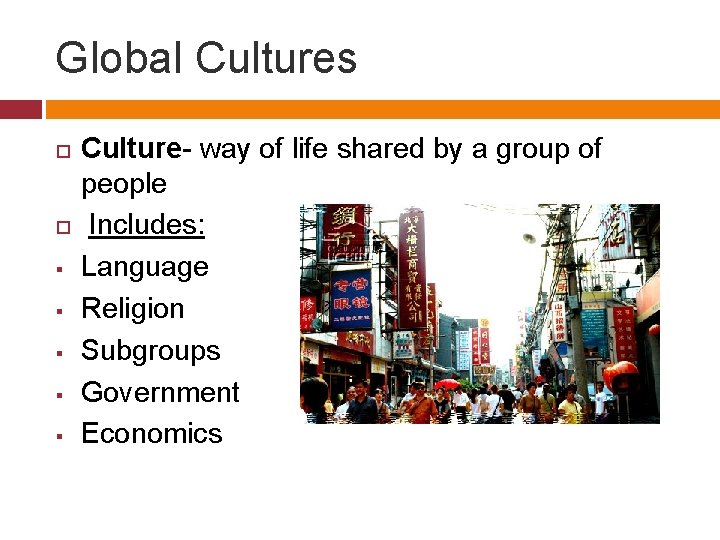
Global Cultures § § § Culture- way of life shared by a group of people Includes: Language Religion Subgroups Government Economics
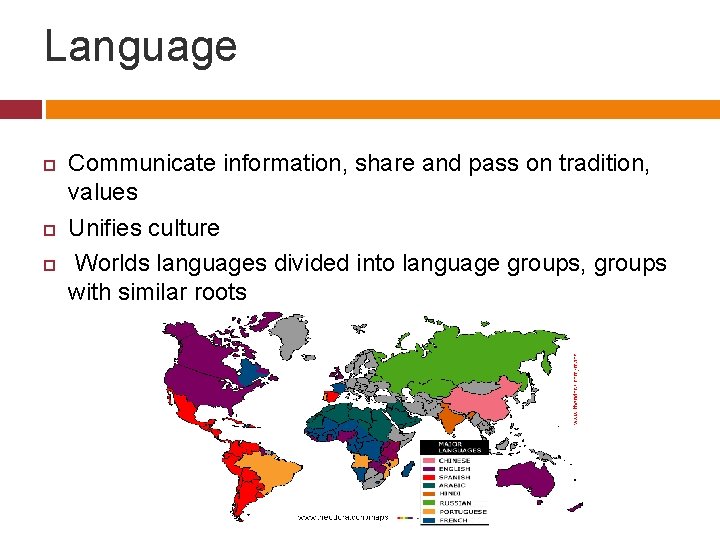
Language Communicate information, share and pass on tradition, values Unifies culture Worlds languages divided into language groups, groups with similar roots
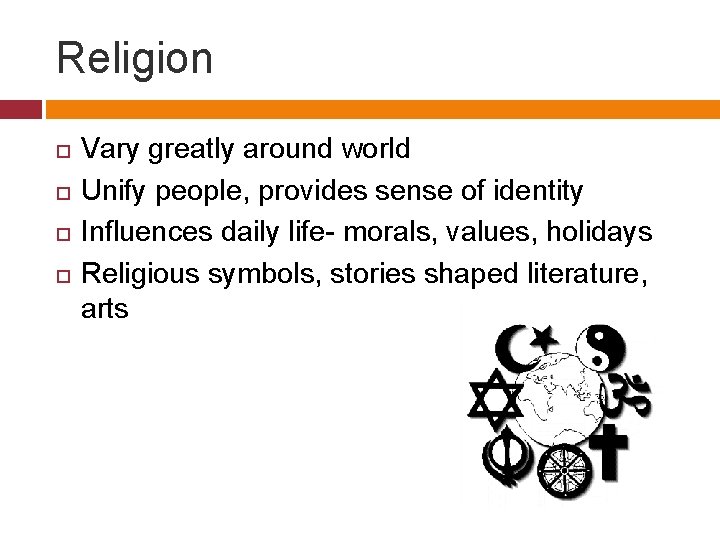
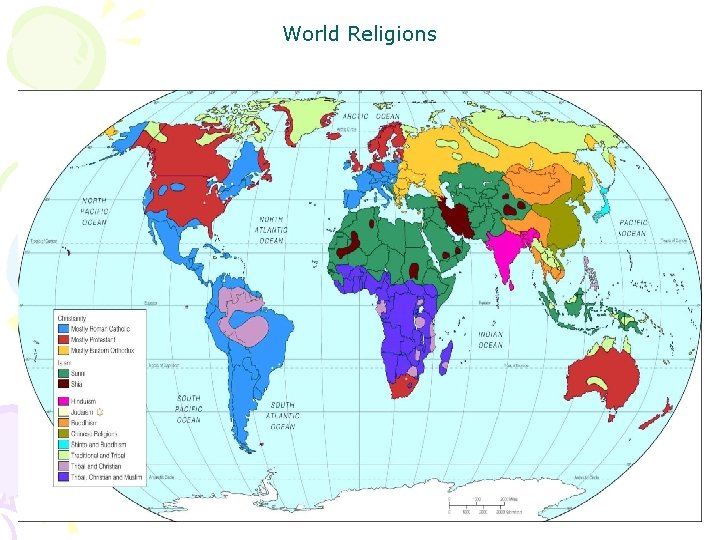
Religion Vary greatly around world Unify people, provides sense of identity Influences daily life- morals, values, holidays Religious symbols, stories shaped literature, arts
World Religions
Social Groups Allow cultures to work together to meet basic needs Family most important part of all cultures, definition and makeup varies Social class- rank based on wealth, ancestry, education, other criteria Some include diverse ethnic groups (share common language, history, etc. )
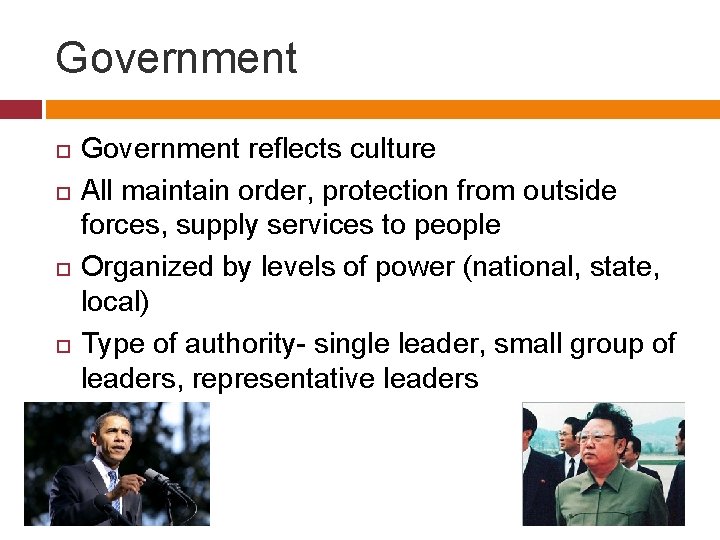
Government reflects culture All maintain order, protection from outside forces, supply services to people Organized by levels of power (national, state, local) Type of authority- single leader, small group of leaders, representative leaders
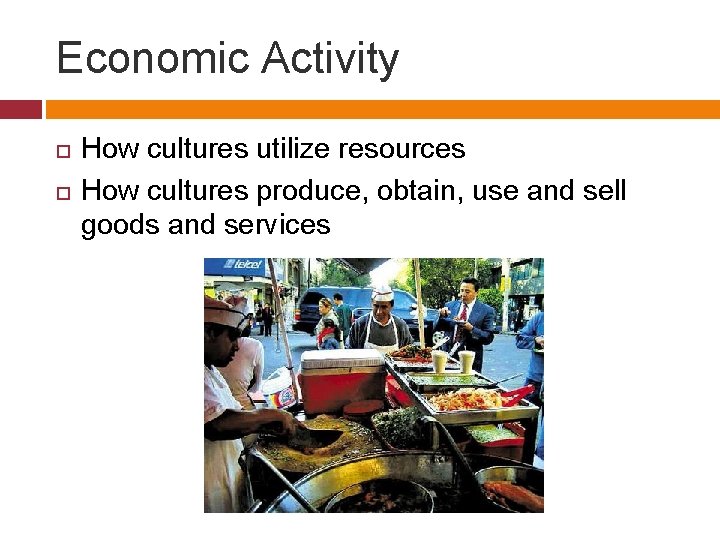
Economic Activity How cultures utilize resources How cultures produce, obtain, use and sell goods and services
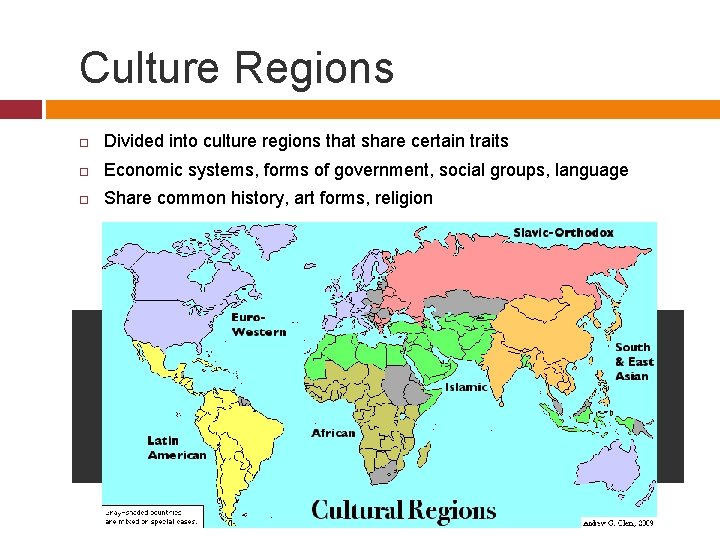
Culture Regions Divided into culture regions that share certain traits Economic systems, forms of government, social groups, language Share common history, art forms, religion
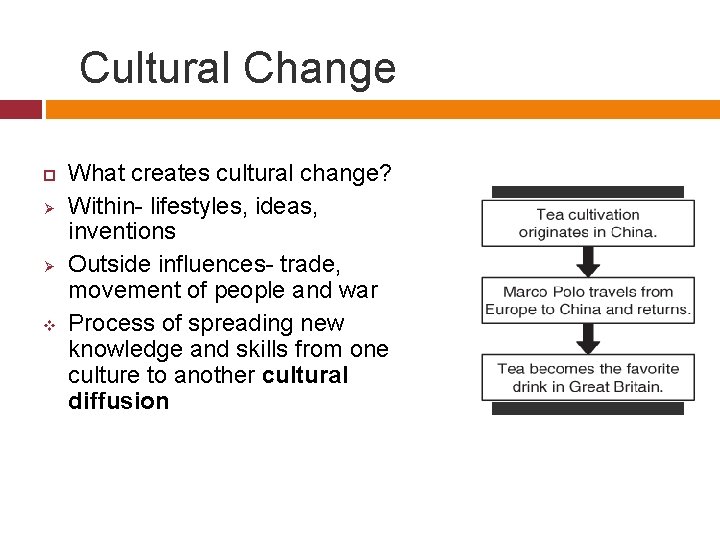
Cultural Change Ø Ø v What creates cultural change? Within- lifestyles, ideas, inventions Outside influences- trade, movement of people and war Process of spreading new knowledge and skills from one culture to another cultural diffusion
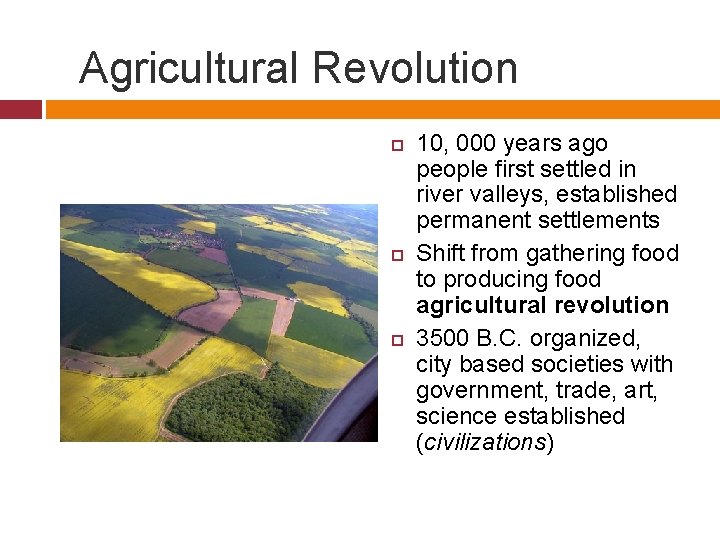
Agricultural Revolution 10, 000 years ago people first settled in river valleys, established permanent settlements Shift from gathering food to producing food agricultural revolution 3500 B. C. organized, city based societies with government, trade, art, science established (civilizations)
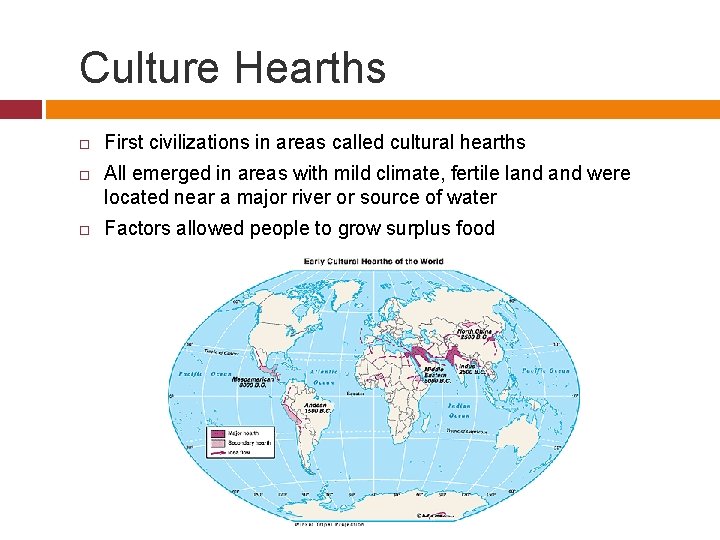
Culture Hearths First civilizations in areas called cultural hearths All emerged in areas with mild climate, fertile land were located near a major river or source of water Factors allowed people to grow surplus food
Specialization and Civilization Surplus food allowed development of other economic activities- economic activities and trade Increased wealth, formed complex governments and societies Governments coordinated building projects, harvests and military defense Creation of writing systems to record and transmit information
Cultural Contacts Causes of Change ü Contact between civilizations through trade and travel ü Permanent migration ü Forced migration (slaves) ü Favorable conditions (climate, opportunity, freedom) draw people from one region to another ü Cause tradition, practices, beliefs to blend across cultures
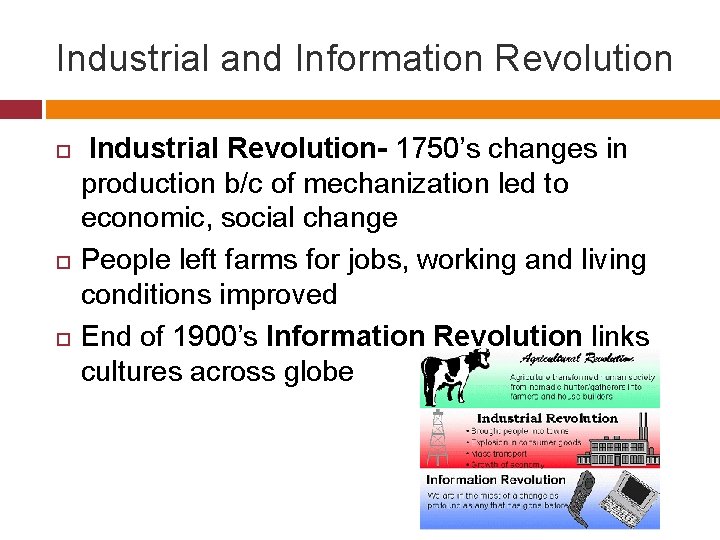
Industrial and Information Revolution Industrial Revolution- 1750’s changes in production b/c of mechanization led to economic, social change People left farms for jobs, working and living conditions improved End of 1900’s Information Revolution links cultures across globe
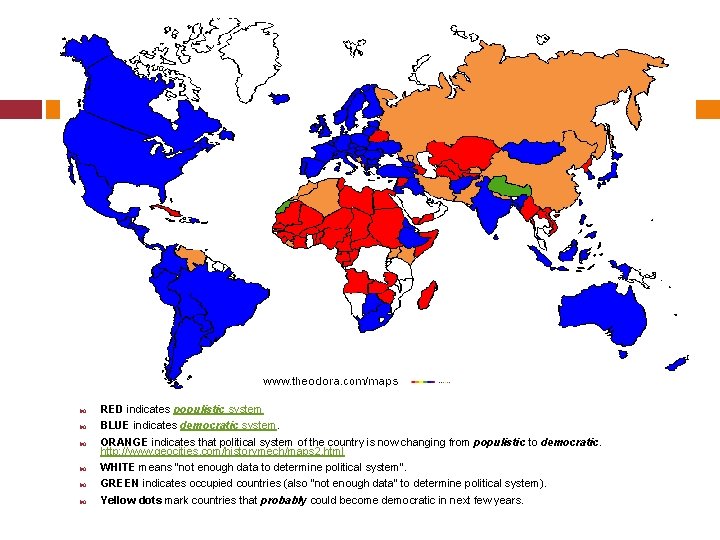
Political and Economic Systems Territory, population, sovereignty, freedom from outside control managed by governments Make and enforce laws that bind people together Governments reflect historic, cultural characteristics of each country Most have different levels of government
RED indicates populistic system BLUE indicates democratic system. ORANGE indicates that political system of the country is now changing from populistic to democratic. http: //www. geocities. com/historymech/maps 2. html WHITE means "not enough data to determine political system". GREEN indicates occupied countries (also "not enough data" to determine political system). Yellow dots mark countries that probably could become democratic in next few years.
Government Systems Unitary System Gives all power to a central government Usually small, not ethnically diverse United Kingdom, France Federal System ü Power divided between states and central government ü Each has sovereignty in certain areas ü U. S. , Canada, Brazil, Australia, India
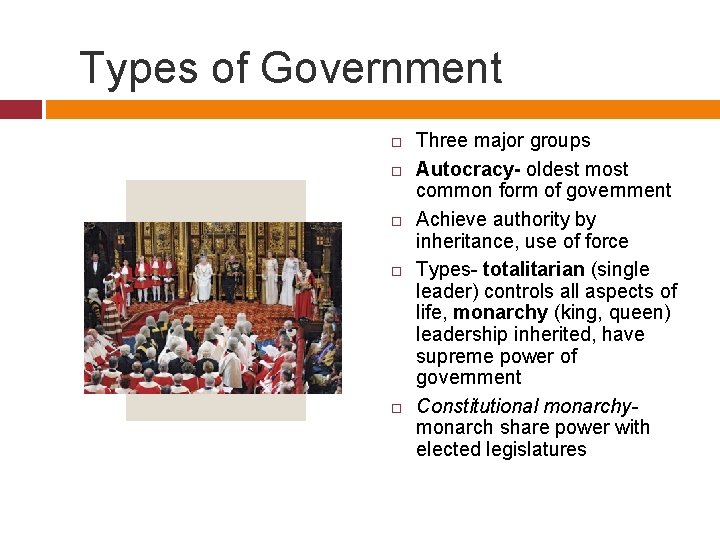
Types of Government Three major groups Autocracy- oldest most common form of government Achieve authority by inheritance, use of force Types- totalitarian (single leader) controls all aspects of life, monarchy (king, queen) leadership inherited, have supreme power of government Constitutional monarchymonarch share power with elected legislatures
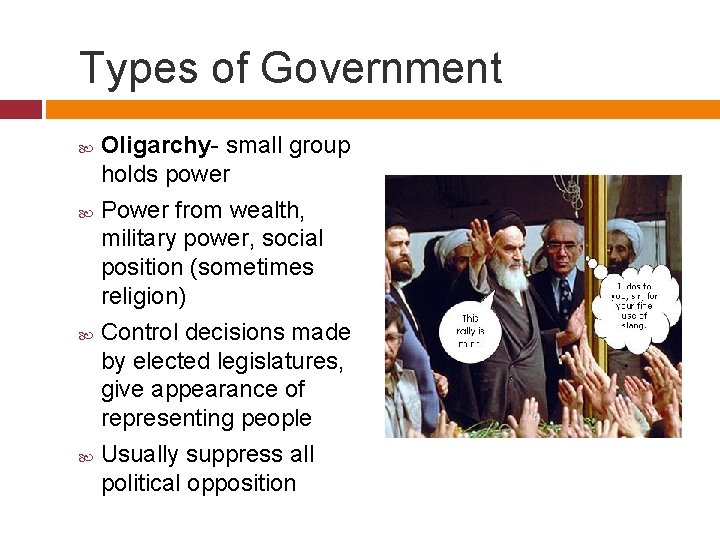
Types of Government Oligarchy- small group holds power Power from wealth, military power, social position (sometimes religion) Control decisions made by elected legislatures, give appearance of representing people Usually suppress all political opposition
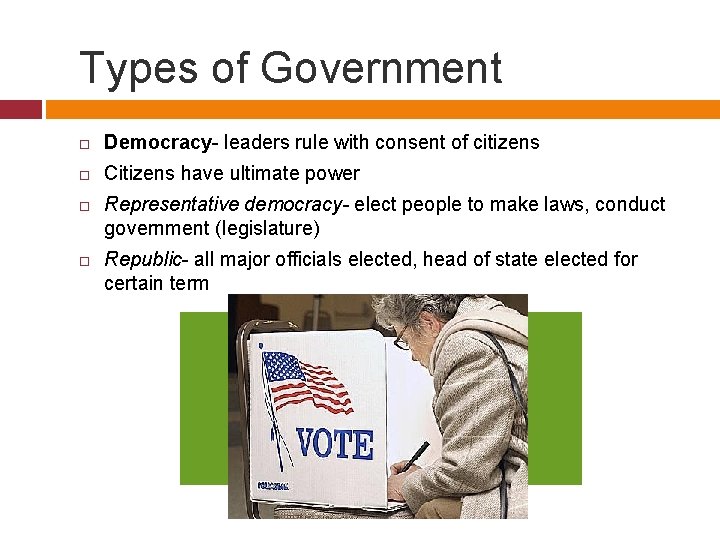
Types of Government Democracy- leaders rule with consent of citizens Citizens have ultimate power Representative democracy- elect people to make laws, conduct government (legislature) Republic- all major officials elected, head of state elected for certain term
Economic Systems Three Basic Decisions v What and how many goods and services should be produced v How they should be produced v Who gets the goods and services produced v 1) 2) 3) Three types of economic systems Traditional Market Command
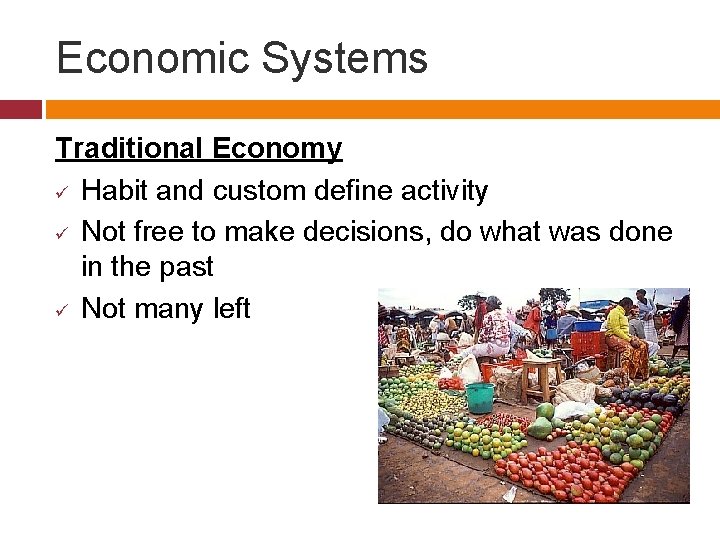
Economic Systems Traditional Economy ü Habit and custom define activity ü Not free to make decisions, do what was done in the past ü Not many left
Economic Systems Market Economy (Capitalism) § Individuals, private groups makes decisions § Based on free enterprise (make what people will buy) § Free enterprise based on right to make a profit w/o gov’t interference § People decide where to work § Mixed economy- gov’t supports and regulates free enterprise, keep competition free and fair § Gov’t influences economies by spending § United States is an example
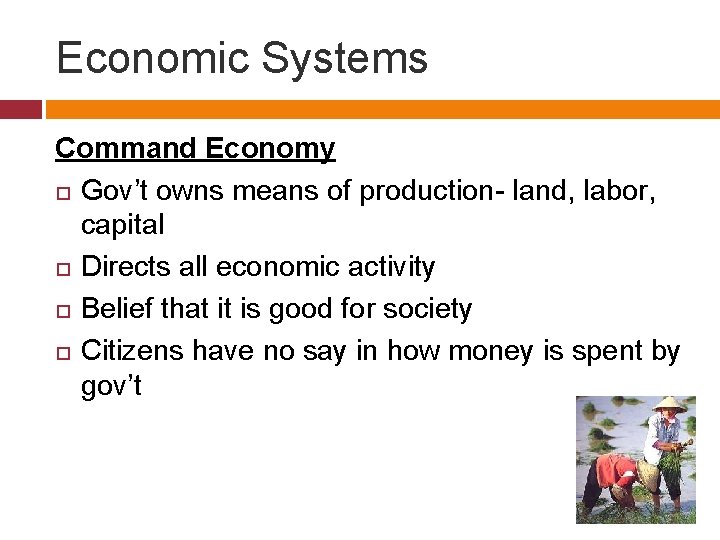
Economic Systems Command Economy Gov’t owns means of production- land, labor, capital Directs all economic activity Belief that it is good for society Citizens have no say in how money is spent by gov’t
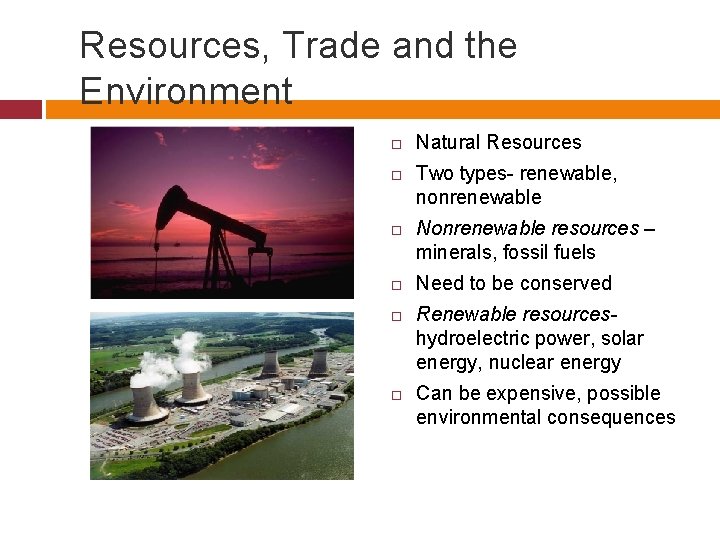
Resources, Trade and the Environment Natural Resources Two types- renewable, nonrenewable Nonrenewable resources – minerals, fossil fuels Need to be conserved Renewable resourceshydroelectric power, solar energy, nuclear energy Can be expensive, possible environmental consequences
Economic Development Uneven distribution of resources affects global economy Some countries develop economies based on their natural resources World Economic Activities divided into four types Primary, Secondary, Tertiary, Quaternary
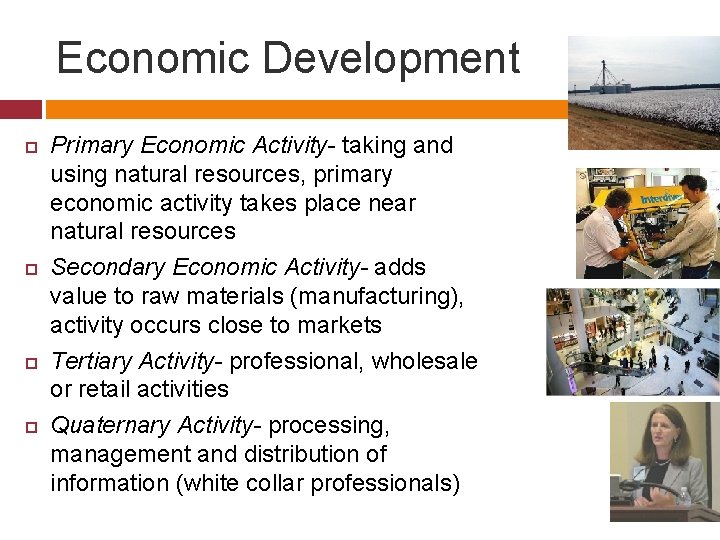
Economic Development Primary Economic Activity- taking and using natural resources, primary economic activity takes place near natural resources Secondary Economic Activity- adds value to raw materials (manufacturing), activity occurs close to markets Tertiary Activity- professional, wholesale or retail activities Quaternary Activity- processing, management and distribution of information (white collar professionals)
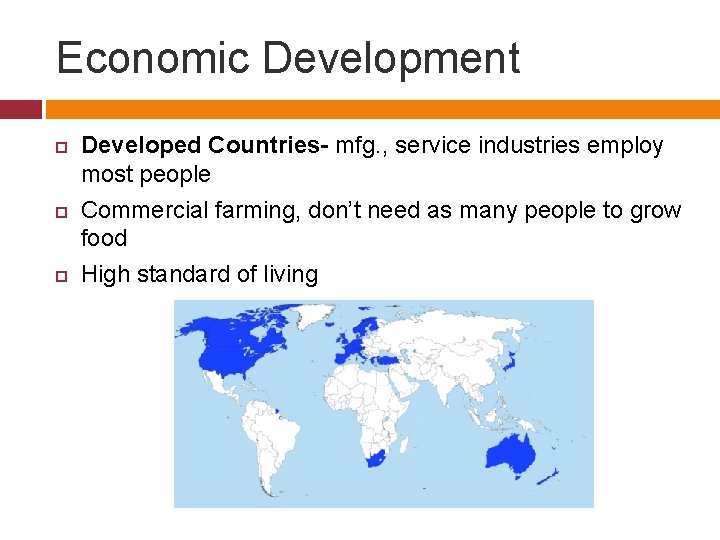
Economic Development Developed Countries- mfg. , service industries employ most people Commercial farming, don’t need as many people to grow food High standard of living
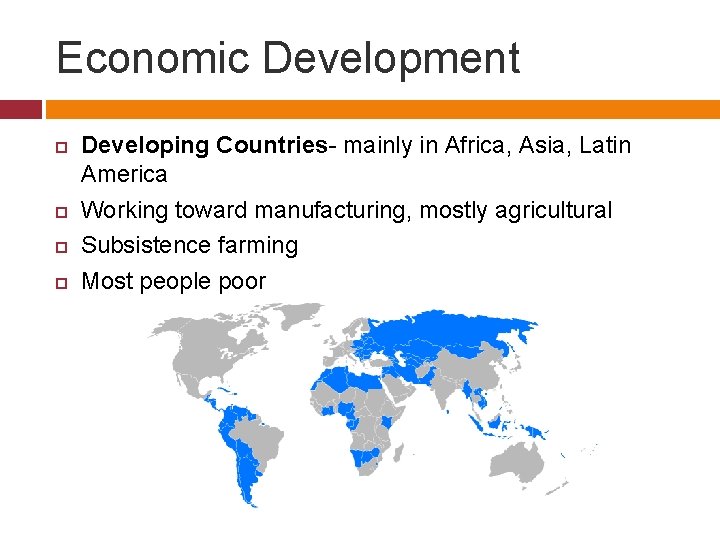
Economic Development Developing Countries- mainly in Africa, Asia, Latin America Working toward manufacturing, mostly agricultural Subsistence farming Most people poor
Economic Development Wealth in developed world leads to resentment Militant groups form to strike back and heighten influence to promote change (terrorists)
World Trade Unequal distribution of resources causes global trade networks to develop Multinational companies (MNC’s) stimulate trade Based in developed countries, set up assembly operations in smaller countries to keep down labor costs, sell to developed countries
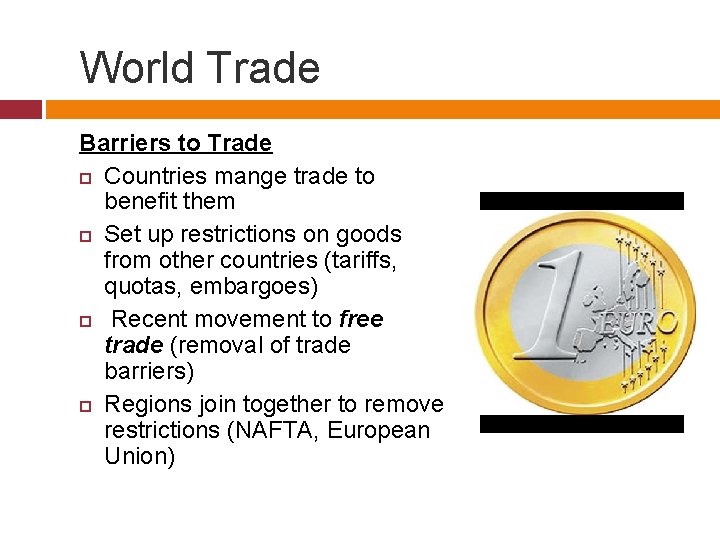
World Trade Barriers to Trade Countries mange trade to benefit them Set up restrictions on goods from other countries (tariffs, quotas, embargoes) Recent movement to free trade (removal of trade barriers) Regions join together to remove restrictions (NAFTA, European Union)
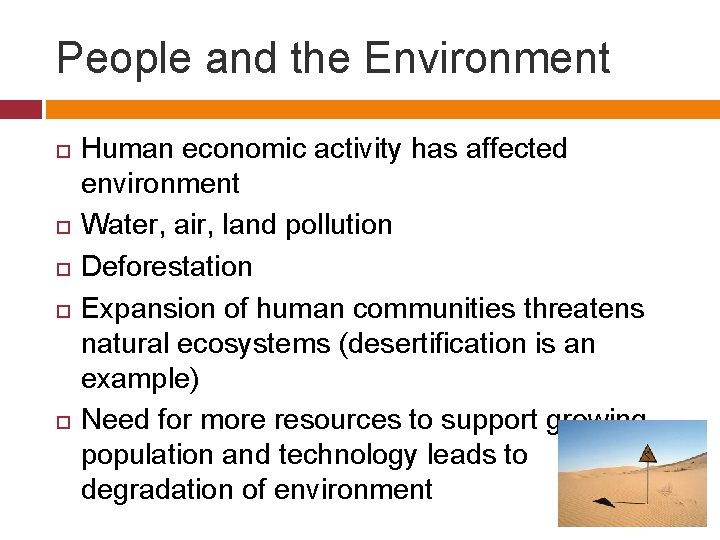
People and the Environment Human economic activity has affected environment Water, air, land pollution Deforestation Expansion of human communities threatens natural ecosystems (desertification is an example) Need for more resources to support growing population and technology leads to degradation of environment