
THE HUMAN WORLD How do the characteristics and
- Slides: 31
THE HUMAN WORLD How do the characteristics and distribution of human populations affect human and physical systems?
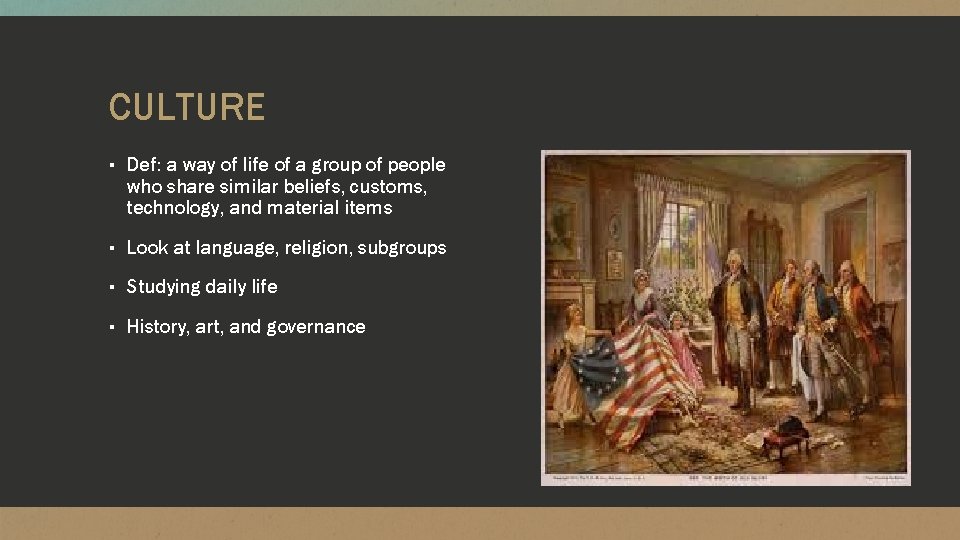
CULTURE ▪ Def: a way of life of a group of people who share similar beliefs, customs, technology, and material items ▪ Look at language, religion, subgroups ▪ Studying daily life ▪ History, art, and governance
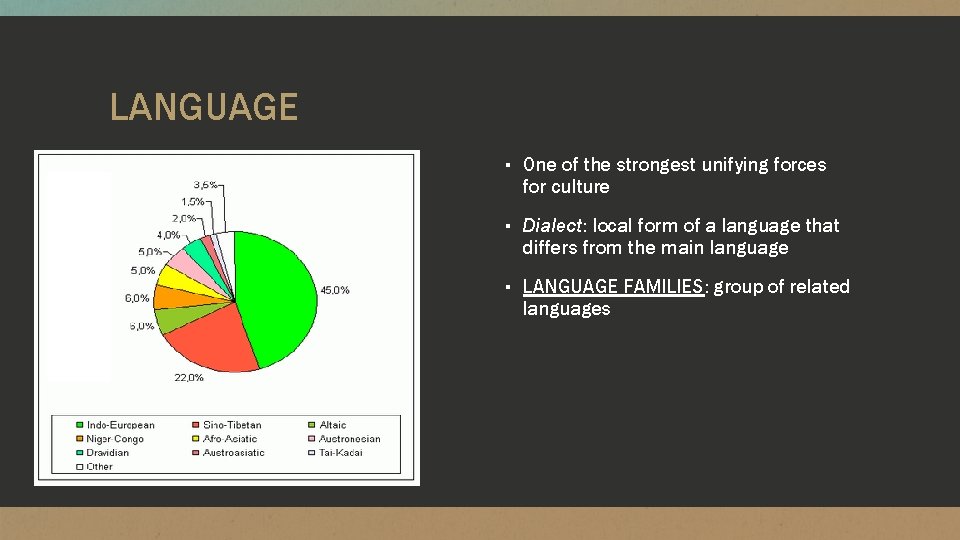
LANGUAGE ▪ One of the strongest unifying forces for culture ▪ Dialect: local form of a language that differs from the main language ▪ LANGUAGE FAMILIES: group of related languages
RELIGION ▪ Can enable a sense of identity ▪ Influences daily life (holidays, morals) ▪ Shapes the arts ▪ Can be a source of conflict in some places ▪ Major religions: ▪ Buddhism, Christianity, Hinduism, Islam, Judaism, and Sikhism
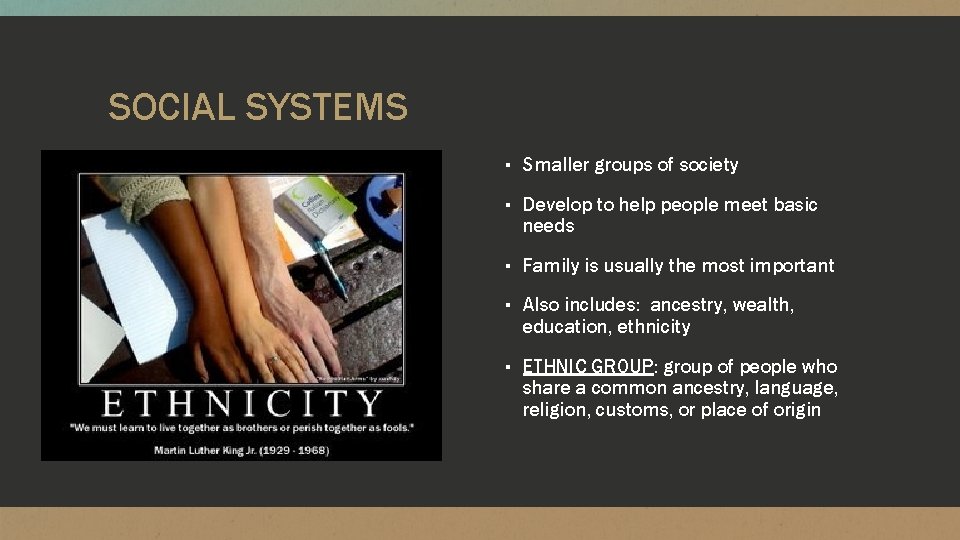
SOCIAL SYSTEMS ▪ Smaller groups of society ▪ Develop to help people meet basic needs ▪ Family is usually the most important ▪ Also includes: ancestry, wealth, education, ethnicity ▪ ETHNIC GROUP: group of people who share a common ancestry, language, religion, customs, or place of origin
GOVERNMENT ▪ Maintains order ▪ Provides protection ▪ Supplies services to the people ▪ Levels of power: national, regional, local
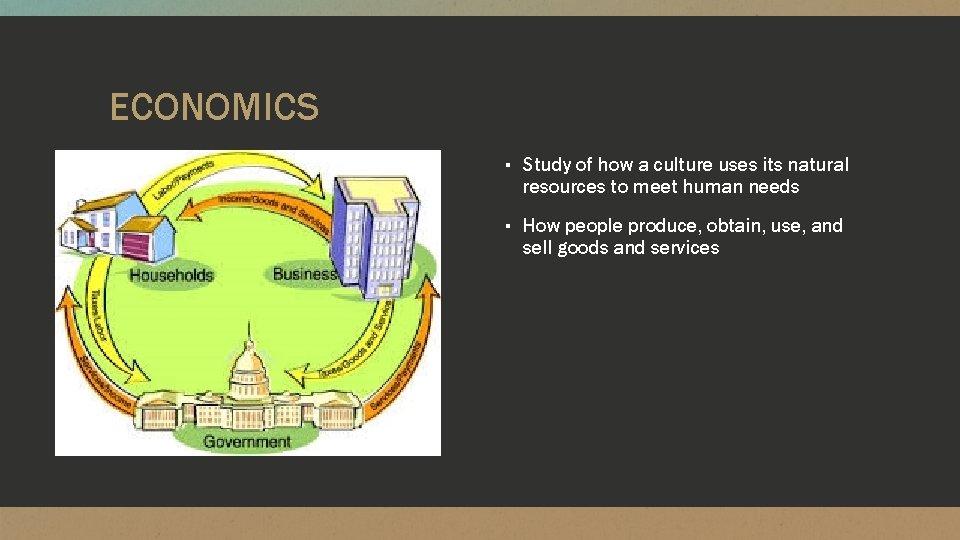
ECONOMICS ▪ Study of how a culture uses its natural resources to meet human needs ▪ How people produce, obtain, use, and sell goods and services
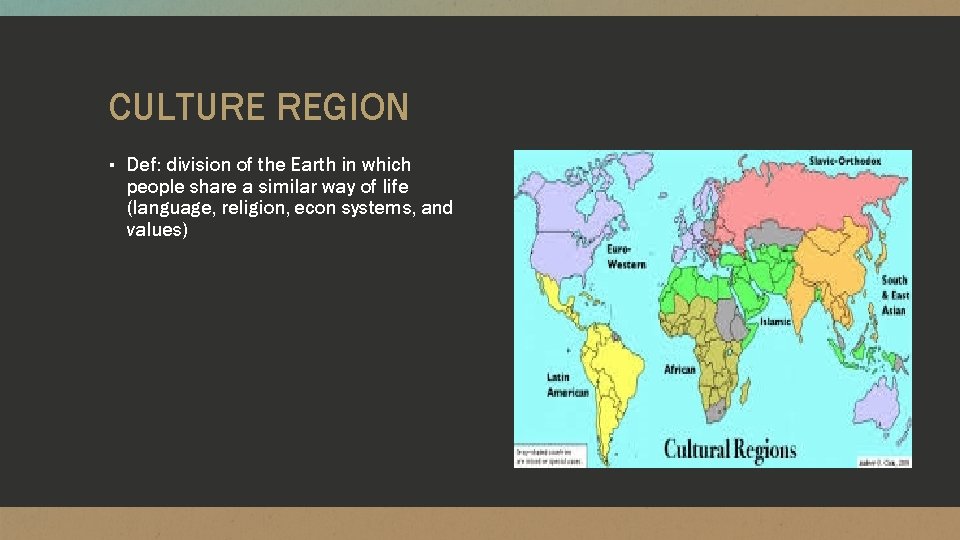
CULTURE REGION ▪ Def: division of the Earth in which people share a similar way of life (language, religion, econ systems, and values)
CULTURE CHANGE What are 2 ways in which culture changes over time?
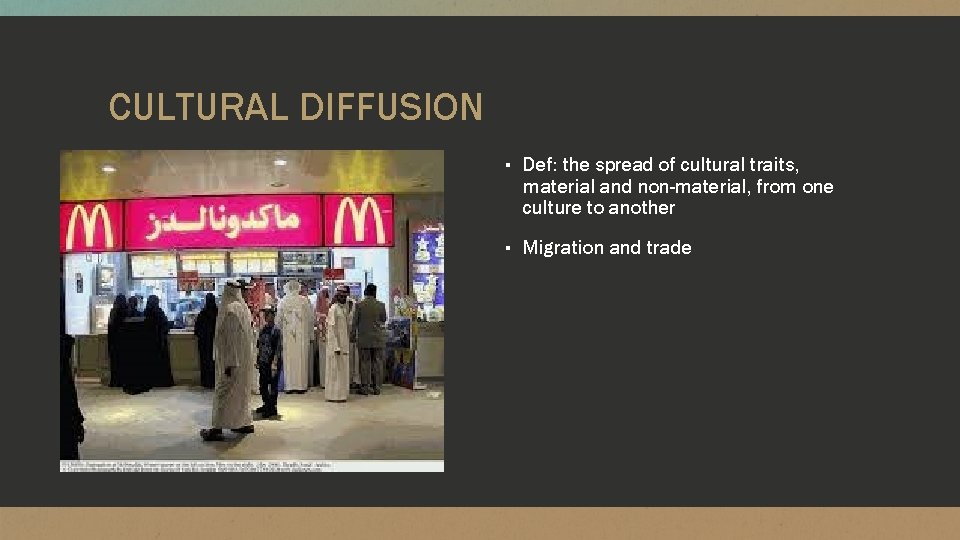
CULTURAL DIFFUSION ▪ Def: the spread of cultural traits, material and non-material, from one culture to another ▪ Migration and trade
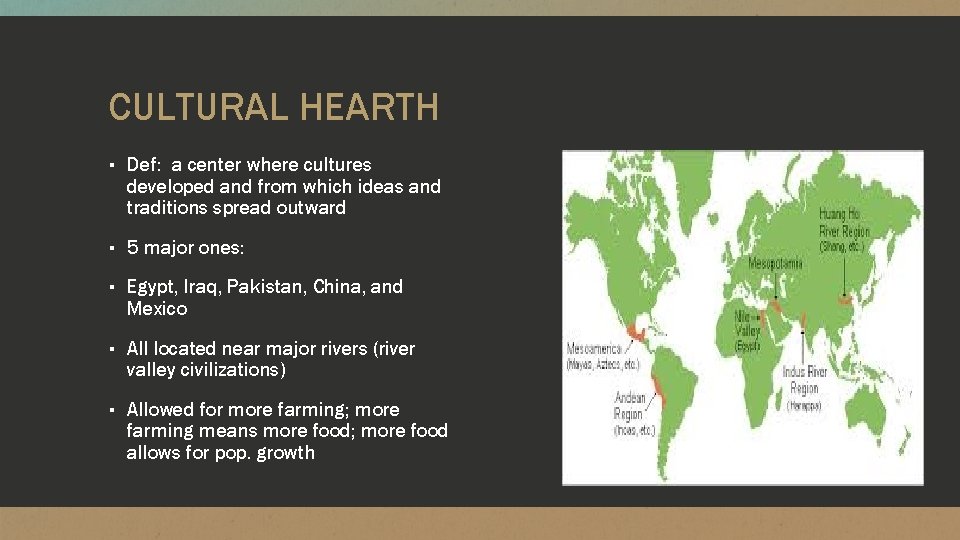
CULTURAL HEARTH ▪ Def: a center where cultures developed and from which ideas and traditions spread outward ▪ 5 major ones: ▪ Egypt, Iraq, Pakistan, China, and Mexico ▪ All located near major rivers (river valley civilizations) ▪ Allowed for more farming; more farming means more food; more food allows for pop. growth
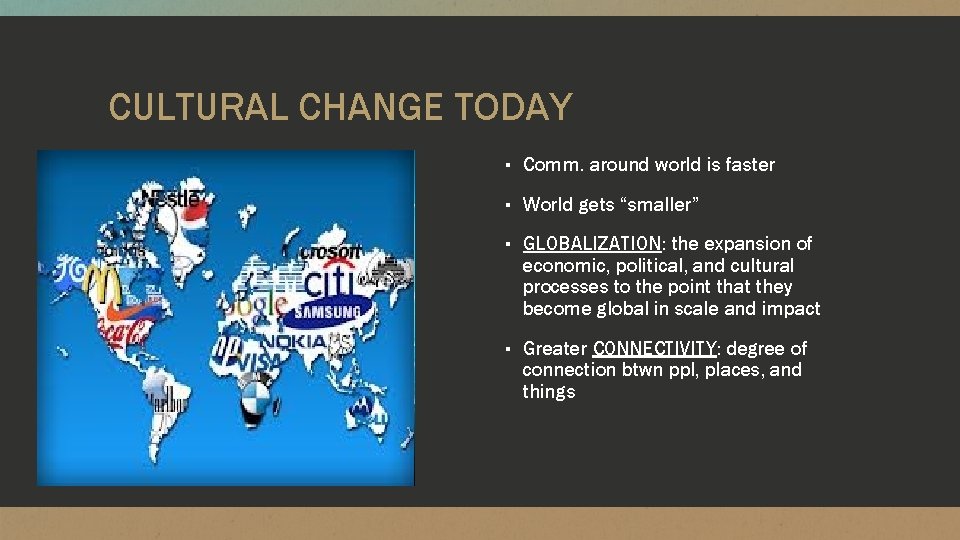
CULTURAL CHANGE TODAY ▪ Comm. around world is faster ▪ World gets “smaller” ▪ GLOBALIZATION: the expansion of economic, political, and cultural processes to the point that they become global in scale and impact ▪ Greater CONNECTIVITY: degree of connection btwn ppl, places, and things
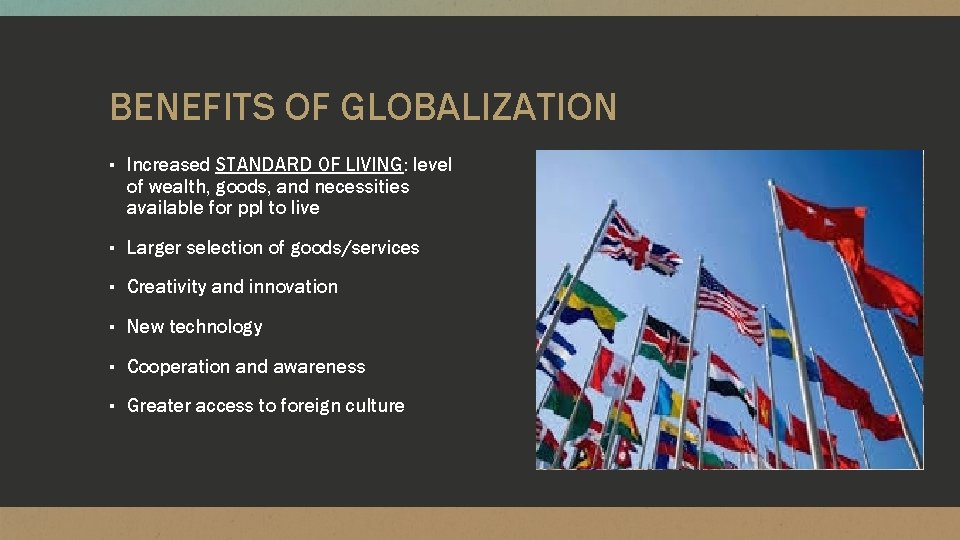
BENEFITS OF GLOBALIZATION ▪ Increased STANDARD OF LIVING: level of wealth, goods, and necessities available for ppl to live ▪ Larger selection of goods/services ▪ Creativity and innovation ▪ New technology ▪ Cooperation and awareness ▪ Greater access to foreign culture
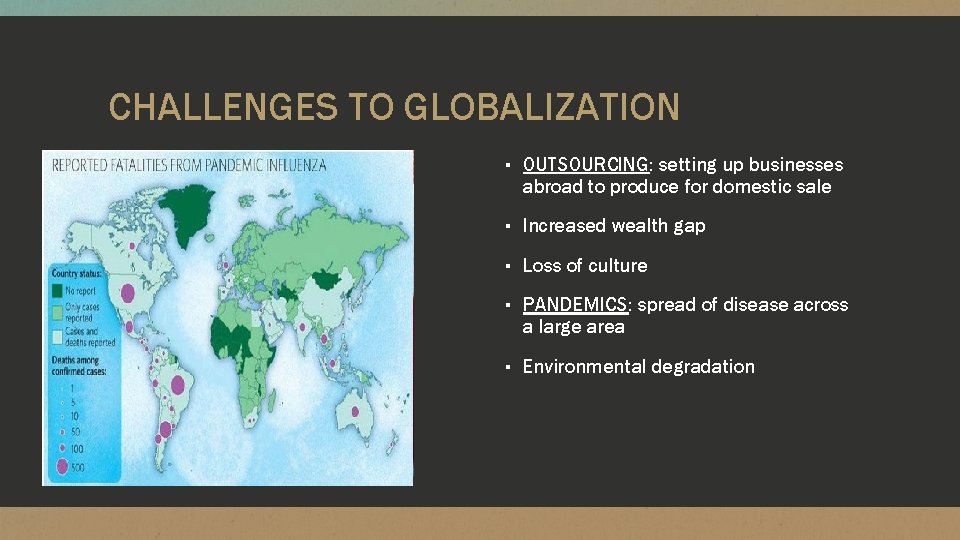
CHALLENGES TO GLOBALIZATION ▪ OUTSOURCING: setting up businesses abroad to produce for domestic sale ▪ Increased wealth gap ▪ Loss of culture ▪ PANDEMICS: spread of disease across a large area ▪ Environmental degradation
POPULATION GEOGRAPHY 7. 3 billion strong…and growing
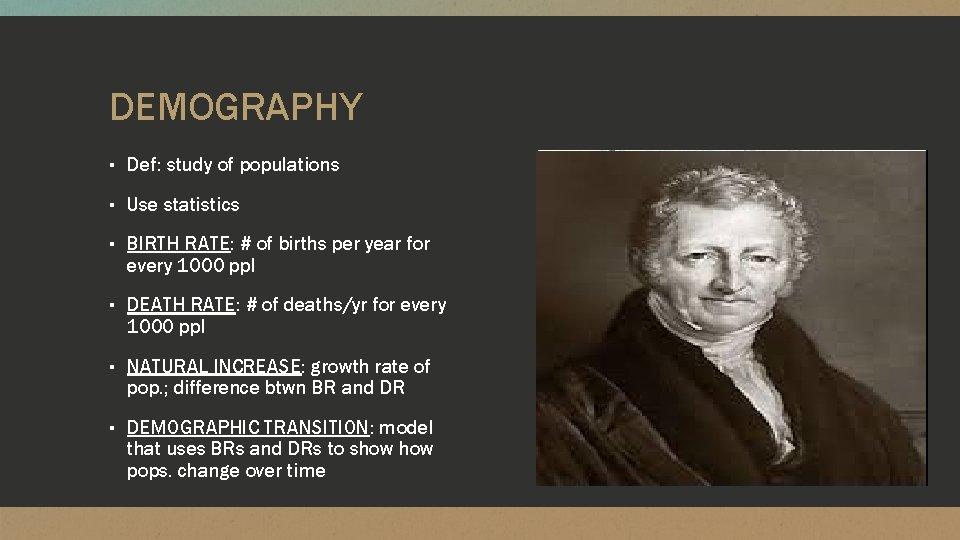
DEMOGRAPHY ▪ Def: study of populations ▪ Use statistics ▪ BIRTH RATE: # of births per year for every 1000 ppl ▪ DEATH RATE: # of deaths/yr for every 1000 ppl ▪ NATURAL INCREASE: growth rate of pop. ; difference btwn BR and DR ▪ DEMOGRAPHIC TRANSITION: model that uses BRs and DRs to show pops. change over time
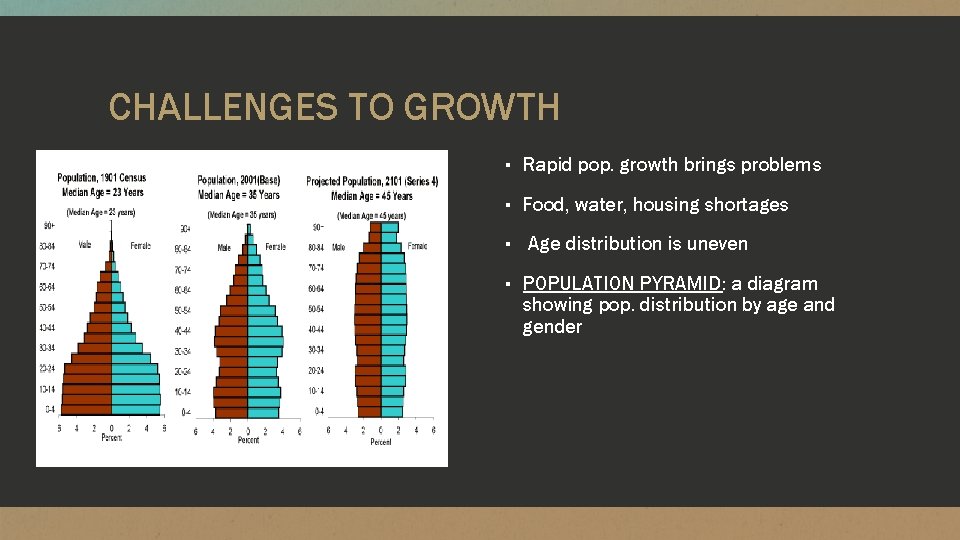
CHALLENGES TO GROWTH ▪ Rapid pop. growth brings problems ▪ Food, water, housing shortages ▪ Age distribution is uneven ▪ POPULATION PYRAMID: a diagram showing pop. distribution by age and gender
POPULATION DISTRIBUTION ▪ Def: the variations in pop. that occur across a country, continent, or the world ▪ Limited land space (humans occupy 1/3 of available land) ▪ POPULATION DENSITY: avg. # of ppl living on a sq. mi. or sq. km. of land ▪ Determines how crowded an area is
POLITICAL GEOGRAPHY Government
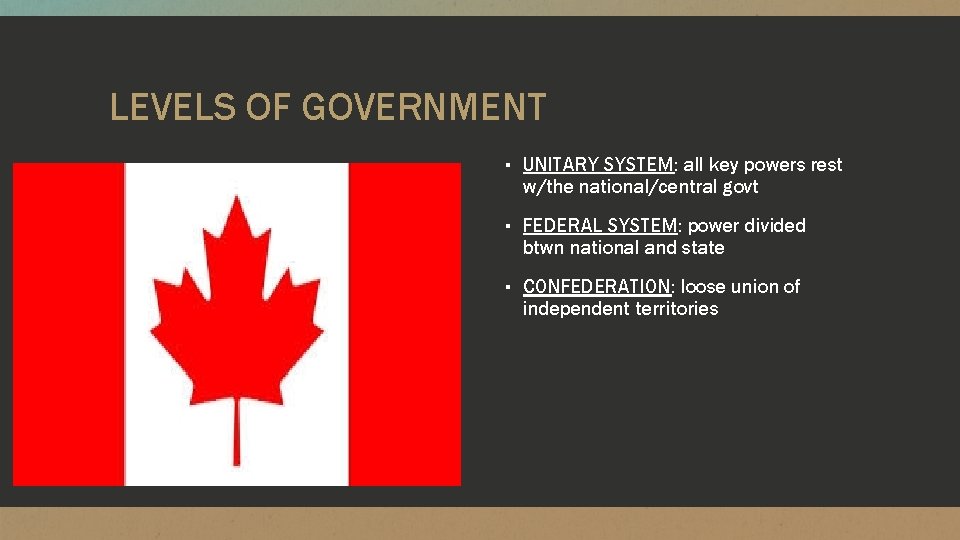
LEVELS OF GOVERNMENT ▪ UNITARY SYSTEM: all key powers rest w/the national/central govt ▪ FEDERAL SYSTEM: power divided btwn national and state ▪ CONFEDERATION: loose union of independent territories
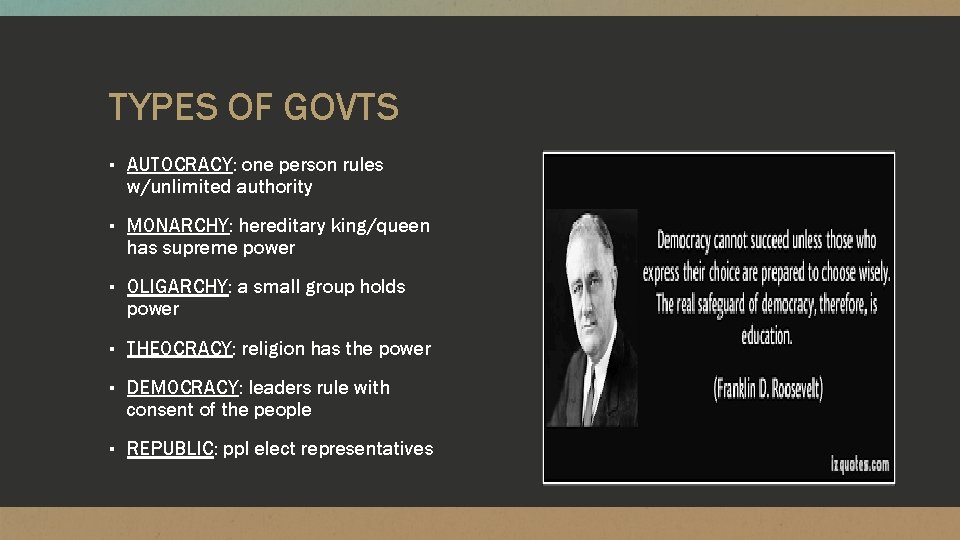
TYPES OF GOVTS ▪ AUTOCRACY: one person rules w/unlimited authority ▪ MONARCHY: hereditary king/queen has supreme power ▪ OLIGARCHY: a small group holds power ▪ THEOCRACY: religion has the power ▪ DEMOCRACY: leaders rule with consent of the people ▪ REPUBLIC: ppl elect representatives
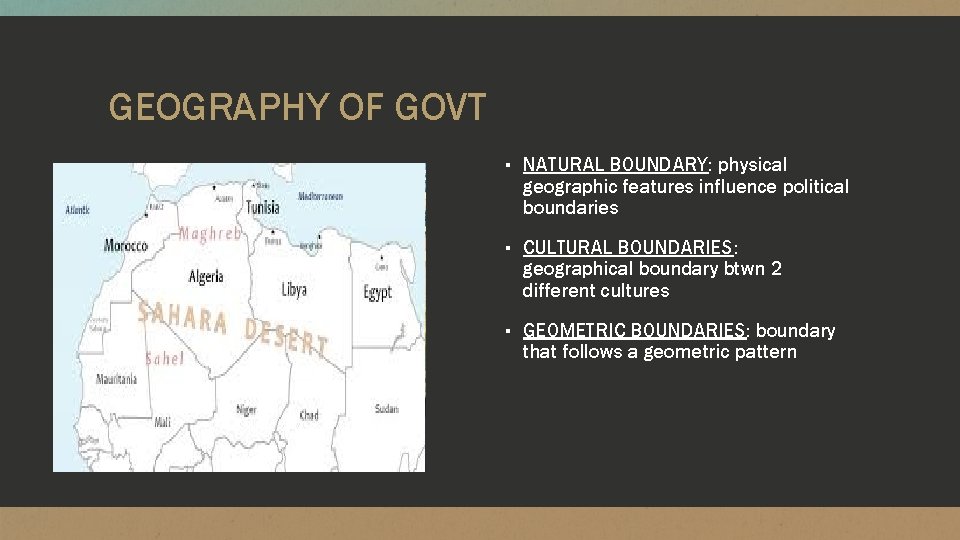
GEOGRAPHY OF GOVT ▪ NATURAL BOUNDARY: physical geographic features influence political boundaries ▪ CULTURAL BOUNDARIES: geographical boundary btwn 2 different cultures ▪ GEOMETRIC BOUNDARIES: boundary that follows a geometric pattern
ECONOMIC GEOGRAPHY Money, money!
ECONOMICS ▪ 3 basic economic decisions: ▪ 1) What and how many goods/services should be produced? ▪ 2) How should they be produced? ▪ 3) Who gets the goods/services?
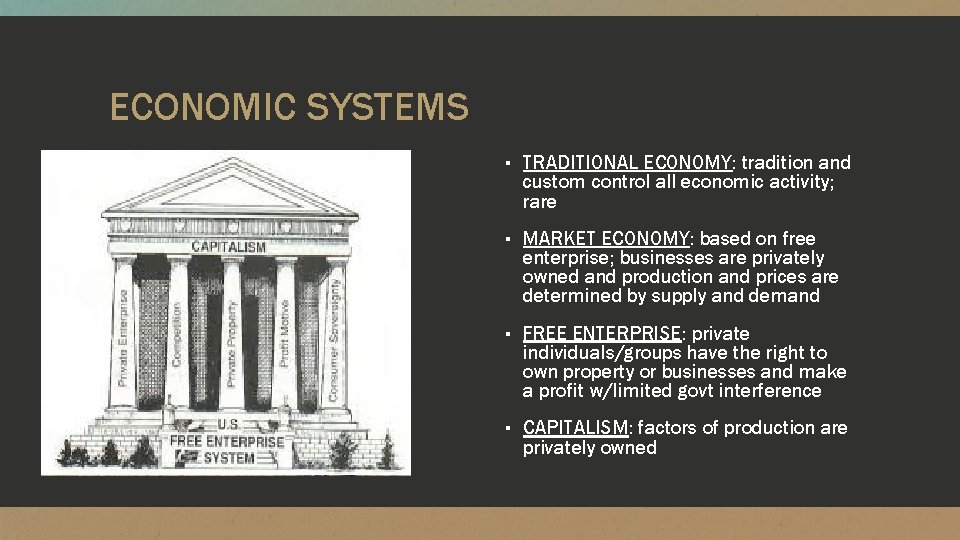
ECONOMIC SYSTEMS ▪ TRADITIONAL ECONOMY: tradition and custom control all economic activity; rare ▪ MARKET ECONOMY: based on free enterprise; businesses are privately owned and production and prices are determined by supply and demand ▪ FREE ENTERPRISE: private individuals/groups have the right to own property or businesses and make a profit w/limited govt interference ▪ CAPITALISM: factors of production are privately owned
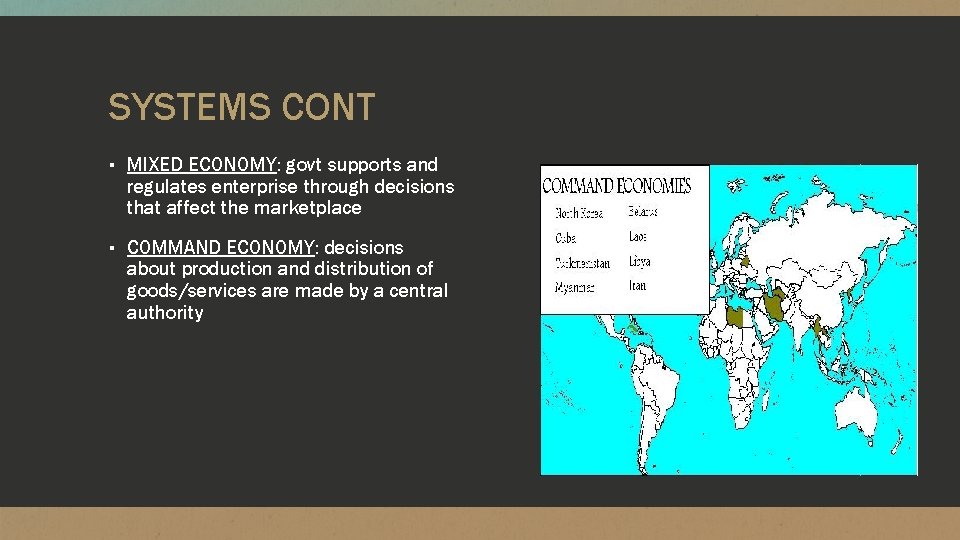
SYSTEMS CONT ▪ MIXED ECONOMY: govt supports and regulates enterprise through decisions that affect the marketplace ▪ COMMAND ECONOMY: decisions about production and distribution of goods/services are made by a central authority
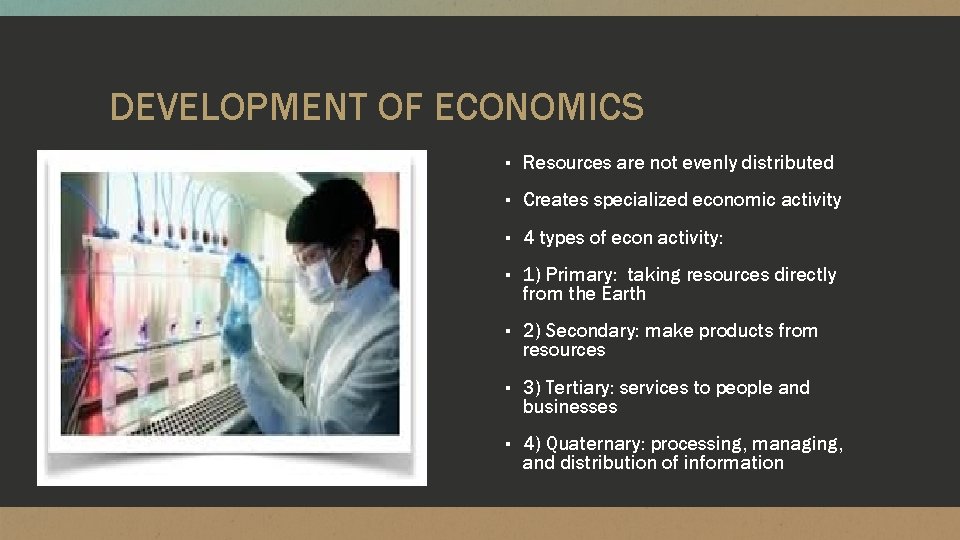
DEVELOPMENT OF ECONOMICS ▪ Resources are not evenly distributed ▪ Creates specialized economic activity ▪ 4 types of econ activity: ▪ 1) Primary: taking resources directly from the Earth ▪ 2) Secondary: make products from resources ▪ 3) Tertiary: services to people and businesses ▪ 4) Quaternary: processing, managing, and distribution of information
LEVEL OF ECON DEVELOPMENT ▪ MORE DEVELOPED COUNTRIES: have a highly developed econ. and advanced technological infrastructure ▪ Characteristics: ▪ High literacy rate ▪ Civil liberties and human rights recognized and protected ▪ Medium to high citizen participation in govt
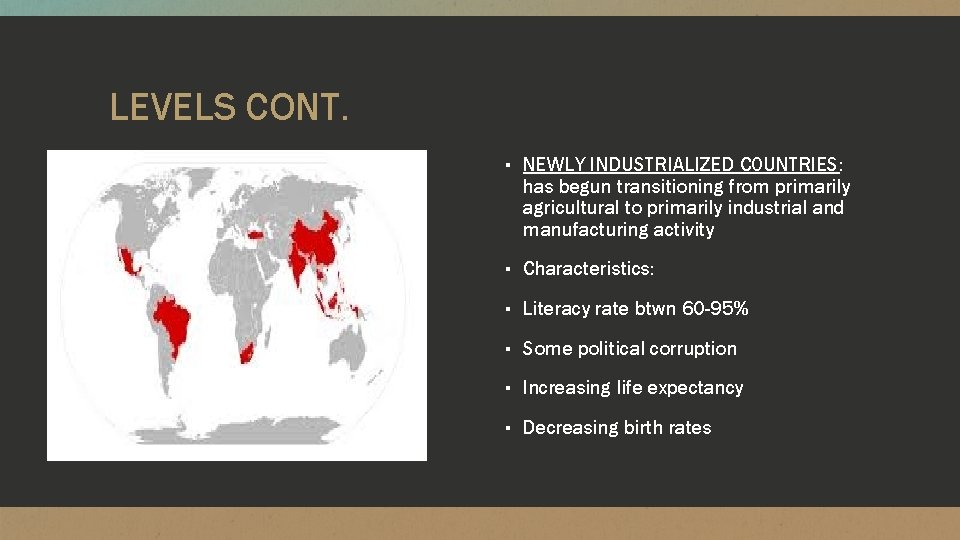
LEVELS CONT. ▪ NEWLY INDUSTRIALIZED COUNTRIES: has begun transitioning from primarily agricultural to primarily industrial and manufacturing activity ▪ Characteristics: ▪ Literacy rate btwn 60 -95% ▪ Some political corruption ▪ Increasing life expectancy ▪ Decreasing birth rates
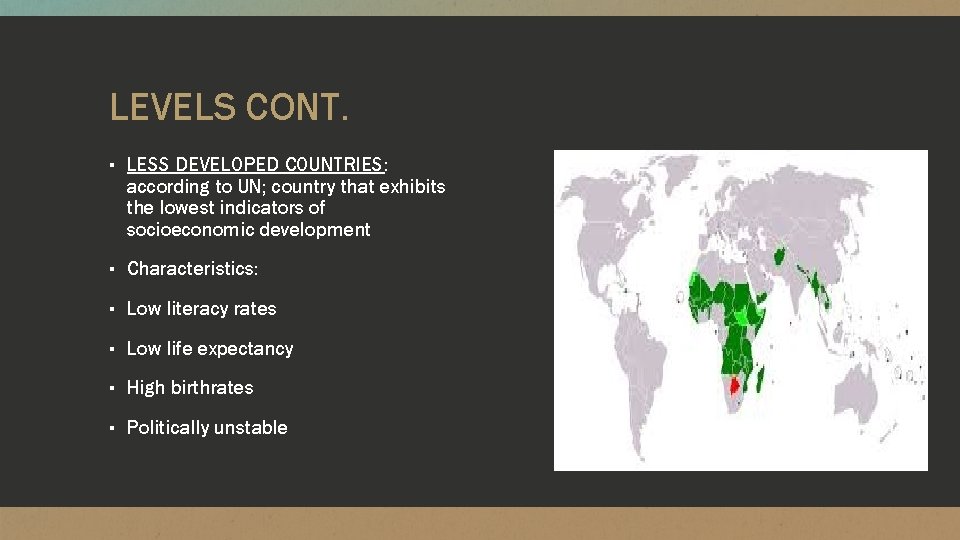
LEVELS CONT. ▪ LESS DEVELOPED COUNTRIES: according to UN; country that exhibits the lowest indicators of socioeconomic development ▪ Characteristics: ▪ Low literacy rates ▪ Low life expectancy ▪ High birthrates ▪ Politically unstable
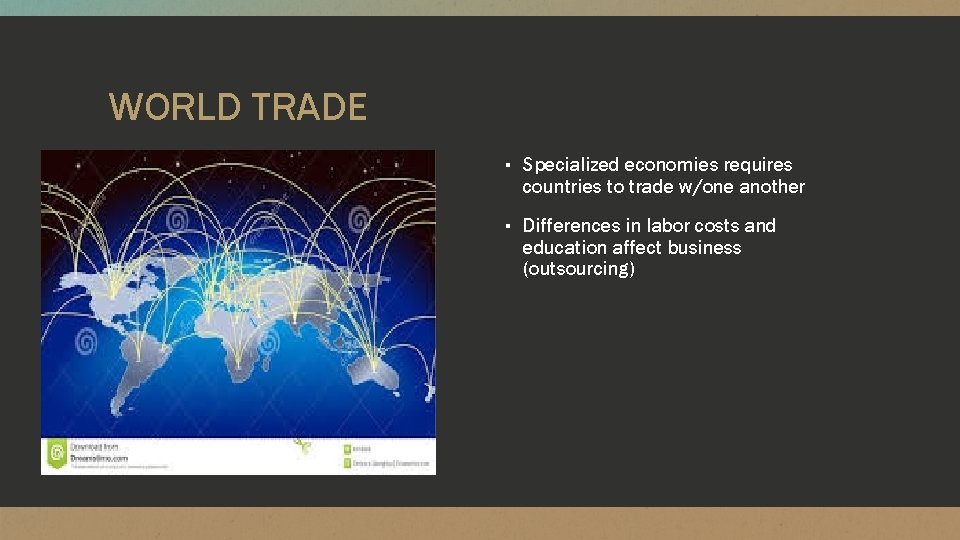
WORLD TRADE ▪ Specialized economies requires countries to trade w/one another ▪ Differences in labor costs and education affect business (outsourcing)