
The Human Skeleton Joints There are 5 major
- Slides: 7
The Human Skeleton Joints
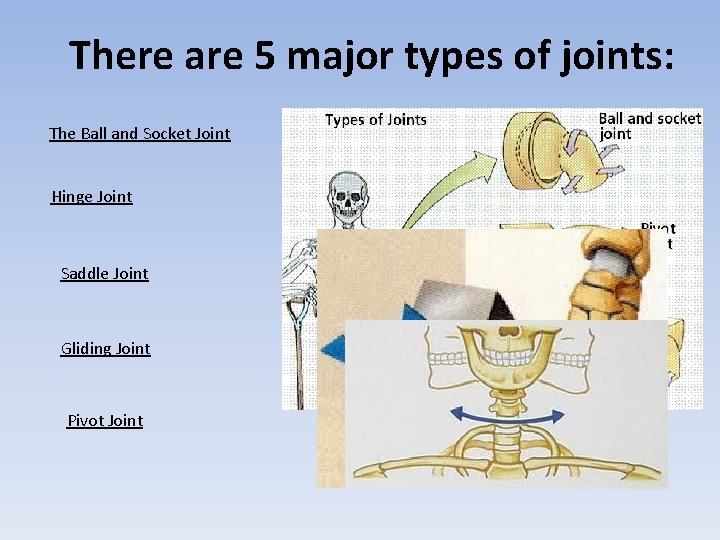
There are 5 major types of joints: The Ball and Socket Joint Hinge Joint Saddle Joint Gliding Joint Pivot Joint
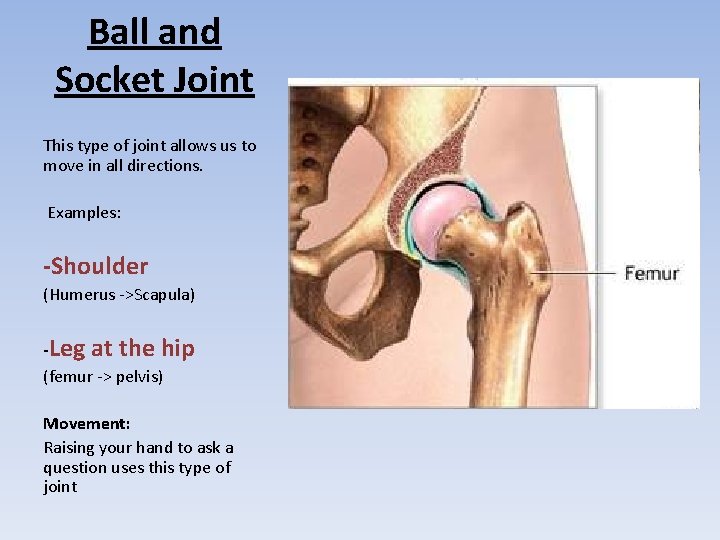
Ball and Socket Joint This type of joint allows us to move in all directions. Examples: -Shoulder (Humerus ->Scapula) -Leg at the hip (femur -> pelvis) Movement: Raising your hand to ask a question uses this type of joint
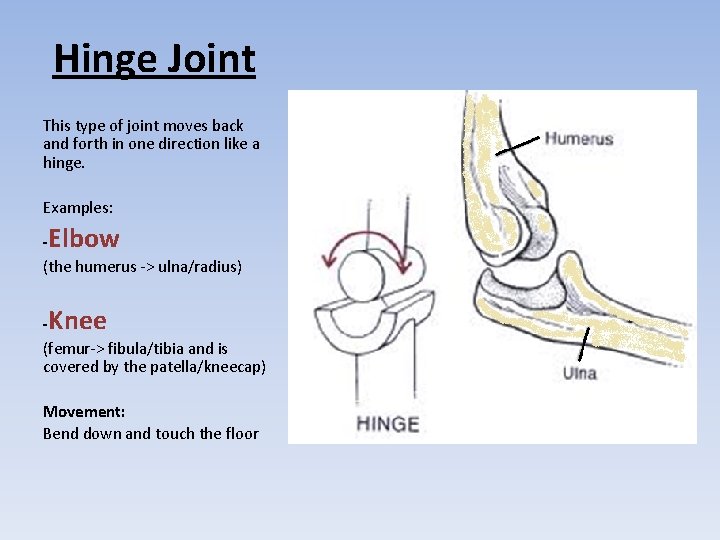
Hinge Joint This type of joint moves back and forth in one direction like a hinge. Examples: Elbow (the humerus -> ulna/radius) Knee (femur-> fibula/tibia and is covered by the patella/kneecap) Movement: Bend down and touch the floor
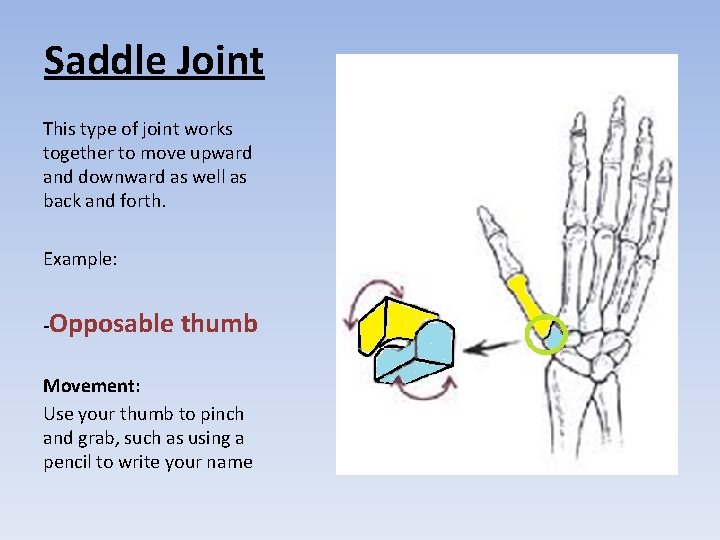
Saddle Joint This type of joint works together to move upward and downward as well as back and forth. Example: -Opposable thumb Movement: Use your thumb to pinch and grab, such as using a pencil to write your name
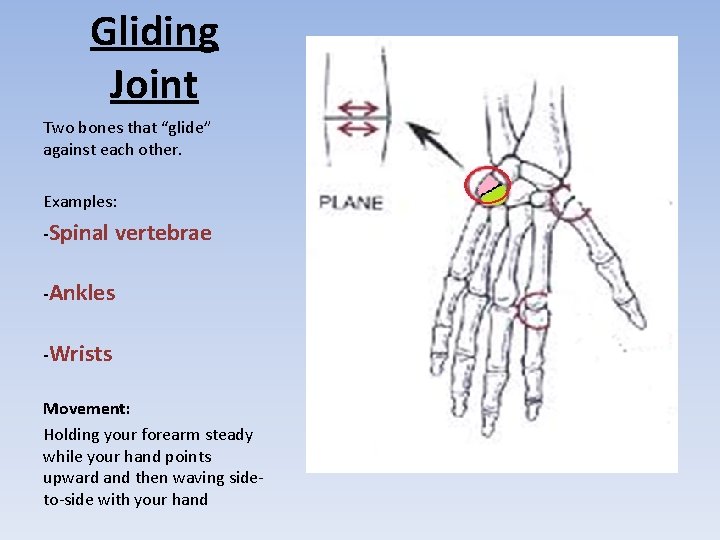
Gliding Joint Two bones that “glide” against each other. Examples: -Spinal vertebrae -Ankles -Wrists Movement: Holding your forearm steady while your hand points upward and then waving sideto-side with your hand
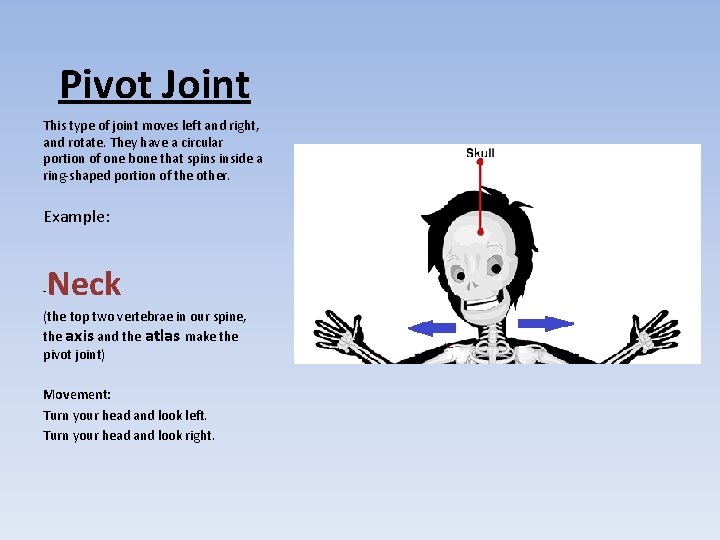
Pivot Joint This type of joint moves left and right, and rotate. They have a circular portion of one bone that spins inside a ring-shaped portion of the other. Example: - Neck (the top two vertebrae in our spine, the axis and the atlas make the pivot joint) Movement: Turn your head and look left. Turn your head and look right.