
The Human Side of Project Management Chapter 4

- Slides: 22
The Human Side of Project Management Chapter 4 4 -1 Copyright 2012 John Wiley & Sons, Inc.
PMBOK® Area – Project Human Resources Management Develop Human Resource Plan § Creating a staff management plan that identifies and documents the reporting relationships as well as each team member’s role, responsibility, and required skills Acquire Project Team § Confirms that specific human resources will be available to work on the project Develop Project Team § The processes to improve the competencies of the project team, their interactions, and the overall team environment Manage the Project Team § The tracking of the project team’s performance, providing feedback, resolving interpersonal issues, and managing organizational change 4 -2
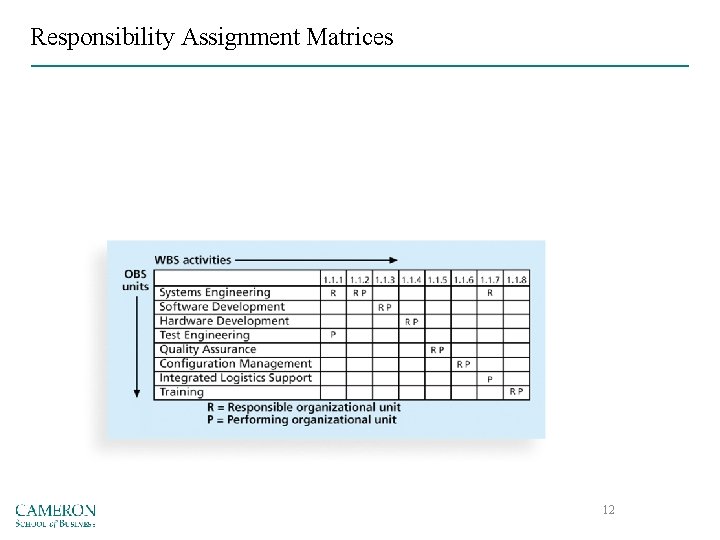
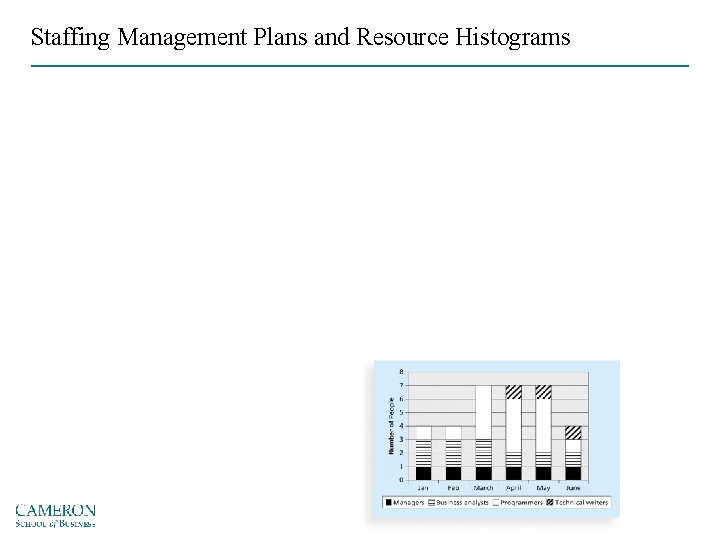
Planning Process Group: Developing the Human Resource Plan Used to determine the roles that will perform schedule activities and to develop the staff management plan to fill the roles with team members Contents include: § project organizational charts § staffing management plan § responsibility assignment matrixes § resource histograms 3
The Project Team The Roles of the Project Manager § Managerial role § Leadership role Attributes of a successful project manager § § ability to communicate with people ability to deal with people ability to create and sustain relationships ability to organize 4 -4
Team Leader (Project Manager) Acts To: Creates the Project Environment 4 -5
Team Selection and Acquisition 4 -6
The Wisdom of Teams - Jon R. Katzenbach Douglas K. Smith Work Groups Pseudo Teams Potential Teams Real Teams High Performance Teams 4 -7
Work Groups Members interact to share information, best practices, or ideas No shared performance goals (individual performance) No joint work-products No mutual accountability Viable in many situations § E. g. , study group 4 -8
Teams Bring complementary skills & experience Jointly defined clear goals & approaches improve communication Improve decision-making Have more fun
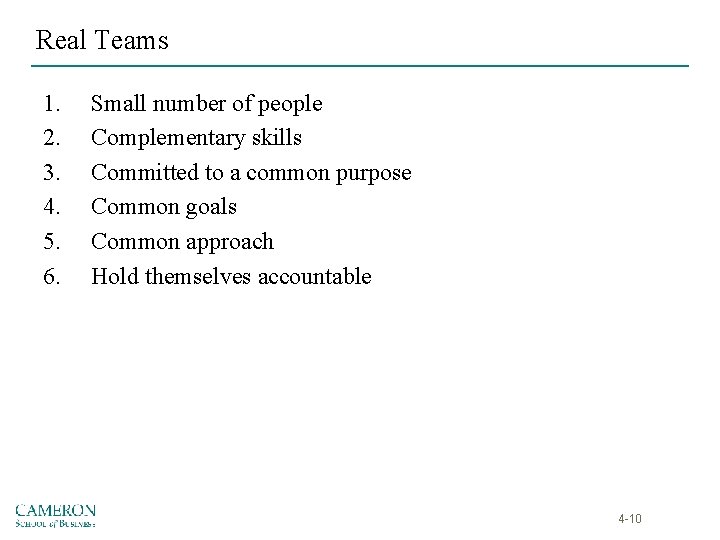
Real Teams 1. 2. 3. 4. 5. 6. Small number of people Complementary skills Committed to a common purpose Common goals Common approach Hold themselves accountable 4 -10
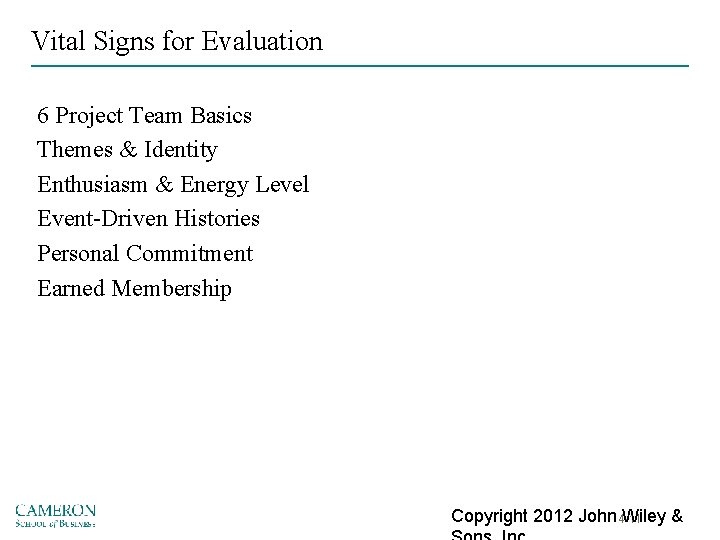
Vital Signs for Evaluation 6 Project Team Basics Themes & Identity Enthusiasm & Energy Level Event-Driven Histories Personal Commitment Earned Membership Copyright 2012 John 4 -11 Wiley &
Responsibility Assignment Matrices 12
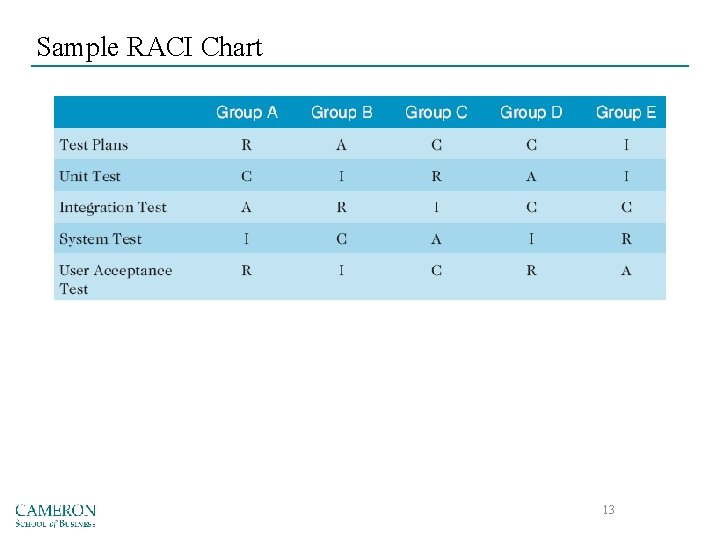
Sample RACI Chart 13
Staffing Management Plans and Resource Histograms 14
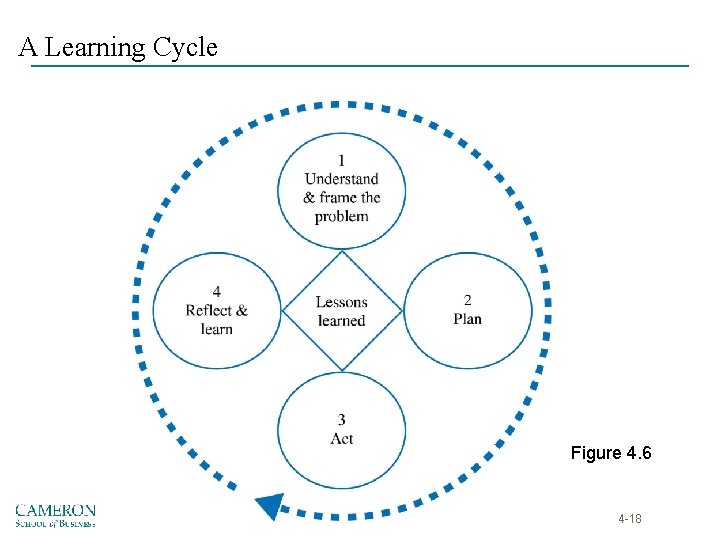
A Learning Cycle Approach to Project Management An Agile Project Management Approach 4 -15
Traditional Teams Accept background information at “face-value” Approach projects in logical, linear fashion Provide run-of-the-mill solutions Solutions remain within the original “frame” or how the problem was originally presented to them 4 -16
Radical Teams Understand frame: Do not accept issues & tasks at their “face value” The way the problem is defined may very well be the problem Unquestioned assumptions are surfaced & challenged Only by digging below the surface can we get to the “root” so that a meaningful solution can emerge 4 -17
A Learning Cycle Figure 4. 6 4 -18
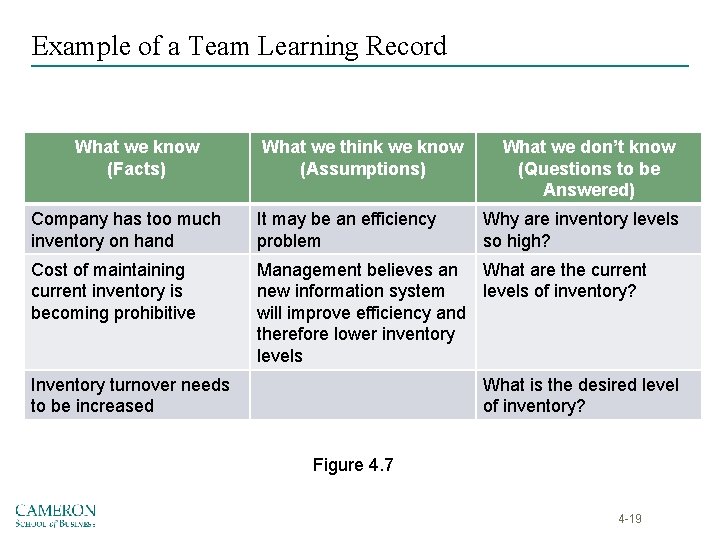
Example of a Team Learning Record What we know (Facts) What we think we know (Assumptions) What we don’t know (Questions to be Answered) Company has too much inventory on hand It may be an efficiency problem Cost of maintaining current inventory is becoming prohibitive Management believes an What are the current new information system levels of inventory? will improve efficiency and therefore lower inventory levels Inventory turnover needs to be increased Why are inventory levels so high? What is the desired level of inventory? Figure 4. 7 4 -19
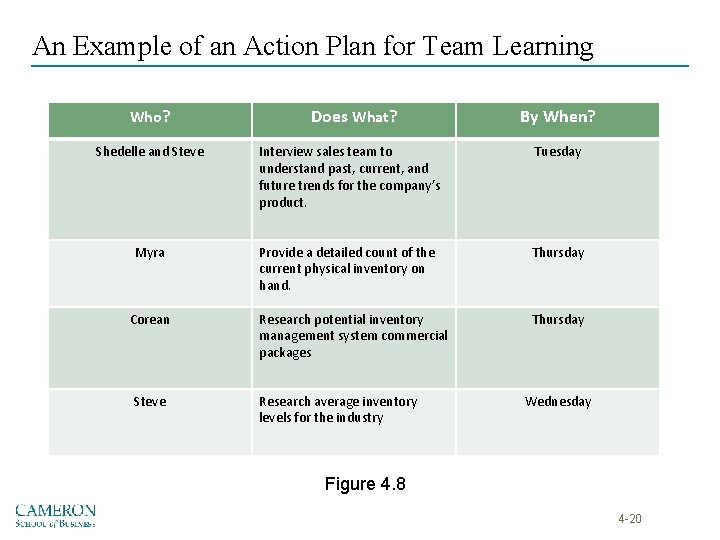
An Example of an Action Plan for Team Learning Who? Does What? By When? Shedelle and Steve Interview sales team to understand past, current, and future trends for the company’s product. Tuesday Myra Provide a detailed count of the current physical inventory on hand. Thursday Research potential inventory management system commercial packages Thursday Corean Steve Research average inventory levels for the industry Wednesday Figure 4. 8 4 -20
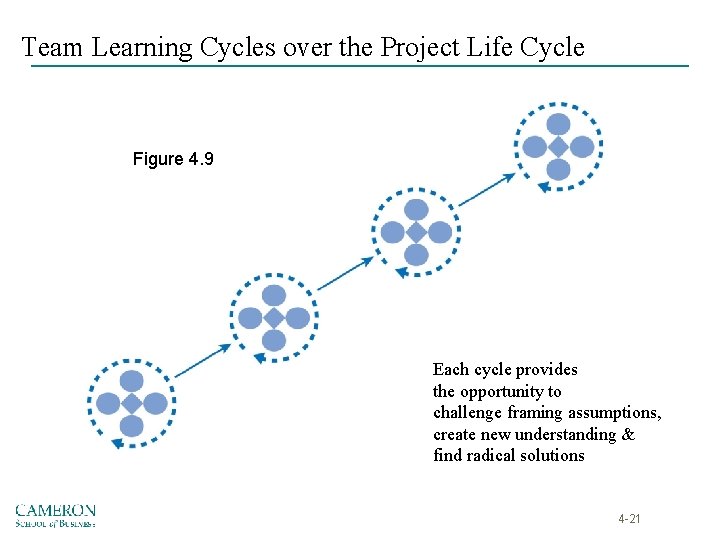
Team Learning Cycles over the Project Life Cycle Figure 4. 9 Each cycle provides the opportunity to challenge framing assumptions, create new understanding & find radical solutions 4 -21
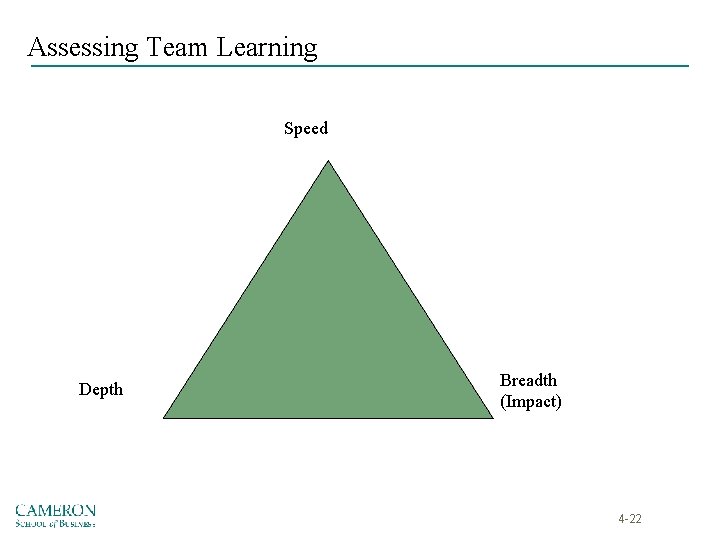
Assessing Team Learning Speed Depth Breadth (Impact) 4 -22