
THE HUMAN REPRODUCTIVE SYSTEMS THE MALE REPRODUCTIVE SYSTEM
- Slides: 19
THE HUMAN REPRODUCTIVE SYSTEMS
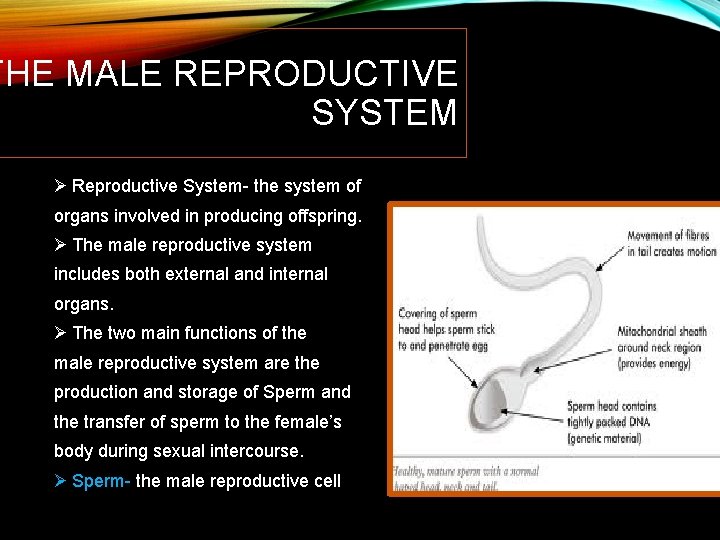
THE MALE REPRODUCTIVE SYSTEM Ø Reproductive System- the system of organs involved in producing offspring. Ø The male reproductive system includes both external and internal organs. Ø The two main functions of the male reproductive system are the production and storage of Sperm and the transfer of sperm to the female’s body during sexual intercourse. Ø Sperm- the male reproductive cell
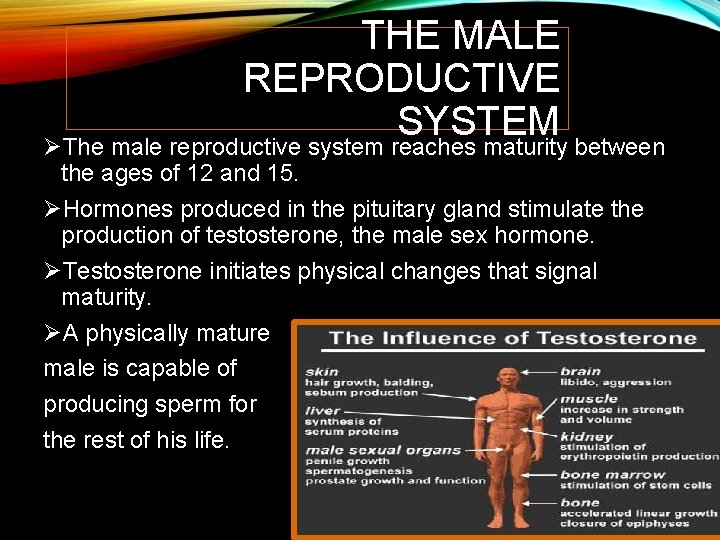
THE MALE REPRODUCTIVE SYSTEM ØThe male reproductive system reaches maturity between the ages of 12 and 15. ØHormones produced in the pituitary gland stimulate the production of testosterone, the male sex hormone. ØTestosterone initiates physical changes that signal maturity. ØA physically mature male is capable of producing sperm for the rest of his life.
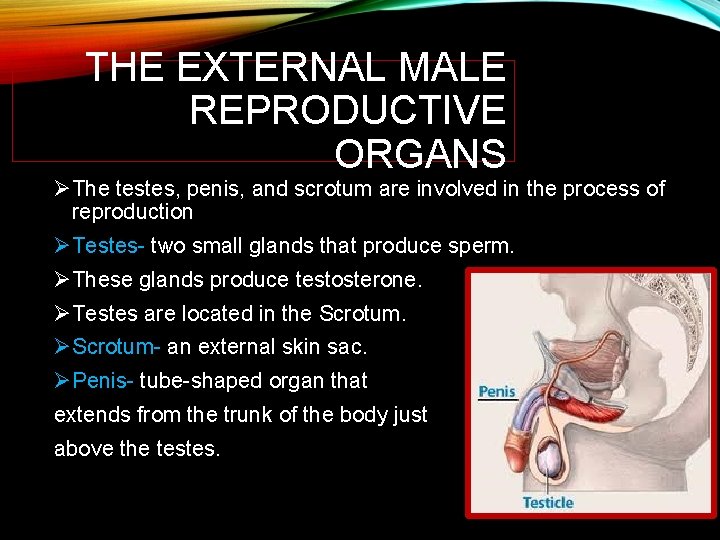
THE EXTERNAL MALE REPRODUCTIVE ORGANS ØThe testes, penis, and scrotum are involved in the process of reproduction ØTestes- two small glands that produce sperm. ØThese glands produce testosterone. ØTestes are located in the Scrotum. ØScrotum- an external skin sac. ØPenis- tube-shaped organ that extends from the trunk of the body just above the testes.
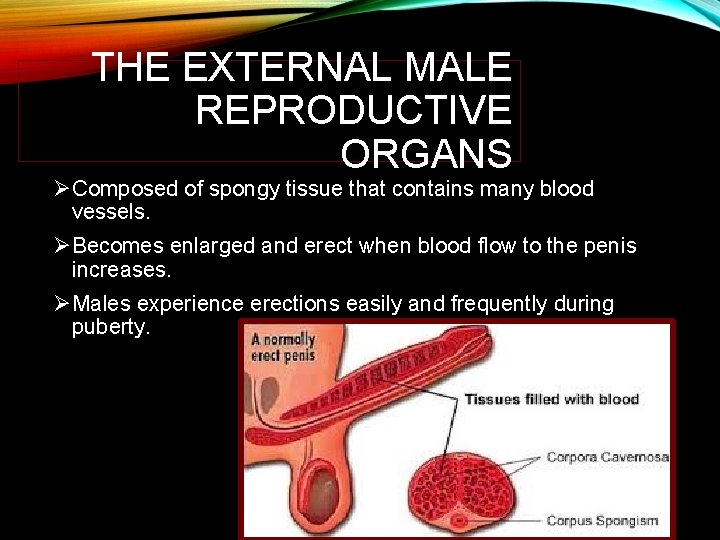
THE EXTERNAL MALE REPRODUCTIVE ORGANS ØComposed of spongy tissue that contains many blood vessels. ØBecomes enlarged and erect when blood flow to the penis increases. ØMales experience erections easily and frequently during puberty.
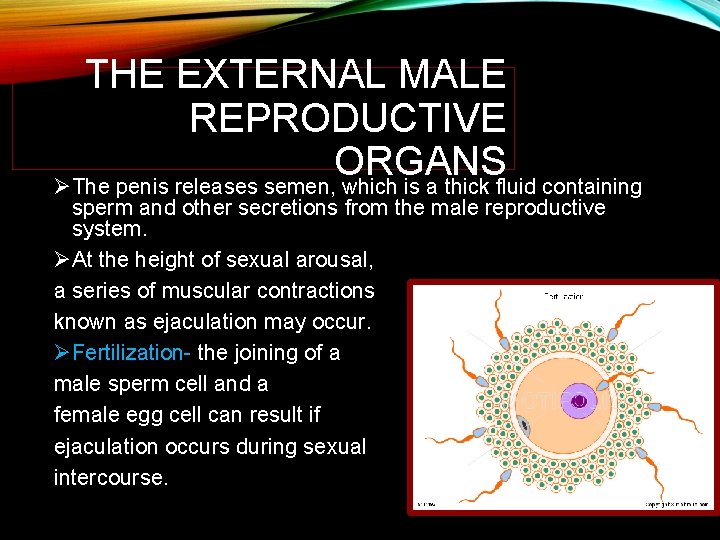
THE EXTERNAL MALE REPRODUCTIVE ORGANS ØThe penis releases semen, which is a thick fluid containing sperm and other secretions from the male reproductive system. ØAt the height of sexual arousal, a series of muscular contractions known as ejaculation may occur. ØFertilization- the joining of a male sperm cell and a female egg cell can result if ejaculation occurs during sexual intercourse.
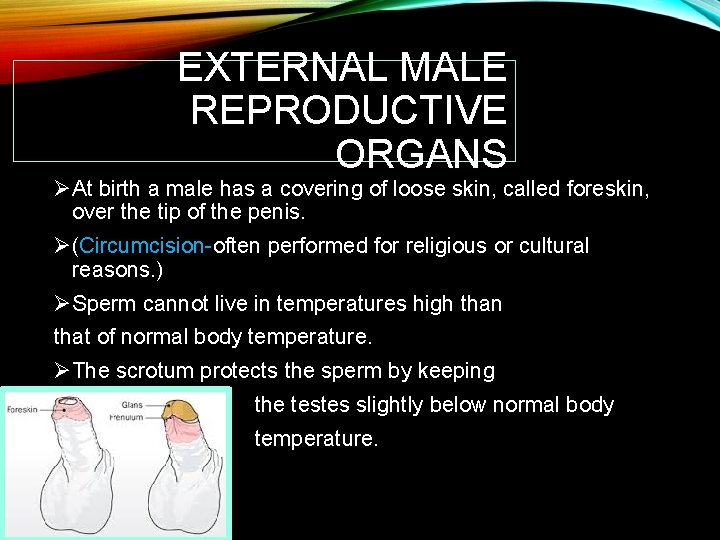
EXTERNAL MALE REPRODUCTIVE ORGANS ØAt birth a male has a covering of loose skin, called foreskin, over the tip of the penis. Ø(Circumcision-often performed for religious or cultural reasons. ) ØSperm cannot live in temperatures high than that of normal body temperature. ØThe scrotum protects the sperm by keeping Ø the testes slightly below normal body Ø temperature.
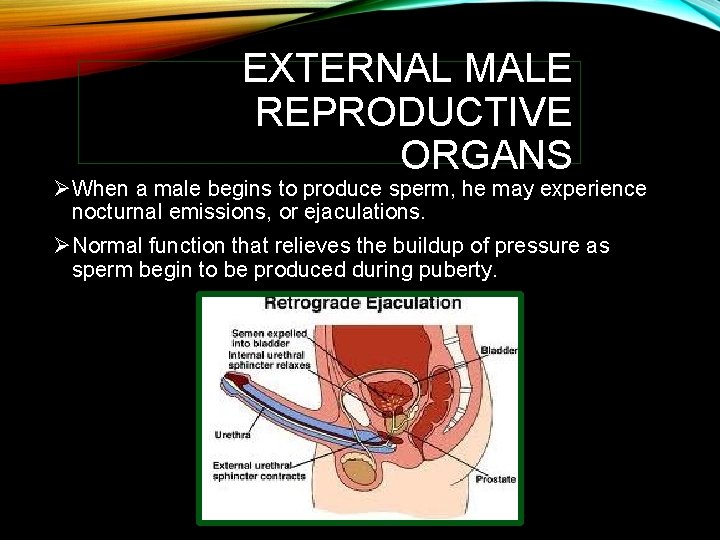
EXTERNAL MALE REPRODUCTIVE ORGANS ØWhen a male begins to produce sperm, he may experience nocturnal emissions, or ejaculations. ØNormal function that relieves the buildup of pressure as sperm begin to be produced during puberty.
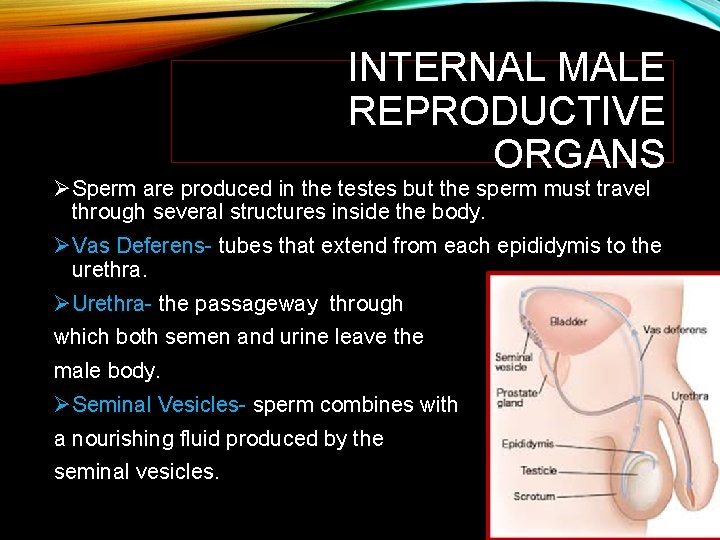
INTERNAL MALE REPRODUCTIVE ORGANS ØSperm are produced in the testes but the sperm must travel through several structures inside the body. ØVas Deferens- tubes that extend from each epididymis to the urethra. ØUrethra- the passageway through which both semen and urine leave the male body. ØSeminal Vesicles- sperm combines with a nourishing fluid produced by the seminal vesicles.
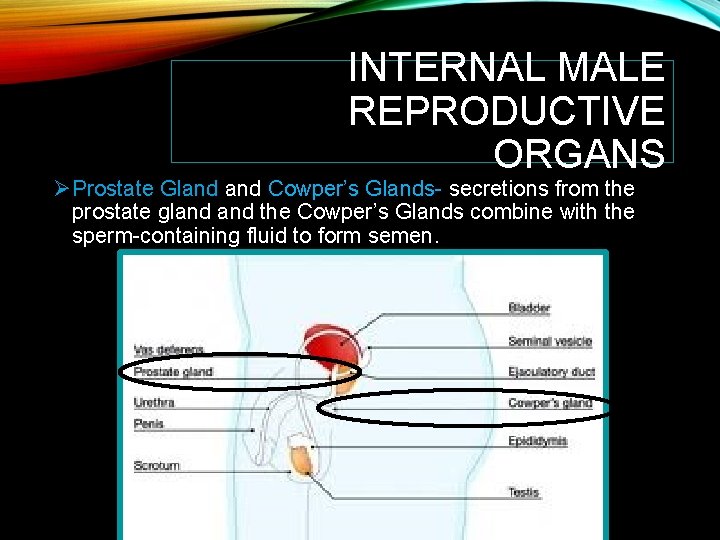
INTERNAL MALE REPRODUCTIVE ORGANS ØProstate Gland Cowper’s Glands- secretions from the prostate gland the Cowper’s Glands combine with the sperm-containing fluid to form semen.
CARE OF THE MALE REPRODUCTIVE SYSTEM ØMedical Checkups, hygiene protection, and self-examination ØGet Regular Checkups ØBathe Regularly ØWear Protective Equipment ØPerform Regular Self-Examinations ØPractice Abstinence
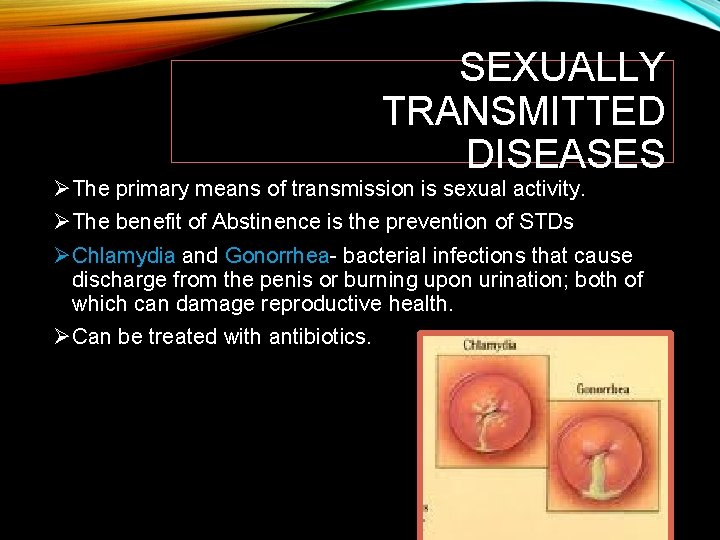
SEXUALLY TRANSMITTED DISEASES ØThe primary means of transmission is sexual activity. ØThe benefit of Abstinence is the prevention of STDs ØChlamydia and Gonorrhea- bacterial infections that cause discharge from the penis or burning upon urination; both of which can damage reproductive health. ØCan be treated with antibiotics.
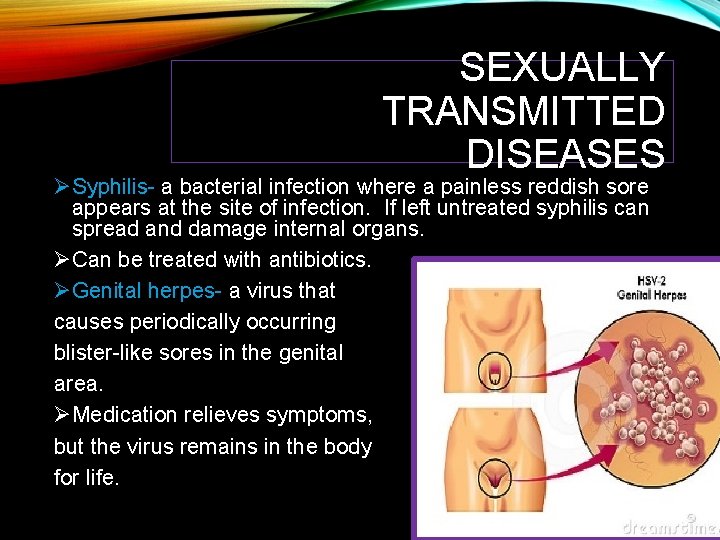
SEXUALLY TRANSMITTED DISEASES ØSyphilis- a bacterial infection where a painless reddish sore appears at the site of infection. If left untreated syphilis can spread and damage internal organs. ØCan be treated with antibiotics. ØGenital herpes- a virus that causes periodically occurring blister-like sores in the genital area. ØMedication relieves symptoms, but the virus remains in the body for life.
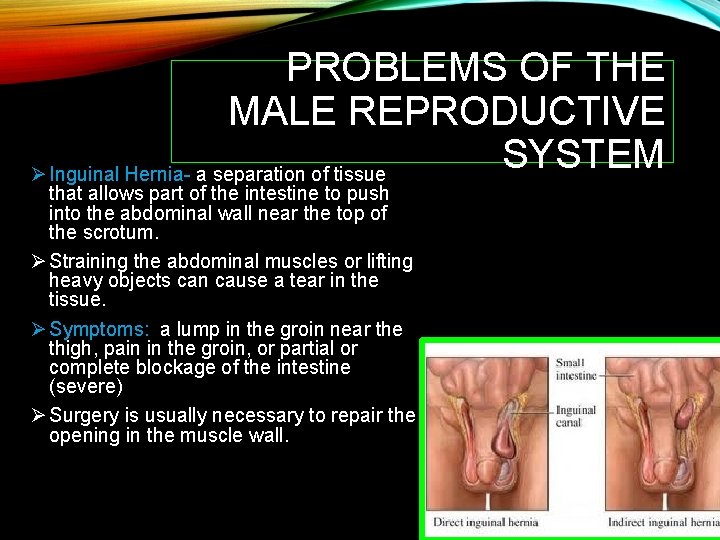
PROBLEMS OF THE MALE REPRODUCTIVE SYSTEM Ø Inguinal Hernia- a separation of tissue that allows part of the intestine to push into the abdominal wall near the top of the scrotum. Ø Straining the abdominal muscles or lifting heavy objects can cause a tear in the tissue. Ø Symptoms: a lump in the groin near the thigh, pain in the groin, or partial or complete blockage of the intestine (severe) Ø Surgery is usually necessary to repair the opening in the muscle wall.
STERILITY ØSterility- the inability to reproduce. Result of: Too few sperm (fewer than 20 million per milliliter of seminal fluid) Sperm of poor quality ØSterility can result from environmental hazards: exposure to X-rays (Radiation) Toxic Chemicals Lead
STERILITY ØHormonal imbalance, certain medications, and the use of drugs (steroids) can damage sperm. ØSTDs and mumps contracted as an adult can result in sterility.
TESTICULAR CANCER AND PROBLEMS OF THE PROSTATE ØAffects males of any age (most often between the ages of 14 and 40) ØFactors that increase the risk of developing testicular cancer: undescended testicle abnormal testicular development family history of testicular cancer ØWith early detection most testicular cancer is treatable through surgery, radiation therapy, or chemotherapy.
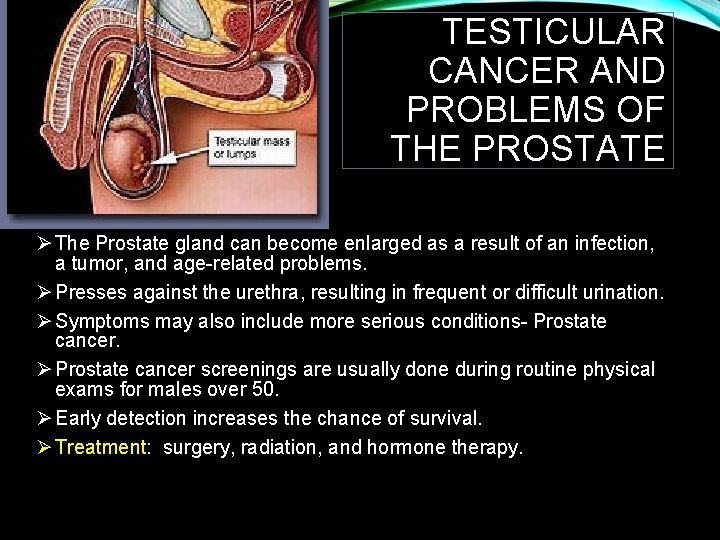
TESTICULAR CANCER AND PROBLEMS OF THE PROSTATE Ø The Prostate gland can become enlarged as a result of an infection, a tumor, and age-related problems. Ø Presses against the urethra, resulting in frequent or difficult urination. Ø Symptoms may also include more serious conditions- Prostate cancer. Ø Prostate cancer screenings are usually done during routine physical exams for males over 50. Ø Early detection increases the chance of survival. Ø Treatment: surgery, radiation, and hormone therapy.
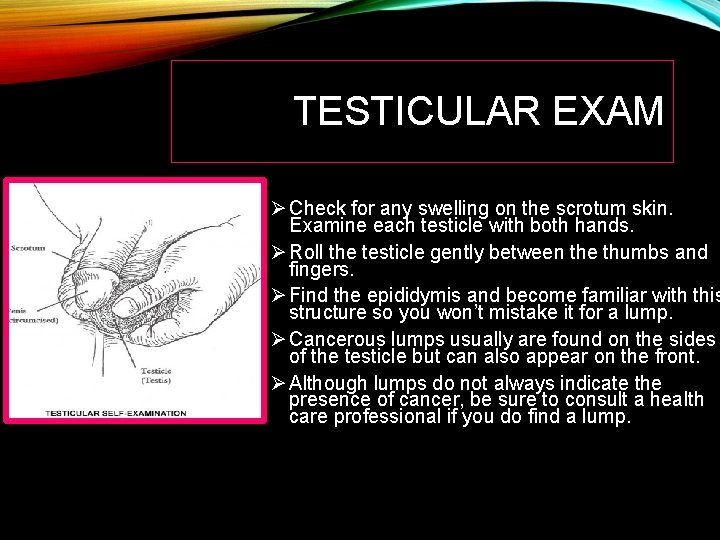
TESTICULAR EXAM Ø Check for any swelling on the scrotum skin. Examine each testicle with both hands. Ø Roll the testicle gently between the thumbs and fingers. Ø Find the epididymis and become familiar with this structure so you won’t mistake it for a lump. Ø Cancerous lumps usually are found on the sides of the testicle but can also appear on the front. Ø Although lumps do not always indicate the presence of cancer, be sure to consult a health care professional if you do find a lump.