
The Human Mosaic CHAPTER SIX Political Geography A
- Slides: 58
The Human Mosaic CHAPTER SIX Political Geography: A Divided World
Introduction: What is political geography? ► How do political decisions shape our environment? ► Does the environment influence the political geography? ► What relationships exist between politics and other aspects of culture? ►
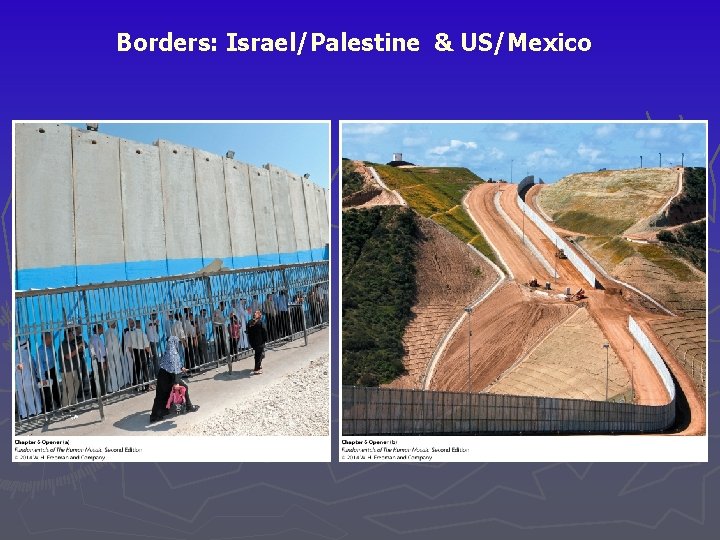
Borders: Israel/Palestine & US/Mexico
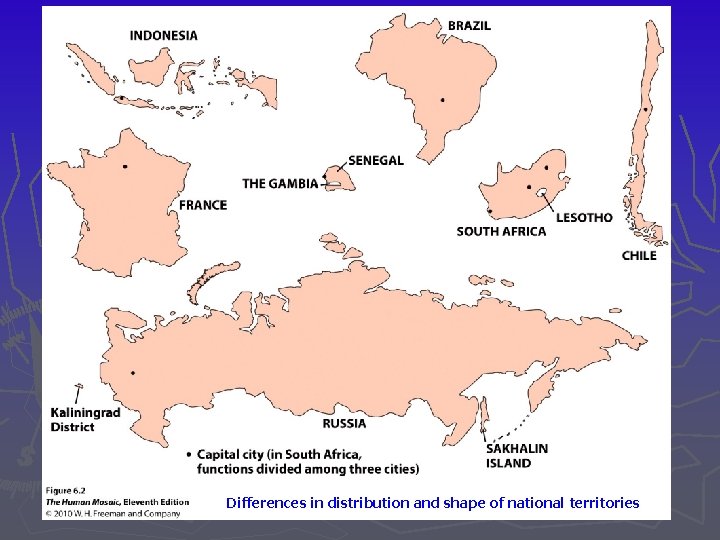
I) Political Culture Regions How is political geography revealed in culture regions? ► A World of States ► A. Independent Countries § § today's mosaic of functional culture regions varying fragmentation on our planet territoriality: instinctual or learned behavior? importance of “colonialism” B. Distribution of National Territory § Shape and configuration of national territories § What is an enclave or an exclave? § What problems can arise from aspects in the distribution some national territories?
Differences in distribution and shape of national territories
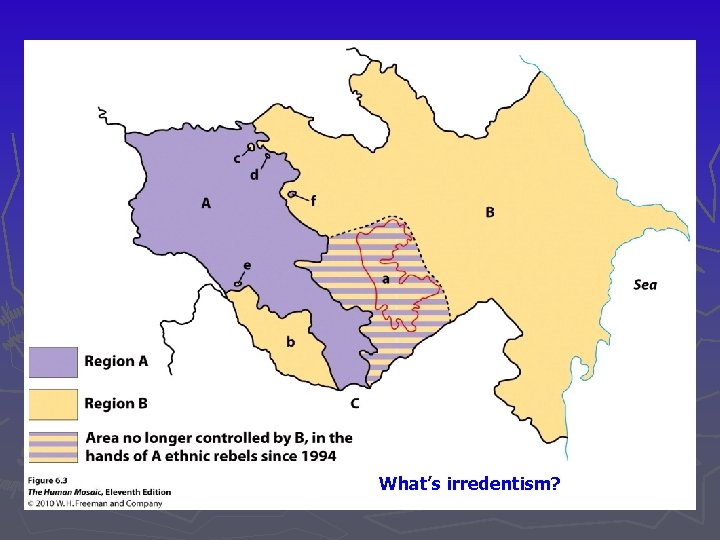
What’s irredentism?
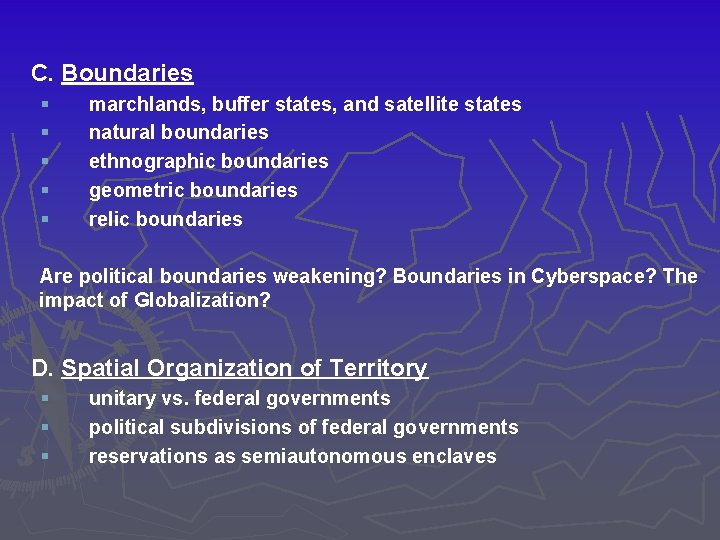
C. Boundaries § § § marchlands, buffer states, and satellite states natural boundaries ethnographic boundaries geometric boundaries relic boundaries Are political boundaries weakening? Boundaries in Cyberspace? The impact of Globalization? D. Spatial Organization of Territory § § § unitary vs. federal governments political subdivisions of federal governments reservations as semiautonomous enclaves
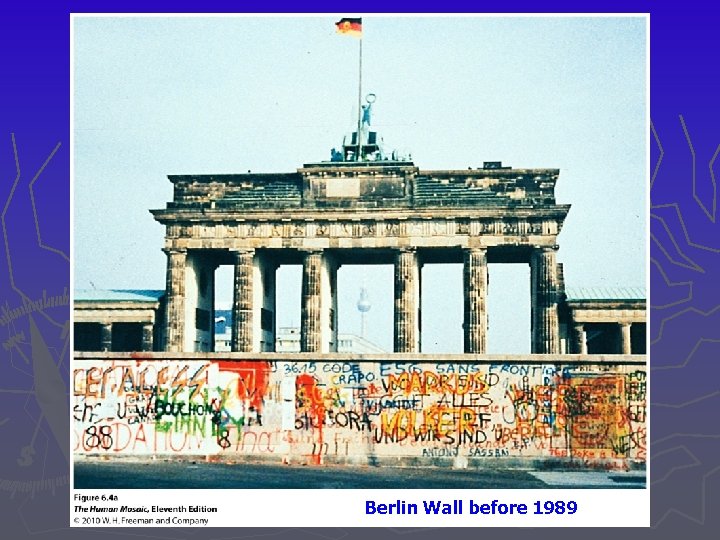
Berlin Wall before 1989
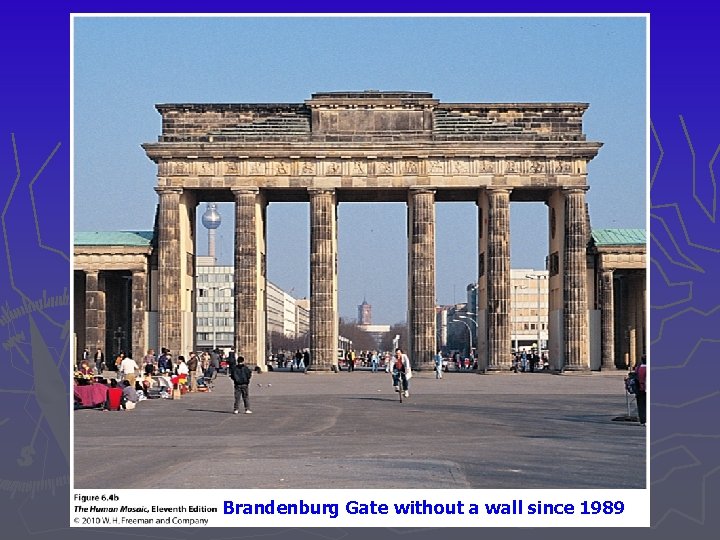
Brandenburg Gate without a wall since 1989
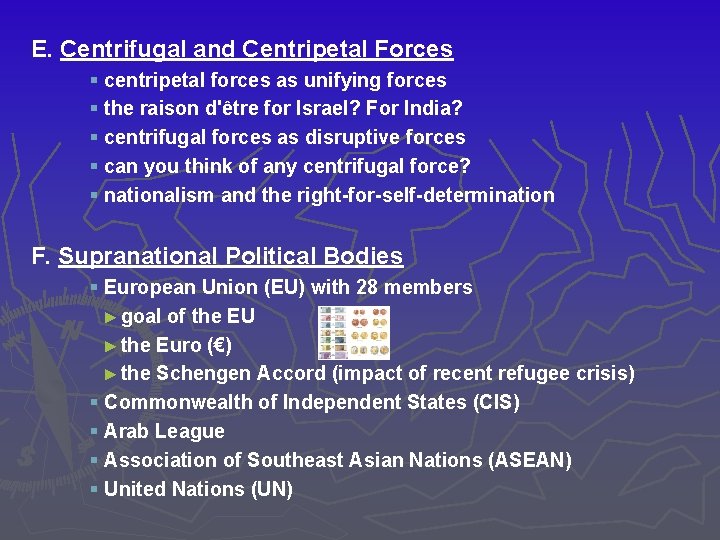
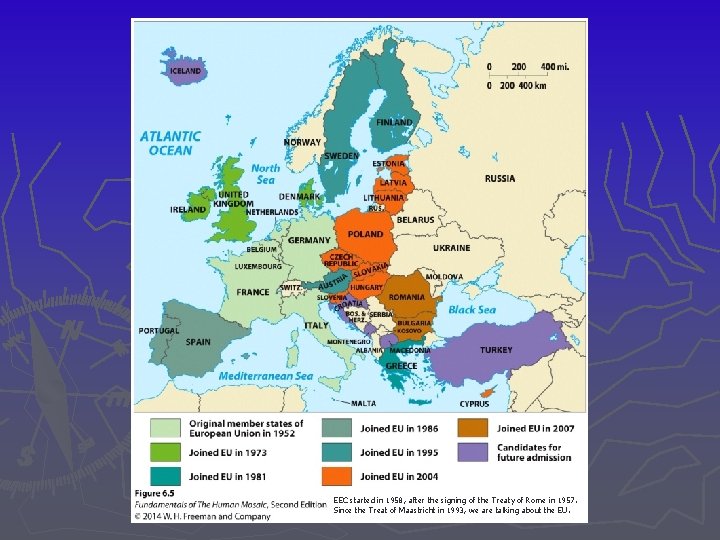
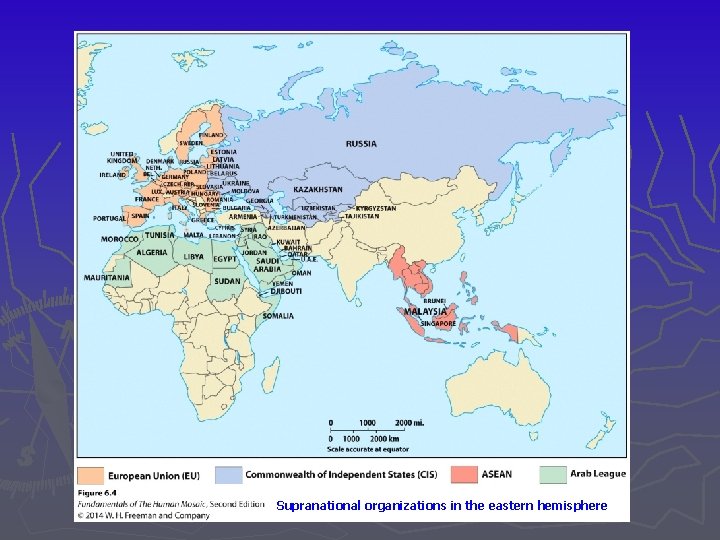
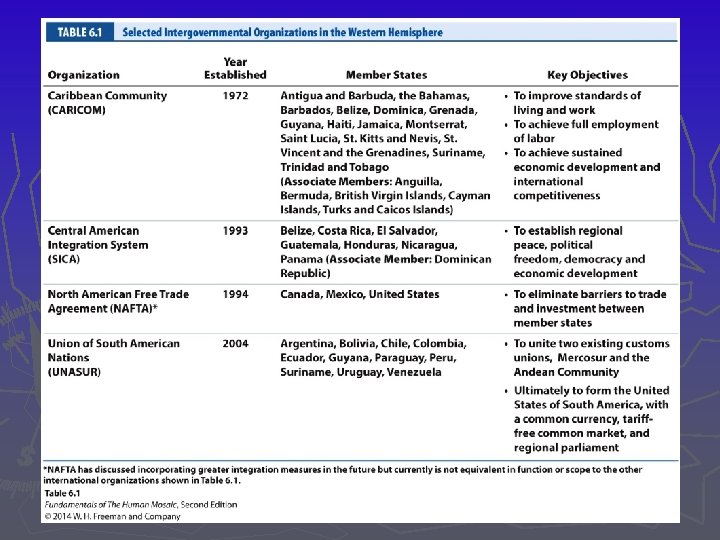
E. Centrifugal and Centripetal Forces § centripetal forces as unifying forces § the raison d'être for Israel? For India? § centrifugal forces as disruptive forces § can you think of any centrifugal force? § nationalism and the right-for-self-determination F. Supranational Political Bodies § European Union (EU) with 28 members ► goal of the EU ► the Euro (€) ► the Schengen Accord (impact of recent refugee crisis) § Commonwealth of Independent States (CIS) § Arab League § Association of Southeast Asian Nations (ASEAN) § United Nations (UN)
EEC started in 1958, after the signing of the Treaty of Rome in 1957. Since the Treat of Maastricht in 1993, we are talking about the EU.
Supranational organizations in the eastern hemisphere
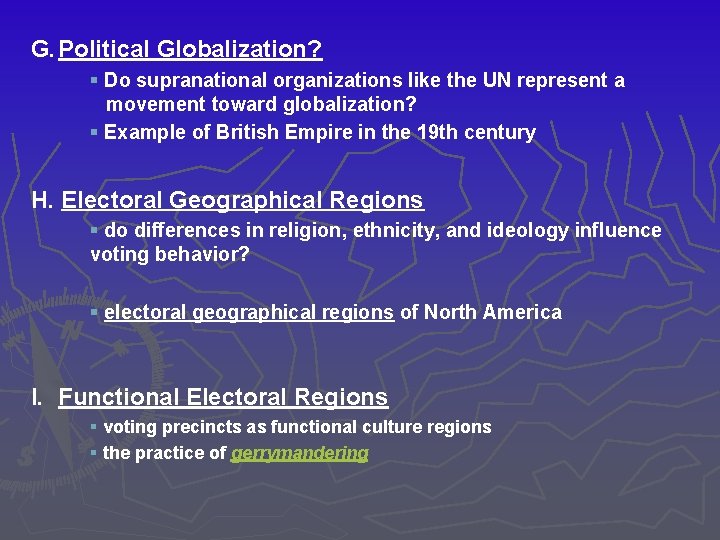
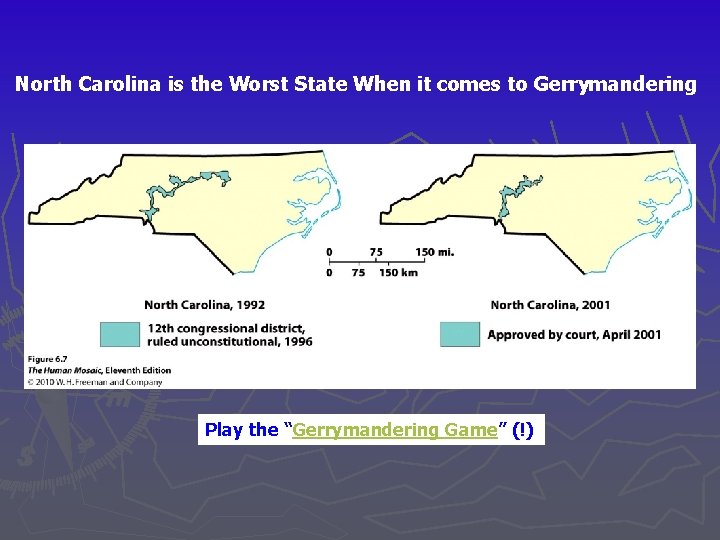
G. Political Globalization? § Do supranational organizations like the UN represent a movement toward globalization? § Example of British Empire in the 19 th century H. Electoral Geographical Regions § do differences in religion, ethnicity, and ideology influence voting behavior? § electoral geographical regions of North America I. Functional Electoral Regions § voting precincts as functional culture regions § the practice of gerrymandering
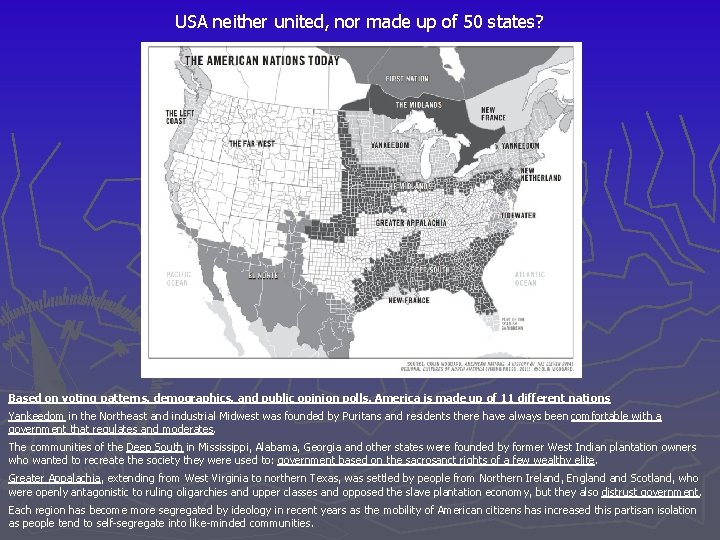
USA neither united, nor made up of 50 states? Based on voting patterns, demographics, and public opinion polls, America is made up of 11 different nations Yankeedom in the Northeast and industrial Midwest was founded by Puritans and residents there have always been comfortable with a government that regulates and moderates. The communities of the Deep South in Mississippi, Alabama, Georgia and other states were founded by former West Indian plantation owners who wanted to recreate the society they were used to: government based on the sacrosanct rights of a few wealthy elite. Greater Appalachia, extending from West Virginia to northern Texas, was settled by people from Northern Ireland, England Scotland, who were openly antagonistic to ruling oligarchies and upper classes and opposed the slave plantation economy, but they also distrust government. Each region has become more segregated by ideology in recent years as the mobility of American citizens has increased this partisan isolation as people tend to self-segregate into like-minded communities.
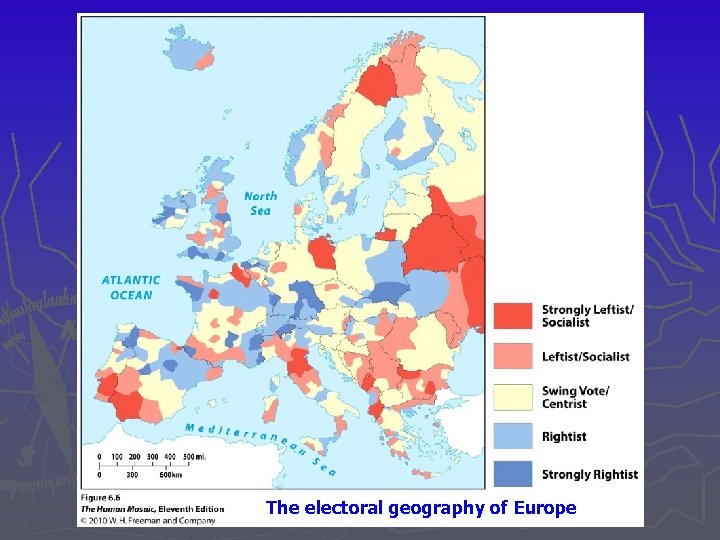
The electoral geography of Europe
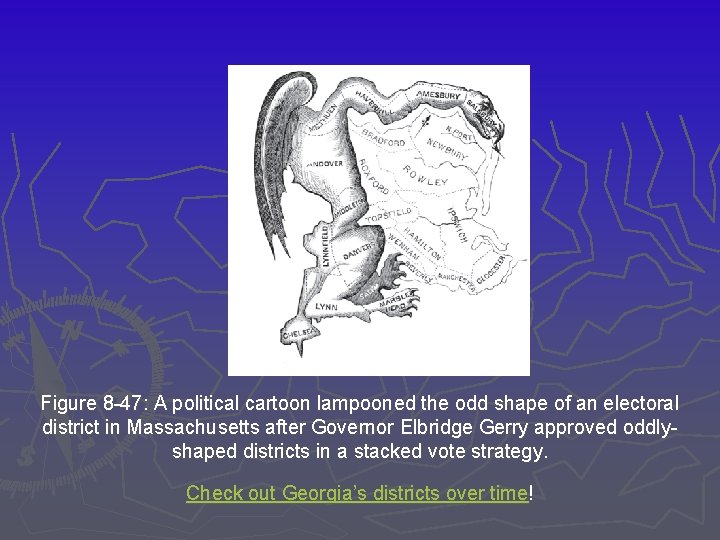
Figure 8 -47: A political cartoon lampooned the odd shape of an electoral district in Massachusetts after Governor Elbridge Gerry approved oddlyshaped districts in a stacked vote strategy. Check out Georgia’s districts over time!
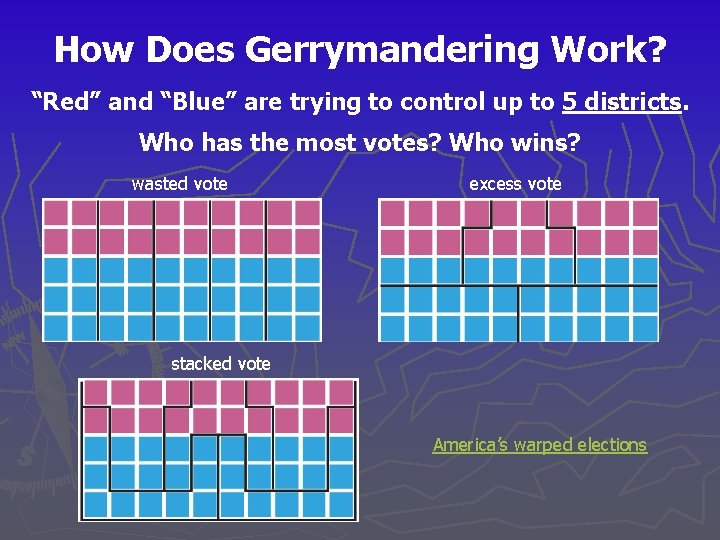
How Does Gerrymandering Work? “Red” and “Blue” are trying to control up to 5 districts. Who has the most votes? Who wins? wasted vote excess vote stacked vote America’s warped elections
North Carolina is the Worst State When it comes to Gerrymandering Play the “Gerrymandering Game” (!)
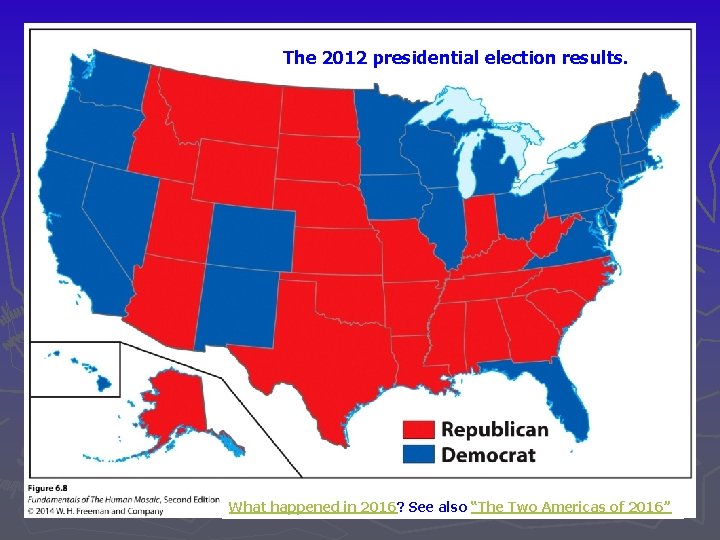
The 2012 presidential election results. What happened in 2016? See also “The Two Americas of 2016”
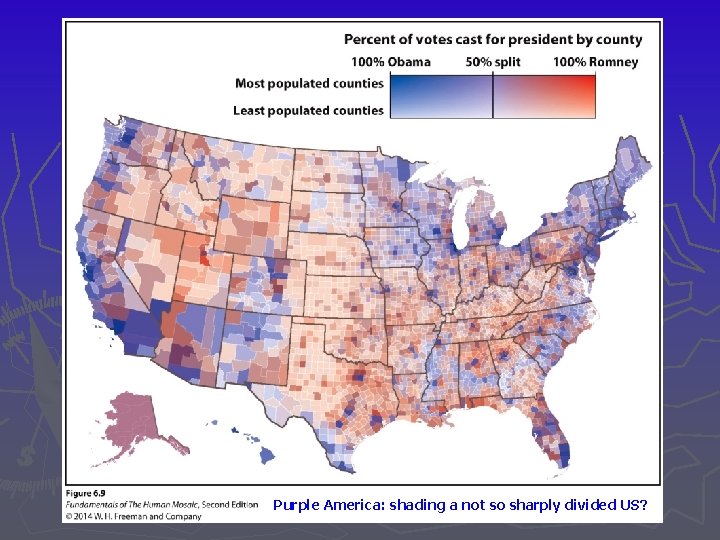
Purple America: shading a not so sharply divided US?
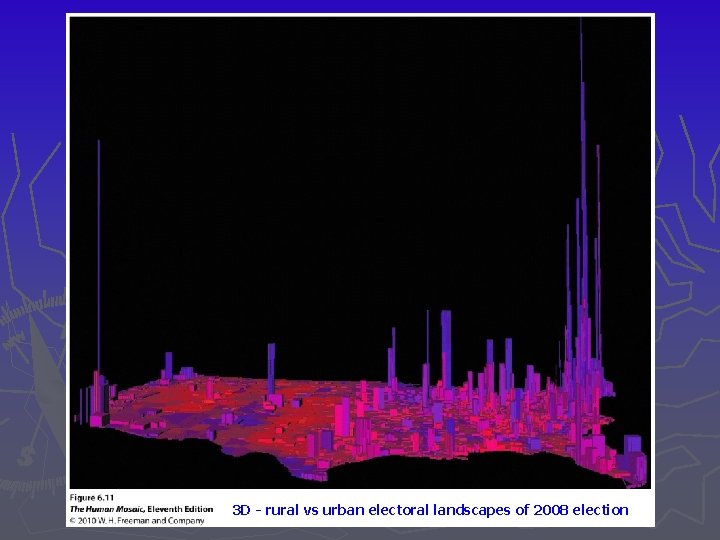
3 D - rural vs urban electoral landscapes of 2008 election
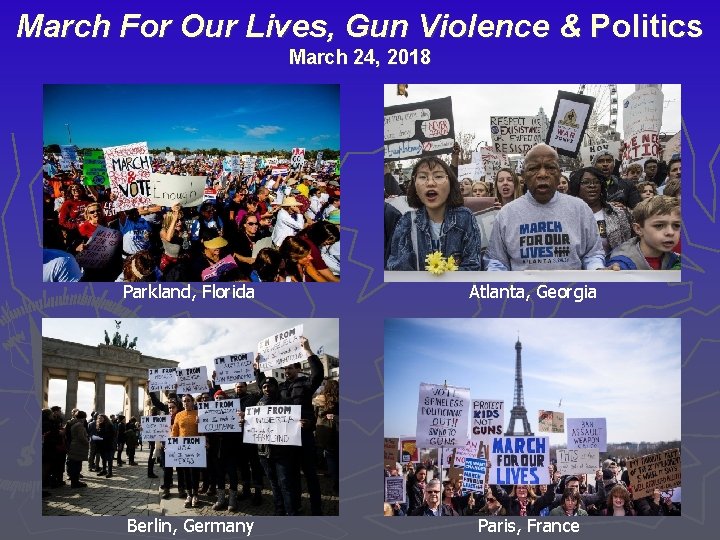
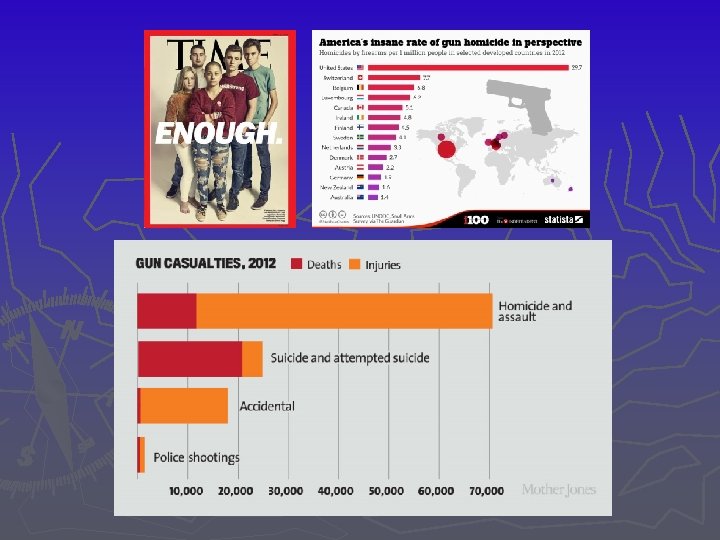
March For Our Lives, Gun Violence & Politics March 24, 2018 Parkland, Florida Atlanta, Georgia Berlin, Germany Paris, France
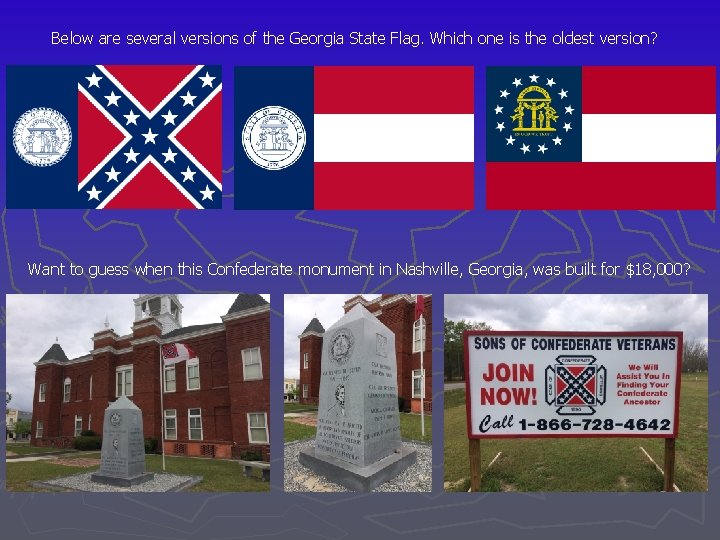
Below are several versions of the Georgia State Flag. Which one is the oldest version? Want to guess when this Confederate monument in Nashville, Georgia, was built for $18, 000?
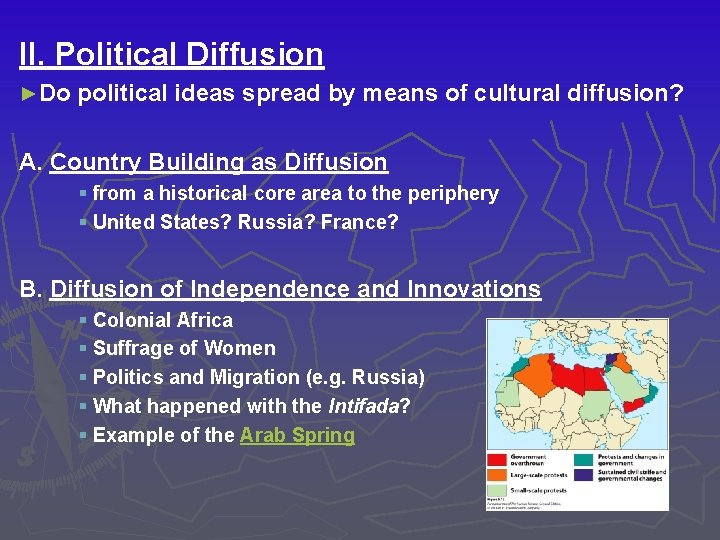
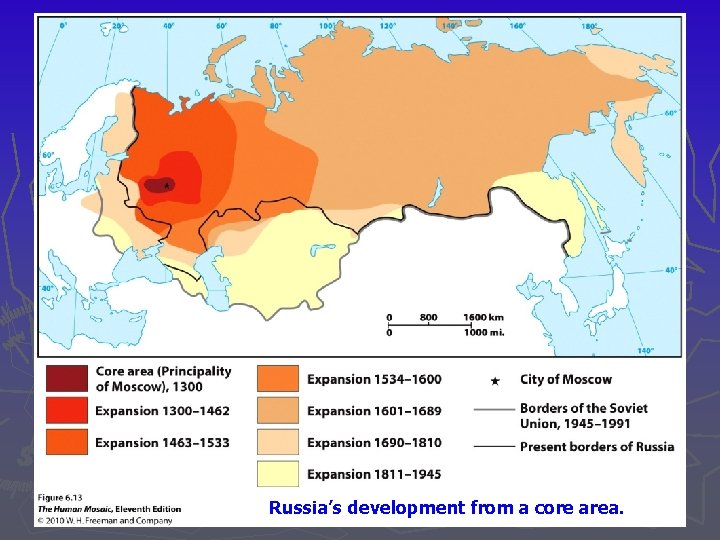
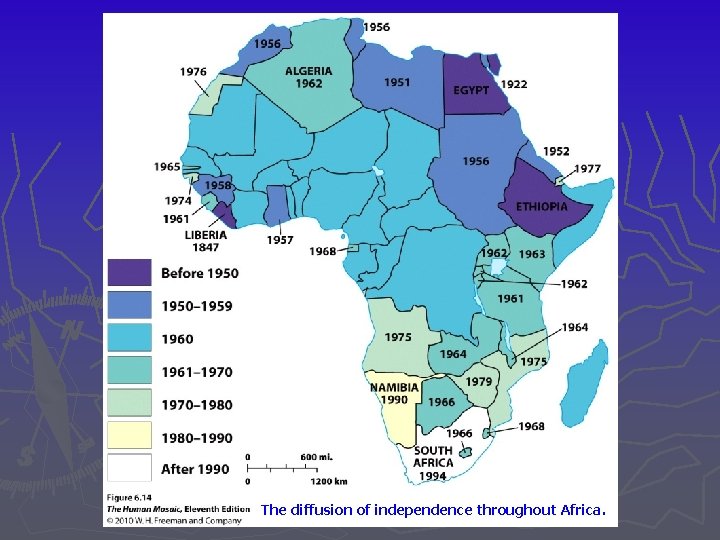
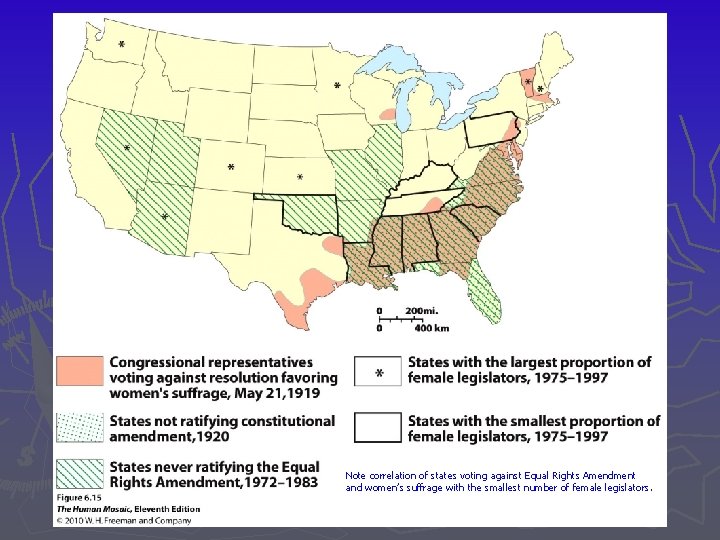
II. Political Diffusion ►Do political ideas spread by means of cultural diffusion? A. Country Building as Diffusion § from a historical core area to the periphery § United States? Russia? France? B. Diffusion of Independence and Innovations § Colonial Africa § Suffrage of Women § Politics and Migration (e. g. Russia) § What happened with the Intifada? § Example of the Arab Spring
Russia’s development from a core area.
The diffusion of independence throughout Africa.
Note correlation of states voting against Equal Rights Amendment and women’s suffrage with the smallest number of female legislators.
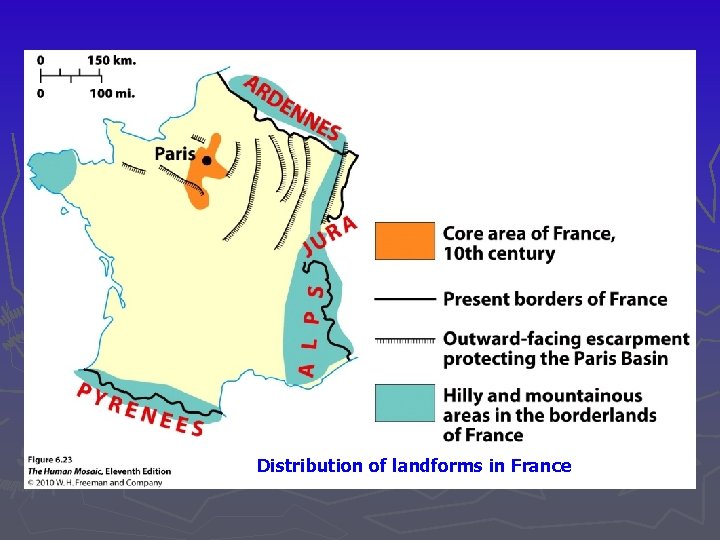
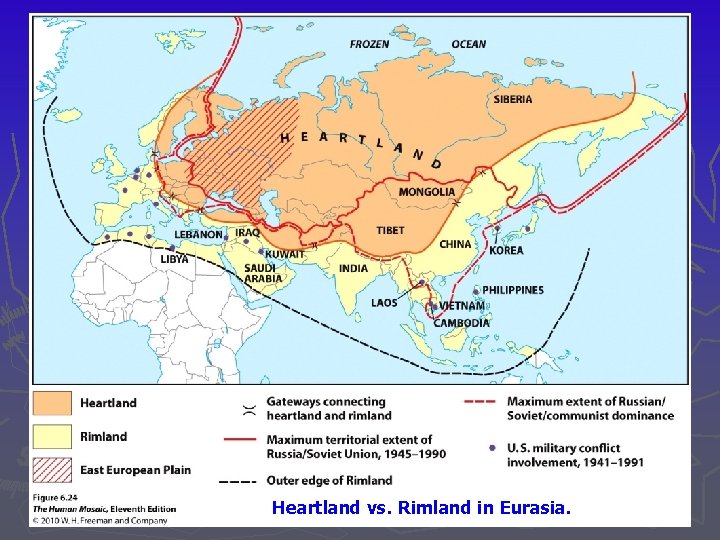
III. Political Ecology ► What is the relationship between political phenomena and the environment? A. Folk Fortresses § survival by natural protection / importance of landform patterns § see U. K. & Egypt § see France § where are separatist sentiments more likely? § logical limits to territorial growth? (manifest destiny) B. The Heartland Theory § outdated theory based on environmental determinism § Eurasia as base for world conquest? ► "Who rules East Europe commands the heartland, who rules the heartland commands the world-island [heartland + rimland], who rules the world-island commands the world. "
Distribution of landforms in France
Heartland vs. Rimland in Eurasia.
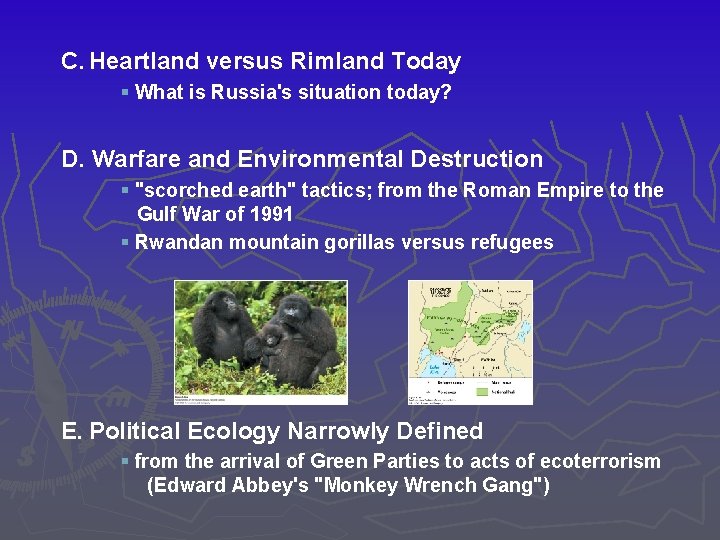
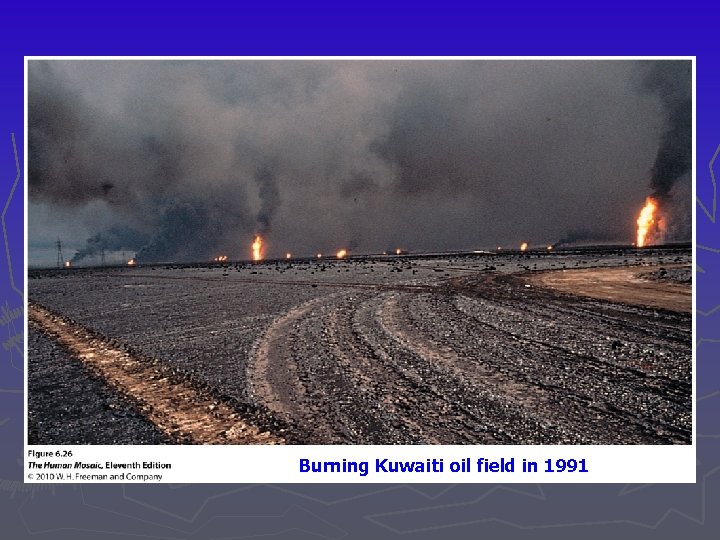
C. Heartland versus Rimland Today § What is Russia's situation today? D. Warfare and Environmental Destruction § "scorched earth" tactics; from the Roman Empire to the Gulf War of 1991 § Rwandan mountain gorillas versus refugees E. Political Ecology Narrowly Defined § from the arrival of Green Parties to acts of ecoterrorism (Edward Abbey's "Monkey Wrench Gang")
Burning Kuwaiti oil field in 1991
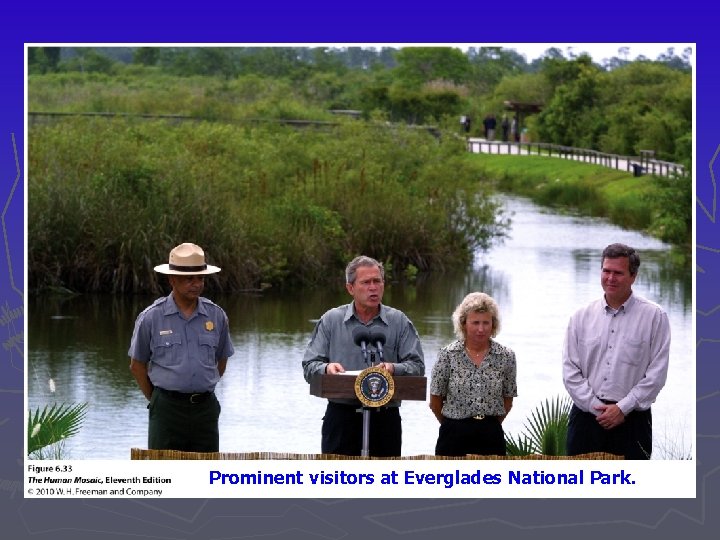
Prominent visitors at Everglades National Park.
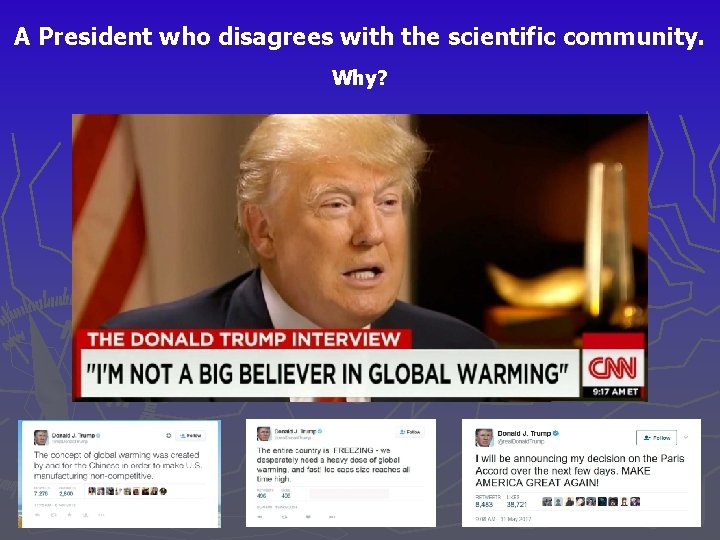
A President who disagrees with the scientific community. Why?
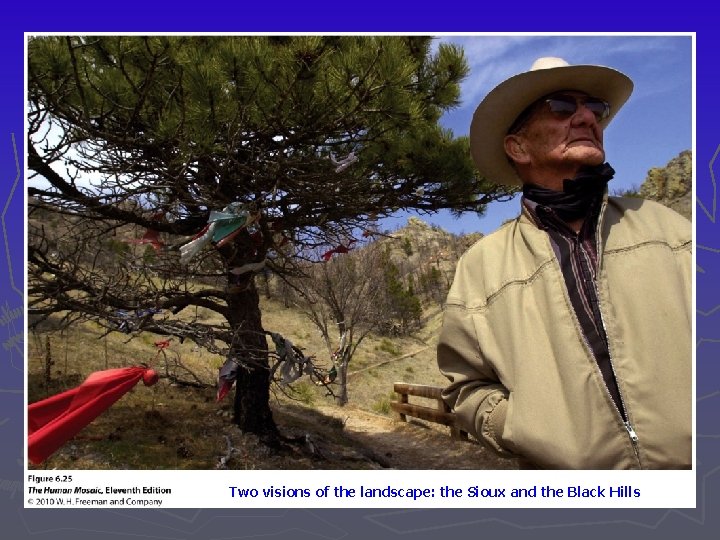
Two visions of the landscape: the Sioux and the Black Hills
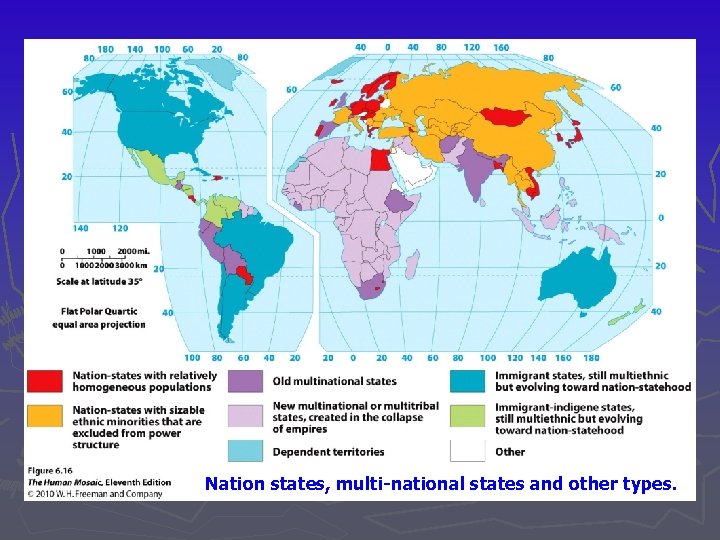
IV) Politico-Cultural Interaction ► How are politics intertwined with other aspects of culture? A. The Nation State § a nation or nationality as being culturally based § cultural identity as raison d'être for a country § cultural homogeneity as centripetal force § sizable ethnic minorities as centrifugal force § the demise of the nation state? B. The Multinational Country § majority of independent countries § importance of federalism in heterogeneous countries
Nation states, multi-national states and other types.
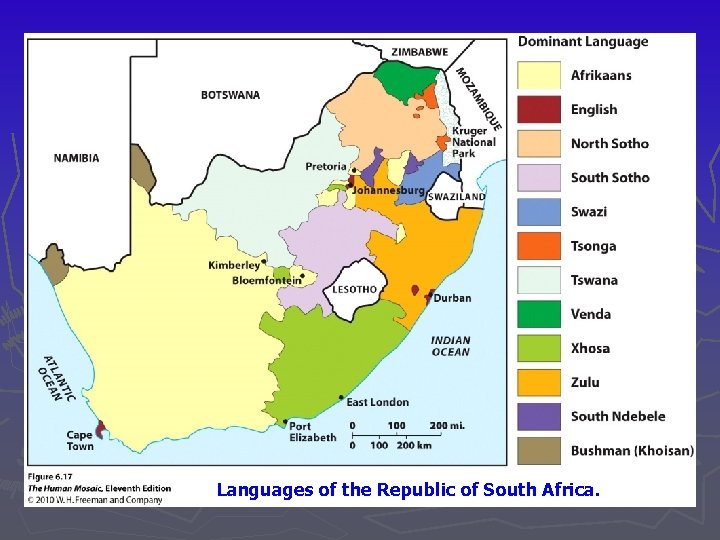
Languages of the Republic of South Africa.
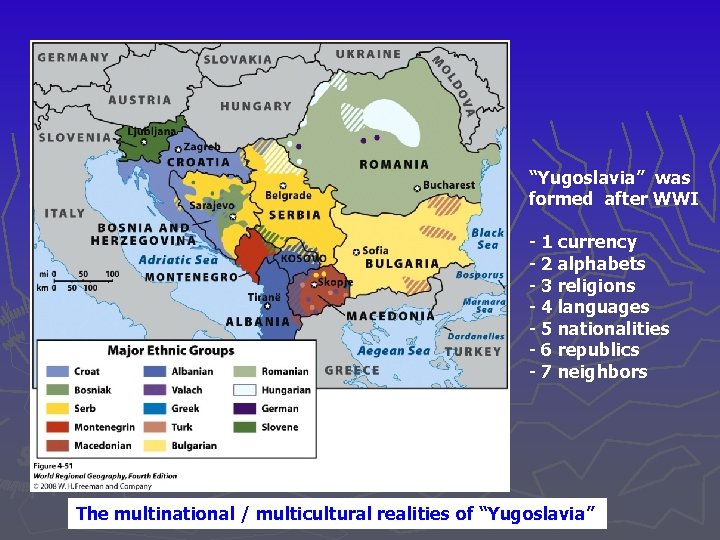
C. Ethnic Separatism § found in multinational countries and nation states alike § development of ethnic-based federalism § significance of ethnic nationalism is displayed in acts of simple unrest to that of ethnic cleansing D. The Cleavage Model § cleavages as sharp contrasts in voting behavior § tensions between a national core area and peripheral districts favor separatist movements (see former USSR) E. Will Serbs recognize an independent Kosovo? § The story of former “Yugoslavia”
“Yugoslavia” was formed after WWI - 1 currency - 2 alphabets - 3 religions - 4 languages - 5 nationalities - 6 republics - 7 neighbors The multinational / multicultural realities of “Yugoslavia”
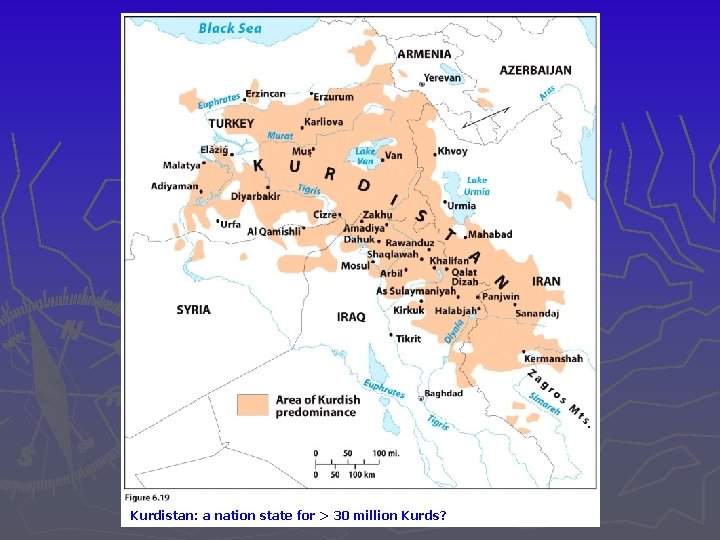
Kurdistan: a nation state for > 30 million Kurds?
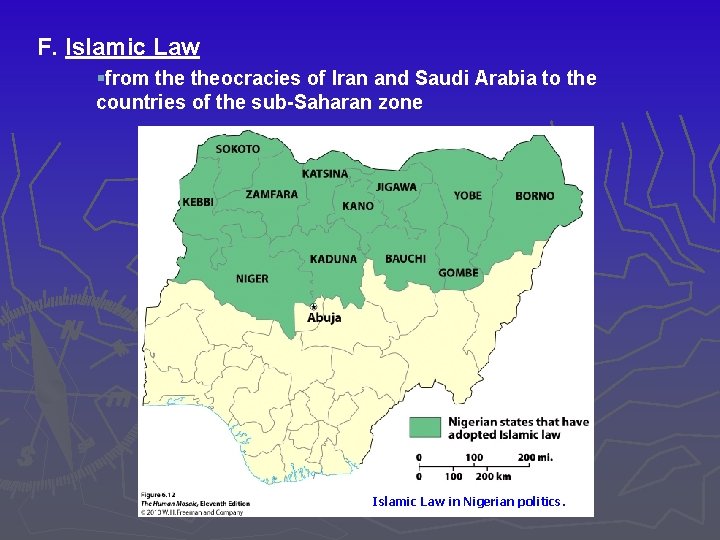
F. Islamic Law §from theocracies of Iran and Saudi Arabia to the countries of the sub-Saharan zone Islamic Law in Nigerian politics.
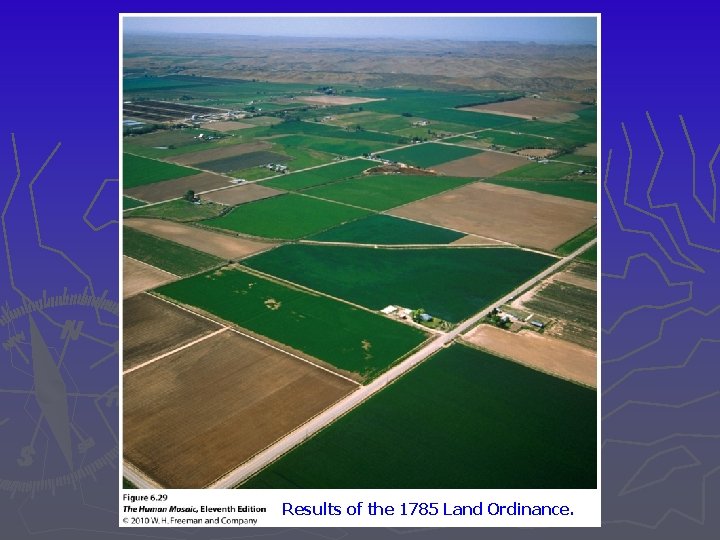
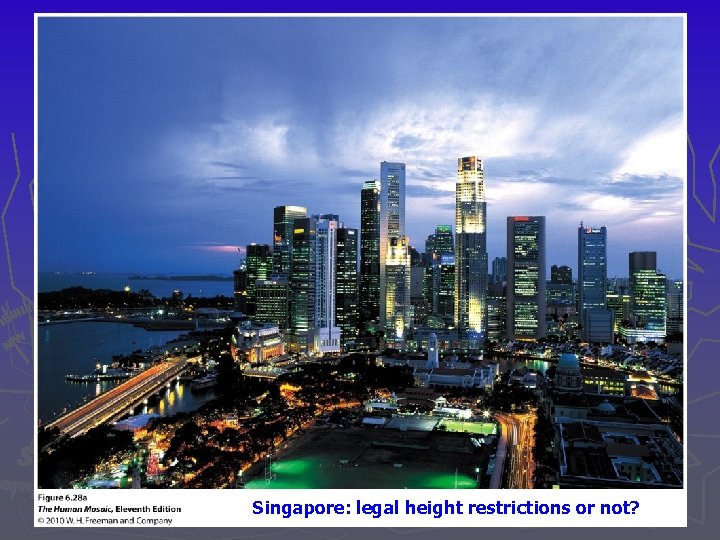
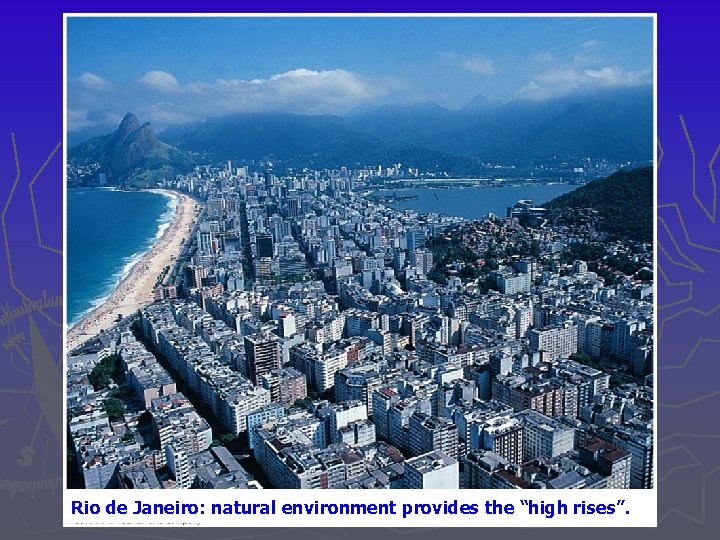
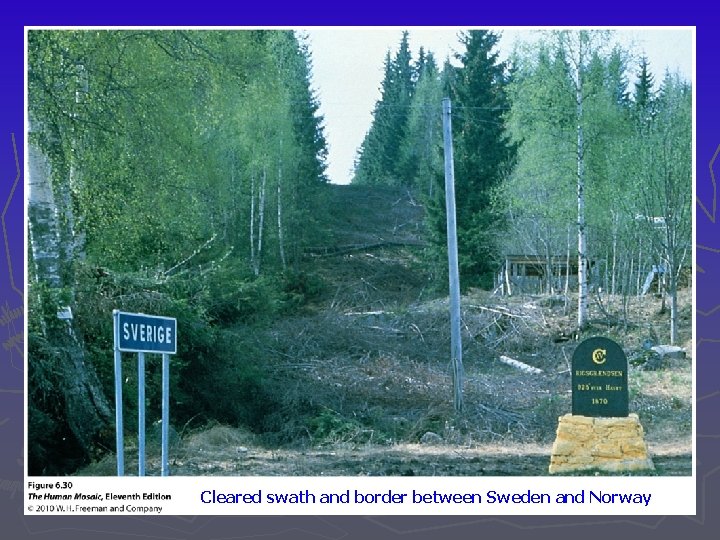
V. Political Landscapes ►What are visible manifestations of political geography? A. Imprint of the Legal Code § land survey patterns § building restrictions (height, style, etc. ) B. Physical Properties of Boundaries § differences in border landscapes (compare U. S. -Canada with the Koreas) § territorial limits of urban street gangs
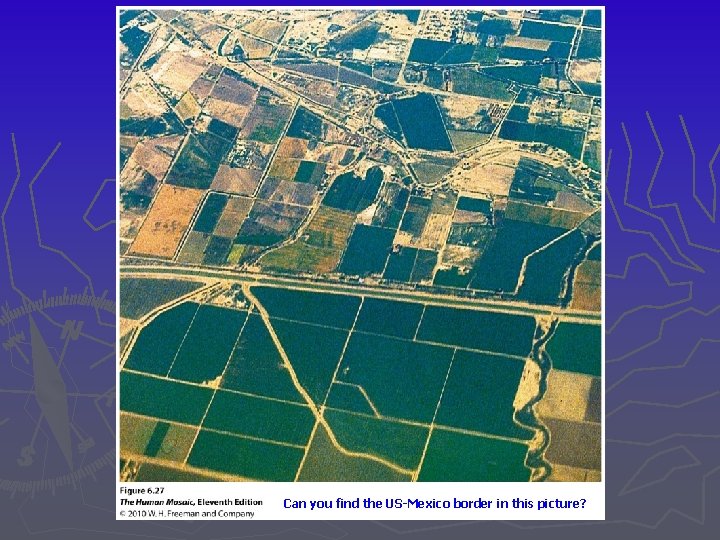
Can you find the US-Mexico border in this picture?
Results of the 1785 Land Ordinance.
Singapore: legal height restrictions or not?
Rio de Janeiro: natural environment provides the “high rises”.
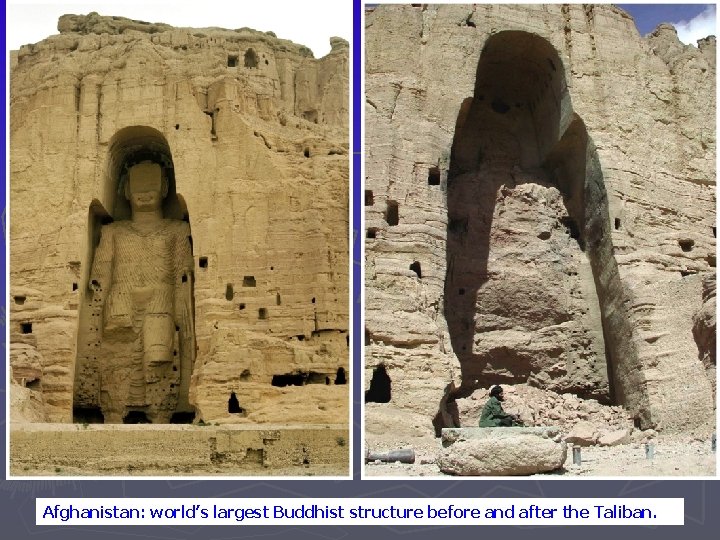
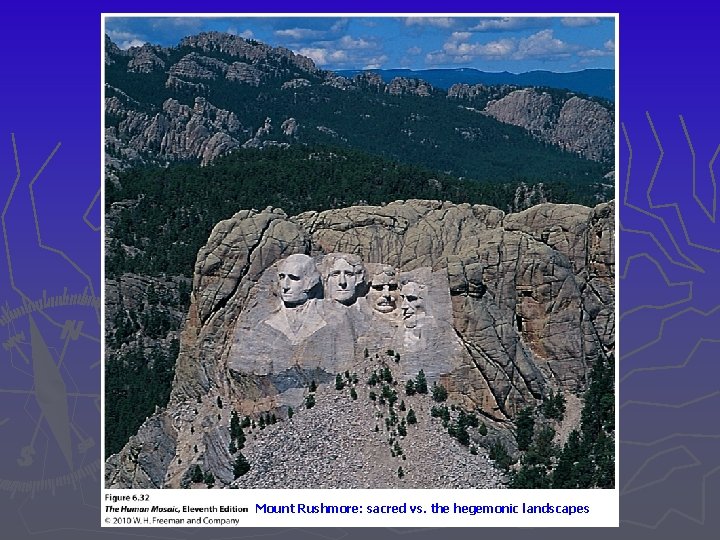
C. The Impress of Central Authority § railroad and highway patterns § destruction of Buddhist statues by the Taliban D. National Iconography on the Landscape § from flags and eagles to Mount Rushmore and the Statue Liberty
Afghanistan: world’s largest Buddhist structure before and after the Taliban.
Mount Rushmore: sacred vs. the hegemonic landscapes
Cleared swath and border between Sweden and Norway
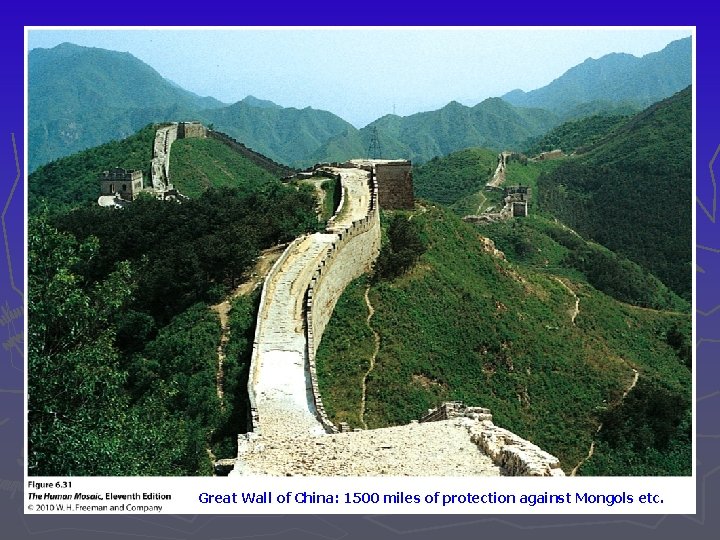
Great Wall of China: 1500 miles of protection against Mongols etc.
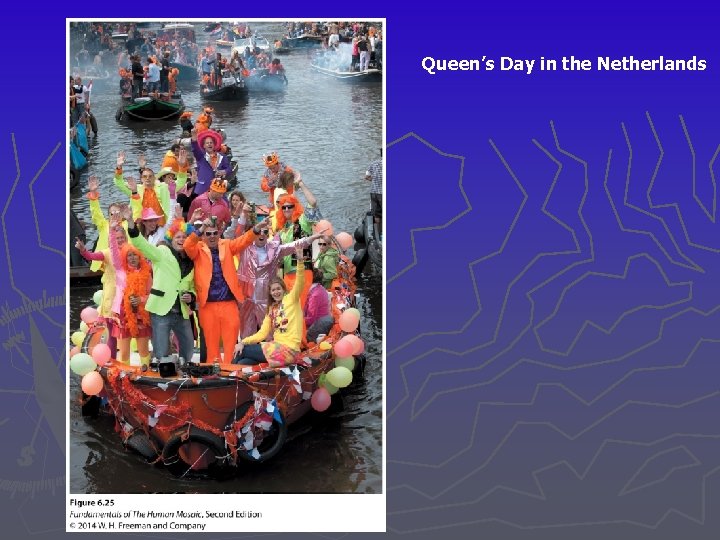
Queen’s Day in the Netherlands
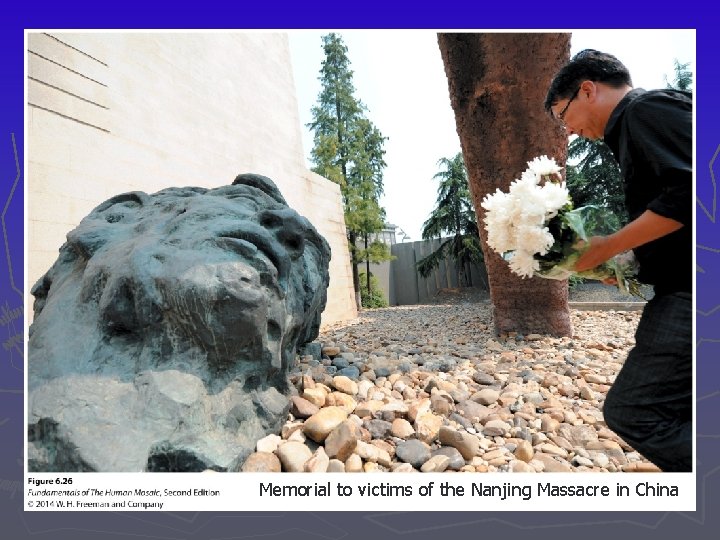
Memorial to victims of the Nanjing Massacre in China