
The Human Genome Project In 1990 the National
- Slides: 34
The Human Genome Project • In 1990, the National Institutes of Health (NIH) & the Department of Energy joined with international partners to sequence all 3 billion base pairs of the human genome. • In 2001, the HGP was completed. Why was the HGP important?
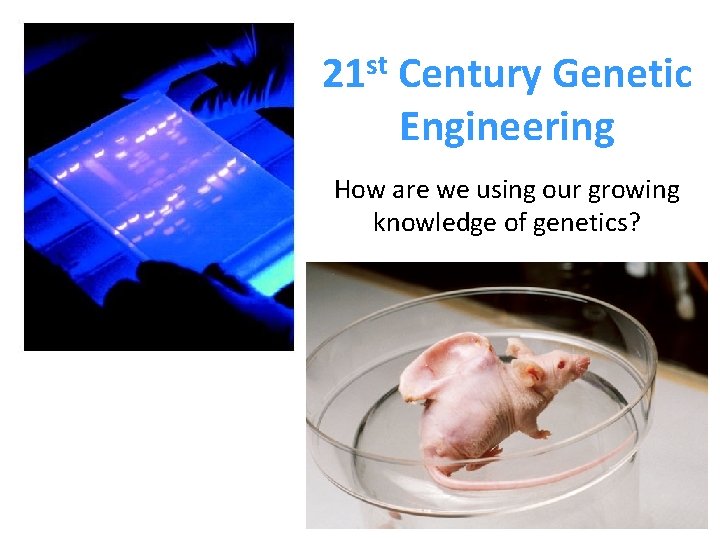
21 st Century Genetic Engineering How are we using our growing knowledge of genetics?
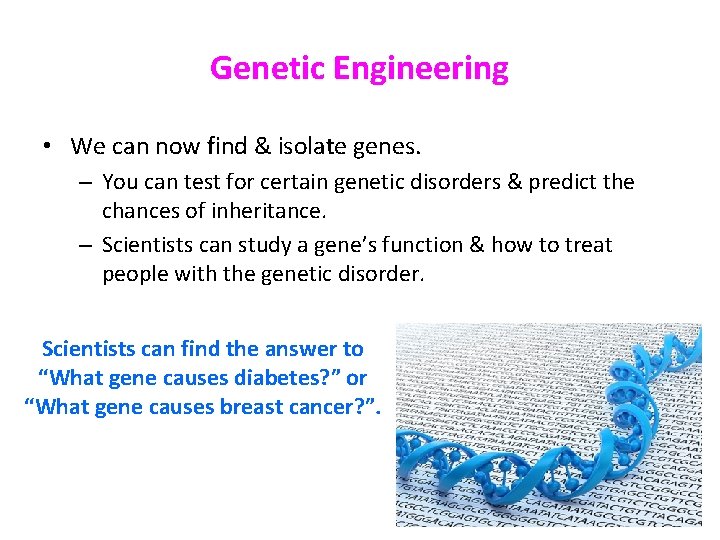
Genetic Engineering • We can now find & isolate genes. – You can test for certain genetic disorders & predict the chances of inheritance. – Scientists can study a gene’s function & how to treat people with the genetic disorder. Scientists can find the answer to “What gene causes diabetes? ” or “What gene causes breast cancer? ”.
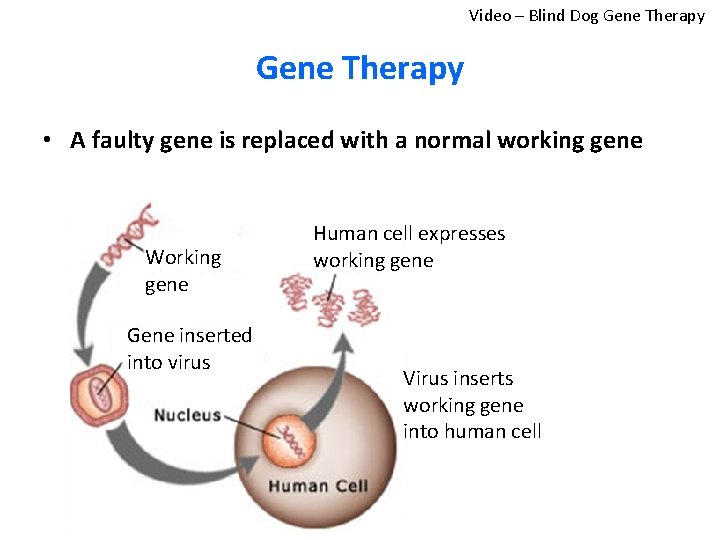
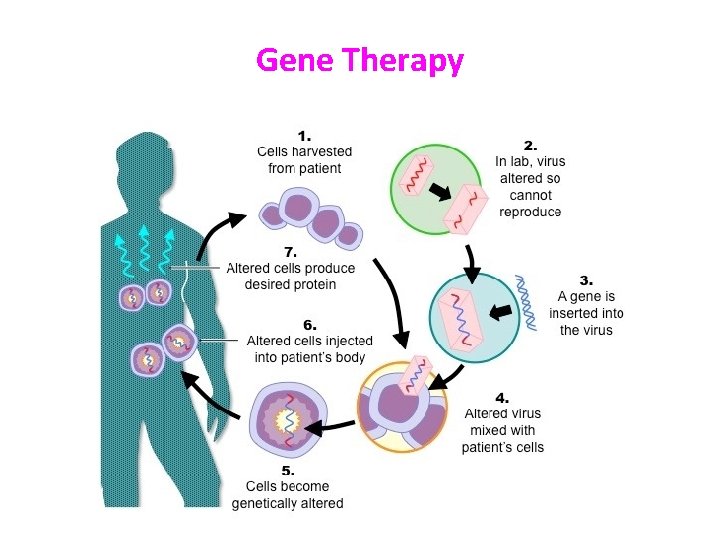
Video – Blind Dog Gene Therapy • A faulty gene is replaced with a normal working gene Working gene Gene inserted into virus Human cell expresses working gene Virus inserts working gene into human cell
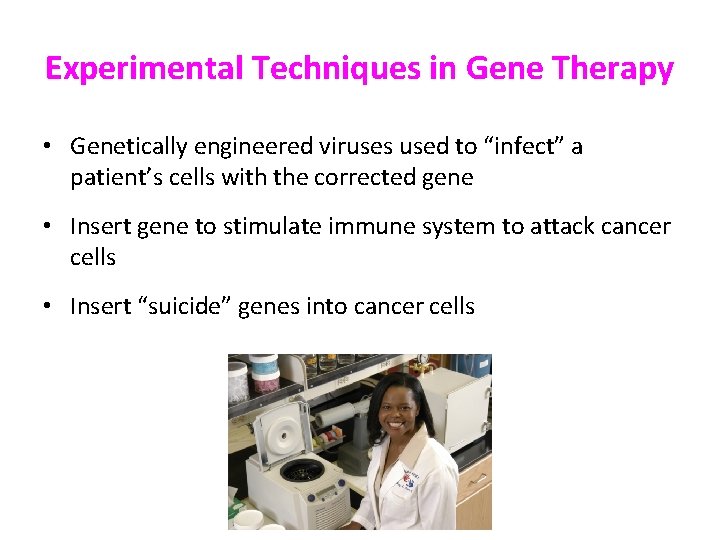
Experimental Techniques in Gene Therapy • Genetically engineered viruses used to “infect” a patient’s cells with the corrected gene • Insert gene to stimulate immune system to attack cancer cells • Insert “suicide” genes into cancer cells
Gene Therapy
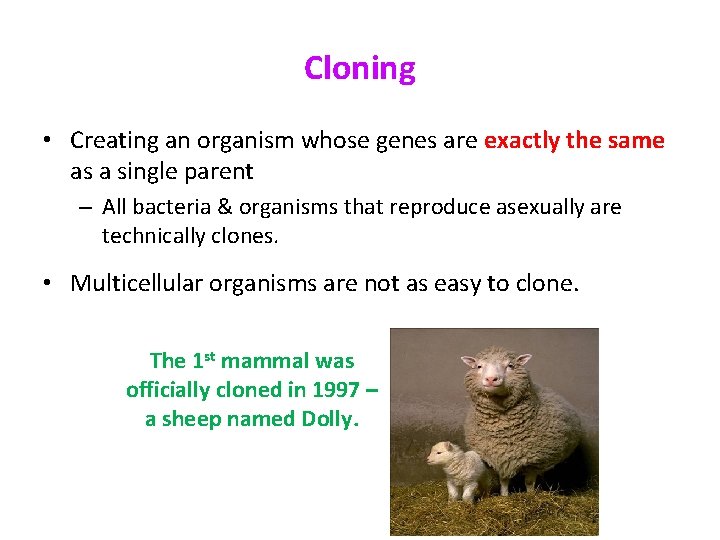
Cloning • Creating an organism whose genes are exactly the same as a single parent – All bacteria & organisms that reproduce asexually are technically clones. • Multicellular organisms are not as easy to clone. The 1 st mammal was officially cloned in 1997 – a sheep named Dolly.
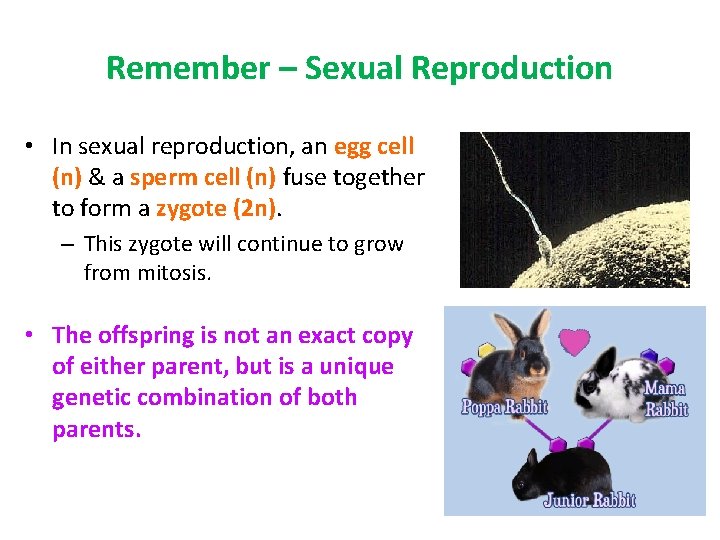
Remember – Sexual Reproduction • In sexual reproduction, an egg cell (n) & a sperm cell (n) fuse together to form a zygote (2 n). – This zygote will continue to grow from mitosis. • The offspring is not an exact copy of either parent, but is a unique genetic combination of both parents.
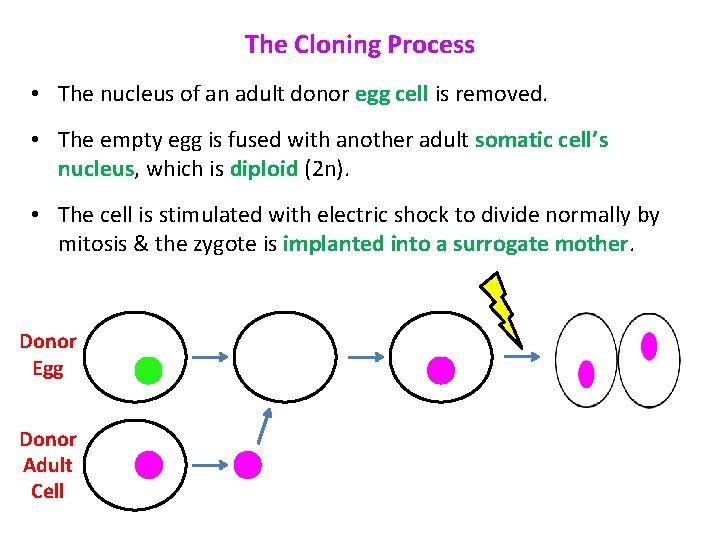
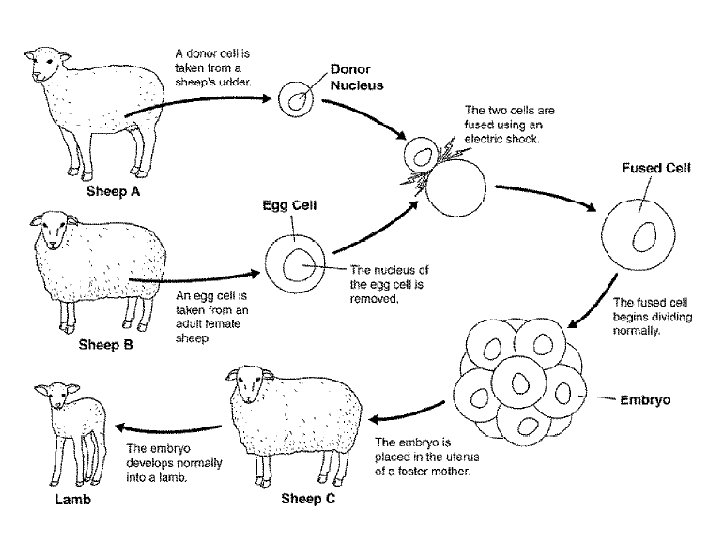
The Cloning Process • The nucleus of an adult donor egg cell is removed. • The empty egg is fused with another adult somatic cell’s nucleus, which is diploid (2 n). • The cell is stimulated with electric shock to divide normally by mitosis & the zygote is implanted into a surrogate mother. Donor Egg Donor Adult Cell
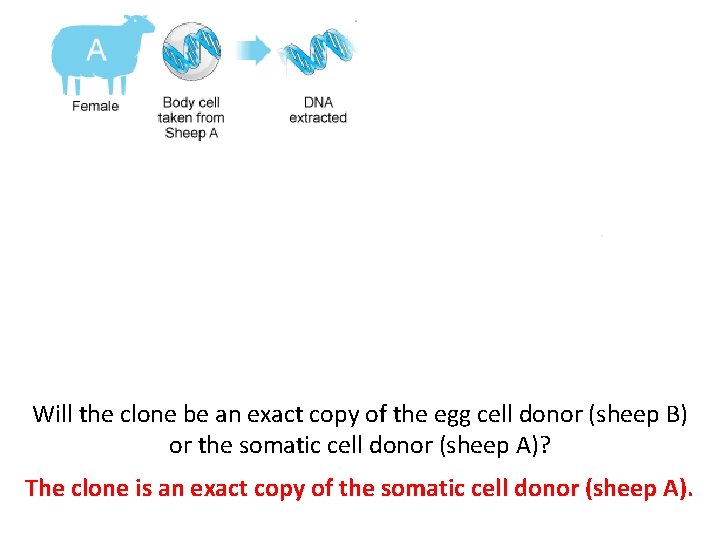
Will the clone be an exact copy of the egg cell donor (sheep B) or the somatic cell donor (sheep A)? The clone is an exact copy of the somatic cell donor (sheep A).
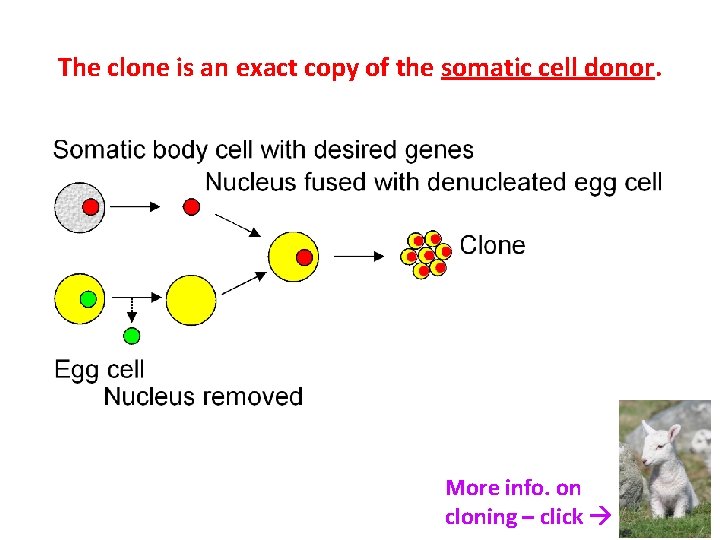
The clone is an exact copy of the somatic cell donor. More info. on cloning – click
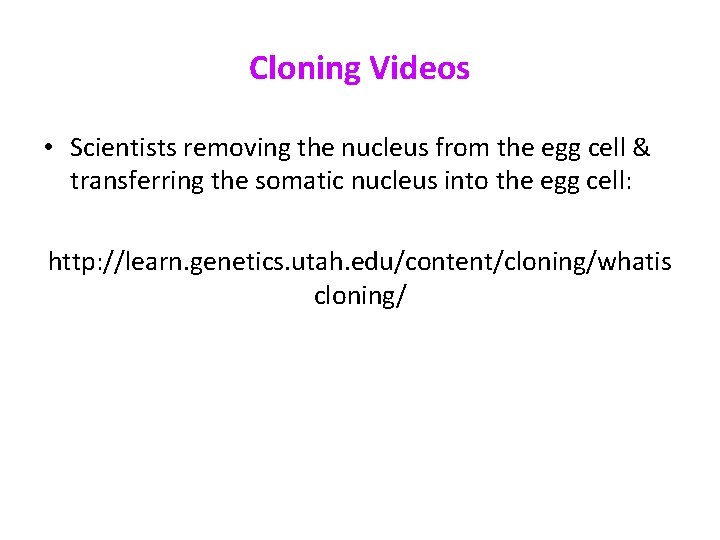
Cloning Videos • Scientists removing the nucleus from the egg cell & transferring the somatic nucleus into the egg cell: http: //learn. genetics. utah. edu/content/cloning/whatis cloning/
Stem Cells
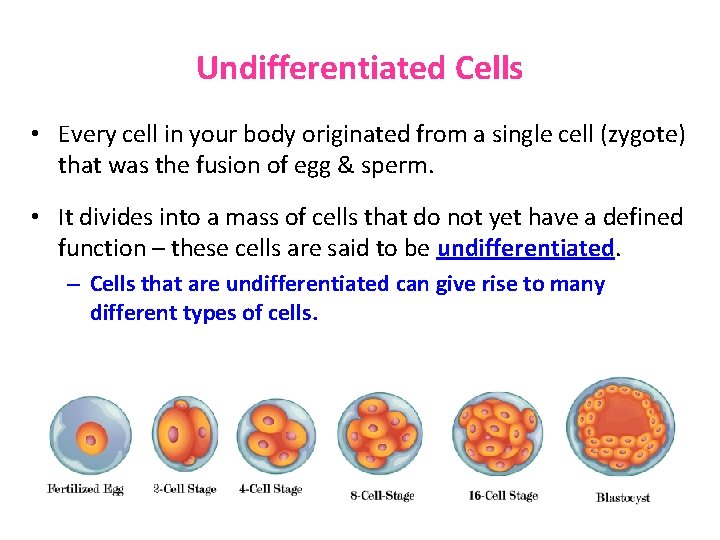
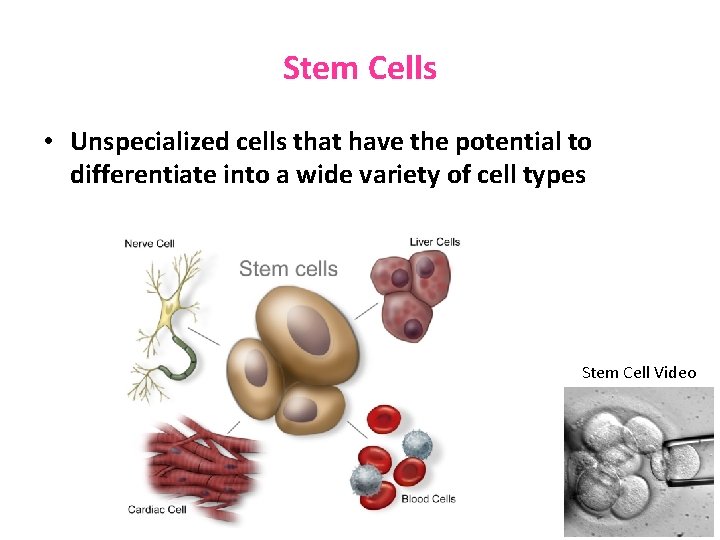
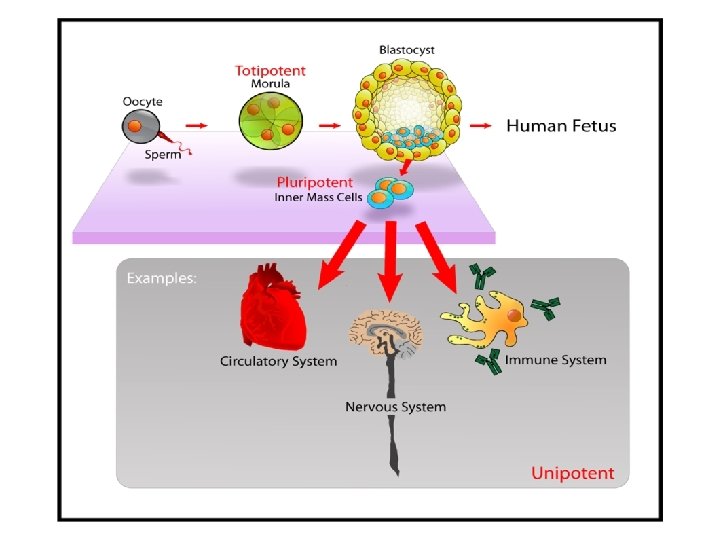
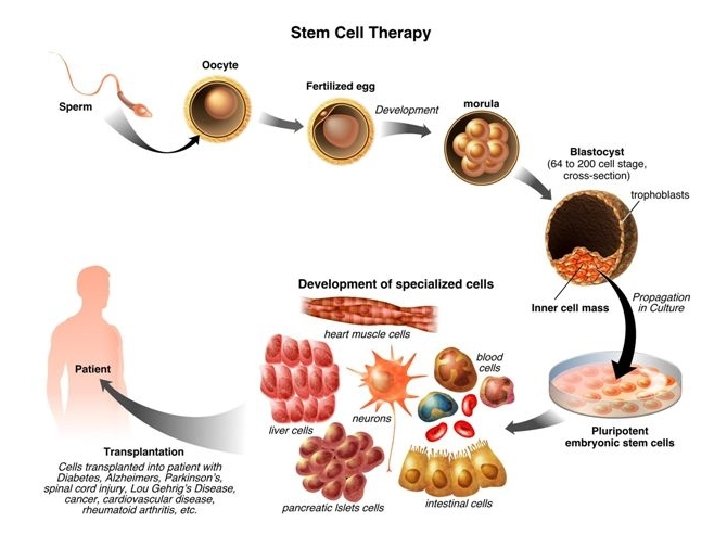
Undifferentiated Cells • Every cell in your body originated from a single cell (zygote) that was the fusion of egg & sperm. • It divides into a mass of cells that do not yet have a defined function – these cells are said to be undifferentiated. – Cells that are undifferentiated can give rise to many different types of cells.
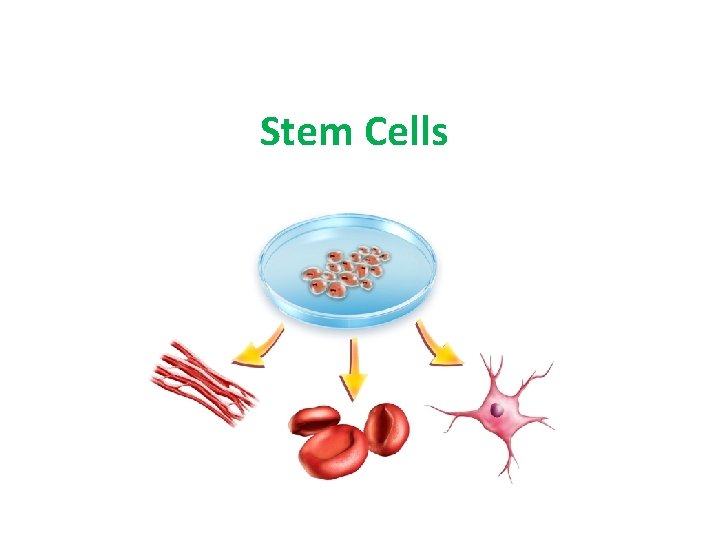
Stem Cells • Unspecialized cells that have the potential to differentiate into a wide variety of cell types Stem Cell Video
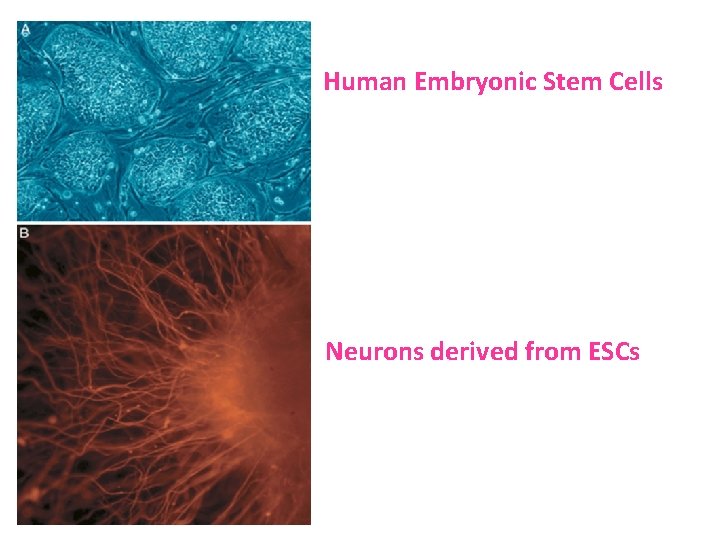
Human Embryonic Stem Cells Neurons derived from ESCs
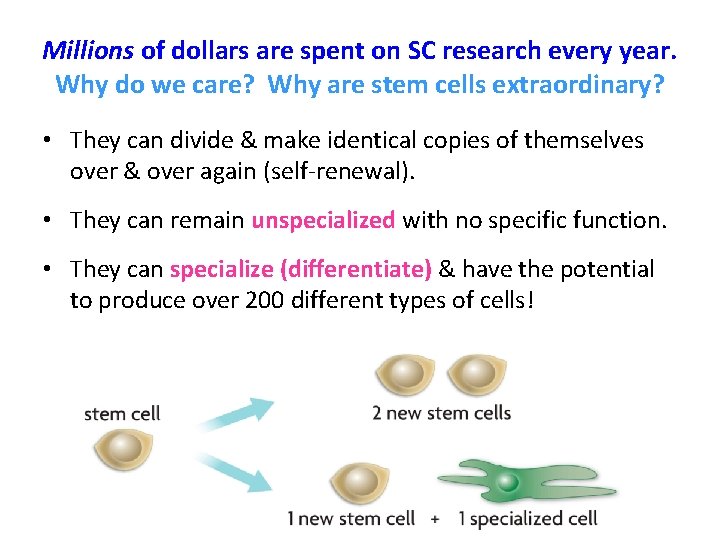
Millions of dollars are spent on SC research every year. Why do we care? Why are stem cells extraordinary? • They can divide & make identical copies of themselves over & over again (self-renewal). • They can remain unspecialized with no specific function. • They can specialize (differentiate) & have the potential to produce over 200 different types of cells!
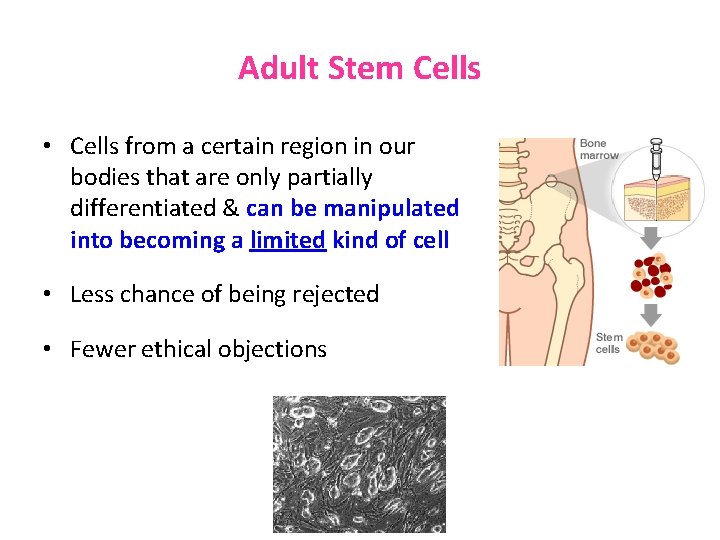
The Major Types of Stem Cells • Embryonic Stem Cells – From blastocysts left over from in-vitro fertilization in the laboratory – From aborted fetuses • Adult Stem Cells – Have been found in blood, bone marrow, liver, kidney, cornea, dental pulp, umbilical cord, brain, skin, muscle, salivary gland…
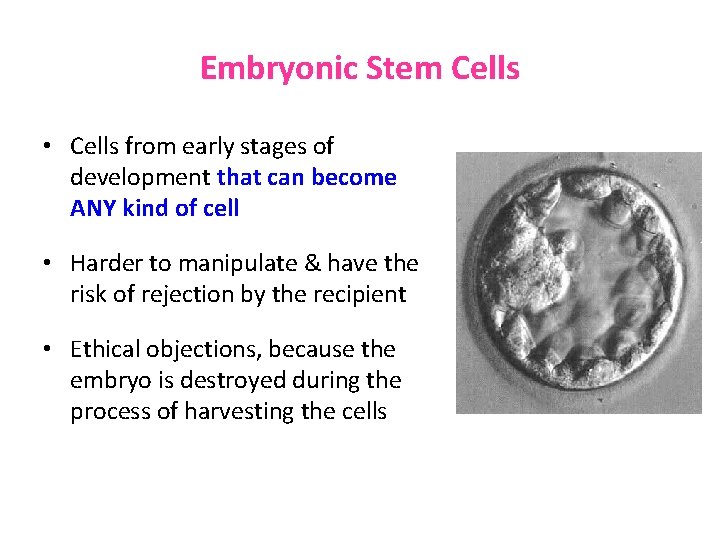
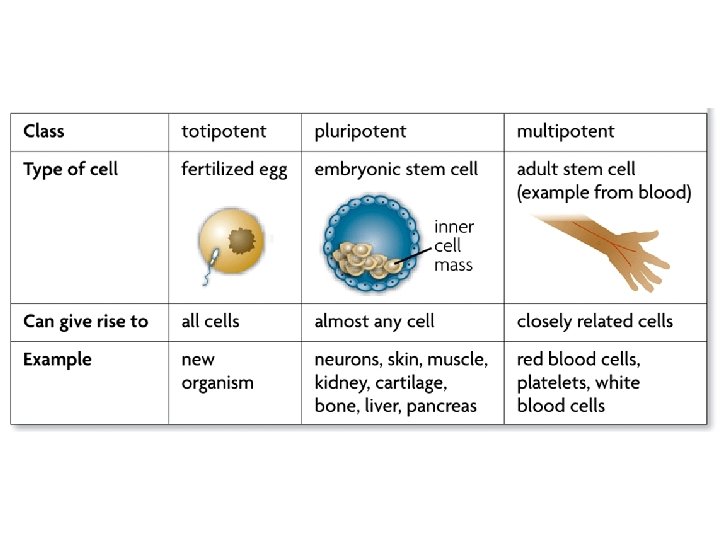
Embryonic Stem Cells • Cells from early stages of development that can become ANY kind of cell • Harder to manipulate & have the risk of rejection by the recipient • Ethical objections, because the embryo is destroyed during the process of harvesting the cells
Adult Stem Cells • Cells from a certain region in our bodies that are only partially differentiated & can be manipulated into becoming a limited kind of cell • Less chance of being rejected • Fewer ethical objections
Stem Cells • All stem cells have 3 general properties: – Capable of dividing & renewing themselves – Unspecialized – Can give rise to specialized cells What’s the purpose of stem cell therapy? To restore tissues that have been damaged by injury or disease that cannot repair themselves
Why is stem cell research important? • SCs allow us to study how organisms grow & develop over time. • SCs can replace diseased or damaged cells that can’t heal themselves. • We can test different substances (drugs, chemicals) on SCs. • We can get a better understanding of our genetic machinery.
Advantages & Disadvantages Embryonic SC Adult SC • Pluripotent: can become any cell • Stable: can undergo many cell divisions • Easy to obtain, but embryo is destroyed • Possibility of rejection • Multipotent: can become some types of cells, but not all • Less Stable: capacity of selfrenewal is limited • Difficult to isolate in adult tissue • Host rejection minimized
Controversy & Ethics • Embryonic SCs are derived from extra blastocysts that would otherwise be discarded following in-vitro fertilization. – Extracting SCs destroys the developing embryo. Is an embryo a person? Is it morally acceptable to use embryos for research? When do we become “human beings? ”
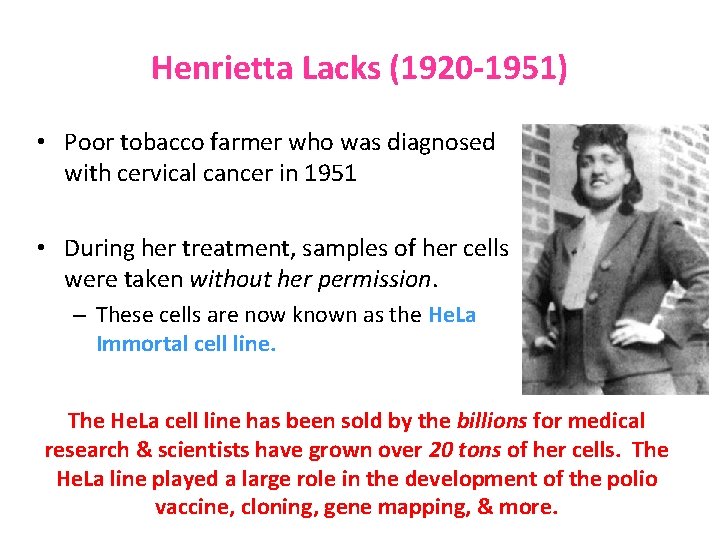
Henrietta Lacks (1920 -1951) • Poor tobacco farmer who was diagnosed with cervical cancer in 1951 • During her treatment, samples of her cells were taken without her permission. – These cells are now known as the He. La Immortal cell line. The He. La cell line has been sold by the billions for medical research & scientists have grown over 20 tons of her cells. The He. La line played a large role in the development of the polio vaccine, cloning, gene mapping, & more.
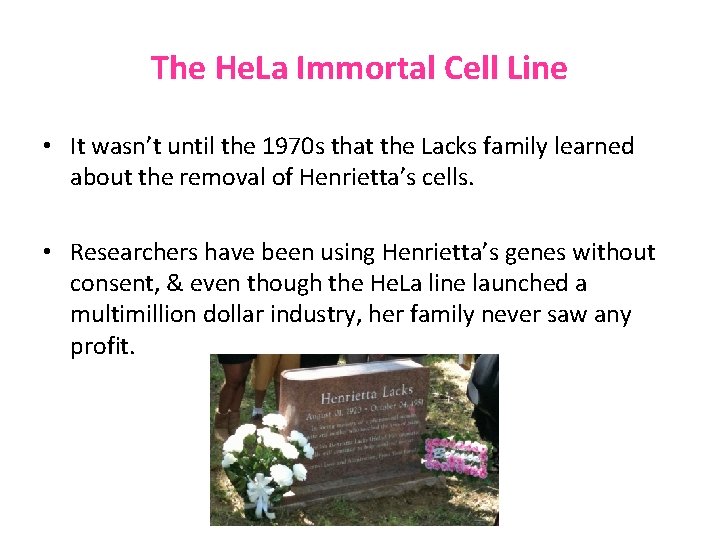
The He. La Immortal Cell Line • It wasn’t until the 1970 s that the Lacks family learned about the removal of Henrietta’s cells. • Researchers have been using Henrietta’s genes without consent, & even though the He. La line launched a multimillion dollar industry, her family never saw any profit.
The Immortal Henrietta Lacks • Do you see any ethical issues here? • Should the scientists have gotten consent before using & publishing information about the Lacks family genes? Why or why not? • Should the Lacks family earn any profit? • Should insurance companies be allowed to discriminate against the Lacks family just because the He. La genes show potential health conditions?
What are some concerns with new biotechnology? • Ethics: moral principles & values that a society should adhere to in determining the use of scientific discoveries • What is ethically acceptable to use while testing on animals? • What could genetically modified crops do to the environment? • What does consuming genetically modified food do to us long term?
What are some concerns with new biotechnology? • Once able to find & fix faulty genes with gene therapy, what is the line we draw on fixing genes? Could we fix not only faulty genes, but undesirable ones? • Could we choose our children’s eye color? • If we can test for genetic disorders at birth, who can access this information? Could discrimination occur based on your genes?